CMHA Mental Health Week: May 5–11, 2025

This year’s theme, “Unmasking Mental Health,” encourages us to look beyond the surface and see the whole person. Many people living with mental health or substance use challenges feel pressure to “mask” their true experiences to avoid judgment or stigma. But by embracing honesty and vulnerability, we can build stronger connections and foster greater understanding.

Throughout the week, explore CMHA’s national campaign, resources, and events at mentalhealthweek.ca and check out programming through your local CMHA branch.

On campus, Lakehead is offering a range of opportunities to support our community in unmasking mental health and showing up as our authentic selves:

Let’s work together to break down stigma and create space for real, open conversations about mental health.

CMHA Mental Health Week

Alum Dr. Amy Junnila Fights the Insect that Brings Pestilence and Death

Solving the mysteries of the fabled Titanic shipwreck is something most people can only dream of, but that's exactly how Dr. Amy Junnila began her research career in the late 1990s.

As an undergraduate anthropology student, Dr. Junnila was part of a team at Lakehead's world-renowned Paleo-DNA Lab that helped identify victims of the maritime disaster who'd lain buried and unknown in a Halifax, Nova Scotia, cemetery.

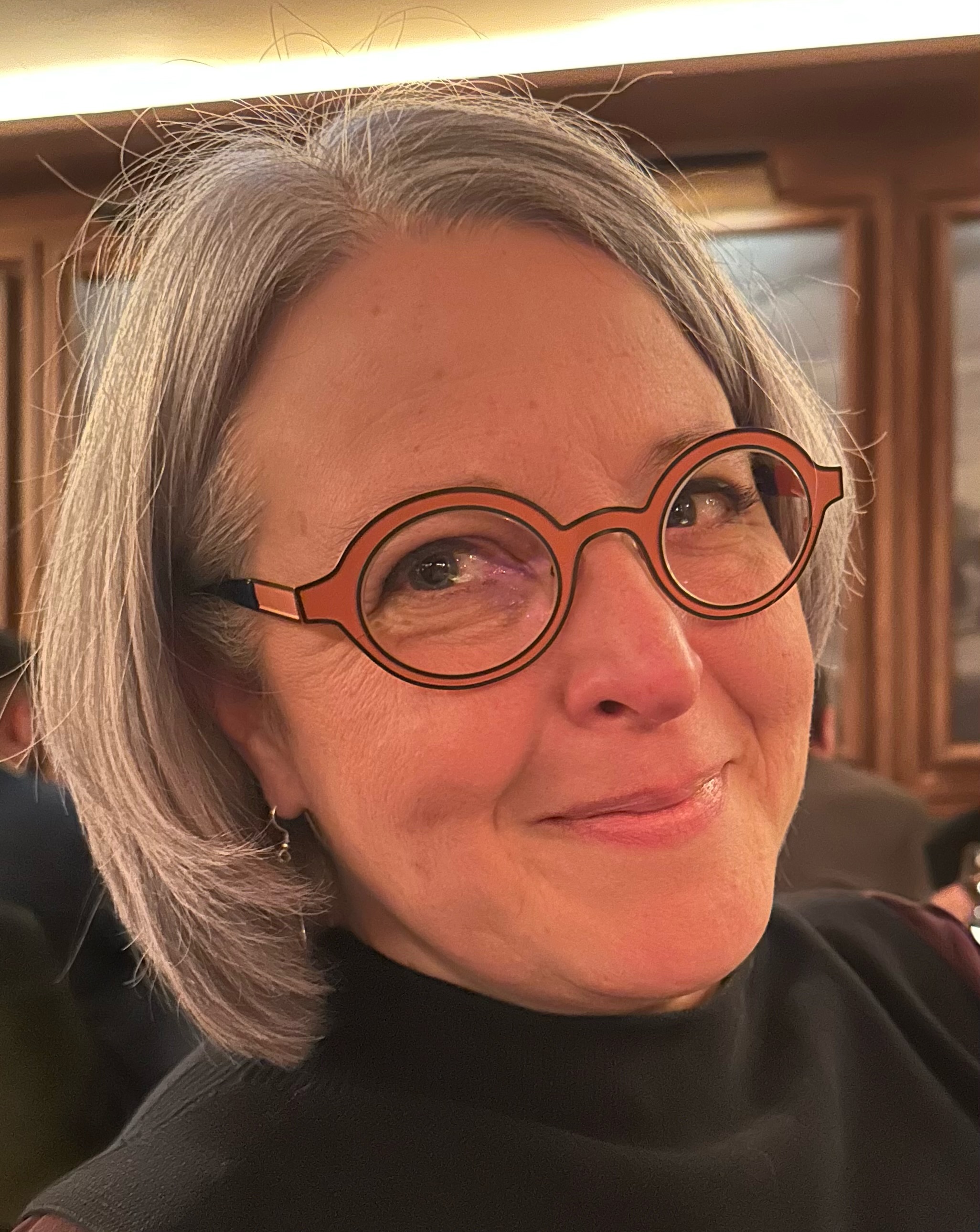
Dr. Dr. Amy Junnila wearing a black shirt and a silver pendant

Lakehead's Paleo-DNA Lab offers outstanding modern DNA services as well as degraded and ancient DNA analyses. Adjunct Professor Dr. Junnila (HBSc'00/MSc'02) will continue some of her work in DNA analysis at the laboratory.

"I'm thoroughly grateful to Lakehead for teaching me everything I know about DNA," says Dr. Junnila, who also earned a Master of Science in Biology specializing in wildlife parasite DNA at Lakehead. "The Paleo-DNA Lab is an international leader in the analysis of degraded and ancient DNA."

Born and raised in Thunder Bay, Dr. Junnila completed a PhD at McGill University and a post-doc at the Hebrew University of Jerusalem before moving to Africa to continue her work with an international research team she joined in 2006 while in Israel. "The team—which has members in Mali, Greece, Russia, Israel, and Florida—is dedicated to dramatically reducing mosquito populations in Mali, West Africa, where mosquitoes carrying malaria are a huge health risk," Dr. Junnila explains.

A green mosquito feeds on a plant

"We collect flowers that mosquitoes feed on and give them to researchers in another lab to make the scent extracts we use in our mosquito-control system," Dr. Junnila says.

She has recently returned to Lakehead as an adjunct professor in the Department of Anthropology and reconnected with the Paleo-DNA Lab, where her work is enhancing Lakehead's already strong commitment to meeting the United Nations' 17 Sustainable Development Goals (SDGs). These goals are a universal call to action to build a better future for everyone, and Dr. Junnila's research is advancing SDG 3, aimed at ensuring good health and well-being around the globe.

Her research team is supported by the Innovative Vector Control Consortium subgroup of the Bill and Melinda Gates Foundation. "Their funding gives us the resources for all of the complex moving parts," Dr. Junnila says.

The Scourge of Malaria

Malaria is an ancient disease transmitted to humans after they've been bitten by female Anopheles mosquitoes whose guts are the home of a single-celled parasite in the Plasmodium family. Every year, malaria kills approximately 600,000 people, with Africa suffering the highest death rates. Tragically, most of the casualties are children under five years old.

Symptoms of malaria include fever, vomiting, seizures, and diarrhea. It also damages blood cells, which can cause organ failure, brain swelling, and death. Since the parasite constantly mutates, it's able to hide from the human immune system, making it extremely hard to formulate an effective vaccine.
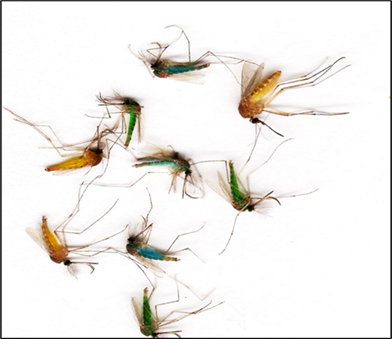
Several brightly coloured dead mosquitoes

Dr. Junnila trapped these mosquitoes during her fieldwork in Mali. Before capturing them, she sprayed flowers in the area with different colours so that she could determine which plants the mosquitoes were feeding on.

"Malaria was widespread in the United States until the early 1900s when they began draining wetlands and standing water where mosquitoes lay their eggs and developed antimalarial medications," Dr. Junnila explains. It's not only swampy places where malaria flourishes. Arid farming regions in Mali, where rice crops are irrigated, for example, attract mosquitoes.

"Mosquitoes are the apex predators of humans," Dr. Junnila says. "In addition to spreading malaria, they carry yellow fever, dengue fever, Zika virus, and West Nile virus. Mosquitoes are equally dangerous to dogs because they carry the parasite that gives them heartworm."

To overcome this threat, Dr. Junnila is studying the plant-feeding behavior of the Anopheles mosquito and then using this information against them. "Mosquitoes, like hummingbirds, beat their wings very quickly and fly around a lot," Dr. Junnila says, "this makes them dependent upon sugar to survive. Flowers are their number-one food source—it's like giving them a Snickers bar."

Her research team has devised the Attractive Toxic Sugar Baits (ATSB) mosquito-control system—consisting of feeding stations containing a paste made of sugar water, an insect-specific poison, and a floral scent that appeals to mosquitoes—as a way to reduce mosquito populations.
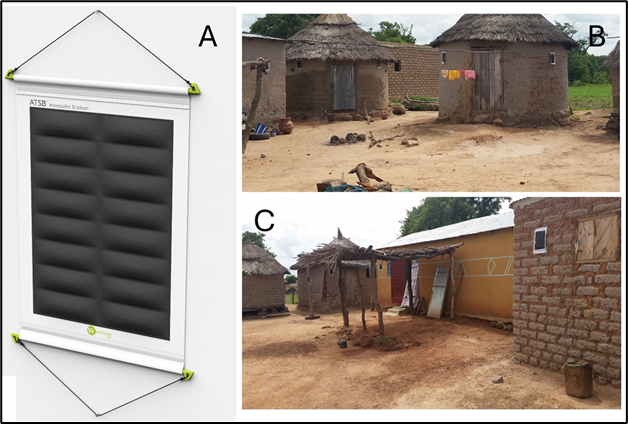
ATSB Mosquito-Control System and images of a Mali village

Left is a prototype of the Attractive Toxic Sugar Baits (ATSB) mosquito-control system and images of a village in Mali where it was tested.

The initial results are impressive. "We had an industry partner that helped us create feeding stations we hung on every home in selected villages in Mali—the stations were able to eliminate more than 80 per cent of mosquitoes in the area."

Dr. Junnila cautions, however, against getting rid of all mosquitoes.

"Since mosquitoes land on flowers, they're probably acting as pollinators. That's why it makes me nervous when people talk about eradicating them entirely; doing so would be ecologically devastating and could destroy crops people depend upon."

One of the ingenious aspects of the ATSB system is that the toxic paste is covered with a plastic-like membrane that mosquitoes can pierce with their mouth parts, which, conversely, is too thick for other pollinators like bees and butterflies to penetrate, keeping them safe.

The researchers are currently in the process of using DNA fingerprinting to pinpoint the flowering plants that mosquitoes prefer to recreate these scents in the lab. Their ultimate goal is to export this technology to any part of the world dogged by malaria—including Asia, Africa, Latin America, the Middle East, and the southern United States—and end the high toll that mosquitoes take on human lives.

Although the Culex mosquito found in Canada doesn't carry malaria and the average Canadian probably doesn't spend much time thinking about this disease, with our warming climate, the Culex mosquito carrying West Nile virus could well make its way east and north to Ontario. "That's why one of my aspirations is to have Lakehead join the fight against mosquitoes," Dr. Junnila says.

Lakehead University is ranked in the top 10 per cent globally for universities making an impact through a commitment to sustainability and positive societal change, and was named the top-ranked university with under 10,000 students in Canada and North America in the Times Higher Education Impact Rankings. These prestigious rankings assess universities' success in delivering on the United Nations 17 Sustainable Development Goals (SDGs) to solve our planet's most pressing social, economic, and environmental challenges.

Applications Open to all Students for Business Startup Accelerator Program-Includes up to $5000 in Funding

Ingenuity Ascend Accelerator program is a great opportunity for entrepreneurial minded Lakehead University students and alumni looking to transition an idea into a business opportunity or accelerate the growth and development of their early stage start-up. The Ingenuity Accelerator program will accepts up to 4 business ideas per cohort and deliver up to $5000 per business idea for costs associated with business development.

Important Dates
Application close: April 20,2025
Interviews to be held during the Week of April 28, 2025
Program starts: May 12, 2025 (8-10 week duration)
Application Link: https://forms.gle/hdf7ipABCxMj1wMP8

What to expect (what participants should be ready for) Ingenuity Ascend participants can expect the following daily activities:

Throughout the 10-week program, early-stage companies will have the opportunity to:

  • Participate in networking events
  • Attend business development workshop sessions
  • Connect with entrepreneurial mentors
  • Participate in milestone meetings with Ingenuity staff to review progress and set upcoming month milestone goals.
  • Access up to $5000 per team to help fund business development activities (some restrictions apply)

Eligibility Requirements:
Applicants must meet the following criteria:

  • Have at least one founder connected to Lakehead University (Student or Alumni up to 1 year post graduation)
  • Must be willing to commit to the program
  • Must have decision-making ability
  • Must participate in all Ingenuity Ascend events, workshops and competitions throughout the program duration (available in online format for Orillia participants)Must be eligible and meet the requirements of starting and running a business in Canada


FAQ’s
Q. Does it cost anything to join the program?
A. There is no cost for this program. This program is completely free for all current students and recent graduates from Lakehead University.

Q. Do I need to have my business running to join?
A. No, we encourage applications from all stages of business development including the idea stage.

Q. What is the time commitment like?
A. Ingenuity requires one milestone meeting per week (up to an hour) as well as there will be workshops throughout the 10 week program. Ingenuity will work with the participants to schedule workshops and meetings at mutually agreed upon times. It is understood the participants may be in classes or working and Ingenuity will work with them to find the best suited times.

Q. Is Ingenuity only for business students?
A. No, we serve students from all disciplines.

Q. Does Ingenuity take any equity or royalties of my company if I use their services?
A. Ingenuity does not take any equity or royalties of any kind.

Q. Who can I contact for questions?
A. For all general inquiries, please email info.ingenuity@lakeheadu.ca

Funding restrictions:
The Ingenuity Ascend program will cover some costs associated with business development and will disperse funds based on a milestone delivery plan. Some costs that are not eligible for this program include rent, labour and wages, and large inventory purchase. All spending will need to be approved through the program coordinator prior to purchase to ensure it is eligible.

Provide your feedback on Lakehead's next sustainability plan

Lakehead University is developing its second Sustainability Plan (2026-2030). Our inaugural Sustainability Plan, launched in 2019, was a milestone for sustainability at Lakehead. It helped create a centralized structure for sustainability at the University, including an Office of Sustainability and a sustainable governance framework. The Sustainability Stewardship Council, a group with multi-stakeholder representation, was formed to create and guide the implementation of the inaugural Plan.

More than five years later, the Office of Sustainability is reflecting on the achievements and lessons learned over this time period. Since 2019, the University has placed repeatedly in the top 100 universities in the world in advancing the United Nations Sustainable Development Goals, declared and implemented a university-wide Year of Climate Action (YOCA), divested our endowment from fossil fuel stocks (becoming the sixth Canadian university to do so), installed electric vehicle charging stations on our Thunder Bay campus, and developed new waste initiatives. Many other sustainability initiatives in the inaugural Plan have also been achieved or are currently underway. We thank all those who have contributed - this work cannot be achieved without your participation and collaboration.

While the implementation of the first Plan has built relationships on and off campus, and created the groundwork for a long-term commitment to sustainability at Lakehead, there is an opportunity at present to pause and reflect. What have we learned? What have our challenges been? The next Sustainability Plan will build on these lessons so that we can deepen our collective commitment to sustainability.

Becoming a sustainable university is not easy. In its most meaningful sense, sustainability requires a shift in culture. It calls us to open our minds and be willing to engage in difficult conversations. For a sustainability program to flourish at Lakehead, it also needs to reflect the context of our community, and the community needs to feel a shared ownership of the program. That’s why we want to hear from you. Your voice matters.

The Office of Sustainability has created a series of engagement opportunities for the Lakehead community to help guide the development of the next Sustainability Plan. This is your opportunity to influence how sustainability is prioritized at Lakehead.

We invite your feedback in the following ways:

  1. Fill out our survey (survey closes April 4).
  2. Drop by the Listening Tree in the Agora and write your creative ideas and wishes for sustainability at Lakehead on a leaf. (Orillia Learning Commons forthcoming).
  3. Arrange a focus group or 1:1 conversation with the Office of Sustainability in April or May. Contact lpmckell@lakeheadu.ca to schedule.

We look forward to your feedback, and to creating the next stage of sustainability programming at Lakehead University.

CERAH Conference - Early bird registration now open

On October 2 and 3, 2025, the Centre for Education and Research on Aging & Health (CERAH) will hold its first ever centre-wide conference, "Aging Across the Life Cycle" at the Superior Inn Hotel & Conference Centre in Thunder Bay, Ontario.

Early bird registration is now open! Register before June 30, 2025. 
Full Early Bird Registration | $300

Standard registration (from July 1, 2025)
Standard Full Registration | $375

To encourage involvement of students, volunteers that work in palliative care, and community members, we are pleased to offer a discounted full registration rate of $150 for these attendees!

Register today: https://ec.lakeheadu.ca/cerah/cerah-conference-aging-across-life-cycle

Learn more about the conference: https://cerah.lakeheadu.ca/2025-cerah-conference/

Early bird registration open for CERAH conference

Join us for SESBASS 2025!

You're invited to the SES Biotechnology and Applied Sciences Symposium (SESBASS 2025) hosted by the Faculty of Science and Environmental Studies at Lakehead University in Thunder Bay, Ontario, Canada, on May 1-2, 2025. This hybrid event will take place in FB 2023 and the Graduate Student Lounge (both in the CASES building) and on Zoom. Updated information about the events can be found here: https://2025sesbass.weebly.com/.

We have a great selection of speakers this year!  There is something for everyone and we have the opportunity to hear from many of our SES PhD alumni! Also, this year's event is hybrid, so come in person or join on Zoom!

Alumni Speakers SESBASS

Registration deadline is Wednesday, April 16.

Only $25 for students/postdocs and $50 for faculty/other. Register here: https://ec.lakeheadu.ca/sesbass.

Symposium
The theme of the symposium is “Past – Present – Future” and it will include topical sessions on Environmental Biotechnology,Materials Research, and Medical Innovations & Bio-inspired Engineering

Tribute
The Biotechnology PhD program was initiated by Dr. Heidi Schraft, who spearheaded the proposal in 2005. The first cohort began in 2008, and since then, the program has graduated over 60 students! As many of you may know, Dr. Schraft will be retiring in June 2025. This event will serve as a tribute to her significant contributions, including establishing the first PhD program within the Faculty of Science and Environmental Studies, developing the Applied Life Science stream in Biology, and her various other achievements.

Reunion
Many alumni expressed a strong interest in reconnecting with peers, whether in person or virtually. This reunion will provide an excellent opportunity for us to come together and celebrate our shared journey.

Please note that attendance at the Tribute to Dr. Heidi Schraft and the Reunion on Friday, May 2 at 1 p.m. do not require registration and are open to the university community.

Please contact Dr. Brenda Magajna at phd.ses@lakeheadu.ca with any questions. 

Research and Innovation Bulletin

The Research and Innovation Bulletin is distributed weekly every Tuesday by the Office of Research Services and includes information on research funding opportunities, events and workshops and updates from our funding partners.

Checkout the latest version of our Bulletin, by clicking here.

Research and Innovation Bulletin

Call for Homestay Hosts for International Students!

Looking for a rewarding experience and competitive income? Become a Homestay Host for an international student! Open your home and provide a welcoming environment while helping students adjust to life in a new country. This opportunity allows you to learn about different cultures, build meaningful connections, and earn a competitive monthly income.

If you're interested in becoming a Homestay Host, please contact Shania Yu at slc.elc@lakeheadu.ca for more details and how to apply.

Join us in making our international students feel at home!

CERAH April Newsletter

Along with a variety of resources, events and news, this month we are pleased to announce the opening of our early-bird registration for the CERAH Conference: Aging Across the Life Cycle. Check it out now!

Hills of rock lead into a lake set against a background of trees with changing leaves

A Powerful Video by SSHRC Storytelling Finalist Casey Oliver Wins Acclaim

Content Warning: This story contains discussion of sexual violence.

"Good morning cutie. U didn't text me back last night??? Too busy dreaming about me?"

This brief text is the beginning of a barrage of intrusive and increasingly threatening messages received by a young woman in the short video "Sexual Violence through Technology: Exploring Vulnerability, Distress and Coping in Women."

The video—which immerses viewers in a hostile online world that Canadian women face every day—was created to highlight Casey Oliver's research into a form of violence that's migrated online. Oliver is a Lakehead clinical psychology PhD student supervised by Dr. Dwight Mazmanian and her video has been chosen as one of 20 finalists in the 2025 SSHRC Storytelling Challenge. 

This challenge is a highly competitive nation-wide contest organized by the Social Sciences and Humanities Research Council (SSHRC) that asks postsecondary students to show Canadians how social sciences and humanities research is affecting our lives, our world, and our future for the better. Oliver was one of hundreds of students from across Canada eager to share their SSHRC-funded research in three-minute-long videos.

Casey Oliver wearing a floral-patterned blazer

Casey Oliver is pursuing a PhD in clinical psychology focused on gender-based violence so that “I can practice clinical psychology with survivors of violence and also conduct research—it’s the best of both worlds.”

"Technology-facilitated sexual violence (TFSV) is a form of gender-based violence that disproportionately affects women," Olivers says. "It's an umbrella term for many different non-consensual behaviours such as sexual comments and harassment about someone's gender or sexual identity." TFSV can include deepfake nude photos and videos, unwanted photos of genitalia, cyber-stalking, unwanted in-person sexual experiences facilitated by technology, and doxxing (releasing personal details, such as a home address, and falsely claiming someone is available for sexual behaviours). It can happen via social media, text messages, gaming sites, and dating platforms as well as in every other corner of the online world.

"What caught my attention is that we don't have a clear understanding of the effects technology-facilitated sexual violence is having on women," Oliver says. This gap motivated her to make it the subject of both her master's and PhD dissertations.

Antisocial Media

A young woman wearing a hijab looks pensively at her cell phone

"Men are a critical part of the solution to technology-facilitated sexual violence (TFSV), both the perpetrators and those in their social circle who need to stand up and say that this is not okay," Casey Oliver says. "I also want to be clear that men can be the victims of TFSV and that women can be perpetrators, however, there is a clear gendered pattern." Photo Credit: Pexels/MART PRODUCTION

Social media is one of the top locations for technology-facilitated sexual violence and women in the LGBTQ+ community appear to be at the highest risk for this type of violence. "Regardless of who they are," Oliver says, "the women I've spoken to have said that TFSV has life-altering consequences."

In the aftermath of TFSV, women may experience anxiety, depression, hypervigilance, substance-use problems, and problematic eating patterns. In her master's research, Oliver found that these behaviours may be linked to the self-objectification that can develop when repeated incidents of TFSV cause women to believe that they are sexual objects rather than human beings with value and dignity.

Some women cope by disguising their identities online or completely removing themselves from the technology world. "That's concerning because women cut themselves off from job opportunities and social and recreational networks. When human beings are monetized, our safety is eroded, and we're placed in danger."

Oliver also points out that the culture of hate and violence that's thriving online is spilling over into our real lives. "The 2023 stabbing attack in a gender studies class at the University of Waterloo is a horrific example of what TFSV can lead to."

Big Tech, Educators, and Governments Must Step Up

"One of the greatest perils to overcoming this issue is everyone—especially the technology giants—pointing the finger at each other and saying that it's someone else's problem to solve," Oliver says. "Governments and educational institutions have a lot of power, too, and they need to do their job. I focused on adults in my research, but many parents have told me they're terrified about their kids being targeted because this kind of abuse starts in middle school."

Oliver will use the findings of her project to help educate the public, governments, online platforms, and other stakeholders about the destructiveness of technology-facilitated sexual violence so that the online world can become a welcoming place for women and girls.

"An SSHRC doctoral fellowship is enabling me to carry out my research and the SSHRC Storytellers Challenge allowed me to get out of my research comfort zone and have a broader impact by communicating to a larger audience," Oliver says.

"It's a hard field to be in," she adds, "but if it makes a difference in terms of human suffering, it's worth it."

In addition to the SSHRC funding for her research, Casey Oliver is grateful to Lakehead University's Office of Graduate Studies and Research Services for facilitating and funding her SSHRC Storytelling Challenge video as well as the film production expertise of Apple Wagon Films. She also appreciates the support for her research from the Canadian Federation of University Women, the Canadian Psychological Association, the Kappa Kappa Gamma Foundation of Canada, and the Province of Ontario. 

Watch the video that earned Casey Oliver a spot as a 2025 SSHRC Storytelling finalist.

Pages