Research & Innovation Week underscores importance of research-driven progress in today’s world

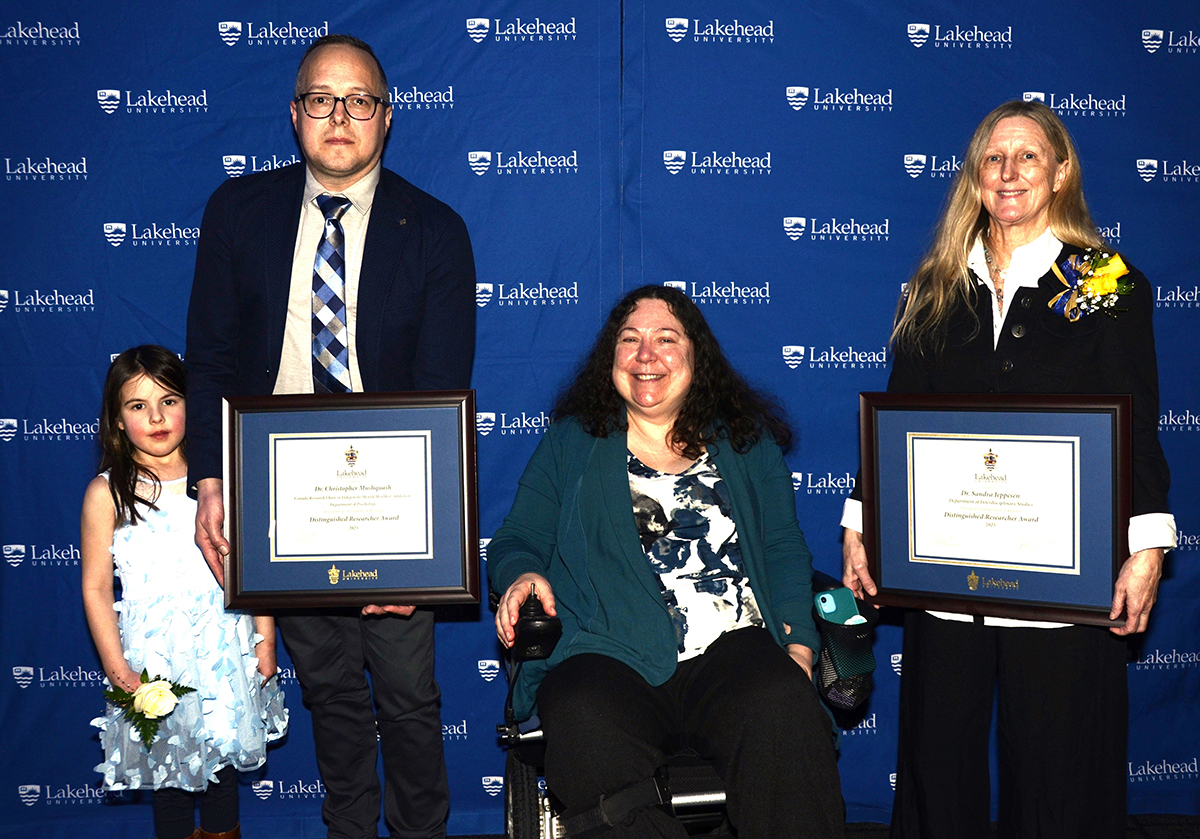
Distinguished Researcher Dr. Christopher Mushquash and daughter, Senate Research Committee Chair Dr. Tamara Varney, and Distinguished Researcher Dr. Sandra Jeppesen


Distinguished Researcher Dr. Christopher Mushquash and daughter, Senate Research Committee Chair Dr. Tamara Varney, and Distinguished Researcher Dr. Sandra Jeppesen.

Thunder Bay, Ont. – New ideas and innovations were on full display as Lakehead University celebrated the 20th annual Research & Innovation Week, February 24 to 28 in Thunder Bay.

Researchers, students, not-for-profit and industry partners, and community members engaged in discussion, shared knowledge and expertise, and fostered new collaborations to support economic development and innovation in the north and beyond.

“Research & Innovation Week is a platform for knowledge exchange and innovation, an opportunity to advance our understanding of how the work of people in our community adds to our understanding of individuals, groups, and societies – what we think, how we live, and how we interact with each other and the world around us – and leads to advancements that not only improve, but enhance lives,” explained Dr. Andrew P. Dean, Vice-President of Research and Innovation.

The milestone year kicked off in Thunder Bay with Science Carnival, a free public event held in collaboration with Science North at the Intercity Shopping Centre—3,800 people visited 30+ exhibitor booths and had the opportunity to participate in live science experiments and demonstrations.

Over 32 public lectures, interactive exhibits, performances, and research workshops welcomed community members to the Thunder Bay Campus to hear from esteemed researchers and students on a broad range of topics including health promotion, dementia and aging in place, inclusive AI knowledge mobilization, and more.
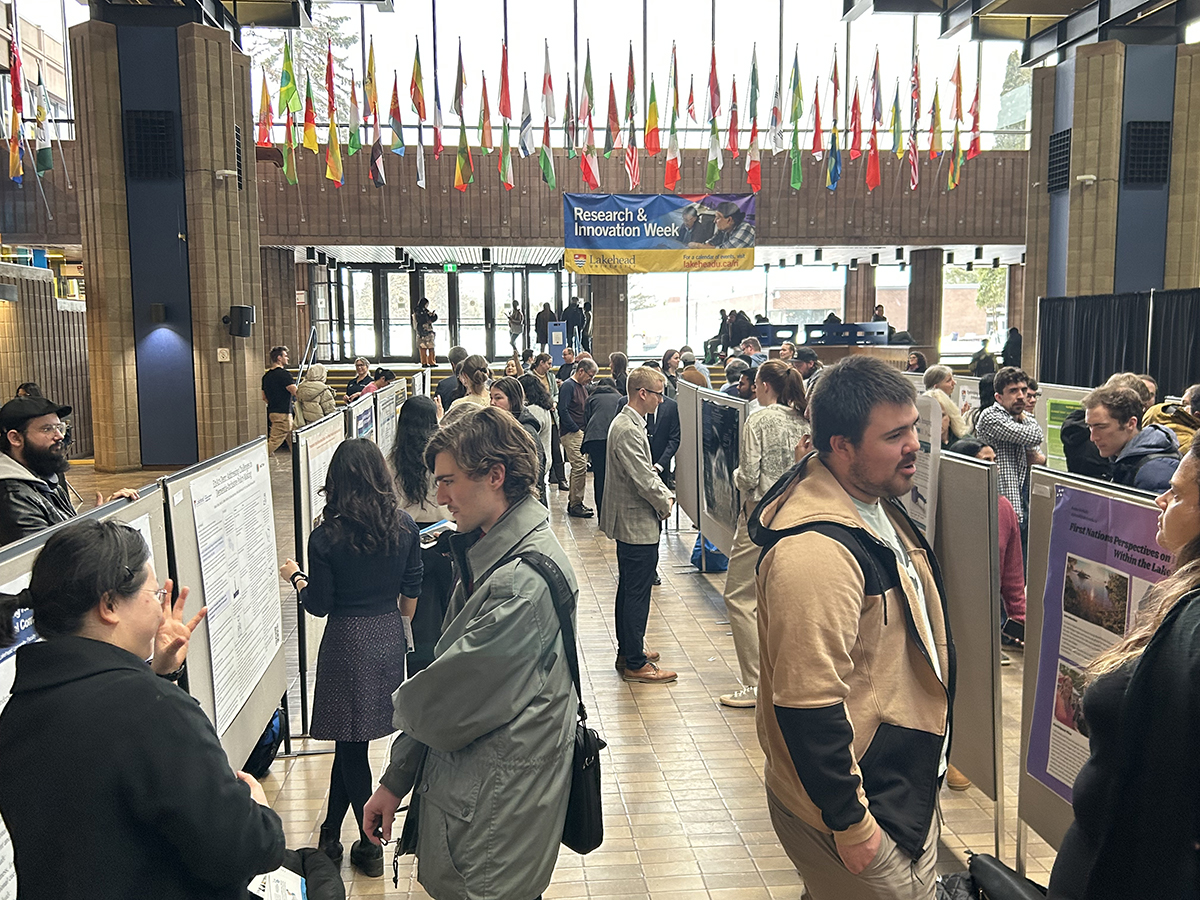
Over 110 students took part in poster presentations and research conferences during Research & Innovation WeekNot to mention, 52 undergraduate and 65 graduate students shared their scholarly and creative activity with their peers through research conferences and poster competitions. At the graduate level, Dylan Di Carlo, a master of science candidate in Anthropology, was crowned champion of the 2025 Lakehead Three Minute Thesis (3MTⓇ) competition, and Alexandra Haak, master of science candidate in Forestry from the Orillia Campus, was named finalist of the GRADflix competition.

One of the standout moments was the celebration of distinguished faculty and students during the Research and Innovation Awards of Excellence. “The impact of the work researchers do on- and off-campus shapes the reputation of Lakehead University as an institution dedicated to research excellence,” stated Dr. Dean.

Two distinguished Lakehead professors were among this year’s honorees: Dr. Christopher Mushquash and Dr. Sandra Jeppesen were recognized with the 2025 Distinguished Researcher Award.

Scholar, scientist, and clinical psychologist, Dr. Mushquash’s contributions in the field of Indigenous mental health and addictions are well documented and have garnered international and national recognition, including the 2023 Canada Gairdner Momentum Award. As Canada Research Chair in Indigenous Mental Health and Addiction, Professor in the Department of Psychology, Vice President Research at the Thunder Bay Regional Health Sciences Centre and Chief Scientist, Thunder Bay Regional Health Research Institute, Dr. Mushquash has devoted his career to addressing mental health- and addiction-related issues in rural and Indigenous communities with an eye toward training and capacity-building for the next generation.

For Dr. Mushquash, this award is recognition of the collective efforts of the trainees, staff, colleagues, and community partners who contribute to research. "Collaboration ensures that research is responsive to community needs. This award highlights the importance of advancing knowledge that supports improvement," he said. 

"More broadly, I want our research to contribute to improving mental health services, policies, and outcomes," explained Dr. Mushquash. "If our work can help create culturally- and contextually-relevant, effective supports that honour Indigenous perspectives and knowledge, then we will have made a meaningful impact."

Dr. Jeppesen joined Lakehead University in 2010 and is a professor in Media, Film, and Communications in the Department of Interdisciplinary Studies at the Orillia Campus. Through ground-breaking research, methodological innovations, and transnational collaborations, Dr. Jeppesen has transformed how scholars and practitioners conceptualize the intersections of race, gender, sexuality, and power within alternative media studies.

“When I began this work, the field of alternative media largely overlooked the nuanced experiences and practices of marginalized groups, such as women, 2SLGBTQ+, and BIPOC groups,” she said.

Since then, her work has influenced significant changes in laws, policies, and practices with respect to a range of issues such as immigration, mental health, digital engagement, racial and gender equity, and 2SLGBTQ+ rights.

“Thank you to the Senate Research Committee, and the community partners, colleagues, and students I’ve had the honour and privilege of working with over the years.”

A full list of award recipients follows:

2025 Research & Innovation Awards of Excellence recipients

Distinguished Researcher Award
Dr. Christopher Mushquash, Department of Psychology
Dr. Sandra Jeppesen, Department of Interdisciplinary Studies

Research Excellence Awards
NSERC Category
Dr. Waleed Ejaz, Department of Electrical and Computer Engineering

SSHRC Category
Dr. Idevania Costa, School of Nursing

Indigenous Partnership Research Award
Dr. Anna Koné Péfoyo, Department of Health Sciences and Dr. Lana Ray, Health Disciplines, Athabasca University, for their project, “Impact of COVID-19 on Indigenous Communities”. Partners include Ariel Root and Janet Gordon, Sioux Lookout First Nations Health Authority; Paul Capon, Matawa First Nations Chiefs Council; and Janice Spencer and Serena Joseph, Waasegiizhig Nanaandawe'iyewigamig.

Community Engaged Research Award
Dr. Erin Pearson, School of Kinesiology, and partners Thunder Bay District Health Unit, Our Kids Count, and City of Thunder Bay, for their project, “The Healthy Kids HOME (Health on the Move for Equity) Program: Examining the Feasibility of a Neighbourhood-based Health Promotion Service Model for Equity Deserving Children and Families”.

Equity, Diversity and Inclusion in Research Award
Dr. Pauline Sameshima, Faculty of Education, for the project, “EDI in the HOPE Collaboratory’s Community Engagement”.

Innovation Award
Bryan Wong, LLB Student, Bora Laskin Faculty of Law

Three-Minute Thesis
First Place: Dylan Di Carlo, MSc Candidate, Department of Anthropology (Supervisor: M. Boyd)

Second Place: Siddharth Kishore, MSc Candidate, Department of Electrical and Computer Engineering (Supervisor: F. Gaffar)

People’s Choice Award (tie):

Navneet Kaur, PhD Candidate, Department of Physics, “Optical Sensor for Monitoring Trace Chemicals in Environment & Food Systems” (Supervisor: G. Das)

KarLee Lefebvre, MSc Candidate, School of Kinesiology, “Alcohol & Heat: A Dangerous Cocktail” (Supervisor: N. Ravanelli)


GRADflix Award
First place: Alexandra Haak, MSc Candidate, Faculty of Natural Resources Management (Supervisor: F. Pendea)

People's Choice Award: Francis Agada, PhD Candidate, Department of Chemistry, “From Molecules to materials: Crafting the next generation of 2D functional materials” (Supervisor: M. Ebrahimi)

Graduate Studies Research Excellence Awards
Natural Sciences and Engineering Category
Vira Grynko, PhD Chemistry & Materials Science (Supervisor: M. Albert)

Social Sciences and Humanities Category

Chelsea Noël, PhD Clinical Psychology (Supervisor: D. Scharf)

Health Research Category
Douglas Newhouse, MSc Kinesiology (Supervisor: N. Ravanelli)

Graduate Student Conference Poster Winners
Winner Engineering Category
Mona Mohammadkhani, PhD Candidate, Department of Chemical Engineering (Supervisor: L. Pakzad)

Winner NSERC Category

Amy Stieh, MSc Candidate, Department of Physics (Supervisor: A. Reznik)

Winner SSHRC Category
Maaja Sepa, MHSc Candidate, Department of Health Sciences (Supervisor: E. Wiersma)

Post-Doctoral Fellow Excellence Award
Viktoriia Batarchuk, Department of Chemistry (Supervisor: M. Albert)

Lakehead researchers awarded international research positions

Thunder Bay, Ont. – Lakehead University researchers Dr. Sudip Rakshit and Dr. Chris Southcott have been appointed international research chairs with the University of the Arctic (UArctic), supporting sustainable development and resilience in the Circumpolar North.

Sudip RakshitDr. Rakshit is Chair in Integrated Sustainability Analysis and Circular Bioeconomy and Dr. Southcott is Chair in Resources and Sustainable Communities. As UArctic chairs, they are leading initiatives to advance knowledge and strengthen international partnerships in and for the North for the next five years.

A professor in chemical engineering and Canada Research Chair (Tier I) in Bioenergy and Biorefining Processes, Dr. Rakshit’s work addresses critical environmental challenges with a focus on resource recovery, waste reduction, and materials reuse, all of which hold significant implications for the Arctic region and beyond.

“In the Arctic region there are lots of marine and terrestrial resources available, but how do we use them in a manner that is technically, economically, environmentally, and socially sustainable and limits climate change,” he said.

Alongside international collaborators, Dr. Rakshit is exploring the potential of using marine and terrestrial products like algae and grasses to produce biofuels and other bioproducts. “I hope to develop efficient and sustainable biorefining processes that meet the tough conditions of the Arctic and contribute to sustainable resource utilization and security.”

Chris SouthcottDr. Chris Southcott, a professor of sociology with close to 40 years of northern research experience in Canada and other Arctic countries, is looking at the impact of resource development – particularly mining, forestry, and oil and gas – on Arctic and Northern communities and how those communities can have more say in the development of resources that take place in their region and how they can benefit from them.
“There have been negative impacts from resource development in Northern communities,” he explained, “so my research looks at how to lessen those negative impacts and enable communities to gain more control, first of all, of the development that goes on in their region, and secondly, reap the benefits from the development to help make them sustainable.”

“My main job as a UArctic Chair is to do anything I can to try and make sure that research being done on the Circumpolar North is done with more of a focus on the needs of the people that live in the region.”

The UArctic is a network of 200 universities, colleges, research institutes, and other organizations concerned with education and research in and about the North. The network promotes a multidisciplinary approach to learning about the Circumpolar North, which includes understanding its lands, seas and environments; peoples and cultures; and the contemporary issues facing the region. Lakehead University is pleased to be a partner in the UArctic chair program.

“Having two international research appointments is a testament to the high quality of research happening at Lakehead University,” explained Dr. Andrew P. Dean, Vice-President of Research and Innovation. “It shows that Lakehead is a leader when it comes to research on and for the North; it’s fabulous that we have esteemed researchers taking part in this international effort.”

Student, faculty researchers demonstrate research excellence during milestone Research & Innovation Week

Students participate in the Rita Nicholas Undergraduate Research Conference


The Rita Nicholas Undergraduate Research Conference celebrates emerging researchers at Lakehead University, presenting undergraduate students the opportunity to share their research with peers and the public. This year's conference will take place on Tuesday, Feb. 25.


Thunder Bay, Ont. 
– A prominent showcase of research excellence at Lakehead University is celebrating an important milestone: 20 years of Research & Innovation Week!

Demonstrating the exceptional work of Lakehead University researchers in the north for the north, Research & Innovation Week has evolved over the last 20 years to include public lectures, interactive exhibits, art and music performances, and more, revealing the growing impact of Lakehead research locally, nationally, and internationally.

“Lakehead has a deep tradition of research excellence,” explained Dr. Andrew P. Dean, Vice-President of Research and Innovation. “By opening our campus to the public and the world we can highlight the profound impact our faculty, student, and staff researchers have on our community and beyond through the advancement of new perspectives and innovations.”

The scope and depth of research activity at Lakehead University were acknowledged in the 2024 Research Infosource Top 50 Research Universities rankings; Lakehead was named a Canadian research powerhouse in the rapidly evolving field of Artificial Intelligence (AI) and maintained its spot as one of the top three universities in Canada in the Research University of the Year competition in the undergraduate category.

“I am immensely proud of the extent of research activity happening at Lakehead University, work that continues to advance knowledge, improve lives, and change our world in meaningful ways,” Dr. Dean said.

To celebrate the 20th year, over 30 events are taking place on the Thunder Bay campus from February 22 to 28, featuring topics for everyone. On Saturday, Feb. 22, in collaboration with Science North, there is a free public event at the Intercity Mall between 10 a.m. and 3 p.m. with hands-on activities and fun for the whole family. Then, on Monday, Feb. 24 at 12 p.m., Lakehead welcomes keynote speaker, explorer and author Jill Heinerth, the first Explorer-in-Residence of the Royal Canadian Geographical Society, to share her incredible career and talk about reaching beyond limitations, challenging the unknown, and overcoming fears, while sharing practical lessons on risk management and safety, discovery learning, failure, and collaboration.

Come find out why Lakehead University is one of the top research universities in Canada. For a full list of events and workshops, visit www.lakeheadu.ca/ri.

Reclaiming Wild Rice: Helping Indigenous Communities Develop More Secure Food Sources

"Wild rice is culturally, nutritionally, and economically significant to the Anishinaabe people of the Great Lakes area," says Lakehead Adjunct Biology Professor Dr. Vincent Palace.

According to their creation story, the Anishinaabe migrated inland from the eastern seaboard to the place where food grows on the water—that food was wild rice, or "manoomin" in the Ojibwe language.

Dr. Palace—who is also the head research scientist at the International Institute for Sustainable Development-Experimental Lakes Area (IISD-ELA) research station about 60 km north of Kenora, Ontario—is part of an exciting research initiative focused on wild rice.

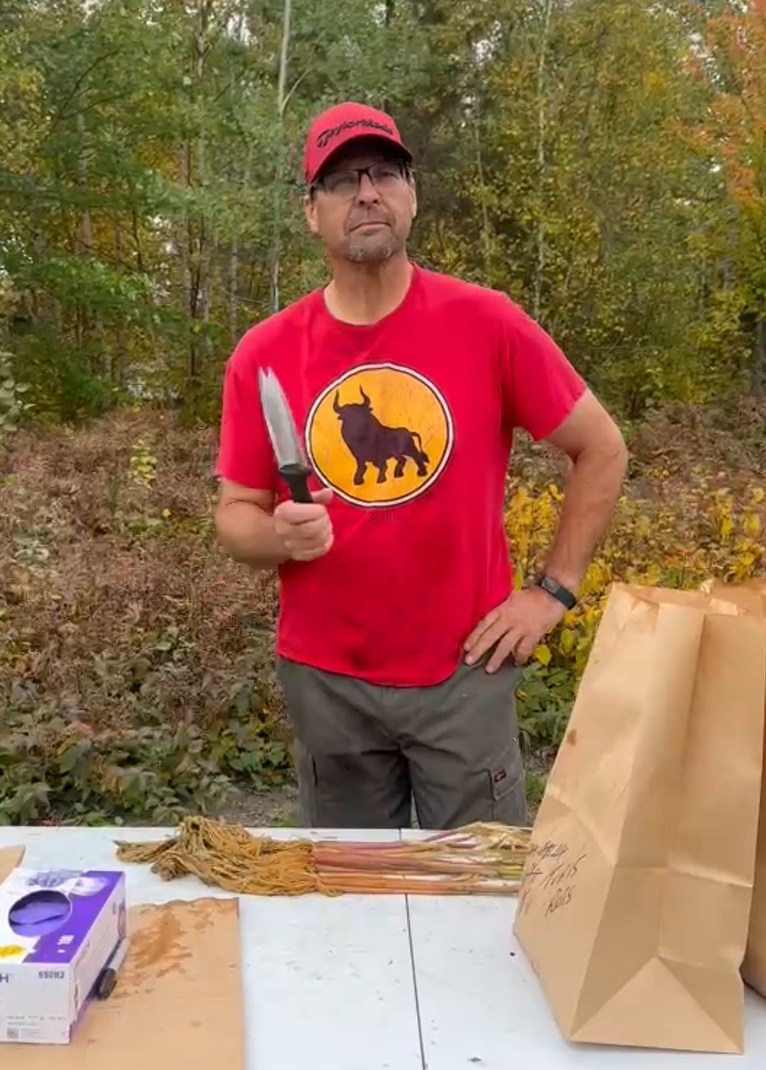
Dr. Vincent Palace at a table outdoors holding an implement for processing wild rice

 The MANOOMIN project, which stands for Multi-culture Agribusiness for Northern Ontario Managed by Indigenous Nations, is a collaboration between the Myera Group (an Indigenous-led biotechnology company committed to fostering Indigenous food sovereignty), IISD-ELA researchers, Lakehead University, and several Treaty #3 Indigenous communities in northwestern Ontario.

"The Kenora Chiefs' Advisory, a cooperative of eight communities from the Treaty #3 area, are part of this project, and they've been amazing to work with!" Dr. Palace says.

Dr. Vincent Palace (left) processing wild rice. Dr. Palace’s research group is currently examining the effects of competition from cattails on wild rice. They’ve also studied how water levels affect the productivity of wild rice.

"Traditionally, most communities harvest this sacred food by canoeing among stands of wild rice growing in lakes, pulling wild rice plants over their canoes, and rapping them with a stick to knock the rice into their boats. This harvesting method means that some of the rice grains fall into the water, allowing the plants to reseed themselves every year."

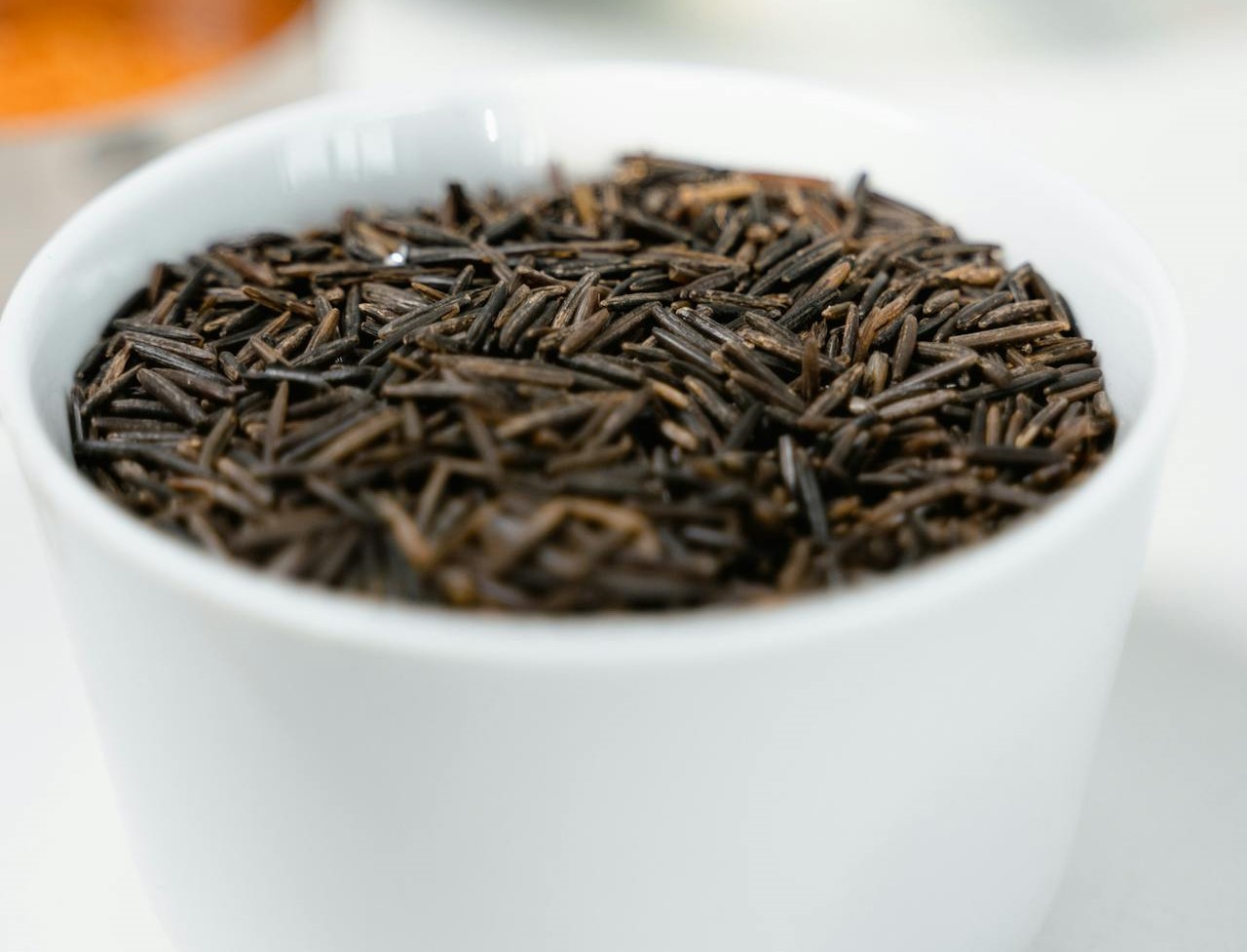
A small bowl of uncooked wild rice grains

Despite the importance of wild rice to Indigenous people, accessing and harvesting it has become more difficult. Hydroelectric production in northwestern Ontario's Rainy River system, for instance, has destroyed habitats where wild rice was typically harvested, and this destruction has been compounded by the spread of an invasive species of cattails that is choking out wild rice. An additional pressure comes from the increasing age of wild-rice harvesters and the growing danger that their knowledge will be lost. "The time to train younger generations to harvest rice and to remove the cattails is limited," Dr. Palace explains.

Wild rice is a nutritionally dense food that’s low in fat and high in fatty acids and fibre. Moreover, wild rice stands create higher-quality habitats for fish, birds, and other animals compared to habitats dominated by cattails.

The research team plans to strengthen these communities' food sovereignty by establishing fish farms in their territories that will be owned and operated by community members. The fish farms will have a dual purpose: the fish will provide an important food source and the solid and liquid waste they excrete will be used as a fertilizer to grow wild rice and traditional medicine plants. Fish waste contains ammonia and phosphorus—nutrients that wild rice plants need to grow. Myera will contribute its business expertise by helping the communities produce wild rice flour, rice cakes, protein shakes, bannock, and other foods for their own consumption, as well as for distribution and sale outside these communities.

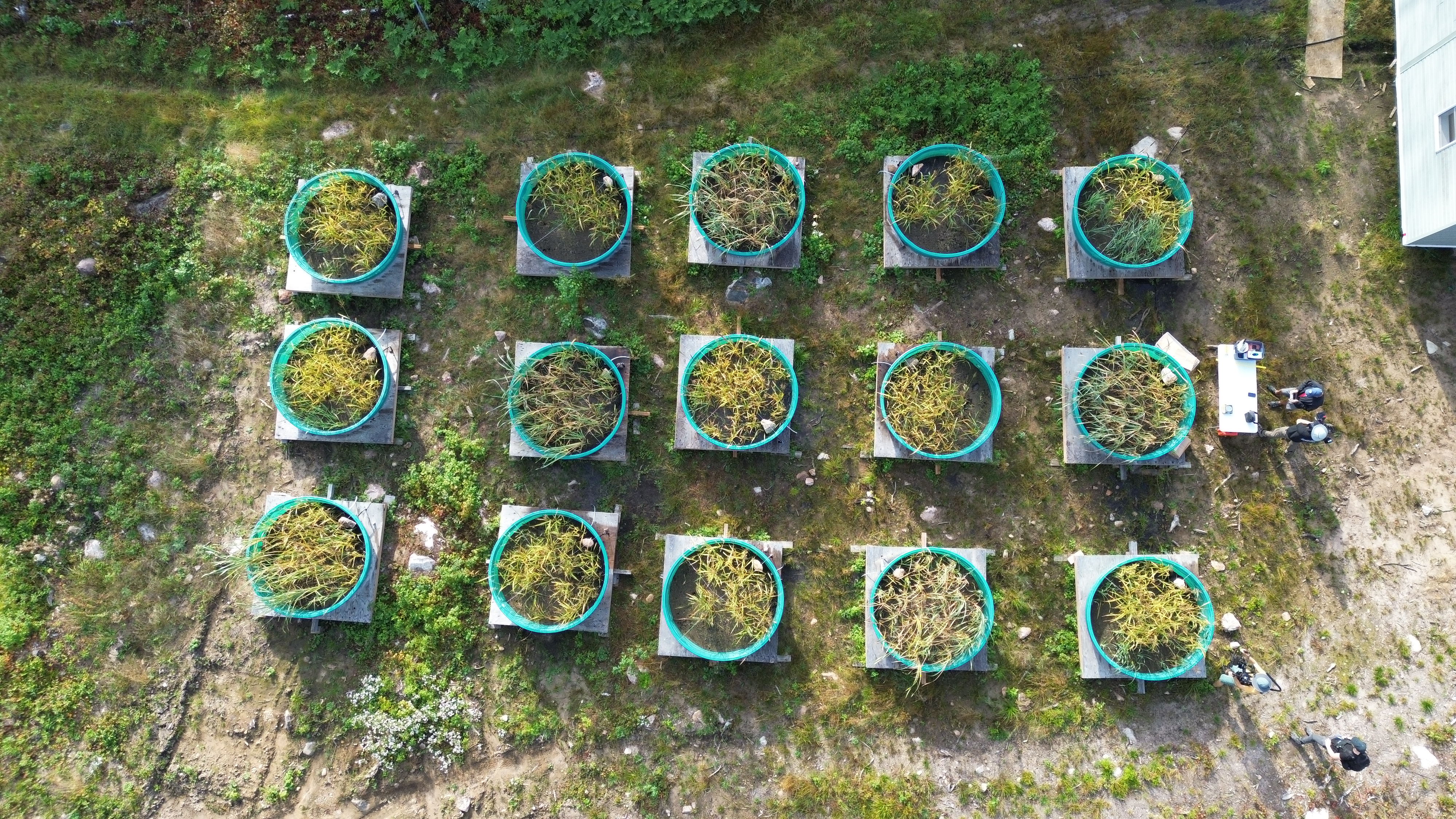
Aerial view of tubs of wild rice being grown outdoors as part of an experiment

Around 50 per cent of the wild rice consumed in Canada is, in fact, commercially cultivated wild rice imported from the United States. The flooded paddies this rice is grown in generates large amounts of methane gas. That's why MANOOMIN researchers are experimenting with growing rice in shallower water to reduce methane production. According to the IISD-ELA, a 10 per cent reduction in emissions would be equivalent to removing 10 million vehicles from the road.

"The overarching idea of marrying fish aquaculture and waste with wild rice production originated with Myera," Dr. Palace says, "although a lot of the work we're doing is based on the research of retired Lakehead biology professor Peter Lee."

MANOOMIN has just completed its third year and is now investigating how different wild rice varieties compete with cattails for nutrients. Next, they'll remove cattails and replace them with wild rice.

"As a scientist, doing research that will be useful to communities is very gratifying," Dr. Palace says.

The MANOOMIN project is possible because of the support of the Myera Group, Northern Ontario Heritage Fund, Protein Innovation Supercluster, and Lakehead University.

Great Northern Concrete Toboggan Race team wins big in first entry

Great Northern Concrete Toboggan Race team

Lakehead University’s very first entry into the Great Northern Concrete Toboggan Race (GNCTR) was a resounding success, scooping the Best New Team Award and Most Inclusive Team Award at the national competition hosted by Concordia University in Montreal.

“Our first-ever GNCTR entry was a huge success, and we’re really proud of what we accomplished. It showed not just our technical skills, but also that we can compete at a national level with other universities across Canada,” said co-captain Elian Drummond. “This is just the beginning for Lakehead University—we’ve built a strong foundation, and we’re excited to see next year's team come back even stronger; improving their designs and making a lasting impact in the GNCTR community.”

The multidisciplinary student team, co-captained by Civil Engineering students Drummond and Faryal Faisal, debuted at 11th overall (out of 18 entries from universities and colleges across Canada) and were the only team in the competition not to receive any deduction points.

“We are immensely proud of the terrific performance of the Lakehead team in their inaugural entry into this competition. This is only the beginning of what will become a tradition with future teams building on the legacy of this pioneering group of students,” said Janusz Kozinski, Dean of Engineering at Lakehead University.

Established last year, the Lakehead GNCTR team made rapid progress in a short time to design and build the Lakehead tobogganGNCTR team poses in front of their concrete toboggan and attract an impressive array of sponsors to support the project.

“Being an inaugural team came with its obstacles, but spearheading the initiative allowed us to curate a skill set we never would have had the opportunity to develop solely in the classroom,” said Faisal. “We got to experience first-hand what it means to be an engineer and how the profession is rooted in strong teams.”

The Great Northern Concrete Toboggan Race is the largest and longest running engineering competition in North America. Teams must design and construct a toboggan with a metal frame and a running surface made completely out of concrete and race it down a steep snow-covered hill. The sled must weigh less than 350 pounds, have a working braking system, and be fitted with a roll cage to protect its five passengers.

"Supervising our inaugural GNCTR team was a lesson in passion and resilience. Their seamless teamwork and impeccable organization transformed every challenge into a breakthrough,” stated faculty advisor Dr. Ahmed Elshaer. “This group showed me that true success lies in the thrill of surprise, not just in the prize. Their awards set a high bar for Lakehead's innovative future.”

Dr. Michel S. Beaulieu Recognized with Ontario Historical Society’s Highest Honour: Cruikshank Gold Medal

Daniel Dishaw congratulates Dr. Michel Beaulieu on his Cruickshank Gold Medal

The Cruikshank Gold Medal for Outstanding Service to the Ontario Historical Society was presented to Dr. Michel S. Beaulieu (right) by OHS Executive Director Daniel Dishaw (left) at the Thunder Bay Museum on February 7, 2025.


Thunder Bay, Ont. --
Dr. Michel S. Beaulieu, Associate Vice-Provost (Academic), has been awarded the Cruikshank Gold Medal by the Ontario Historical Society. This prestigious honour recognizes his outstanding contributions to preserving and sharing Ontario’s history through volunteerism, philanthropy, and scholarship. "His integrity, dedication, and tireless efforts to expand the reach and influence of the OHS have made lasting impacts on the vitality of this historic organization," stated the media release. 

You can read the full story on the Ontario Historical Society website at https://ontariohistoricalsociety.ca/michel-s-beaulieu-ohs-cruikshank-gold-medal/

Research and Innovation Bulletin

The Research and Innovation Bulletin is distributed weekly every Tuesday by the Office of Research Services and includes information on research funding opportunities, events and workshops and updates from our funding partners.

Checkout the latest version of our bulletin, by clicking here.

County of Simcoe invests $15 million in the future of Lakehead Orillia

Lakehead president Gillian Siddall and County Warden Basil Clarke

County Warden Basil Clarke presents a $1.5 million cheque to Lakehead President Dr. Gillian Siddall as the first installment of a $15 million commitment was celebrated on the Orillia Campus. 

Orillia, Ont. — People in communities across Simcoe County will benefit from greater access to education for generations to come thanks to a transformative $15 million investment from the County of Simcoe.

Building on the County of Simcoe’s first $10 million contribution in 2009 which helped establish Lakehead University’s Orillia campus, this additional $15 million over 10 years—beginning with a $1.5 million installment today—will seed the expansion of Lakehead’s Orillia campus with a new building to allow expanded programs and more opportunities for students to succeed.

“Lakehead Orillia began with a charter class of 101 students and now we have a bustling campus with over 2,100 students pursuing their dreams,” said Dr. Gillian Siddall, President and Vice-Chancellor of Lakehead University. “This incredibly generous support from our dedicated partner, the County of Simcoe, will allow our campus to grow to an estimated 3,500 students. Together, we are transforming the communities of Simcoe County by opening access to education that sets people up for a lifetime of success while driving economic prosperity for the region.”

In 2024, Lakehead University’s impact on the City of Orillia’s local economy was $328 million and $4.54 billion on Ontario’s total GDP. Ranked Ontario’s number one primarily undergraduate university by Maclean’s Magazine, Lakehead has a track record of transforming communities by graduating highly skilled people ready for in-demand jobs. When it comes to the value of a Lakehead education, 88% of Lakehead grads are employed within six months of graduating, increasing to 97.4% within two years of degree completion. Over 90% of Lakehead graduates are employed in jobs directly related to their studies.

“Today’s $1.5 million investment kicks off our ambitious 10-year $15 million commitment to further expand post-secondary education at Lakehead University in Simcoe County,” said Basil Clarke, County of Simcoe Warden. “This investment ignites the region’s next generation of innovators, building up our communities and empowering local talent to dream big and thrive in the communities they love.”

While academic planning for the new building is in development, Lakehead’s approach is to work collaboratively with local industry, partners and stakeholders to identify in-demand fields requiring local talent to power economic growth in the region and ensure students are prepared to secure well-paying jobs after graduation.

The County’s $15 million contribution is the first of many needed to realize this campus expansion. The university is undertaking a feasibility study to determine the fundraising goals for the new building.

Lakehead’s case for expansion is rooted in deep relationships throughout the region and confirmed by data that tells an inspiring story about community transformation. Before Lakehead University was established in Simcoe County, post-secondary degree attainment rates were significantly lower than the provincial average. Since Lakehead arrived in 2006, there has been a 147% increase in university enrolment throughout the region – contributing to strengthening the economy, building up the local workforce and empowering people to be the architects of their lives.

An estimated 95% of Lakehead’s domestic student population faces barriers to attending university, such as financial need or being the first generation in a family to pursue post-secondary education. Despite these barriers, and because of the exceptional level of support that Lakehead students receive including work-integrated learning, Lakehead has the second-highest graduation rate among Ontario’s primarily undergraduate universities according to the Macleans’ Magazine 2025 annual university rankings.

“The County of Simcoe’s investment recognizes and validates the boundless social and economic value of university education,” added Dr. Siddall. “We are deeply grateful for this support and look forward to keeping the community updated as plans for our new building unfold and our fundraising efforts ramp up. We are so proud to be Simcoe County’s university.”

Quick Facts:

  • Expected number of new programs enabled by the new building: 10 new undergraduate, graduate, and other academic program credentials by 2032
  • New campus amenities and space usage plans for the new building include: teaching spaces, Indigenous learning and gathering centre, student programming space, and a new centralized student services hub
  • Enrolment capacity once the new building opens: 3,500 students up from today’s 2,100
  • Number of industry and not-for-profit partnerships around the world: 116
  • Lakehead undergraduates who gain practical experience through experiential learning: 100%
  • Lakehead STEM undergraduates who participate in work-integrated co-ops and internships: 95%
  • Lakehead Orillia students who are from Simcoe County: 50%

-30-

Cheer on Your Thunderwolves!

Lakehead Thunderwolves men's varsity hockey and men's varsity basketball teams will play at home this week in postseason matchups. 

Varsity men's hockey team will take on division rivals Western Mustangs in the first round of the OUA West Playoffs on Wednesday, Feb. 19 at 7:30 p.m. at the Tournament Center. Tickets are $20 each.

The men's basketball team will host one of the four OUA quarterfinals this Saturday, Feb. 22, with 7 p.m. tip-off at the Thunderdome. The Thunderwolves sit first overall in the central division. Children and seniors are $10, adults $15.

Tickets can be purchased online (see below) or at the Wolf Den front desk. Doors open at 6 p.m.

Men's hockey: https://square.link/u/9lbwYQyv

Men's basketball: https://luathletics.lakeheadu.ca/GuestPass/GetProducts

**If purchasing a ticket online please print off your ticket to reduce queues on gameday and the potential for technical difficulties**

Come on out and "pack the house" for this OUA showdown! Let's Go Wolves!


Playoff hockey

R&I Week Photo Contest!

We’re excited to invite you to participate in a unique opportunity to showcase your research and creativity as part of Lakehead's Research & Innovation Week!

We’re looking for photos that capture your research in action—whether it’s fieldwork, lab work, creative outputs, or research projects. These photos will be featured during the awards ceremony and may also be used on the Research & Innovation Week website or in promotional materials.

Photos must fall under one of the following categories:

  1. History of Research at Lakehead (ex. people conducting research etc, however, no posed team photos)
  2. Research Through the Lens (ex. photos of research or research results)

Winners will be decided via online voting! Winners will have the option to select a Canadian retailer from this list: LU Bookstore, Indigo, Canadian Tire, and Shoppers Drug Mart.

Prizes for each category will be valued at:

  • $150 for First Place
  • $100 for Second Place
  • $50 for Third Place

Don't miss this exciting chance—share your research in action and join the fun!

Eligibility: Open to Lakehead faculty, staff, and students from all campuses.

Submission Deadline: February 23, 2025

Ready to share your work? Submit your photos here: https://docs.google.com/forms/d/e/1FAIpQLSeJZ0LKrjPPSDefw13VEU9cC9eAk7CUtFYGwiPpFSueFE59gg/viewform?usp=dialog

Let’s celebrate the incredible research and innovation throughout the years at Lakehead University!

R&I Week photo contest

Pages