
Engineering Prof Receives International Prize for Pioneering Research

Dr Mohammad UddinDr. Mohammad Nasir Uddin, professor in the Department of Electrical Engineering and Director of the Renewable Energy, Power Systems and Drive Research Lab, has received the 2025 Institute of Electrical and Electronics Engineers (IEEE) Power and Energy Society (PES) Cyril Veinott Electromechanical Energy Conversion Award.

The prestigious international award recognizes outstanding contributions in the field of electromechanical energy conversion.

Through the development and application of control techniques for AC motor drives, Dr. Uddin’s research is creating more resilient and sustainable energy systems. 

“I feel honoured and humbled to be recognized by this prestigious award from the IEEE PES,” Dr. Uddin says. “I am grateful to Lakehead University, all of my graduate students, other research collaborators, and research funding agencies for their support to continue my research.”

Dr. Uddin, who joined Lakehead in 2001, has made outstanding contributions to research on the modeling, simulation and real-time application of intelligent algorithms such as fuzzy logic, neural networks, neuro-fuzzy, nonlinear and loss minimization controls of AC motor drives, to achieve fast and accurate speed response with high efficiency under system nonlinearities/uncertainties.

He has developed and applied fuzzy logic controllers for both induction motor (IM) and interior permanent magnet synchronous motor (IPMSM) drives in real-time, which improved the dynamic performance of the drives compared to traditional controllers. 

Dr. Uddin has published or received the acceptance of more than 290 technical papers in international journals and conferences, including 72 in IEEE Transactions/Journals, which are considered the top-ranking journals in his research field.

He received this accolade from IEEE PES President Dr. Shay Bahramirad at the IEEE PES General Meeting Awards Gala Dinner and Ceremony in Austin, Texas, on July 29, 2025.

Student Spotlight: Nothing Can Stop Joel Abraham

If you need someone who gets things done, talk to Joel Abraham.

This entrepreneur and third-year Honours Bachelor of Commerce student has been a whirlwind on the Lakehead Orillia campus.

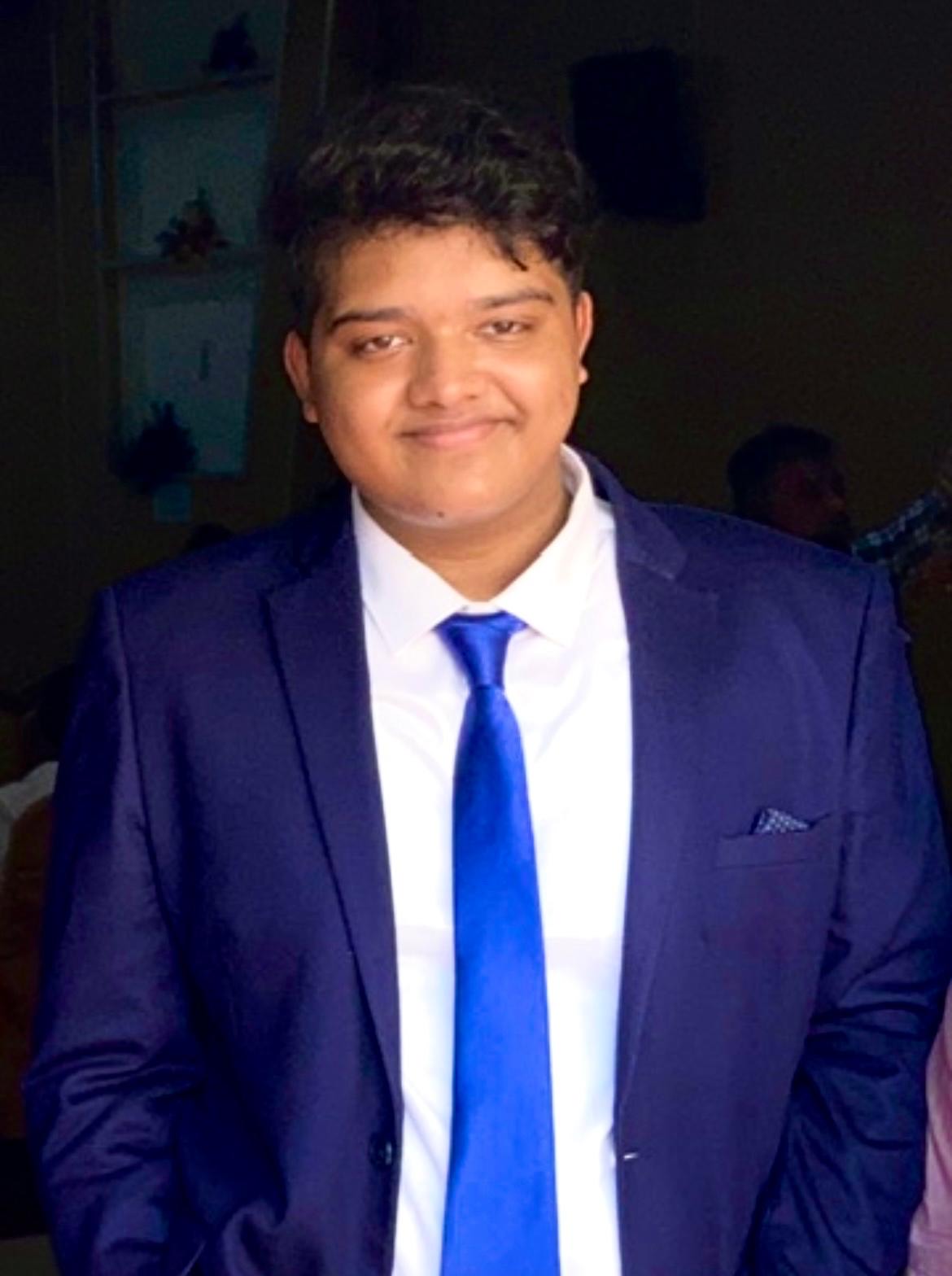
Orillia student Joel Abraham

"Everyone at Lakehead is very friendly, and because it's still a young university, you have the honour of starting new clubs and taking the university to new heights," Joel says. "Orillia is a breath of fresh air, too. It's a quaint little town with the most beautiful summers I've ever seen—and I've travelled to several countries."

Joel's hometown is the city of Bangalore—known as the Silicon Valley of India. "I started my entrepreneurship journey in Bangalore when I was 14 or 15, specializing in buying cryptocurrencies," he explains.

“Tech, finance, and entrepreneurship are my interests,” Joel says. “My current business venture is intended to help researchers and students who are part of the Solana cryptocurrency community.”

Joel credits his business professors, particularly Dr. Xuequn Wang and Andrew Ault, with deepening his understanding of finance and entrepreneurship. "I see Lakehead Orillia as a boutique university with access to top researchers and professors."

A Talent for Finance and Community Building

Since arriving at Lakehead, Joel hasn't confined his activities to the classroom. In his second year, he founded the Lakehead Orillia Enactus Club and became its inaugural president. Enactus is a non-profit organization with clubs around the world. The postsecondary students who belong to Enactus clubs use entrepreneurship to create positive economic, social, and environmental change. Among his Enactus projects, Joel developed a framework to make the Orillia Area Community Development Corporation more profitable.

In 2025, he had a consultancy with a First Nation in Manitoba. "I assisted Professor Ault with a report on the feasibility of a proposed riverfront marina and fishing resort," Joel says.

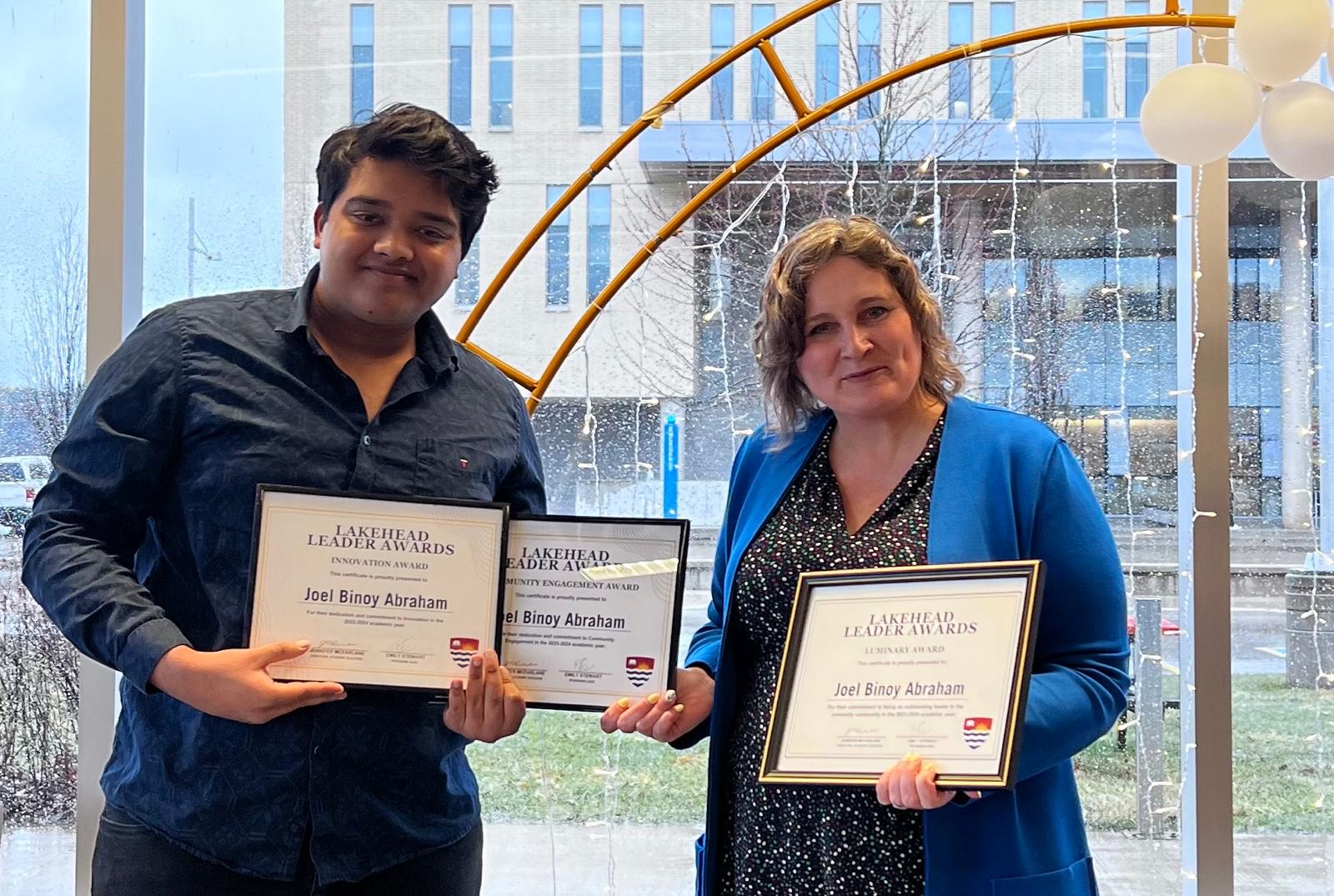
Orillia student Joel Abraham accepts three Lakehead Leader Awards from Orillia Principal Dr. Linda Rodenburg

Winning Streak: Joel accepts three Lakehead Leader Awards from Orillia Principal Dr. Linda Rodenburg.

Currently, Joel is the president of the Business Orillia Student Society (BOSS). In this role, he's been an ambassador for the Canadian Young Investors Society and delivered financial literacy and investing seminars to students across Canada. He's also given presentations about investing in alternative assets and taxation on behalf of the Canadian Foundation for Economic Education (CFEE), as well as served on Lakehead's Senate Academic Appeals Committee.

Building personal connections with his fellow students is equally important to Joel. He's mentored overseas students to help make their transition to Lakehead Orillia easier. In addition, Joel has tutored students struggling with Lakehead's "Introduction to Finance" course, ensuring that each of them earned 80% or higher in the class.

A Heart of Gold

Joel's efforts haven't gone unnoticed. He was recognized with a Lakehead Leader Luminary Award and Lakehead Leader Awards in the categories of community engagement and innovation. He's also received the David Richards Community Spirit award, the Paul Rependa Learning Award, and the 2025 Keith and Carrie Black Award.

Joel Abraham stands outdoors beside a sculpture on the Lakehead Orillia campus

So what drives Joel to keep up such a gruelling pace of activities?

"Everything I do is for my mom," Joel says. "She struggled to get me where I am today and funded my education. Sometimes, I'll call her at 4 am in the morning in India to tell her about an award I've won or a new accomplishment. She deserves a son who does well, and she's my first priority in terms of who I help."

After he graduates from Lakehead, Joel plans to earn an MBA and a chartered financial analyst (CFA) certification. His ultimate goal is to work in finance on Bay Street or Wall Street.

"Lakehead is such a wonderful university," Joel says. "I will be sad to be graduating next year."

Right now, though, he is focused on giving back to the Lakehead community.

"I want to show the students coming up after me on what's possible at Lakehead and the fantastic opportunities open to them. I want to inspire them to start their journey so that they can carry themselves, and Lakehead, farther."

Dr. Sonja Grover Publishes Three New Books

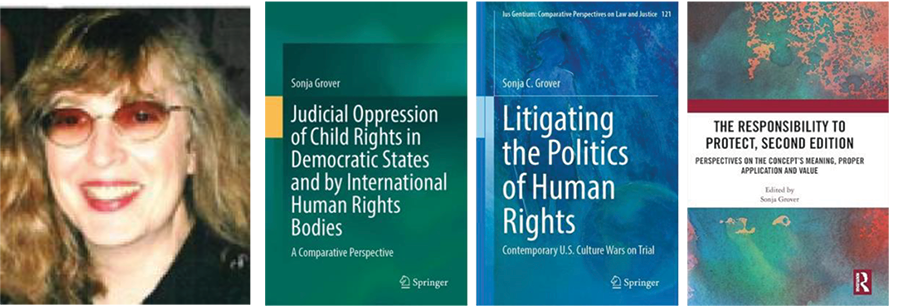
Dr Sonja Grover and three new books

By Jan Oakley

Congratulations to Dr. Sonja Grover, professor in the Faculty of Education, on the recent publication of three books:

  • Judicial Oppression of Child Rights in Democratic States and by International Human Rights Bodies (2025, Springer) examines the contemporary systematic judicial suppression of child human rights empowerment in Western States. It is argued that a new evolved understanding of child rights calls for a rethinking of the court’s patris patriae doctrine to now include the protection and strengthening of child autonomous fundamental human rights and child empowerment.
  • Litigating the Politics of Human Rights: Contemporary US Culture Wars on Trial (2025, Springer) examines selected U.S. landmark cases of the Trump era to explore to what degree the U.S. courts have reinforced constitutionally protected human rights or cast the issues as a matter of governmental discretionary decision-making on social policy matters. The book highlights the risk to a democracy of the latter legal characterization.
  • The Responsibility to Protect, Second Edition (2025): Perspectives on the Concept's Meaning, Proper Application and Value (Routledge) examines the international community’s responsibility to protect civilians from atrocity international crimes (genocide, crimes against humanity and systematic war crimes). First published in 2017, this second edition includes a new introduction and an afterward addressing contemporary armed conflicts and R2P.  This book presents the views of various international human rights scholars (including the editor) on the possibility, legality and strategies for intervention where a State is unable and/or unwilling to protect civilians against atrocity international crimes.

NSERC Funding Supports Research on Climate Resilience and Indigenous Knowledge Revival

Thunder Bay, Ont. – Lakehead University has received $3.2 million from the Natural Sciences and Engineering Research Council of Canada (NSERC) to support 18 faculty-led research projects over the next five years.

Dr. Nathan Basiliko, professor in the Faculty of Natural Resources Management and Director of the Lakehead University Environmental Laboratory, is receiving a $220,000 Discovery Grant.

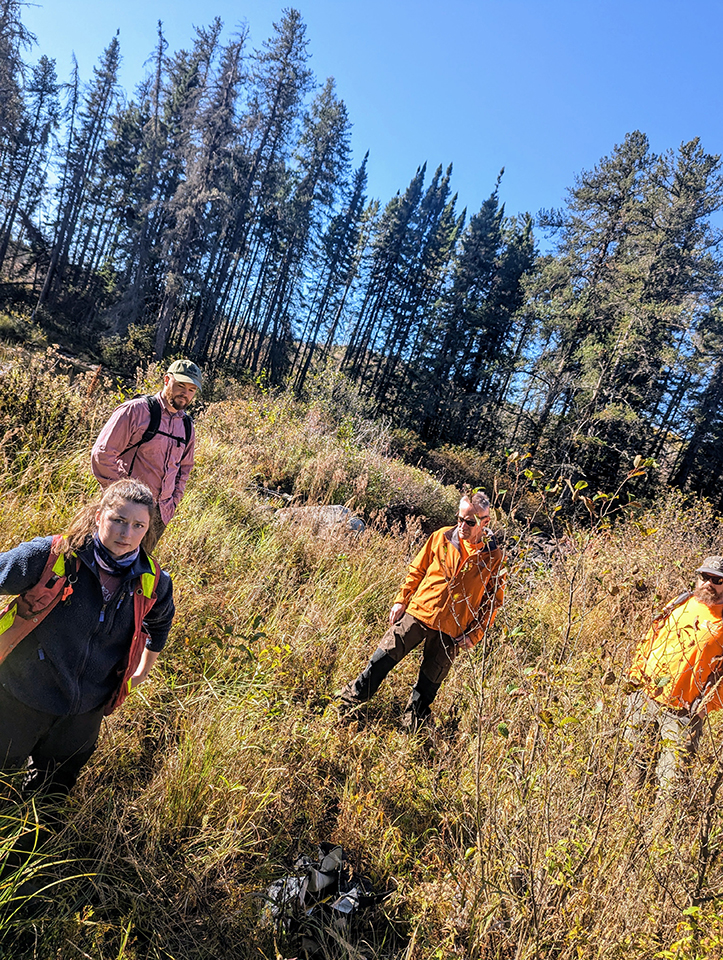
Lakehead researchers standing in a small wetland area spanning between a recently harvested forest and a headwater stream off HWY 527Dr. Basiliko and a team of student researchers will do hands-on fieldwork in forests, wetlands, and watersheds across northwestern Ontario and cutting-edge lab research to uncover how microorganisms, i.e., the bacteria and fungi in soil, water, and plants, affect an ecosystem’s response to climate change.
Canada’s boreal forests and wetlands play an important role in the fight against climate change, storing carbon and providing a large amount of the world’s freshwater and natural resources. But rising temperatures, invasive species, urban settlements, and resource development like mining and forestry are affecting these diverse habitats.

Lakehead graduate student Adelaide Huth (front left), post-doctoral fellow Dr. Patrick Levasseur (back left), and Ontario Ministry of Natural Resources research colleagues Dr. Alex Ross and Dr. Rob Mackereth (right), are standing in a small wetland area spanning between a recently harvested forest and a headwater stream off HWY 527. Adelaide’s research, in part supported by new NSERC Discovery funding, is exploring how new forest management approaches affect the anaerobic microbes in these poorly drained soils. (Photo credit: N Basiliko)

“Climate change mitigation relies on how boreal ecosystems adapt to these environmental stressors. Right now, that’s a major unknown,” said Dr. Basiliko.

To help answer this question, Dr. Basiliko’s research team will study how the microorganisms living within these ecosystems respond to environmental changes.

“Microorganisms are key players in boreal ecosystems because they break down organic matter, transform nutrients and pollutants, and produce and consume greenhouse gases,” he said. “Through these processes, these tiny communities impact our forest and freshwater resources and, ultimately, our planet’s future climate.”

Dr. Jessica Metcalfe, associate professor in the Department of Anthropology, is receiving a $468,345 Discovery Horizons Grant—one of only 11 awarded in Canada—for research that will investigate how bison have changed physical and cultural landscapes in Tsattine (Beaver Dene) territory in Alberta over the last 10,000 years.

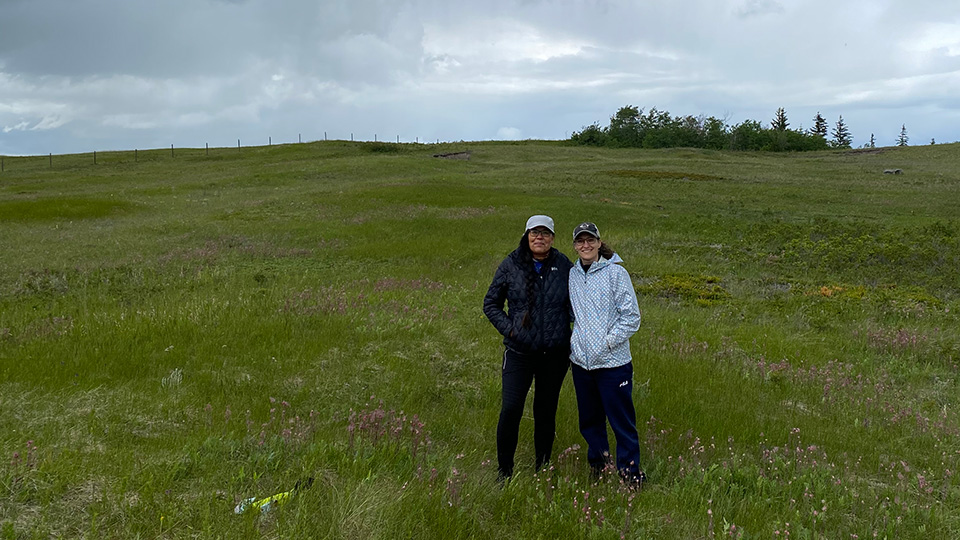
Jessica Metcalfe and Victoria WanihadieDr. Jessica Metcalfe is a researcher in the Department of Anthropology is pictured with Tsattine research partner Victoria Wanihadie.

Working with Lakehead colleagues Dr. Scott Hamilton and Dr. Matthew Boyd, and Tsattine research partner Victoria Wanihadie, Dr. Metcalfe will combine Western science (chemical analyses of bones, digital mapping, experimental archaeology) and Indigenous storytelling, creative arts, and land-based learning to study more than 10,000 years of environmental change, land use, and food practices in northwestern Alberta.

“Bison—North America’s largest herbivore—are typically seen as creatures of the prairies, but they also have deep connections with Indigenous communities farther north,” explains Dr. Metcalfe. “Even though wild bison no longer inhabit Tsattine territory, they are guiding our research through their bones, trails, plants, and the ways they were processed and cooked. Our goal is to put bison and Tsattine people back on the map in northwestern Alberta, supporting the resurgence of a cultural group that was previously declared extinct.”

“This significant funding from NSERC is a testament to the research excellence of Lakehead’s faculty,” said Dr. Andrew P. Dean, Lakehead University’s Vice-President, Research and Innovation. “Our researchers are leading vital work across disciplines, addressing critical issues with innovative and impactful approaches.”

In 2024/25, Lakehead University received almost $2.8 million in assistance from the Research Support Fund to support the indirect costs of research, which include costs for supporting the management of intellectual property, research and administration, ethics and regulatory compliance, research resources, research facilities, and research security.


Lakehead University received a total of $3,203,374 from the Natural Sciences and Engineering Research Council of Canada (NSERC). The following Lakehead researchers have received grants:


Discovery Grants (five-year grants) 

Dr. Malek Alsmadi, Department of Electrical Engineering, "Practical Joint Visible Light Communication and Positioning: Enhancing Spectrum Efficiency and Reliability", $202,500.


Dr. Nathan Basiliko, Faculty of Natural Resources Management, "Microbiomes mediating environmental change across boreal landscapes", $220,000.


Dr. Qing-Lai Dang, Faculty of Natural Resources Management, "Effects of drought frequency and severity on boreal conifers under predicted future climate conditions and different soil temperature and nutrient regimes", $195,000.


Dr. Hubert de Guise, Department of Physics, "Group methods and quantum technologies", $180,000.


Dr. Jian Deng, Department of Civil Engineering, "Further Studies on Stochastic Dynamic Stability of Complex Structures", $215,000.


Dr. Yong Deng, Department of Software Engineering, "Coding for Communication-Efficient and Straggler-Resilient Heterogeneous Distributed Computing", $192,500.


Dr. James Kryklywy, Department of Psychology, "Bidirectional control of affective sensation and cognitive processes", $177,500.


Dr. Michel Laforge, Faculty of Natural Resources Management, "Altered Spatial Strategies of Caribou in Disturbed Landscapes: Adaptive or Maladaptive Responses?", $177,500.


Dr. Deli Li, Department of Mathematical Sciences, "Asymptotic Behavior in Probability and Statistics with Applications", $175,500.


Dr. Baoqiang Liao, Department of Chemical Engineering, "Next Generation and Self-Sustainable Membrane Based Microalgal-Bacterial Processes for Wastewater Treatment", $215,000.


Dr. Xin Yang Lu, Department of Mathematical Sciences, "On the triple junction between PDE, material science, and image processing", $160,000.


Dr. Abdulsalam Yassine, Department of Software Engineering, "Advancing Collaborative Data-Driven AI for Enhanced Energy Management in Connected Electric Mobility", $185,000.


Discovery Horizons Grants (five-year grant)

Dr. Jessica Metcalfe, Department of Anthropology, "Follow the Bison: Insights into Environmental and Cultural Change", $468,345.


Discovery Development Grants (two-year grant)

Dr. Ruizhong Wei, Department of Computer Science, "Combinatorial structures and their applications", $44,000.


Dr. Andrew J. Dean, Department of Mathematical Sciences, "Classification of Gradings and Real Structures on C*-algebras", $44,000.


Dr. Mark Gallagher, Department of Physics, "On-surface synthesis and characterization of molecular based two-dimensional nanomaterials", $44,000.


Discovery Grant – Ship Time (one-year grant)

Dr. Michael D. Rennie, Department of Biology, "Quantifying productivity, biodiversity and genetic novelty of fishes at lakemounts", $159,674.


Research Tools and Instruments (RTI) Grants (one-year grant)

Dr. Kang Kang, Lakehead University - Biorefining Research Institute, "Advanced Tool for Investigating Thermochemical Conversion of Biomass into Renewable Energy and High-Value Chemicals", $147,855.


Research and Innovation Bulletin

The Research and Innovation Bulletin is distributed weekly every Tuesday by the Office of Research Services and includes information on research funding opportunities, events and workshops and updates from our funding partners.

Check out the latest version of our Bulletin, by clicking here.

R&I Bulletin

Royals Behaving Badly

English professor Dr. Sarah Olutola has a secret life. 

She's known to most of the Lakehead community as a respected scholar of literature, critical race studies, and postcolonialism. But she's also an accomplished YA novelist who writes under the pen name Sarah Raughley to distinguish her fiction writing from her academic work.

Dr. Sarah Olutola poses with TV host Annette Ham who holds a copy of the novel The Queen's SpadeDr. Olutola (right) after a television interview with CHCH Morning Live host Annette Ham (left) promoting The Queen's Spade. Dr. Olutola will be releasing a follow-up novel about Sarah's daughter, Victoria Davies, and Victoria's time at the boarding school she was sent to after Sarah died of tuberculosis. You can learn more about Dr. Olutola's work at SarahRaughley.com.

Dr. Olutola's latest book, described as The Count of Monte Cristo meets Bridgerton, is attracting praise and devoted fans.

"The Queen's Spade is a historical young adult/adult-crossover novel," Dr. Olutola says. "It's inspired by a real person—Sarah Forbes Bonetta—who lived during the 1800s."

 A Stolen Princess

 "Revenge, murder, and political intrigue will captivate readers." Kirkus Reviews

The idea for The Queen's Spade arose while Dr. Olutola was researching her Bones of Ruin trilogy set in nineteenth-century London. "I came across references to a Nigerian girl named Omoba Ina."

Omoba was a princess of the Egbado Clan of the Yoruba people. Her world fell apart when the neighbouring Kingdom of Dahomey (now Benin) raided her village. The invaders killed her family in a ritual sacrifice to the King of Dahomey—everyone except Omoba. Dr. Sarah Olutola being interviewed about her novel The Queen's Spade

A British naval officer rescued the orphaned seven-year-old girl, brought her to England, and renamed her Sarah Forbes Bonetta. Shockingly, he then gave her to Queen Victoria as a gift. "The queen made Sarah one of her goddaughters because she seemed amiable and docile, almost like a doll," Dr. Olutola says. "But Sarah was probably very traumatized. It reminds me of the stories of immigrants and refugees."

"The abolition of slavery in British territories in the 1830s didn't end racism," Dr. Olutola says. "You can see its legacy today as democratic countries slide into authoritarianism and facism—a lot of this is to do with a fear of Black bodies. People have often said, 'Don't play the race card,' but here we are."

Sarah's connection with Queen Victoria made her a figure of public fascination who was tracked in society columns. She was also put under a microscope and picked apart in public discourses about race and white supremacy.

"Someone with even a drop of Black blood couldn't be part of the monarchy," Dr. Olutola says.

Although Queen Victoria was fond of Sarah and provided for her care, "there was a level of dehumanization in that affection," Dr. Olutola says. The queen exerted control over every aspect of her goddaughter's life.

The Queen's Spade

The main action of The Queen's Spade takes place in 1862 when Sarah is plotting against the British monarchy and aristocratic society.

Cover of the novel The Queen's Spade

Dr. Olutola’s book title and book cover are an allusion to the “Queen of Spades” playing card. “‘Spade’ is also a word used as a slur against Black people,” Dr. Olutola says. “The dagger Sarah is holding symbolizes the bloodiness of the revenge she wants to enact, as well as the violence of colonialism. She was part of a group of Black people who were erased from history. I wanted to un-erase her.”

"Sarah was given to an African king, and then a British queen, before being unwillingly married off by Queen Victoria to an African businessman when she was only 19."

In a letter the real Sarah wrote at the time, she said: "I know that the generality of people would say he is rich & your marrying him would at once make you independent, and I say 'Am I to barter my peace of mind for money?' No – never!"

In real life, Sarah was forced to comply, but Dr. Olutola wanted to tell a what-if story.

"A young lady can take only so many injuries before humiliation and insult forge a vow of revenge." The Queen's Spade

As a Black woman, there were lines Sarah wasn't allowed to cross, so Dr. Olutola asked herself, "What would have happened if Sarah became romantically involved with an heir to the British throne?"

To find out the answer, you'll have to pick up a copy of The Queen's Spade.

Celebrating a Hall of Fame Award

Lakehead University's Orillia campus is feeling a lot of love right now.

Its Office of Community Engagement and Lifelong Learning (CELL) received the highest honour possible in the 2025 OrilliaMatters Community Builders Awards.

CELL has been inducted into the Community Builders Hall of Fame for its profound and lasting impact on the broader community.

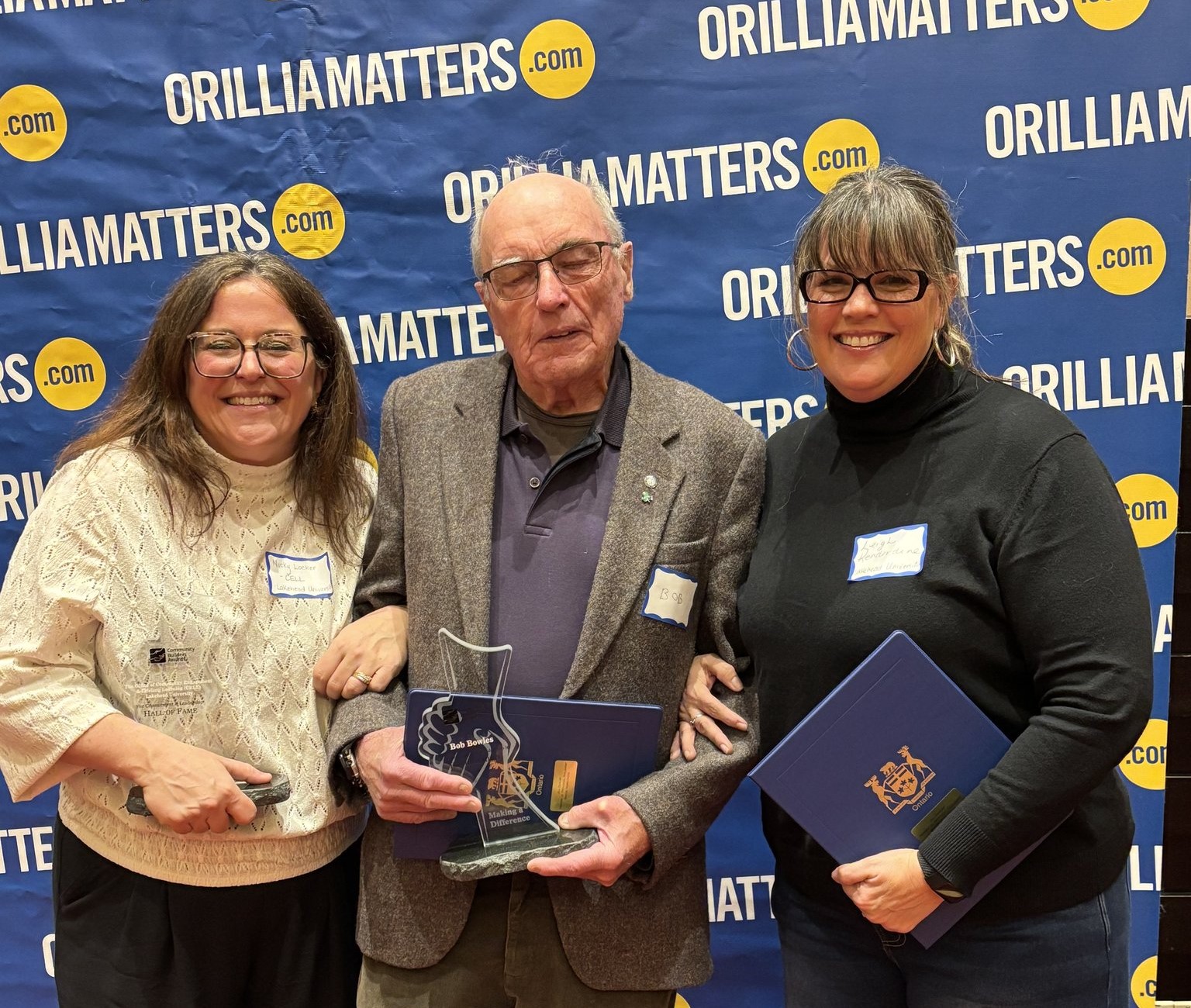
CELL Director Nicky Locker, Bob Bowles, and Lakehead Administrative Officer and EA Leigh Kenderdine at the 2025 OrilliaMatters Community Builders awards ceremony.

"This award recognizes that CELL fosters relationships between countless instructors and countless lifelong learners of all ages," says Lakehead Orillia Principal Dr. Linda Rodenburg—and CELL's first director.

"We're always focused on being responsive to industry and community needs and interests," agrees current CELL Director Nicky Locker. "CELL allows people to forge new learning pathways, which may eventually lead to more formalized and degree programs, although that's not our main focus," she says.

CELL Director Nicky Locker (left), Bob Bowles (centre), and Lakehead University Administrative Officer and Executive Assistant Leigh Kenderdine (right) celebrate at the 2025 OrilliaMatters awards ceremony. Bob, who runs CELL's Ontario Master Naturalist Program, received a Community Builders Award for his environmental work.

Community is a Two-Way Street

CELL's programs, courses, and workshops have become hugely popular with Simcoe County residents—whether it's the Third Age Learning Lakehead (TALL) lecture series for seniors or the Ontario Master Naturalist Program for community members who want to learn more about the natural world and environmental stewardship.

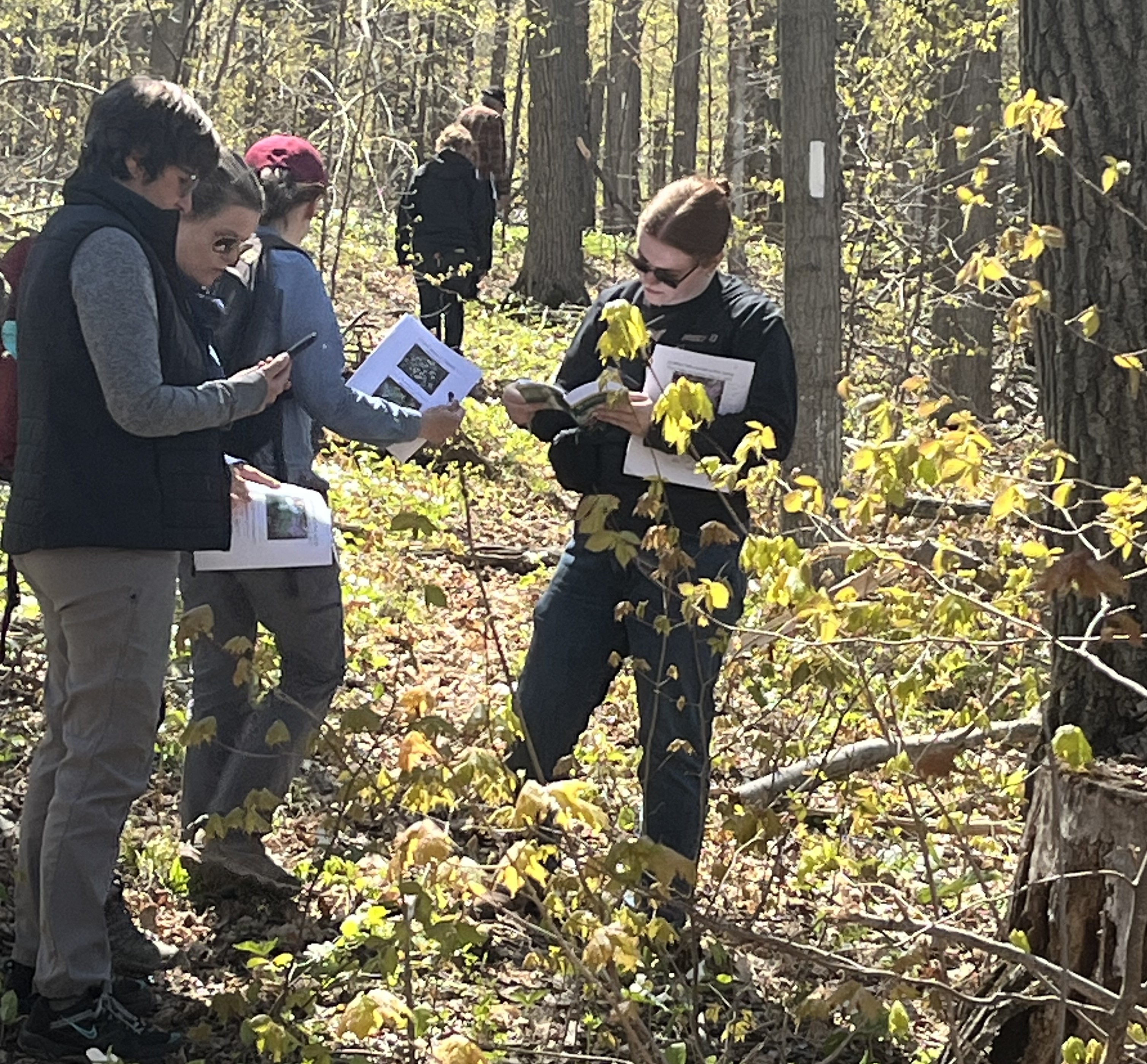
Ontario Master Naturalist Program learners on a wildflower field trip in the woods

Community members learn about spring wildflowers during a May 2025 Ontario Master Naturalist Workshop.

Locker is just as enthusiastic about CELL's programming for local high school students. "Our tourism Specialist High Skills Major (SHSM) and environmental sustainability SHSM really help young people zero in on their career pathways."

CELL also offers professional development opportunities, including the Executive Leadership Program, and responsive programming for municipal and regional economic development offices and local organizations. 

Putting the Human in the Humanities

One of CELL's flagship programs is Humanities 101. "It gives people facing socioeconomic barriers a taste of the university experience and empowers them to become lifelong learners," Dr. Rodenburg says. "It's a true reminder that access to education enables people to change their lives, and the world around them, for the better."

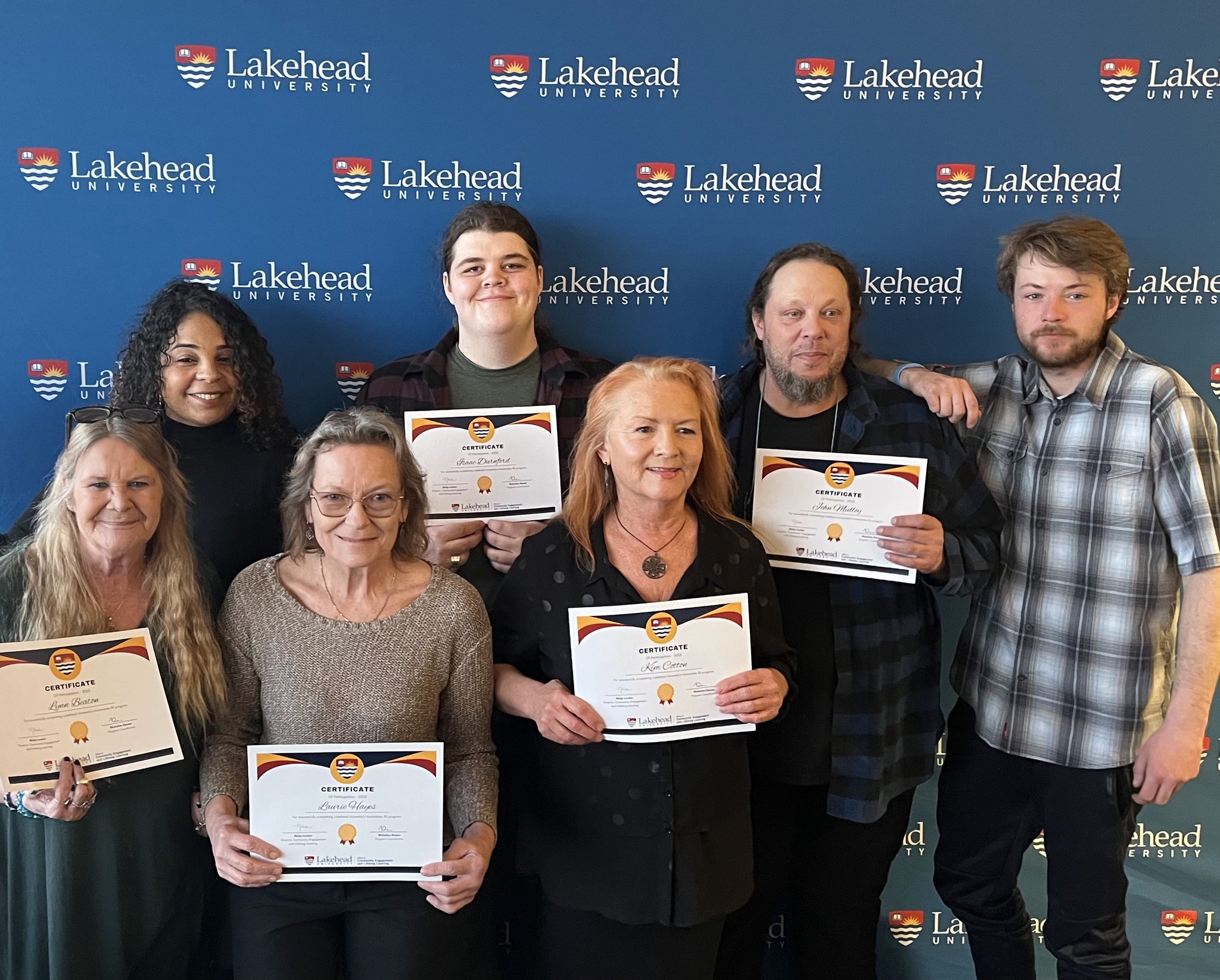
2025 graduates of the Humanities 101 Program pose with their certificates of completion

 The 2025 graduates of the Humanities 101 program proudly hold up their certificates of completion.

"Humanities 101 is very dear to my heart because it welcomes people to campus who might otherwise not find opportunities to engage," Locker says. "Access and inclusion are at the forefront of everything we do."

Dr. Rodenburg says that Humanities 101 graduates have inspired her both as an educator and as a human being.

"One student taking the course was staying at a women's shelter. Afterwards, she was empowered to earn honours and master's degrees in social work at Lakehead. During her social work program, she chose to do a placement at the same shelter so she could help other women in crisis."

It's All About Connection

"Every day I meet new people and organizations and find new opportunities to create innovative programming," Locker says.

Recently, CELL partnered with Inclusive Orillia for Pride Month and this August, the Orillia Museum of Art and History will be hosting a children's day camp on Lakehead's campus for the first time.

This spirit of friendship and curiosity has driven CELL since its beginnings.

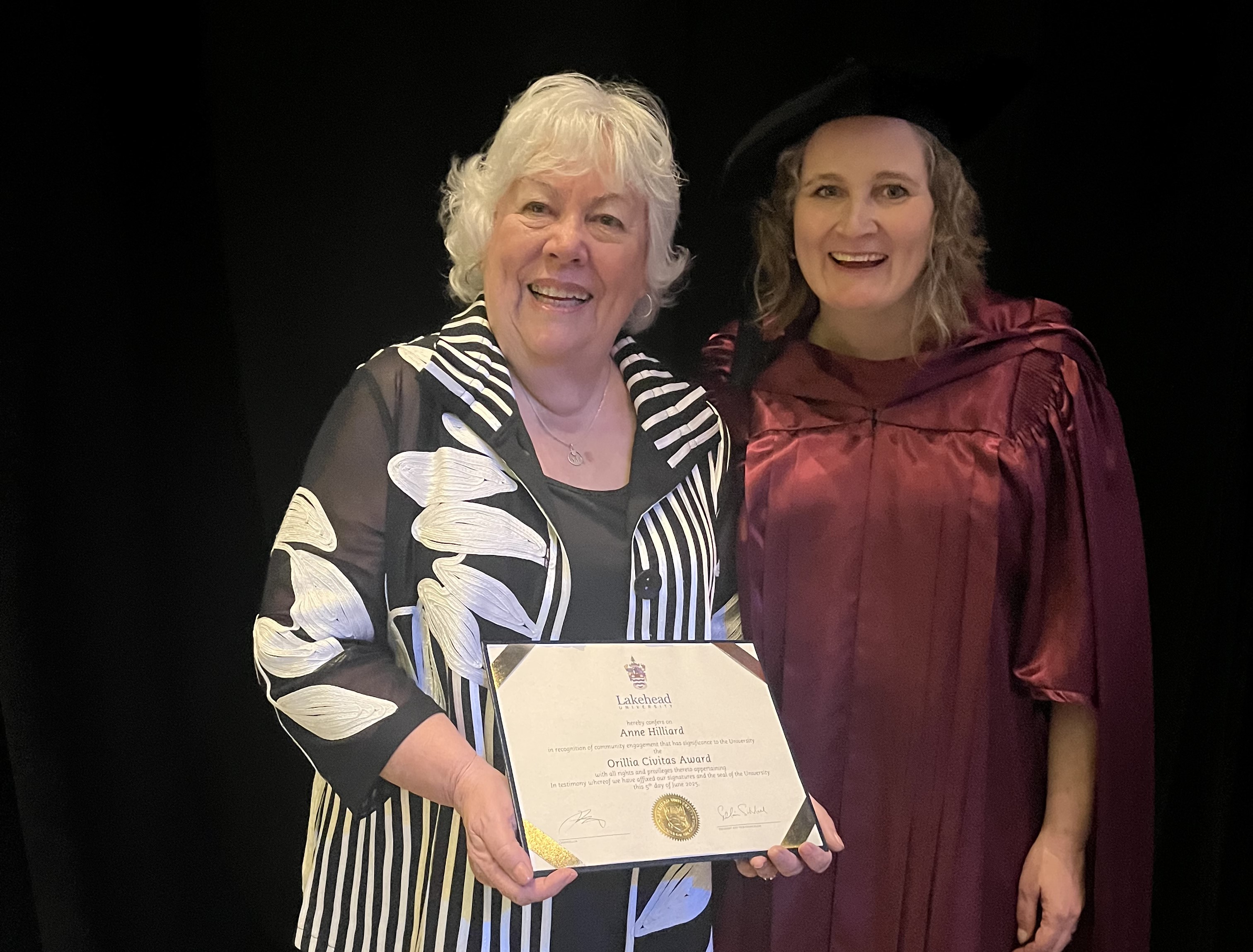
Anne Hilliard holds her 2025 Civitas Award while standing beside Dr. Linda Rodenburg (wearing convocation robes)

"I don't think Lakehead Orillia ever decided to 'start CELL,' but rather CELL grew out of a genuine desire to meet the learning needs of diverse members of our community," Dr. Rodenburg explains.

"As a founding Lakehead Orillia faculty member, I led the inaugural 'Meet the Professors' lecture series. It was a forum for faculty members to share their research and teaching interests with the community."

Dr. Linda Rodenburg (right) presents Anne Hilliard (left) with the Orillia Civitas Award at Lakehead’s June 2025 convocation ceremony. Anne is the community advisory committee chair of the CELL program, Third Age Learning at Lakehead (TALL).

CELL blossomed from this community-outreach initiative. Now, almost 20 years later, being given the OrilliaMatters Community Builders Hall of Fame award is a moving affirmation that Lakehead remains a community university at its core.

"We're committed to serving beyond the walls of the campus in this wonderful community we call home," Locker says.

Lakehead Expands Language Testing Services with Launch of IELTS

The English Language Centre (ELC) is proud to announce the launch of International English Language Testing System (IELTS) computer-based testing at the Thunder Bay campus, made possible through a new collaboration with ILSC Toronto. The first test sittings will take place at the Lakehead Library Lab.

This initiative marks a significant expansion of services offered by the ELC and strengthens its role as a regional hub for international student support.

"Offering IELTS computer-based testing on campus allows us to provide international students with more accessible, flexible, and efficient language testing options, right here at Lakehead,” says Ismel Gonzalez, Director of the English Language Centre. “This not only enhances our recruitment and retention efforts, but also reinforces Lakehead’s position as a leader in international education services in northern Ontario.”

The IELTS  is one of the most widely recognized English proficiency tests globally and a key requirement for university admissions, immigration, and professional certification in Canada and beyond. By offering the computer-delivered version, the ELC is meeting the growing demand for faster results and an expanded range of test dates.

Key benefits of the implementation:

  • Improved accessibility: Students can now take the test locally without the need to travel to larger urban centres.
  • Faster results: Computer-based tests deliver results in one to five days, significantly reducing wait times.
  • Enhanced student experience: Quiet lab environment, modern facility, and flexible scheduling improve the overall candidate experience.
  • Increased visibility: Becoming a computer-based test site positions Lakehead as a service provider not just for enrolled students, but for the broader local, regional international student and newcomer community.

The introduction of this computer-based testing service also reflects Lakehead’s broader commitment to supporting student success at every stage of the international learner journey, from language preparation to full academic integration.

To register for an upcoming exam date, visit IELTS in Thunder Bay

Dr. Aamir Taiyeb Joins Lakehead as Vice-Provost, International

Advancing internationalization will be the top priority for Lakehead University’s new Vice-Provost, International, Dr. Aamir Taiyeb.

An international education leader with 15 years of experience in marketing and recruitment, policy, and partnership development, Dr. Taiyeb most recently served as Director, International Analytics, Experience and Initiatives at Canadore College. Before that, he managed the EduCanada brand, Canada’s official brand for international education, with the Council of Ministers of Education, Canada (CMEC). A graduate of the University of Toronto’s Ontario Institute for Studies in Education (PhD’19), Queen’s University (MPA’09), and Wilfrid Laurier University (BA’07), Dr. Taiyeb is multi-lingual and speaks fluent English, French, Spanish, and Urdu/Hindi.

Aamir Taiyeb “We’re excited to welcome Aamir to Lakehead at a time when international recruitment is both challenging and full of opportunity for innovation,” says Dr. Gillian Balfour, Provost and Vice-President (Academic). “His experience will be a real asset as we strengthen our global partnerships, support student mobility and academic excellence, and continue to grow our international presence.”

As vice-provost, Dr. Taiyeb will lead Lakehead’s international strategy, overseeing partnerships, student mobility programs, global engagement initiatives, and the university’s efforts to expand its international footprint. Bringing Dr. Taiyeb on board marks the next step in growing Lakehead’s global presence and fostering a more internationally connected campus community.

“I see an institution in Lakehead University that is a significant force for positive change in the local communities of Thunder Bay and Orillia,” Dr. Taiyeb says. “My vision is to work towards further harnessing this potential for Lakehead in a manner that allows it to punch above its weight when it comes to internationalization.”

Having a clear vision will be important as the university continues to adapt to changes in the postsecondary sector and federal policies that have affected international student enrolment across Canada. One key opportunity Dr. Taiyeb sees is improving international student success by strengthening their connection to the community and encouraging greater local involvement in helping them thrive.

“When I say community involvement, I mean developing internationalization strategy actions that align with the aims, goals, and aspirations of the people, place, and time they’re designed for,” he explains.

“For example, an internationalization strategy for Lakehead that is most successful as possible must speak to the needs of each of the following constituents: Lakehead international students, of course, Lakehead faculty and staff, but also the municipalities of Thunder Bay and Orillia, employers, Chambers of Commerce, medical facilities, places of worship, community centres, foodbanks, banking centres — really a ‘whole-of-community’ approach. In other words, both horizontal and vertical policy coordination are needed.”

It’s the relationship between community and university that is central to international student experience, and will influence and impact a university's ability to grow, recruit, and retain its student population. Finding ways to achieve regular, sustained, and sincere dialogue with the local community will be a priority for Dr. Taiyeb.

“Having excellent ‘town-gown’ relations is important for all postsecondary institutions and their local communities but even more so in communities outside the major metropolitan areas of Canada,” he says. “Over time, I earned a reputation for being an advocate for international students in my local community, and I hope to continue that approach through engagement within the communities of Orillia and Thunder Bay.”

Dr. Taiyeb also plans to draw on his background in data and analytics to help shape the university’s international strategy.

“Understanding where there may be potential to do more is vital,” he says. He sees value in conducting an internationalization audit to review data related to international efforts and identify where it could be strengthened. He’s also interested in encouraging faculty members to become internationalization champions within their departments.

“I feel that our academic faculty members are the key here, and utilization of existing international relationships, engagements and collaborations could be the catalyst for sustainable future growth.”

Outside of work, Dr. Taiyeb enjoys a variety of activities - from kayaking to backcountry camping, cross-country skiing to mountain trekking and swing dancing.

Dr. Taiyeb will begin his role on July 21, 2025.

From Shy Student to Inspired Engineering Graduate

Amanda Pacholczak and peers stand in front of a yellow school bus

Amanda Pacholczak (third from right) is pictured with her engineering peers and faculty dean Dr. Janusz Kozinski.


Convocation day is often a bittersweet moment—a culmination of years of hard work, paired with the sadness of saying goodbye.

For Amanda Pacholczak, a graduate of the Bachelor of Engineering (Chemical) program at Lakehead University, it was precisely that: “I loved my time at Lakehead. It was hard to say goodbye to everyone, but it was also nice to celebrate.”

Amanda is the recipient of this year’s Robert Poulin Award, presented to a full-time Lakehead student for their outstanding citizenship.

She recalls hearing about the Robert Poulin Award in her first year. The legacy of past recipients like Jocelyn Bell (one of Amanda’s favourite Superior Science summer camp instructors when she was a kid) and Silas Young gave her something to aspire to. “There’s a domino effect with awards like this,” she says. “I’m grateful for the exposure the Robert Poulin Award provides because learning about past recipients and their mark on the world had a wonderful impact on me.”

Balancing academics and volunteering was part of Amanda’s strategy for success and well-being during her time at Lakehead. As a shy and introverted student, she found volunteering a way to connect with people.

“Volunteering is important because it allows you to expand your horizons in terms of knowledge and develop critical soft skills that will serve you for the rest of your life, both career-wise and in your personal life,” explains Amanda. “Saying yes to opportunities and not holding yourself back by thinking, ‘I won’t have time for this’ is crucial, because it’s so easy to fall into that habit.”

Amanda Pacholczak participates in the annual engineering bus pullAt Lakehead, she was a member of the Engineering Student Society, the Lakehead Canadian Society for Chemical Engineering and the Judicial Panel and Engineering Equipment Endowment Fund’s board of directors. She was also the founder of the Chemical Engineering Design Club, a student senator, a tutor, and an Academic Peer Mentor. Off campus, Amanda was a member of the Thunder Bay Rotaract Club and a mentor with Big Brothers and Big Sisters.

“I think a lot of students have a tough time separating their self-worth from their marks and their academic performance. So, making a conscious effort to learn for the fun of it and engage in experiential learning opportunities that aren't tied to your marks or degree completion is important and good for your mental health.”

Now, just a month into her master’s degree in mining engineering at Queen’s University, Amanda is thriving. Her graduate thesis is focusing on the extraction of lithium from a mineral called spodumene using novel chemical methods and electrochemistry.

“Women are often pushed toward caring professions like health care or education,” she notes, “but I want to bring that caring perspective into mining to encourage sustainable practices in the industry.”

“I started at Lakehead as a very shy person. I was introverted, and I still am, but I met a lot of amazing people at Lakehead, who were able to challenge me and really bring me out of my shell.”

Since 1952, Lakehead University has presented the Robert Poulin Award annually to a full-time student selected by their peers, faculty, and administration for contributing to the welfare of the university through student activities.

Lakehead named the Robert Poulin Award after an outstanding forestry graduate of the Lakehead Technical Institute who died at the age of 20 in a workplace accident.

Pages