

Engineering

Researchers Receive $2.7 Million in Funding from NSERC

Engineering Practical Solutions to Protect Our Environment and Our Communities

Dr. Sam Salem from the Department of Civil Engineering and Dr. Seung-Il Lee from the Faculty of Natural Resources Management have received Discovery Grants from the Natural Sciences and Engineering Research Council of Canada (NSERC) to develop innovative solutions to critical engineering and environmental issues. Theirs are among 15 Lakehead University projects receiving a total of over $2.7 million in funding from NSERC.

“Lakehead researchers are at the forefront of tackling the urgent challenges facing our region, from escalating wildfires to the broader impacts of climate change,” Vice-President, Research and Innovation Dr. Langis Roy says. “This vital NSERC funding will lead to practical solutions that will protect both our environment and our communities while training the next generation of scientists and engineers.”

Setting a Global Standard for Mass Timber Fire Safety
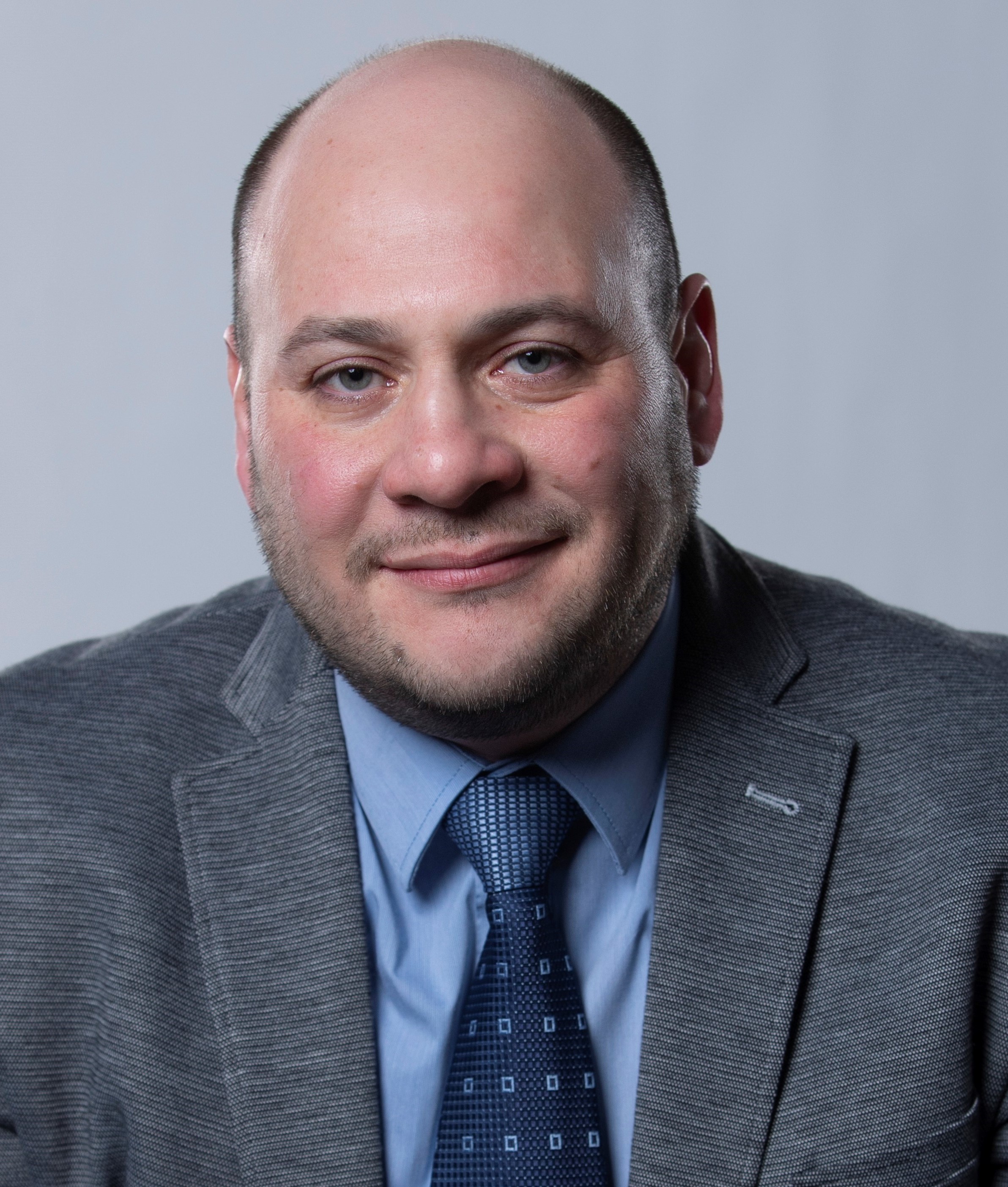
Sam SalemBuilding on over a decade of cutting-edge research at the Lakehead University Fire Testing and Research Laboratory (LUFTRL), which he founded, Dr. Salem and his research team are improving the safe and widespread use of engineered wood products— called mass timber— in construction.

Despite mass timber’s growing popularity as a sustainable alternative to steel and concrete, the construction industry lacks proven standards for inspecting, assessing, and repairing these buildings after a fire.

Various full-size mass timber building elements, such as beams, columns, and slabs, will be put through intense fire testing. The burned materials will then be analyzed and assessed to determine exactly how fire affects them using rigorous char-layer analysis before applying innovative repair and retrofitting techniques. The outcomes of this research program will help the construction industry accurately assess structural safety after a fire and choose the most reliable, cost-effective ways to repair or rebuild.

“This research will improve public safety, influence building codes, and support the sustainable use of mass timber in high-rise constructions,” says Dr. Salem, the 2026 recipient of the Distinguished Researcher Award for his contributions to structural fire engineering.

This practical research program positions LUFTRL as a global leader in structural fire engineering, shaping best practices and standards for the mass timber industry in Canada and beyond.

Protecting Creepy-Crawlers in Northwestern Ontario’s Forests
Seung-Il LeeLand-dwelling arthropods (insects, spiders, and other “creepy-crawlers”) make up nearly 70% of all forest species. Highly sensitive to their environment, they serve as an early-warning system for forests facing climate change and industrial logging.

Three student-led projects under the supervision of Dr. Lee will foster sustainable ecosystem management and the conservation of arthropods in northwestern Ontario’s forests.

The first student-led project investigates how jack pine logging affects forest biodiversity. Researchers will determine how much wood debris loggers need to leave behind on the forest floor to allow ground-dwelling and wood-dependent insects to recover from the impacts of logging.

Study two will provide northwestern Ontario with its first in-depth assessment of regional insect biodiversity. The project examines how different levels of commercial thinning in black spruce forests affect local spider and insect populations.

Using mesh screens to block insects from specific wood samples, the third research team will determine whether insects or microbes— like fungi and bacteria— do the heavy lifting of breaking down dead wood in managed versus wild forests.

“Together, these projects will provide valuable insights to enhance the management and conservation of Canada’s forest ecosystems and biodiversity,” Dr. Lee says.

In 2025-26, Lakehead University received $2.8 million in assistance from the Research Support Fund to support the indirect costs of research, which include costs for supporting the management of intellectual property, research and administration, ethics and regulatory compliance, research resources, research facilities, and research security.

Funding Recipients

Lakehead University received a total of $2,702,000 from the Natural Sciences and Engineering Research Council of Canada (NSERC). The following Lakehead researchers have received grants:

Discovery Grants (five-year grants)

Dr. Abedalrhman Alkhateeb, Department of Computer Science, "Self-aligned, Causal, and Actionable Multimodal AI Framework for Complex Biomedical Data", $192,500.

Dr. Liang Cui, Department of Civil Engineering, "Multiaxial Mechanical Behavior of Exposed Cemented Paste Backfill under Multiphysics Curing Conditions", $215,000.

Dr. Gautam Das, Department of Physics, "Investigation into photonic devices and their applications in sensing trace chemicals and gases", $180,000.

Dr. Peter Hollings, Department of Geology, "Magmatic evolution and mineralization of the Midcontinent Rift, Ontario", $200,000.

Dr. Seung-Il Lee, Faculty of Natural Resources Management, "Linking forest management intensity to arthropod biodiversity recovery and ecosystem function", $222,500.

Dr. Osama (Sam) Salem, Department of Civil Engineering, "Innovative Techniques for Post-Fire Assessment and Structural Rehabilitation of Mass Timber Buildings", $215,000.

Dr. Tobias Stephan, Department of Geology, "Kinematics and Strain Geometry of Archean Tectonics – A New Tool for Predicting Gold Mineralization in the Canadian Shield", $187,500.

Dr. Abdelhamid Tayebi, Department of Electrical Engineering, "Towards Fully Autonomous Navigation: Robust Estimation and Control Strategies", $260,000.

Dr. Wilson Quansheng Wang, Department of Mechanical Engineering, "Intelligent Diagnostics and Prognostics of EV Drive Systems", $235,000.

Dr. Qiang Wei, Department of Electrical Engineering, "Power Converter Topologies and Controls for High-Power Medium-Voltage Battery Energy Storage Systems", $235,000.

Dr. Kaiyu Wu, Department of Computer Science, "Space Efficient Graph Data Structures", $192,500.

Dr. Yushi Zhou, Department of Electrical Engineering, "Scalable On-Chip Low-Dropout Regulators Architectures for Edge Artificial Intelligence System on Chips", $235,000.

Discovery Development Grants (two-year grant)

Dr. Jinqiang Hou, Department of Chemistry, "Integrated Chemical-Digital Technologies for Targeted Molecular Probes in Biological Regulation and Imaging", $44,000.

Dr. Eltayeb Mohamedelhassan, Department of Civil Engineering, "Solar-electrokinetic in-situ leaching for sustainable critical minerals extraction", $44,000.

Dr. Douglas Morris, Department of Biology, "Evolutionary ecology of habitat selection", $44,000.

Lakehead and City of Barrie Announce Second Site for Barrie STEM Hub

Thunder Bay and Orillia, Ont. - Lakehead University is expanding its footprint in downtown Barrie with the addition of 5 Ross Street as a second location for the Barrie STEM Hub, opening later this year.

Beginning in fall 2026, students will study for in-demand careers in engineering or computer science at the STEM Hub’s two locations downtown: 24 Maple Avenue and 5 Ross Street.

“This marks another incredible milestone for Lakehead University, as we continue to establish our university presence in Barrie,” said Dr. Gillian Siddall, President and Vice-Chancellor. “With the support of Mayor Alex Nuttall and the City of Barrie, we are building a modern, purpose-built environment for our students that is perfectly designed for hands-on learning and applied research.”

The new location at 5 Ross Street will support flexible classrooms and active learning spaces, student services and social spaces, as well as graduate student offices. The first floor at 24 Maple Avenue will house specialized research and teaching laboratories, including multiple advanced labs focused on Motors and Robotics, Machines, Instrumentation, and Mechatronics.

“We are providing high-quality classrooms, high-tech labs, student services spaces, and social areas that our students deserve, right from the start,” she said, noting the finalized academic plan for the Barrie STEM Hub includes 27,200 sq. ft. of teaching, learning and research space.

As one of the fastest growing municipalities in Ontario and one of the few among the 25 urban growth centres in the Greater Golden Horseshoe without a university campus, Barrie Mayor Alex Nuttall is happy to see this unique partnership come to fruition.

“The expansion of Lakehead University’s presence downtown is a major win for Barrie,” said Mayor Alex Nuttall. “This second STEM Hub location not only brings new energy to our core, but also enhances the student experience by creating vibrant, modern spaces to learn, collaborate, and connect. It’s an investment in our students, our businesses, and the future of our city.”

Together with Georgian College, Lakehead University is re-energizing the downtown core and building an interconnected ecosystem where students can study locally for in-demand careers in engineering, mechatronics, and computer science. “By creating new pathways for local learners and new talent pipelines for local employers, we are helping build a stronger, more resilient regional economy,” explained Dr. Siddall.

In December 2024, the City of Barrie Council approved a plan to partner with Lakehead to bring the STEM (Science, Technology, Engineering and Mathematics) Hub to downtown Barrie. Delivering engineering and computer science programs at the undergraduate and graduate levels, the STEM Hub will create a pipeline of skilled workers ready to join in-demand industries, especially in STEM fields.

The Barrie STEM Hub will open in fall 2026. Applications are now open.

Find out more at www.lakeheadu.ca/about/barrie-stem-hub.

From Shy Student to Inspired Engineering Graduate

Amanda Pacholczak and peers stand in front of a yellow school bus

Amanda Pacholczak (third from right) is pictured with her engineering peers and faculty dean Dr. Janusz Kozinski.


Convocation day is often a bittersweet moment—a culmination of years of hard work, paired with the sadness of saying goodbye.

For Amanda Pacholczak, a graduate of the Bachelor of Engineering (Chemical) program at Lakehead University, it was precisely that: “I loved my time at Lakehead. It was hard to say goodbye to everyone, but it was also nice to celebrate.”

Amanda is the recipient of this year’s Robert Poulin Award, presented to a full-time Lakehead student for their outstanding citizenship.

She recalls hearing about the Robert Poulin Award in her first year. The legacy of past recipients like Jocelyn Bell (one of Amanda’s favourite Superior Science summer camp instructors when she was a kid) and Silas Young gave her something to aspire to. “There’s a domino effect with awards like this,” she says. “I’m grateful for the exposure the Robert Poulin Award provides because learning about past recipients and their mark on the world had a wonderful impact on me.”

Balancing academics and volunteering was part of Amanda’s strategy for success and well-being during her time at Lakehead. As a shy and introverted student, she found volunteering a way to connect with people.

“Volunteering is important because it allows you to expand your horizons in terms of knowledge and develop critical soft skills that will serve you for the rest of your life, both career-wise and in your personal life,” explains Amanda. “Saying yes to opportunities and not holding yourself back by thinking, ‘I won’t have time for this’ is crucial, because it’s so easy to fall into that habit.”

Amanda Pacholczak participates in the annual engineering bus pullAt Lakehead, she was a member of the Engineering Student Society, the Lakehead Canadian Society for Chemical Engineering and the Judicial Panel and Engineering Equipment Endowment Fund’s board of directors. She was also the founder of the Chemical Engineering Design Club, a student senator, a tutor, and an Academic Peer Mentor. Off campus, Amanda was a member of the Thunder Bay Rotaract Club and a mentor with Big Brothers and Big Sisters.
“I think a lot of students have a tough time separating their self-worth from their marks and their academic performance. So, making a conscious effort to learn for the fun of it and engage in experiential learning opportunities that aren't tied to your marks or degree completion is important and good for your mental health.”

Now, just a month into her master’s degree in mining engineering at Queen’s University, Amanda is thriving. Her graduate thesis is focusing on the extraction of lithium from a mineral called spodumene using novel chemical methods and electrochemistry.

“Women are often pushed toward caring professions like health care or education,” she notes, “but I want to bring that caring perspective into mining to encourage sustainable practices in the industry.”

“I started at Lakehead as a very shy person. I was introverted, and I still am, but I met a lot of amazing people at Lakehead, who were able to challenge me and really bring me out of my shell.”

Since 1952, Lakehead University has presented the Robert Poulin Award annually to a full-time student selected by their peers, faculty, and administration for contributing to the welfare of the university through student activities.

Lakehead named the Robert Poulin Award after an outstanding forestry graduate of the Lakehead Technical Institute who died at the age of 20 in a workplace accident.

Great Northern Concrete Toboggan Race team wins big in first entry

Great Northern Concrete Toboggan Race team

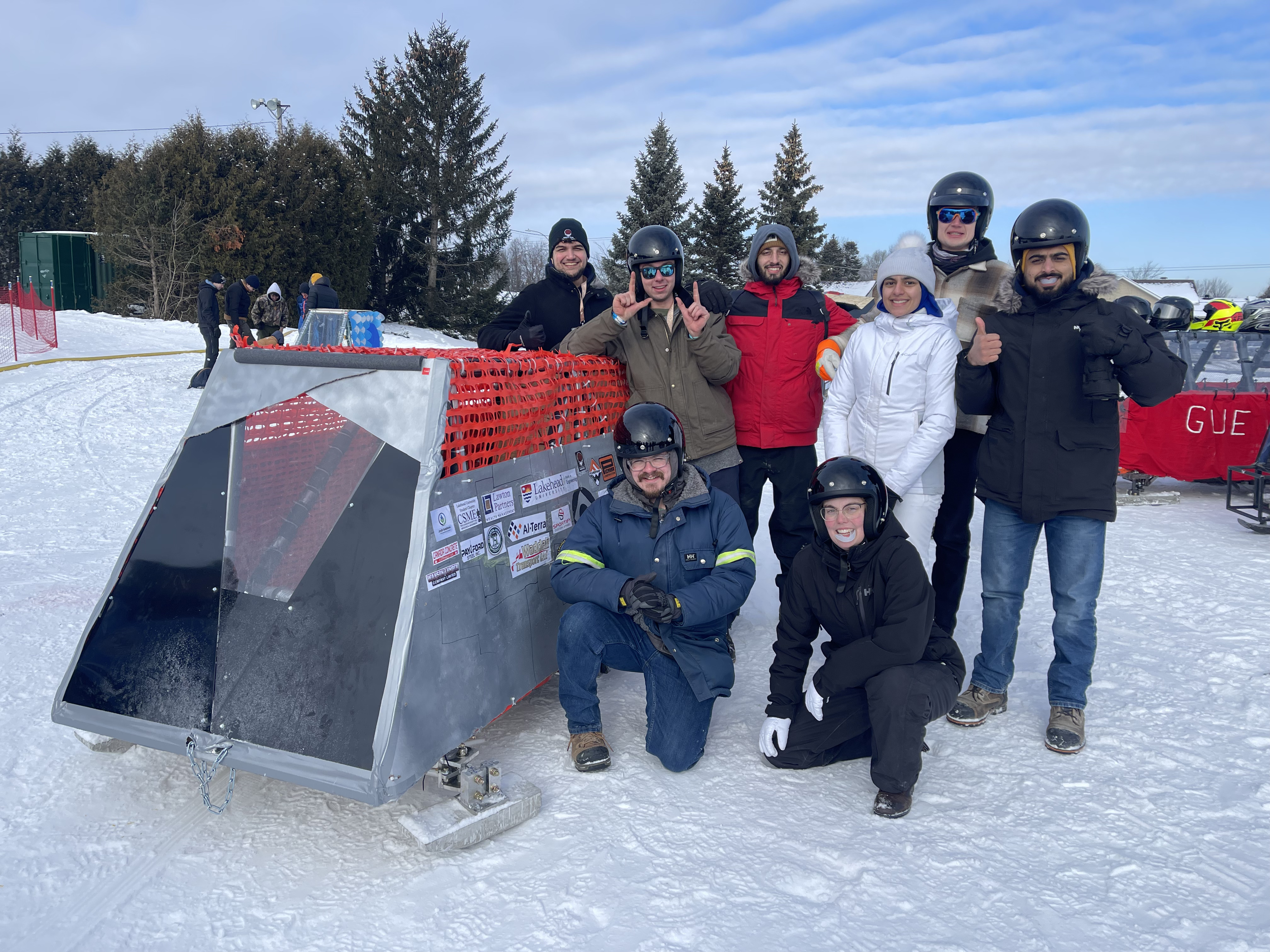
Lakehead University’s very first entry into the Great Northern Concrete Toboggan Race (GNCTR) was a resounding success, scooping the Best New Team Award and Most Inclusive Team Award at the national competition hosted by Concordia University in Montreal.

“Our first-ever GNCTR entry was a huge success, and we’re really proud of what we accomplished. It showed not just our technical skills, but also that we can compete at a national level with other universities across Canada,” said co-captain Elian Drummond. “This is just the beginning for Lakehead University—we’ve built a strong foundation, and we’re excited to see next year's team come back even stronger; improving their designs and making a lasting impact in the GNCTR community.”

The multidisciplinary student team, co-captained by Civil Engineering students Drummond and Faryal Faisal, debuted at 11th overall (out of 18 entries from universities and colleges across Canada) and were the only team in the competition not to receive any deduction points.

“We are immensely proud of the terrific performance of the Lakehead team in their inaugural entry into this competition. This is only the beginning of what will become a tradition with future teams building on the legacy of this pioneering group of students,” said Janusz Kozinski, Dean of Engineering at Lakehead University.

Established last year, the Lakehead GNCTR team made rapid progress in a short time to design and build the Lakehead tobogganGNCTR team poses in front of their concrete toboggan and attract an impressive array of sponsors to support the project.
“Being an inaugural team came with its obstacles, but spearheading the initiative allowed us to curate a skill set we never would have had the opportunity to develop solely in the classroom,” said Faisal. “We got to experience first-hand what it means to be an engineer and how the profession is rooted in strong teams.”

The Great Northern Concrete Toboggan Race is the largest and longest running engineering competition in North America. Teams must design and construct a toboggan with a metal frame and a running surface made completely out of concrete and race it down a steep snow-covered hill. The sled must weigh less than 350 pounds, have a working braking system, and be fitted with a roll cage to protect its five passengers.

"Supervising our inaugural GNCTR team was a lesson in passion and resilience. Their seamless teamwork and impeccable organization transformed every challenge into a breakthrough,” stated faculty advisor Dr. Ahmed Elshaer. “This group showed me that true success lies in the thrill of surprise, not just in the prize. Their awards set a high bar for Lakehead's innovative future.”

Lakehead’s Civil Engineering students win top prizes at Steel Bridge Competition

Steel Bridge Team

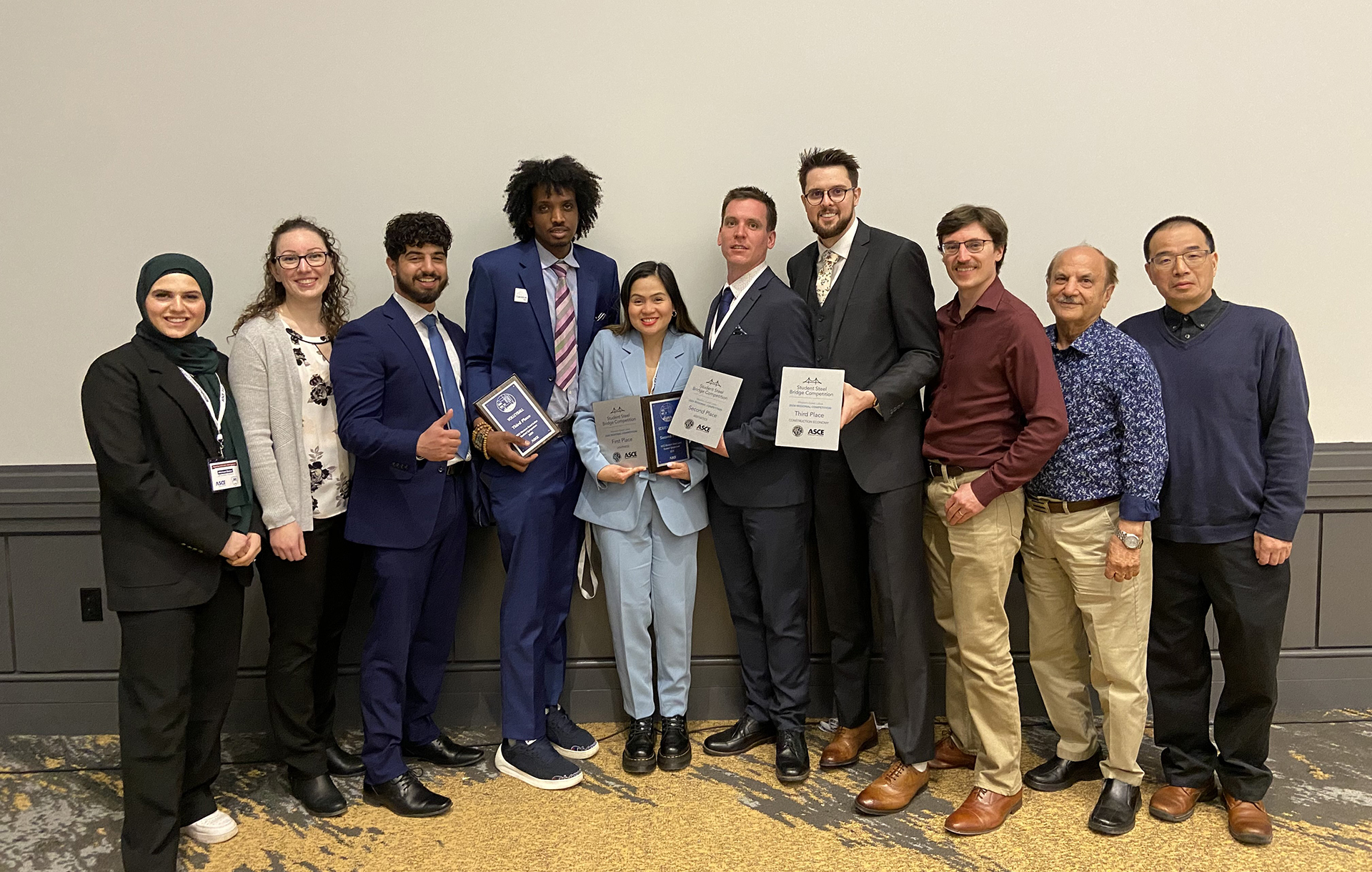
(from left) Wadika Faisal, Nadine Elmehriki, Ibrahim Shaheed, Mohamed Abi, Lovely Faith Donaldson, Karl Prentice, Zachary Morgan, Cory Hubbard, Kailash Bhatia, and Dr. Yanglin Gong.


April 18, 2024 – Thunder Bay, Ont.

The Lakehead University steel bridge team achieved top prizes at the annual American Society of Civil Engineers (ASCE) Western Great Lakes Student Symposium in Chicago from April 4 to 6.

The Lakehead team won three awards including first place in lightness, second place in aesthetics and third place in construction economy, and were ranked fourth place overall among the 16 universities competing.

The team was made up of third- and fourth-year civil engineering students: captain Zachary Morgan, co-captain Karl Prentice, Lovely Faith Donaldson, Ibrahim Shaheed, Mohamed Abi, and Wadika Faisal.

In this year’s competition, students were challenged to design and fabricate a 1:10 scale model steel bridge spanning 21 feet over an extra-wide eight-foot river and subject to height restrictions to minimize interference with its surroundings. The bridge was then tested under 2,500 pounds of weight to confirm its stability, strength and stiffness.

“Ever since I started at Lakehead, my goal was to be on the steel bridge team,” said Morgan. “I have had an amazing experience learning skills that will impact my life and my future career.”

The competition experience included conceptual design and details design, fabrication, erection, and testing.

“Every challenge we faced was not just an obstacle, but a valuable opportunity for growth and learning, guiding us to redefine success through perseverance and ingenuity,” Prentice explained. “As a team, we embraced the unpredictable knowing that tenacity fuels innovation and resilience.”

“The competition weekend was a fantastic experience, especially seeing the diverse designs and innovations from many different universities,” added Donaldson.

In addition, third-year civil engineering student Nadine Elmehriki participated in a paper competition, representing the Lakehead ASCE student chapter.

The Lakehead delegation was led by faculty advisor Dr. Yanglin Gong and supported by technologists Cory Hubbard and Kailash Bhatia. Construction company Facca Inc. and the Iron Workers Local 759 in Thunder Bay were the major sponsors for the team.

“The bridge competition challenges our students to extend their classroom knowledge to a practical, hands-on design and construction project that grows their professional and interpersonal skills,” said Dr. Gong.

Dr. Jian Deng, chair of civil engineering in Lakehead’s Faculty of Engineering added, “The Department of Civil Engineering is incredibly proud of our students. Their performance was exceptional and they once again demonstrated that Lakehead can compete and win against tough competition from top U.S. universities in the region.”

Lakehead Engineering professor selected for Nokia Visiting Professorship

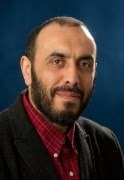
Salama IkkiLakehead Engineering professor Salama Ikki has been selected for the prestigious Nokia Visiting Professorship offered by the Nokia Foundation.
Professor Ikki, a faculty member in Lakehead’s Department of Electrical Engineering, will be a visiting research professor at Aalto University in Espoo, just west of Finland’s capital Helsinki. He will also visit other Finnish universities, as well as various branches of the global technology firm Nokia.

“I am truly honoured to have been chosen for this professorship that will provide an exceptional opportunity to work together with researchers from all over the world on the latest 5G technology,” said Professor Ikki.

Professor Ikki will give lectures to students, academics, and employees on signal processing 5G wireless networks, and take part in collaborative research projects in this field.

“Professor Ikki is a distinguished researcher and innovator. We are thrilled that he has been recognized by the Nokia Foundation, and I know he will make a significant contribution to this rapidly-evolving field of research during his time in Finland,” added Janusz Kozinski, Dean of Lakehead Engineering.

Professor Ikki is only the second Canadian to receive this highly-competitive professorship. He is currently Lakehead University Research Chair in Wireless Communications, where he undertakes research focused on creating a unified theoretical framework that will lead in the application of artificial intelligence to telecommunications systems.

Lakehead-Georgian welcomes first students

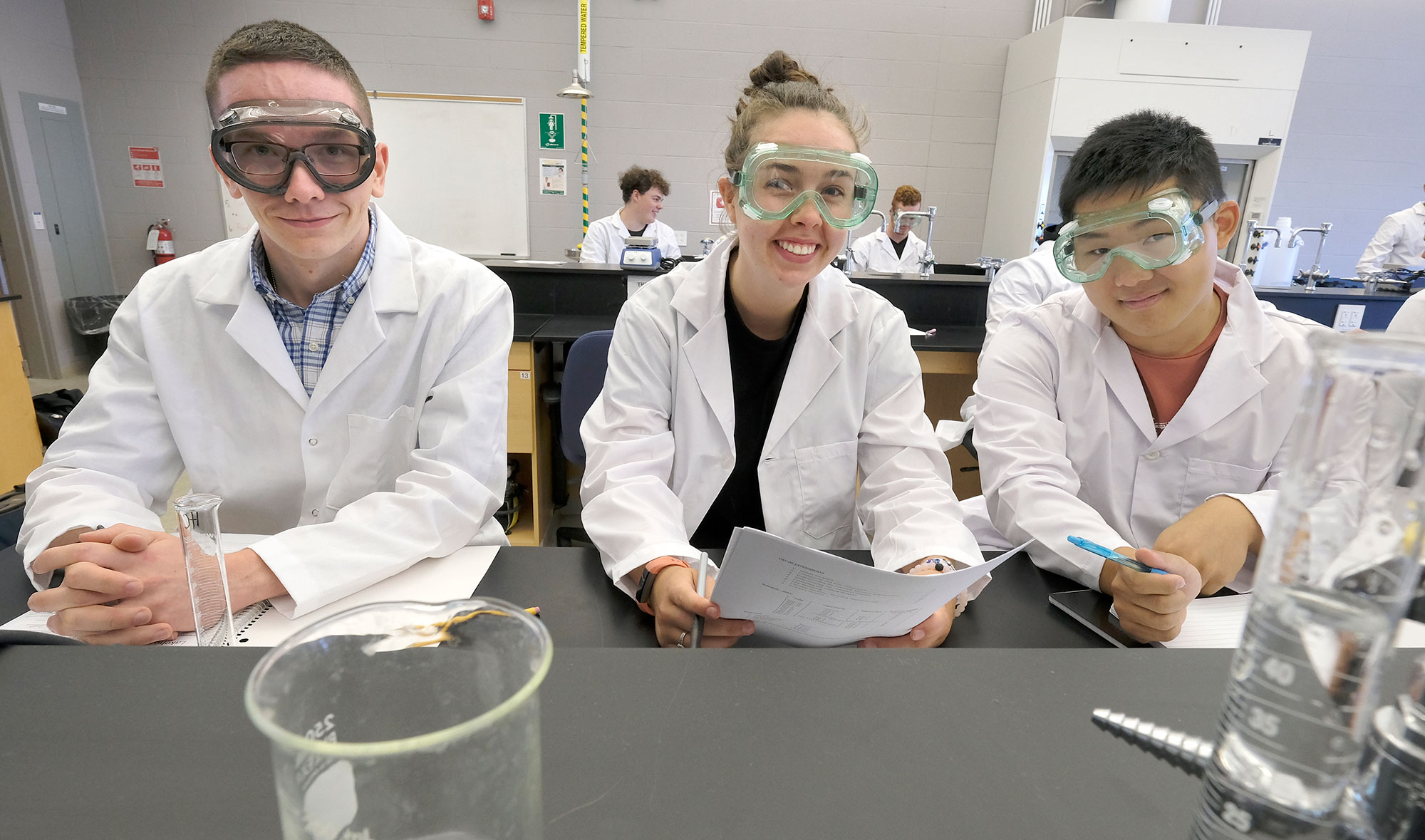
Stephen Bond, Bridget Healy and Jacky Wu are part of the inaugural cohort of Lakehead-Georgian Electrical Engineering students

(from left to right) Stephen Bond, Bridget Healy and Jacky Wu are part of the inaugural cohort of Lakehead-Georgian Electrical Engineering students. 


September 13, 2017 - Barrie, ON

Approximately 36 students began their studies at Georgian College's Barrie Campus in September as part of Lakehead-Georgian’s first classes.  Students embarked on a four-year journey in the first two Lakehead-Georgian combined programs: Bachelor of Engineering (Electrical) with Electrical Engineering Technology advanced diploma, and Honours Bachelor of Arts and Science – Environmental Sustainability (Ecosystem Management) degree with Environmental Technician diploma.

“I’ve always been a very hands-on person,” said Bridget Healy, a first-year engineering student. “I explored a number of other degree programs, but the university-college model at Georgian really appealed to me. I liked the idea of having one-on-one interaction with the faculty and learning practical skills.” Healy, who is from Orillia, also loved the fact she can live at home and have a short commute to school.

Lakehead-Georgian programs allow students to complete a university degree and college credential in only four years, combining academic and applied learning to graduate job-ready.

“We routinely hear from industry that they are looking for graduates who have hands-on practical experience, in addition to a theoretical foundation that comes from a university education,” said Dr. Dean Jobin-Bevans, Principal, Orillia Campus of Lakehead University.

“Under the innovative partnership that is Lakehead-Georgian, our students will experience the best of a university and college education. Our goal is to provide a combination of applied and practical learning experiences that will be valued by employers. Our engineering graduates will be job-ready, equipped with the theoretical and practical skills to allow them to hit the ground running.”

Academic and service teams from Lakehead and Georgian continue to collaborate on a number of fronts, including the development of new programs for the years ahead.

“We’re very excited to have our first Lakehead-Georgian cohort of students on campus,” said Jason Galea, Dean, Academic Quality, Teaching and Learning, and Degree Partnerships, Georgian College. “Our two academic institutions continue to work diligently and creatively – ensuring our partnership grows to meet the need for degree-level education in our communities. With the Lakehead campus in Orillia and Georgian’s main campus in Barrie, we are proud to serve students and employers with innovative, collaborative programs for today’s economy.”

Two new Lakehead-Georgian programs will begin in September 2018:

  • Honours Bachelor of Science in Applied Life Science degree with Biotechnology – Health diploma
  • Honours Bachelor of Science in Computer Science with Computer Programmer diploma

—30—

For further information, please contact:

Elaine Murray
Communications Specialist
Georgian College
elaine.murray@georgiancollege.ca
705.728.1968, ext. 1003

Jaclyn Bucik
Marketing and Communications Associate
Lakehead University
jbucik@lakeheadu.ca
705.330.4008, ext. 2014

Lakehead University has about 9,700 full-time equivalent students and 2,000 faculty and staff in 10 faculties at two campuses in Orillia and Thunder Bay, Ontario. Lakehead is a fully comprehensive university: home to Ontario’s newest Faculty of Law in 44 years, the Northern Ontario School of Medicine, and faculties of Engineering, Business Administration, Health & Behavioural Sciences, Social Sciences & Humanities, Science & Environmental Studies, Natural Resources Management, Education, and Graduate Studies. In 2016, for the second consecutive year, Re$earch Infosource ranked Lakehead first among Canada’s undergraduate universities. Visit www.lakeheadu.ca.


Degrees, diplomas, certificates, apprenticeships and more – Georgian College offers more than 125 market-driven programs to accelerate your success. Georgian is Ontario’s #1 co-operative education college and #1 in graduate employment among all Ontario colleges. We're recognized as a trailblazer in entrepreneurship and social innovation education. Georgian is home to 11,000 full-time students, including 1,500 international students from 60 countries. In 2017 we are celebrating our 50th anniversary.

Stephen Bond, Bridget Healy and Jacky Wu are part of the inaugural cohort of Lakehead-Georgian Electrical Engineering students

Co-op Program Options

At Lakehead University, there are a variety of disciplines that offer the co-op option:

Undergraduate Programs

Faculty of Business Administration

Faculty of Science & Environmental Studies

Honours Bachelor of Arts and Science

Faculty of Engineering

  • Bachelor of Engineering
    • Chemical
    • Civil
    • Electrical 
    • Electrical (Lakehead-Georgian)
    • Mechanical 
    • Software
    • Mechatronics

Faculty of Natural Resources Management

Graduate Programs

Faculty of Graduate Studies

Subscribe to Engineering