

food sovereignty

Reclaiming Wild Rice: Helping Indigenous Communities Develop More Secure Food Sources

"Wild rice is culturally, nutritionally, and economically significant to the Anishinaabe people of the Great Lakes area," says Lakehead Adjunct Biology Professor Dr. Vincent Palace.

According to their creation story, the Anishinaabe migrated inland from the eastern seaboard to the place where food grows on the water—that food was wild rice, or "manoomin" in the Ojibwe language.

Dr. Palace—who is also the head research scientist at the International Institute for Sustainable Development-Experimental Lakes Area (IISD-ELA) research station about 60 km north of Kenora, Ontario—is part of an exciting research initiative focused on wild rice.
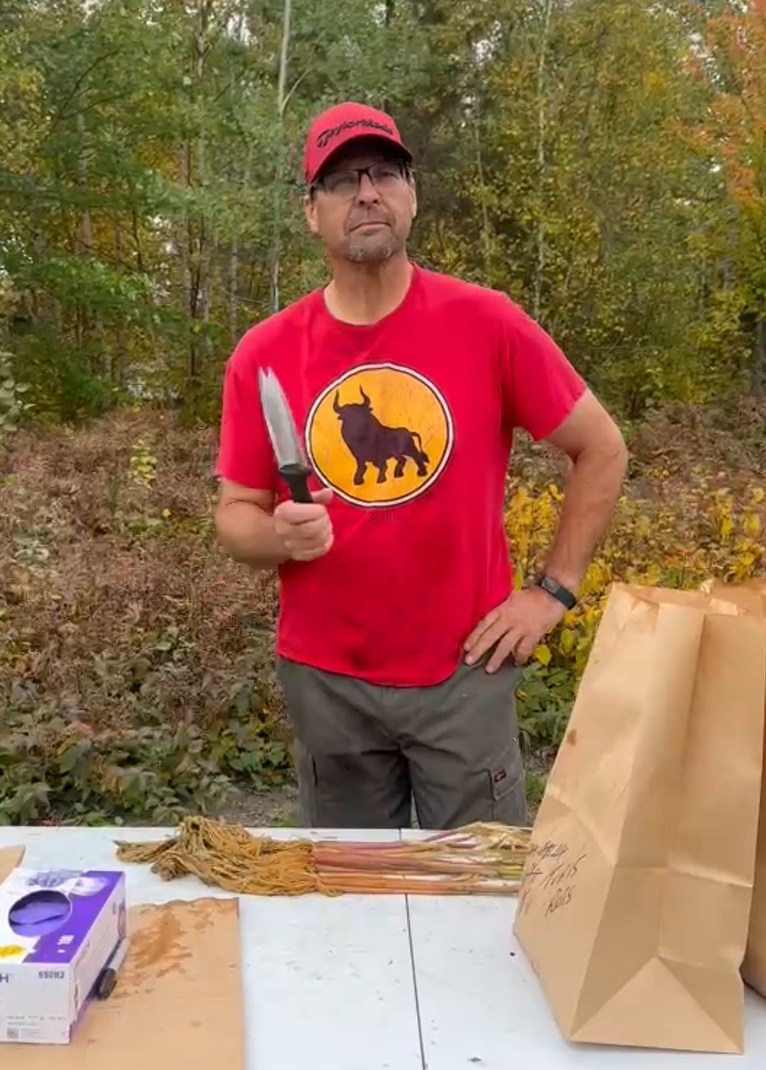
Dr. Vincent Palace at a table outdoors holding an implement for processing wild rice

 The MANOOMIN project, which stands for Multi-culture Agribusiness for Northern Ontario Managed by Indigenous Nations, is a collaboration between the Myera Group (an Indigenous-led biotechnology company committed to fostering Indigenous food sovereignty), IISD-ELA researchers, Lakehead University, and several Treaty #3 Indigenous communities in northwestern Ontario.

"The Kenora Chiefs' Advisory, a cooperative of eight communities from the Treaty #3 area, are part of this project, and they've been amazing to work with!" Dr. Palace says.

Dr. Vincent Palace (left) processing wild rice. Dr. Palace’s research group is currently examining the effects of competition from cattails on wild rice. They’ve also studied how water levels affect the productivity of wild rice.

"Traditionally, most communities harvest this sacred food by canoeing among stands of wild rice growing in lakes, pulling wild rice plants over their canoes, and rapping them with a stick to knock the rice into their boats. This harvesting method means that some of the rice grains fall into the water, allowing the plants to reseed themselves every year."
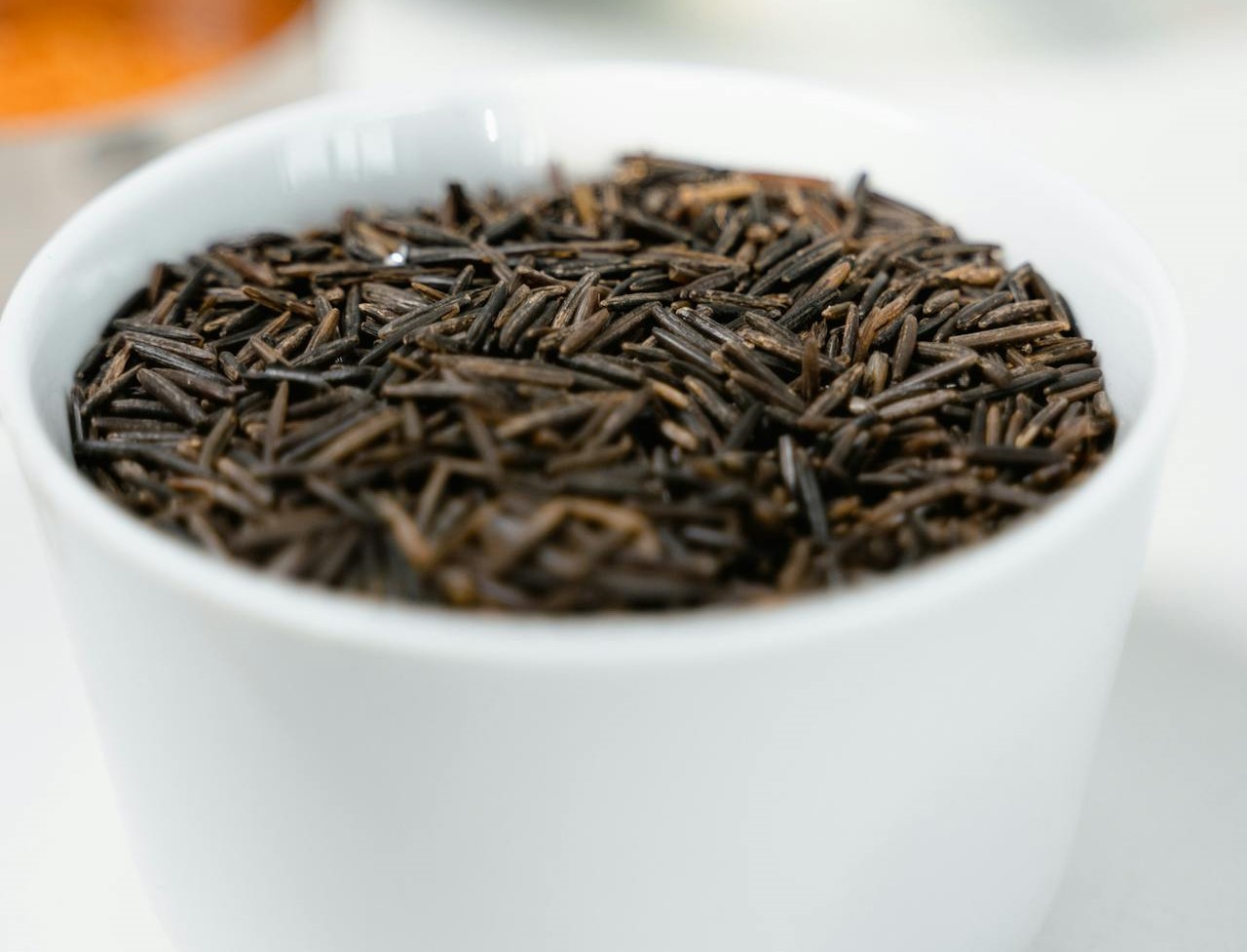
A small bowl of uncooked wild rice grains

Despite the importance of wild rice to Indigenous people, accessing and harvesting it has become more difficult. Hydroelectric production in northwestern Ontario's Rainy River system, for instance, has destroyed habitats where wild rice was typically harvested, and this destruction has been compounded by the spread of an invasive species of cattails that is choking out wild rice. An additional pressure comes from the increasing age of wild-rice harvesters and the growing danger that their knowledge will be lost. "The time to train younger generations to harvest rice and to remove the cattails is limited," Dr. Palace explains.

Wild rice is a nutritionally dense food that’s low in fat and high in fatty acids and fibre. Moreover, wild rice stands create higher-quality habitats for fish, birds, and other animals compared to habitats dominated by cattails.

The research team plans to strengthen these communities' food sovereignty by establishing fish farms in their territories that will be owned and operated by community members. The fish farms will have a dual purpose: the fish will provide an important food source and the solid and liquid waste they excrete will be used as a fertilizer to grow wild rice and traditional medicine plants. Fish waste contains ammonia and phosphorus—nutrients that wild rice plants need to grow. Myera will contribute its business expertise by helping the communities produce wild rice flour, rice cakes, protein shakes, bannock, and other foods for their own consumption, as well as for distribution and sale outside these communities.
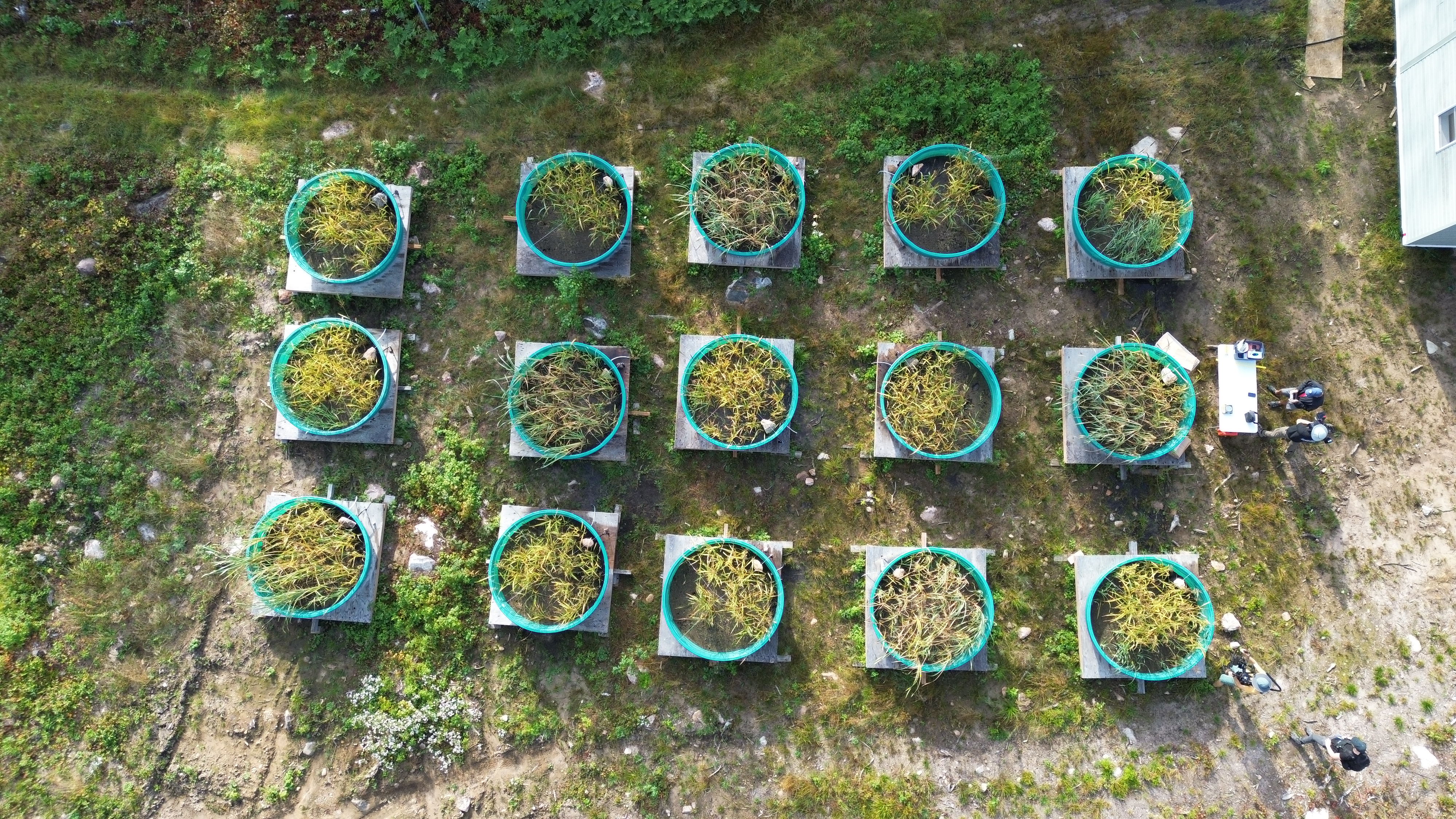
Aerial view of tubs of wild rice being grown outdoors as part of an experiment

Around 50 per cent of the wild rice consumed in Canada is, in fact, commercially cultivated wild rice imported from the United States. The flooded paddies this rice is grown in generates large amounts of methane gas. That's why MANOOMIN researchers are experimenting with growing rice in shallower water to reduce methane production. According to the IISD-ELA, a 10 per cent reduction in emissions would be equivalent to removing 10 million vehicles from the road.

"The overarching idea of marrying fish aquaculture and waste with wild rice production originated with Myera," Dr. Palace says, "although a lot of the work we're doing is based on the research of retired Lakehead biology professor Peter Lee."

MANOOMIN has just completed its third year and is now investigating how different wild rice varieties compete with cattails for nutrients. Next, they'll remove cattails and replace them with wild rice.

"As a scientist, doing research that will be useful to communities is very gratifying," Dr. Palace says.

The MANOOMIN project is possible because of the support of the Myera Group, Northern Ontario Heritage Fund, Protein Innovation Supercluster, and Lakehead University.
Community-based research navigates social, economic and environmental sustainability

Thunder Bay and Orillia, Ont. – Lakehead University researchers Dr. Martha Dowsley and Dr. Debra Mackinnon are leading two community-based studies that will impact how societies understand and navigate food sovereignty and public safety.

Dr. Dowsley, Associate Professor in Anthropology and Geography and the Environment, is partnering with Lac Seul First Nation (LSFN) in Northwestern Ontario and Nubian communities in Egypt to explore the role of focal plants in the community’s survival, culture, and self-determination and how that role has been altered by the flooding of traditional lands. The study is supported by a $328,000 grant from the Social Sciences and Humanities Research Council (SSHRC).

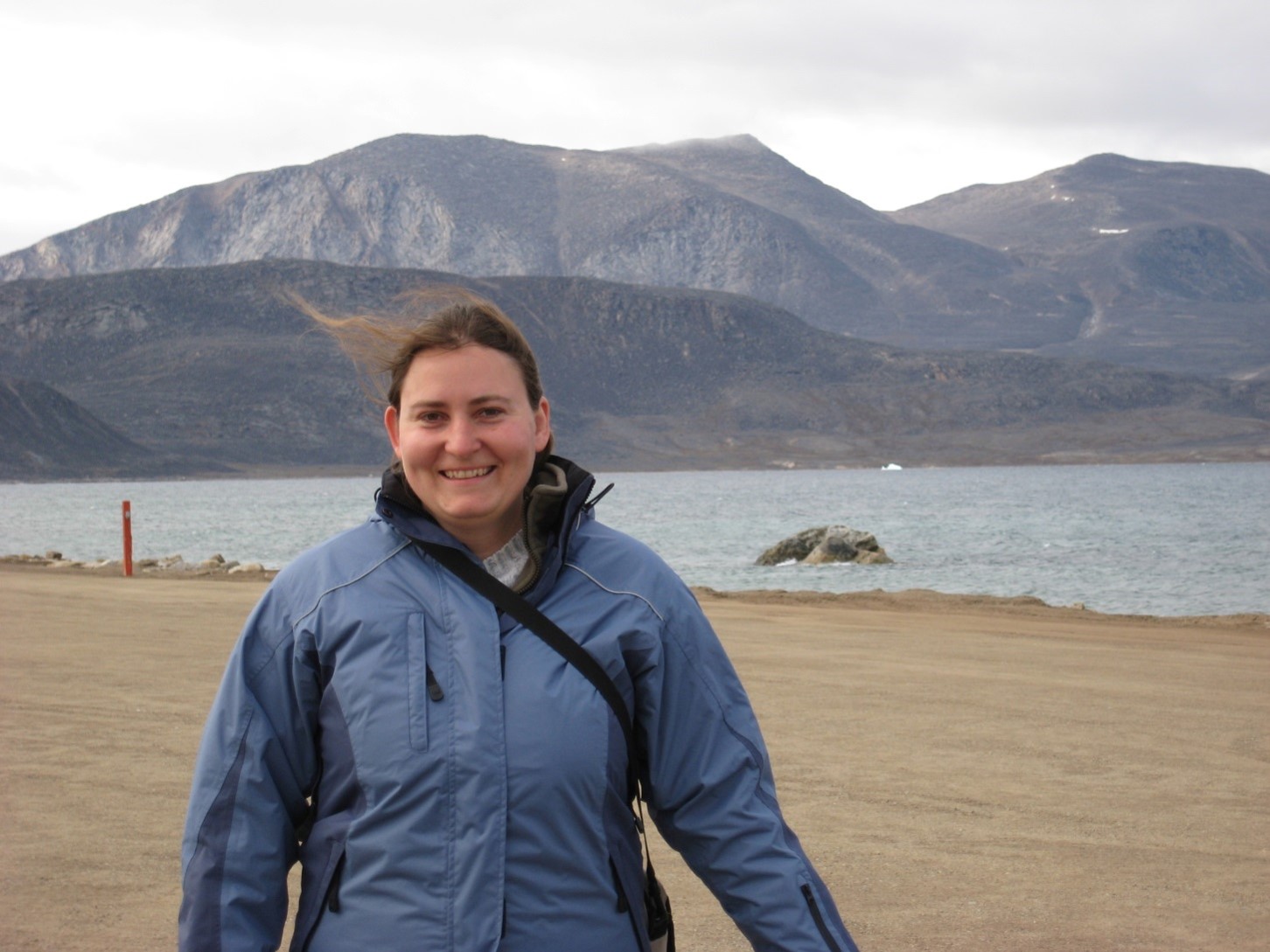
Martha Dowsley“Many Indigenous communities have lost lands and resources to hydroelectric development, severely impacting their economic and cultural wellbeing,” Dowsley explained. “By studying some of these injured human-plant relationships we hope to support communities in strengthening their plant relationships. This can have important impacts in areas such as the Sustainable Development Goals, improving the lives of girls and women, and building resilience into damaged local food systems.”

For the study, each community selected a plant with economic and cultural significance: LSFN chose wild rice (manomin) and the Nubian communities date palm and a fodder plant called kashrangig. Now, the research team will explore the history of lost relationships with these plants to understand how to support Indigenous communities as they look to re-establish traditional practices. Illustrated books, films and educational resources will be created to help cultural sharing and discussions on food sovereignty and cultural resurgence.

“I hope this research will allow the two case study communities to learn about themselves through seeing how a community on the other side of the world is struggling with a similar problem,” she said. “My hope is that this project will support the communities to find new ways to use their cultural knowledge of plants to continue those plant relationships in a changed environment. It’s all about honouring and nurturing these ancient relationships and finding a place for them in a modern world.”

Debra MackinnonIn another community-focused project, Dr. Mackinnon, an Assistant Professor in Interdisciplinary Studies, will examine how libraries in mid-sized Ontario cities balance safety with their mandate of free and equitable access.

“Public libraries are more than just places for books; they serve as critical social infrastructure by providing access to information, encouraging social inclusion and equity, and fostering civic engagement,” Mackinnon explained. “However, they face growing pressure to navigate their commitment to social inclusion and equity, while managing the added pressure of ensuring the safety of all staff and patrons.”

In collaboration with public libraries in Barrie, Brantford and Thunder Bay, and in the context of ongoing social issues such as the opioid epidemic, mental health crisis, lack of affordable housing, and changing perceptions of public safety, Mackinnon and Dr. Tarah Hodgkinson of Wilfrid Laurier University will engage library staff, patrons, and community members to identify practical, community-driven solutions that support both safety and inclusivity in these spaces. The three-year study is supported by a $97,267 grant from SSHRC.

“The work conducted by Lakehead researchers is responsive and directly tied to supporting, engaging and enriching our local communities,” said Dr. Andrew P. Dean, Vice President - Research and Innovation. “Thank you to our funding partners for recognizing the importance of these projects, not just at the community level, but advancing knowledge nationally and globally in several key areas.”

In 2023/24, Lakehead University received almost $2.5 million in assistance from the Research Support Fund to support the indirect costs of research, which includes costs for supporting the management of intellectual property, research and administration, ethics and regulatory compliance, research resources, research facilities, and research security.

SSHRC Grants 2023-24

Total received: $975,920

Insight Grants (2-5 year grant)

Dr. Martha Dowsley, Department of Anthropology and Department of Geography and the Environment, “Feeding our Relationships: Investigating Anishinaabe and Nubian plant relationships in the context of food sovereignty, biocultural landscapes and sustainable development”, $328,000

  • Co-applicant: Dr. Charles Levkoe, Department of Health Sciences, Lakehead University

Dr. Lindsay Galway, Department of Health Sciences, “Climate Anxiety and Coping Among Youth and Young Adults in Canada: Synthesizing and Advancing Knowledge and Practice”, $308,916

  • Co-applicant: Dr. Ellen Field, Faculty of Education, Lakehead University
  • Collaborator: Kate Ashwood, Youth Climate Lab
  • Collaborator: Alexis Ashworth, Root in Nature, Inc.
  • Collaborator: Dr. Thomas Beery, School of Natural History, Kristianstad University
  • Collaborator: Katie Hayes
  • Collaborator: Stacie Smith, Young Canadians Roundtable on Health

Dr. Debra Mackinnon, Department of Interdisciplinary Studies, Securitizing the last Public Bastion: Safety in Public Libraries in Mid-sized Ontario Municipalities, $97,267

  • Co-applicant: Dr. Tarah Hodgkinson, Department of Criminology, Wilfrid Laurier University
  • Collaborator: Barrie Public Library
  • Collaborator: Brantford Public Library
  • Collaborator: Thunder Bay Public Library
  • Collaborator: Federation of Ontario Public Libraries

Insight Development Grant (2-year grant)

Dr. Bartholomew Chireh, Department of Health Sciences and EPID@Work Research Institute, “Work Stressors and Job Satisfaction and Mental Well-being Among Black, Indigenous, and People of Color Skilled Trades Workers in Northwestern Ontario”, $63,723

  • Co-applicant: Dr. Samuel Essien, Department of Health Sciences and EPID@Work Research Institute, Lakehead University
  • Co-applicant: Dr. Charles Gyan, School of Social Work, McGill University
  • Collaborator: Dr. Annshirley Afful, Registrar’s Office, University of Regina

Knowledge Synthesis Grants: Evolving Narratives of Cultures and Histories (1-year grant)

Dr. Martha Dowsley, Department of Geography and the Environment, “From Manomin to ‘Wild’ Rice and Back Again: Understanding the Transformations of a Native Ontario Grain and Indigenous Cultural Resurgence”, $30,000

  • Co-applicant: Dr. Keira Loukes, School of Outdoor Recreation, Parks and Tourism, Lakehead University

Individual Partnership Engage Grant (1-year grant)

Dr. Mirit Kastelman Grabarski, Faculty of Business Administration, “Coach Officer Training Development”, $25,000.

  • Co-applicant: Hina Kalyal, London Police Service

Connection Grants (1-year grant)

Dr. Leisa Desmoulins, Faculty of Education (Orillia) “Multiple Perspectives for Indigenous Education Activation in Simcoe County”, $49,494.

  • Co-applicant: Dr. Ruth Beatty, Faculty of Education (Orillia)
  • Collaborator: Christina Ruddy

Dr. Idevania Costa, School of Nursing, “Our Voices, Our Stories: An Action-Oriented Outreach and Knowledge Exchange Webinar Series”, $48,520.

  • Co-applicant: Dr. Catherine Phillips, School of Social Work (Orillia)
  • Co-applicant: Dr. Catherine Schoales, School of Nursing
  • Co-applicant: Dr. Michelle-Marie Spadoni, School of Nursing
  • Co-applicant: Dr. Pilar Camargo Plazas, Queen’s University
  • Collaborator: Irmajean Bajnok, Wounds Canada
  • Collaborator: Mariam Botros, Wounds Canada

Individual PCH-SSHRC Initiative for Digital Citizen Research (Connection) (1-year grant)

Dr. Davut Akca, Department of Interdisciplinary Studies (Orillia), Combatting Hate Speech in an Increasingly Polarized Era Conference, $25,000.

Subscribe to food sovereignty