



Student Services Generalist
Overview
The Student Services Generalist provides front-line, integrated support to students acting as the primary, on-site resource for a broad range of student services and supports. The role maintains an extensive scope of responsibility, offering support and programming in core student service functions, such as registration, financial aid navigation, policy guidance, wellness support, and career development.
The core function of the role is to provide guidance and assistance to students, deliver programming and triage complex needs ensuring timely, seamless referrals to specialized student support staff when required. In addition, the Generalist develops and maintains focused expertise in a specific Portfolio Area, acting as the local point of coordination and specialized support for that function in coordination with the central student service department.
We are currently recruiting two positions. Portfolio A: Student Accessibility Services & Academic Advising. Portfolio B: Student Awards and Financial Aid & Graduate Studies. Please specify your preferred portfolio in your cover letter.
This is a fully in-person role at the Barrie STEM Hub. Hours of operation are anticipated to be 8:30 AM – 4:30 PM, Monday – Friday. Additional hours may be needed at peak times and to meet student needs, including during Fall Orientation.
Responsibilities
- Accountable for providing direct, integrated support as the primary, on-site generalist resource for a broad range of student needs.
- Assesses student needs and provides direct support to students. As needed, manages seamless warm hand-offs to specialized staff for complex cases.
- Guides students through university policies, procedures and technologies to ensure they understand their requirements and resources.
- Facilitates workshops and activities tailored to the Barrie STEM Hub student community.
- Maintains strong ties with on-site colleagues to support integration of services and supports.
- Monitors student feedback and identifies emerging needs to help inform continuous improvement.
- Keeps student service-related information current, updates and accurate.
- Maintains focused expertise in a specific Portfolio Area (Student Accessibility Services, Career Services & Co-op, Financial Aid, Academic Advising and/or Graduate Studies), serving as the localized extension of the central department to ensure students receive seamless, high-quality support.
- As part of a matrixed support model, maintains specialized knowledge in a specific field as the local subject matter expert, in coordination and under the guidance of the centralized department.
- Interprets and applies relevant policies, regulations and legislation locally while maintaining alignment and adherence with the procedural standards and oversight provided by the central unit.
- For example, one position will be responsible for on-site academic accommodations as part of our legislated duty to accommodate.
- Serves as the formal link between the Barrie STEM Hub and the central department to ensure service alignment.
- Informs the local team of policy updates, resources and information from their central portfolio area.
Qualifications
- 5+ years of student service experience working in a university or college setting, along with an undergraduate degree.
- Deep knowledge and technical expertise within a specific assigned portfolio area including relevant legislation, to act as the local expert working in coordination with the relevant student service department leader and team. We are currently recruiting two positions. Portfolio A: Student Accessibility Services & Academic Advising. Portfolio B: Student Awards and Financial Aid & Graduate Studies. Please specify your preferred portfolio in your cover letter.
- Comprehensive knowledge of the principles and best practices of student-centred service delivery and integrated support models.
- Detailed understanding of the policies, procedures, and service offerings of various student support units (e.g. orientation and transition, advising, financial aid, academic supports, student success, international services, billing, student referrals).
- Excellent skill in facilitating collaboration and building strong, productive working relationships with central service leaders and staff.
- Highly developed verbal and written communication skills to ensure open, clear, and positive communication between central departments and the student services Generalist team.
- Strong knowledge of standard office routines, record management, and adherence to student confidentiality standards (e.g., FIPPA).
- Proficiency in using Student Information Systems (SIS), CRM software, and platforms for tracking interactions and managing case files. Working knowledge of reporting tools, such as Informer, and advanced skills in Excel are considered an asset.
- Familiarity with assistive technology (ie. Dragon Naturally Speaking, Kurzweil) is considered an asset.
Lakehead University is committed to creating a diverse and inclusive environment and welcomes applications from all qualified individuals including women, racialized persons, Indigenous people, persons with disabilities, and other equity-seeking groups. All qualified candidates are encouraged to apply; however, Canadian citizens and permanent residents will be given priority. This is in accordance with Canadian immigration requirements.
Lakehead University has a goal to recruit and retain a diverse workforce as measured by increasing representation of underrepresented groups among applicants, candidates, and hires. Experience working with Indigenous or racialized communities, and/or members of other equity-deserving groups, is a strong asset. A lived experience or worked experience of any of these issues is preferred.
We appreciate your interest; Lakehead University is committed to supporting an accessible environment. Applicants requiring accommodation during the interview process should contact the Office of Human Resources at (807) 343-8010 ext. 8334 or human.resources@lakeheadu.ca to make appropriate arrangements.
Student Services Generalist
Overview
The Student Services Generalist provides front-line, integrated support to students acting as the primary, on-site resource for a broad range of student services and supports. The role maintains an extensive scope of responsibility, offering support and programming in core student service functions, such as registration, financial aid navigation, policy guidance, wellness support, and career development.
The core function of the role is to provide guidance and assistance to students, deliver programming and triage complex needs ensuring timely, seamless referrals to specialized student support staff when required. In addition, the Generalist develops and maintains focused expertise in a specific Portfolio Area, acting as the local point of coordination and specialized support for that function in coordination with the central student service department.
We are currently recruiting two positions. Portfolio A: Student Accessibility Services & Academic Advising. Portfolio B: Student Awards and Financial Aid & Graduate Studies. Please specify your preferred portfolio in your cover letter.
This is a fully in-person role at the Barrie STEM Hub. Hours of operation are anticipated to be 8:30 AM – 4:30 PM, Monday – Friday. Additional hours may be needed at peak times and to meet student needs, including during Fall Orientation.
Responsibilities
- Accountable for providing direct, integrated support as the primary, on-site generalist resource for a broad range of student needs.
- Assesses student needs and provides direct support to students. As needed, manages seamless warm hand-offs to specialized staff for complex cases.
- Guides students through university policies, procedures and technologies to ensure they understand their requirements and resources.
- Facilitates workshops and activities tailored to the Barrie STEM Hub student community.
- Maintains strong ties with on-site colleagues to support integration of services and supports.
- Monitors student feedback and identifies emerging needs to help inform continuous improvement.
- Keeps student service-related information current, updates and accurate.
- Maintains focused expertise in a specific Portfolio Area (Student Accessibility Services, Career Services & Co-op, Financial Aid, Academic Advising and/or Graduate Studies), serving as the localized extension of the central department to ensure students receive seamless, high-quality support.
- As part of a matrixed support model, maintains specialized knowledge in a specific field as the local subject matter expert, in coordination and under the guidance of the centralized department.
- Interprets and applies relevant policies, regulations and legislation locally while maintaining alignment and adherence with the procedural standards and oversight provided by the central unit.
- For example, one position will be responsible for on-site academic accommodations as part of our legislated duty to accommodate.
- Serves as the formal link between the Barrie STEM Hub and the central department to ensure service alignment.
- Informs the local team of policy updates, resources and information from their central portfolio area.
Qualifications
- 5+ years of student service experience working in a university or college setting, along with an undergraduate degree.
- Deep knowledge and technical expertise within a specific assigned portfolio area including relevant legislation, to act as the local expert working in coordination with the relevant student service department leader and team. We are currently recruiting two positions. Portfolio A: Student Accessibility Services & Academic Advising. Portfolio B: Student Awards and Financial Aid & Graduate Studies. Please specify your preferred portfolio in your cover letter.
- Comprehensive knowledge of the principles and best practices of student-centered service delivery and integrated support models.
- Detailed understanding of the policies, procedures, and service offerings of various student support units (e.g. orientation and transition, advising, financial aid, academic supports, student success, international services, billing, student referrals).
- Excellent skill in facilitating collaboration and building strong, productive working relationships with central service leaders and staff.
- Highly developed verbal and written communication skills to ensure open, clear, and positive communication between central departments and the student services Generalist team.
- Strong knowledge of standard office routines, record management, and adherence to student confidentiality standards (e.g., FIPPA).
- Proficiency in using Student Information Systems (SIS), CRM software, and platforms for tracking interactions and managing case files. Working knowledge of reporting tools, such as Informer, and advanced skills in Excel are considered an asset.
- Familiarity with assistive technology (ie. Dragon Naturally Speaking, Kurzweil) is considered an asset.
Lakehead University is committed to creating a diverse and inclusive environment and welcomes applications from all qualified individuals including women, racialized persons, Indigenous people, persons with disabilities, and other equity-seeking groups. All qualified candidates are encouraged to apply; however, Canadian citizens and permanent residents will be given priority. This is in accordance with Canadian immigration requirements.
Lakehead University has a goal to recruit and retain a diverse workforce as measured by increasing representation of underrepresented groups among applicants, candidates, and hires. Experience working with Indigenous or racialized communities, and/or members of other equity-deserving groups, is a strong asset. A lived experience or worked experience of any of these issues is preferred.
We appreciate your interest; Lakehead University is committed to supporting an accessible environment. Applicants requiring accommodation during the interview process should contact the Office of Human Resources at (807) 343-8010 ext. 8334 or human.resources@lakeheadu.ca to make appropriate arrangements.
A rare ecosystem has survived an ice age, but can it survive humans?
Researcher Dr. Gerardo Reyes is Working to Protect Alvar Landscapes
Ecologist Dr. Gerardo Reyes's curiosity has been captured by alvars—a habitat found in only a few places around the globe.
These unusual and biodiverse landscapes are characterized by exposed limestone bedrock and a patchwork of thin mineral-rich soils.
"Alvars are relics," says Dr. Reyes, a Lakehead Orillia Biology and Sustainability Sciences associate professor.
"They've remained virtually unchanged since the last ice age 12,000 years ago."

Dr. Reyes is a population and community ecologist focused on species conservation, socioecological resilience, and the scholarship of teaching and learning.
Dr. Reyes and his research team want to develop sustainable grazing practices to balance the needs of agriculture with the conservation of alvar ecosystems.
They're doing this through fieldwork analyzing the vegetation and abundance of alvar species and by mapping land use over time.
Endangered Species Thrive in Alvars
In the spring the alvars flood, in the summer they sizzle through drought, and the rest of the year they crack and heave with frost.
Much of the vegetation found in alvars is a mishmash of what would normally grow in alpine, grassland, or arctic conditions.
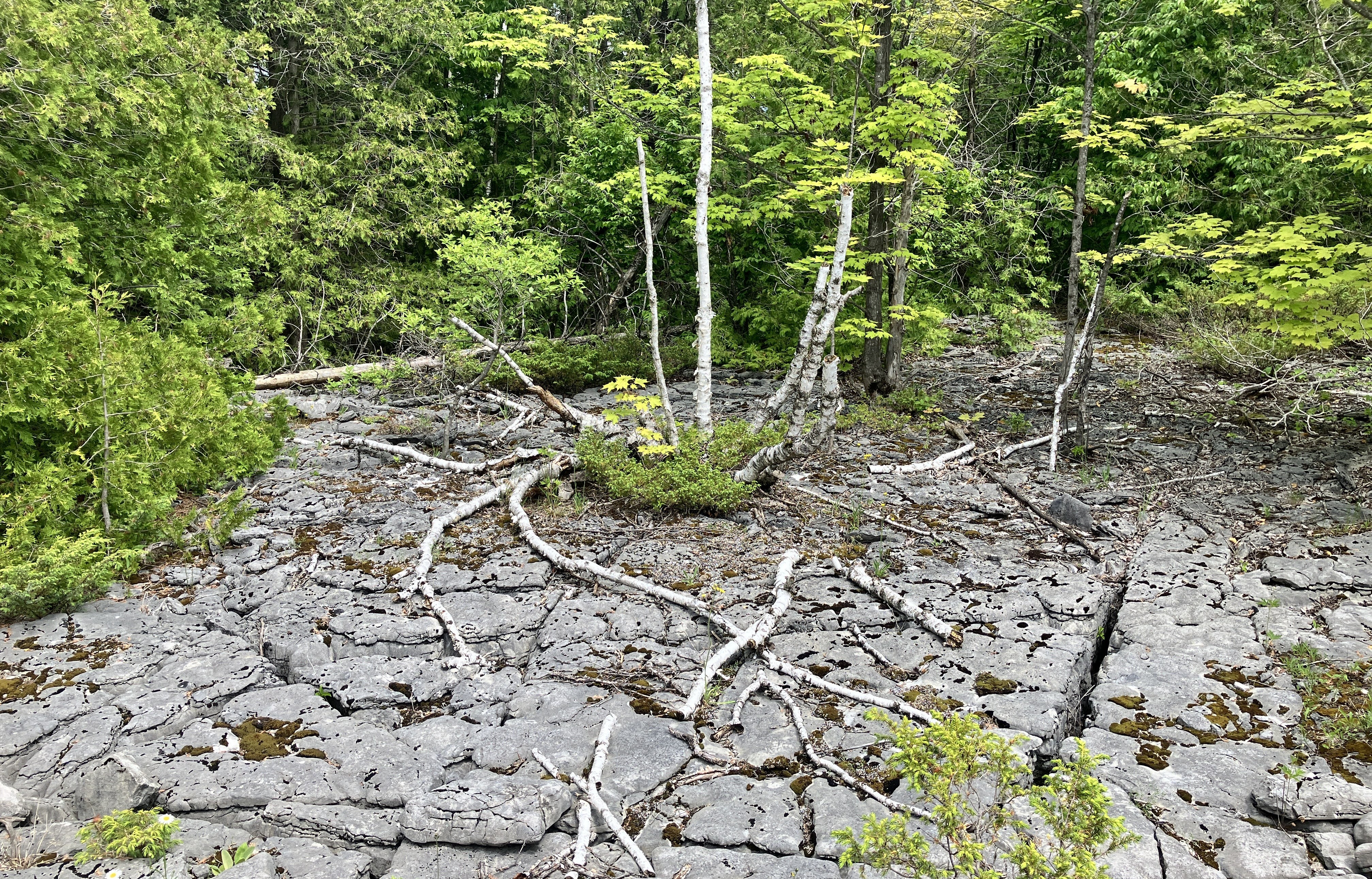
Trees such as white birch can grow in the fissures of alvars, provided enough soil and moisture is retained. Trees also deepen the fissures through root development. The microhabitats they help create can maintain vegetation cover during the drought periods of late summer.
Alvars are also the home of rare and endangered plants, as well as plant species that have been separated from other populations of the same species found further north or south.
Despite the rarity of alvars, Dr. Reyes doesn't have to venture far from his doorstep to study them.
Remarkably, 75% of the world's alvars are found in Ontario.
The Carden Plain, around the Kawartha Lakes region, is the site of Dr. Reyes's research.
It's there that native fauna including the juniper hairstreak butterfly and the bobolink songbird flit among dwarf lake iris, tiny mousetail, and juniper sedge.
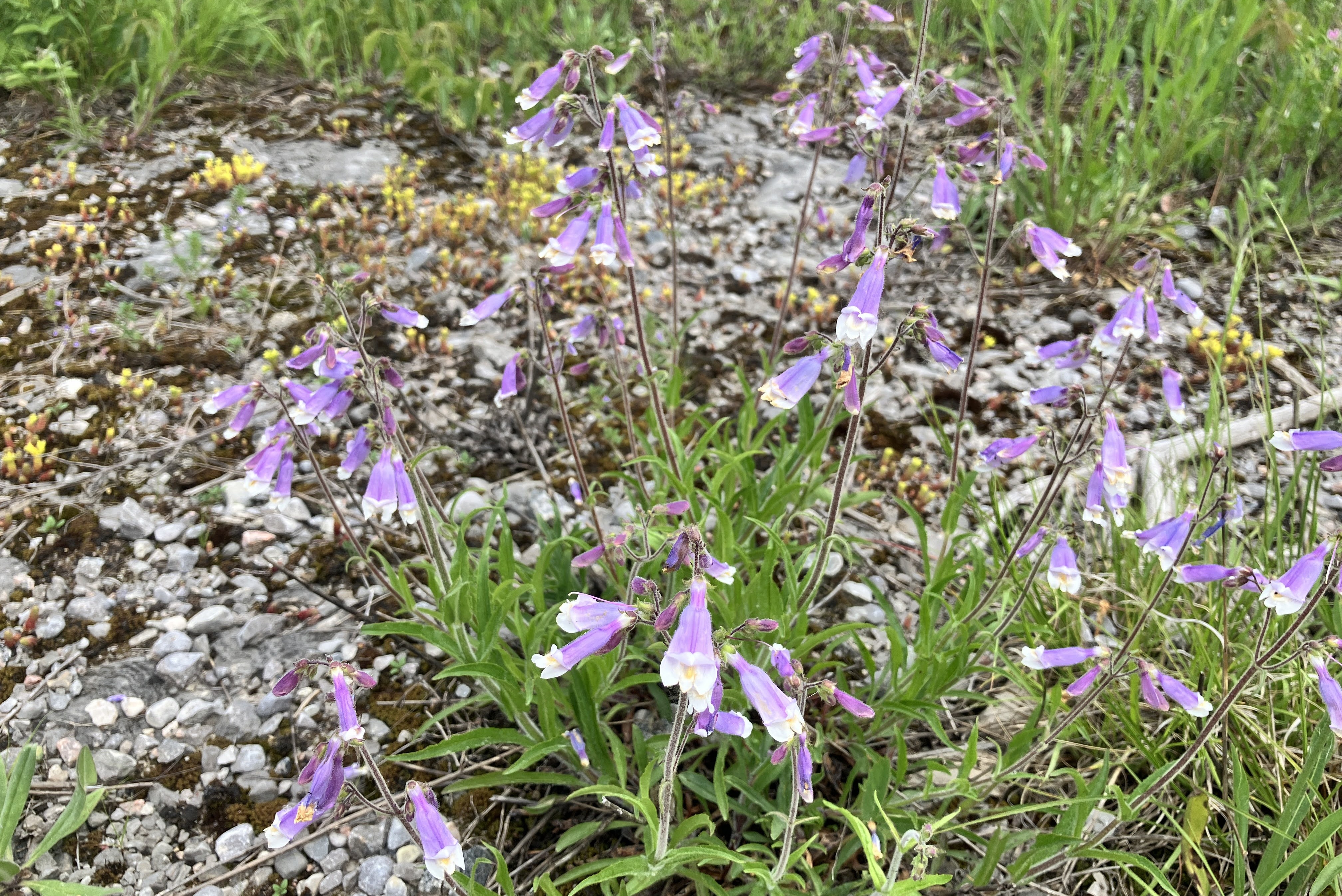
Beardtongue plant (Penstemon hirsutus) is a drought-tolerant native perennial that attracts native checkerspot butterflies and many bee pollinators, making it important for maintaining biodiversity.
Not surprisingly, areas like the Carden Plain are a popular spot for birders and nature lovers.
They are attracting unwelcome visitors, too, which concerns Dr. Reyes.
He says that the Carden Plain is under pressure from urban development, quarrying, livestock grazing, off-road vehicle use, and invasive species.
Can cows help save this fragile habitat?
Dr. Reyes—along with Biology and Sustainability Sciences professor Dr. Nanda Kanavillil and graduate student Brandon Guoth—are taking a closer look at these pressures, particularly at how cattle grazing affects this unique environment.
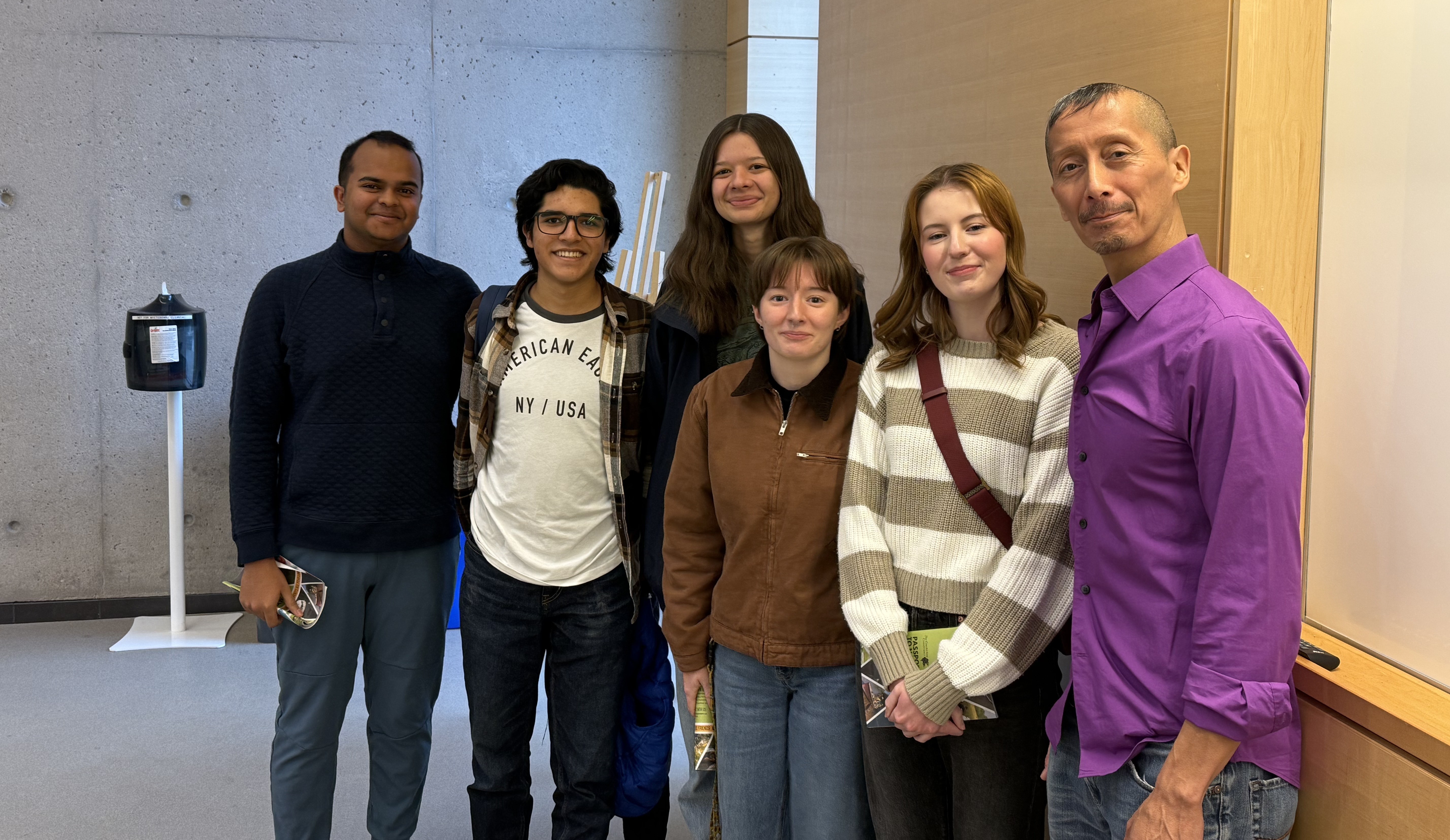
Dr. Reyes and Lakehead sustainability sciences students (left to right): Avi Balroop, Mateo Velasco, Emily De Geus, Holland Dunlop, and Mika Mackay. Emily and Holland are members of Dr. Reyes's alvar research team.
A portion of the Carden Plain is owned by conservation groups who lease it to ranchers so that groups of 50 to 100 head of cattle can graze there in the spring and early summer.
"We're trying to determine what level of grazing is okay to maintain biodiversity and natural conditions," Dr. Reyes says.
"At what point is it too many cattle for too long a period of time?"
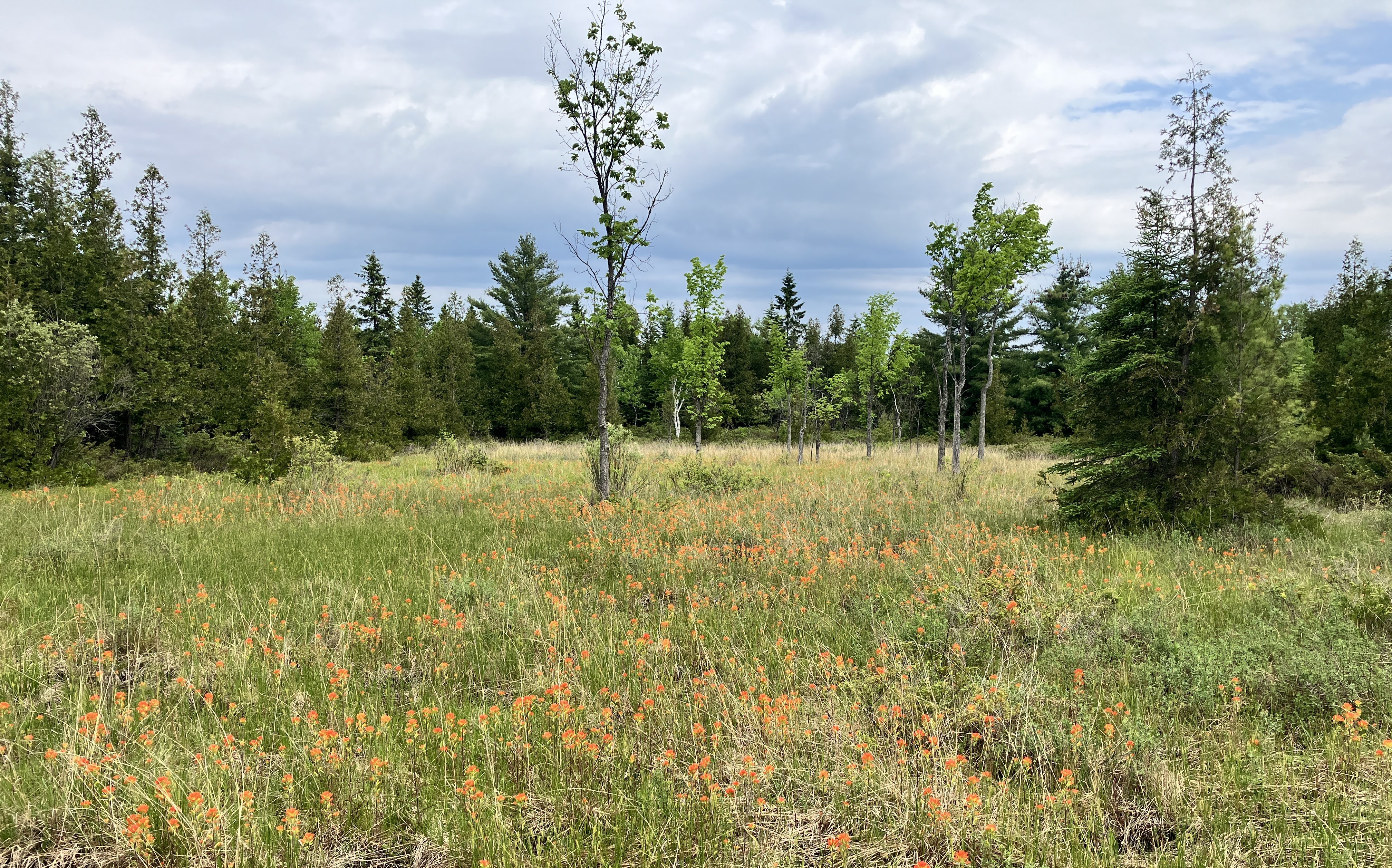
Cattle may stop trees from encroaching on open alvar habitat. This could conserve grassland habitat for at-risk bird species like the bobolink and the eastern meadowlark.
One negative effect may be that the cattle are inadvertently spreading invasive species—or aggressive native species—by scattering seeds as they walk or via their droppings.
On the other hand, cattle grazing may protect alvars by enriching the soil and maintaining its open grassland structure and plant diversity.
Taking Action to Safeguard Biodiversity
Dr. Reyes's alvar research is a newer field of study for him, but it connects with his commitment to socioecological resilience.
"Historically, I've worked mostly in forests," Dr. Reyes explains.
"I study the impacts of harvesting practices such as clear-cutting and partial cutting on forest regeneration and look for ways to better manage our forest resources.
Alvars are a different ecosystem, but they face the same issue—trying to make sure that natural resource use is carried out in a sustainable way.
We want to ensure that we're stewards of our resources."
Dr. Reyes and Dr. Kanavilil's alvar research has received funding from Lakehead's Office of Research Services, the City of Orillia, and private donors. Research team member Brandon Guoth also received funding from the Orillia Fish and Game Conservation Club.
$2-Million Gift From Joyce Family Foundation Expands Access to Education at Lakehead University
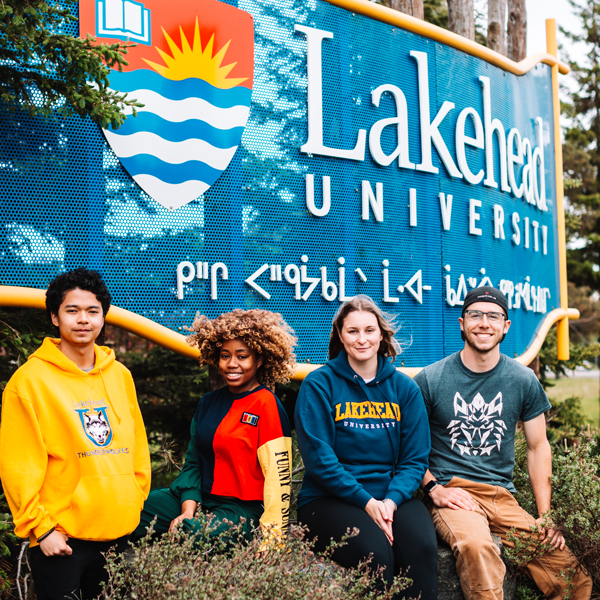 A $2-million gift from the Joyce Family Foundation will help more students access a Lakehead University education, removing financial barriers and opening doors to opportunity.
The gift will establish The Joyce Family Foundation Bursary, an endowed fund that will provide three bursaries of $22,000 ($5,500 payable per year for four years) per year and directly benefit students who face financial challenges. The first bursaries will be given out in September 2026.
"The Joyce Family Foundation Bursary is a door-opening opportunity that removes the financial barriers standing between students and their ambitions,” said Lakehead President and Vice-Chancellor Dr. Gillian Siddall. “As an access institution, we are thrilled that each year three Lakehead students will have the support of this bursary so they can focus on their studies and achieve their goals rather than worry about financial stress."
On average, 95 per cent of Lakehead’s domestic student population faces barriers to attending university, such as financial need or being the first generation in a family to pursue post-secondary education. Support from donors helps bridge the gap between provincial student grants and loans and the financial needs of students.
Today’s investment builds on a decade-long relationship between Lakehead University and The Joyce Family Foundation, grounded in a shared commitment to improving access to postsecondary education and supporting student success.
“The Joyce Family Foundation is honoured to continue Ron Joyce’s legacy of investing in young people,” said Rob MacIsaac, Chair of the Foundation. “This bursary program at Lakehead University affirms our shared belief that every student deserves the opportunity to learn, grow, and contribute to their community.”
Anchored by this transformative leadership gift, Lakehead is kicking off a fundraising initiative to raise $10 million for scholarships, bursaries, and awards over the next five years. With more than $2.6 million already raised, President Siddall explained that the campaign will not only ease financial burden, but it will unlock potential.
“When we invest in students, we strengthen not only their future, but the future of our communities,” she said.
Lakehead University continues to be recognized as a leader in student support and undergraduate education. Among Ontario universities in the primarily undergraduate category, Lakehead ranked first in student awards, second in scholarships and bursaries, and held its position as Ontario’s top primarily undergraduate university, according to the 2026 Maclean’s University Rankings.
Investments like this help ensure that more students, regardless of financial circumstance, have the opportunity to pursue higher education and reach their full potential. Financial aid also plays a critical role in attracting talent, supporting Indigenous participation, and strengthening communities across Northern Ontario and beyond.
Heat Stress Calculator
OHCOW (Occupational Health Clinics for Ontario Workers Inc.) provides an online calculator to assist in determining an adjusted temperature based on relative humidity, clothing/PPE worn, and work conditions. Using this adjusted humidex, the calculator provides a response table to assist in determining recommended precautionary measures. The calculator can use temperature and relative humidity information from a weather app/the news, but also offers more accurate methods if the temperature/relative humidity can be measured in the work area. Departments with a high risk of workers developing heat related illnesses may want to consider the use of a thermometer or thermal hygrometer to measure accurate temperatures/relative humidity in the work area. These can be purchased for relatively low costs (<$30).
Important Considerations
It is important to recognize that the calculator is a tool to aid workers and supervisors in making informed decisions about working in the heat, but should not be the only item considered when making these decisions. Regardless of what the calculator displays it is important to never ignore symptoms and continue to utilize any mitigation measures that have been put in place. The calculator does not take into account individual attributes that may impact heat tolerance and is an estimate based on the information entered.
Heat Stress Information for Supervisors
Ways to Manage Heat Stress in the Workplace
Under the Occupational Health and Safety Act, employers must take every reasonable precaution for the protection of a worker. This includes protecting workers form heat stress, below are several tips to do this:
Plan Ahead to Reduce Heat Stress
Administrative controls such as workplace policies and procedures, scheduling, and training can all help reduce the risk of heat stress. Some examples include:
- Assessing the demands of all jobs and putting a plan in place for hot days and workspaces
- Increasing the frequency and length of rest breaks
- Scheduling strenuous jobs during the cooler times of the day such as in the early morning or late afternoon/night
- Providing cool drinking water near workers
- Remind workers to drink water at least every 15 to 20 minutes
- Cautioning workers to avoid direct sunlight where possible
- Assigning more workers or slowing down the pace of work
- Making sure workers have time to acclimatize to a modified intensity of work
- Training workers to recognize the signs and symptoms of heat stress
- Start a buddy system since people are not likely to notice their own symptoms
- Report any heat-related incidents to Health and Safety
- Know who the designated first aiders are in your work area
- Advise workers who are pregnant or have a medical condition to consult their physician about working in the heat. If needed accommodations should be submitted to Health and Safety.
- Follow approved accommodation plans
Help Workers Adjust to Hot Environments
Having more time to acclimatize to a hot environment, helps workers' bodies handle the heat better. Some workers may need more time to adjust to hot environments if they have certain health conditions or based on individual characteristics.
For new workers with no experience in hot conditions, some tips to help them tolerate heat are:
- Gradually increase the activity level over one to two weeks
- Gradually increase the amount of time spent in hot working conditions
Workers with experience in hot conditions may still need to gradually readjust to the heat if they have been ill or away from work for 9 days or more or at the start of the summer season.
Supervisor Tips
- Supervisors should be constantly monitoring workers for signs that could suggest a risk of illness due to heat stress
- Put up resource posters in your work area
- Go over heat stress information while training new workers
- Encourage workers to wear suitable protective clothing that is breathable if possible
- Report incidents or near misses to Health and Safety immediately through the incident reporting form
- Monitor weather conditions and plan work accordingly
Supervisor Resources
Heat Stress Overview
Working in hot environments puts stress on your body's cooling system. When steps are not taken to mitigate the risk, it can lead to heat-related illness, disability, and even death. This can happen to anyone.
Heat stress can get worse when in combination with:
- Physical work
- Loss of fluids
- Fatigue
- A pre-existing medical condition
Causes of Heat Stress
Factors that can cause heat stress include:
- Working in direct sunlight in the summer months
- Humidity in the workplace (greater than 50% relative humidity)
- Working with equipment that radiates heat
Tips for Workers
- Wear light and breathable summer clothing if applicable
- Cover your head to prevent exposure to direct sunlight
- Wear reflective clothing in a high radiant-heat situation
- Watch for symptoms of heat exhaustion/ heat stroke in yourself and your coworkers
- Stay hydrated by frequently drinking water
- Take breaks in shaded or cooler locations
Resource Posters
These posters can be printed to display in your work environment or used for information purposes:
Associate Security Guard
Overview
Posted Until Filled
Under general supervision, reporting to the Director of Security Services, a Security Guard performs duties for the purpose of preventing theft and vandalism, maintaining order, providing security for all University personnel, buildings and property, controlling traffic and parking, guiding students and visitors, and undertaking special investigation duties as required. Incumbents in this classification are subject to rotating shifts and day or night duty.
Responsibilities
- Patrols campus to prevent and discover, observe and report offences, including potential intruders and criminal offenders, trespassers and those in breach of university policy,
- Conducts patrols for insecure areas, fire and other threats to campus structures including equipment malfunctions and makes reports and takes appropriate action;
- Engages in parking and smoking control and enforcement;
- Responds to inquiries and follows up with required information or responses;
- Responds to emergency medical calls for service on campus; Provides walking escort services for faculty, students and staff;
- Works with other Security Guards, Emergency First Response Team (EFRT), and Emergency Services (Police, Ambulance, Fire) as required;
- Responsible for assisting with access to restricted areas;
- Provide assistance and direction to visitors, staff and students;
- Enter data in various computer programs on a daily basis;
- Assists with University lost and found service;
- Completes and submits timely reports and administrative forms as required; Relieves Associate Security Guards as is required;
- Performs other related duties as assigned.
Qualifications
- Must possess a Law and Security Administration or Police Foundations Diploma, and/or University degree or equivalent combination of education (minimum grade 12) and experience;
- Must possess a valid Ontario Private Security & Investigative Services License;
- Sufficiently proficient in the use of PCs to utilize reporting and searching programs to assist in daily duties, submission of reports, investigations and familiarity in Datatel Colleague systems an asset;
- Knowledge of investigative techniques and/or experience in security an asset;
- Excellent oral and written communication skills;
- Strong customer service, interpersonal and organizational skills; Ability to exercise good judgement and discretion with emphasis on good human relations, courtesy, deportment and appearance;
- Ability to handle all security matters in a trustworthy and confidential manner;
- Ability to perform regular patrolling Security Guard duties (includes patrolling Lakehead University campus buildings and grounds on foot, by vehicle and by bicycle; includes climbing stairs);
- Must possess a valid driver's license (class "G" minimum) and maintaining a driving record ensuring insurable status for the operation of university vehicles;
- Willingness to perform rotating shift duty;
Lakehead University is committed to creating a diverse and inclusive environment and welcomes applications from all qualified individuals including women, racialized persons, Indigenous people, persons with disabilities, and other equity-seeking groups. All qualified candidates are encouraged to apply; however, Canadian citizens and permanent residents will be given priority. This is in accordance with Canadian immigration requirements.
Lakehead University has a goal to recruit and retain a diverse workforce as measured by increasing representation of underrepresented groups among applicants, candidates, and hires. Experience working with Indigenous or racialized communities, and/or members of other equity-deserving groups, is a strong asset. A lived experience or worked experience of any of these issues is preferred.
We appreciate your interest; Lakehead University is committed to supporting an accessible environment. Applicants requiring accommodation during the interview process should contact the Office of Human Resources at (807) 343-8010 ext. 8334 or human.resources@lakeheadu.ca to make appropriate arrangements.
Associate Security Guard Casual
Overview
Posted Until Filled
Under general supervision, reporting to the Director of Security Services, a Security Guard performs duties for the purpose of preventing theft and vandalism, maintaining order, providing security for all University personnel, buildings and property, controlling traffic and parking, guiding students and visitors, and undertaking special investigation duties as required. Incumbents in this classification are subject to rotating shifts and day or night duty.
Responsibilities
- Patrols campus to prevent and discover, observe and report offences, including potential intruders and criminal offenders, trespassers and those in breach of university policy,
- Conducts patrols for insecure areas, fire and other threats to campus structures including equipment malfunctions and makes reports and takes appropriate action;
- Engages in parking and smoking control and enforcement;
- Responds to inquiries and follows up with required information or responses;
- Responds to emergency medical calls for service on campus; Provides walking escort services for faculty, students and staff;
- Works with other Security Guards, Emergency First Response Team (EFRT), and Emergency Services (Police, Ambulance, Fire) as required;
- Responsible for assisting with access to restricted areas;
- Provide assistance and direction to visitors, staff and students;
- Enter data in various computer programs on a daily basis;
- Assists with University lost and found service;
- Completes and submits timely reports and administrative forms as required; Relieves Associate Security Guards as is required;
- Performs other related duties as assigned.
Qualifications
- Must possess a Law and Security Administration or Police Foundations Diploma, and/or University degree or equivalent combination of education (minimum grade 12) and experience;
- Must possess a valid Ontario Private Security & Investigative Services License;
- Sufficiently proficient in the use of PCs to utilize reporting and searching programs to assist in daily duties, submission of reports, investigations and familiarity in Datatel Colleague systems an asset;
- Knowledge of investigative techniques and/or experience in security an asset;
- Excellent oral and written communication skills;
- Strong customer service, interpersonal and organizational skills; Ability to exercise good judgement and discretion with emphasis on good human relations, courtesy, deportment and appearance;
- Ability to handle all security matters in a trustworthy and confidential manner;
- Ability to perform regular patrolling Security Guard duties (includes patrolling Lakehead University campus buildings and grounds on foot, by vehicle and by bicycle; includes climbing stairs);
- Must possess a valid driver's license (class "G" minimum) and maintaining a driving record ensuring insurable status for the operation of university vehicles;
- Willingness to perform rotating shift duty;
Lakehead University is committed to creating a diverse and inclusive environment and welcomes applications from all qualified individuals including women, racialized persons, Indigenous people, persons with disabilities, and other equity-seeking groups. All qualified candidates are encouraged to apply; however, Canadian citizens and permanent residents will be given priority. This is in accordance with Canadian immigration requirements.
Lakehead University has a goal to recruit and retain a diverse workforce as measured by increasing representation of underrepresented groups among applicants, candidates, and hires. Experience working with Indigenous or racialized communities, and/or members of other equity-deserving groups, is a strong asset. A lived experience or worked experience of any of these issues is preferred.
We appreciate your interest; Lakehead University is committed to supporting an accessible environment. Applicants requiring accommodation during the interview process should contact the Office of Human Resources at (807) 343-8010 ext. 8334 or human.resources@lakeheadu.ca to make appropriate arrangements.
Memory Aid (in person only)
Updated 2025
