



Barrie STEM Hub
Doctor of Philosophy in Engineering
Master of Compter Science
Master of Science in Engineering
People are Going Hungry and Farmers are Struggling
Dr. Jennifer Jarman Wants to Fix a Canadian Food System in Crisis
Abundant and affordable food is something Canadians once thought they could always count on.
But this is no longer true for many of us.
"We're experiencing multiple food crises as more families are plunged into food insecurity," says Lakehead Interdisciplinary Studies Chair Dr. Jennifer Jarman.

Dr. Jarman's research is centred on social inequality and social justice. "I became interested in rural employment issues when I joined Lakehead," she says. "This led to the book 'The Right to Be Rural,' which I co-edited with Karen Foster at Dalhousie University in 2022.
"This situation has been steadily deteriorating since the pandemic, which was one of the factors that triggered rising grocery prices."
Dr. Jarman is a sociology professor who studies social inequality and its effects. She is also on the board of directors of the Sharing Place Food Centre, a food bank in Orillia.
"We're seeing disturbing trends at the centre," she says.
"More people are becoming homeless, and people with full-time jobs and housing don't have enough money for groceries. Many are paying their rent first and then having to skimp on food."
Food Insecurity is Not Inevitable
Dr. Jarman is part of a movement to change this state of affairs.
She and fellow Lakehead professor Dr. Charles Levkoe are co-investigators with the Common Ground Network—a Social Sciences and Humanities Research Council (SSHRC) project led by Dalhousie University.
They've received research funding to establish a national research network of social sciences and humanities (SSH) researchers focused on supporting sustainable agriculture, forestry, fisheries, and food systems in Canada.
"The goal is to harness social sciences and humanities expertise to create affordable and ecologically sustainable paths for producing and distributing food. For example, growing more food locally," Dr. Jarman says.
.jpg "Hand Planting Crop")
"More local agriculture could help address food insecurity," Dr. Jarman says. "There's a debate about whether the problem is food prices or insufficient income." Photo Credit: Unsplash/Zoe Richardson
"When tackling food and agricultural issues, input is generally sought from scientists and agricultural experts," she adds.
"Unfortunately, many are often unaware of social sciences and humanities researchers doing related agriculture and food systems work.
That's why we're bringing these researchers together with community stakeholders to create strong teams and networks that make both SSH and community-based research more visible, impactful, and reflective of local and regional needs and realities."
Currently, Common Ground has over 200 SSH researchers.
This is in addition to hundreds of agricultural, fisheries, forestry, community, and industry organizations as well as government partners and Indigenous and settler communities.
Helping Canadian Farmers and Food Producers
For the past year, Dr. Jarman has been a co-lead of Common Ground's 'Relationships Across and Between Rural Communities' pillar.
She—along with PhD student and Lakehead Farm Lab Coordinator Jacob Kearey-Moreland—have been investigating whether smaller Canadian agricultural producers have the necessary infrastructure to get their food to market locally.
This infrastructure encompasses storage warehouses, distribution methods, and secondary facilities such as grinding mills for grain farmers.
.jpg "Farmer in Greenhouse")
A tool assessing the needs of Ontario agricultural producers will be tested in Thunder Bay and Simcoe County. It's being developed by Dr. Jarman and Common Ground collaborators including Dr. Charles Levkoe—a Lakehead health sciences professor and a Canada Research Chair in Equitable and Sustainable Food Systems. Photo Credit: Unsplash/Zoe Richardson
Dr. Jarman is also working with Dr. Levkoe, the Food Action Network of Northwestern Ontario, the Sharing Place Food Centre, Sustain Ontario, and the Food Communities Network on a pilot project to create an assessment tool for Ontario municipalities.
The tool will allow municipalities to engage their stakeholders in building more equitable and sustainable food systems.
"Canada needs more baseline information about its agricultural producers and their needs," Dr. Jarman explains.
"We want to identify these needs before making policy recommendations and engaging in lobbying.
We're particularly interested in infrastructure for socially just food systems for vulnerable people."
Coming Together at the Common Ground Food Forum
Dr. Jarman is excited to be helping coordinate the Common Ground Food Forum taking place June 15-19 on the Lakehead Orillia campus.
.jpg "Vegetable Stand")
"The Common Ground Food Forum will be an opportunity to share experiences from diverse regions," Dr. Jarman says. "Food distribution looks very different depending upon which part of the country you live in." Photo Credit: Unsplash/Peter Wendt
The forum will welcome delegates from the Common Ground Network, the Canadian Association of Food Studies, the Food Communities Network, and Food Secure Canada.
The theme of the conference is "Building a Bigger Table."
"We want to introduce people who've never met before to find common areas of interest and forge research and policy alliances," Dr. Jarman says.
.jpg "Cargo Ship")
"From the 1970s onwards, food systems have become globalized," Dr. Jarman says. "This has caused carbon emissions to soar because we're shipping food halfway around the world. It's better to switch back to older ways of doing things—growing food locally and eating food in season." Photo Credit: Unsplash/Andreas Dittberner
She believes that shifting away from globalized food production monopolized by large grocery chains is critical to ensuring food security and the long-term health of the planet.
"People have lived on this continent for thousands of years with sustainable food systems," she points out. "Vegetable crops like potatoes, tomatoes, squash, and berries flourish here and so do wild game, fish, and livestock.
Everyone in Canada should have access to healthy food at affordable prices."
Click here for more information about the 2026 Common Ground Food Forum running from June 15-18 at Lakehead Orillia.
The Common Ground Network was launched in 2024 and is being funded by a five-year Social Sciences and Humanities Research Council (SSHRC) grant led by Dalhousie University in partnership with Agriculture and Agri-Food Canada (AAFC).
Other Common Ground partners include Lakehead University, Arrell Food Institute, Canadian Association for Food Studies, Canadian Centre for Food and Environment, Centre for Studies in Food Security, Centre for Sustainable Food Systems, Collège Boréal, Dalhousie University, Ecology Action Centre, Farmers' Markets of Nova Scotia, Farm to Cafeteria Canada, FarmWorks Investment Co-operative Ltd, Food Communities Network – Réseau Communautés Nourricières,Food for All NB / Ailments Pour Tous NB, Food Secure Canada, HSI Canada, JustFOOD (Ottawa), National Farmers Foundation, National Farmers Union, Northern Ontario Farm Innovation Alliance, Organic Agriculture Centre of Canada, Organic Nova Scotia, Reimagine Agriculture, Selkirk College, Territorial Agrifood Association, The Sharing Place Food Centre, Thunder Bay and Area Food Strategy, the University of Alberta, and Wilfrid Laurier University.
Technical Staff
Barrie STEM Hub
Full-time
Permanent
Overview
The Department of Mechanical and Mechatronics Engineering is inviting applications for a Laboratory (Lab) Technologist (Level B) who will enhance student success through a positive learning environment and teach undergraduate lab courses within the established scope and guidelines of the professional degree program.
This position is responsible for lab course delivery and other academic responsibilities, and the technical operation and maintenance of the Mechatronics undergraduate lab facilities in support of assigned lab courses. The Lab Technologist collaborates with course faculty members for lecture-lab synchronization and works in conjunction with faculty members on lab content and development, and design of any new experiments to be introduced into the undergraduate lab.
Responsibilities
Instruction of Students and Assessment of their Academic Performance.
- Prepares and teaches assigned undergraduate lab courses.
- Collaborates with faculty course instructors for lecture-lab synchronization.
- Monitors students’ lab progress by assessing reports and lab assignments in the technical and theoretical aspects of the subject matter.
- Ensures academic integrity is maintained in the labs.
- Marks student work term reports.
- Assists students on an individual or group basis with lab and related assignments/problems.
- Evaluates student technical presentations and symposium poster marking.
- Supervises/consults/advises/marks fourth year student design projects.
- Develops experiments and writes lab materials/manuals in conjunction with the related faculty members.
- Recommends and/or makes necessary changes in materials, techniques or procedures to optimize the value of the lab exercise.
- Plans new labs, conducts and evaluates prototype labs.
- Keeps course content and resources current.
- Provide Graduate Attributes Indictor data and any information related to CEAB accreditation process for the lab part of the course (measuring the academic performance of students) to the Chair/Coordinator of the program, upon request.
Supervises Teaching Assistants who Oversee Students Performing the Experiments and Exercises
- Ensures the effective utilization and development of graduate assistants (GAs) who assist with undergraduate labs from term-to-term on a changing basis.
- Directs lab GAs through the academic term cycle: assigning duties, coordinating their labactivities, etc.
- Provides new GAs with training in lab equipment procedures and/or theory, and instruction on experiments and design exercises before each term’s lab sessions begin.
- Participates in GA interviewing, ranking, and rating their performance.
- Mentors new or sessional staff in area of expertise.
- Trains other Lab Instructors in the use of specialized hardware or software as required.
Lab Maintenance
- Monitors and updates the lab equipment inventory.
- Monitors performance to ensure adequate quality control and arranges maintenance of technical equipment.
- Oversees teaching inventory, researches and recommends purchases.
- Maintains the technical and safe operation of the assigned laboratories.
- Recommends and implements approved upgrades and improvements to lab facilities and practices.
Qualifications
- BASc or BEng degree in Mechatronics or Mechanical Engineering. MSc degree or relevant industrial experience is an asset.
- Specialization should encompass one of the following areas: mechatronics, CNC fabrication, mechanical material testing, instrumentation, sensors and actuators.
- Experience in new lab development and purchasing hardware and software in the area of specialization is an asset.
- Experience in running labs, troubleshooting CNC machines, electromechanical systems, and equipment, giving tutorials/lectures and demonstrations, writing and updating lab manuals, developing new labs, marking reports, and evaluating technical presentations is strongly preferred.
- Experience with hardware design procedures and use of software packages related to the area of specialization.
- Experience in monitoring and enforcing safety in the labs or a similar environment is an asset.
- Proven aptitude for teaching and a demonstrated interest in working with undergraduate students.
- Well-developed interpersonal, oral, and written communication skills.
- Proven ability to establish and maintain procedures for ensuring safety of students and staff in the lab.
- Strong organizational, problem-solving, and analytical skills are essential.
- Self-motivation in taking initiatives to improve the quality of labs, teaching, and working environment is required.
- Demonstrated ability to specify, evaluate, install, test and service the required hardware for labs is required.
- Willingness to train for other specializations as required by the department.
- Work outside of normal hours may be occasionally required to deal with emergencies, maintenance, or upgrades
Lakehead University is committed to creating a diverse and inclusive environment and welcomes applications from all qualified individuals including women, racialized persons, Indigenous people, persons with disabilities, and other equity-seeking groups. All qualified candidates are encouraged to apply; however, Canadian citizens and permanent residents will be given priority. This is in accordance with Canadian immigration requirements.
Lakehead University has a goal to recruit and retain a diverse workforce as measured by increasing representation of underrepresented groups among applicants, candidates, and hires. Experience working with Indigenous or racialized communities, and/or members of other equity-deserving groups, is a strong asset. A lived experience or worked experience of any of these issues is preferred.
We appreciate your interest; Lakehead University is committed to supporting an accessible environment. Applicants requiring accommodation during the interview process should contact the Office of Human Resources at (807) 343-8010 ext. 8334 or human.resources@lakeheadu.ca to make appropriate arrangements.
Protecting Canada's Parliamentary Democracy
Professor Ryan Alford Takes Free Speech Case to the Supreme Court
Law professor Ryan Alford launched a landmark legal challenge that took him all the way to the Supreme Court of Canada in April.
He undertook this arduous years-long journey to fight for the right to free speech in the House of Commons and the Senate.

Above, Professor Alford argues his case before the Supreme Court. The Canadian Civil Liberties Association, the BC Civil Liberties Association, the Canadian Constitution Federation, and other civil liberties associations intervened in parallel to Professor Alford to move his legal challenge through the court system.
For 150 years, free speech was an uncontested and fundamental right.
But that changed in 2017 when the National Security and Intelligence Committee of Parliamentarians (NSICOP) was established to allow the Canadian Security Intelligence Service (CSIS) to share information with MPs and senators.
To regulate the committee, the federal government passed the National Security and Intelligence Committee of Parliamentarians Act (NSICOP Act).
Section 12 of the act specifies that NSICOP members—and anyone invited to participate in their proceedings—can't reveal anything they've learned to the public.
If they do disclose information, for whatever reason, they can be imprisoned for up to 14 years.
What is Parliamentary Privilege?
Professor Alford challenged section 12 for limiting constitutionally guaranteed freedom of speech and parliamentary privilege.
"I wanted to raise public awareness because NSICOP wasn't front-page news when it was enacted and this legislation isn't compatible with our parliamentary system," he says.
"Parliamentary privilege is part of Canada's 600-year-old constitutional architecture," he adds.
"So before anyone takes a hatchet to this architecture, as the NSICOP Act did, they should first consider if it is a load-bearing element of our constitution."
.jpg "Parliament Hill")
An example of how parliamentary privilege can hold the government to account happened during the 2007 Afghan detainee crisis. Canada was one of the countries belonging to the International Security Assistance Force in Afghanistan. A part of this military operation, Canada was handing over prisoners to Afghan security forces known to use torture. MPs used their parliamentary privilege to bring this situation to light and halt the federal government's actions. Photo Credit: Unsplash/Benoit Debaix
According to Canada's House of Commons website, "parliamentary privilege encompasses rights and immunities essential for the House of Commons and its members to perform their duties without external interference.
These privileges are vital for legislating, deliberating, and holding the government accountable.
This includes freedom of speech and collective rights of the House, such as the ability to institute inquiries, demand documents, and call witnesses to appear."
.jpg "Supreme Court of Canada")
In 2023, the consequences of the NISCOP's Act section 12 became clear. Even though it was discovered that foreign governments had persuaded several federal MPs to interfere in Canada's 2019 and 2021 federal elections, the MPs' identities were prohibited from being released. Above, the Supreme Court of Canada where Professor Alford argued his case. Photo Credit: Unsplash/Tom Carnegie
Safeguards Already Existed to Protect Confidential Information
Professor Alford believes that the NSICOP Act has made Canada's executive branch—the prime minister and the cabinet—too powerful.
"The NSICOP Act was presented as a grand bargain that would give MPs and senators access to highly sensitive security information on the condition that this information wasn't made known outside Parliament.
The unintended effect of the NSICOP Act has been the destruction of a safety mechanism for bringing government transgressions to light. It has made Parliament responsible to the government, rather than the other way around.
"The NSICOP Act could lead to corruption, the eroding of parliamentary democracy, and the degeneration of the rule of law," Professor Alford says.
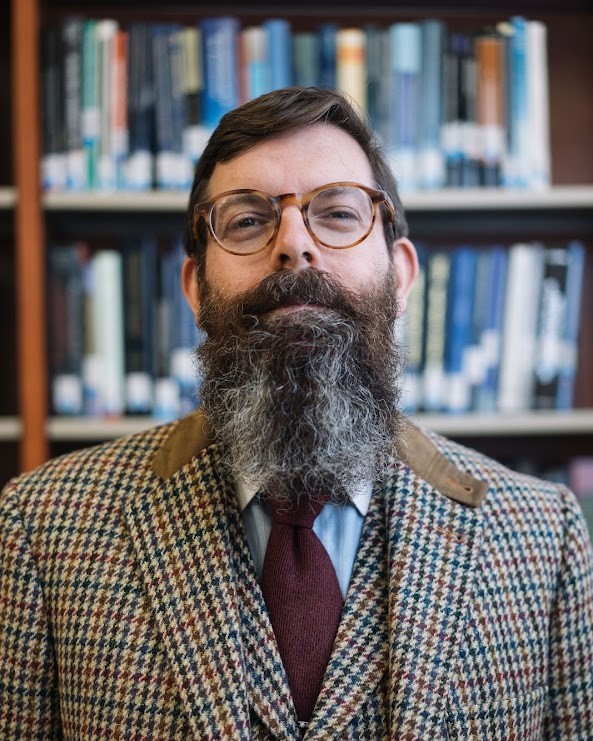
Professor Alford is a law professor, lawyer, and a distinguished legal scholar. "Canada has become the only country with a Westminster parliamentary system that has limitations on parliamentarians' freedom of speech," Professor Alford says. "Embarrassing the government can now be a valid reason for prohibiting MPs and senators from speaking out if they belong to the NISCOP committee."
"Parliamentary privilege is an essential protection against these wrongs."
Professor Alford is also convinced that section 12 is unnecessary because highly confidential matters have always been discussed in Parliament.
He points to an example from World War Two that hits close to home for him.
"My grandfather was a member of the 1st Canadian Parachute Battalion that landed behind the beaches of Normandy on D-Day," Professor Alford says.
"Although the D-Day invasion plans were reviewed in the House of Commons, this information wasn't leaked. If it had been, I might never have been born."
If, in a rare case, a security breach does occur, Parliament has the power to punish these offences, including expelling MPs.
A Historic Ruling
At the end of April, Professor Alford spent two days before the Supreme Court of Canada arguing his case and answering questions from the justices.

"Much of my work is focused on uncovering errors that creep into legal reasoning and attempting to correct them," Professor Alford says. "It's crucial that Canada has legal scholars who can concentrate on the forgotten fundamentals of the constitution because lawyers don't have the time to engage in these issues. Scholars can point out where something could, or has, gone wrong. That's one of the functions of law schools." Above, a view of Lakehead's law library.
In an 8-1 ruling, the justices decided not to strike down section 12. Despite this decision, they accepted a significant amount of Professor Alford's argument.
"The justices said the sole reason that section 12 stands is because NISCOP committee members volunteered for the committee," he says.
"They also determined that there are no limits on what non-NSICOP members can say in Parliament. This is something the Supreme Court hadn't previously recognized, so the case created an important legal precedent.
Only extremely narrow limits can be imposed on Parliament's freedom of speech and guardrails that hadn't previously existed have been constructed."
Learn more about this issue by reading Professor Alford's newly released book, "By Authority of Parliament: The Constitutional Boundaries of Legislative Power in Canada," published by McGill Queen's University Press.
Interested in naturalizing your yard and garden?
These Lakehead Farm Lab Educators Will Help You Go Wild
With the arrival of spring, people are eager to put their green thumbs to use.
And many of us—from novice to expert gardeners—are wondering how to create more eco-friendly green spaces.
Fortunately, Linda Grant and Lindsay Sargent have some easy-to-implement advice to transform your yard into a garden blooming with native plant species and locally adapted vegetables.
Linda and Lindsay are both garden-based educators with Lakehead Orillia's Farm Lab.
It's a small on-campus model farm that grows food and flowers to help elementary, high school, and Lakehead students understand sustainable food systems and immerse themselves in hands-on ecological learning. The Farm Lab is supported by a three-year Natural Sciences and Engineering Research Council of Canada (NSERC) PromoScience grant.
 Linda Grant, who has a Master of Education in Mathematics and Gardening, has been an educator for 30 years, including at the elementary and secondary levels. She integrates First Nations Ways of Knowing, outdoor education, and experiential Learning into her work. Currently, she teaches K-6 mathematics education at Lakehead University and works at the Farm Lab as a garden-based educator.
Both Linda and Lindsay agree on some simple ways to become an environmentally friendly gardener.
First, try seeking out neighbours who've already naturalized their yards for ideas you can put into practice. It's a great way to share tips, gardening tools, plants, and seeds with one another.
Another way to jumpstart this process is to not mow a section of your yard.
"Soon, a variety of species will begin growing there," Linda and Lindsay explain. "This will encourage biodiversity, which birds and pollinators love."
To naturalize large sections of your lawn and replace traditional grass, mow it very short and then spread clover seeds over it.
"And, if you're clearing out parts of your yard, put the brush at the back of your property to give animals a place to live," Linda adds.

Lindsay Sargent has taught in K-7 classrooms and has recently completed a Master of Education at Lakehead University. Currently, she's a sessional instructor with Lakehead's Faculty of Education and a Farm Lab garden-based educator. Her teaching and research interests include environmental education, garden-based learning, place-based approaches, and reconciliation rooted in the land. Lindsay is also the food literacy coordinator at Farm to Cafeteria Canada.
Another key element of sustainable gardening is avoiding chemical fertilizers. Instead, spread compost and manure to give your soil the nutrients it needs.
"In the fall, you can cover up the soil with compost and leaf litter, which will keep pests and weeds away," Linda says.
"Rotating plants every year and using row covers will also deter pests—like voles and insects—so that you don't have to use pesticides," Lindsay says.
"Sustainable gardening can be a wonderful lifelong learning journey that's good for the Earth and that allows you to pass your along your knowledge to others," Linda says.
Read on to discover a few of the plants that thrive in Ontario and for more tips about naturalizing your yard.
.jpg "Brown-Eyed Susans")
Learn which plants grow in your region—for example, these brown-eyed susans—and then introduce them into your yard or garden. "Google 'rewilding my yard' or 'sustainable gardening practices,' for inspiration," Linda says. "Plant nurseries and garden centres that sell native plants are a good resource, too." Photo Credit: Unsplash/Caroline Sterr
.jpg "Purple Aster")
To get started on your rewilding adventure, you’ll need just a few simple tools: a shovel, a hand trowel, a rake to even out planting surfaces, and a watering can or hose. Before long, you’ll be able to enjoy colourful flowers in your yard like these native purple asters. Photo Credit: Unsplash/Patti Black
.jpg "Dandelions")
Traditional lawns are monocultures that are hostile to pollinators. Instead of spending time and energy trying to kill off plants considered weeds, let dandelions, creeping thyme, wild violets, and clover grow on your lawn. “At Farm Lab, we say that a weed is in the eye of the beholder,” Linda says. “Usually, it just means a plant that’s growing where you don’t want it to,” agrees Lindsay. Dandelion flowers are one of the first available foods for pollinators in the spring, so it’s important not to mow them down. A good practice to follow is “no-mow May.” Photo Credit: Unsplash/Alyona Milch
.jpg "Goldenrod")
Colourful goldenrod is an excellent native species to plant for fall colour. Pollinators flock to it in late summer and early fall and, in the winter, it provides food for birds, mice, and other animals because it sticks up above the snow. While of tremendous ecological value, keep in mind that goldenrod spreads quickly. Cut it back in the late fall to contain it to the areas you want it to grow in. Photo Credit: Unsplash/Michael Barrick
.jpg "Bloodroot")
Native forest plants like bloodroot (above), trilliums, fiddlehead ferns, and mosses can provide visual interest in shady areas of your yard. “Because I’ve naturalized my lawn, I only mow it two or three times a year in the sunny spots,” Lindsay says. Photo Credit: Unsplash/TR
.jpg "Milkweed")
Having a variety of plants in your garden provides more food for pollinators, including butterflies, birds, and bees. The nectar of the milkweed plant is a favourite of insects, including the monarch butterfly. Photo Credit: Unsplash/Annette Meredith
.jpg "Potatoes") Choose an area of your yard that receives a lot of sun to establish a vegetable garden. Linda and Lindsay recommend starting small, perhaps with a container garden, while you build up your horticultural skills. Potatoes (above), onions, and leafy greens are easy crops to grow and are well adapted to Canada's climate and geography. Photo Credit: Unsplash/Javier Albuja
Choose an area of your yard that receives a lot of sun to establish a vegetable garden. Linda and Lindsay recommend starting small, perhaps with a container garden, while you build up your horticultural skills. Potatoes (above), onions, and leafy greens are easy crops to grow and are well adapted to Canada's climate and geography. Photo Credit: Unsplash/Javier Albuja
.jpg "Wild Black Raspberries")
These delicious black raspberries are native to Ontario and they’re a popular species at the Farm Lab. “This spring, a baby rabbit found a safe spot behind the raspberries' prickly canes to protect itself from foxes and other predators,” Linda says. Photo Credit: Unsplash/Nadine Eggenberger
.jpg "Wild Strawberries")
When naturalizing, think about the shady and sunny parts of your yard and choose plants accordingly. Good native plants to grow include wild strawberries (above) and wild leeks. Photo Credit: Unsplash/Eric Prouzet
Check out these resources for eco-friendly gardening:
Welcome Webinar Series: International Undergraduate Registration 101
Starting university this fall? Registration Ready is a webinar series designed to help you with the course registration process and other important aspects of your university career, like navigating the Academic Calendar, understanding university regulations and the requirements of your program. Whether you are an undergraduate or graduate international student, we have a webinar specifically for you!
Welcome Webinar Series: International Graduate Registration 101
Starting university this fall? Registration Ready is a webinar series designed to help you with the course registration process and other important aspects of your university career, like navigating the Academic Calendar, understanding university regulations and the requirements of your program. Whether you are an undergraduate or graduate international student, we have a webinar specifically for you!
Pages
