



Welcome Webinar Series: Get Ready for Graduate Studies
Are you an incoming international graduate student? Join Get Ready for Graduate Studies to help you prepare for a smooth transition into your studies with the Faculty of Graduate Studies.
Are you an incoming international graduate student? Join Get Ready for Graduate Studies to help you prepare for a smooth transition into your studies with the Faculty of Graduate Studies.
Discuss everything housing as you prepare for your journey to Lakehead. This is one you don't want to miss as a new student!
Are you joining us as an international student this Fall? Join us to discuss things to consider as you plan and prepare, meet your advisors, and start your preparations, so you feel organized and confident as you navigate through your journey to Lakehead. Information will also be provided for students moving with dependants, including enrolling in school, daycare, and more!
Are you a new international student, joining us this Fall? Join us for all you need to know about Lakehead to get started on your academic journey!
Universities are familiar places to Teagan Neufeld.
But feeling welcome on campus was a long process for this accomplished researcher and psychology graduate student.
"I grew up Métis in northwestern Ontario," she explains. "Going to university in Sudbury meant moving 18 hours away from my hometown of Kenora."
The sudden disconnection from her family and her culture was challenging.
"It made me realize how crucial it is that Indigenous youth have access to culturally relevant mental health services," she says.
This insight helped shape the direction of Teagan's Master of Clinical Psychology research, which is now in the national spotlight.

In September 2026, Teagan will begin a PhD in Clinical Psychology at Lakehead, supervised by Dr. Aislin Mushquash, where she will continue her mental health research. She previously gained hands-on experience helping young people as a childcare worker with Tikinagan Child & Family Services.
She has been chosen as one of 20 finalists from across Canada in the 2026 Social Sciences and Humanities Research Council (SSHRC) Storytellers Challenge.
"Learning that I was a storytelling finalist was very exciting," she says. "It feels good to translate knowledge in a way that's accessible to the broader public."
In her award-winning video, Teagan describes the alienation that Indigenous young people can feel as they adapt to life away from their communities.
"You reach out for help, and a counsellor hands you a standard questionnaire to assess your mood.
No one asks about your family, your culture, your language, or your connection to the land.
The support you truly need doesn't exist...yet."
Finding that support is the driving force behind Teagan's master's research, "Evaluating Acceptance of Aaniish Naa Gegii: The Children's Health and Wellbeing Measure."

Central to Teagan's methodology is the embrace of two-eyed seeing—honouring both Indigenous and western ways of knowing.
Her research is being supervised by Lakehead Associate Professor Dr. Aislin Mushquash and is also supported by Dr. Christopher Mushquash, a Canada Research Chair in Indigenous Mental Health and Addiction at Lakehead.
Psychologists and mental health professionals regularly use health and wellbeing measures to get a baseline assessment of an individual's wellbeing and to track their mental health over time.
"The problem is that virtually none of the existing measures are Indigenous," Teagan says.
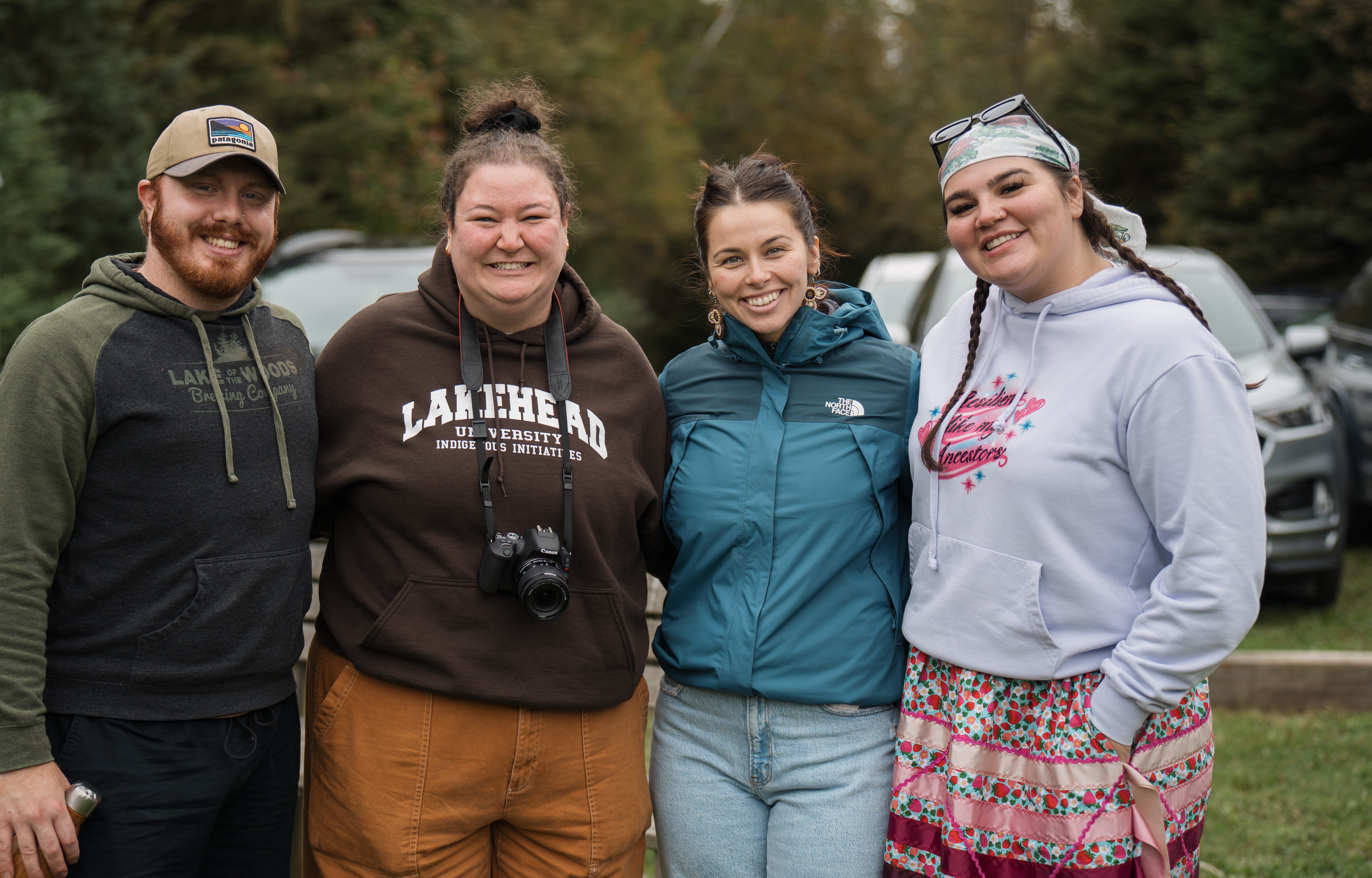
Teagan (second from left) enjoys spending time with fellow students Joshua Wetendorf, Abbey Radorf, and Céline Wick at the 2025 Fall Harvest festival organized by Lakehead’s Indigenous Initiatives.
"Standard western measures don't take into account what it's like growing up on a reserve or in a small community. They also don't recognize the spiritual component of wellbeing, which is an essential part of life in Indigenous communities."
In 2011, this gap in care led researchers Mary Wabano and Dr. Nancy Young to design a new clinical tool.
They partnered with Indigenous children, youth, and communities to create Aaniish Naa Gegii: The Children's Health and Wellbeing Measure for Indigenous youth aged 8 to 18.
Aaniish Naa Gegii is a greeting in the Anishinaabemowin language that translates to: "How are you?"
Young people completing the assessment respond to questions based on the four quadrants of the Medicine Wheel to gauge their emotional, physical, spiritual, and mental wellbeing.
"It's been proven to accurately identify a person's strengths as well as areas where they need support. For example, becoming more involved in cultural events, getting additional help with schoolwork, or talking to a counsellor."
"My research—which is funded by a SSHRC Indigenous Scholars Award—is looking at how to adapt Aaniish Naa Gegii for Indigenous postsecondary students," Teagan says.
Before embarking on her research, she went to Lakehead's Indigenous Student Service Centre (ISSC) to see if students had an interest in more culturally relevant mental health tools.
Both ISSC students and staff were enthusiastic about the proposal, and now they're collaborating with Teagan on the evaluation of Aaniish Naa Gegii.
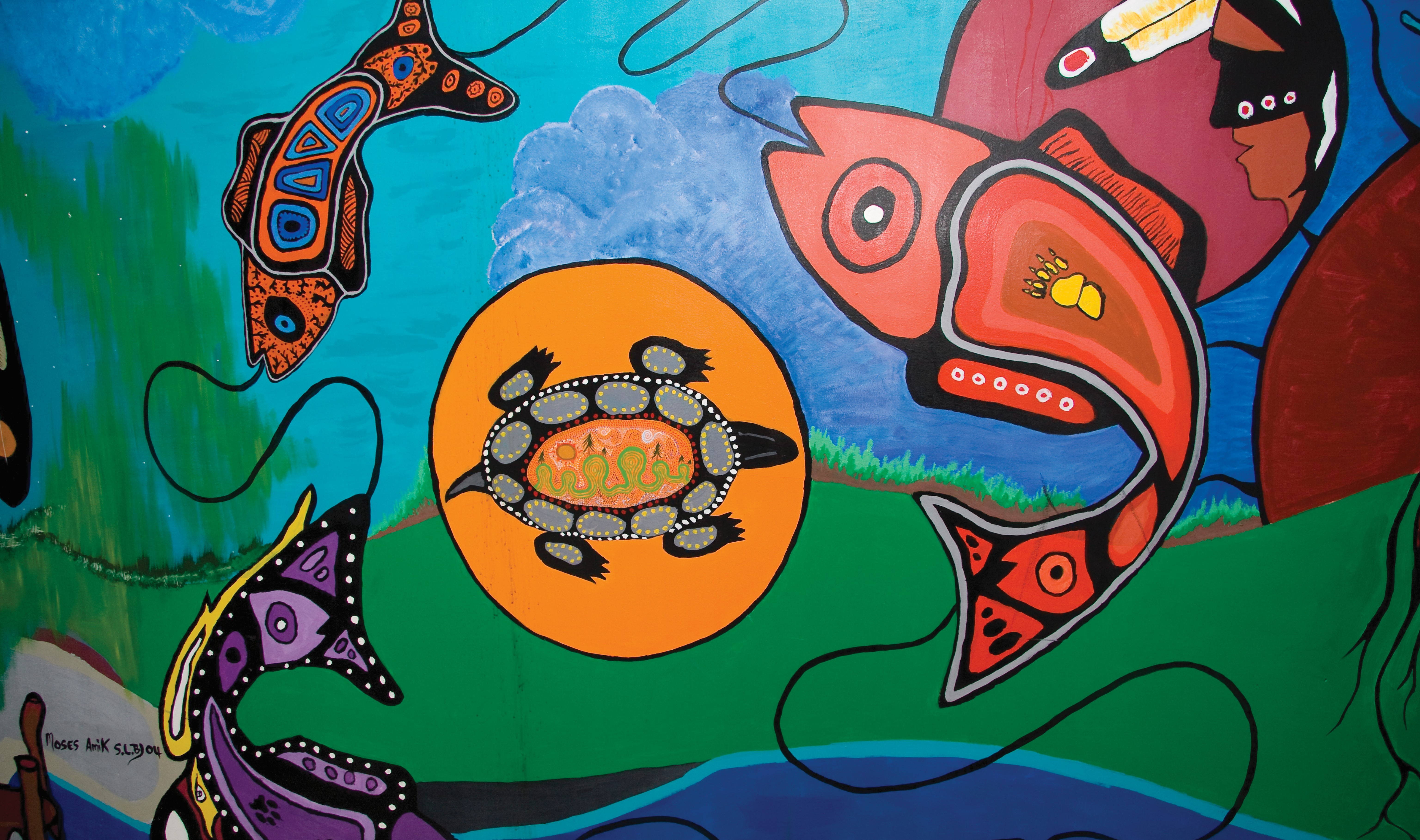
"My research follows the Cree and Metis principle of Wâhkôhtowin, which recognizes that everything and everyone is connected," Teagan says. Artwork credit: Moses Amik
"We're at the information-gathering stage, trying to determine how to adapt the measure to best reflect the students' experiences," Teagan says.
"It's important to me to take a participatory and community-based approach to my research," she adds.
The next steps will be to modify the measure and run a statistical analysis to see if Aaniish Naa Gegii is still valid and reliable.
"This research is where my heart goes because it affects the people in my life," Teagan says.
"The power of representation, and what it can do for Indigenous youth, is transformative."
SSHRC's Storytellers Challenge asks postsecondary students to show Canadians how social sciences and humanities research is impacting our lives, our world, and our future for the better. In June 2026, the national SSHRC Storytellers finalists, including Teagan, will present their research at the Science Writers and Communicators of Canada conference in Montreal. Based on their presentations, five winners will be chosen.
The 2nd International Conference on Cognitive Computing, Intelligence and Data Science Applications (CCIDSA 2026) will take place on June 19–20, 2026, at Lakehead University, Thunder Bay.
Organized by the Image Analysis & Pattern Identification Research Lab (IAPI-RL), the conference brings together researchers, academicians, industry professionals, and students working in artificial intelligence, cognitive computing, data science, mathematical modeling, and intelligent systems.
CCIDSA 2026 is an international Springer Scopus conference focused on sharing recent advances in AI-driven technologies and intelligent systems. The conference includes topics such as deep learning, computer vision, large language models, explainable AI, robotics, healthcare AI, optimization, graph neural networks, digital twins, intelligent control systems, and mathematical modeling.
June 19 will be conducted as an in person conference at Lakehead University, while June 20 will be organized online for international participation. The event aims to create opportunities for collaboration, networking, research discussions, and knowledge exchange among participants from academia and industry worldwide.

Madeline Fabiano (HBK'23/MSc'25) is part of a generation of young people who've faced more than their fair share of struggles.
She was only a few months into her university studies when COVID hit, forcing everyone into lockdown.
This crisis affected students mentally, socially, and academically.
Madeline, though, rose above the pandemic's daunting challenges. She not only thrived, but she helped her fellow students thrive, too.
"I wanted to create supportive environments where people feel empowered and to foster a more inclusive, health-focused campus," she says.
"My goal was to address real student needs and promote a lasting culture of wellness."
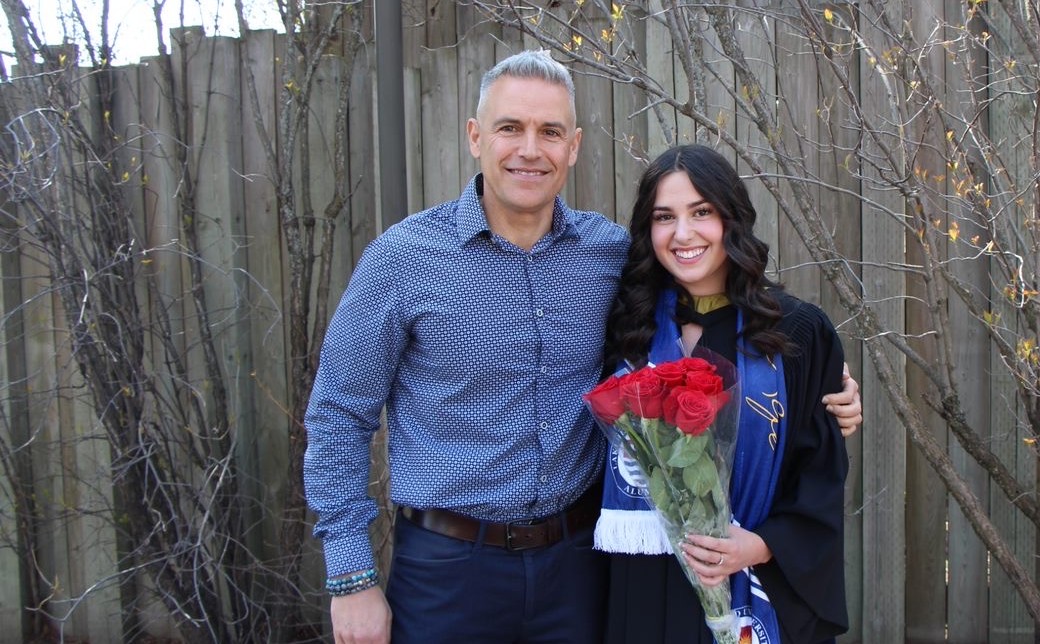
Above, Madeline (right) and her father Enzo (left) at her 2023 undergraduate convocation ceremony.
Her diverse contributions have earned her the 2026 Robert Poulin Memorial Award for Outstanding Citizenship.
"Receiving the award is a wonderful culmination of my academic, research, and volunteer work at Lakehead," says Madeline, who has earned undergraduate and master's degrees in kinesiology.
"It's an honour to leave with such a meaningful award."
To help students have the best university experience possible, Madeline joined several organizations—including the Kinesiology Association of Lakehead University (KALU) and Lakehead's Student Wellness Advisory Team (SWAT).
"I promoted awareness of campus services and connected students with critical resources, such as counselling," she says.

Madeline’s approach to kinesiology is focused on the benefits of physical activity. “Even carving out 10 minutes makes a huge difference,” she says.
Later, during her master's degree, Madeline joined the Lakehead chapter of the Cam's Kids Foundation, which assists youth dealing with mental health issues.
"My focus was on promoting exercise and healthy coping strategies and disseminating this knowledge through campus activities and social media."
Madeline's outreach efforts went far beyond campus.
She found time to volunteer with the Thunder Bay Regional Health Sciences Centre's Hospital Elderly Life Program and WE-Can patient assistant program.
Serving as a Camp Quality companion to children with cancer was another incredibly rewarding endeavour.
Madeline was drawn to kinesiology—the study of the body in motion—because physical activity has been central to her life.
"I did dance, gymnastics, soccer, and swimming as a young child because my parents wanted to introduce me to a broad range of activities," she says. "When I got older, I concentrated on competitive cross-country skiing and running."
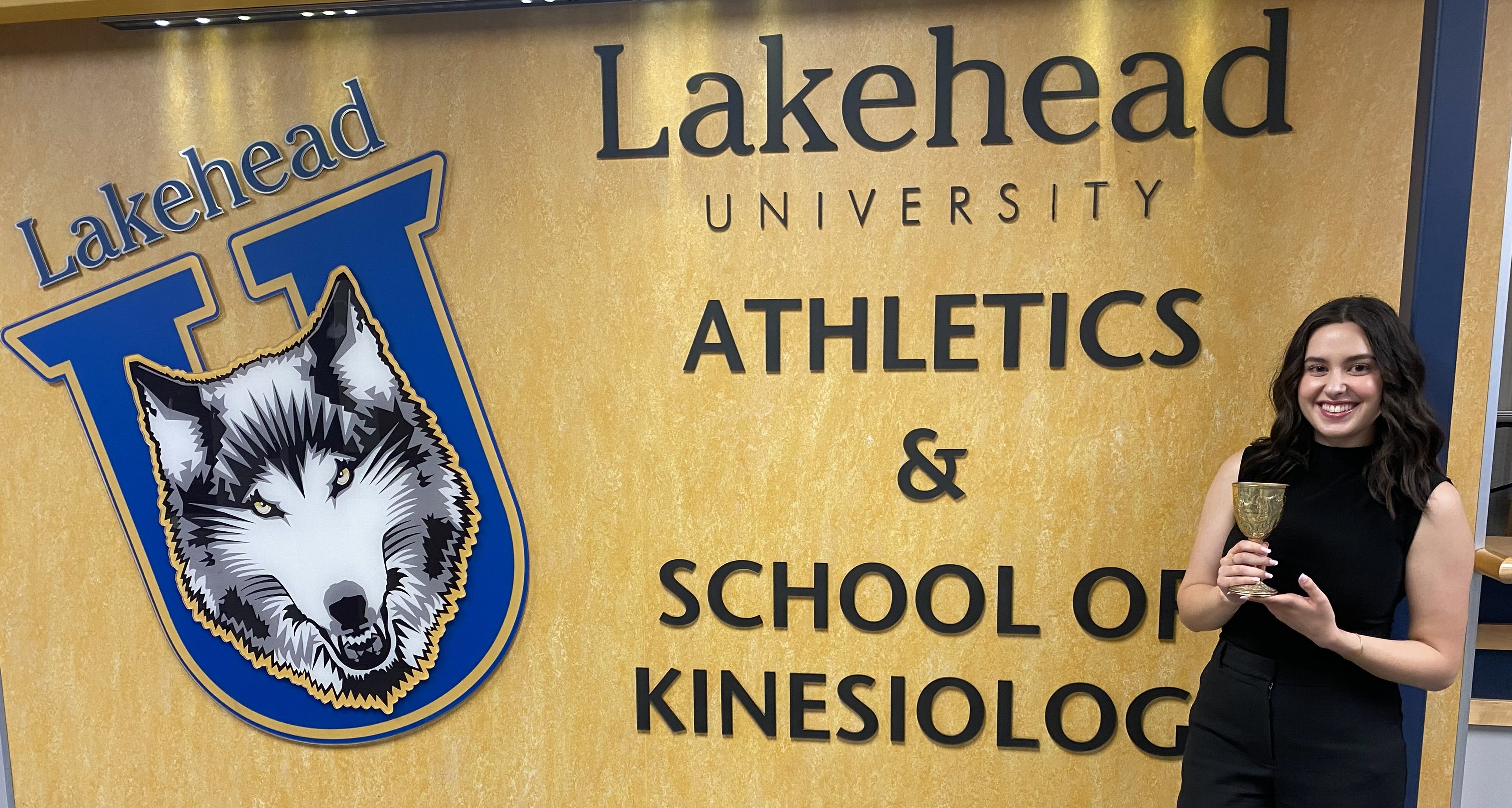
Above, Madeline stands in front of the School of Kinesiology with the coveted Chalice of Knowledge. "You can only drink from it after you've defended your master's thesis!" she explains. This passion for athletics carried over into her university research.
Madeline zoned in on an overlooked aspect of the pandemic—the loss of opportunities for exercise and physical activity.
"After the lockdown ended, I noticed there weren't many young women in the gym," she says.
"They wanted to be more active, but because they hadn't had access to athletic facilities during COVID, they didn't learn the skills needed to feel confident in the gym."
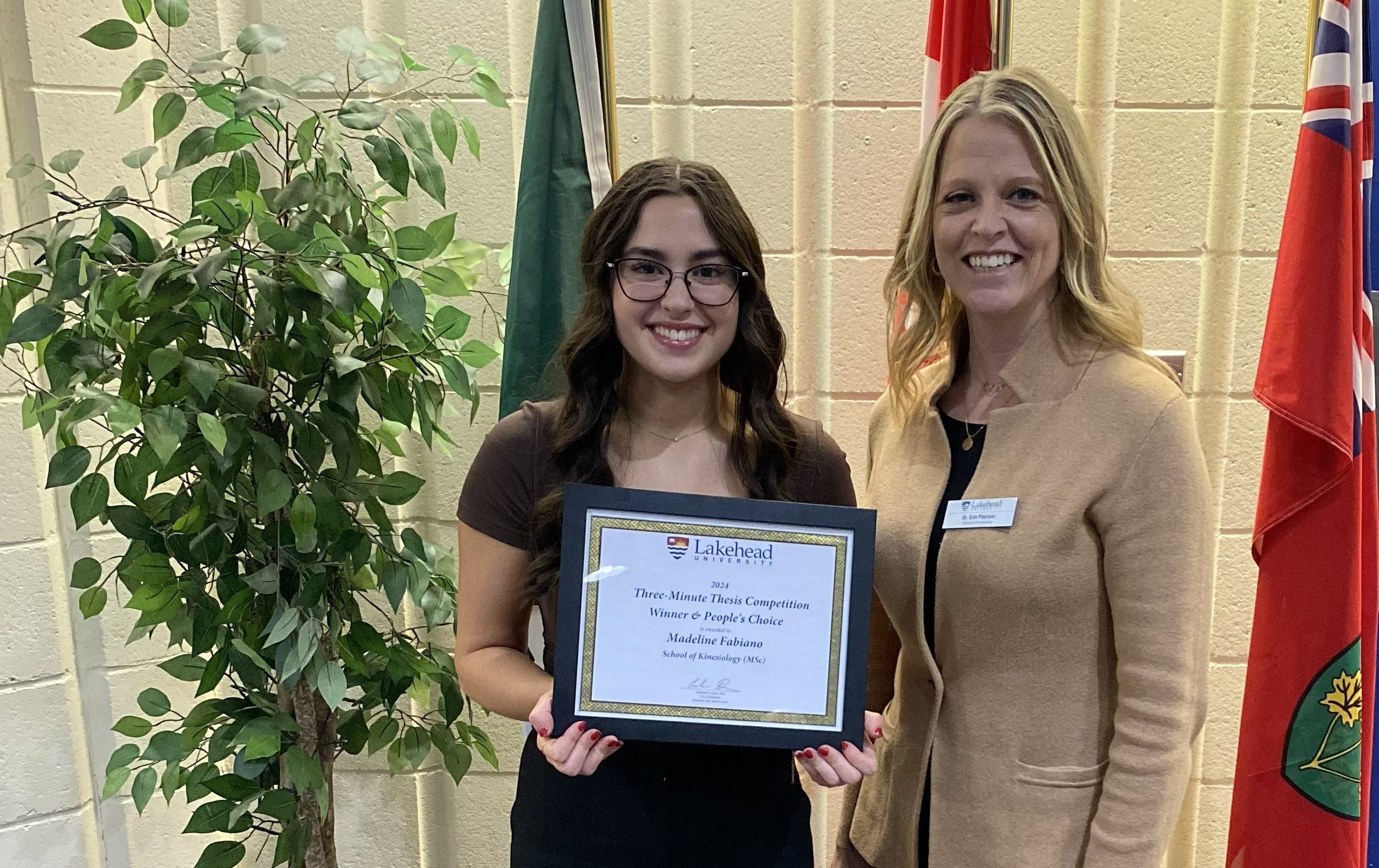
"I had a lot of people in my corner at Lakehead—including my thesis supervisor Dr. Erin Pearson—who contributed heavily to my successes," Madeline says. Above, Madeline and Dr. Pearson (pictured right) at Lakehead's 2024 Research and Innovation Awards Ceremony after Madeline won the People's Choice Award and came first place in Lakehead's Three Minute Thesis (3MT®) competition. She later came third in the 3MT® provincial finals.
Madeline's undergraduate thesis studied these barriers to exercise and provided the foundation for her master's thesis—the development of the SHINE (Supporting Her In Navigating Exercise) program.
SHINE used peer support to enhance women's exercise behaviours and comfort level in the gym.
"Each student exercised once a week with a kinesiology student who acted as their mentor," Madeline explains. "It really improved their confidence and activity level."
"I had countless opportunities at Lakehead," Madeline says, "from representing the university at a national undergraduate kinesiology research conference to competing in the provincial Three Minute Thesis (3MT®) graduate competition.
My Lakehead professors have been my cheerleaders for the past six years." 
For her PhD research, Madeline will create exercise interventions aimed at reducing perimenopausal symptoms among inactive women. "There's not much research on perimenopause," she says. Above, Madeline gives a presentation at McGill University.
Since successfully defending her master's thesis in August 2025, she has been enrolled in McGill University's kinesiology PhD program. "My dream is to continue conducting health research as a university professor," she says.
Madeline urges Lakehead students to be unafraid of pursuing opportunities that come their way.
"My dad always tells me to have courage, he says, 'Be a lion.' It's advice that inspires me to take chances."
The Robert Poulin Memorial Award for Outstanding Citizenship is presented to a full-time undergraduate or graduate student on the Thunder Bay campus for their contributions to the welfare of Lakehead through their student activities.
Madeline's research was made possible by several scholarships and grants: a Canada Graduate Research Scholarship awarded by the Canadian Institutes of Health Research, an Ontario Graduate Scholarship, an Applied Health Research Scholarship from St. Joseph's Care Group, and funding provided by a Lakehead faculty member, through a Lakehead Faculty Research Grant, in support of Madeline's master's research.
"As more of young people's lives move into the virtual world, online platforms and apps are increasingly being used to contact, groom, manipulate, and exploit young people," says Lakehead student Taylor Munro.
Taylor and fellow social work students Steven Kearney, Shanta Paudel Khatiwada, Kris Carlson, and Tessa Pasqualino recently investigated this growing problem.

"Social media is now both a place of connection and a place of exploitation," says Taylor Munro (pictured left). She and her fellow students' human trafficking project gave them the opportunity to engage with a complex and urgent social issue early in their academic and professional development.
As part of an undergraduate social work theory course taught by professor Abigale Sprakes, they studied the impact of human trafficking in Thunder Bay and northwestern Ontario.
Their research focused on the online exploitation of young people aged 12–18.
As part of this important work, they developed a social media campaign to raise public awareness about human trafficking.
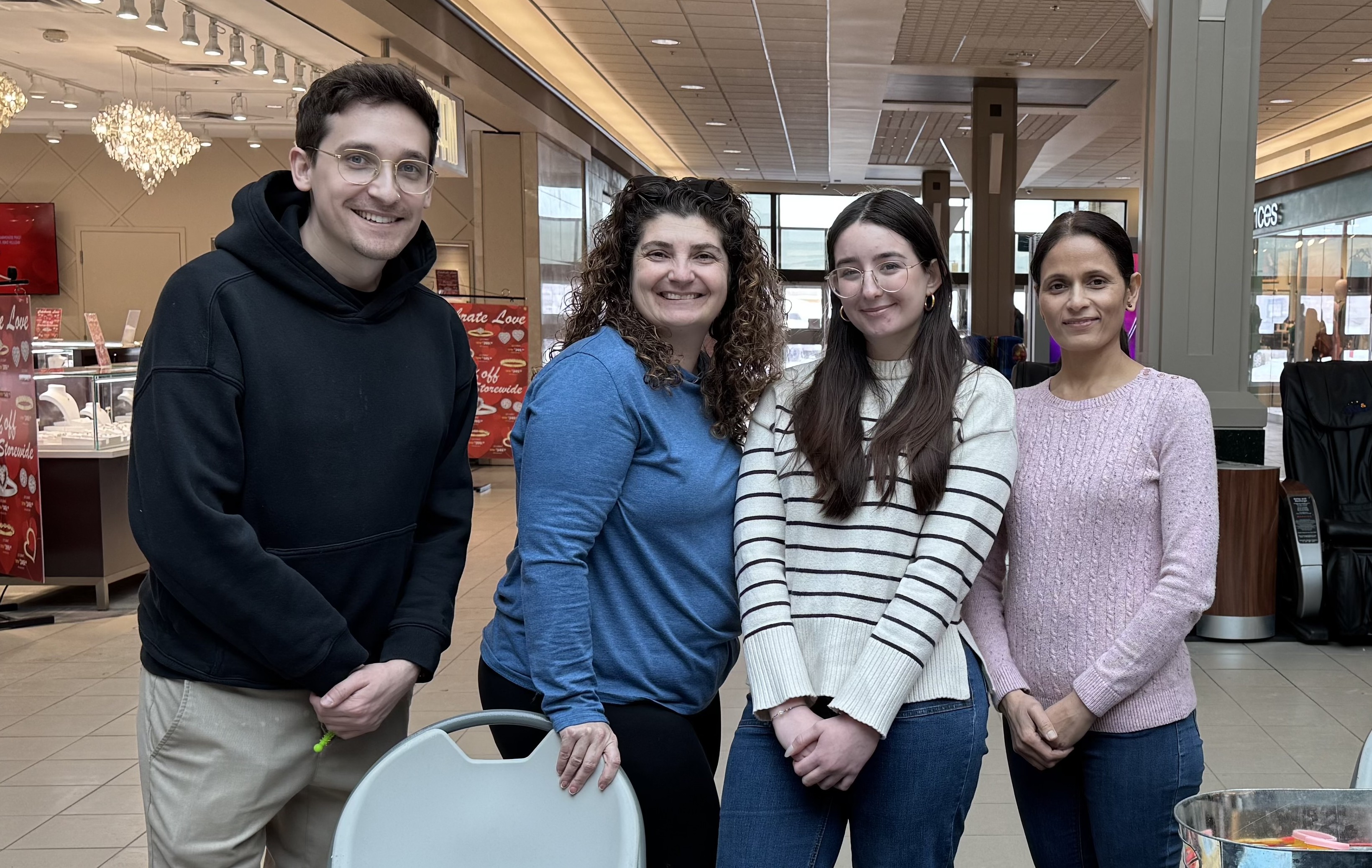
Social work students Taylor Munro and (left to right) Steven Kearney, Kris Carlson, Tessa Pasqualino, and Shanta Paudel Khatiwada hosted an information table about human trafficking at Thunder Bay's Intercity Mall in February 2026. They say that "one of the most important takeaways from our research is the need to shift how we understand vulnerability."
These efforts were bolstered by a letter-writing campaign aimed at key stakeholders and decision-makers with the power to take action against trafficking.
The students also participated in a community awareness event organized by the Thunder Bay Coalition to End Human Trafficking at the Intercity Shopping Centre in February 2026.
The core mechanics of trafficking—recruitment, control, and exploitation—are consistent across Canada, but regional context shapes how it occurs.
In northwestern Ontario, domestic sex trafficking that targets women and youth is the most prevalent form of trafficking.
"It doesn't usually look like what you see in the movies," explains Shanta Paudel Khatiwada.
"Trafficking is less about abduction by strangers, which does happen, and more about abusive relationships, manipulation, and victims being moved between communities."
Trafficking is subtle and embedded in everyday environments, particularly online.
Social media has become a gateway for the trafficking and exploitation of children and youth on an unprecedented scale.
This is particularly the case in northwestern Ontario. The region's geographic isolation and limited access to services and social supports make it more likely that youth will seek connection online.

Approximately 91% of Canadians aged 15–24 report using some sort of social networking platform, making them vulnerable to online predators. This means that young people's access to technology must be balanced with meaningful safeguards and awareness.
Traffickers then deploy a range of online tactics, including grooming through fake identities and sextortion (using images for blackmail).
Luring victims by pretending that they're interested in a romantic relationship, known as the "boyfriend model," is another popular strategy.
"Because of this, many young people do not initially identify as 'victims,'" Steven Kearney says. "But what may appear as a 'choice' is frequently survival within highly controlled circumstances."
Online platform features such as anonymous accounts, disappearing messages, livestreaming, and algorithm-driven connections make it easier to contact, manipulate, and isolate youth—often in a frighteningly short space of time.
The students' research showed that Snapchat is one of the most commonly used social media platforms for trafficking and exploitation.
Traffickers are highly skilled at identifying the unmet needs of young people and positioning themselves as the solution.
"They look for signals, both online and offline, such as loneliness, conflict at home, financial stress, or a desire for belonging," Kris Carlson says.
They then set about exploiting these normal human needs."
.jpg "Girl with iPhone")
The social work students discovered that escaping trafficking is not a single moment but a process. Recovery may involve housing, healthcare, counselling, legal advocacy, and community connection. Photo Credit: Pexels/cottonbro studio
There are also social factors and systemic inequities, such as colonialism, racism, and homophobia, which can increase a young person's vulnerability.
For instance, youth who identify as 2SLGBTQIA+ and BIPOC, and those who've had adverse childhood experiences (ACEs), may be at higher risk because they're part of marginalized groups with less access to support.
Human trafficking is a crime that affects every aspect of a person's life, including physically, psychologically, relationally, and neurologically.
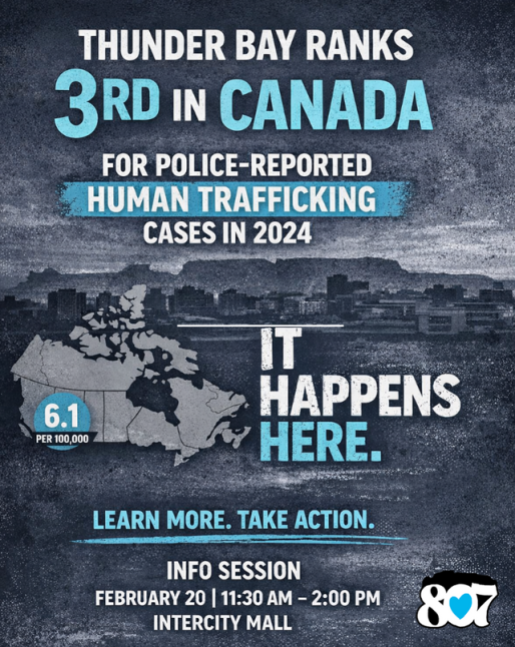
The research students developed infographics, including this one, that they shared with the Thunder Bay Coalition to End Human Trafficking for their use. Some of the students also posted the infographics to their personal social media platforms to further public awareness.
So how can parents protect their children?
"When children feel safe, seen, and supported, they are more likely to recognize risk before a situation escalates," Tessa Pasqualino says.
"Open, non-judgmental conversations about online spaces, relationships, and safety are essential."
The most effective protection is not to control a young person's world, but to prepare them to navigate it safely.
Likewise, schools and social service providers can play a critical role in prevention and early intervention. Developing strong legislation and protections to keep pace with the constantly evolving world of the internet is equally important.
"We want people to remember that young people are not 'seeking attention' when they're online," the student researchers add.
"They are seeking connection, belonging, and safety. When those needs are unmet, they can be exploited."
Parents, educators, and community members can click here to learn more about tools and resources to prevent human trafficking.
If you, or someone you know, may be a victim of trafficking, call the Canadian Human Trafficking Hotline at 1-833-900-1010.
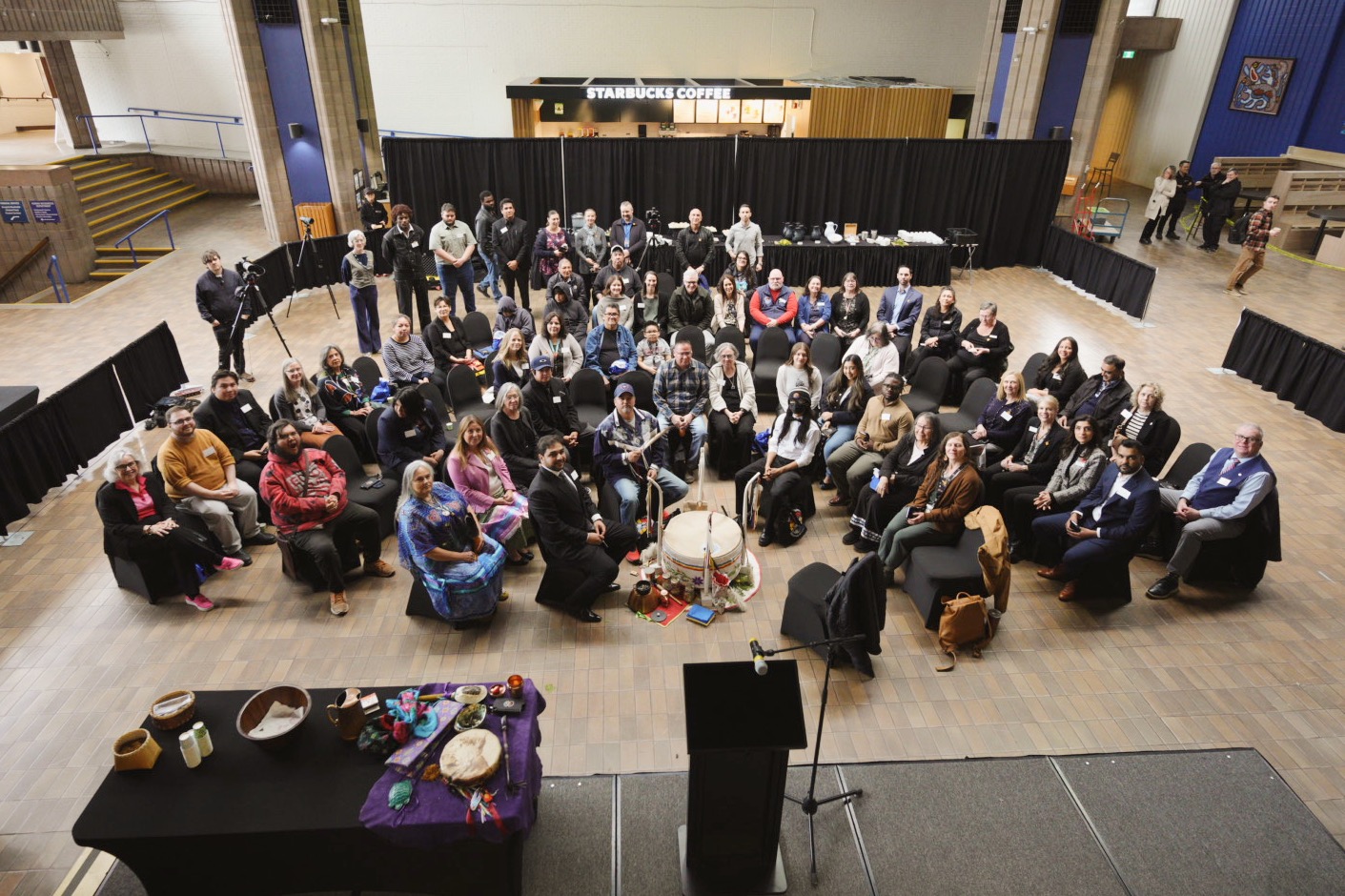 Lakehead University and Paapiiwaaniimaan Grassy Narrows Mercury Care Home (GNMCH) signed a Memorandum of Understanding today to help advance education, workforce development, and community-based research for Grassy Narrows First Nation.
The MOU outlines a shared commitment to expand access to postsecondary education for Grassy Narrows First Nation members, introduce new training programs and micro-credentials, support student placements in the community, and advance research that responds directly to local needs and priorities.
“This collaboration reflects our shared belief in the transformative value of education and the importance of working together in meaningful, community-driven ways,” said Dr. Gillian Siddall, President and Vice-Chancellor of Lakehead University. “We are proud to collaborate with Grassy Narrows in building pathways for Indigenous learners and advancing initiatives rooted in community priorities.”
At the centre of the agreement is an emphasis on the integration of Indigenous knowledge and culturally informed approaches across programs, training, and research, to ensure the partnership aligns with community values and perspectives.
“This is about creating opportunities for our people in ways that respect our knowledge, our needs, and our future,” said Chief Sherry Ackabee of Grassy Narrows First Nation. “We are building something that is guided by our elders, supports our youth, strengthens our workforce, and reflects what matters most to our community.”
For Lauri-Ann Marshall, Executive Director of GNMCH, the partnership with Lakehead helps GNMCH continue to build a model of care that reflects what the community has been asking for. “It supports training, workforce development, continuing and life-long education opportunities, supporting the community vision of ‘care close to home’ for the people of Grassy Narrows,” she explained.
The Memorandum of Agreement between GNMCH and Lakehead’s Faculty of Health and Behavioural Sciences will further support this vision of ‘care close to home’ through health-focused education pathways, student placements addressing local health needs, and initiatives to strengthen the community’s health workforce.
“This partnership creates meaningful opportunities for our students to learn with and from the community,” said Dr. Mirella Stroink, Dean of the Faculty of Health and Behavioural Sciences. “It strengthens experiential learning while supporting culturally relevant approaches to care.”
The work between Lakehead and GNMCH has been ongoing, grounded in the connections that students, faculty, and staff have built together over time.
“It has supported shared learning and helped create safer, more welcoming workplaces, offices, and communities across the partnership, opening pathways for Lakehead students and Grassy Narrows community members to continue these relationships for generations to come,” said Hussain Durrani, Director of HR and Operations at GNMCH and a Lakehead alum.
Following the signing ceremony, Lakehead held a screening of “Sports Education Reconciliation”, a documentary capturing the Lakehead University Student Union and Thunderwolves Soccer Club’s second annual visit to Grassy Narrows. The documentary highlights the strength of relationship-building through youth engagement, athletics, and cultural exchange.
The opioid epidemic is taking a toll on families and communities across the country.
In northern Ontario alone, 324 people died from opioids in 2024.
“Being able to showcase my SSRHC-funded research is huge,” says Sydney, who just successfully defended her master’s thesis. “It’s important to show how we transform grant money into research.”
"Watching this crisis unfold and seeing how people who use drugs are treated as less deserving of care sparked my research," says Master of Social Work student Sydney Ambury.
In 2024, she became a research assistant on a project funded by a Social Sciences and Humanities Research Council (SSHRC) Institutional Grant and led by Lakehead social work professor Abigale Sprakes.
The research—done in partnership with Thunder Bay's Safer Supply Program (SSP)—documented the impact of accessing opioid alternatives.
Safer Supply prescribed alternative drugs to people with opioid-use disorders, allowing them to avoid the unregulated toxic drug supply.
A key component of Sydney's research involved inviting Safer Supply clients to share their experiences in short videos they created together.
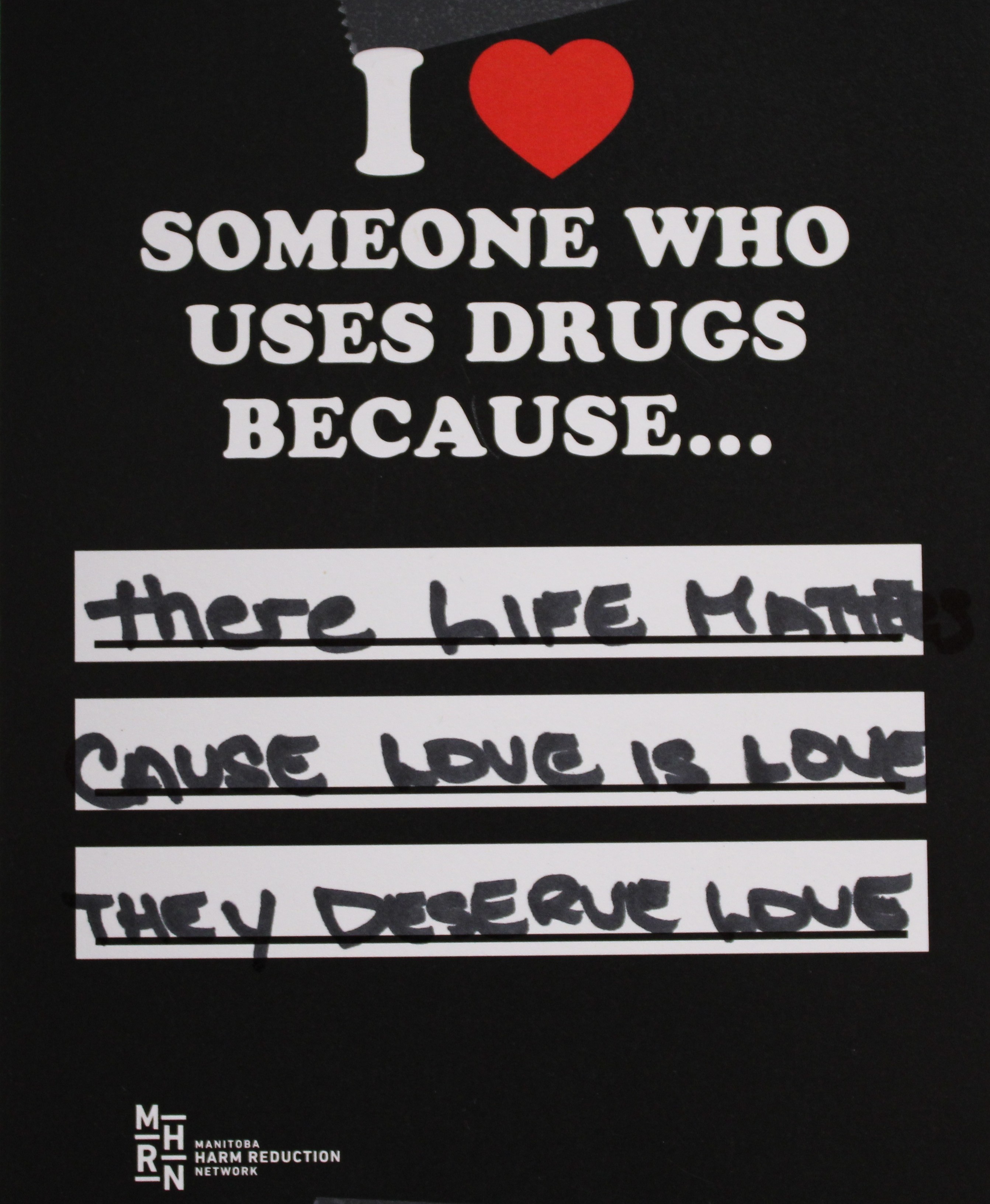
"The digital stories are an important piece of advocacy calling for evidence-based and compassionate systems of care," Sydney says. "We need to remind community members that the lives of people who use drugs matter."
"We wanted these digital stories to spotlight the real human beings who relied on the program and to show how the program changed their lives," she says.
This powerful research project led SSHRC to select Sydney as one of 20 national finalists in the 2026 SSHRC Storytellers Challenge.
"It was very exciting to learn I was a finalist," Sydney says. "SSHRC's research funding has allowed the voices of people who are often dismissed to be heard."
Thunder Bay's Safer Supply Program had an impressive track record.
It was responsible for a 92% reduction in drug poisonings for participants enrolled in the SSP and a significant decrease in their Fentanyl use, one of the deadliest drugs contributing to the opioid crisis.
"Not a single program participant died the entire time that Safer Supply was running," Sydney reports.
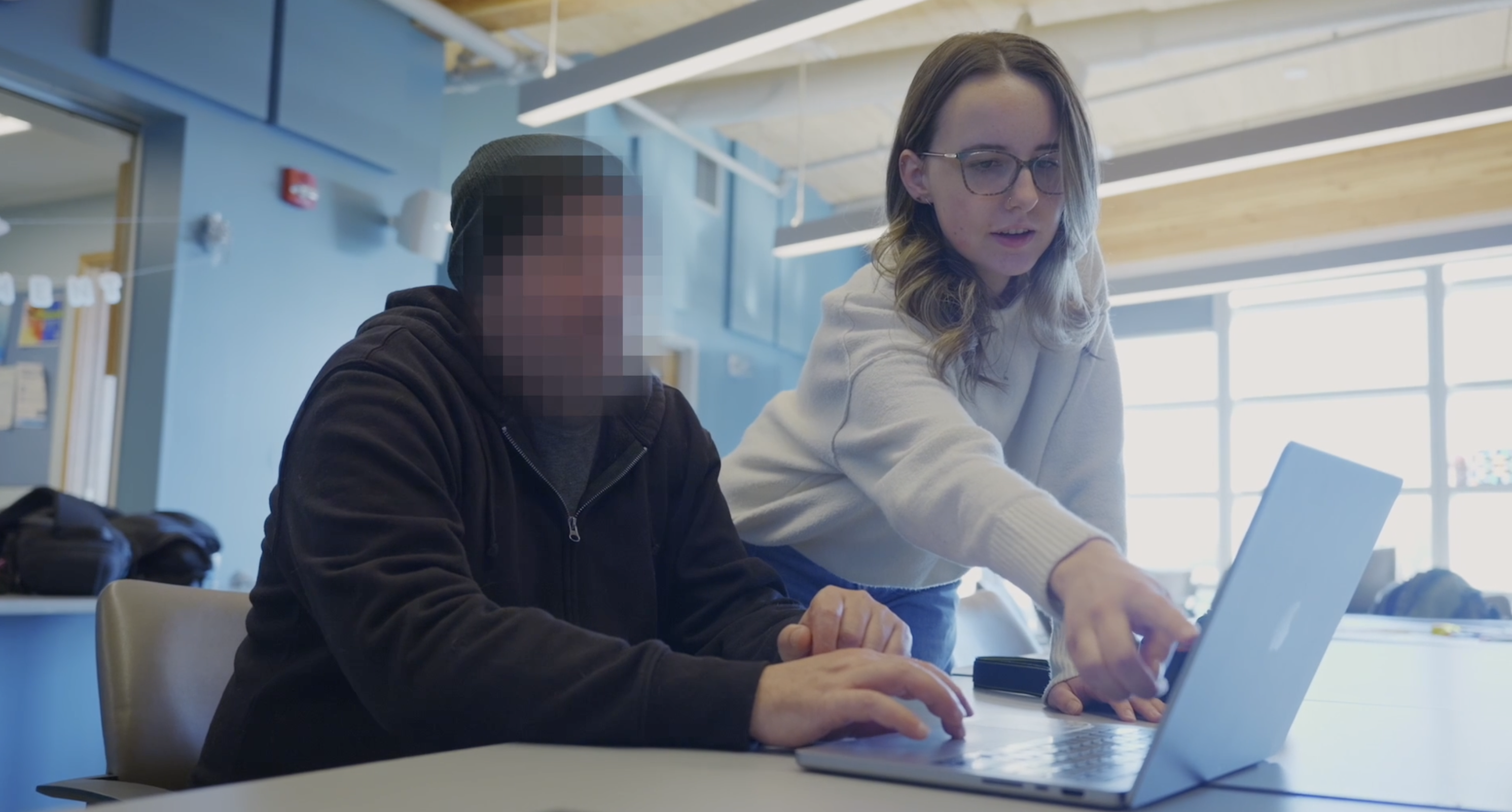
Safer Supply increased clients' connection to family, friends, and the larger community. The program's wraparound services also had a huge positive impact. Safer Supply's support led to an 86% increase in housing for its clients and reduced the amount of time they spent in hospital emergency rooms by 50%.
Many other participants reduced their drug use or stopped using drugs entirely.
But SSP's impact went far beyond reducing the harms of drug use.
"The staff did a great job of being welcoming and inclusive," Sydney says. "Safer Supply provided meals if clients were hungry, a place to nap, and connected them with health and social services, including housing."
"I am healthier, happier, and loved because of Safer Supply," says Peanut, one of the digital storytellers.
"Before Safer Supply, I wanted to die," adds Solo. "Safer Supply helped me want to live."
Unfortunately, the federal government stopped funding Safer Supply Programs in March 2025—putting the people who relied on them in jeopardy.
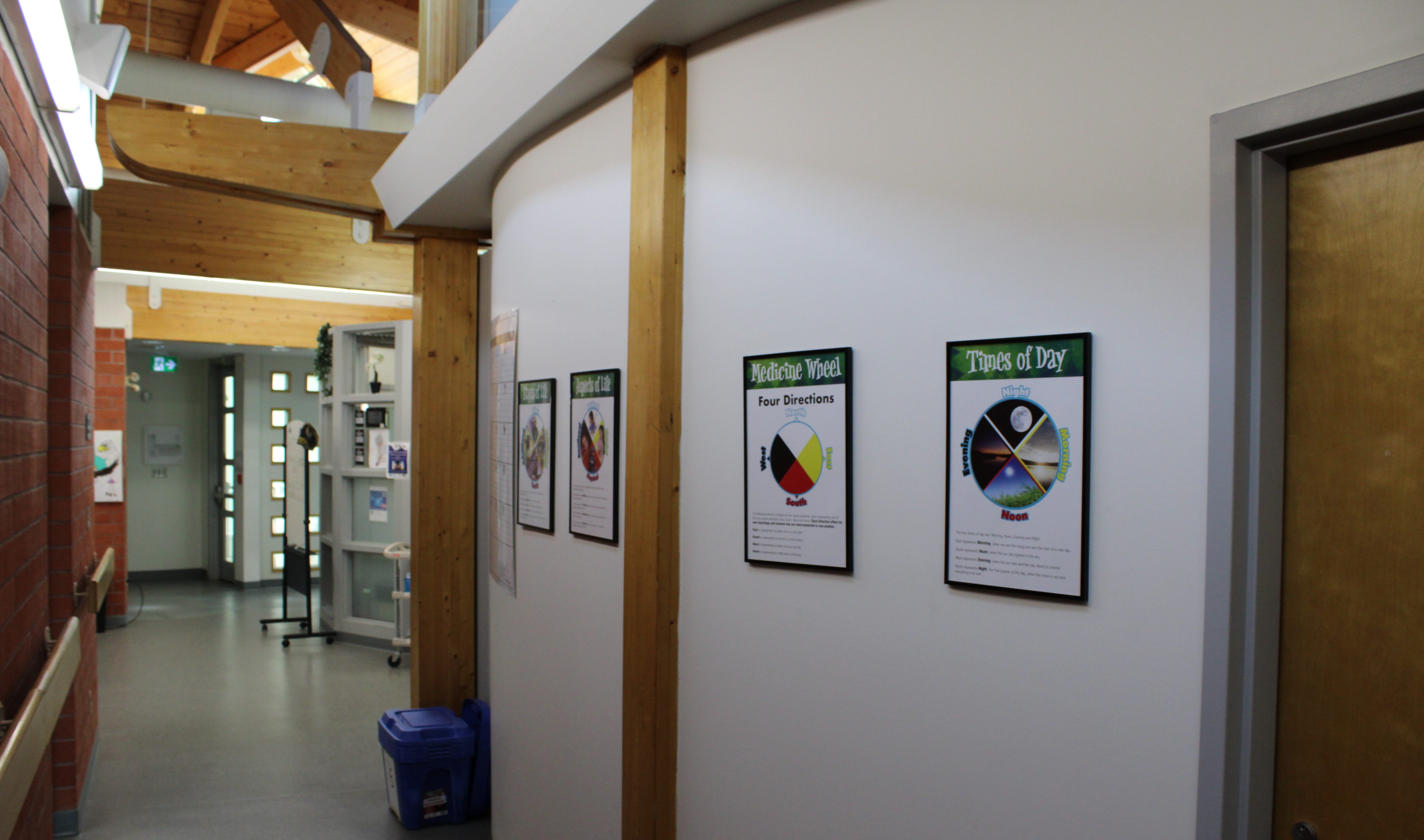
Thunder Bay's Safer Supply Program was shut down while Sydney was conducting her research in 2025. "I saw how cared for and valued Safer Supply participants felt, and their grief and fear when they learned that the program was closing," she says.
"Provincially, there's been a shift to an abstinence model when it comes to treating drug use," Sydney says.
"It ties into the misguided idea of expecting people to pull themselves up by their bootstraps, without taking into account all the factors affecting them."

As an undergraduate student, Sydney conducted opioid research with Lakehead social work professor Abigale Sprakes. "I was part of the Thunder Bay Safer Supply program evaluation team. During the evaluation, some of Safer Supply's clients and staff said they wished they could show people what was happening at Safer Supply.
While there's no typical substance user, clients of SSP were more likely to be struggling with challenges like homelessness and food insecurity.
Now, their primary treatment option is the new Homelessness and Addiction Recovery Treatment (HART) Hubs.
"These hubs focus entirely on abstinence and offer no harm-reduction services," Sydney says.
"But we need both approaches to provide the full scope of care required, rather than trying to force people who use drugs into societal beliefs about what they 'should' want."
She believes that the decrease in harm-reduction approaches makes it even more crucial to share the stories of Safer Supply clients with educators, healthcare providers, and policymakers.
As Sydney says in the closing of her SSHRC finalist video:
"These stories advocate for compassion. They are people asking to be heard. Are you listening?"
SSHRC's Storytellers Challenge asks postsecondary students to show Canadians how social sciences and humanities research is impacting our lives, our world, and our future for the better. In June 2026, Sydney, and 20 other national SSHRC Storytelling finalists, will present their research at the Science Writers and Communicators of Canada conference in Montreal. Based on their presentations, five winners will be chosen.
