Northern Ontario

Call the Midwife

Ensuring Equitable Maternity Care for All Northern Ontarians

OVERVIEW:

  • Many Northern Ontario communities have limited access to maternity and newborn care
  • Training more midwives can help solve the region's healthcare challenges
  • Dr. Kirsty Bourret and Dr. Helle Møller's research team offers timely maternity care solutions

Bringing a child into the world should always be a joyful experience, but for many northern Ontario families, pregnancy also brings stress and anxiety.

Women across the region report difficulties in finding adequate perinatal and pregnancy care.

"If a woman living outside of a major centre needs her baby delivered, she often has to travel an average of four or five hours," says Health Sciences Professor Dr. Kirsty Bourret.

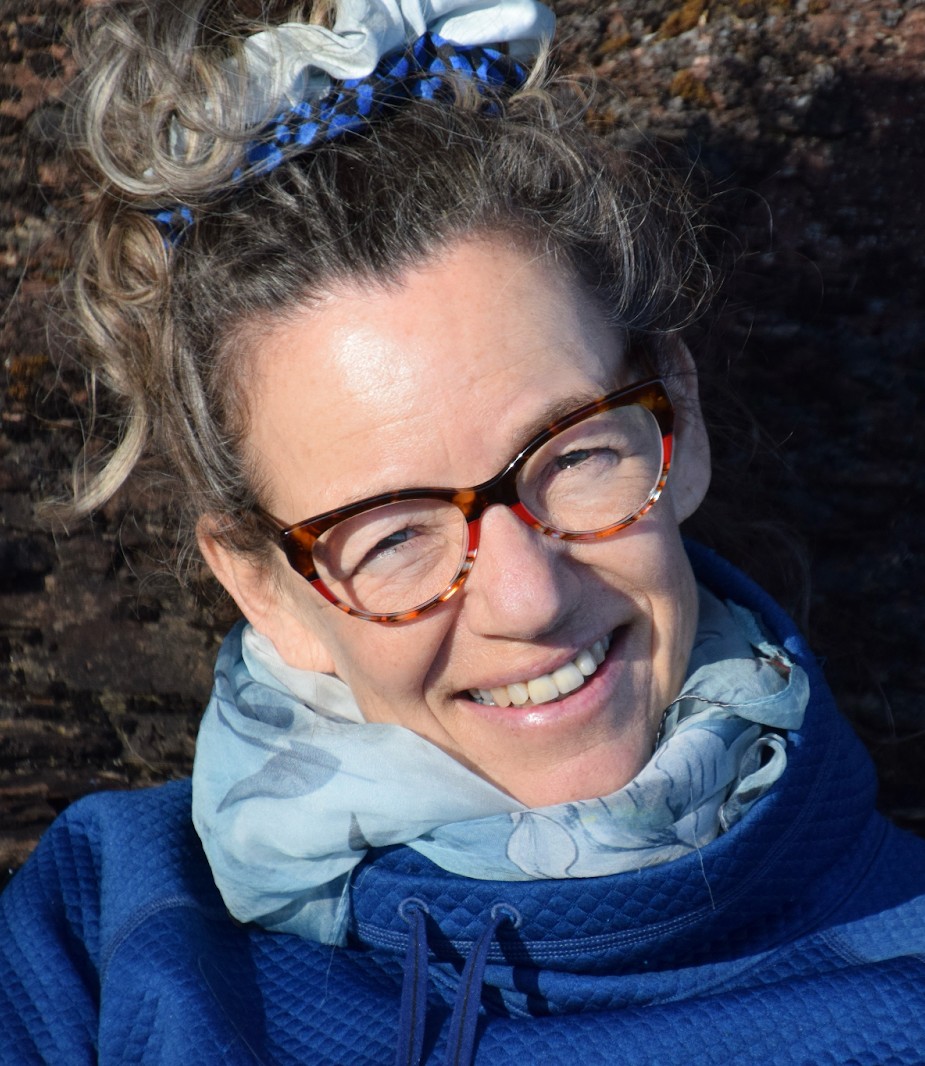
Dr. Kirsty Bourret

Dr. Kirsty Bourret (left) is a Francophone settler, midwife and researcher committed to advancing primary care, reproductive justice, anti-racism, and culturally safe care. She bridges clinical practice, policy, and implementation research to strengthen health systems that reflect the communities they serve.

Rural, Indigenous, and Francophone communities face the greatest challenges.

"Over the last five years, birth services in northern Ontario hospitals have been shutting down," says Health Sciences Professor Dr. Helle Møller. "Many of the remaining doctors don't have experience assisting with births, so they aren't offering maternity care."

"It was emotionally difficult to be separated from my two-year-old child for so long."
- Northern Ontario woman who had to leave her community to give birth
Dr. Helle MoellerDr. Helle Møller (right) studies the determinants of health, social justice, and equity in health, healthcare, and health education. In particular, she focuses on perinatal people, people on the female continuum, and Indigenous people in northern, rural, and remote regions.

For Dr. Bourret and Dr. Møller, the way to solve this concerning state-of-affairs is obvious. Train more midwives so that they can step into the gap.

Currently, midwives support approximately 40 per cent of all births in Thunder Bay, however, there aren't enough of them to meet demand in the region.

"Hundreds of northern Ontarians who want midwifery services are turned away because of a shortage of midwives," Dr. Bourret says.

What exactly does a midwife do?

Midwives are frontline healthcare providers whose services, which are free of charge, are comparable to those offered by doctors and nurse practitioners.

Prenatal, birth, and postpartum care is the focus of most midwives; however, they can also tend to every aspect of women's health and reproductive needs—from their teen years to menopause and beyond.

This care includes routine health screenings, contraception, early pregnancy loss and pregnancy care, care of mothers, and care of babies for the first two years of their lives.

They also allow women to choose where they will deliver their babies—at home, in a hospital, or at a birth centre.
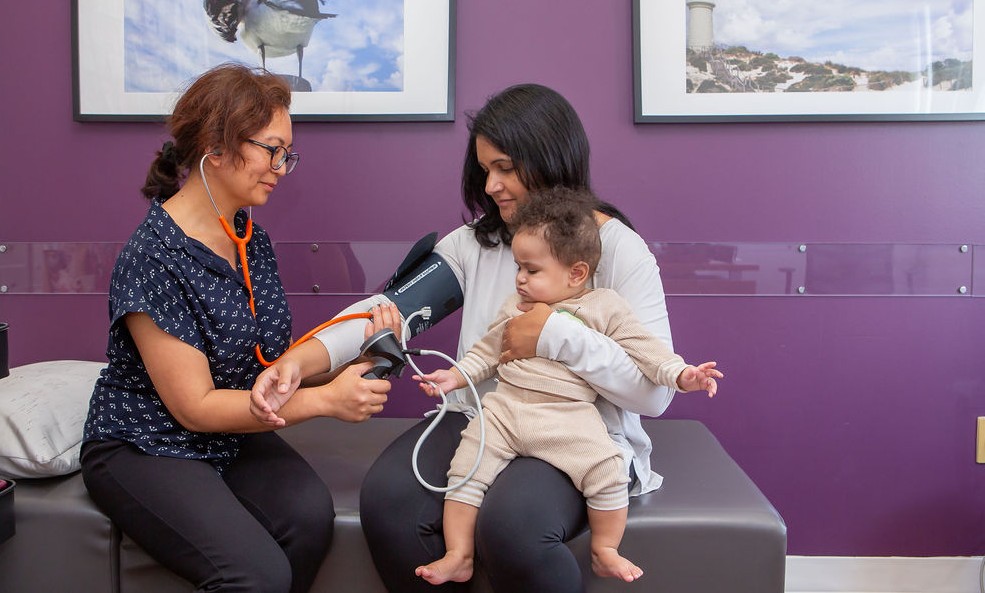
A midwife takes the blood pressure of a mother holding a baby

During home births, midwives bring clinical equipment including blood pressure cuffs, IVs, portable ultrasounds, and instruments for suturing, as well as medications to stabilize newborns and mothers. Some midwives travel up to 400 km to treat patients in rural northern communities. Photo Credit: Association of Ontario Midwives

"There are a lot of misconceptions about midwives, including that they're untrained and unregulated," Dr. Møller says.

"We want the public to know that midwives must complete a four-year university degree and that they are a regulated health profession governed by the College of Midwives of Ontario. They collaborate closely with specialists and are recognized by the province of Ontario as essential to interprofessional primary care teams."

Dr. Bourret is a midwife herself. "I came to midwifery in 2000 because I believe that everyone deserves equitable, safe, and respectful care."

"Midwives have a unique philosophy of care and a huge positive effect on their clients' mental health," agrees Dr. Møller.

They provide continuity of care, informed choice, are on call 24 hours a day for urgent concerns, and travel to clients' homes for postpartum care.

Standing Up for Women and Children
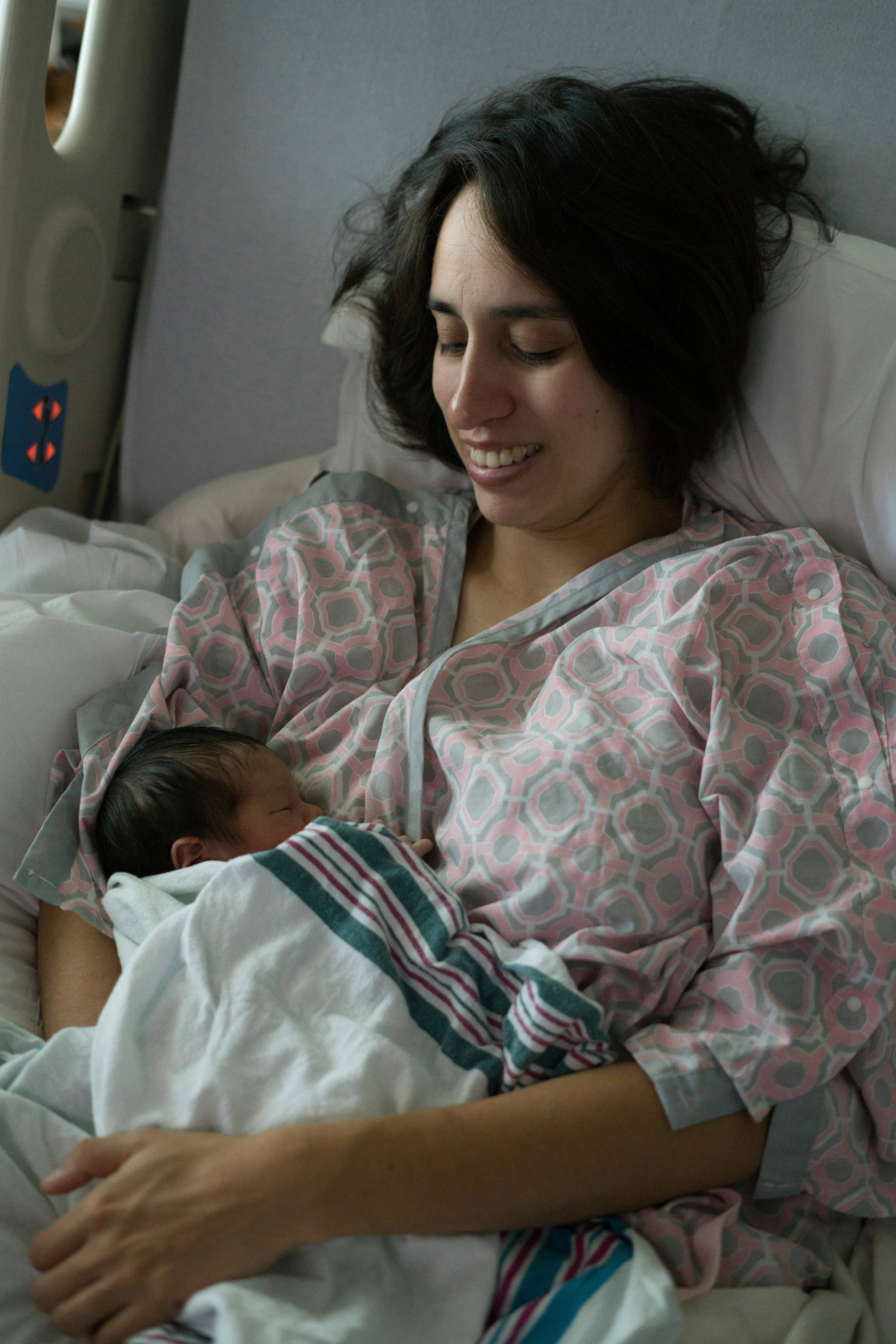
A woman seated upright in a hospital bed holds her newborn baby

Midwives help patients navigate a complex healthcare system by acting as advocates and by offering counselling and referrals. Currently, there are only about 1,000 midwives to serve Ontario's population of over 16 million. Photo Credit: Unsplash/Brian Wangenheim

Dr. Møller and Dr. Bourret are part of Northern Midwifery Care—an interdisciplinary research group committed to ensuring that every woman in northern Ontario receives culturally safe, equitable midwifery care.

The group is leading a large qualitative and quantitative midwifery research study called "Mapping Midwifery Care in Northern Ontario, an intersectional mixed methods study."

"Until now, there was no research showing where midwives are working in northern Ontario and how the midwife shortage is affecting access to primary healthcare," says Dr. Bourret, who is the study's lead investigator.

Dr. Møller is a co-investigator along with Laurentian University midwifery professor emeritus Dr. Susan James and Dr. Patrick Timony with the Centre for Rural and Northern Health Research. Their diverse research team also includes graduate students and northern Ontario client partner researchers with lived experiences, including midwives and doulas.

Midwives Make All the Difference
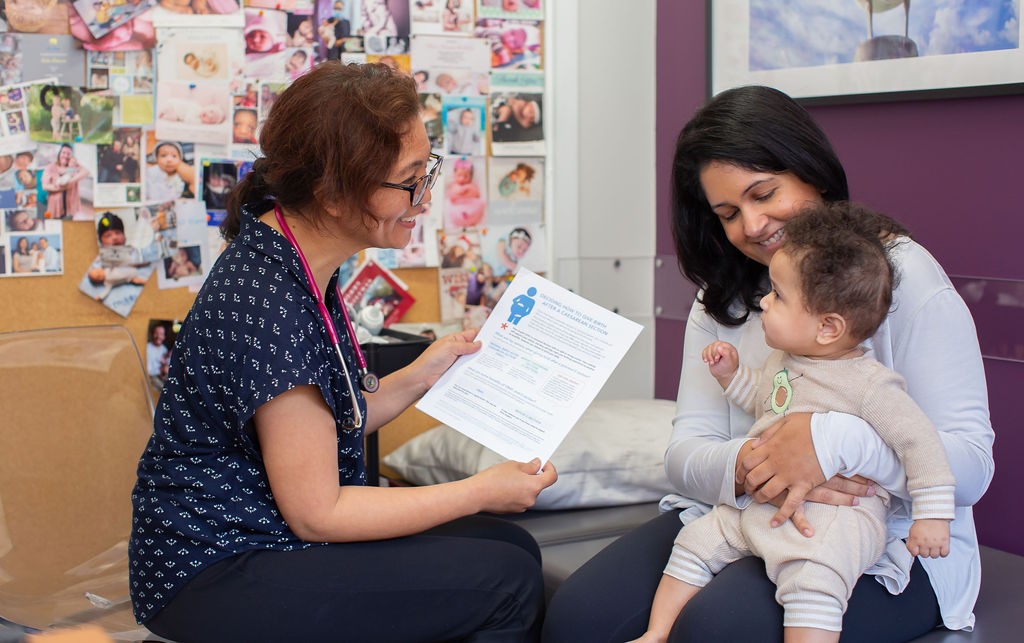
A midwife shares an information sheet with a mother holding a baby

Over 51 midwives, plus clients from every district in northern Ontario, were interviewed for the research study. "I come from Denmark where midwives provide 85 per cent of care to pregnant and birthing people," Dr. Møller says. Photo Credit: Association of Ontario Midwives

Preliminary results of the study have found that midwives provide timely and continuous primary care across rural, remote, and urban communities in the North and that they are one of the backbones of a good healthcare system.

They divert admissions to hospitals—including costly emergency department visits for women and newborns—and free up hospital resources for other patients.

That's why Dr. Bourret and Dr. Møller are organizing the Northern Ontario Midwifery Symposium this winter, to explore challenges, innovations, and collaborative solutions that will support sustainable midwifery care in northern Ontario.

"Midwives are change agents,"Dr. Møller says.

Make your voice heard by clicking here to register for the Northern Ontario Midwifery Symposium on February 5, 2026.

Dr. Bourret and Dr. Møller's research is funded by the Association of Ontario Midwives. You can learn more about the Northern Midwifery Care research group on Facebook and Instagram. You can also email them at northernmidwiferycare@gmail.com.

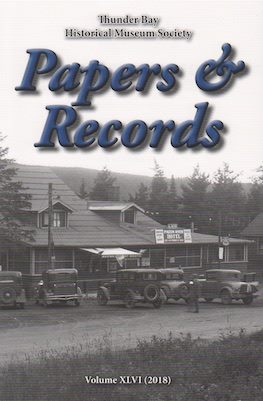
New Work by Alumni and Faculty in the 2018 Papers & Records

The 2018 issue of the Thunder Bay Historical Museum Society's journal Papers & Records features articles by alumni exploring aspects of Northwestern Ontario's history.

In recognition of the hundredth anniversary of the construction of the “Outlaw Bridge” over the Pigeon River in 1917, alumna and part-time faculty member Beverly Soloway explores how it enabled the “Scott Highway” to connect the Lakehead with Minnesota providing a link to American personal and business interests, opportunities for a growing automobile service industry, and new ventures in travel and tourism. 

Alumnus Richard Mastrangelo examines how newsletters like The Steep Rock Echo and Steep Rock Features can be used to illustrate relationships between manager and miner for most of SRIM’s four-decade long operation. He argues that, together, the papers frame questions which go beyond records of mineral production and consumption. How did various groups negotiate and express positions on socially sensitive topics? Did the newsletters support free worker expression or manager dictation? How was control maintained and destroyed by broader political, social, and economic realities?

Alumnus Mark Chochla investigates the efforts of Dr. Edward Oliver, of Fort William’s Medical Officer of Health, to build a professional department of health that worked systematically to save the lives of infants and children during the early twentieth century. As Chochla demonstrates, Oliver was fearless in advocating policies to modernize the city and to improve the health of residents and had the courage to persist with public health reforms even when many opposed him.

The issue also features an interview with former Métis Nation of Ontario Senator the late Bob McKay (1935-2018). One of his life-long passions was the region’s lighthouses; having worked as a light keeper and caretaker for lighthouses on the Great Lakes until 1979. In 2014, Bob was one of the founders of what has now become Canadian Lighthouses of Lake Superior.

Papers & Records is a peer-reviewed journal co-edited by Beth Boegh and Department Chair Michel S. Beaulieu. Submissions on any aspect of the history and heritage of Northwestern Ontario are welcome (email michel.beaulieu@lakeheadu.ca)


New Film on First World War to Premiere November 4th at Community Auditorium

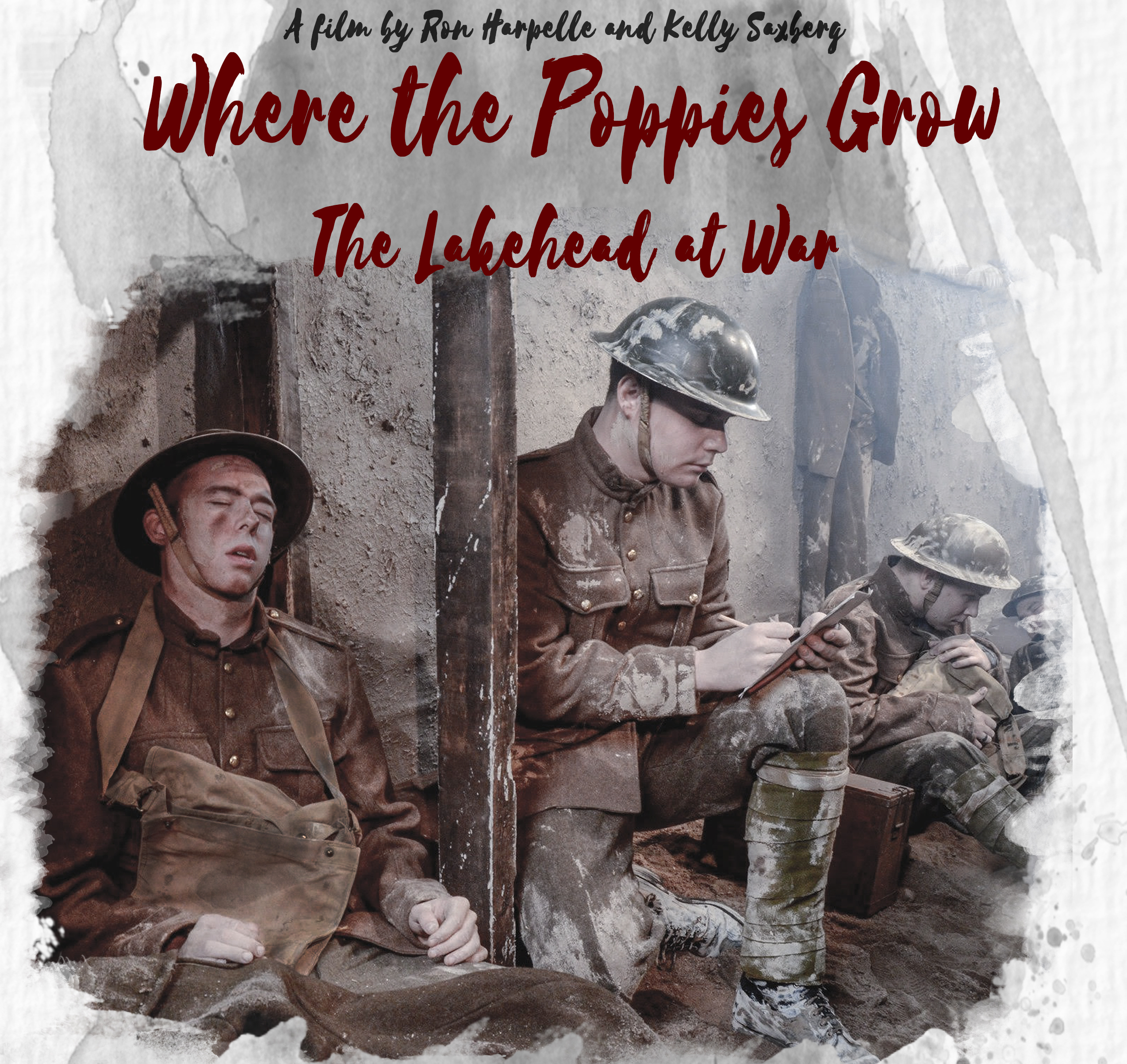
The Department of History is pleased to welcome faculty, staff and students to the premiere on 4 November of Where The Poppies Blow: The Lakehead at War, a new film by Dr. Ron Harpelle and Kelly Saxberg.

The docu-drama was produced with a focus on the Lakehead region’s participation of the First World War and as a commemoration of the end of the conflict in 1918. Where The Poppies Blow follows the story of the war through the experience of one soldier, highlighting the home front as well as events in Europe. It is intended as an educational film to inform people about the sacrifices that were made 100 years ago and about the many ways that people in our region participated in the conflict.

Funded by the City of Thunder Bay and the Northern Ontario Heritage Fund, the film was shot in Super 16 mm and is a showcase of local talent, with dozens of actors, extras and crew from Thunder Bay and region. The film contains rare archival footage and photos and makes use of many items from the Thunder Bay Military Museum and Thunder Bay Historical Museum Society.

Lakehead University alumni, faculty, and students played important roles in the production and post-production phases of the project. A French language version of the film will soon be available and both versions will be posted online with Dr. Harpelle’s other films. 

Where The Poppies Blow will screen as part of the City of Thunder Bay’s commemoration event at the Thunder Bay Community Auditorium on 4 November between 2:00 pm and 4:00 pm. The event is a family friendly event and free and open to the public.

New Book Published on Thunder Bay and the First World War

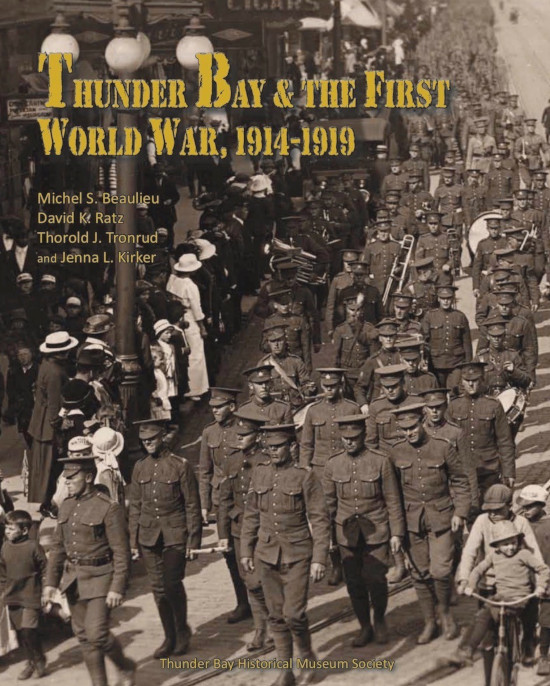
A new book written by Lakehead University faculty members and alumni explores the role the region and its people played during the First World War and, for better and for worse, why and how they fought, how they addressed the problems the war created, where they differed from elsewhere in Canada, and what impacts the conflict had on their community and their lives.

Thunder Bay and the First World War, 1914- 1919 is co-authored by Michel S. Beaulieu, David K. Ratz, Thorold J. Tronrud, and Jenna L. Kirker and published by the Thunder Bay Historical Museum Society. It is a narrative history shaped, in large part, by what remains of the voices of those from the period—the letters and correspondence produced by soldiers, nurses, governments, organizations, and families. Their stories are augmented, particularly on the home front, by the remaining archival records. It is the story of a community at war.

As part of the City of Thunder Bay's commemoration this November of the hundredth anniversary of the armistice that ended the First World War, the book will be launched on Friday, November 2 at the O’Kelly Armoury (317 Park Avenue). It will begin at 7 pm and will also feature the Royal Canadian Air Force Band and historical displays.

Cover of Thunder Bay and the First World War

New Exhibit on Early Photography at the Lakehead

17 September - Thunder Bay

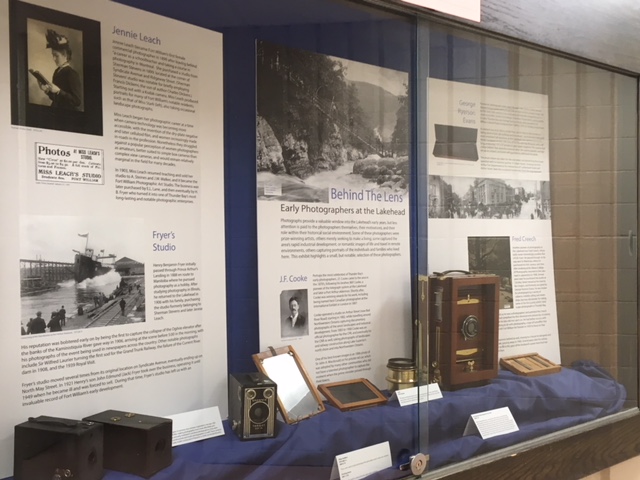
“Behind the Lens: Early Photography at the Lakehead” is a new exhibit as part of an ongoing partnership between the Department of History and the Thunder Bay Historical Museum Society to bring museum exhibits to the Thunder Bay Campus. 

Photographs provide a valuable window into the Lakehead’s early years, but less attention is paid to the photographers themselves. Learn more about Jennie Leach, Fryer’s Studio, J.F. Cooke, George Ryerson Evans, and Fred Creech.

To see the new display, go to the third floor of the Ryan Building. It is located in the main hallway directly across from room 3025.

Department of History a sponsor of Doors Open Thunder Bay 2018

The Department of History is a proud sponsor of Doors Open Thunder Bay, an event taking place on Saturday, Sept. 8 between 10 am and 4 pm. Doors Open is an opportunity for people to explore some of Thunder Bay’s most unique structures and heritage sites. 

This year at the Paramount Theatre (24 Court St. S., there will be a series of screenings of Long Walk Home: The Incredible Journey of Sheila Burnford, an award winning film by faculty members Dr. Ronald Harpelle and Kelly Saxberg. The film is a biographical sketch of one of Thunder Bay’s most famous and remarkable authors. 

Along with the film will be a display of items from The Burnford Project, which is an initiative to index Sheila Burnford’s personal papers. Dr. Harpelle and his team of students have been working with the papers for four years and the papers will soon be available for public access through the Thunder Bay Public Library.

Screenings of the film will take place at 11 am, 1 pm and 3 pm and this is a free event. Sheila Burnford will also be inducted into the Walk of Fame in the Village Green at Victoriaville Mall on Saturday, Sept. 8 at 11:30 am. 

These events are opportunities for students, faculty and the public to find out more about Sheila Burnford and The Burnford Project. Visit Doors Open Ontario for more information.

Doors Open Thunder Bay 2018

Department recognizes the 150th anniversary of Ontario as a province with special spring online course.

2017 is the 150th anniversary of Ontario as a province. In recognition the Department of History is offering an online survey History of Ontario between 1 May and 12 June. A map of Ontario

History 3801 SDE: Ontario History will examine the role of the province within Canada, and the role of Northwestern Ontario and other selected areas in the history of the province.

The course will be taught by Dr. Michel S. Beaulieu. An expert on the history of the province, he is also currently the Vice-President of the Ontario Historical Society, a Board member of the Multicultural Society of Ontario, and Vice-President and President Elect of The Champlain Society.

To find out how to register go to https://www.lakeheadu.ca/faculty-and-staff/departments/services/enrolment-services/registration

Department of History and Thunder Bay Museum Partner to Bring Exhibits to Campus

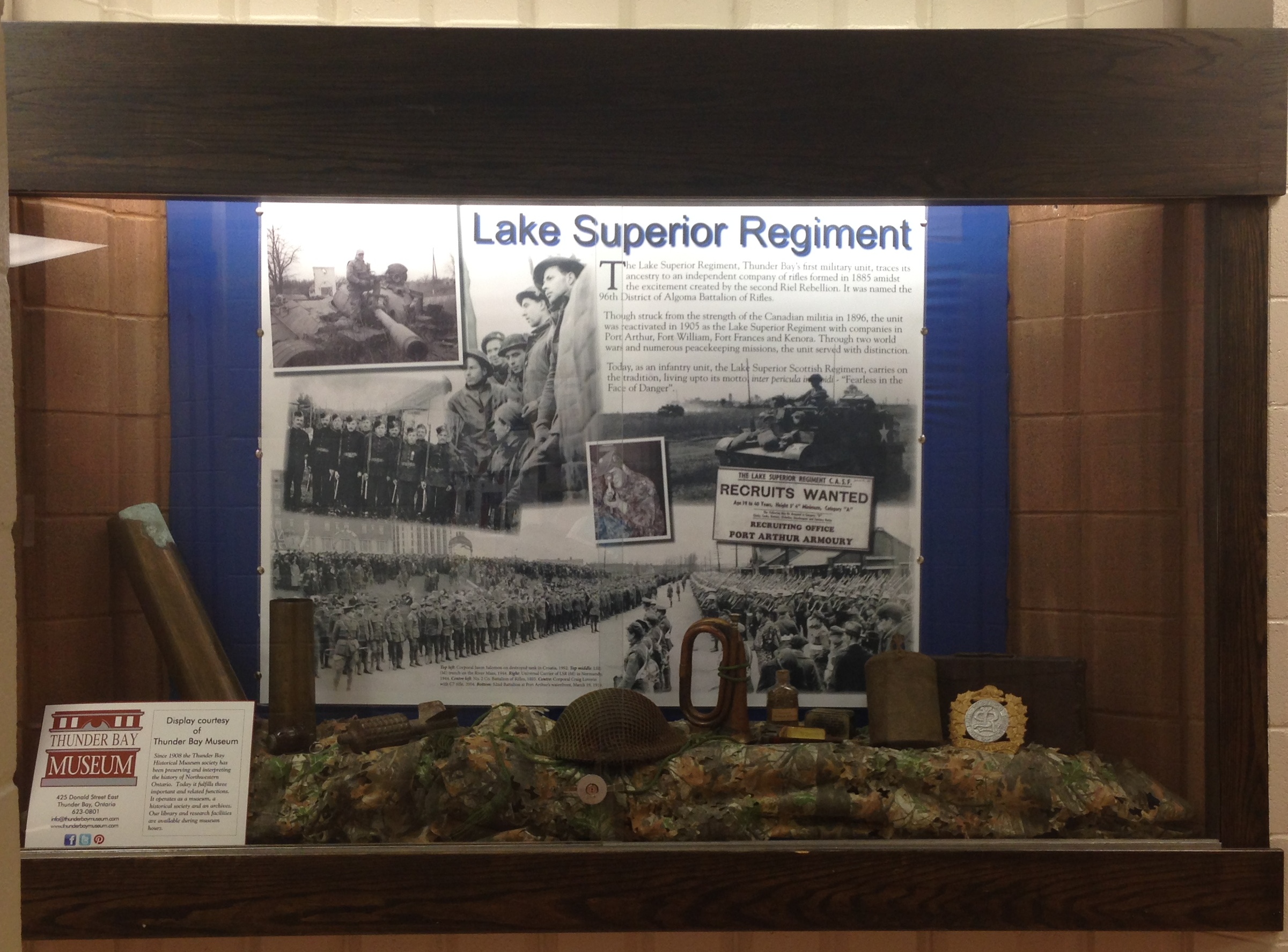
Image of Museum Display Case

30 September - Thunder Bay

The Department of History and the Thunder Bay Museum have entered into a partnership to bring museum exhibits to the Thunder Bay Campus. Every term, a new exhibit exploring the region’s past will be installed on the third floor of the Ryan Building.

In recognition of the centennial of the First World, the inaugural display is focused on our region’s military history. The theme is also in keeping with this year’s annual military symposium which will explore the history and legacies of the First World War.

For information about the symposium, including a draft agenda with times and titles of presentations, click here.

To see this term's display, go to the third floor of the Ryan Building. It is located directly across from room 3025.

Faculty Member Contributes to Book on Governance in Northern Ontario

Michel S. Beaulieu’s “A Historic Overview of Policies Effecting Non-Aboriginal Resource Development in Northwestern Ontario, 1900-1930” appears in the book Governance in Northern Ontario published by the University of Toronto Press. Edited by Charles Conteh and Bob Segsworth, the book analyzes economic development policy governance in northern Ontario over the past thirty years, with the goal of making practical policy recommendations for present and future government engagement with the region.

Subscribe to Northern Ontario