Barrie STEM Hub

Cooperathon 2026 Info Session & Networking Event

Have an idea that could create real impact?

Join this virtual information and networking session to learn about Cooperathon 2026, one of Canada's largest open innovation challenges. Cooperathon is a national entrepreneurial program that brings together students, researchers, entrepreneurs, professionals, and innovators to develop high-impact solutions addressing major social, environmental, and economic challenges.

Alumni Spotlight: If You’re in a Jam, Dick Hembree’s Your Man

His Inventions Have Saved Lives and Attracted Worldwide Attention

Despite being an inventor who holds 22 patents in the United States (U.S.)—and many more globally—Richard "Dick" Hembree (BEng'83) doesn't consider himself to be creative.
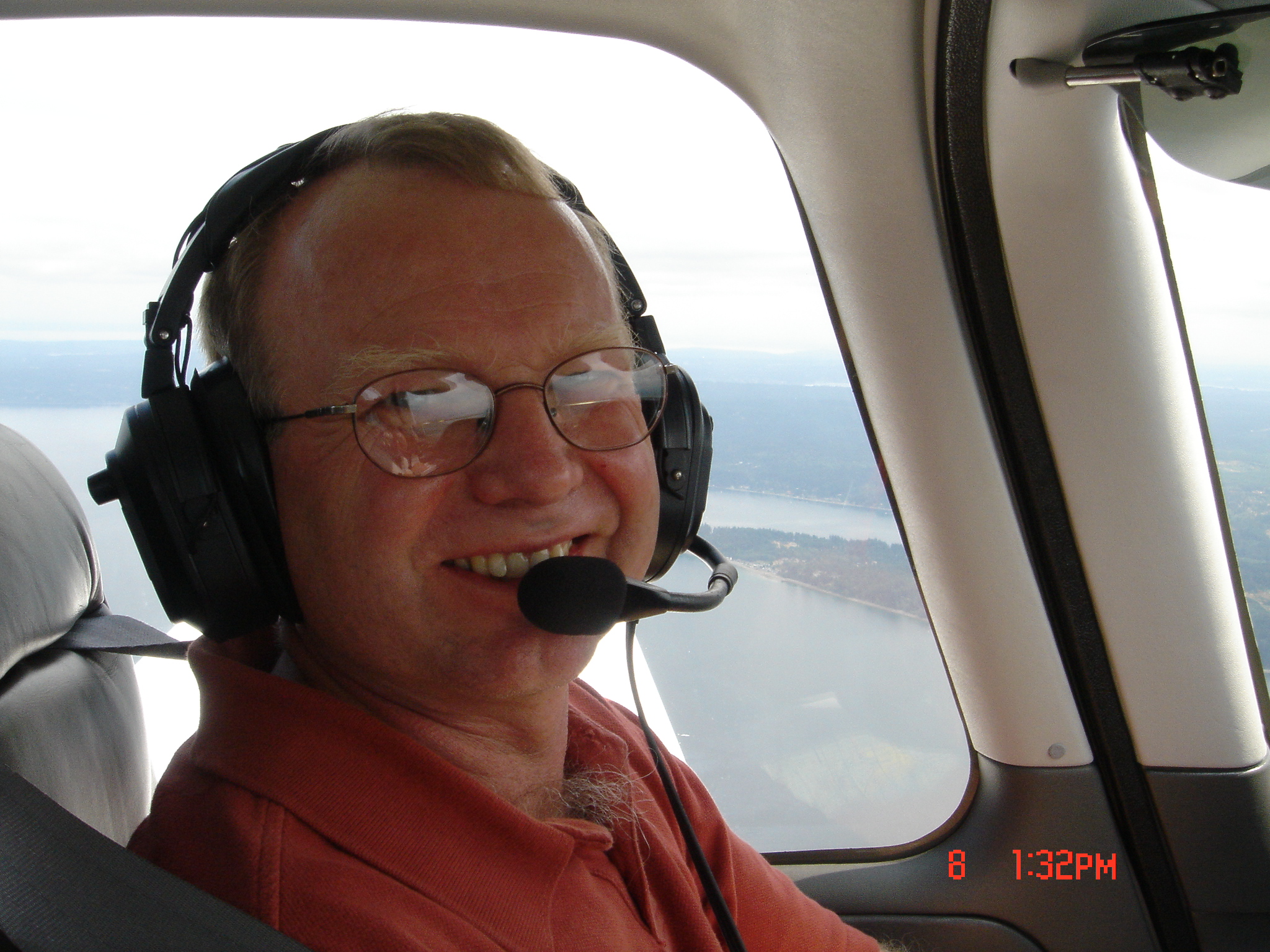
Dick Hembree wearing a headset in the cockpit of a plane flying over water

Dick is a born adventurer who loves flying and sailing.

"I see something that doesn't work, or doesn't do its job very well, and I think of a better way of doing it," says Dick, who lives in Port Coquitlam, British Columbia.

"A patent has to be useful, non-obvious, and unique, and most of the things I come up with are like that. It always starts with a problem I want to solve rather than a dream I want to accomplish."

A Daring Designer

Growing up in Burnaby, British Columbia, Dick always had hobby projects on the go.

"My dad was a do-it-yourself type of guy—he grew up on a farm and fixed things all the time, and as a young kid, I was taking things apart and making them do things they weren't made to do," he recalls.

"When I was 10, I made a little motorized contraption to close the drapes in my room—silly stuff like that."

Dick Hembree stands in an industrial facility beside a Hydra-Cell T200 Series pump

Dick with the Hydra-Cell Pump he designed for use in the oil and gas industries. Any liquid that runs through the pump is 100% contained, and eliminates VOC chemicals, emissions, and hazards.

In high school, he decided to become an automotive mechanic and machinist.

Long-time friend Don Middleton says he's always admired the way Dick's mind works.

"In high school, my neighbour gave us a compressor from a refrigerator, and we actually thought we could snorkel underwater with this as a breathing apparatus, but it was a big failure," he laughs.

"But that didn't stop Dick from carrying on. We altered a small open sailboat and added a 'cuddy cabin' so we could sleep in it and then sailed over to Vancouver Island. His bravery allowed him to tackle anything.

At 17, he tried to rejig and adapt a Volkswagen into a sports car. He was the kind of guy that would rip the whole body off and make a new one out of fibreglass."

Lakehead Lays the Groundwork

After graduating magna cum laude from the British Columbia Institute of Technology (BCIT) with a diploma in mechanical technology in 1979, he was recruited by Canada's Defense Research Establishment Pacific (DREP) in Esquimalt, British Columbia, as a technologist.

At DREP, he designed and built mechanical equipment used in ocean acoustic research.

"We had our own little engineering group, so I was machining parts and designing things like experimental underwater acoustic listening devices, pressure-vessel equipment with electronics, winches, and other equipment for ships," he says.

But while Dick enjoyed the work, he felt he could lead the design team, rather than follow other people's ideas, so after two years at DREP, he enrolled in Lakehead's post-diploma engineering degree program.
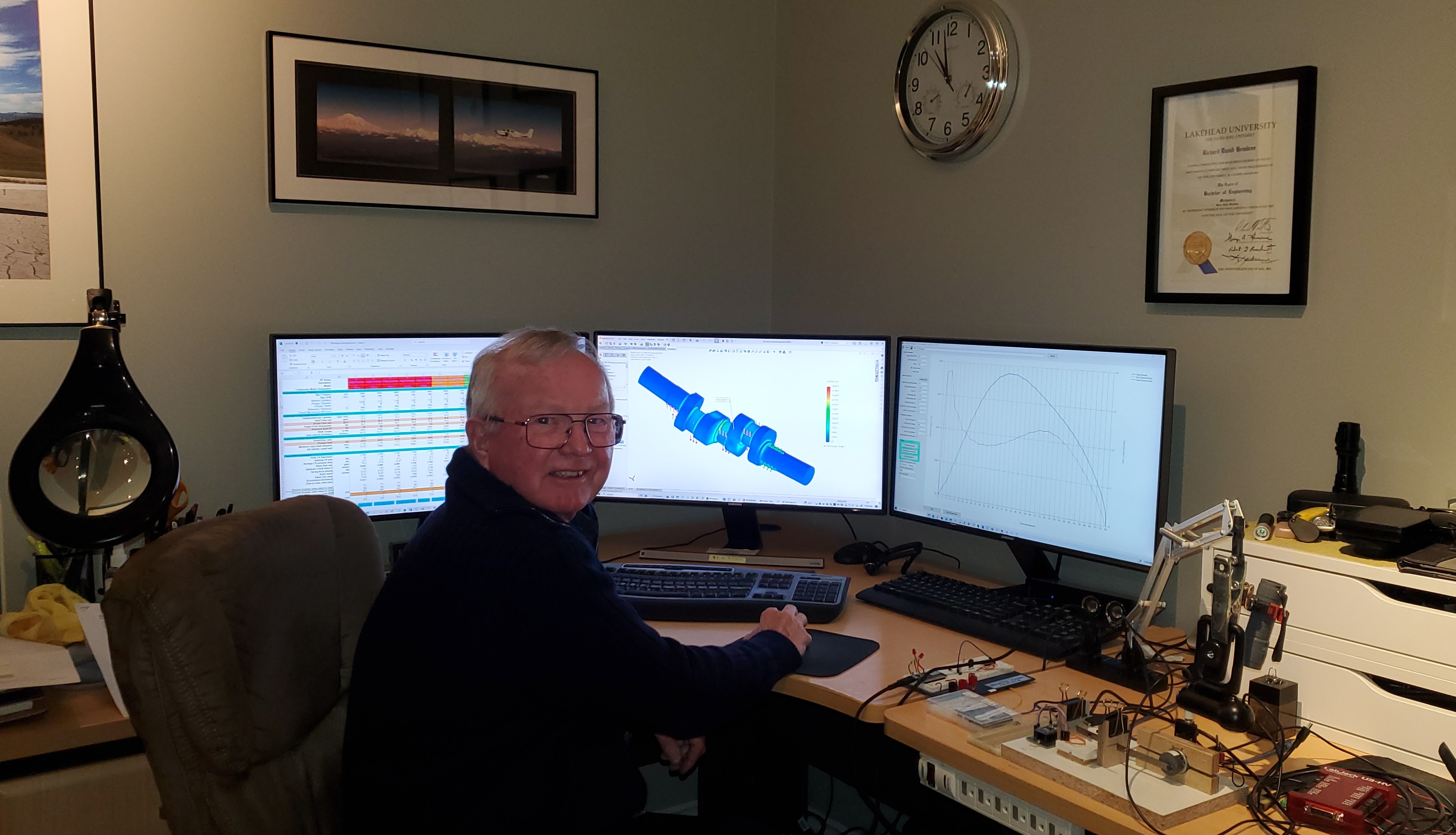
Dick Hembree seated in front of a computer in his home office

"One personal philosophy that has evolved over my life is that you should never stop learning," Dick says.

"Lakehead was one of my best choices because it had a good mechanical engineering transfer program for BCIT graduates, and it felt like a good fit for me," he says.

"I enjoyed those Lakehead years, and the professors were very good.

At BCIT, we learned about the practical application of science, but at Lakehead we went more deeply into the use of differential equations, which I found really interesting.

In high school, I never was able to connect the dots and see what I would do with things like calculus, but I felt that connection at Lakehead."

Creating the World's Smallest Seawater Desalinator

After graduating with first class standing, Dick was ready for a new chapter.

"I felt like I could get into any field and enjoy it. I wanted to design things, and I was interested in manufacturing and engineering," he says.

Dick was intrigued by Vancouver-based Seagold Industries, which was testing a hand-operated desalinator.

"I liked the idea of making drinking water from seawater with a little hand pump, and I was impressed with the concept of it, so I contacted the company and told them I thought I could add something to it," he recalls.

"They hired me."

As Seagold's newest design engineer, Dick did much more than just add something to it.

Working with their basic, larger pump, he designed the world's smallest seawater desalinator and became a leading global expert in the process.
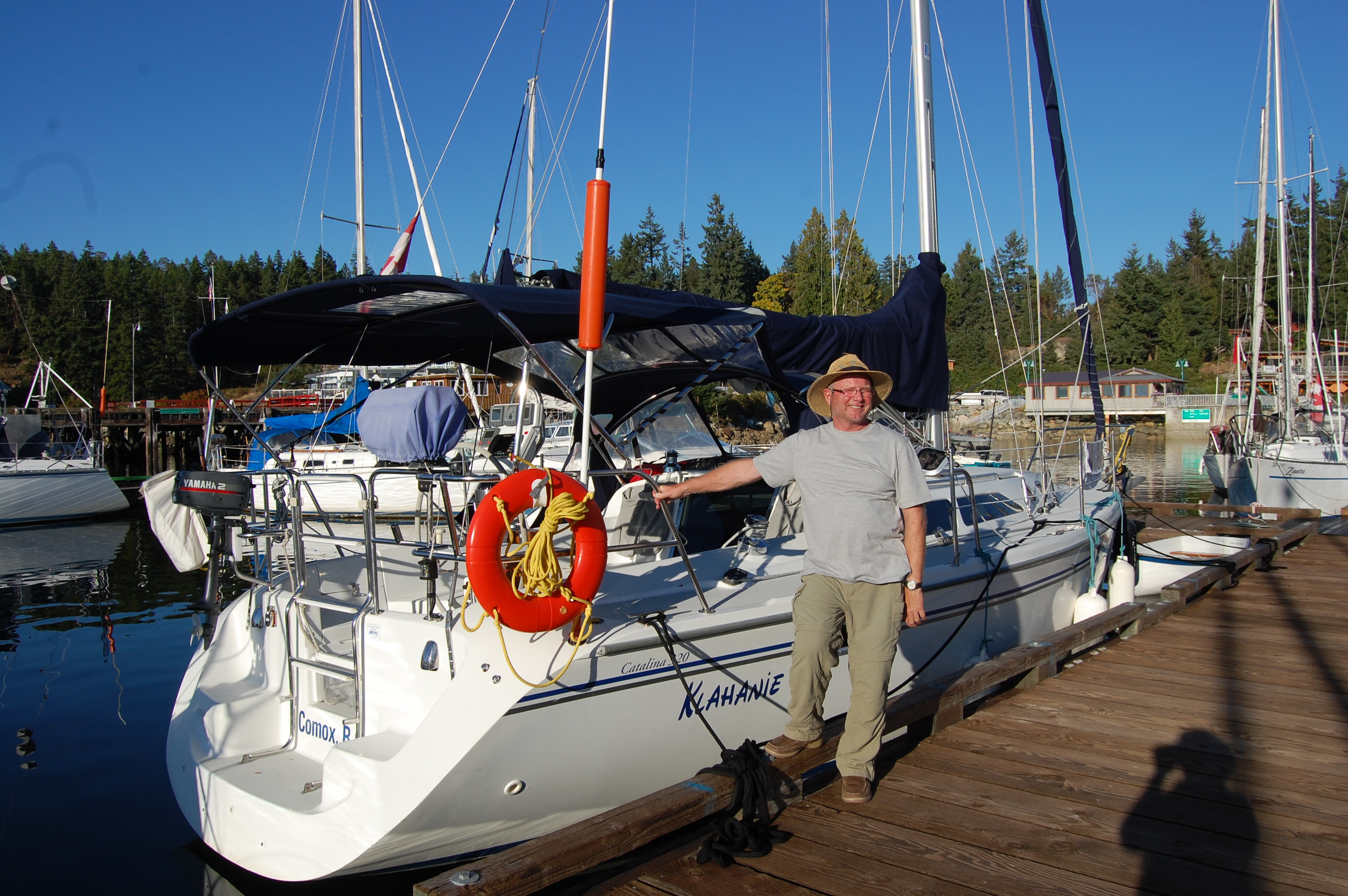
Dick Hembree stands on a dock in front of a sailboat

Dick designed, developed, and put into production the first hand-powered pumps to purify seawater for use on life rafts, ships, and planes.

Seagold's reverse-osmosis water purification devices use energy-recovery technology, which allows users to purify seawater with little effort.

With Dick's input, the company quickly attracted the attention of the U.S. Air Force, which asked him to design a small desalinator to fit into its two-by-six-by-eight-inch ejection seat survival kits.

Soon afterwards, Minneapolis-based Wanner Engineering acquired Seagold's patents, installing Dick as chief engineer of their new spin-off company, Recovery Engineering, in 1986.

His new task: Designing and developing a small hand-operated desalinator for the U.S. Navy's 25-man life rafts.

"There were very few people working on hand-operated desalinators; that's why it was so unique to have a small one," Dick says.

"It was pretty scary at first; I was still a little inexperienced and suddenly I was doing a proposal for the U.S. Navy.

Then I designed a motorized version we could sell commercially and that did fairly well—it was the only 12-volt low-powered desalinator on the market."

Shipwreck Victims Survive Pacific Ocean Disaster

In 1989, a few years after Dick's team started Recovery Engineering, a Florida couple on an around-the-world voyage had their boat capsized by a school of pilot whales, forcing them onto their lifeboat.

Bill and Simone Butler were adrift for 66 days in the Pacific Ocean before they were miraculously rescued 1,200 miles off the coast of Costa Rica.
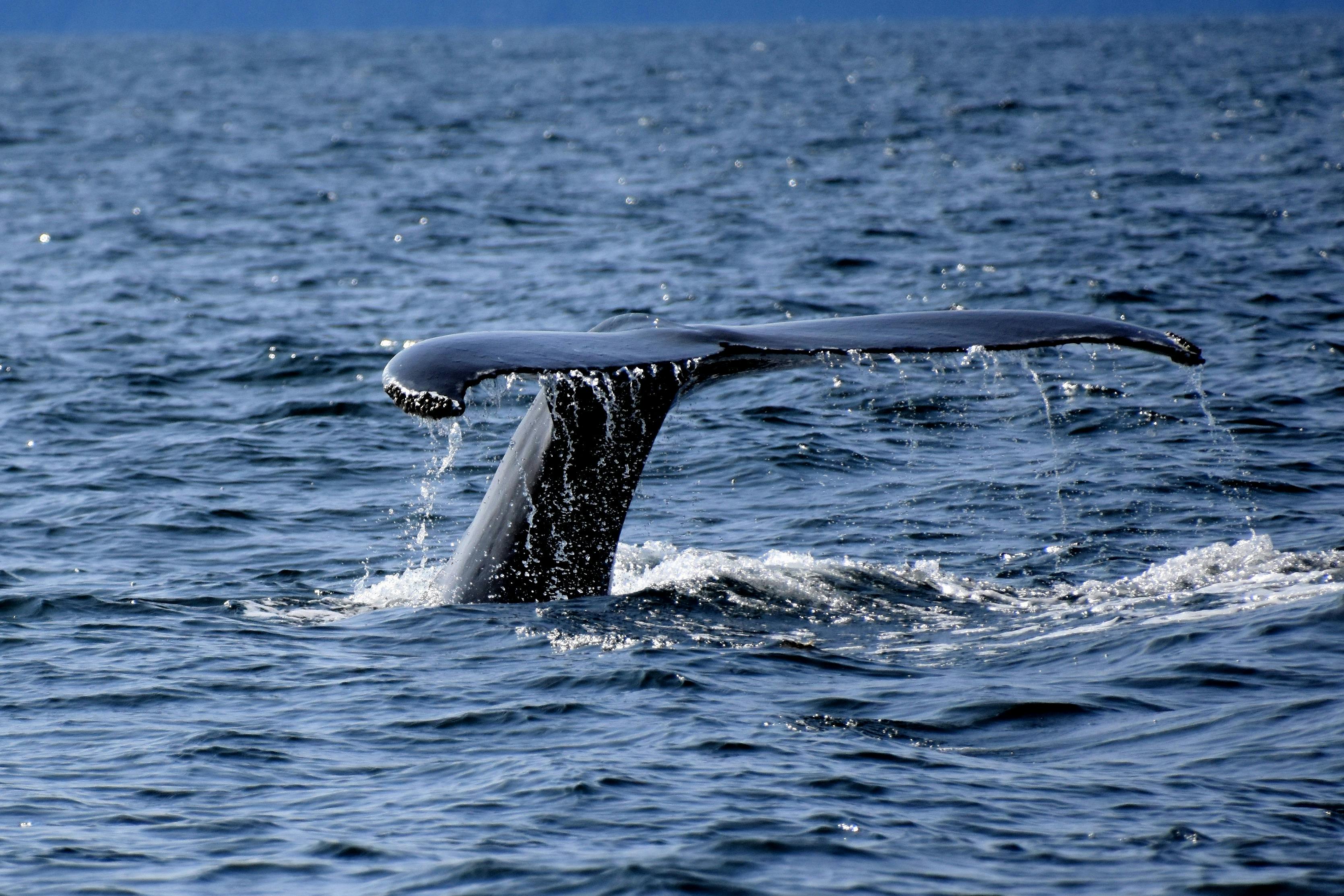
A whale's tail breaks the surface of the water

Pilot whales capsized Simone and Bill Butler's sailboat in 1989. Fortunately, Dick's desalinator provided them with drinking water during their ordeal. Photo Credit: Pexels/Jeffrey Eisen

They couldn't have survived that long if it weren't for Dick's invention—the Recovery Survivor-35 pump—which extracted three litres of freshwater from the ocean every day until they were rescued.

Coverage on CBS, People Magazine, and other news outlets boosted the company's reputation and its sales.

"I remember getting phone calls from people telling me to watch the news. There was a photo of the Butlers holding up the desalinator after their rescue. That notoriety really helped us build the company."

Procter & Gamble Come Calling for Dick's Water Purifiers

Dick went on to develop desalinators for other countries along with a line of hand-operated and low-power desalinators for a brand-new market—the recreational marine consumer.

From there, he designed and patented the first hand-pumped outdoor backpacking water purifiers under the PŪR brand and household faucet-mounted filters that sold so well, Procter & Gamble (P&G) bought the company in 1999.

Seeking consumer products with the potential for rapid growth, P&G hired Dick as the research and development director of their water purification division.

They were impressed by the way he had built up his engineering group from two to 500 employees, as well as his product-development processes.

Dick Hembree stands beside a small prop plane on an airstrip

Dick invented and patented the first hand pumps for hikers and backpackers so that they could purify water taken from lakes and streams.

"It's funny, I consider myself more of a mechanical designer than a water purification expert, but when I looked into what was on the market, the breakthrough came when I realized that companies couldn't make good on the claims of their household water purifiers to reduce lead levels," he says.

Dick discovered that by incorporating an end-of-life indicator into the purifier, the purifier could track how many gallons go through its filter and accurately measure chemical reduction levels.

"By doing that, we were able to get NSF (National Sanitation Foundation) International certifications."

By 2001, Dick's role had become more administrative, so he left P&G to form his own consulting firm.

He also became a major contributor to Wanner Engineering's unique high-pressure pumps and valves, which were designed to handle complex fluids for the oil and gas industries.

Always Keep Your Curiosity Alive

Dick's love of hobbies has never waned—he is an avid skier, and he piloted his own airplane for 10 years.

"I've sailed all my life, too," he says.

Dick's most important tip for young engineers and would-be inventors? Always stay curious.

"It's nice to specialize and get good at something, but it's amazing how much you can learn by delving into completely different areas.

Electronics has always been one of my passions, and although I'm not formally trained in it, I've learned to program in several languages and build things run by microprocessors I've programmed.

And when I hire employees, I look for people who have hobbies."

 

If You Want to Know How to Change the World, Talk to Sandy Falcon

This Alum Excels at Putting her Social Justice Degree to Work

"For me, public transportation is social justice in action because it meets a basic community need," Sandy Falcon says.

"Public transportation was the only way I could get to school when I was a kid growing up in a low-income neighbourhood in Toronto. Later, I used buses to commute to work, buy groceries, and take my kids to the doctor."

Head-and-shoulders image of Sandy Falcon

As a Lakehead undergraduate student, Sandy did a placement with Dress for Success, a non-profit that supports unemployed women trying to enter the workforce by providing business clothing and mentoring. Sandy also investigated the feasibility of starting a similar non-profit for unemployed men as part of a project with the MITACS research organization.

Today, Sandy is a graduate of Lakehead's Master of Social Justice Studies program and the Town of Collingwood's community transportation co-ordinator.

Her Lakehead degree gave her the tools to achieve her childhood dream of helping others.

A Transformative Social Justice Degree Comes to Orillia

Sandy went back to school as a mature student and a mother of four because she felt compelled to create positive change in her community.

After earning a Law Clerk diploma at Georgian College, she enrolled at Lakehead Orillia where she majored in criminology.

Sandy Falcon, wearing convocation robes, stands in Simcoe Hall

Sandy Falcon (BA'20/HBASc'20/MA'22) takes a moment to celebrate her graduation from Lakehead's Master of Social Justice Studies program in 2022.

In 2020, Sandy was getting ready to graduate with a Bachelor of Arts degree and an Honours Bachelor of Science degree when she heard some exciting news.

Lakehead was considering making its Master of Social Justice Studies program available on the Orillia campus.

"They decided to pilot an online version of the program with just five students," Sandy says.

"They asked me if I wanted to join. I said, 'Sign me up.'"

It's a decision she hasn't regretted.

"I had so many different opportunities while I was doing my social justice degree.

As part of my practicum stream, I was able to start Unknown Neighbours—a non-profit that gave vulnerable migrant workers in Canada access to legal, social, and health services," she says.

"All the social justice courses I took were amazing, the program in its entirety was amazing," Sandy adds.

"Every single professor I studied with was extremely knowledgeable and supportive."

Sandy Falcon sits in a chair while holding a coffee mug

Sandy ran the Unknown Neighbours non-profit from 2020 to 2023, using COVID pandemic funding to assist Mexican and Jamaican agricultural workers. "Dr. Douglas West, a wonderful Lakehead political science professor, helped me with the funding application and the administration of Unknown Neighbours."

Sandy also underwent life-changing personal and academic growth, especially when she learned about the theory of intersectionality. It's a concept that explains how aspects of an individual's identity—like their race, class, and gender—can lead them to be treated in discriminatory or privileged ways.

"Intersectionality made so much sense to me as a woman, as an immigrant, as a BIPOC person, and as a person with a disability," she says.

"I thought, 'Oh this is who I am, it all makes sense now.'"

Why a Bus is Much More than a Vehicle

After Sandy completed her Master of Social Justice Studies, she was hired by the Simcoe-Muskoka branch of the Red Cross.

"I wanted to work for them because they're the largest humanitarian organization in the world and I wanted to help everybody that I could."

She initially oversaw their Community Connector program for seniors before becoming the assistant manager of community health and wellness programs such as Meals on Wheels, Friendly Visiting, and transportation services.

In 2024, she launched the next phase of her career as the Town of Collingwood's community transportation co-ordinator.

A side view of a Town of Collingwood bus

"Public transportation is a lifeline that makes it possible for people to go about their everyday activities," Sandy says. Photo Credit: Town of Collingwood

This role offered a new way to provide essential services and make life more equitable for Collingwood residents.

Her first order of business was to become a passenger on every single bus route to discover how to make the city easier for everyone to navigate.

"I try to experience things firsthand. It strikes me as odd to design and make decisions about a service when you've never used it."

Sandy also ensures that buses remain accessible to people with visual, hearing, and mobility challenges.

She attributes much of the success she's had helping her fellow citizens to her social justice degree.

"Social justice will give you the knowledge and understanding to see the world through a completely different lens."

Are you interested in fostering social justice and laying the foundation for a meaningful career with non-profits, governments, or community partners? Then click here to learn more about Lakehead Orillia's Master of Social Justice Studies degree.

Meet Teaching Innovation Award Winner Mohit Dudeja

This Lakehead Instructor Helps Students Advocate for a Better World

"I love teaching because it enables me to transform learning into a creative, political, and collective experience," says Faculty of Education instructor Mohit Dudeja.

The PhD candidate, researcher, educator, activist and psychotherapist won a Lakehead University Teaching Innovation Award in November 2025.

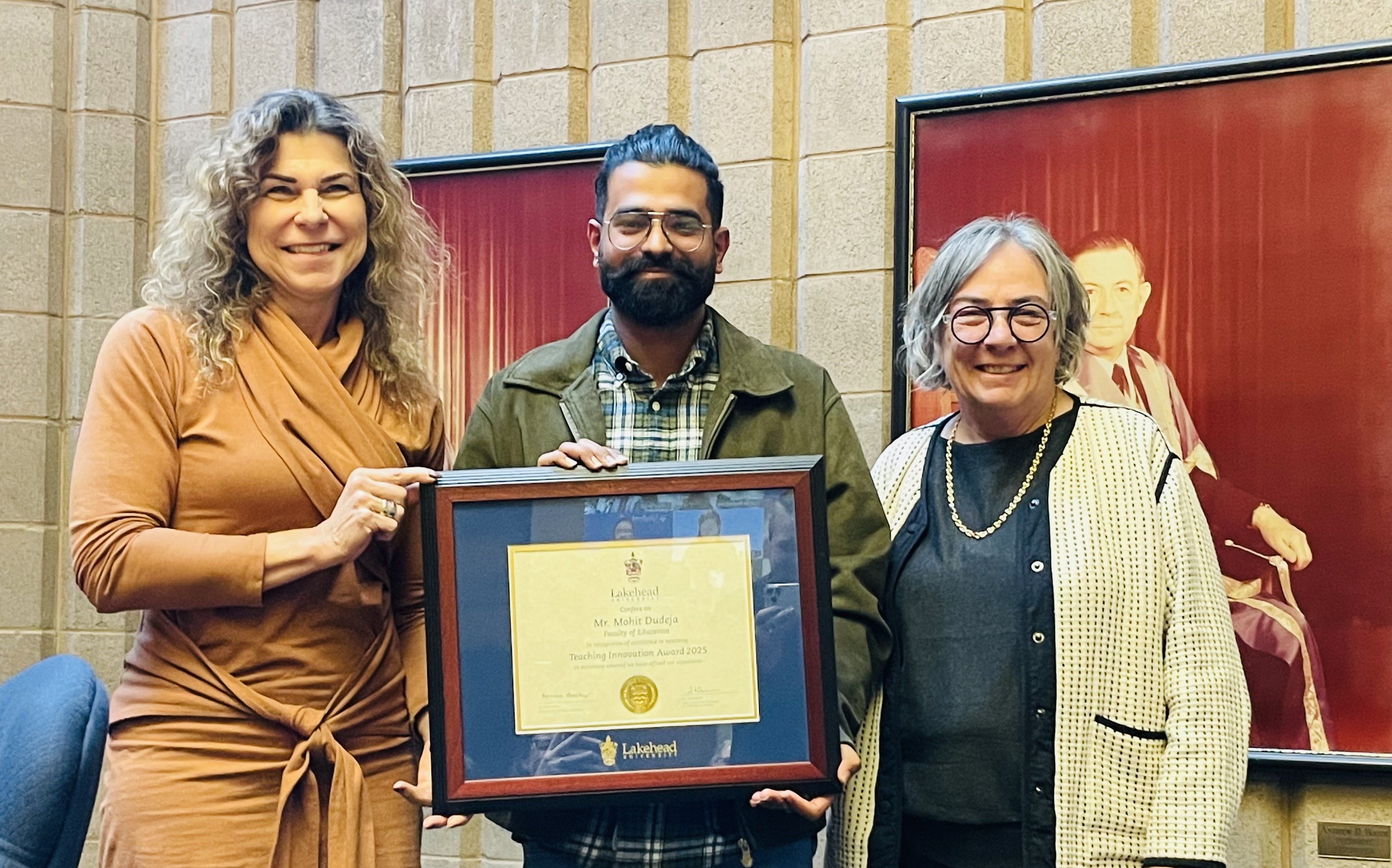
Mohit Dudeja, flanked by Dr. Gillian Balfour and Dr. Gillian Siddall, holds his framed 2025 Teaching Innovation Award in Lakehead's Senate Chamber

Mohit accepts his Teaching Innovation Award from Provost and VP Academic Dr. Gillian Balfour and Lakehead President Dr. Gillian Siddall.

The award celebrates Mohit's broader teaching accomplishments in the Department of Graduate Studies and Research in Education, as well as his inventive approach to the Activism in Education graduate course.

"It felt really amazing to win because Activism in Education is one of the best courses I've developed and taught," says Mohit, who moved to Canada from Delhi, India, to continue his studies.

Shaking Things Up

Mohit's ability to connect with his students is at the core of his methods.

"Everything I do, including my research and my teaching, comes from my own lived experiences," he says.

"As a child—and even as an undergrad and postgrad student in India—studying was a burden because it was boring and full of pressure. So, when I got an opportunity to teach, I thought, 'I want to make it fun.'"

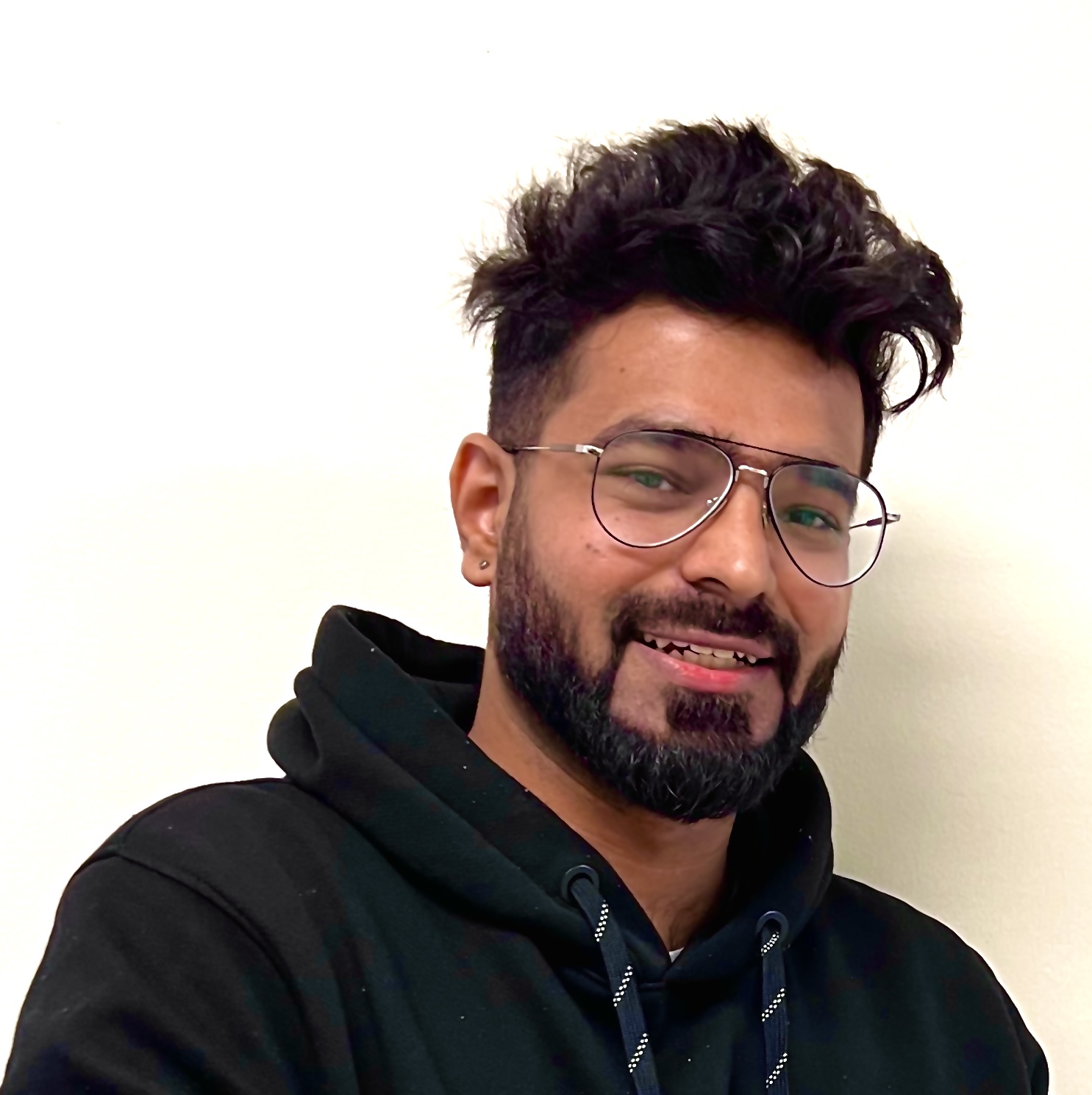
Mohit Dudeja wearing a black hoodie

"I have been a fighter from an early age, and the battles I have lived through shape how I teach," Mohit Dudeja says.

In the Activism in Education course—where all students come from outside Canada—Mohit deliberately designed learning experiences that extended beyond lectures and traditional assessments.

He blended theoretical concepts with practical experience by integrating arts, outdoor experiential learning, multimedia, and imaginative activities.

The goal was to give students a creative platform to examine topics such as gender equality, racism, and discrimination in Canada.

As a culminating project, Mohit proposed an ambitious idea: a collaboratively written and performed theatrical production that would bring students' analyses to life.

"I invited the students to create a script for a dramatic performance. Every one of them agreed. They were really excited to embark on an unconventional learning adventure."

An Award-Winning Performance

Mohit's students chose to put on a play exploring how Canada's changing immigration policies are affecting the lives of international students.

Education professor Dr. Gerald Walton nominated Mohit for the Teaching Innovation Award after sitting in on a dress rehearsal.

Lakehead students perform the last scene of their play for the Activism in Education play with images of the Canadian flag projected onto the wall of the auditorium

Above, students perform the last scene of the Activism in Education play. Their compelling performances brought the audience to its feet. "Knowing that my teaching helped students feel represented, validated, and less alone is something I carry with me and remain proud of," Mohit says.

Dr. Walton was impressed by both the performances he saw and the solutions the play proposed—solutions that can be implemented in classrooms, schools, and communities.

The production was performed in Lakehead's Bora Laskin Auditorium on November 21, 2025.

"When the play ended, the room echoed with claps," Mohit says.

"Many of us, including me, were in tears. Students had just seen their struggles and unspoken truths reflected back at them.

International students who weren't enrolled in the course came up to me and said, 'Thank you for highlighting the harsh realities that we live every day.'"

An Impassioned Advocate

Mohit's commitment to activism extends to helping people battling mental health challenges.

It was an area he became interested in when he faced his own mental health challenges.
His experiences spurred him to join Lakehead groups and community projects and volunteer with Thunder Bay Counselling.

Since then, he's helped countless students.

He has also served as president of the Lakehead University Graduate Students' Association. In that role, he pushed for inclusive initiatives such as a queer graduate student circle and a peer support program, as well as a listening and sharing circle at the Student Health and Wellness Centre.

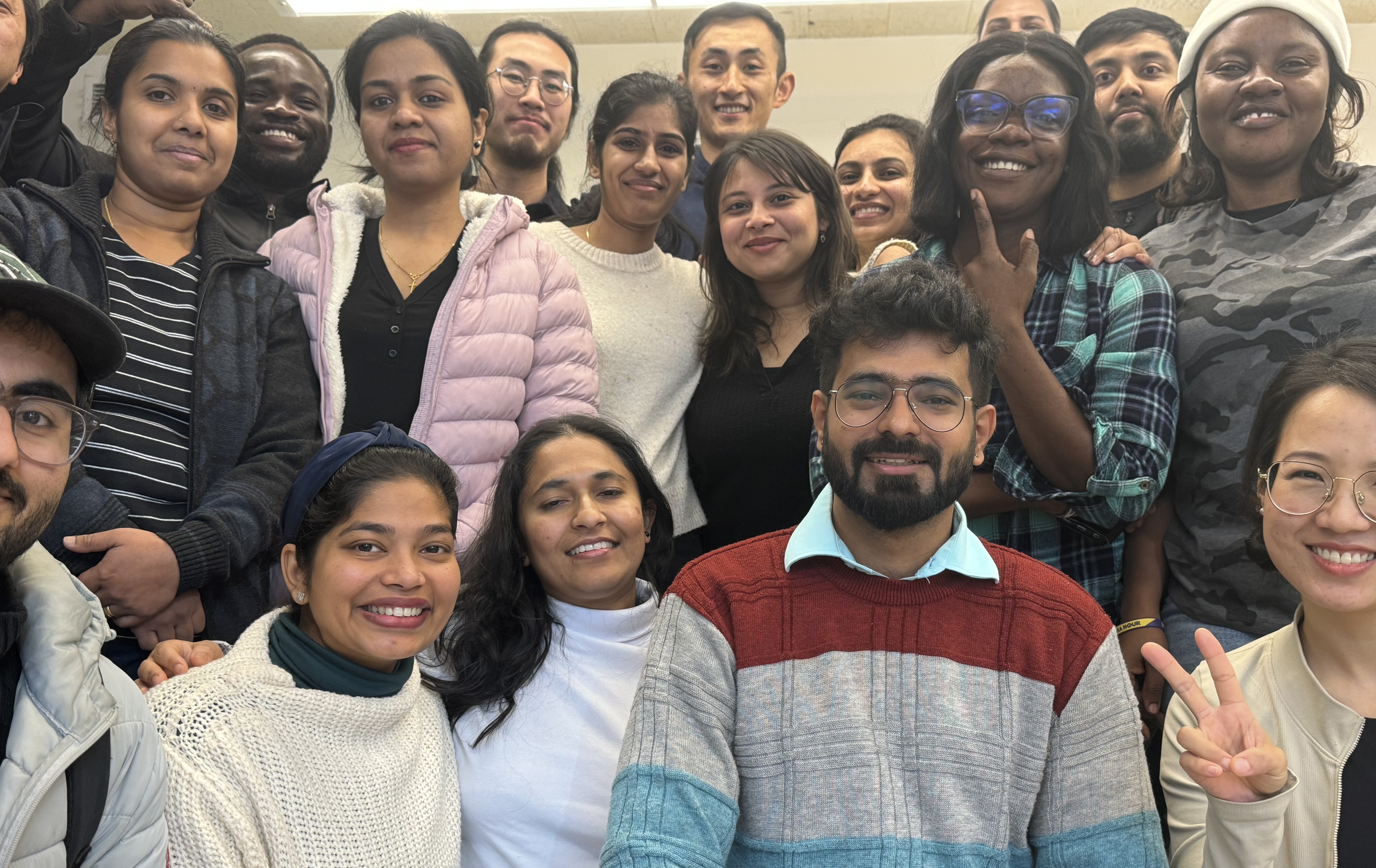
Mohit Dudeja and his Activism in Education students pose for a group photo

Mohit with his Activism in Education students.

"In the future, I see myself running a nonprofit and working for queer, BIPOC, and international student communities here in Canada and in India."

But Mohit has another, more immediate, dream.

"I come from a very humble background," he says. "I didn't have the resources to build something on my own. Becoming a tenure-track professor feels like the next step in continuing this work, and doing it sustainably."

Alumni Spotlight: Teigan Labor Fights for Canada’s Incredible Wilderness

This Conservationist and Freediver Documents Life in the Atlantic

"Lake Superior was definitely a big pull for me," says Teigan Labor of her decision to come to Lakehead University.

This recent grad (HBOR/BSc'24) is now the communications manager of the Nova Scotia chapter of the Canadian Parks and Wilderness Society (CPAWS-NS).

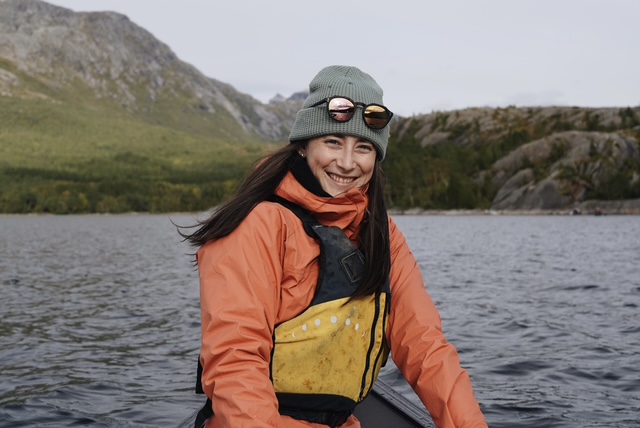
Teigan Labor, wearing a waterproof jacket and a life jacket, sits in a canoe on the water with rocky mountains in the background

Above, Teigan canoeing in Norway during the semester she spent at Nord University. "Northern Norway was a fantastic place to go as someone studying outdoor recreation and natural sciences because of the stunning landscape and the culture of friluftsliv, which translates to 'open-air life.'"

Choosing the university surrounded by boreal forest and a vast lake proved to be a good move for Teigan, who grew up exploring the wild waters and shores of Nova Scotia.

She was also encouraged by a glowing endorsement from her dad, Peter Labor.

He graduated from Lakehead in 1989 with Honours Bachelor of Outdoor Recreation and Bachelor of Science degrees, and went on to become the Government of Nova Scotia's director of protected areas and ecosystems.

"Growing up, my dad told me a lot of stories about Lakehead, especially his outdoor rec adventures—like joining the Mackenzie Expedition canoe trip across Canada," Teigan says.

"I saw how his time at Lakehead led him to an environmentally focused career and shaped him into someone I looked up to."

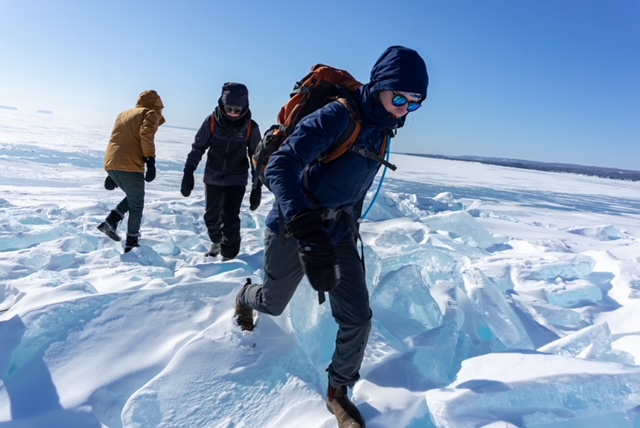
Teigan Labor, wearing winter clothing and a backpack, hikes with two other people across Lake Superior in the winter

"I chose Lakehead for its community-oriented mindset—smaller classes, knowing your profs—and the opportunity to do a double degree in Outdoor Recreation, Parks and Tourism and Natural Sciences," Teigan says. "This was unique from the other universities I was considering."

A Sailing Adventure and Studying Among Norway's Glaciers

Teigan packed a lot of living into her time at Lakehead.

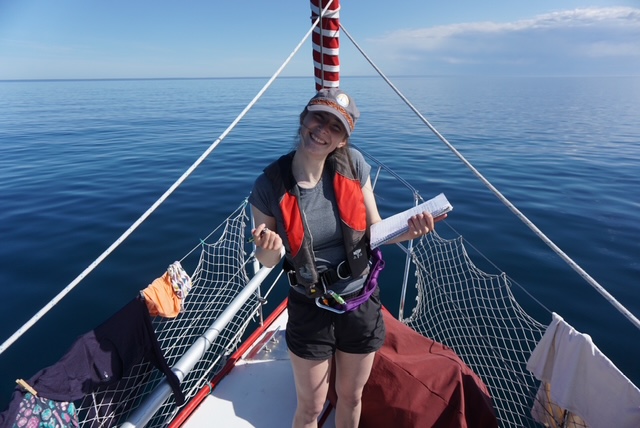
She began a month-long stint as an environmental educator in 2022 after attending a campus presentation by Sea Change Expeditions, an educational organization.

This entailed living aboard a 40-foot sailboat on Lake Superior and sailing to schools around the lake. She talked to kids about issues affecting the lake, like climate change, microplastics, and invasive species.

Teigan Labor on a sailboat holding a notebook and a pen

While sailing around Lake Superior in 2022, Teigan recorded water-clarity data as well as spoke to schoolchildren. "The schools we stopped at included Knife River and others on the North shore," she says. "We also stopped in Houghton, Michigan and Washburn, Wisconsin."

In her final year at Lakehead, she spent a semester at Nord University in Bodø, Norway, as part of Lakehead's North2North exchange program. "It was really eye opening, and one of the best decisions I made as a student," she says.

"I got to climb a glacier and learn how glaciers are being impacted by global warming—while standing RIGHT THERE in person."

The Pull of the Magnificent Atlantic Ocean

As an undergrad, Teigan worked as a summer student with CPAWS-NS, which works to conserve Canada's natural ecosystems.

She springboarded into a full-time role as CPAWS communications manager (she also does videography work for the organization) right after graduating from Lakehead.

Teigan Labor, wearing a wetsuit and a snorkelling mask and with a video camera hanging from a wrist, swims among eelgrassTeigan during a conservation freedive among eelgrass. "Eelgrass meadows provide shelter and nursery habitats for juvenile fish, and other marine species," she says. "They also store and sequester carbon, reduce coastal erosion, and much more." Photo Credit: CPAWS-NS/Teigan Labor
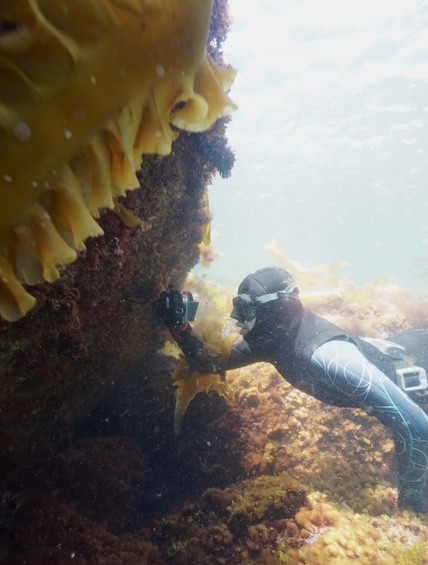
Her path to this position was helped by her activities both in and out of class.

She was the Lakehead Outdoor Recreation Parks & Tourism Student Society information coordinator and a videographer of outdoor rec-related content used in Lakehead's digital recruitment campaigns.

"Outdoor rec is just such an incredible program because you get a lot of different perspectives, including a really strong Indigenous-led perspective," she notes.

"I got a strong grasp of the leadership and group dynamics side of outdoor rec, such as guiding people in the outdoors, and learning how to assess risk and liability for participants."

Another bonus was earning certifications for diverse skills as part of her coursework.

On a Mission to Conserve Nova Scotia's Unique Marine Life

Today, Teigan has a career that gives her a sense of meaning and purpose.

"There are islands all up and down the coast of Nova Scotia, so one of the coolest projects I've been working on lately is a documentary about those islands and their remarkable biodiversity," she says.

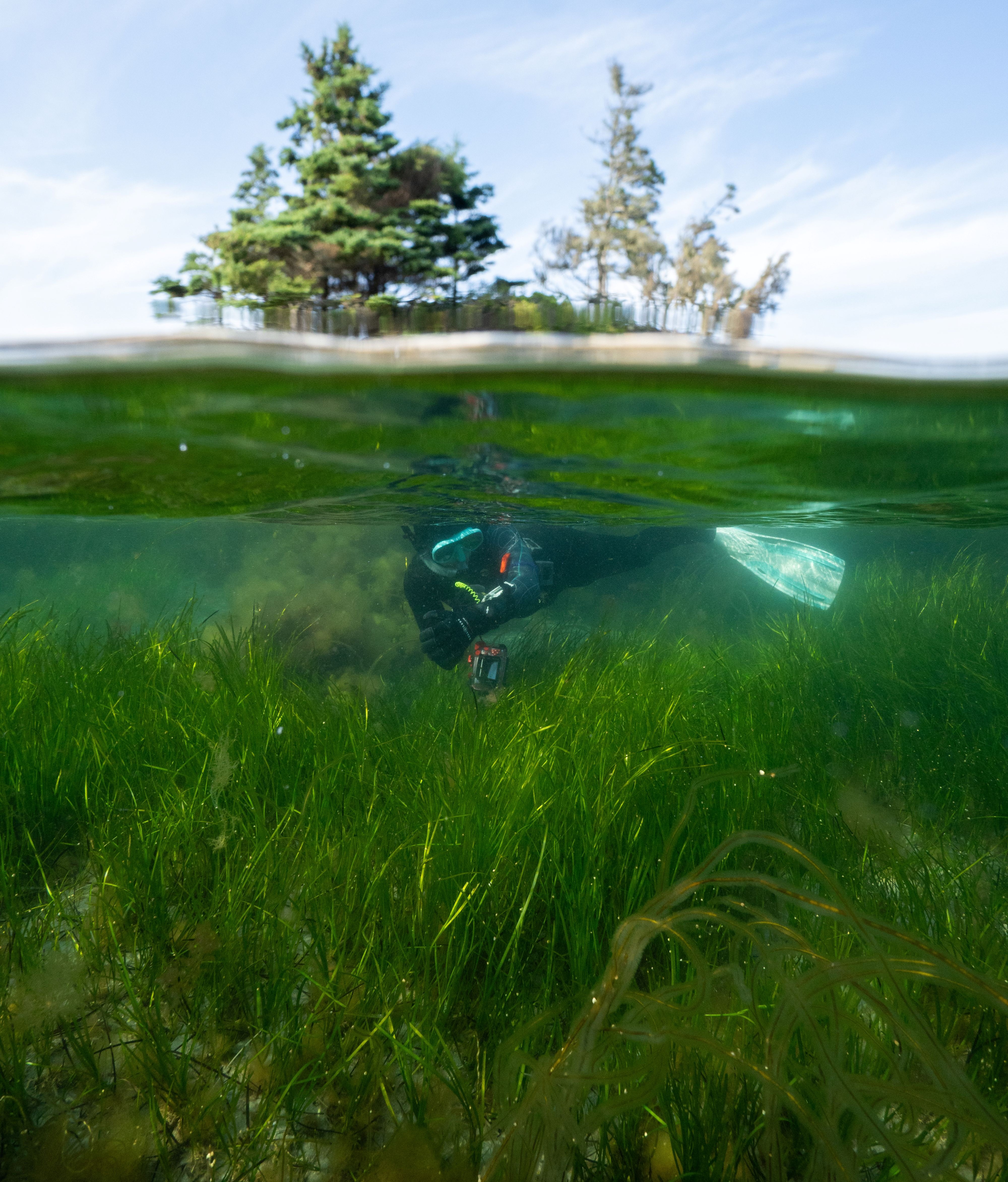
Part of her efforts include conservation freediving, which allows her to document marine environments with underwater photos and videos.

Teigan Labor films underwater footage of a coral reef while freedivingTeigan on a CPAWS conservation freedive at Sandy Cove, Terence Bay, in Nova Scotia. "We don't use the snorkel that much because we spend most of our time diving deeper than the surface!" Photo Credit: CPAWS-NS/Teigan Labor

"Conservation freediving looks a lot like spearfishing, but we replace the spear with a camera and strap a slate to our arms so that we can take down observations." Unlike scuba diving, freedivers don't use oxygen tanks.

Her department focuses on science communication to bring the public and communities into conversations. The goal is to inspire people to care about conservation and to talk to their policymakers about protecting the environment.

"I believe as humans we have a responsibility to take care of nature," Teigan says.

"I grew up canoeing, hiking, and playing in Nova Scotia's parks, protected areas, and coastlines. I want future generations to have the same opportunity."

News

No news to display for the selected year

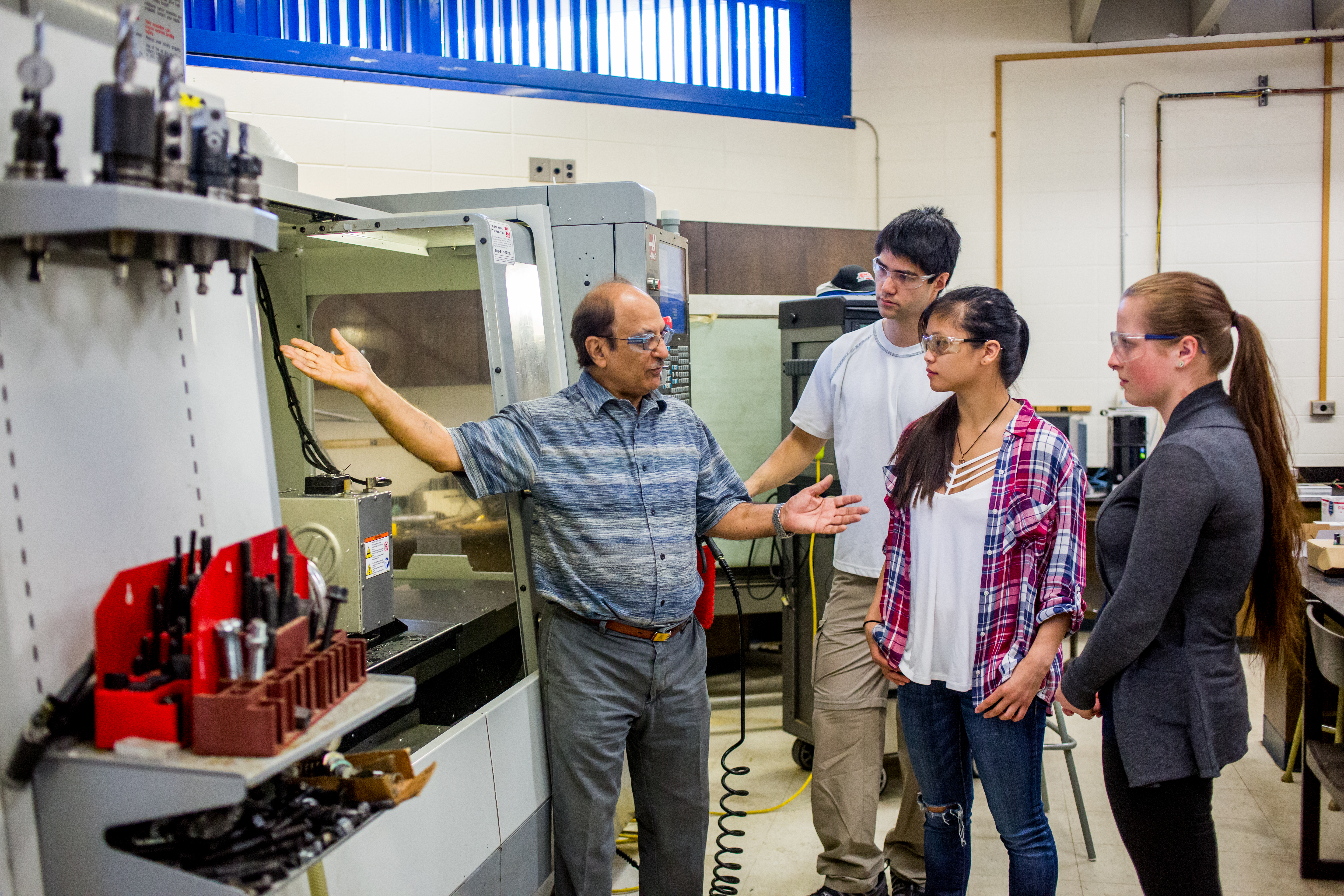
Students learning from instructor in a lab

Pathways

We are proud to offer a series of different entry pathways for students to study at the Faculty of Engineering, including our Post-Diploma transfer pathway for graduates of eligible engineering technology diploma programs, and our new online Common Year pathway for students without all the admissions requirements.

Undergraduate

Students in Fire LabOur Bachelor of Engineering (BEng) degree programs are delivered in-person at our campus in Thunder Bay or the Barrie STEM Hub.
In addition to graduating with a Bachelor of Engineering (BEng) degree, Lakehead’s undergraduate students who start in Year 1 also earn an Engineering Technology Diploma after completing the first two years of the program.

Our undergraduate BEng programs* are accredited by the Canadian Engineering Accreditation Board (CEAB).

*Our Bachelor of Engineering in Mechatronics Engineering will be reviewed by the CEAB in 2027 following the graduation of the first cohort of students.

English Professor Dr. Kathryn Walton is an Expert in Enchantment

Step Aboard a Golden Airship

If students hate to miss your classes, that's a sign you're doing well as a professor.

And if a student compares missing a class to "abandoning a once-in-a-lifetime voyage aboard a golden airship," that's a sign that your professor is Dr. Kathryn Walton.

With that kind of praise, it's fitting that she received her second Lakehead Contribution to Teaching Award in November 2025 (she was granted her first award in 2021).

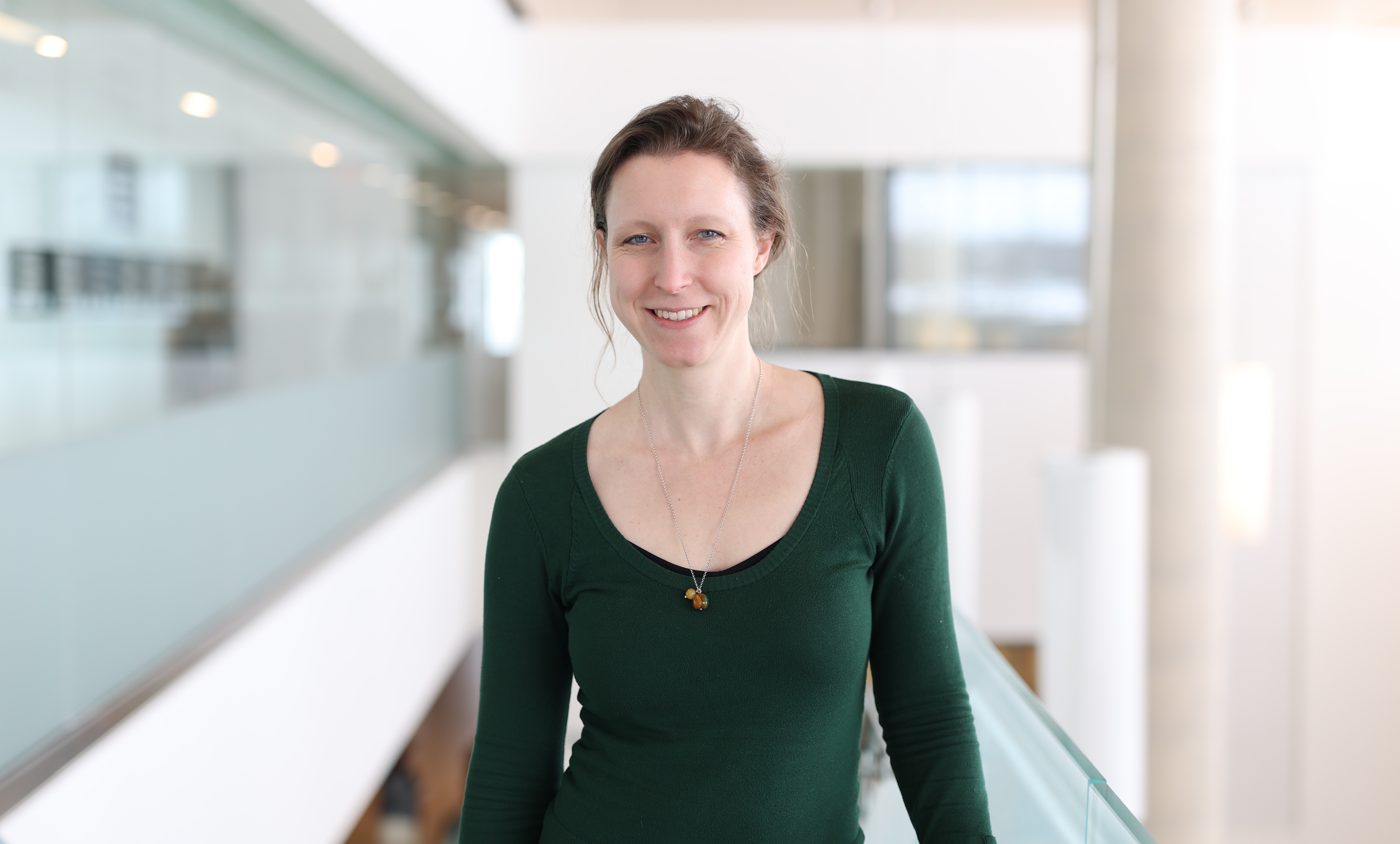
Dr. Kathryn Walton, wearing a green sweater and a pendant necklace, stands at the top of the staircase in Simcoe Hall

One student described Dr. Walton as "Lakehead Orillia's very own English-focused Ms. Frizzle. She's just missing the anthropomorphic chameleon and the magic bus."

This is a very special honour because it is students who nominate instructors for these awards, and it's their votes that determine who wins.

Dr. Walton, a professor in the English department at Lakehead Orillia, teaches sought-after courses in medieval literature, children's literature, and the history of English literature.

Literary magic, in particular, is one of her specializations. She's currently working on a book called Literary Magic in Medieval England to be published by the academic press Boydell & Brewer.

"That wonder, that excitement and engagement with the unreal and the supernatural in medieval literature has definitely influenced today's contemporary literature," she says.

Adventures into the Unknown

A lifelong lover of reading, Dr. Walton says her interest in the link between medieval literature and children's literature was sparked during her undergraduate studies.

"I was just absolutely fascinated by the way in which contemporary literary works have deep roots in the medieval era."

Heroes, quests, journeys, and magic that are common hallmarks of both forms of literature. Pseudo-medieval worlds—think Narnia, Middle Earth, and Hogwarts—abound in children's literature.

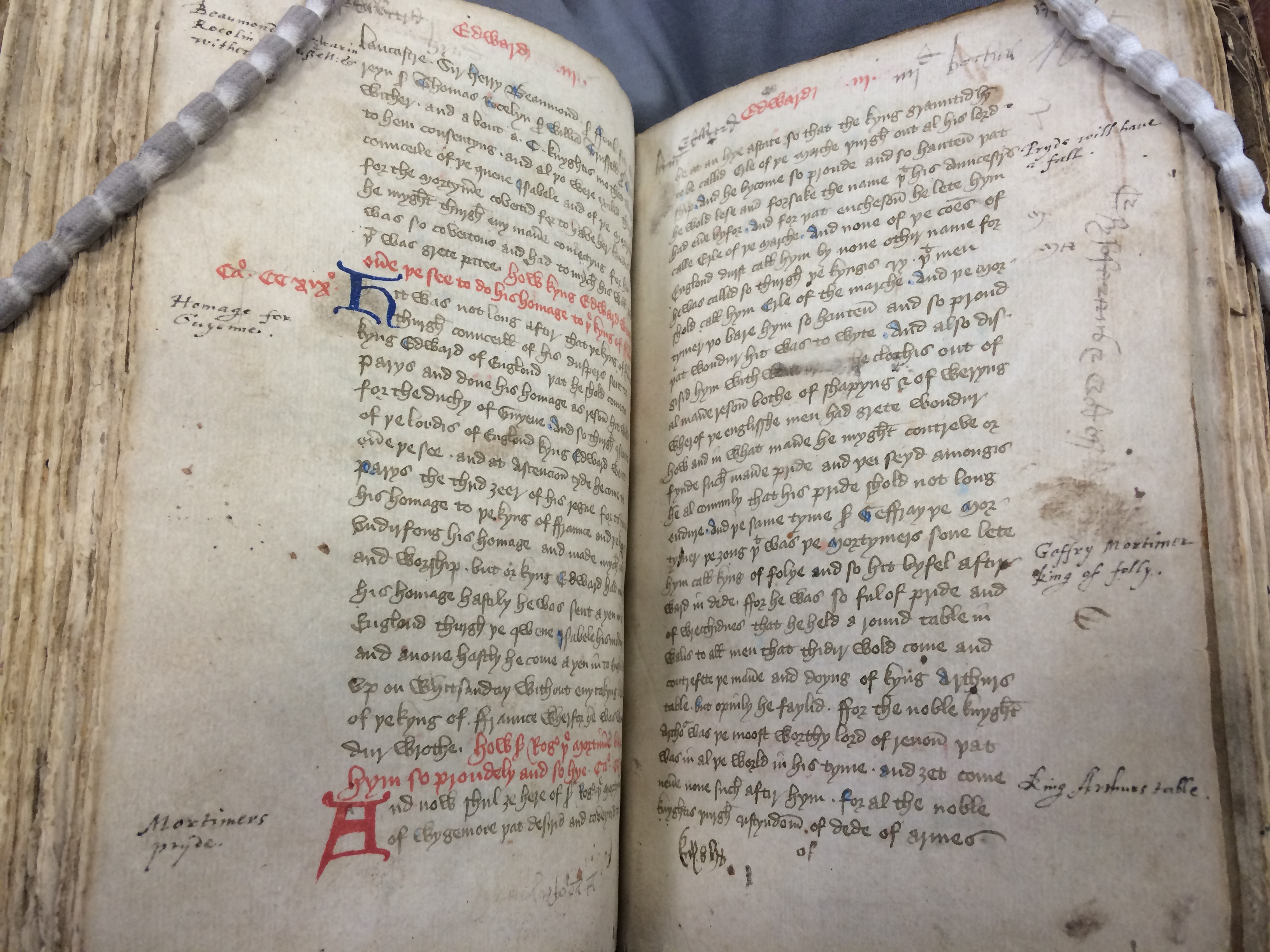
The Lincoln's Inn MS 150 medieval manuscript is opened up so that two facing pages are visible

Above is the Lincoln's Inn MS 150 manuscript created c. 1400. It features a mix of religious and romance texts from the medieval period. Dr. Walton discusses this book in her class Literary Magic in Medieval England.

In the Middle Ages, many literary works were conveyed orally, rather than written, so they're constructed in a way that appeals to the ear. Children's literature is similar, she points out.

But children's literature is unique in that it offers compelling and brilliantly written stories that are also easy to understand.

"That's incredibly powerful," Dr. Walton says. "Most people can remember books that they read as kids much better than they can remember anything they've read as an adult."

Old Languages Bring Literature to Life

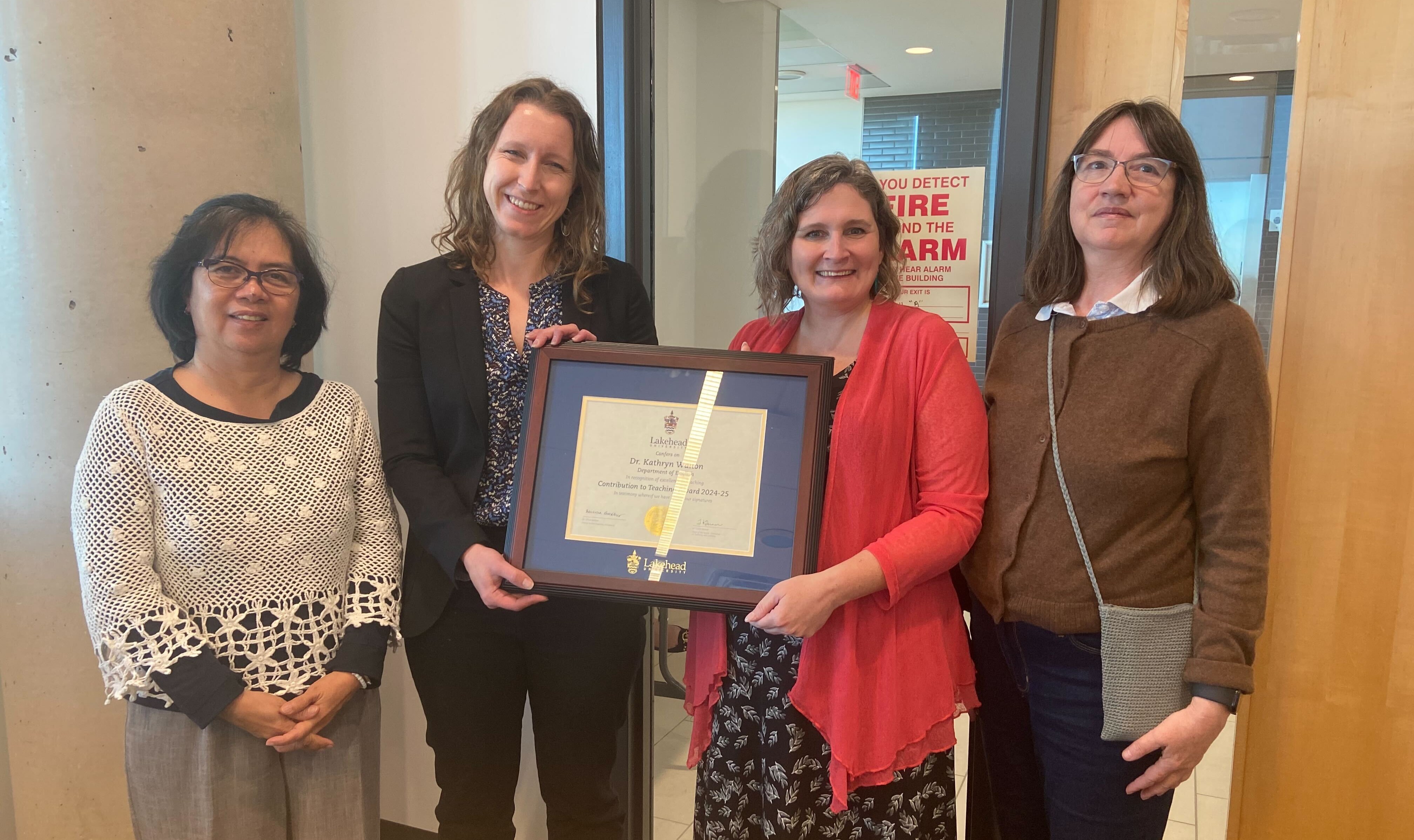
Dr. Kathryn Walton accepts her 2025 Contribution to Teaching Award

Dr. Walton accepts her 2025 Contribution to Teaching Award. Left to right: Social Sciences and Humanities Dean Dr. Glenda Bonifacio, Dr. Kathyn Walton, Lakehead Orillia Principal Dr. Linda Rodenburg, and Social Sciences and Humanities Dean Dr. Jennifer Jarman.

A mastery of Middle English, Old English, and Latin is essential for any expert in medieval literature. Of the three, Middle English is the closest to modern English.

"I tell my students to squint and ignore the extra vowels," she laughs.

Being proficient in these languages allows Dr. Walton to bring more insight to her classes.

"Reading texts in the original language is invaluable. It helps readers appreciate a specific poetic structure that doesn't come through in translation, and grasp the culture of the time through archaic words."

Freke, for instance, means "knight."

What's it like to be Peter Pan or Alice in Wonderland?

Getting students fired up about diverse forms of literature drives Dr. Walton's teaching approach.

"I give students a lot of space to talk about what they're interested in and what they find good or bad about whatever we're reading," she explains.

"Then I give them the historical context to understand the text and to inspire them to make new connections—to themselves and to the material."

A medieval illustration of Merlin, wearing a blue robe, points a finger towards a seated monk writing in a book

"In contemporary literature, magic is often splashy, with fireworks and explosions while in medieval literature, magic is more subtle but infused with a sense of wonder," Dr. Walton says. Right, a 13th-century illustration of Merlin dictating his prophecies to his scribe, Blaise.

Ingenious assignments further enrich students' comprehension.

For example, she'll ask students to transcribe a character from children's literature, such as Peter Pan, into contemporary realist fiction to show how the character would operate in the modern world.

"This allows them to use their brains in a different way because to write a character, you really have to know them."

Or, students may try their hand at writing a sonnet, sixteenth-century style, to truly come to grips with this form of poetry.

Dr. Walton's imaginative and immersive teaching continues to win her new fans, as well as Contribution to Teaching Awards.

"It's always extremely rewarding to know that students value my teaching and the experiences that they have in my classroom," she says.

If you'd like to dive into medieval or children's literature, Dr. Walton recommends: The Marrow Thieves by Cherie Dimaline, the Legendborn series by Tracy Deonn, The Canterbury Tales by Geoffrey Chaucer, and the poem Sir Gawain and the Green Knight.

Subscribe to Barrie STEM Hub