



Adventures in Archaeology
Lakehead Students Step Back into a Fascinating Past
Chris Hamilton was strolling along the McIntyre River on Lakehead's Thunder Bay campus one day in 2015 when he came to a sudden halt. His attention was caught by small flakes of jasper taconite rock.
Hamilton—who was a Lakehead geoarchaeology student at the time—realized that these fragments were ancient belongings left behind thousands of years ago by humans fashioning tools out of stone.
"Many implements such as spear points, dart points, and arrowheads were made where Lakehead's campus now sits," says Assistant Professor of Anthropology Dr. Jill Taylor-Hollings. "They were used for hunting animals."
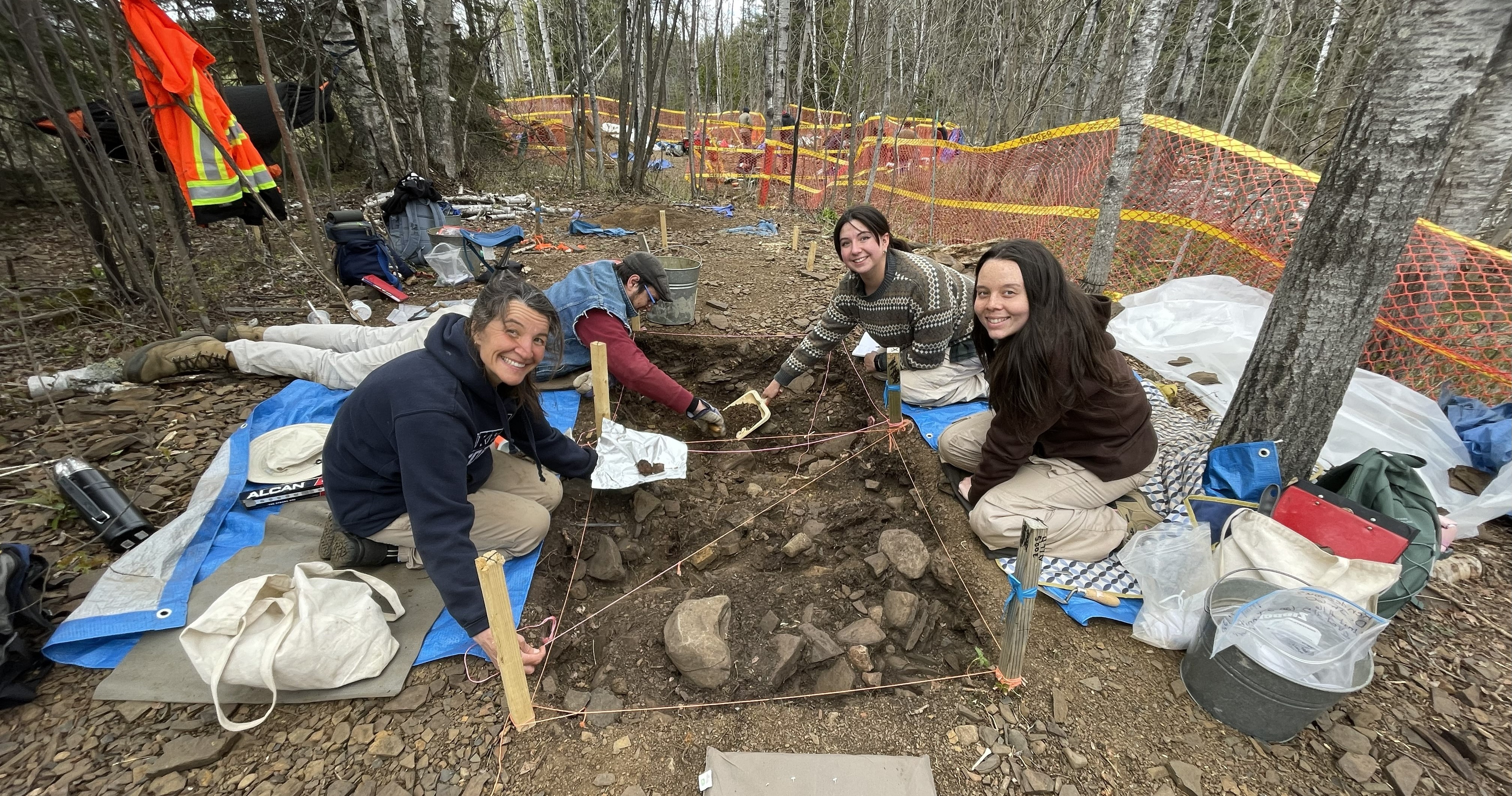
Enthusiastic Lakehead archaeology students worked rain or shine during the 2025 Archaeological Field School. The field school organizers, Clarence Surette and Dr. Taylor-Hollings, also volunteer with the Ontario Archaeological Society, which trains community representatives to monitor archaeological work.
This major find opened up an exciting world for Lakehead archaeology and anthropology students. They've been able to immerse themselves in the material culture of ancient peoples right on the grounds of their school.
Many other sites have been discovered on campus since 2015.
"They're all old pre-contact sites from the Middle period, ranging from about 7,000 to 2,500 years ago, as are three sites that were previously discovered in 1976," Dr. Taylor-Hollings says.
Digging Deep
Since 2015, the Department of Anthropology has offered three archaeological field schools on the Lakehead campus. They were led by Bio-Archaeology Technician Clarence Surette, Dr. Taylor-Hollings, and Anthropology Technician Chris McEvoy. These digs teach students essential skills like proper site excavation, reconnaissance techniques, mapping, and laboratory analysis.
"You start with a bird's-eye perspective, then establish a site grid made up of one-metre square units using wooden stakes," Dr. Taylor-Hollings says. "Students then excavate in layers using trowels, paint brushes, and root cutters."
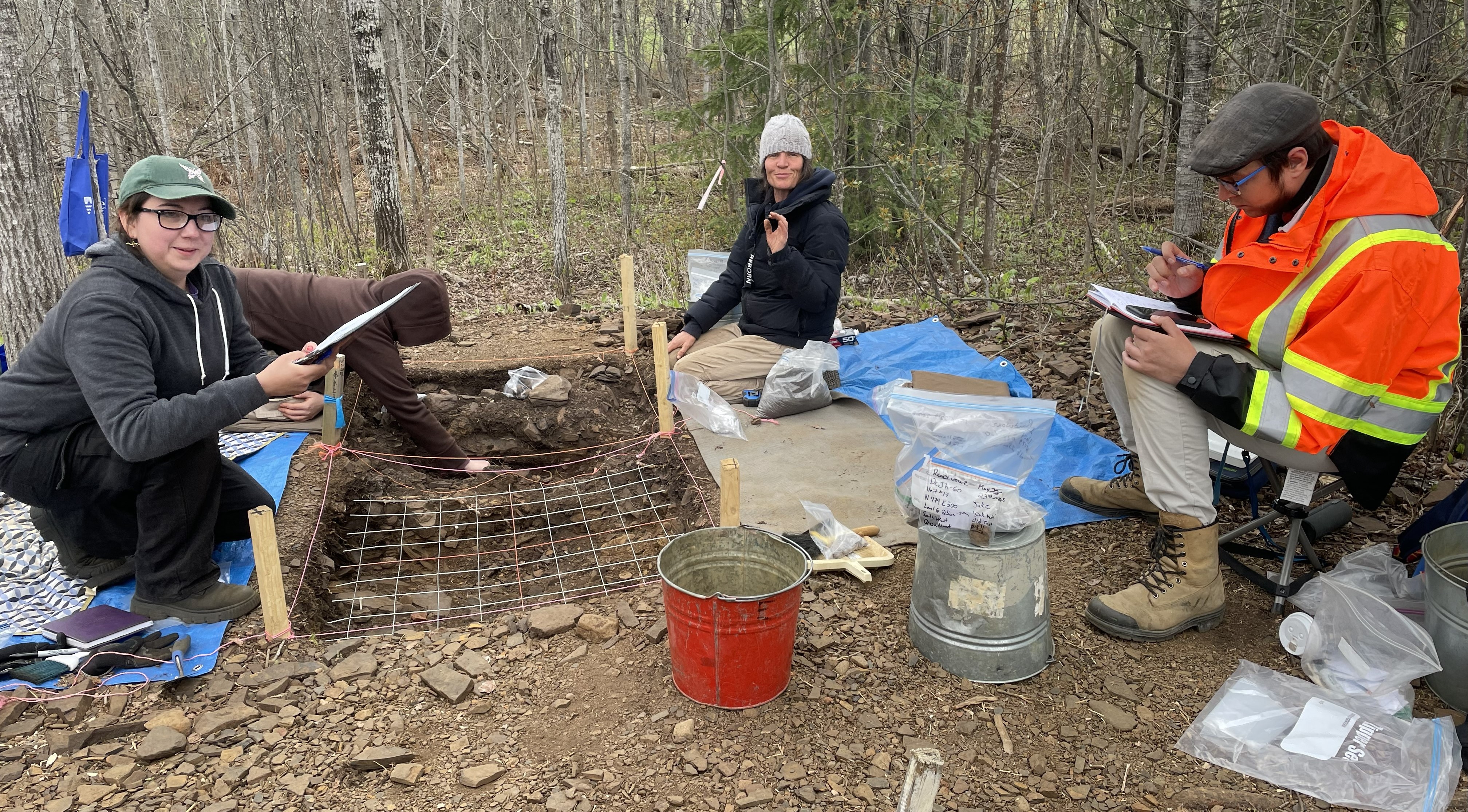
"In Ontario, 90 per cent of archaeological excavations happen at Indigenous sites," says Dr. Taylor-Hollings. "So, it is very important to work with local First Nations and teach the students about being respectful while being at these sites."
The most recent field school took place in May 2025, in partnership with the archaeological consulting firm Woodland Heritage Northwest. Archaeologists-in-training investigated the ancient, human-occupied shores of Lake Superior in the lake's northwestern region.
"We're like detectives," Dr. Taylor-Hollings says." We take the evidence we find and try to solve a research question."
Before beginning the excavation at this site, the Department of Anthropology asked for approval from Fort William First Nation to work there. "It was important to get their approval because this is their traditional territory," Dr. Taylor-Hollings says. Once the analysis of the artifacts (also known as ancient belongings) they uncovered is complete, they'll report the findings to Fort William First Nation and discuss next steps.
Clues to the Early Inhabitants of the Canadian Shield
"The humans who lived at the sites on campus were most likely the ancestors of the Indigenous people who now reside in this region," Dr. Taylor-Hollings says.
The hypothesis of the researchers leading the excavations is that these early inhabitants of the boreal forest lived in nomadic family groups along rivers and lakes, seasonally occupying areas while engaging in hunting, fishing, and plant harvesting. Ceremonies were also important in the past, and sacred locations exist all over the Thunder Bay area.
"Because of the stone material found during excavations at Lakehead sites, we can confirm that the Thunder Bay area has one of the largest concentrations of Early period sites (ca. 9500 - 7,000 years ago), which are the oldest sites in Canada," Dr. Taylor-Hollings says.
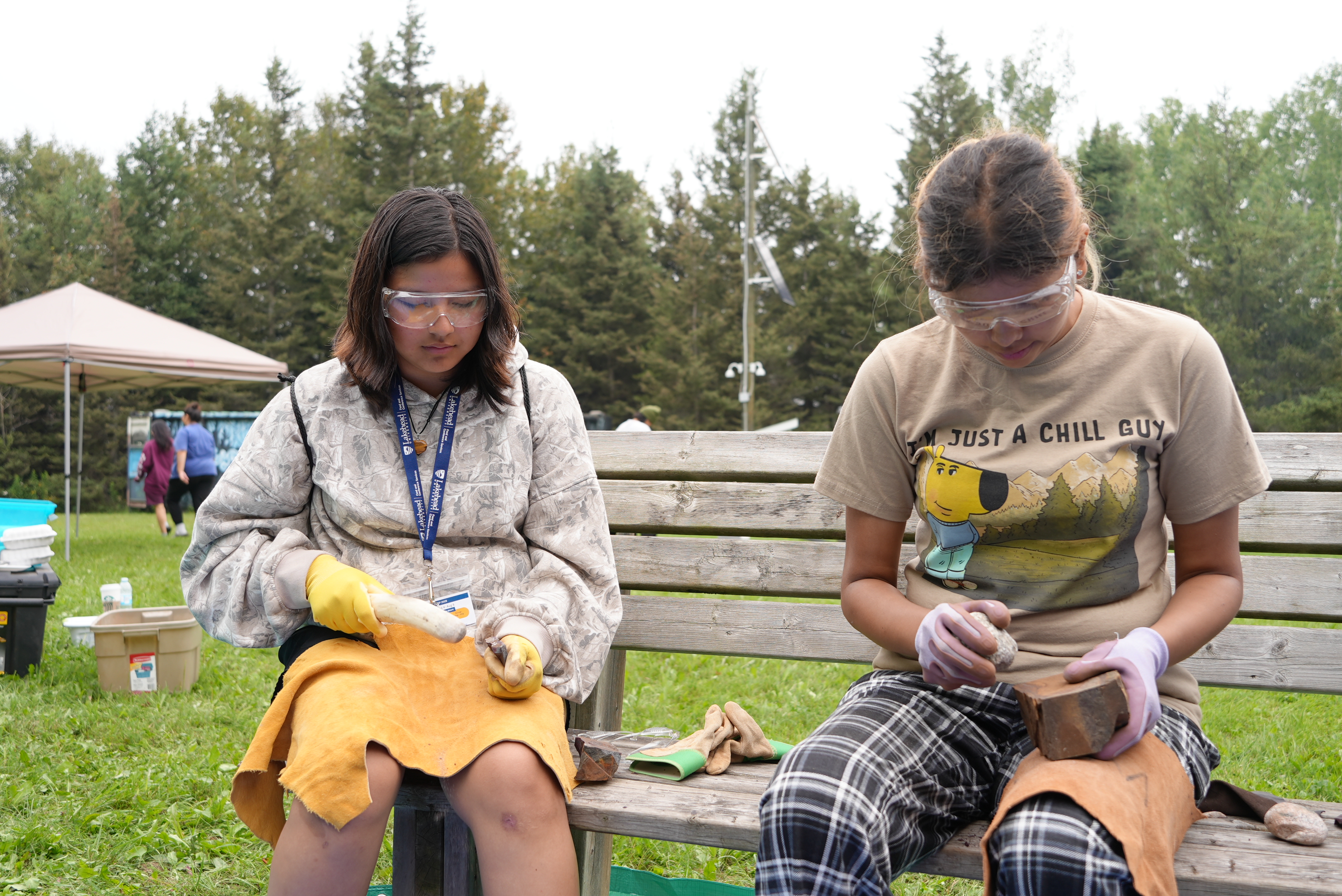
Above, Outland students learn how to flintknap. "We see evidence of groundstone technology and chipped stone technology (also called flintknapping) at Lakehead sites," Clarence Surette says.
Several copper tools were unearthed during the 2025 field school—a once-in-a-lifetime discovery that will contribute to the understanding of human history.
"It's likely that the first people anywhere in the world to use copper were from the Lake Superior Region," Surette says.
"We also found a fire pit, which is quite rare," Dr. Taylor-Hollings adds. "We're radiocarbon dating some charcoal we retrieved from the pit to determine how old the occupation is." This is evidence that people were camping right here thousands of years ago.
Experimental Archaeology Offers Unique Insights
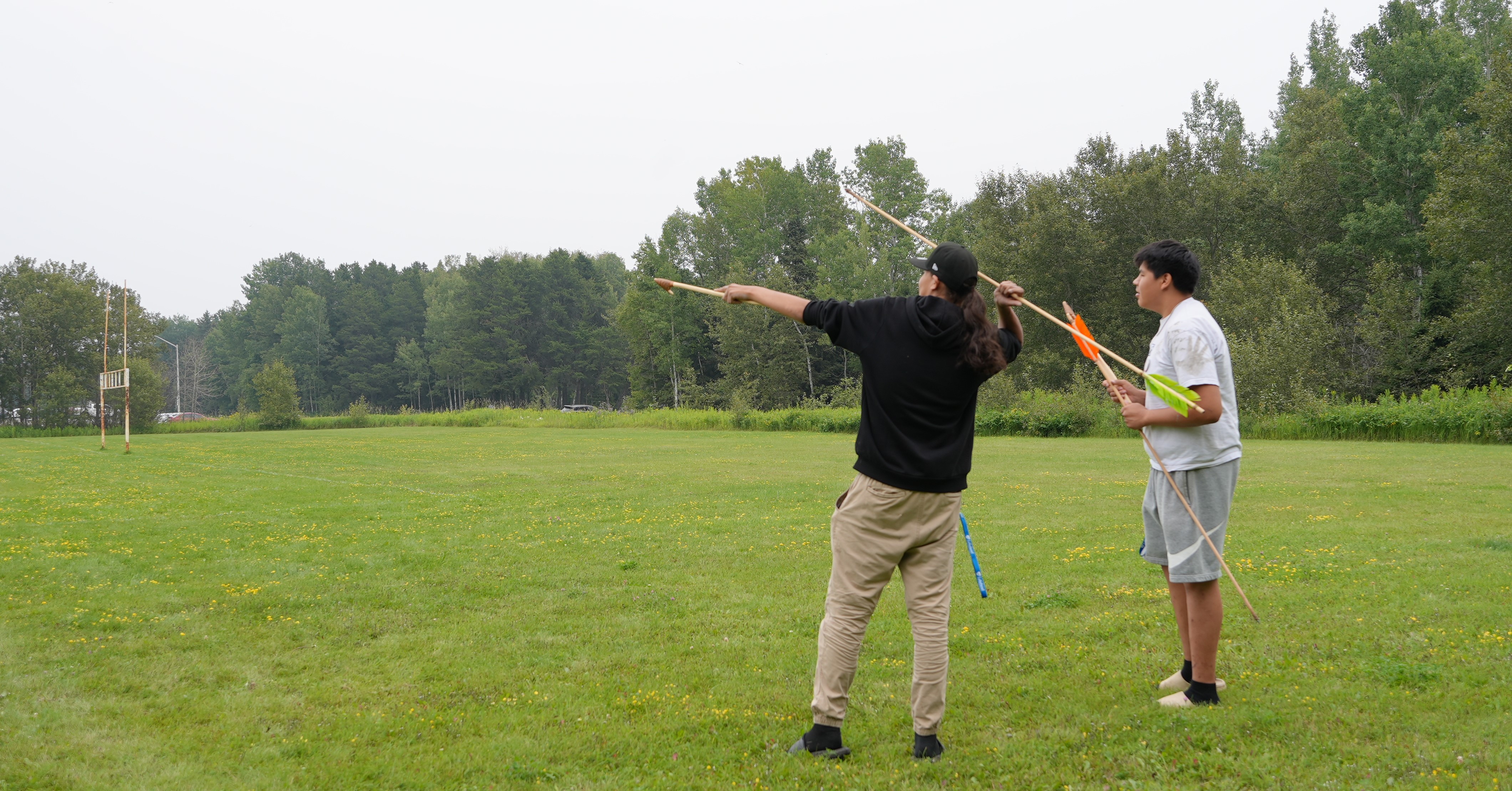
Outland students learn how to throw spears as part of Lakehead's experimental archaeology programming in August 2025.
Excavations and field schools aren't the only way that the Department of Anthropology teaches students about ancient people and settlements—experimental archaeology plays an important role, too.
"It allows participants to engage in hands-on activities such as stone tool and pottery making, using ancient techniques and materials to gain a deeper understanding of what life may have been like when these sites were originally occupied," Surette says.
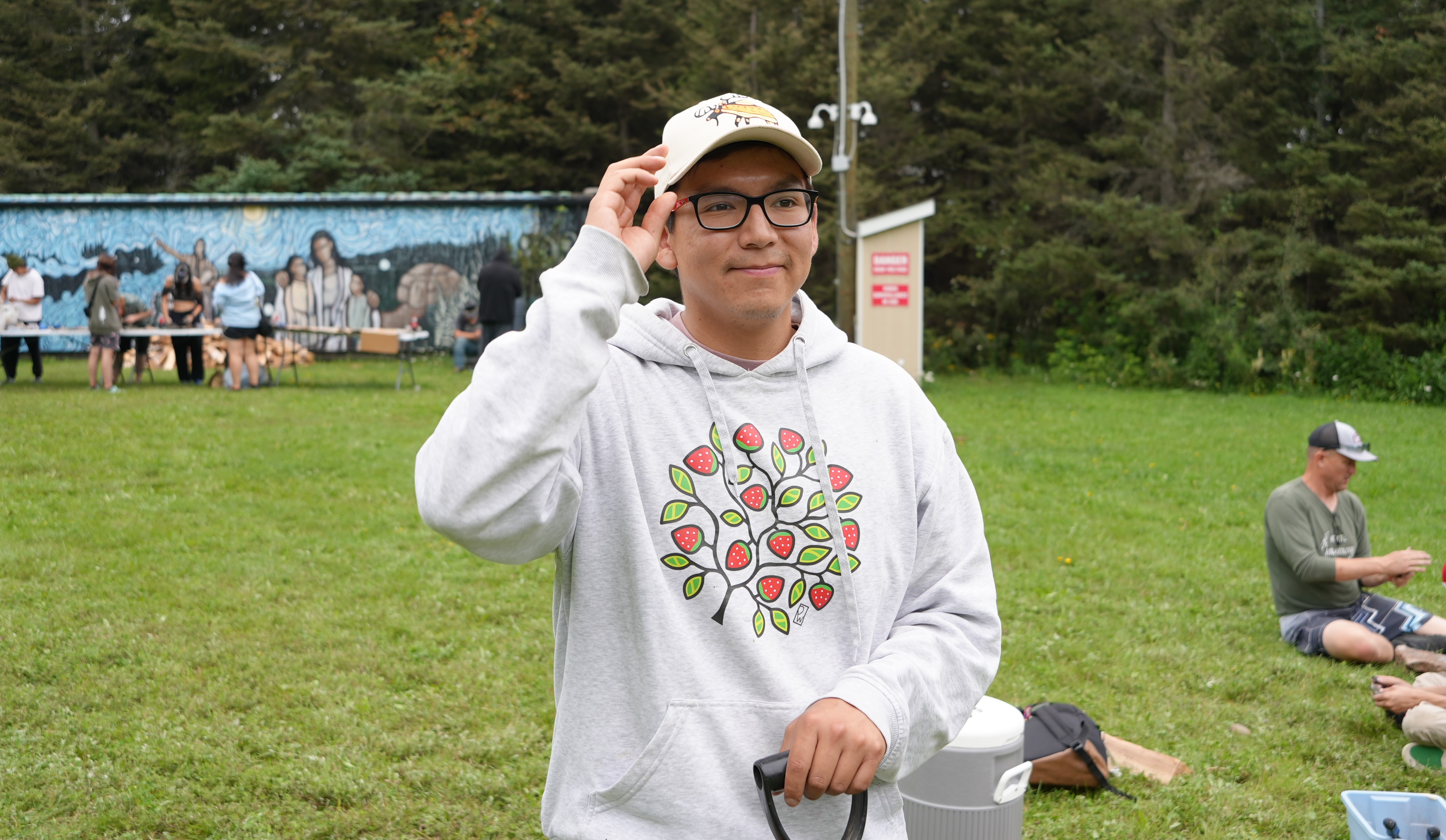
Niijii Outreach Coordinator Jared Visitor, who is also a Lakehead anthropology lab assistant, helped with experimental archaeology demonstrations for Outland students this summer.
Hands-on learning opportunities like these aren't limited to Lakehead anthropology students. In 2024 and 2025, Indigenous high school students participating in both the Outland Youth Employment Program and Lakehead's Niijii Indigenous Mentorship Program took part in experimental archaeology summer camps.
"It allowed our Indigenous youth to explore technologies and traditions their ancestors used for thousands of years," says Niijii Outreach Coordinator Jared Visitor. "This history has been told through the lens of science for many decades, but now we get to be a part of telling our own story."
If you're an aspiring archaeologist or anthropologist, check out Lakehead's degree options and enrol in classes and labs taught by nationally and internationally recognized experts.