



All About International Info Table @ STEM Hub
Stop by to meet staff, ask questions, and connect with us about campus services and upcoming events!
Stop by to meet staff, ask questions, and connect with us about campus services and upcoming events!
Stop by to meet staff, ask questions, and connect with us about campus services and upcoming events!
Stop by to meet staff, ask questions, and connect with us about campus services and upcoming events!
Stop by to meet Settlement Counsellors who support newcomers across Simcoe County, ask questions about community and social services, and connect with us about upcoming webinars! If you are new to Barrie and have dependents, this team will be a great resource for you.
Stop by to meet Settlement Counsellors who support newcomers across Simcoe County, ask questions about community and social services, and connect with us about upcoming webinars! If you are new to Barrie and have dependents, this team will be a great resource for you.
Environmental sustainability student Mateo Velasco Alva isn't standing on the sidelines when it comes to protecting the planet.
He's been involved with the youth branch of the United Nations Environment Assembly (UNEA) since he was a teen and has participated in Model United Nations conferences since middle school.
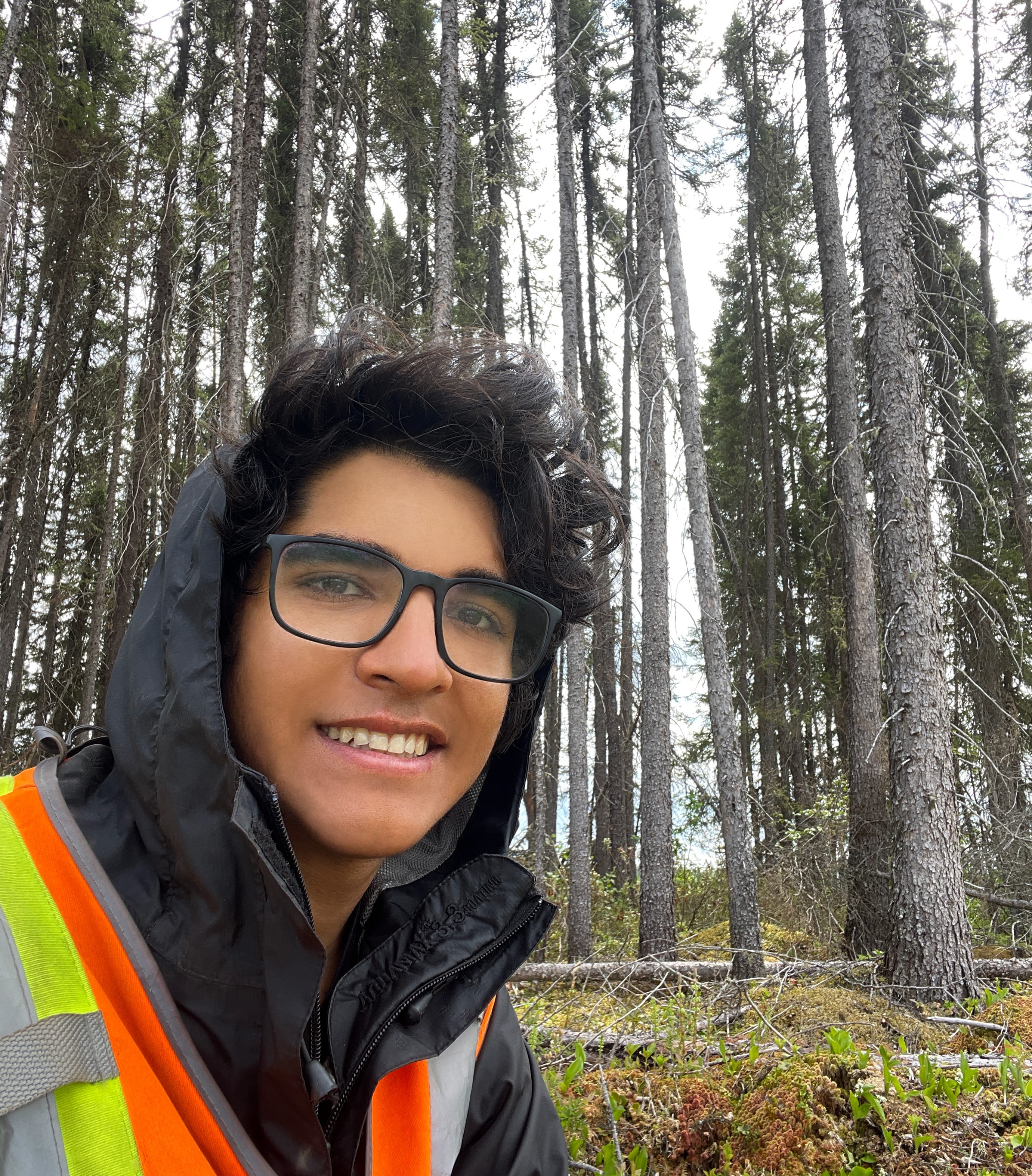
Mateo is beginning his fourth year in Lakehead's Honours Bachelor of Arts and Science program in Environmental Sustainability. "I'm from Mexico City where there isn't a lot of nature, so when I got to Canada I decided to do a truly Canadian outdoors activity," he says. "I did tree planting for two summers in northern Ontario."
These experiences have instilled in Mateo a determination to become a diplomat and to use his advocacy skills to help overcome the climate crisis.
"Seeing the ravages caused by extreme weather has been mind boggling," he says. "The saddest part is that the poorest countries are the most vulnerable.
We need to work together so that all people can thrive. We also need to acknowledge that humans aren't the only living creatures we share our world with."
Mateo recently had the chance to practice statesmanship at the very highest level through the Global Model United Nationsers (GlobalMUNers).
"I co-organized the 2026 GlobalMUNers New York City (GMNYC2026) summit held at the UN's ECOSOC Building."
Global MUNers is a non-profit organization that arranges student debates around the world to engage young people in civil society and to give them the tools to create real change.
Mateo was given this challenge after being chosen as the GMNYC2026 President of the UNEA Committee.
He and Vice-President Inés Belkhodja spent months planning the conference before welcoming over 2,000 student delegates to the headquarters of the United Nations.
"They came from middle schools, high schools, and universities from across the globe, including North Africa, Europe, North America, and the Caribbean," he says.
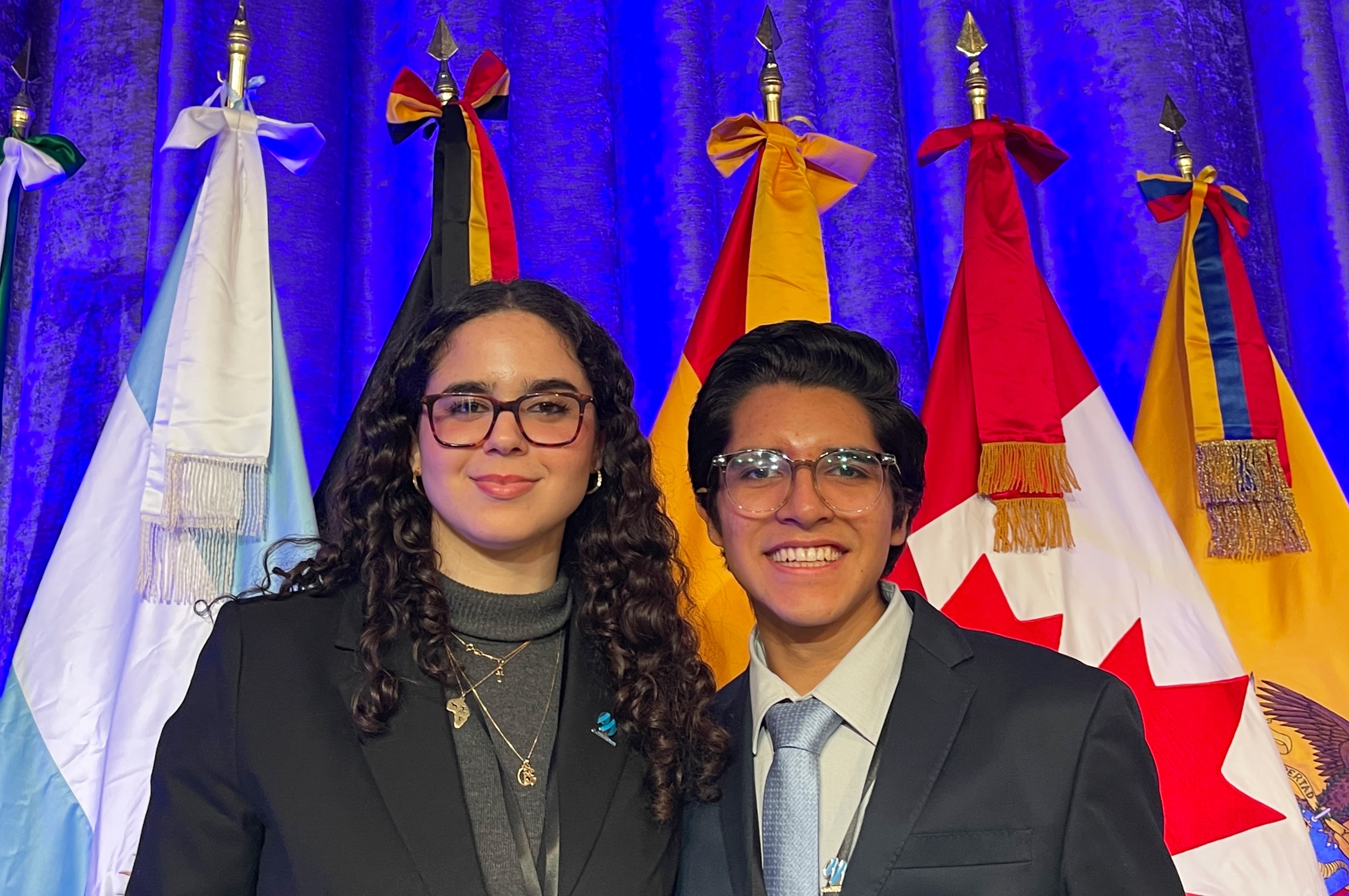
One of the highlights of Mateo's UN trip was a visit to the headquarters of the Permanent Mission of Germany to the United Nations. "We had a discussion with Germany's official representative and got to experience what a real diplomat does. It was great!" Above, Mateo with GMNYC2026 Vice-President Inés Belkhodja.
The summit's opening ceremony was held at the UN General Assembly.
"I never imagined that I would be at the United Nations headquarters, so it felt like a mission accomplished," Mateo says.
Keynote speeches were delivered by two of Mateo's heroes—UN Secretary-General António Guterres and GlobalMUNers Director-General Pilar Sandoval.
But this was just the start of a whirlwind week.
The student delegates participated in two working sessions per day. These sessions focused on GMNYC2026's selected debate topics: plastic pollution and climate change.
"I moderated the debates and the vice-president took notes and answered questions," he says.
The GMNYC2026 organizers also gave students the opportunity to address an impending real-world crisis—Greenland's melting ice sheets.
"The disappearing ice sheets are leading to rising sea levels," Mateo says, "and since 60 per cent of the world's population lives in coastal regions, it will become a massive humanitarian crisis.
When we introduced the crisis, the delegates were very shocked to learn about it," he adds.
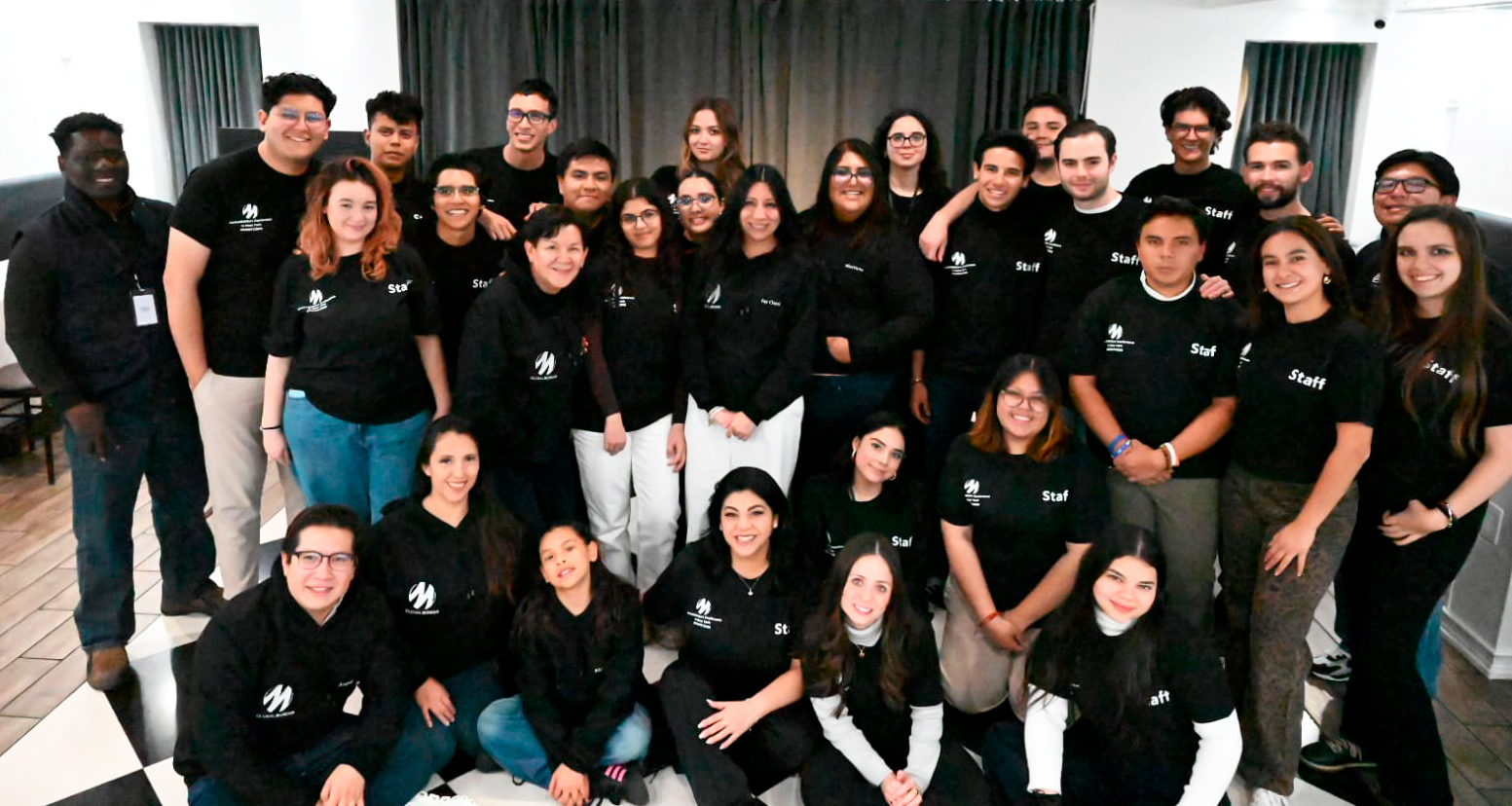
Above, Mateo with fellow students who helped run GMNYC2026. "I got to make new friends and new international connections," he says. "The best part of it is that I'll be going to another GlobalMUNers session in the Dominican Republic this September."
Students were asked to debate solutions and to draft an international non-binding agreement outlining these solutions.
"The UNEA doesn't have the power to compel governments to adhere to their conventions, so all UNEA agreements are non-binding," Mateo explains. "Countries have to want to adopt them."
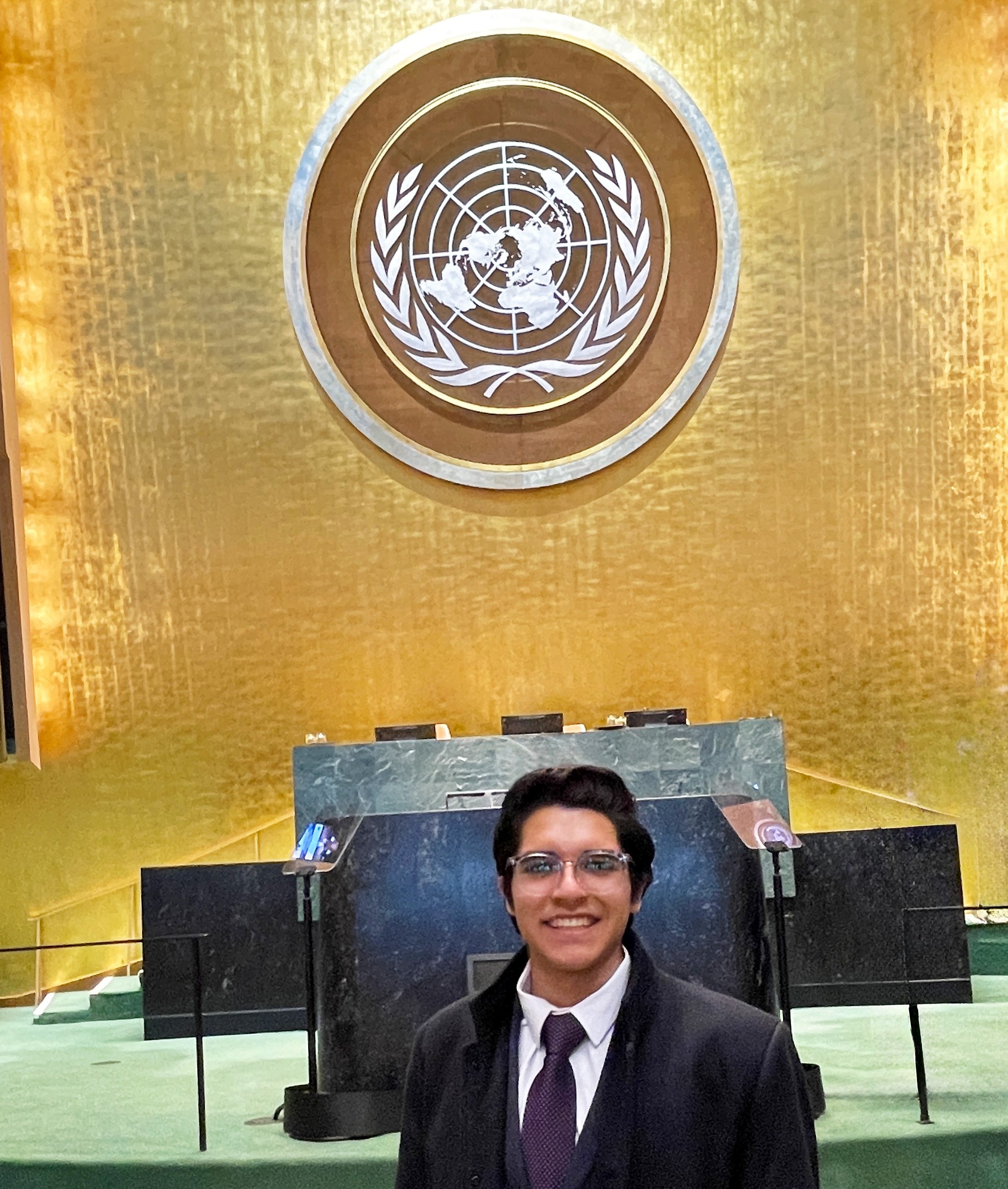
Last year, Mateo further enhanced his foreign affairs skills as an intern with the Organization of the American States (OAS) in Washington, DC. Above, Mateo in the UN General Assembly Hall.
This made the students' job even more challenging. When it came time to ratify the agreement, delegates had to vote along the lines that their countries vote at actual UN summits, forcing them to get creative.
"They knew the United States and Russia would be unlikely to accept an environmental agreement, so it was presented to them as a military crisis," Mateo says. "Both countries have strategically important military bases in Greenland and melting ice will affect their operation."
Solutions outlined in the agreement ranged from land reclamation projects to the establishment of atmospheric weather stations that would provide data needed to develop mitigation plans.
Mateo's leadership role with the GlobalMUNers has strengthened his decision to follow a diplomatic career path.
"Seeing all those young people gave me hope and the belief that younger generations can solve the problems created by older generations."
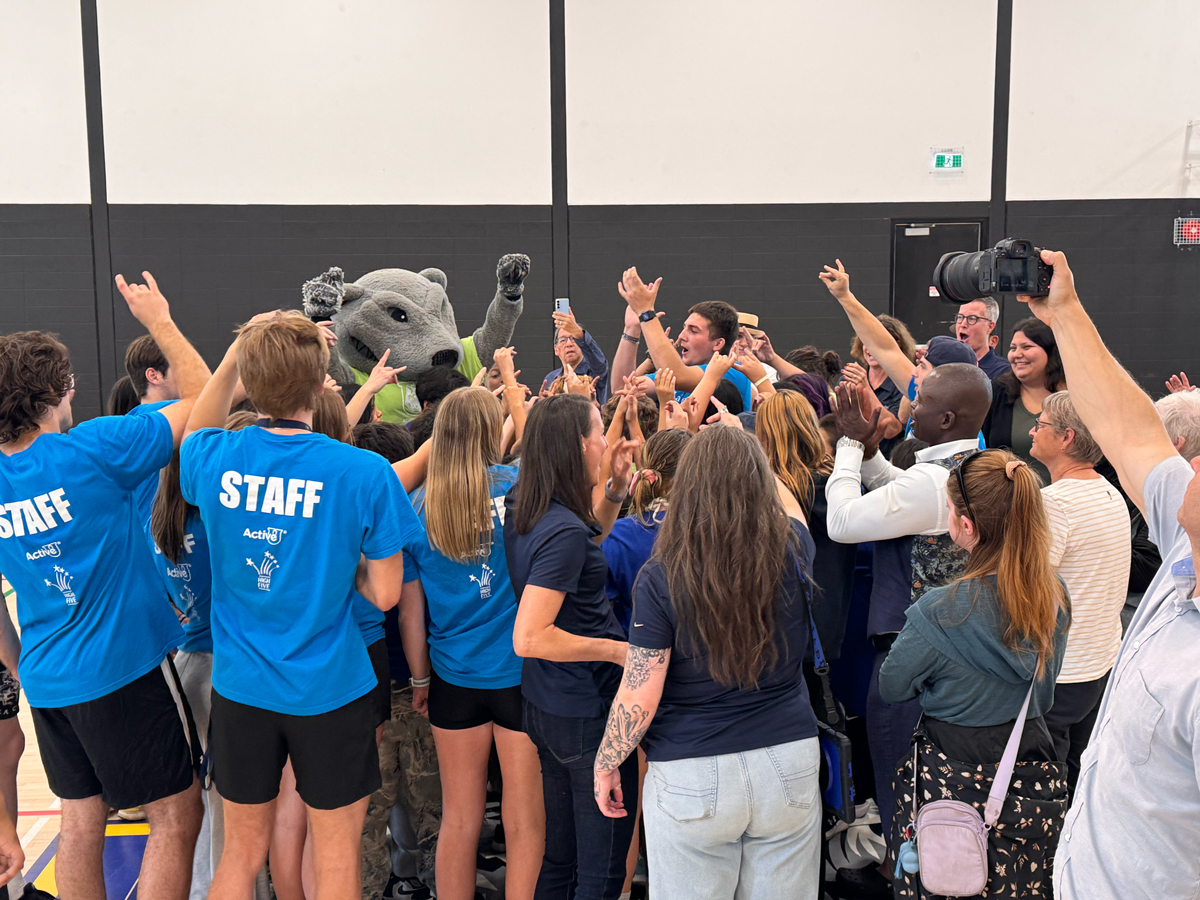 Lakehead University is launching a new $2-million fundraising goal to expand the reach and impact of its Achievement Program, with a significant commitment from the Alumni Association of Lakehead University helping kick-start the campaign.
The campaign builds on more than $1 million raised over the past five years and will support the program's continued growth across Northwestern Ontario and future expansion into Simcoe County. The Alumni Association is building early momentum with a $64,517 commitment.
"As Lakehead alumni, we know firsthand how education can change the direction of someone's life," said Alumni Association President Paul Popo-Ola. "We want young people to know that Lakehead can be a place for them, too. Supporting the Achievement Program is an investment in those students and in the communities they will one day help lead and strengthen."
The Achievement Program provides long-term support for equity-deserving youth who face barriers to postsecondary education. Beginning in Grade 4 and continuing through Grade 12, students participate in programming in their schools, on Lakehead's campus, and in the community, building confidence, developing skills, and becoming familiar with the opportunities available through postsecondary education.
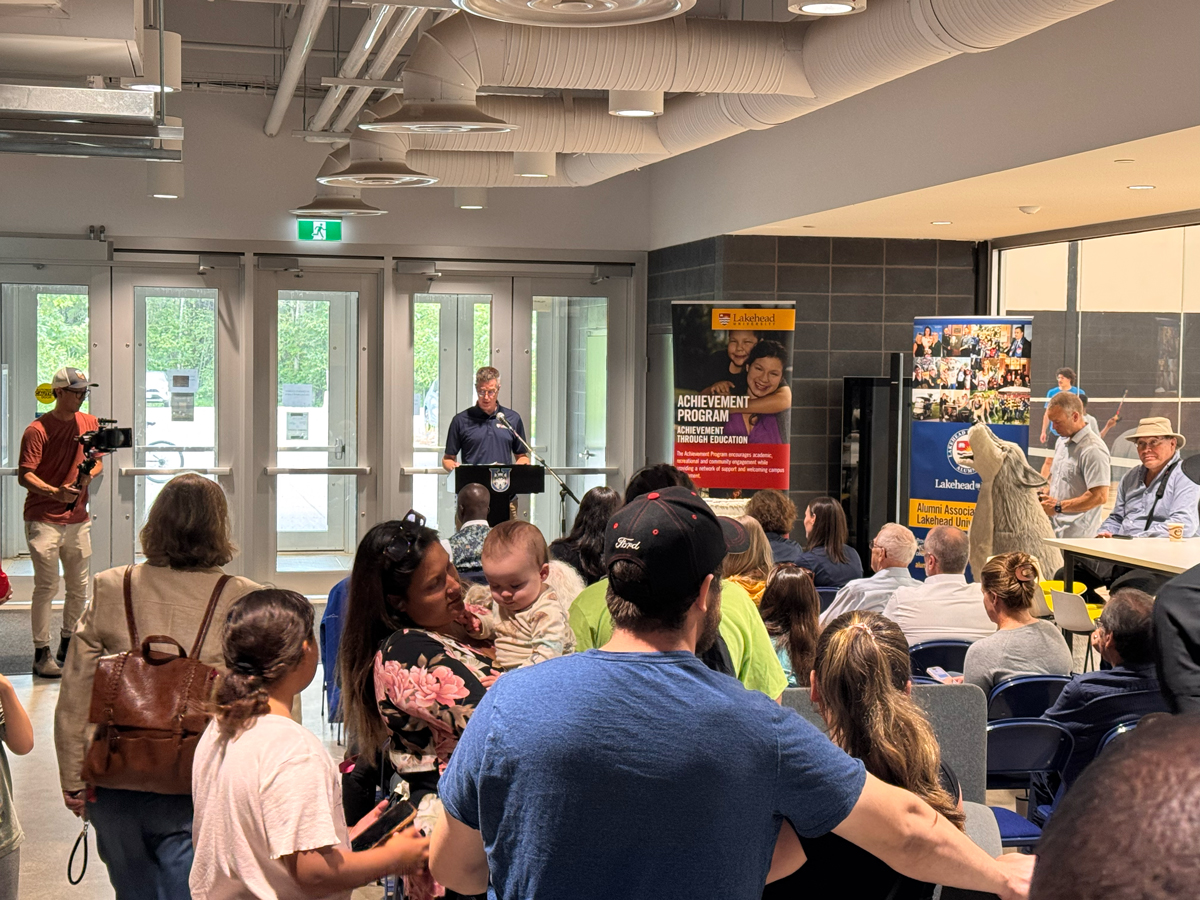 “The Achievement Program reflects what we believe deeply at Lakehead University: that education should be within reach for every young person,” said Dr. Gillian Siddall, President and Vice-Chancellor. “By building relationships with students from an early age, we can help them discover what is possible, build confidence, and help them see themselves as belonging at university. We want to create those opportunities for even more young people.”
In 2025-26, the program reached 500 students from 45 schools across six school boards in Northwestern Ontario. Eight Achievement Program graduates have attended Lakehead University since 2020. Three more participants are expected to begin their studies at Lakehead this September.
Through the Achievement Program, young people engage in recreational programming, hands-on learning, mentorship, cultural programming, leadership development, and opportunities to experience university life.
“One of the strengths of the Achievement Program is that we start building those connections early through sport and recreation, and stay with students throughout their journey," said Amanda Stefanile, Achievement Program Manager. "For many of our students, their first experience at Lakehead happens in athletics, years before they are thinking about applying to university. They get to explore the campus, meet new friends, and discover what they're capable of. Our hope is that over time, our campus becomes a very familiar space where they can picture themselves going to school."
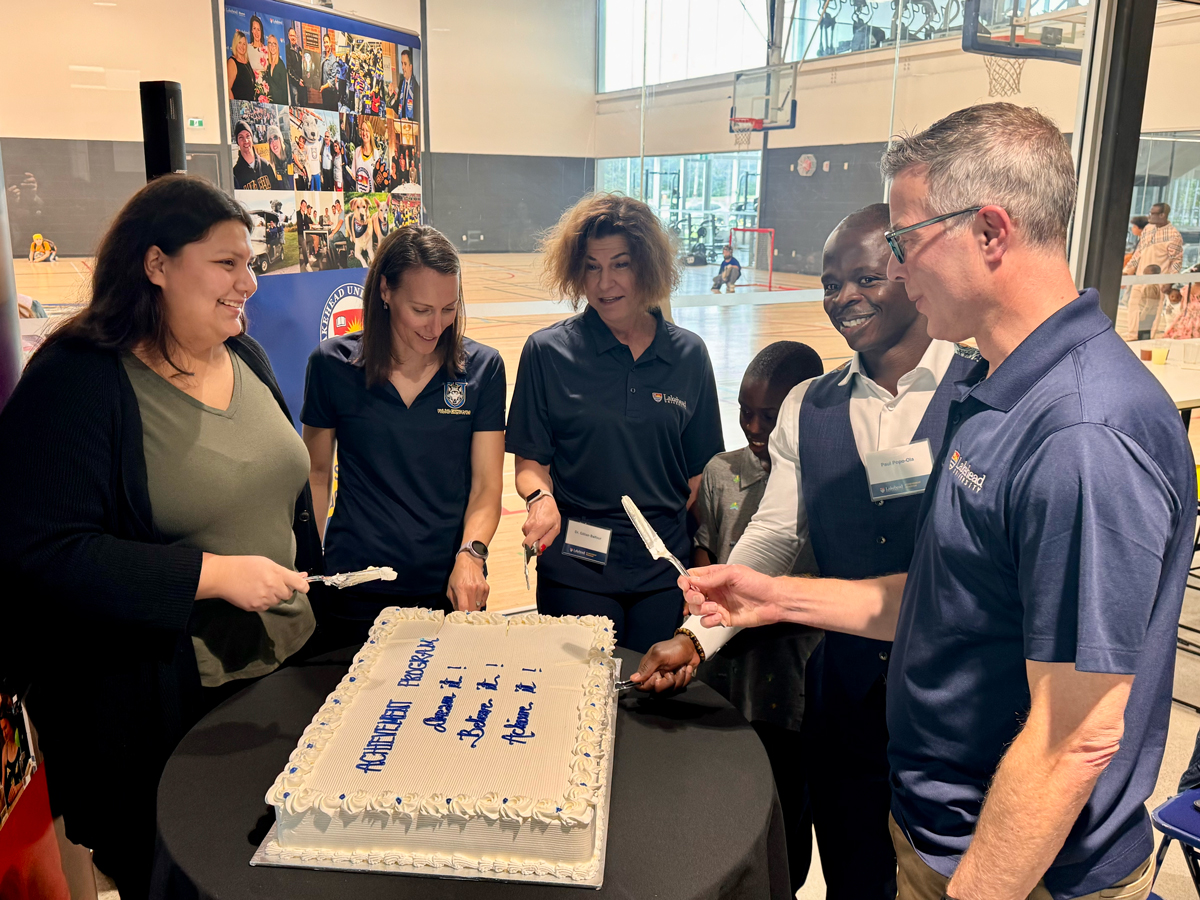 Friday's celebration allowed donors to engage directly with students taking part in the Achievement Program's summer camp, seeing the impact of their support firsthand. As the program enters its next stage, Lakehead's goal is not simply to reach more students, but to continue building relationships with young people and their families over time and provide meaningful pathways into postsecondary education.
“When we talk about raising the next $2 million, we’re really talking about what those dollars will make possible for the next generation of students,” said Michael den Haan, Vice-President, University Advancement. “Every gift to the Achievement Program helps create opportunities for young people to discover what is possible for their future and to know there is a community behind them as they pursue it.”
“Reaching this first milestone was possible because people believed in this program and decided to give. We are incredibly grateful for that support, and we’re excited to build on that generosity as we begin this next chapter.”
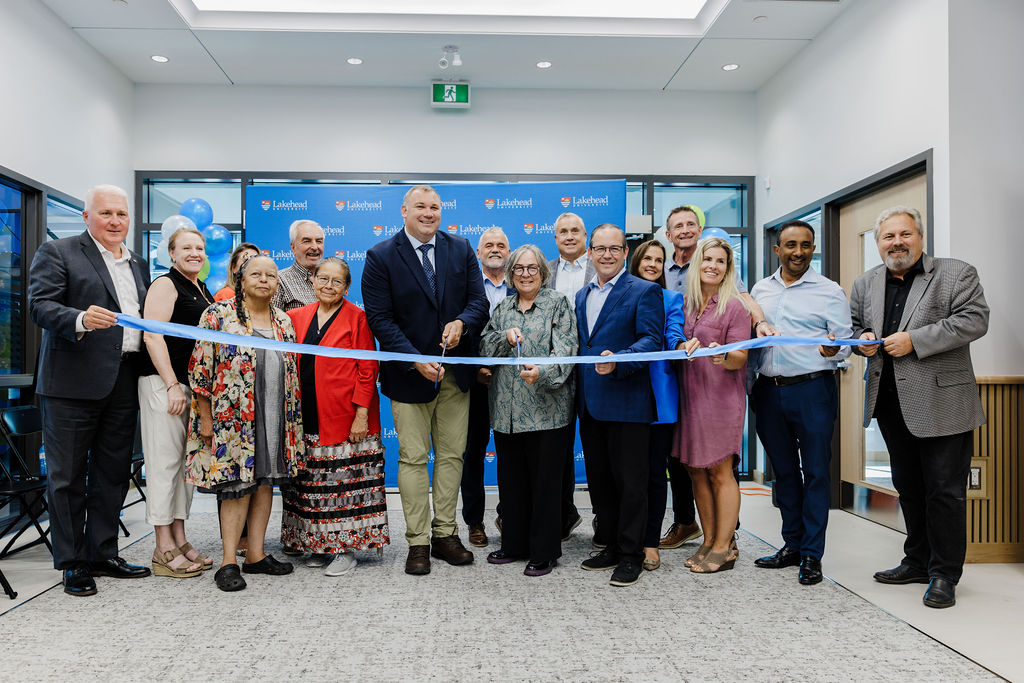
(Barrie, ON) – Today, the City of Barrie and Lakehead University celebrated the completion of the Lakehead University Barrie STEM Hub in the heart of downtown Barrie’s vibrant waterfront. Bringing a university presence to the city represents a transformative investment in talent, education, and economic growth in Barrie.
The Barrie STEM Hub is a multi-site facility with two locations: 24 Maple Avenue (the former Barrie Transit Terminal) and 5 Ross Street. These facilities have been transformed into more than 26,000 square feet of lab and classroom space, offering vibrant spaces designed to deliver hands-on education in engineering, mechatronics, and computer science at the undergraduate and graduate levels. The dual-location model will support both student experience and business collaboration.
As enrolment grows over time, the STEM Hub is expected to bring upwards of 800 students, researchers, and employees into the downtown over the next several years. The STEM Hub will enable students to learn locally for in-demand careers, supply industry with skilled talent, and generate economic benefits for the city with more demand for goods, services, dining, and entertainment.
With small class sizes, mentorship opportunities, and strong connections to local industry, the STEM Hub will empower students to explore, innovate, and launch successful careers in STEM fields.
Lakehead University will welcome the inaugural Barrie STEM Hub class on September 8, 2026.
For more information about the Barrie STEM Hub, visit barrie.ca/STEMHub or lakeheadu.ca/barrie.
“Today is truly a game-changer for our city. The opening of the Lakehead University Barrie STEM Hub is a major investment in our future and an important step in advancing Barrie’s emerging education district. With hundreds of students now studying downtown, we are bringing more people, more activity and more opportunity to the heart of our city. I look forward to seeing the incredible impact the Lakehead University Barrie STEM Hub will have on our community.”
- Alex Nuttall, Mayor of the City of Barrie
“With the opening of the Barrie STEM Hub, we’re establishing the first university campus in Barrie–a history-making moment for the City of Barrie and for Lakehead University. At its heart, the STEM Hub is about creating opportunities for students. It’s about building stronger connections between education and industry and ensuring that talented young people have the opportunity to learn, stay, build careers and contribute to the communities around them. An immeasurable amount of work has gone into preparing the Barrie STEM Hub to welcome our first cohort of students in just a few weeks, and today, we’re incredibly proud to officially open the doors to this exciting new chapter.”
- Dr. Gillian Siddall, President and Vice-Chancellor of Lakehead University
Are you graduating this fall, and plan to apply for a post-graduation work permit (PGWP), and submit your dependent's extension application? Join this session lead by our Int'l Student Advisors to learn about the next steps, what is required and how to apply for your PGWP, and dependent extensions.
Do you plan to leave Canada during the winter holidays? Have questions or concerns about re-entering Canada? Or do you have questions about how many hours you can work during this holiday break? Join this open Q&A session to ask questions, understand the eligible working hours, and see what is needed to exit and re-enter Canada.
