



Immigration 101 for New Students
Are you a new student who has joined us in the Fall term? Have questions about working and studying, or anything immigration related? Join us for an overview of your responsibilities as a student in Canada.
Are you a new student who has joined us in the Fall term? Have questions about working and studying, or anything immigration related? Join us for an overview of your responsibilities as a student in Canada.
This session is for current international students at Lakehead University who will require a study permit extension. You must keep your study permit active the entire time you study in Canada and always apply for an extension before it expires. Join our International Student Advisor to learn more about the process and what is required.
Are you a new student who has joined us in the Fall term? Have questions about working and studying, or anything immigration related? Join us for an overview of your responsibilities as a student in Canada.
Are you a new or returning international student? Stop by our drop-in session (online or in-person) to get your quick questions answered by one of our licensed student advisors. Whether you have questions about your studies, immigration, campus resources, or settling into student life, we're here to help.
No appointment is required - students will be seen on a first-come, first-served basis
Hydro One and the Faculty of Natural Resources Management (NRM) are embarking on a first-of-its-kind partnership to build a more resilient power system for people across Ontario through transformative research into vegetation management.
As Ontario’s largest electricity transmission and distribution service provider, Hydro One manages over 33,000 kilometres of transmission lines provincewide. These lines are located above power corridors—strips of land that must be kept clear of tall-growing trees and vegetation to reduce the risk of power supply disruption and wildfires.
Hydro One has long been a leader in the targeted use of herbicides for vegetation management, an environmentally conscious approach that enables low-growing vegetation to thrive. But the company is constantly seeking new and innovative ways of applying herbicides to achieve the same outcomes with less product.
That’s why Hydro One’s forestry division decided to undertake its first formal research collaboration, choosing Lakehead’s Faculty of Natural Resources Management as its partner.
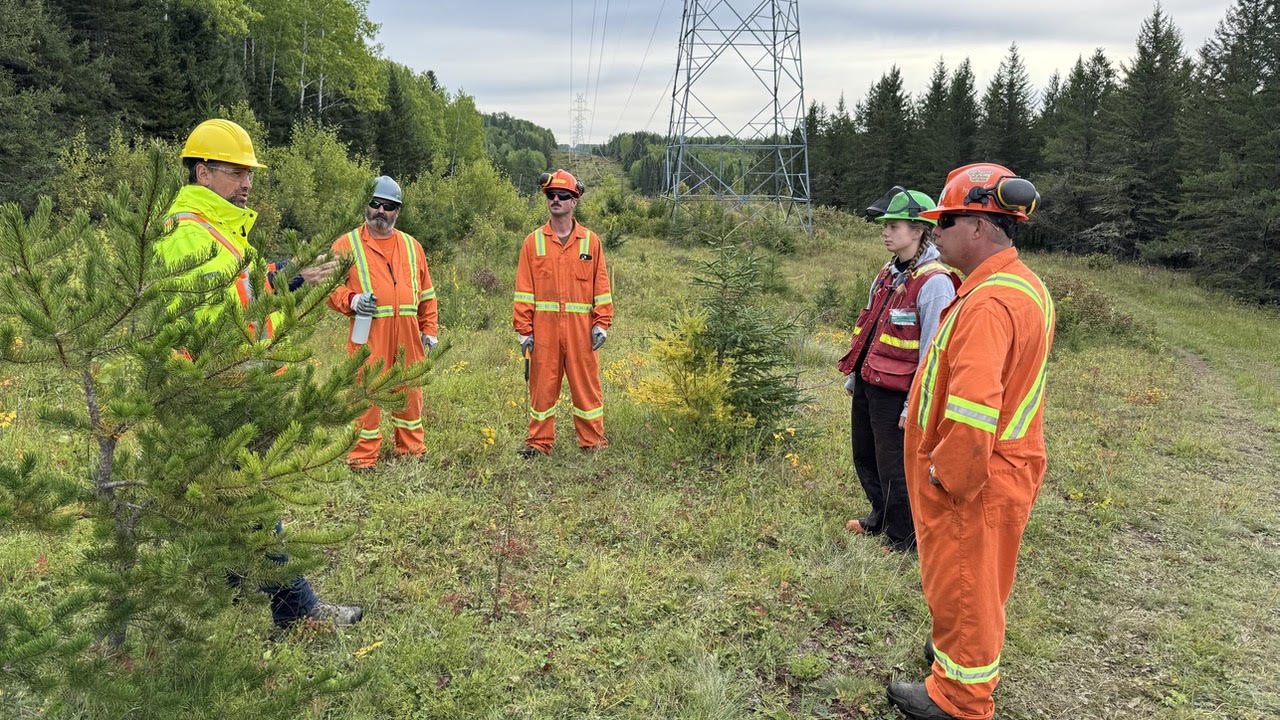
Assistant Professor Dzhamal Amishev (yellow helmet), MSc student Caitlin Stewart (green helmet), and Hydro One staff discuss the herbicide plan along the power transmission corridor in Thunder Bay.
“We spoke to multiple schools, but we chose Lakehead because of the NRM faculty’s expertise and operational on-the-ground forestry-management experience across Ontario’s diverse forest regions,” says Anthony Shi, the Hydro One Forestry program manager who initiated the project. “Their academically rigorous work will allow us to stand behind the research as we make important decisions about evolving our practices.”
Together with researchers and staff from Hydro One, the Lakehead team —including NRM dean, professor of remote sensing, and principal investigator Dr. Brigitte Leblon and co-investigators Dr. Dzhamal Amishev and Dr. Seung-Il Lee—is testing different methods of applying herbicides in two forested regions of Ontario.
They are also leveraging this research opportunity to explore new ways of assessing the effectiveness of each method and how these methods will affect pollinator populations.
Each member of the Lakehead’s research team is leading a different aspect of the project, which is funded by a major grant from the Natural Sciences and Engineering Research Council of Canada (NSERC) and Hydro One.
Dr. Leblon is using aerial imagery and deep-learning methods to detect and assess tree mortality in power corridors before and after herbicide treatment—an innovative approach which will help the research team understand the effectiveness of each treatment method at scale. Her work assessing fuel moisture from radar images will also be used to inform forest-management practices focused on reducing the risk of wildfires in powerline corridors.
“Vegetation in these corridors is difficult to monitor because of the lines, and climate change makes power corridor vegetation more prone to fire. New methods need to be developed for monitoring both fire hazards and vegetation growth,” Dr. Leblon says.
Meanwhile, Dr. Amishev—a forestry professional and assistant professor in forest management and operations—is comparing the effectiveness of several different approaches to highly targeted herbicide application, including methods that reduce the amount of active chemical ingredients required.
Jonathan Marriott (HBSc’06), senior manager of forestry business and innovation at Hydro One and a Lakehead alumnus, says Dr. Amishev’s work aims to identify new methods that can be used at scale across Hydro One’s network.
“If we don’t perform this research, we’ll never know if there are better approaches out there that achieve the same outcome while drastically reducing the amount of chemicals being used,” he says.
And Dr. Lee, whose research focuses on how insects respond to different forest-management practices, is looking at how these alternate methods impact pollinators compared to existing practices.
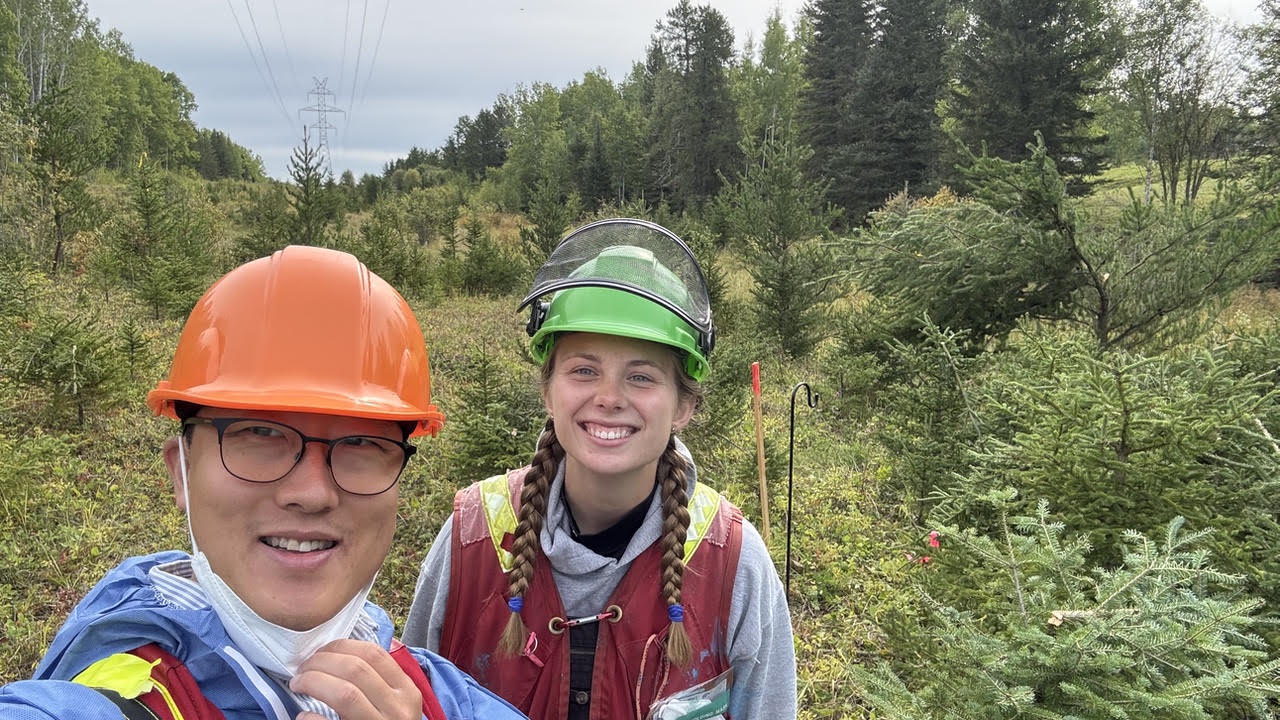
Assistant professor Seung-Il Lee and MSc student Caitlin Stewart in the herbicide experimental site along the power transmission corridor in Thunder Bay
“Power corridors are really important habitats for pollinator populations like bees and butterflies, which also play a crucial role in pollinating crops in nearby farm fields,” Dr. Lee says. “While it’s extremely important to control vegetation in these corridors, we need to understand how different methods of applying herbicides affect pollinators so we can minimize the impact as much as possible.”
Andrew McNeil, manager of Hydro One’s forestry business and innovation group, says this project is especially critical as the company’s power grid expands while storms become increasingly intense in the face of climate change.
“We need science-backed practices that will enable better vegetation management strategies while supporting a strong, reliable power network,” he says. “This research is giving us invaluable insights and tools to work with.”
Through its leadership within Canada’s network of utility companies, Hydro One will share research findings from this project—including with major providers like BC Hydro and Hydro-Québec—to extend its impact nationally.
“We’re really excited to be part of this pioneering work, and we see it bringing real value to the entire utility industry,” Shi says.
This collaborative research project directly aligns with United Nations Sustainable Development Goals (SDGs) #3: Good Health and Well-Being, #9: Industry, Innovation, and Infrastructure, #13: Climate Action, and #15: Life On Land.
"Cities revolve around transportation," says civil engineering PhD candidate Omotunde Adeniran.
For the past few years, Omotunde—under his supervisors Dr. Juan Pernia and Dr. Sam Salem—has been applying his engineering skills to make traffic roundabouts safer for all community members.
It's become a pressing issue as roundabouts become more common in North America.
"Municipalities are embracing them because they ease traffic congestion and reduce severe vehicular collisions," Omotunde says.
They're also cheaper than traffic lights over the long term since they don't require as much electricity or infrastructure maintenance.
Surprisingly, Omotunde wanted to avoid a civil engineering career when he was younger.
He grew up in Nigeria where his elder brother and several family members were civil engineers.
Wanting to do something different, Omotunde studied engineering physics before deciding that he wanted to be a pilot. This led him to a logistics and technical support job with a British Columbia-based helicopter company with a subsidiary in Nigeria.
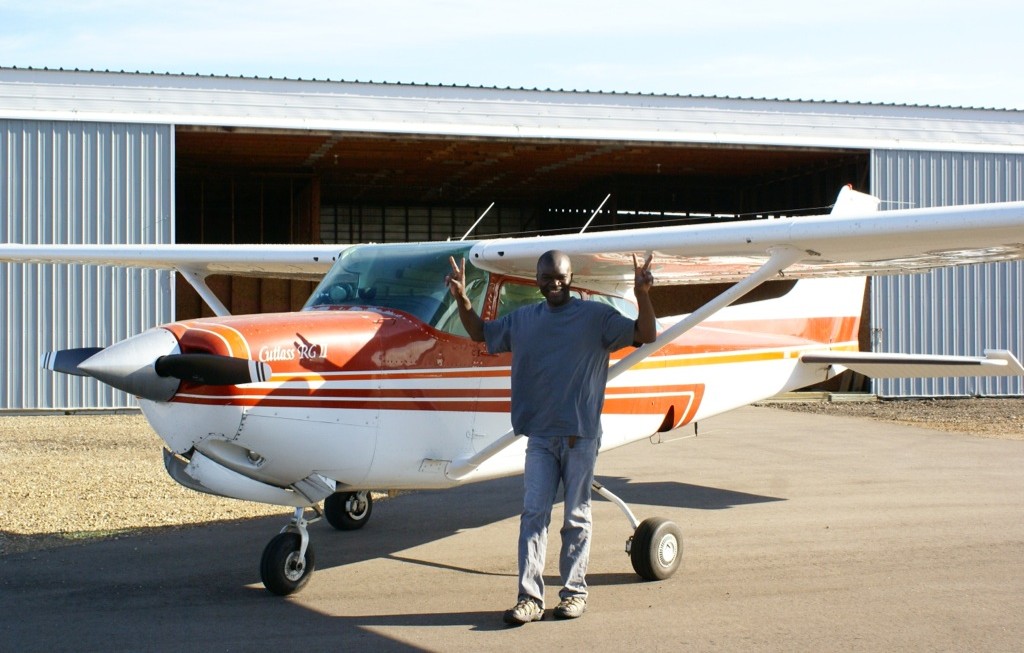
Omotunde learned to fly small single-engine planes and earned a Private Pilot Licence. While working at the Lakeside meat-packing plant in Brooks, Alberta, he liked to go flying with a friend who owned a Cessna plane. At the plant, Omotunde was responsible for food inspection and quality control. Then, for three-and-half years, he was on the crew that cleaned the plant. "I took college and university courses from about 9 am to 4 pm and then worked from 4 pm to midnight and, later, the graveyard shift, so that I could upgrade my education," he says.
He eventually moved to Canada and went back to school after spending several years working in demanding jobs, including one at a meat-packing plant in Brooks, Alberta.
"While taking general engineering courses at the University of Calgary, I realized that civil engineering came naturally to me and that I wanted to do something practical," he says.
He went on to earn a Bachelor of Science in Civil Engineering at the University of New Brunswick and a Master of Science in Civil Engineering at Lakehead and is now in finishing his PhD studies.
Despite the many advantages of roundabouts, they sometimes present challenges for people with vision loss.
In Ontario, drivers are required to yield to pedestrians at designated roundabout crosswalks. Some roundabouts also have rectangular rapid flashing beacons (RRFB), which pedestrians can activate by pressing a button to signal to drivers that they want to cross.
Even so, a small percentage of drivers don't stop for pedestrians.
"This can be dangerous for kids, the elderly, and people with vision loss," Omotunde says. "If cars don't stop, pedestrians have to wait for another opportunity to cross."
_Aerial%20View%20of%20Thunder%20Bay%20Roundabout_Photo%20Credit%20City%20of%20Thunder%20Bay.PNG "Aerial View of Thunder Bay Roundabout")
Omotunde’s sensor-based system uses a signal from a camera to alert pedestrians to oncoming vehicles via a loudspeaker. “When activated, the system says: ‘Gap detected, use caution’ or ‘Vehicle approaching,’” he explains. “As an engineer, you always want the simplest option.” Photo Credit: City of Thunder Bay
Even when additional safety measures have been incorporated into roundabouts—such as tactile walking surface indicators and pedestrian refuge islands—people are still vulnerable.
"None of these measures indicate if drivers are yielding to pedestrians or give them a real-time assessment of how long they have to cross a roundabout road," Omotunde says.
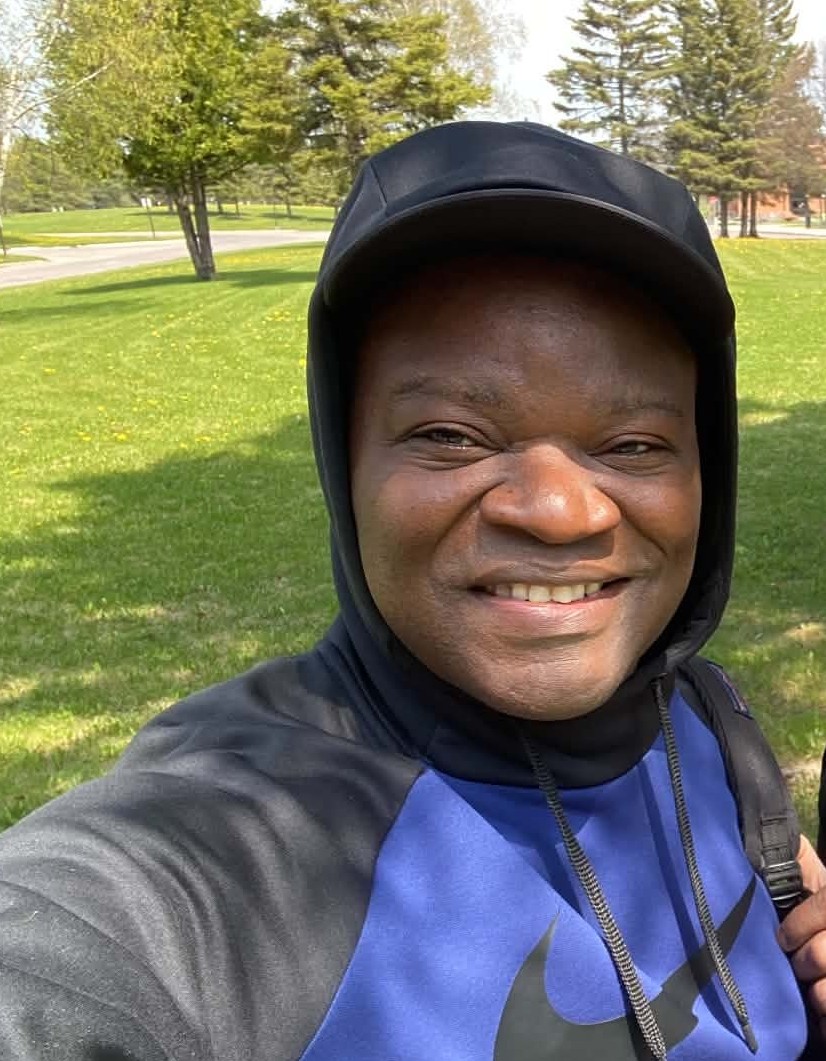
Omotunde started a community newsletter called The Integrand News: Keeping You in the equation! while living in Brooks, Alberta. “I wanted both the non-immigrant and the immigrant communities to see all the good things that were happening in Brooks,” he says. He also joined charitable and service organizations, including Rotary International, where he met educator Dr. Lyle Hamm who encouraged him to go back to university.
Concern about this situation prompted the Canadian National Institute for the Blind (CNIB) to reach out to Dr. Pernia.
"They wanted to know if it was possible to launch a nation-wide study investigating how to make roundabouts safer for people with vision loss," Omotunde says.
"We decided to begin the study at Thunder Bay's Edward Street and Redwood Avenue roundabout because the City of Thunder Bay was willing to support our research."
Omotunde's master's research focused on testing rumble strips that vibrated and made a 'tak tak' sound as cars drove over them, alerting pedestrians to their presence.
Although somewhat successful, this mechanical model had some flaws—including not being sufficiently audible if cars were rolling or travelling at extremely low speeds—that made it unable to completely resolve the concerns of people with vision loss.
For his PhD research, Omotunde switched his attention to developing a sensor-based system that uses computer vision to detect approaching vehicles.
He's now built an impressive prototype that merges AI, coordinate mapping, and Real-Time Streaming Protocol (RTSP) to process camera images taken at roundabouts.
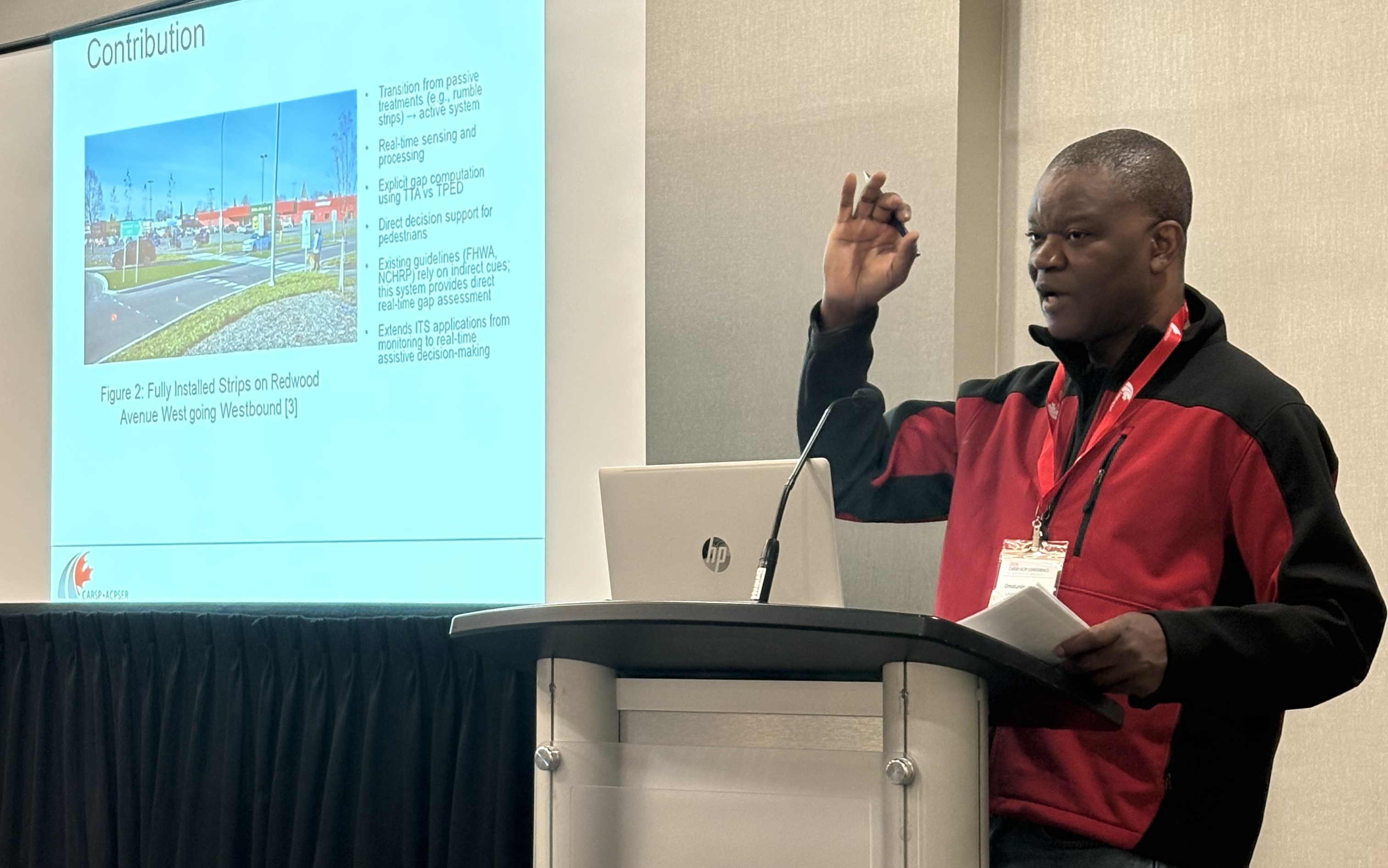
Omotunde won first place in the 2026 Canadian Association of Road Safety Professionals (CARSP) Student Paper Competition for his paper, "Field Testing of an Infrastructure-Mounted Sensor-Based Accessibility System for Unsignalized Roundabouts." Professionals from multiple countries who attended the CARSP conference were eager to learn more about Omotunde's concept. "I'm happy to be an ambassador for Lakehead and thankful for the support of my PhD thesis supervisors," he says.
Once triggered, Omotunde's system estimates vehicle time-to-arrival at a roundabout, computes estimated pedestrian crossing time, and uses a loudspeaker to let pedestrians know when there is a gap in traffic.
He's already conducted technical and field testing of the system and will be running a trial with CNIB volunteers at the Thunder Bay roundabout this summer.
"My work has broad applications," he says. "It could potentially help people with mobility issues and people distracted by their cellphones, as well as people with vision loss."
"We can't change the behaviour of drivers," Omotunde adds, "but we can give pedestrians more information to keep them safer."
Thank you to the City of Thunder Bay and Pioneer Construction for providing equipment, staff assistance, and access to the Edward Street/Redwood Avenue roundabout and its infrastructure.
Omotunde also thanks the multiple volunteers who helped make this research possible, including the CNIB, as well as Oasis Family Dental and Janzen Pharmacy who kindly provided access to their power outlets.
This research project directly aligns with United Nations Sustainable Development Goals (SDGs) #9: Industry, Innovation, and Infrastructure, #10: Reduced Inequalities, and #11: Sustainable Cities + Communities.
"The summer has been a whirlwind," says Dr. Mathew Leitch, a professor of wood sciences at the Faculty of Natural Resources Management.
Throughout June, he hosted and trained forestry professionals from Ghana committed to making their forest industry more sustainable and profitable. 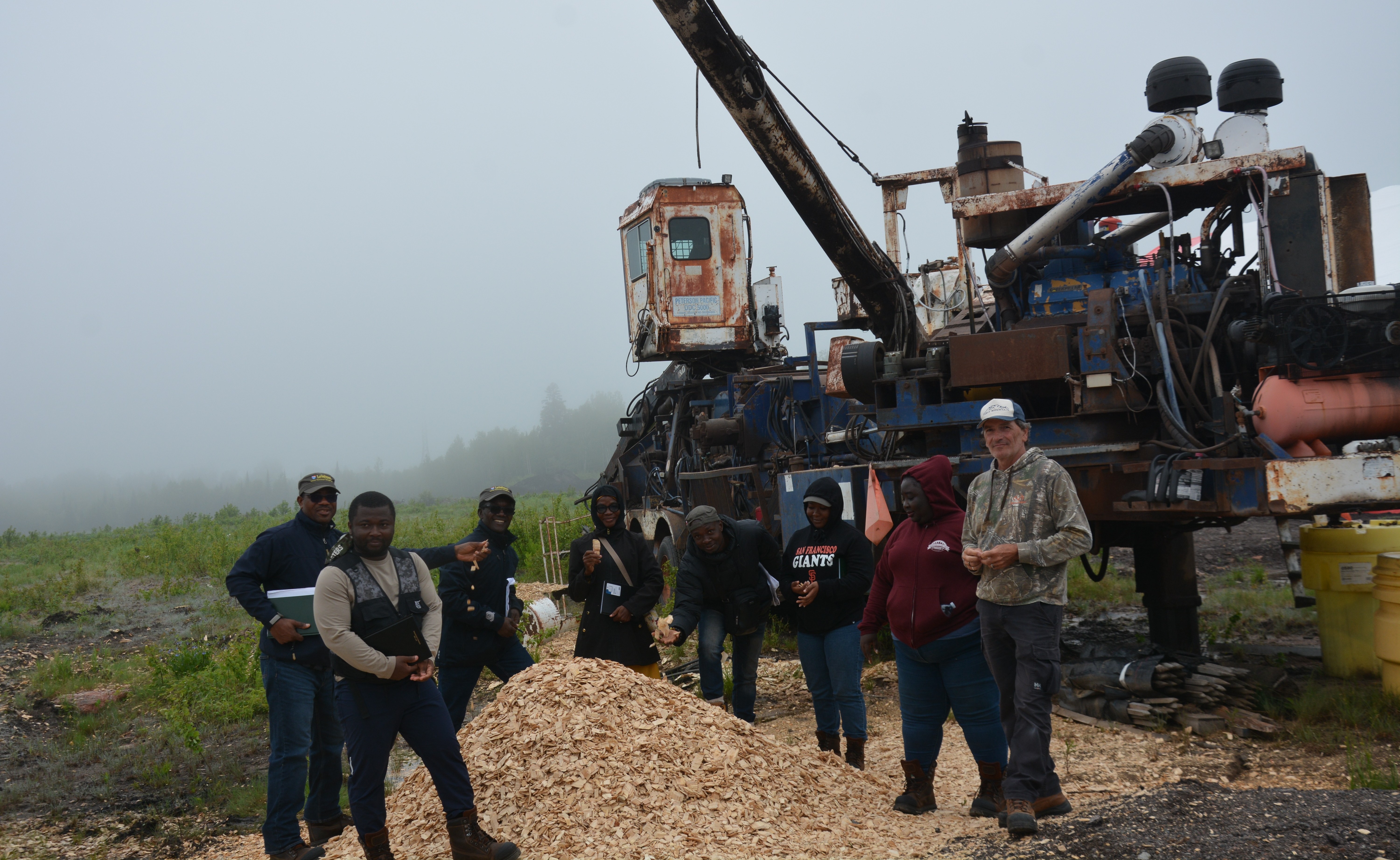
"We get thousands of products from trees including mass timber products, phenols, formaldehyde, flocculants, and cellulose fibres that are so strong they're used to create bullet-proof flak jackets," Dr. Leitch says. Above, participants visit the Hurkett Biohub facility with Scott Rubin and his team at Lake Nipigon Forest Management to look at the facility's biochar location, merchandising yard, and other wood value-adding initiatives.
It took over a year to organize the month-long "Workshop in Wood Science and Forest Products," which was hosted on Lakehead University and Confederation College's Thunder Bay campuses.
The session was the first of three customized training workshops that are part of Lakehead's five-year "Best Practices in Sustainable Natural Resources Management" project.
Dr. Leitch received a Global Affairs Canada grant worth nearly $570,000—through the Canadian International Development Scholarships 2030 (BCDI 2030) program—to run the project.
It includes funding for the workshops and visiting researchers as well as scholarships for master's degree students.
BCDI scholarships—which are open to small island developing states and 26 Francophonie and Commonwealth countries—harness the power of education to strengthen economic and social development.
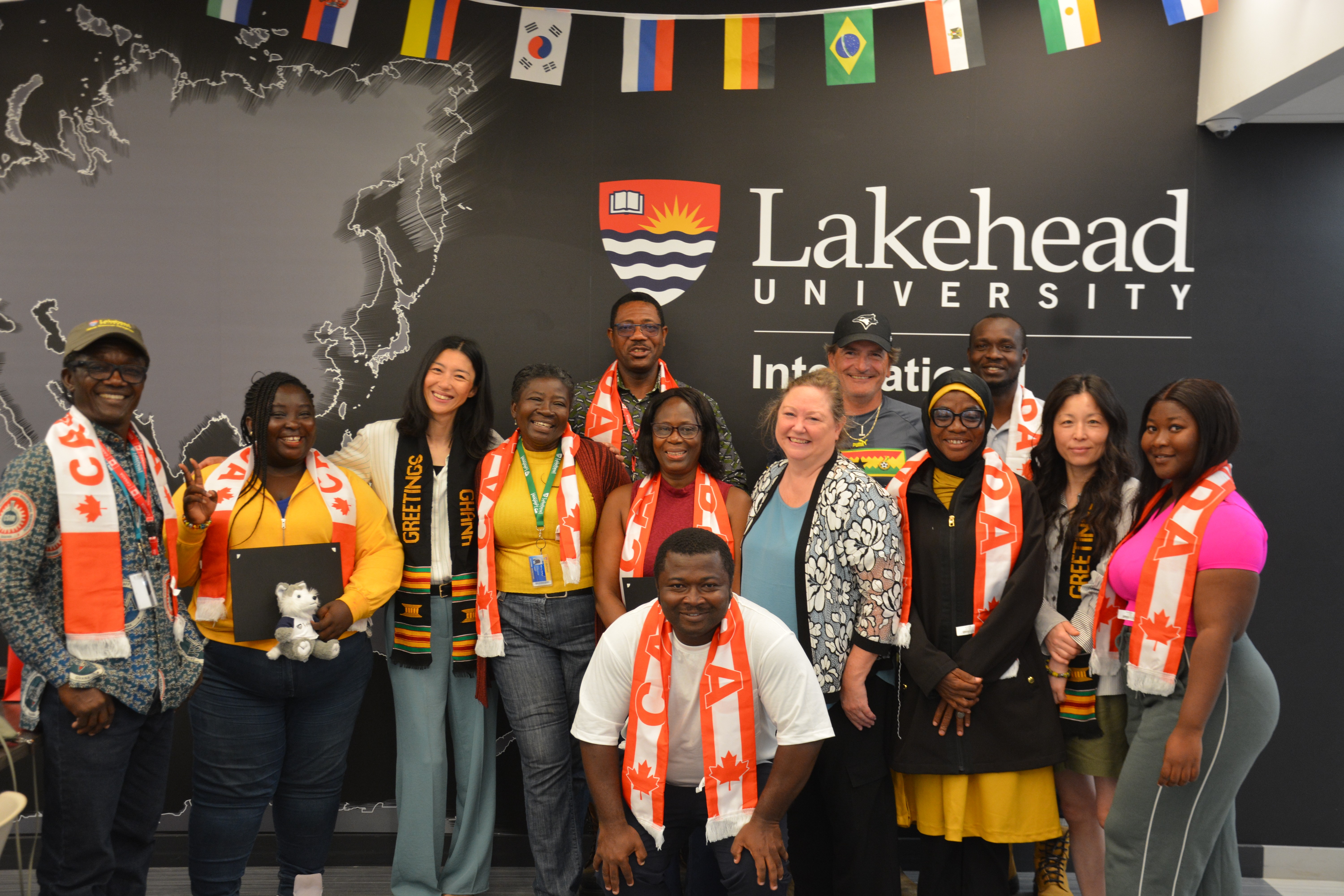
Dr. Leitch's BCDI 2030 grant will enable him to continue training Ghanaian forestry professionals at Lakehead. In 2027, he will host a remote sensing and geomatic workshop and, in 2028, he will host an ecological studies workshop. The workshops are part of a customized training approach to address skill development needs identified by the Government of Ghana. Above, the BCDI participants celebrate completing the workshops.
"Many women in Ghana live in extreme poverty, so one of the goals of my program is to bring more women into the workforce so that they're economically independent," Dr. Leitch explains.
Over the course of Lakehead's project, an estimated 35 professionals and students will receive advanced training in natural resources management.
The resulting network of professionals within Ghana will share their knowledge and skills with their students and colleagues.
Ghana is a West African country known for its diverse ecosystems.
The southern region—where Dr. Leitch has forged many longstanding partnerships—has tropical rainforests with more than 200 species of hardwood trees.
"The main trees harvested for commercial purposes are African mahogany, iroko, sapele, utile, and teak," he says. "Ghana's trees grow impressively fast," he adds. "In 40 years, African mahogany grows to 4-8 feet in diameter."
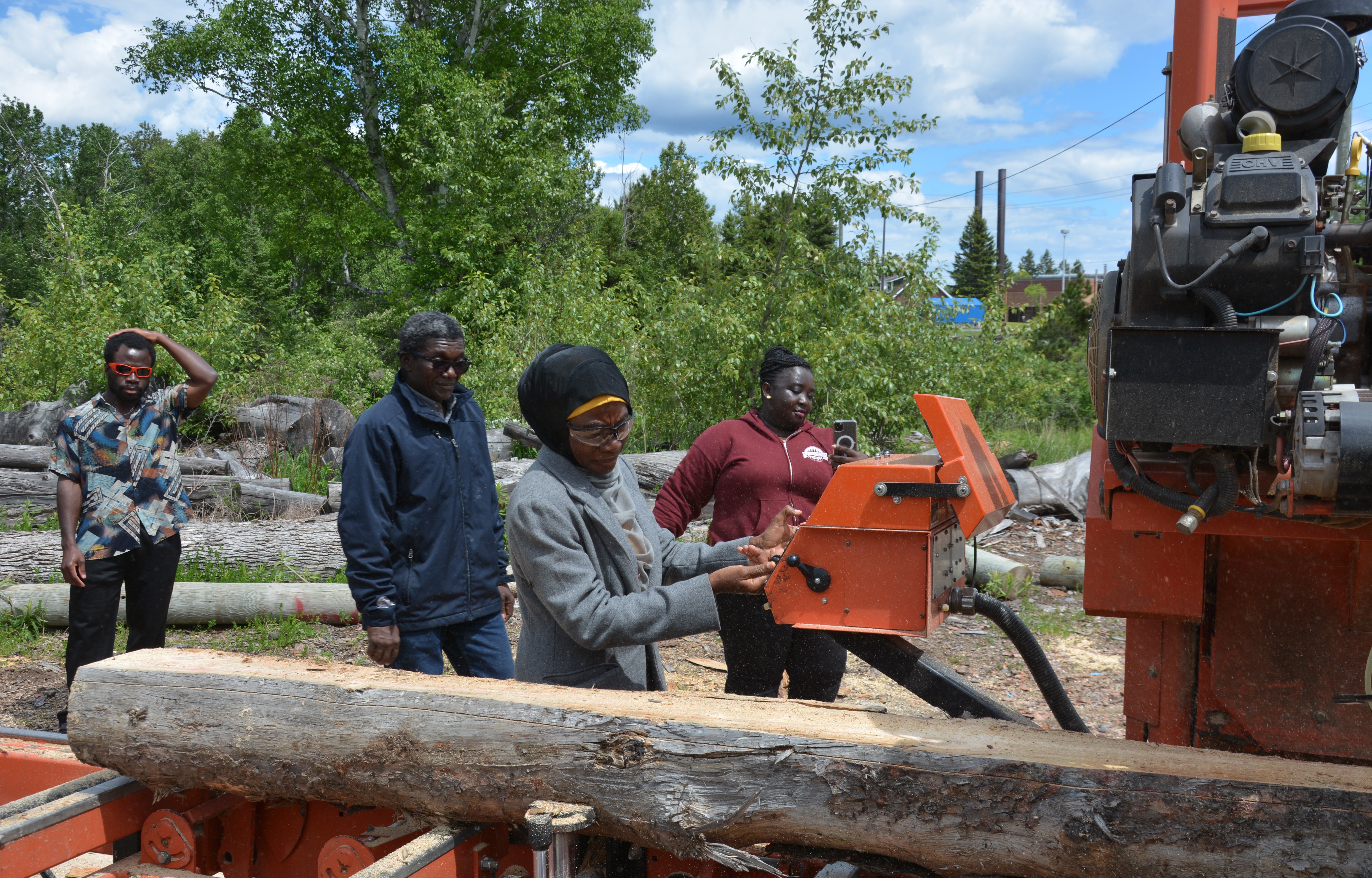
Above, a participant practices using a portable mill at Dr. Leitch's campus facility. "Everyone learned how to run the mill and cut wood because these types of mills are readily available in Ghana," Dr. Leitch says. The BCDI grant funded the participants' costs of attending the workshops.
Ghanaians use their forests primarily as sources of lumber, plywood, and charcoal.
"Ghana is the second biggest charcoal producer in the world," says Dr. Leitch, who shared strategies for more efficiently producing charcoal with the visiting professionals and students.
The workshop participants arrived at Lakehead for training in remote sensing, geomatics, wood science, property mapping, and ecological monitoring.
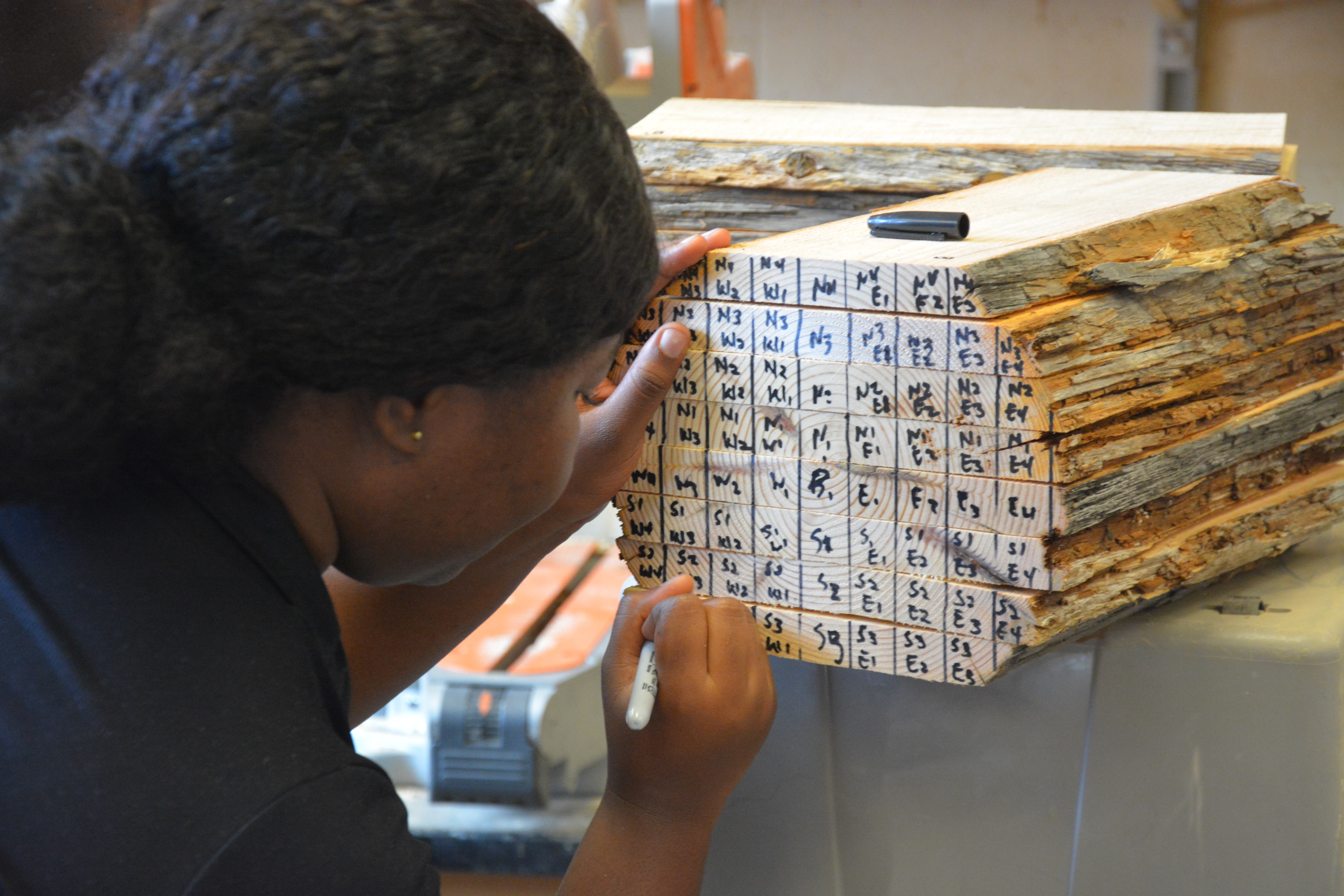
Wood science is a multifaceted discipline that studies the properties of wood species and how they can be used. Above, one of the participants prepares a sample in Dr. Leitch's Wood Science Testing Laboratory.
Dr. Leitch welcomed faculty, staff, and PhD students from Kwame Nkrumah University of Science and Technology, the University for Development Studies, the University of Energy and Natural Resources, and CSIR-College of Science and Technology.
There were also scientists and staff from the CSIR-Forestry Research Institute of Ghana and Lakehead University Master of Science in Forestry students.
"We looked at everything from high-value forest products like engineered wood used in housing construction to low-value products like wood pellets used for heating and barbecues," Dr. Leitch says.
All the workshop participants found their time at Lakehead to be worth the long journey.
"They wanted to learn everything they could about our approaches to forest management," Dr. Leitch says.
The participants enjoyed field visits to tree farms, biomass facilities, sawmills, and pulp and paper mills. Another highlight was seeing Lakehead's state-of-the-art research facilities and testing equipment in action.
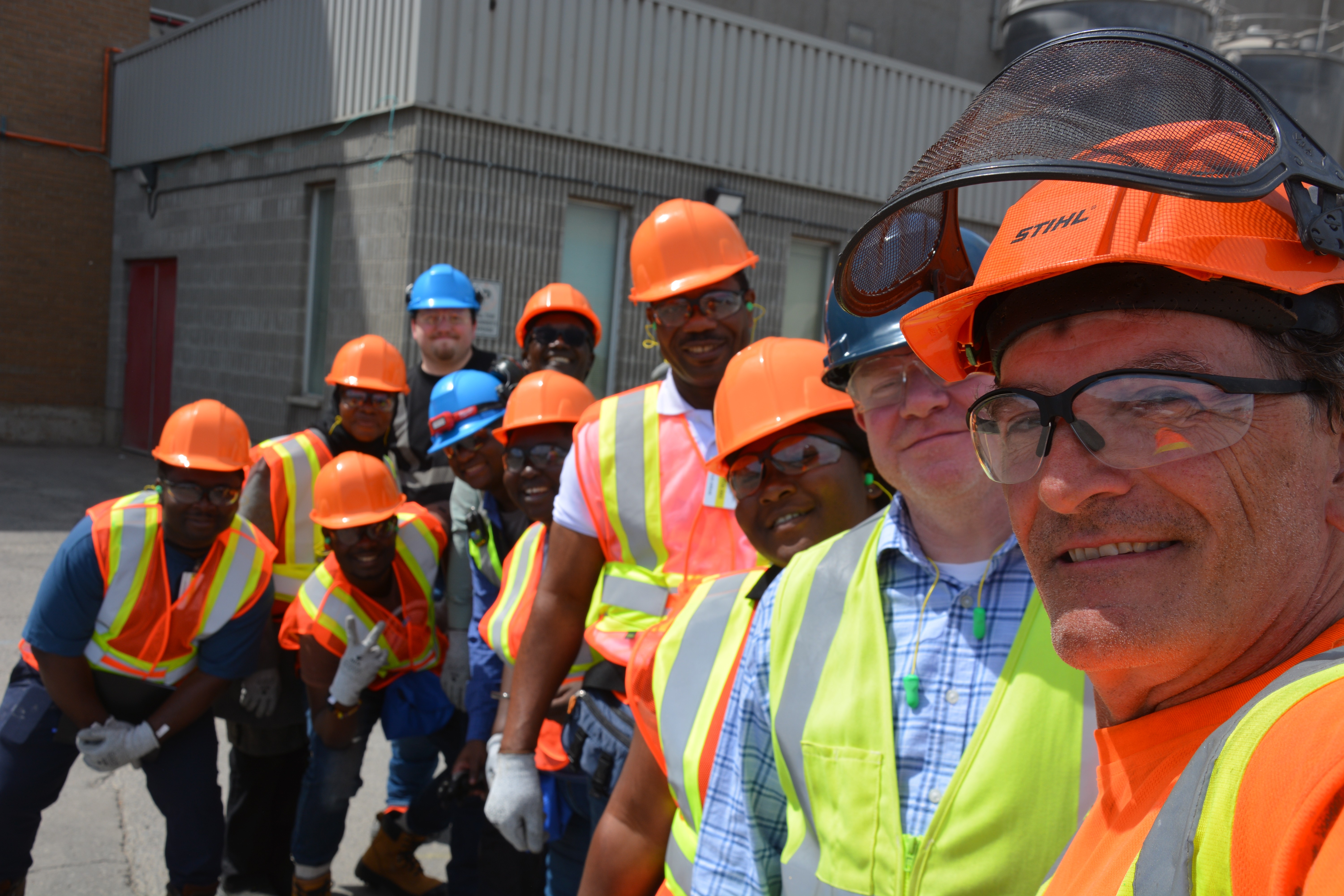
A tour of Thunder Bay Pulp and Paper, led by Fibre and Logistics Manager Mike Furniss, provided insight into how wood is processed into pulp, energy production from boilers, waste use, and the production of value-added chemicals. Dr. Mat Leitch is pictured on the far right.
"We showed them how we use silviculture to grow, manage, and manipulate the properties of trees and bring products to market," he says.
"I could see their wheels spinning. Even before the workshops were over, they were writing up draft plans to implement when they got back home."
Dr. Leitch greatly enjoyed his time at the workshops, too.
"Ghanaians are some of the nicest people you'll ever meet. The participants were so gracious and appreciative that they were selected for this prestigious program.
They are eager for anything that will help them move forward as a country."
Lakehead gratefully acknowledges the nearly $570,000 Global Affairs Canada grant that made The Best Practices in Sustainable Natural Resources Management (BPSNRM) project possible.
Thank you to Confederation College and the following government and industry partners in Ghana, including: the Forestry Commission of Ghana, The Council for Scientific and Industrial Research — Forestry Research Institute of Ghana (CSIR-FORIG), Samartex Timber and Plywood Company, and the Charcoal Chamber of Commerce.
Lakehead would also like to thank the following partner higher education institutions: CSIR College of Science and Technology (CCST), Kwame Nkrumah University of Science and Technology (KNUST), the University of Cape Coast (UCC), the University of Development Studies (UDS), the University of Energy and Natural Resources (UENR), and the University of Ghana-Legon.
Dr. Sam Salem from the Department of Civil Engineering and Dr. Seung-Il Lee from the Faculty of Natural Resources Management have received Discovery Grants from the Natural Sciences and Engineering Research Council of Canada (NSERC) to develop innovative solutions to critical engineering and environmental issues. Theirs are among 15 Lakehead University projects receiving a total of over $2.7 million in funding from NSERC.
“Lakehead researchers are at the forefront of tackling the urgent challenges facing our region, from escalating wildfires to the broader impacts of climate change,” Vice-President, Research and Innovation Dr. Langis Roy says. “This vital NSERC funding will lead to practical solutions that will protect both our environment and our communities while training the next generation of scientists and engineers.”
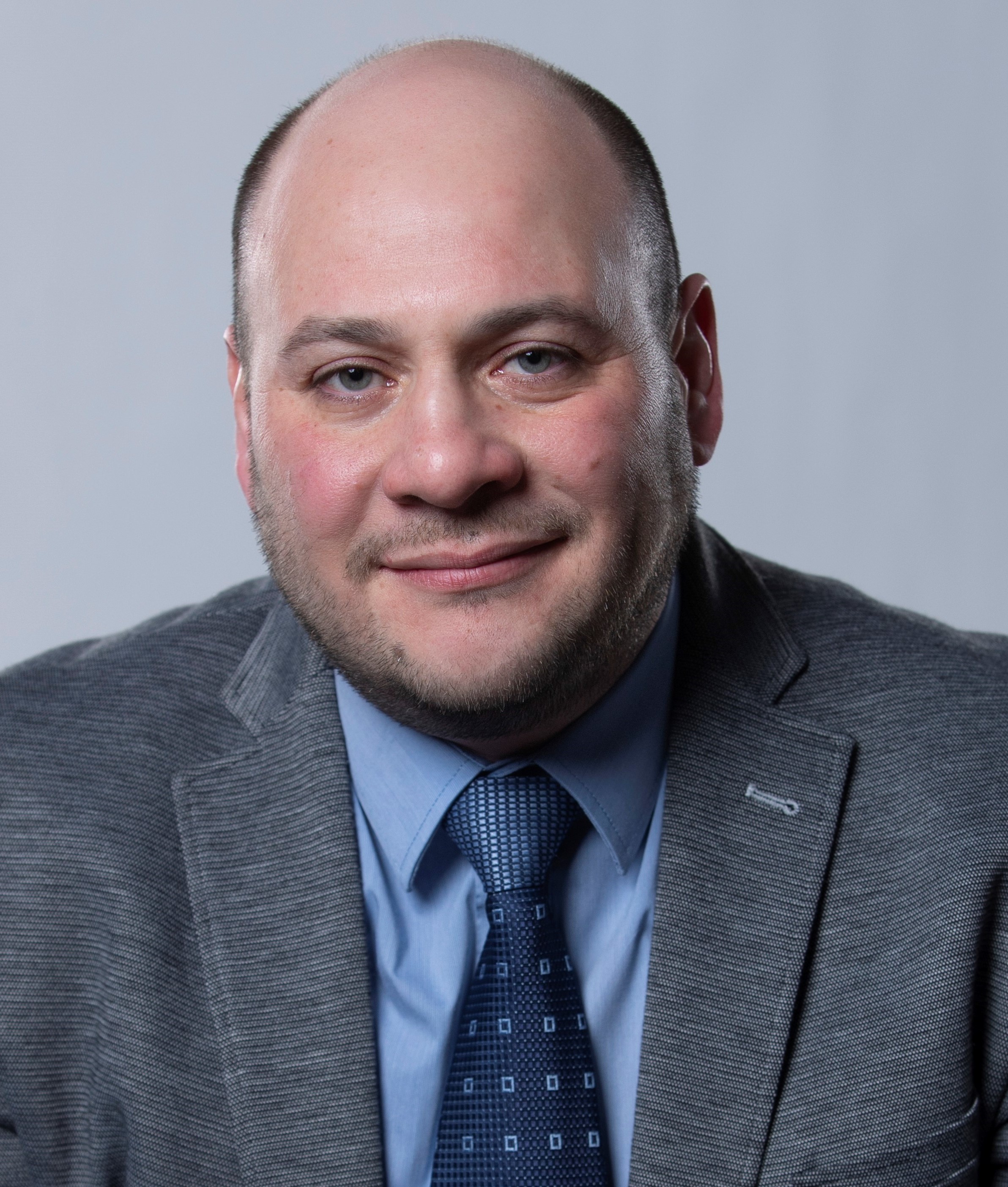 Building on over a decade of cutting-edge research at the Lakehead University Fire Testing and Research Laboratory (LUFTRL), which he founded, Dr. Salem and his research team are improving the safe and widespread use of engineered wood products— called mass timber— in construction.
Despite mass timber’s growing popularity as a sustainable alternative to steel and concrete, the construction industry lacks proven standards for inspecting, assessing, and repairing these buildings after a fire.
Various full-size mass timber building elements, such as beams, columns, and slabs, will be put through intense fire testing. The burned materials will then be analyzed and assessed to determine exactly how fire affects them using rigorous char-layer analysis before applying innovative repair and retrofitting techniques. The outcomes of this research program will help the construction industry accurately assess structural safety after a fire and choose the most reliable, cost-effective ways to repair or rebuild.
“This research will improve public safety, influence building codes, and support the sustainable use of mass timber in high-rise constructions,” says Dr. Salem, the 2026 recipient of the Distinguished Researcher Award for his contributions to structural fire engineering.
This practical research program positions LUFTRL as a global leader in structural fire engineering, shaping best practices and standards for the mass timber industry in Canada and beyond.
 Land-dwelling arthropods (insects, spiders, and other “creepy-crawlers”) make up nearly 70% of all forest species. Highly sensitive to their environment, they serve as an early-warning system for forests facing climate change and industrial logging.
Three student-led projects under the supervision of Dr. Lee will foster sustainable ecosystem management and the conservation of arthropods in northwestern Ontario’s forests.
The first student-led project investigates how jack pine logging affects forest biodiversity. Researchers will determine how much wood debris loggers need to leave behind on the forest floor to allow ground-dwelling and wood-dependent insects to recover from the impacts of logging.
Study two will provide northwestern Ontario with its first in-depth assessment of regional insect biodiversity. The project examines how different levels of commercial thinning in black spruce forests affect local spider and insect populations.
Using mesh screens to block insects from specific wood samples, the third research team will determine whether insects or microbes— like fungi and bacteria— do the heavy lifting of breaking down dead wood in managed versus wild forests.
“Together, these projects will provide valuable insights to enhance the management and conservation of Canada’s forest ecosystems and biodiversity,” Dr. Lee says.
In 2025-26, Lakehead University received $2.8 million in assistance from the Research Support Fund to support the indirect costs of research, which include costs for supporting the management of intellectual property, research and administration, ethics and regulatory compliance, research resources, research facilities, and research security.
Lakehead University received a total of $2,702,000 from the Natural Sciences and Engineering Research Council of Canada (NSERC). The following Lakehead researchers have received grants:
Discovery Grants (five-year grants)
Dr. Abedalrhman Alkhateeb, Department of Computer Science, "Self-aligned, Causal, and Actionable Multimodal AI Framework for Complex Biomedical Data", $192,500.
Dr. Liang Cui, Department of Civil Engineering, "Multiaxial Mechanical Behavior of Exposed Cemented Paste Backfill under Multiphysics Curing Conditions", $215,000.
Dr. Gautam Das, Department of Physics, "Investigation into photonic devices and their applications in sensing trace chemicals and gases", $180,000.
Dr. Peter Hollings, Department of Geology, "Magmatic evolution and mineralization of the Midcontinent Rift, Ontario", $200,000.
Dr. Seung-Il Lee, Faculty of Natural Resources Management, "Linking forest management intensity to arthropod biodiversity recovery and ecosystem function", $222,500.
Dr. Osama (Sam) Salem, Department of Civil Engineering, "Innovative Techniques for Post-Fire Assessment and Structural Rehabilitation of Mass Timber Buildings", $215,000.
Dr. Tobias Stephan, Department of Geology, "Kinematics and Strain Geometry of Archean Tectonics – A New Tool for Predicting Gold Mineralization in the Canadian Shield", $187,500.
Dr. Abdelhamid Tayebi, Department of Electrical Engineering, "Towards Fully Autonomous Navigation: Robust Estimation and Control Strategies", $260,000.
Dr. Wilson Quansheng Wang, Department of Mechanical Engineering, "Intelligent Diagnostics and Prognostics of EV Drive Systems", $235,000.
Dr. Qiang Wei, Department of Electrical Engineering, "Power Converter Topologies and Controls for High-Power Medium-Voltage Battery Energy Storage Systems", $235,000.
Dr. Kaiyu Wu, Department of Computer Science, "Space Efficient Graph Data Structures", $192,500.
Dr. Yushi Zhou, Department of Electrical Engineering, "Scalable On-Chip Low-Dropout Regulators Architectures for Edge Artificial Intelligence System on Chips", $235,000.
Discovery Development Grants (two-year grant)
Dr. Jinqiang Hou, Department of Chemistry, "Integrated Chemical-Digital Technologies for Targeted Molecular Probes in Biological Regulation and Imaging", $44,000.
Dr. Eltayeb Mohamedelhassan, Department of Civil Engineering, "Solar-electrokinetic in-situ leaching for sustainable critical minerals extraction", $44,000.
Dr. Douglas Morris, Department of Biology, "Evolutionary ecology of habitat selection", $44,000.
Revised July 2026
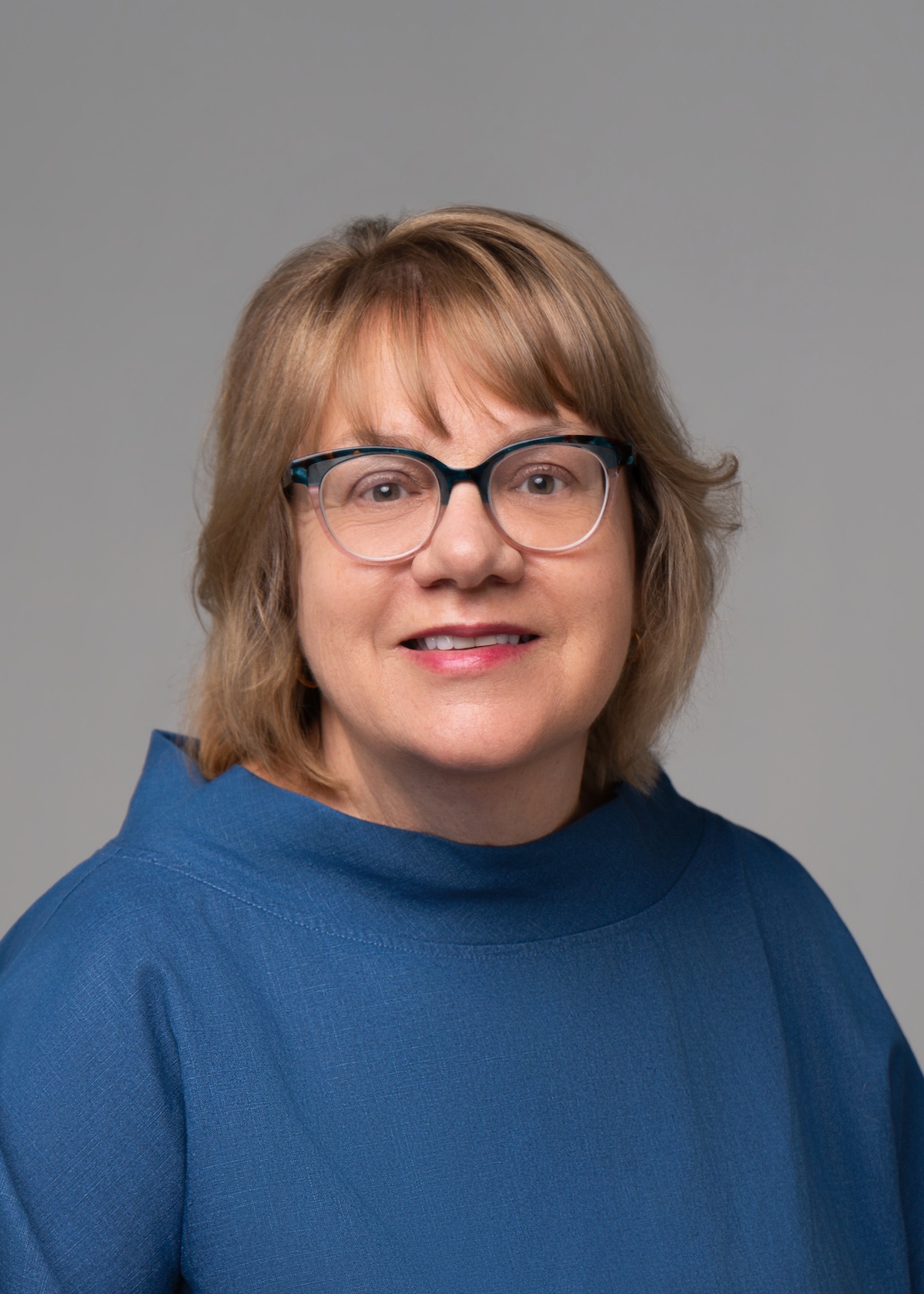 Jane Antoniak joins Lakehead University as Associate Vice-President, Communications and Marketing and takes on leadership of the Communications and Media Relations, Marketing Support, and Web Development portfolios. A proud Northener, Jane is excited to return to her hometown of Thunder Bay.
A respected communications leader and educator, Jane’s career is marked by a deep commitment to advancing the field of public relations and communications management. She is the owner of a private communications consultancy and currently serves as the President of the Canadian Public Relations Society (CPRS) Board of Directors. Jane brings significant experience in institutional communications, notably her tenure as Director of Communications and Media Relations at King’s University College at Western University. She began her career as a national journalist working across television, print, and digital media.
Jane’s commitment to professional development and education is reflected in her work as an instructor at Fanshawe College and McMaster University, where she taught strategic public relations within their post-graduate programs and helped prepare the next generation of communications professionals. In addition, she has a Master of Communications Management degree from McMaster University/Syracuse University, and is Accredited in Public Relations (APR).
Her genuine enthusiasm for engaging with community makes her exceptionally well-suited to the role, positioning her to build strong relationships that will advance Lakehead's reputation and deepen its impact across our regions. An active volunteer, Jane has served as a board member at London’s Boler Mountain, a past board member with CPRS Hamilton (Accreditation Chair), and a life-member of the Optimist Club. In 2025, she volunteered in Thunder Bay at the Scotties Tournament of Hearts curling championships in the youth engagement program.
Jane believes strongly in the mission, vision and values of Lakehead University and looks forward to being part of Lakehead’s continued growth and success.
Her first day at Lakehead will be Monday, August 24.
