
Lake Superior

Dr. Rob Stewart Spearheads Efforts to Protect Lake Superior

OVERVIEW:

  • Dr. Rob Stewart leads the Freshwater Coastal Management Research Group and coordinates Remedial Action Plans (RAPs) along the Canadian north shore of Lake Superior
  • Harbours along Lake Superior were heavily polluted as a result of mining and forestry operations and industrial development
  • The work of RAPs, combined with government regulation, has made Lake Superior harbours safe for swimming and a source of drinking water
  • Dr. Stewart, in collaboration with RAPs, is investigating emerging global threats to the health of Lake Superior
  • Lakehead researchers are also working with Indigenous communities with the goal of restoring Lake Nipigon's ecosystem

"The best way to experience the magnificence of Lake Superior is to paddle to the last chain of islands before you hit open water," says Dr. Rob Stewart.

Dr. Rob Stewart on a lakeshore wearing outdoor gear and a winter toque

He's an associate professor of geography & the environment who feels most at home on the lake.

"It's amazing to be 10 km offshore in a kayak and have an otter pop up and hiss at you."

His career has been devoted to working with local communities to protect the watersheds and coastal environments of the Lake Superior Basin.

"Lake Superior is the headwater of all the Great Lakes, and its health determines the future of all the Great Lakes," he explains.

Dr. Stewart leads Lakehead's Freshwater Coastal Management Research Group and coordinates Remedial Action Plans (RAPs) along the Canadian north shore of Lake Superior.

"We identify environmental problems, monitor them, and then work on lake restoration," he says.

Through the determination of communities and researchers, there's been great success in removing pollutants from Lake Superior.

"When I was growing up, places like Thunder Bay, Nipigon, and Red Rock had working harbours.

There was foam, oil, and tree bark floating on the water because industries like pulp mills and mines would discharge effluents directly into the lake.

Today, you can swim in these harbours and use them for drinking water because of intense government regulation and the clean-up efforts of RAP groups."

Community members, and a videographer, stand in a circle on a Jackfish Bay beach

Community members belonging to the Jackfish Bay Area of Concern RAP discuss next steps to deal with legacy contaminants discharged into Lake Superior by the Terrace Bay Pulp and Paper Mill. "Remedial Action Plan groups try to reduce conflict between communities and governments over problems that can't be immediately resolved," Dr. Stewart says.

Now, Lake Superior RAPs are equally concerned with emerging threats to the lake that don't have simple solutions and that require cooperation between countries.

"We're investigating how to deal with invasive species, airborne mercury travelling from China and India, and climate change—Lake Superior is the fastest warming Great Lake."

Uncovering the Story of Lake Nipigon

Dr. Stewart's research extends beyond Lake Superior.

He's excited to be working with Indigenous communities in the Lake Nipigon area to trace the history of this freshwater lake and how it's changed over the past 200 years.

"Lake Nipigon was intensely developed in the 1940s. Large forestry and mining operations were set up near the lake's shoreline.

The provincial government also built a hydroelectric dam that diverted massive amounts of water from the Arctic watershed into Lake Nipigon. This changed the lake's ecosystem dramatically."

Members of the Nipigon Guardians Team aboard the Velma Linda boat

Above, the Nipigon Guardians Team (researchers from Lakehead, York University, and Biinjitiwaabik Zaaging Anishinaabek First Nation) collect sediment core samples. "We want to empower Indigenous communities with data to verify what they've been saying all along about the negative effects of hydro dams on Lake Nipigon."

The high levels of silt and nutrients in the Arctic Watershed were too much for a freshwater body like Lake Nipigon to absorb.

"The silt covered up fish spawning grounds, and the overabundance of nutrients created toxic algae blooms. The dam also caused erosion and raised the level of the lake, which released more sediment and nutrients."

Until recently, Indigenous people were forced to stand by and see their lake degraded because they had no say over how it was developed.

"Now, First Nations want the full story of the lake's changes backed up with scientific data," Dr. Stewart says. "Our 'Lake Nipigon Cumulative Impacts Partnership' will help provide this information."

A back view of Dr. Rob Stewart wearing an orange safety jacket, jeans, and rubber boots stands in an excavated area of land near the north shore of Lake Superior

Dr. Stewart's Freshwater Coastal Management Research Group has built landscape features to filter stormwater before it reaches Lake Superior. They've also restored riverbanks and coastal habitats for fish and wildlife. For instance, constructing a new channel for fish to swim through (see above).

His research team is doing this by tracking the movement of fish in the lake and by taking sediment samples from the lake floor.

"We'll analyze the sediment to determine the nutrients, plants, aquatic life, and toxins present in Lake Nipigon at different time periods."

After all the evidence is gathered, communities will pinpoint areas of Lake Nipigon where the environment has been adversely affected by development and by pollution, such as arsenic contamination from mills. Then, they'll advocate to have them restored.

"They want to build healthy communities with clean water and land for their youth," Dr. Stewart says.

Save Our Remarkable Lakes

A profile view of Dr. Rob Stewart outside with a cliff in the background

Current projects being led by North Shore of Lake Superior RAPs include shoreline naturalization and monitoring beaches closed because of high E.coli levels. "We also watch for new technology that may help with future lake restoration efforts," Dr. Stewart says.

He encourages local citizens to get involved in sustaining our region's waterways by joining an environmental community group or by becoming a member of one of the north shore's Remedial Action Plan groups.

"The number-one thing, though, is to connect with our lakes in your own way. Go for a canoe ride with a friend, take your kids fishing, or walk along one of the beaches."

Dr. Stewart's Lake Nipigon Cumulative Impacts Partnership research is funded by an NSERC Alliance Grant, the Indigenous Guardians Network, the First Nations Environmental Contaminants Program (Health Canada), and by Biinjitiwaabik Zaaging Anishinaabek. He has received funding for his Lake Superior research initiatives from the Great Lakes Freshwater Ecosystem Initiative, which is part of the Government of Canada's Freshwater Action Plan.
Dr. Rob Stewart Spearheads Efforts to Protect Lake Superior

OVERVIEW:

  • Dr. Rob Stewart leads the Freshwater Coastal Management Research Group and coordinates Remedial Action Plans (RAPs) along the Canadian north shore of Lake Superior
  • Harbours along Lake Superior were heavily polluted as a result of mining and forestry operations and industrial development
  • The work of RAPs, combined with government regulation, has made Lake Superior harbours safe for swimming and a source of drinking water
  • Dr. Stewart, in collaboration with RAPs, is investigating emerging global threats to the health of Lake Superior
  • Lakehead researchers are also working with Indigenous communities with the goal of restoring Lake Nipigon's ecosystem

Communities are Coming Together to Clean Up Our Freshwater Lakes

"The best way to experience the magnificence of Lake Superior is to paddle to the last chain of islands before you hit open water," Dr. Rob Stewart says.

He's an associate professor of geography & the environment who feels most at home on the lake.

"It's amazing to be 10 km offshore in a kayak and have an otter pop up and hiss at you."

His career has been devoted to working with local communities to protect the watersheds and coastal environments of the Lake Superior Basin.

"Lake Superior is the headwater of all the Great Lakes, and its health determines the future of all the Great Lakes," he explains.

Dr. Stewart leads Lakehead's Freshwater Coastal Management Research Group and coordinates Remedial Action Plans (RAPs) along the Canadian north shore of Lake Superior.

"We identify environmental problems, monitor them, and then work on lake restoration," he says.

Through the determination of communities and researchers, there's been great success in removing pollutants from Lake Superior.

"When I was growing up, places like Thunder Bay, Nipigon, and Red Rock had working harbours. There was foam, oil, and tree bark floating on the water because industries like pulp mills and mines would discharge effluents directly into the lake.

Today, you can swim in these harbours and use them for drinking water because of intense government regulation and the clean-up efforts of RAP groups."

Now, Lake Superior RAPs are equally concerned with emerging threats to the lake that don't have simple solutions and that require cooperation between countries.

"We're investigating how to deal with invasive species, airborne mercury travelling from China and India, and climate change—Lake Superior is the fastest warming Great Lake."

Uncovering the Story of Lake Nipigon

Dr. Stewart's research extends beyond Lake Superior.

He's excited to be working with Indigenous communities in the Lake Nipigon area to trace the history of this freshwater lake and how it's changed over the past 200 years.

"Lake Nipigon was intensely developed in the 1940s. Large forestry and mining operations were set up near the lake's shoreline.

The provincial government also built a hydroelectric dam that diverted massive amounts of water from the Arctic watershed into Lake Nipigon. This changed the lake's ecosystem dramatically."

The high levels of silt and nutrients in the Arctic Watershed were too much for a freshwater body like Lake Nipigon to absorb.

"The silt covered up fish spawning grounds, and the overabundance of nutrients created toxic algae blooms. The dam also caused erosion and raised the level of the lake, which released more sediment and nutrients."

Until recently, Indigenous people were forced to stand by and see their lake degraded because they had no say over how it was developed.

"Now, First Nations want the full story of the lake's changes backed up with scientific data," Dr. Stewart says. "Our 'Lake Nipigon Cumulative Impacts Partnership' will help provide this information."

His research team is doing this by tracking the movement of fish in the lake and by taking sediment samples from the lake floor.

"We'll analyze the sediment to determine the nutrients, plants, aquatic life, and toxins present in Lake Nipigon at different time periods."

After all the evidence is gathered, communities will pinpoint areas of Lake Nipigon where the environment has been adversely affected by development and by pollution, such as arsenic contamination from mills. Then, they'll advocate to have them restored.

"They want to build healthy communities with clean water and land for their youth," Dr. Stewart says.

Save Our Remarkable Lakes

He encourages local citizens to get involved in sustaining our region's waterways by joining an environmental community group or by becoming a member of one of the north shore's Remedial Action Plan groups.

"The number-one thing, though, is to connect with our lakes in your own way. Go for a canoe ride with a friend, take your kids fishing, or walk along one of the beaches."

Dr. Stewart's Lake Nipigon Cumulative Impacts Partnership research is funded by an NSERC Alliance Grant, the Indigenous Guardians Network, the First Nations Environmental Contaminants Program (Health Canada), and by Biinjitiwaabik Zaaging Anishinaabek. He has received funding for his Lake Superior research initiatives from the Great Lakes Freshwater Ecosystem Initiative, which is part of the Government of Canada's Freshwater Action Plan.

A Voyage to a Secret Underwater Everest

OVERVIEW:

  • Lakehead University biologist Dr. Michael Rennie was the chief scientist on a recent expedition of the Blue Heron research vessel
  • Dr. Rennie is doing critical research into the Superior Shoal—a 300-metre-high mountain in Lake Superior nicknamed the "Freshwater Everest"
  • Data from the Superior Shoal expedition will be used to develop strategies to conserve Lake Superior and other threatened large-lake environments

Behind the Scenes on Dr. Michael Rennie's Unprecedented Expedition

Dr. Michael Rennie has just returned from the nautical adventure of a lifetime.

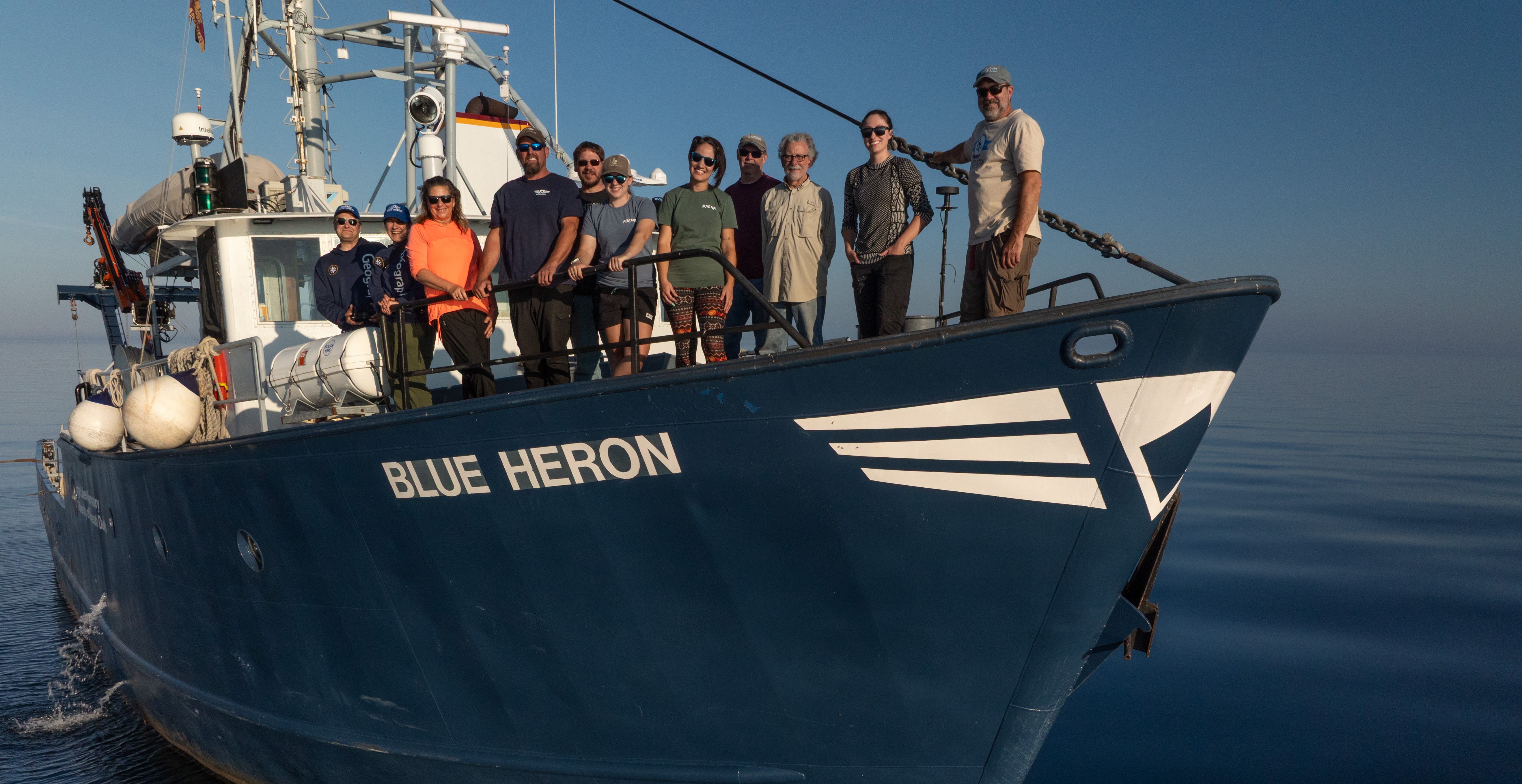
In early September, he was the chief scientist on a mission to explore a hidden ecosystem. He and a research crew set sail across Lake Superior on the Blue Heron research vessel owned by the University of Minnesota Duluth (UMD).

The research crew of the Blue Heron stand on the deck of the ship

During the week the research crew (above) was at the Superior Shoal, its ROV submersible did two to three dives per day. Left to right: Zach Melnick (Inspired Planet), Yvonne Drebert (Inspired Planet), Lisa Sundberg (UMD), Tom Frantti (UMD), Jason Agnich (UMD), Gwen Phillips (U Vermont), Dr. Bianca Possamai (U Vermont), Rual Lee (UMD), Ted Gephart (UMD), Lydia Paulic (U Windsor), Dr. Michael Rennie (Lakehead). Photo Credit: Zach Melnick

This voyage was the culmination of over a year of planning for Dr. Rennie, who is a Lakehead University professor in the Department of Biology.

It took a day to load the equipment on the boat and a full day to sail to their destination, 70 kilometres from the Canadian shore.

View of the Superior Shoal

The Superior Shoal is part of the Lake Superior National Marine Conservation Area and was formed from the lava of a long-ago volcanic eruption. Photo Credit: Zach Melnick

A Soaring Mountain Rises from the Abyss

The Superior Shoal, nicknamed the "Freshwater Everest," reaches 300 metres upward from the lake floor and is rumoured to have caused shipwrecks like the infamous 1975 sinking of the Edmund Fitzgerald.

"It's this strange cryptic environment," Dr. Rennie says. "If you were sailing near it on a freighter, you'd never know it was there, even though its highest peak is just six metres below the surface.

It's swarming with fish, and it's a hotspot of biological activity. This kind of biodiversity can also be found on seamounts in oceans."

Dr. Michael Rennie

Dr. Michael Rennie says that Lakehead has an important role to play as the only research-intensive university on the Canadian side of Lake Superior.

A key goal of Dr. Rennie's expedition was to test his hypothesis that the same conditions that create abundant life on seamounts—geological features combined with currents, light, and water columns—are also responsible for the Superior Shoal's biodiversity.

"It's probable that the algae covering the shoal supports an extensive food web, and the shoals act as a spawning ground for fish."

The expedition was a collaboration between Dr. Rennie and researchers from the University of Minnesota Duluth, the University of Wisconsin-Milwaukee, the University of Vermont, and the University of Windsor. Other partners included the Grand Portage Band of Lake Superior Chippewa, the Ontario Ministry of Natural Resources, and Parks Canada.

"It takes a village," Dr. Rennie says.

A Filmmaking Odyssey

To view the Superior Shoal, the Blue Heron used a remotely operated vehicle (ROV)—a small submersible equipped with a high-resolution camera—capable of diving among the shoal's perilous peaks and canyons.

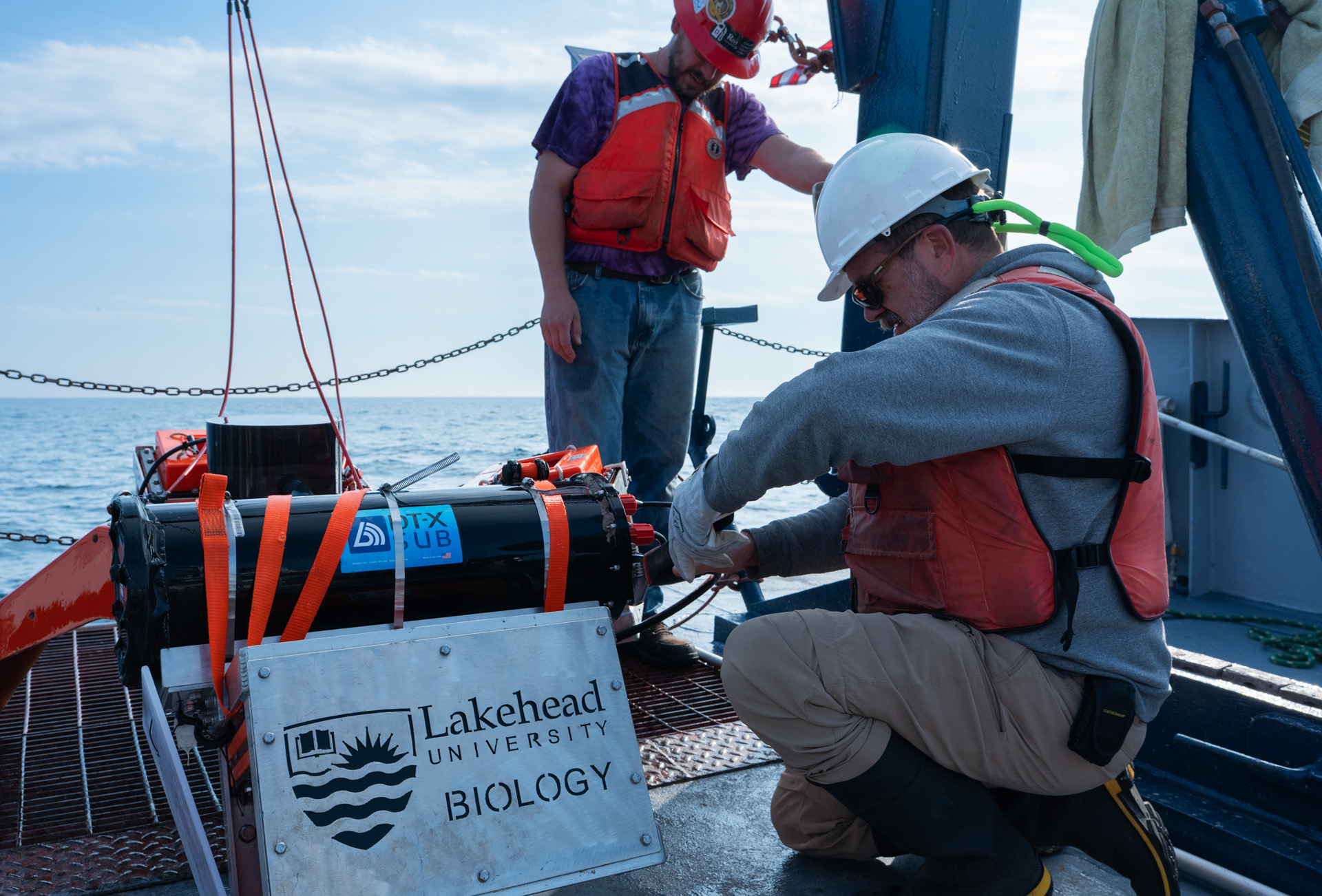
Dr. Michael Rennie helps prepare the submersible on the deck of the Blue Heron

Although Dr. Rennie is a certified scuba diver, regulations make the cost of research dives prohibitive. "This means the ROV footage we shot is even more crucial." Above, Dr. Rennie helps prepare a stationary up-looking hydroacoustic submersible to detect concentrations of fish above the shoal. Photo Credit: Yvonne Drebert

The ROV was operated by Zach Melnick and Yvonne Drebert, the filmmakers behind Inspired Planet Productions. "They were absolutely fantastic to work with," Dr. Rennie says.

The filmmakers—with the sponsorship of Parks Canada, Science North, and Canadian Geographic—produced the first-ever livestream of the Superior Shoal during Dr. Rennie's expedition.

A Haven for Lake Trout

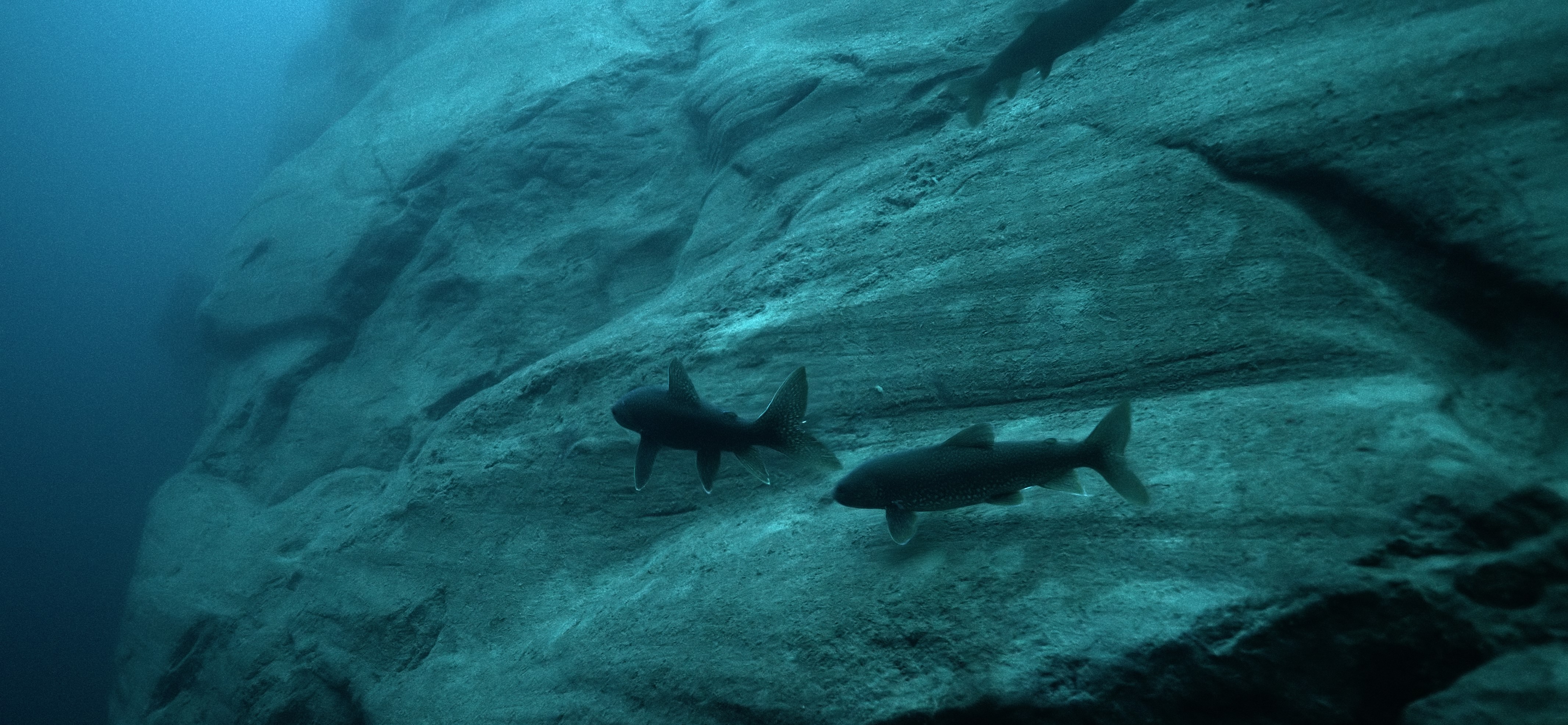
Two redfin trout swim past the Superior Shoal

The research crew dropped off acoustic receivers at the Superior Shoal. These receivers detect tags that have been surgically implanted in lake trout, enabling scientists to see where fish like the redfin trout (above) travel, and learn more about their behaviour. Photo Credit: Zach Melnick

Dr. Rennie is investigating whether the Superior Shoal ecosystem is crucial to the well-being of the entire lake.

"We know that the shoal is filled with many species of lake trout. This is encouraging since Lake Superior's lake trout fishery collapsed in the 1960s and has only recently rebounded."

On the expedition, the researchers collected genetic material from lake trout to test how similar or different they are to near-shore lake trout populations, and to determine if these lake trout can help repopulate other areas of Lake Superior.

The Mysteries of the Deep

"Seeing the multitude of fish on the shoal, including sculpins, burbot, and rare redfin, siscowet, and humper lake trout species was amazing," Dr Rennie says.

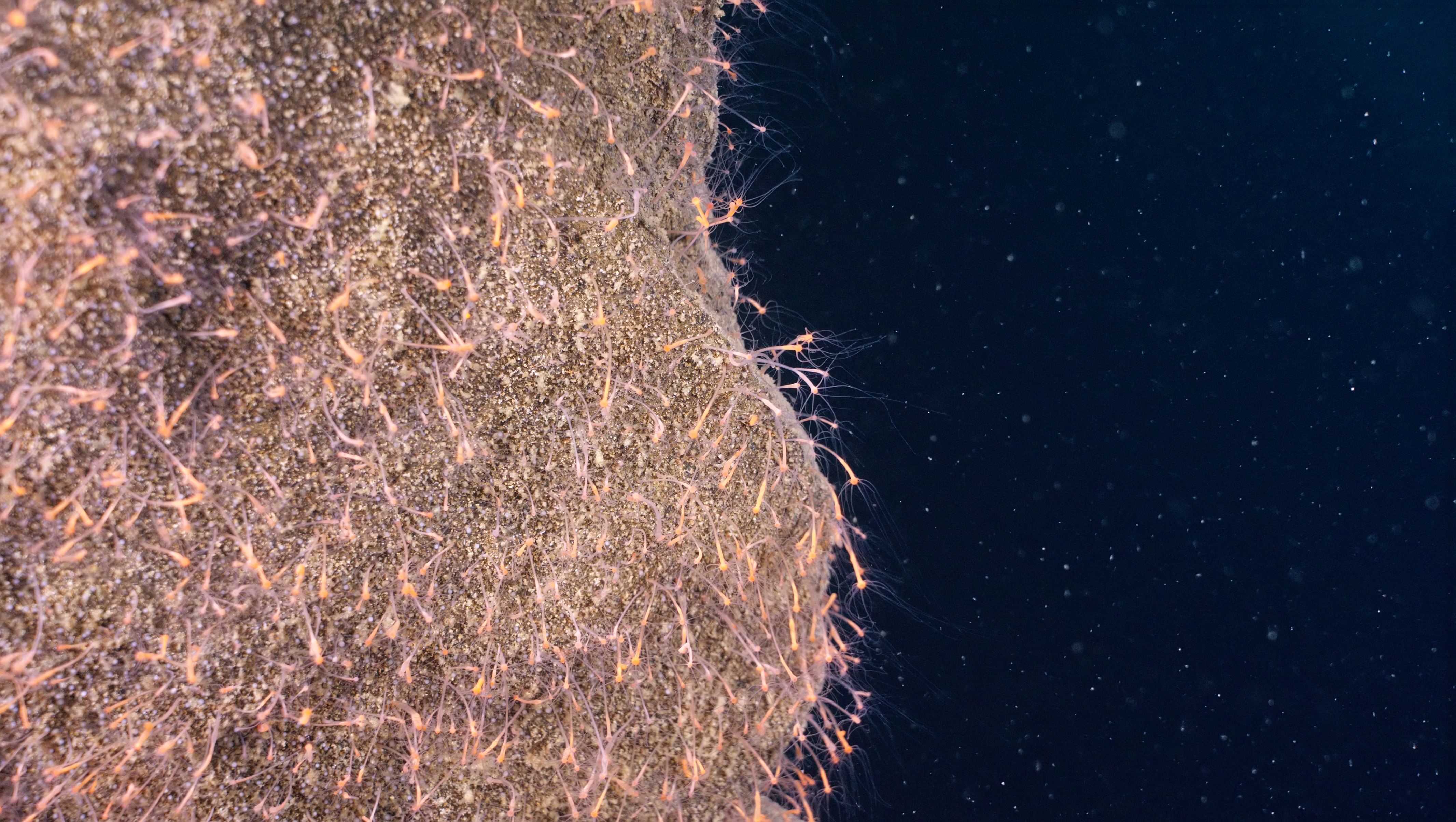
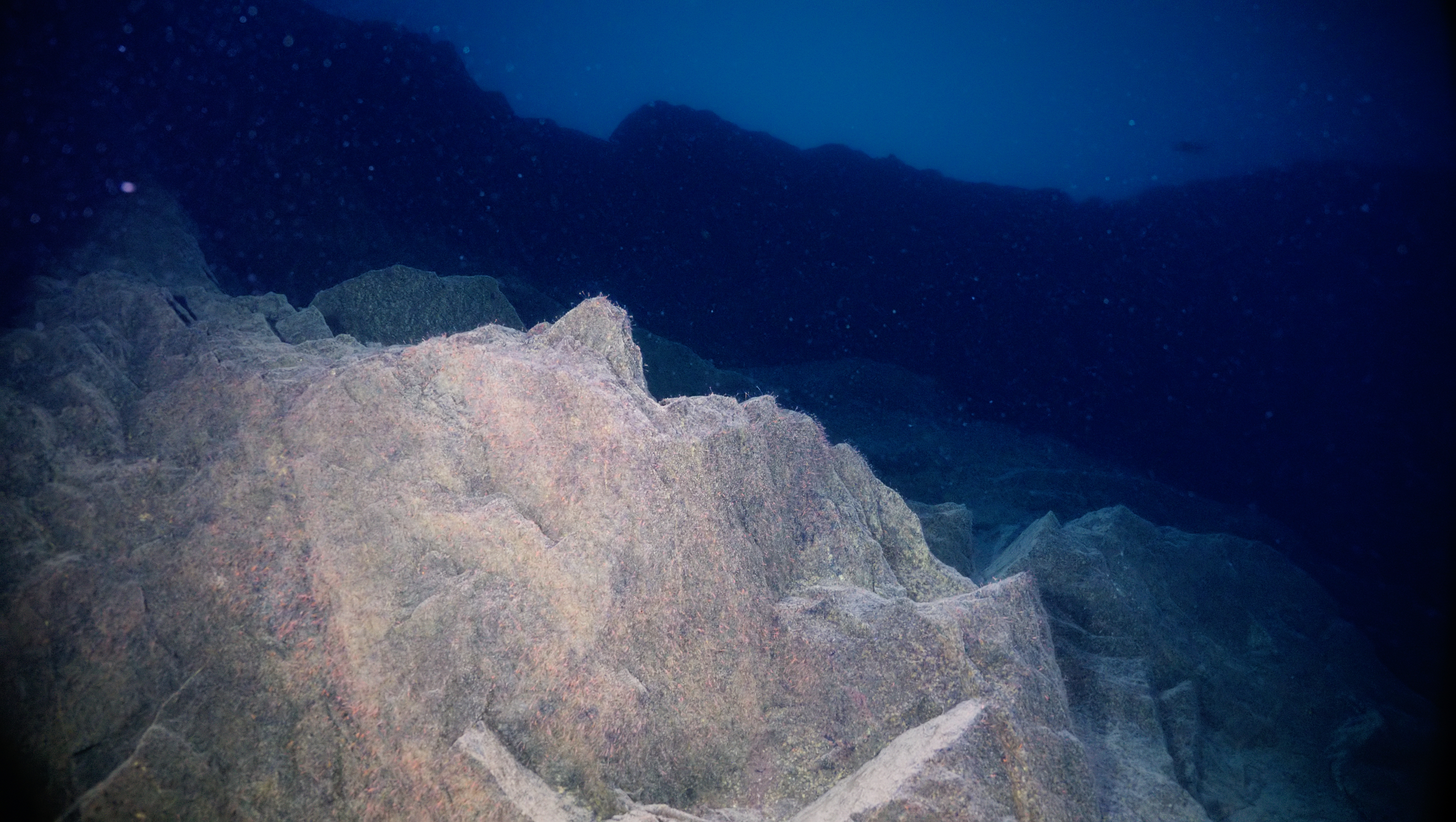
"The most astounding sight for me, though, was pinky-orange hydras pulsing like a vast garden on the shoal," he says of the tiny anemone-like creatures.

A cliff face of the Superior Shoal covered with luminescent hydra

Above, carnivorous hydra cover one of the shoal's cliff faces. Award-winning filmmakers and Royal Canadian Geographical Society Fellows Yvonne Drebert and Zach Melnick hope to make a film about Dr. Rennie's Superior Shoal expedition. Photo Credit: Zach Melnick

The research crew was also transfixed by a never-before-seen hunting behaviour of the redfin lake trout.

"They dragged their fins through the algae to chase out organisms so that they could eat them. Until now, no one knew they used this ingenious hunting method."

Dr. Rennie's work has laid the groundwork for future expeditions that will yield unique insights.

"Our research has the potential to create scientific strategies to successfully conserve Lake Superior and other large-lake environments that face threats such as climate change, pollution, and overfishing."

Watch the historic livestream of the Superior Shoal dive.

Dr. Michael Rennie's Superior Shoal research and expedition was made possible by funding from the University of Minnesota Duluth, the Great Lakes Fisheries Commission, and a Discovery Grant and Ship Time grant from the Natural Sciences and Engineering Research Council of Canada (NSERC).

OUTD4370 Sailing on Superior

Just prior to the start of fall classes, a fourth year elective class undertook a 12 day sailing experience along the north shore of Lake Superior. Click here to see a video of their experience.

ORPT Students Take Part in International Coastal Cleanup Day

On September 16th, 2017, Parks Canada hosted the International Coastal Cleanup Day along the shores of Mountain Bay, east of Nipigon. The Lakehead University Outdoor Recreation, Parks & Tourism program joined the cause, prepared for a long day’s work and experiential learning.

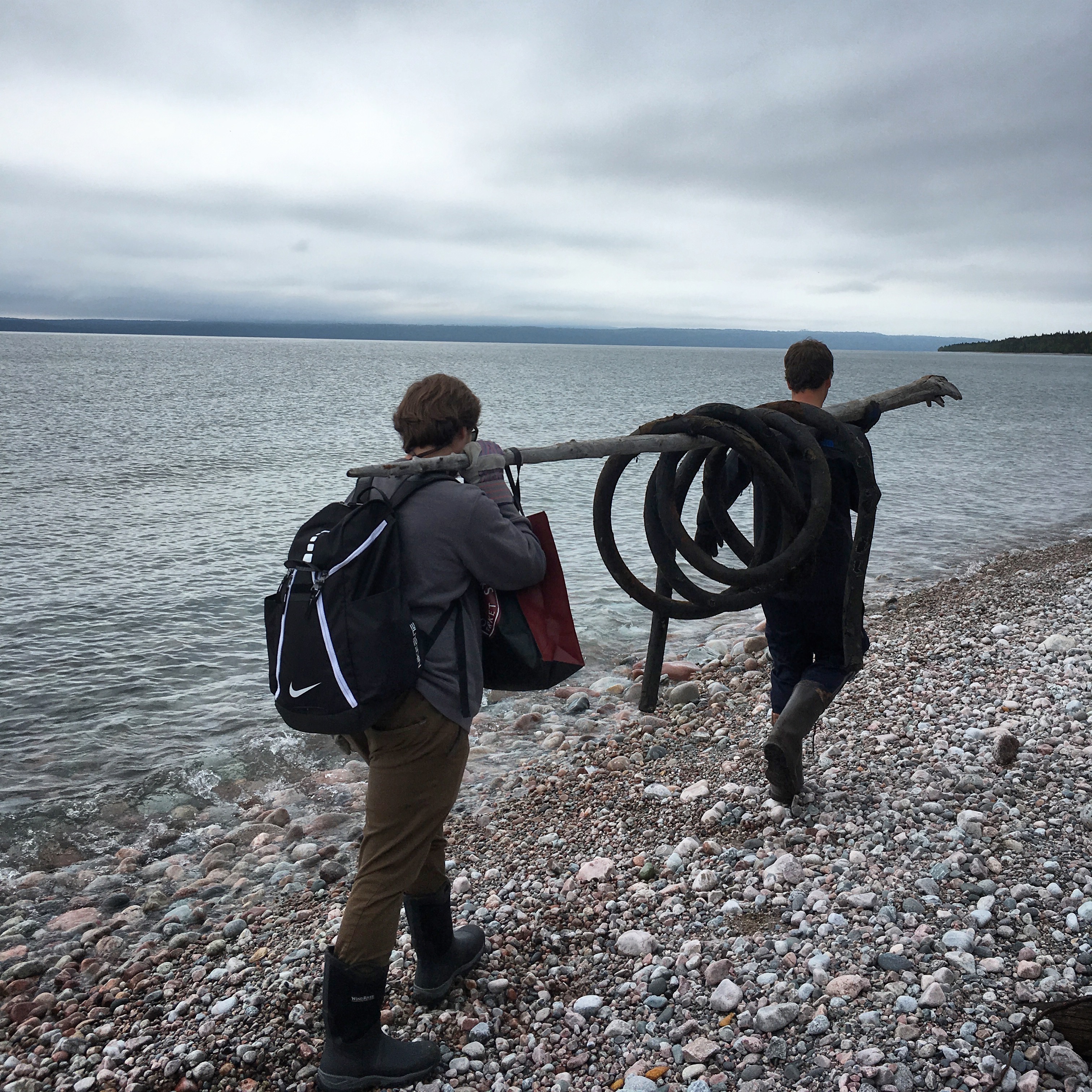
Chuck Hutterli, a Mountain Bay area resident, has been a long-time ambassador for coastal ORPT students haul garbage from Lake Superior shorelineconservation. He has been extracting nurdles, small plastic pellets, from local beaches for almost ten years. On January 21st, 2008, a CP train derailed west of Rossport resulting in three rail cars spilling their load of plastic nurdles. Due to the tremendously cold and snowy weather conditions at the time, CP was unable to completely clean up the spilled pellets. With wind, rain and snowmelt, the nurdles made their way into Lake Superior. The result was the dispersal of nurdles throughout the area, where they still wash up on the shore. Hutterli hosted the event at his home where we all 37 students gathered to learn and understand the true impact these tiny plastic beads have on the environment. They learned how nurdles are meticulously removed from the sand and were given the choice to either remain in one location collecting nurdles or to be dropped off further away to clean the shoreline of debris.

After a delicious lunch, students set out with one goal in mind; to make the area cleaner than when they arrived. Some of the larger items found included a number of unusual objects, some of which are toxic to the environment. From cigarette packs, inhalers, to rusted empty oil drums, more than a dozen bags were filled to the brim. Five kilometres of beach were combed, accumulating fifty pounds of trash and nearly 200, 000 nurdles.

The overall experience was extremely eye-opening. At the end of the day, students better understood the impact humanity has on our waters. Our oceans, lakes, and rivers are all fragile biotic zones which need our attention. In some areas in the world, fifty pounds of debris on a shoreline certainly does not stretch for five kilometres. The level of waste washed up on shore must be reduced significantly to see a positive change in our Earth’s waters.

The Outdoor Recreation team can’t wait for next year! Thank you, Parks Canada and Chuck Hutterli, for setting up an excellent initiative.


Subscribe to Lake Superior