

Teaching

Alumni Spotlight: Yukon Educator Heidi Warren

This Exceptional Alumni Award Winner Helps Children Blossom
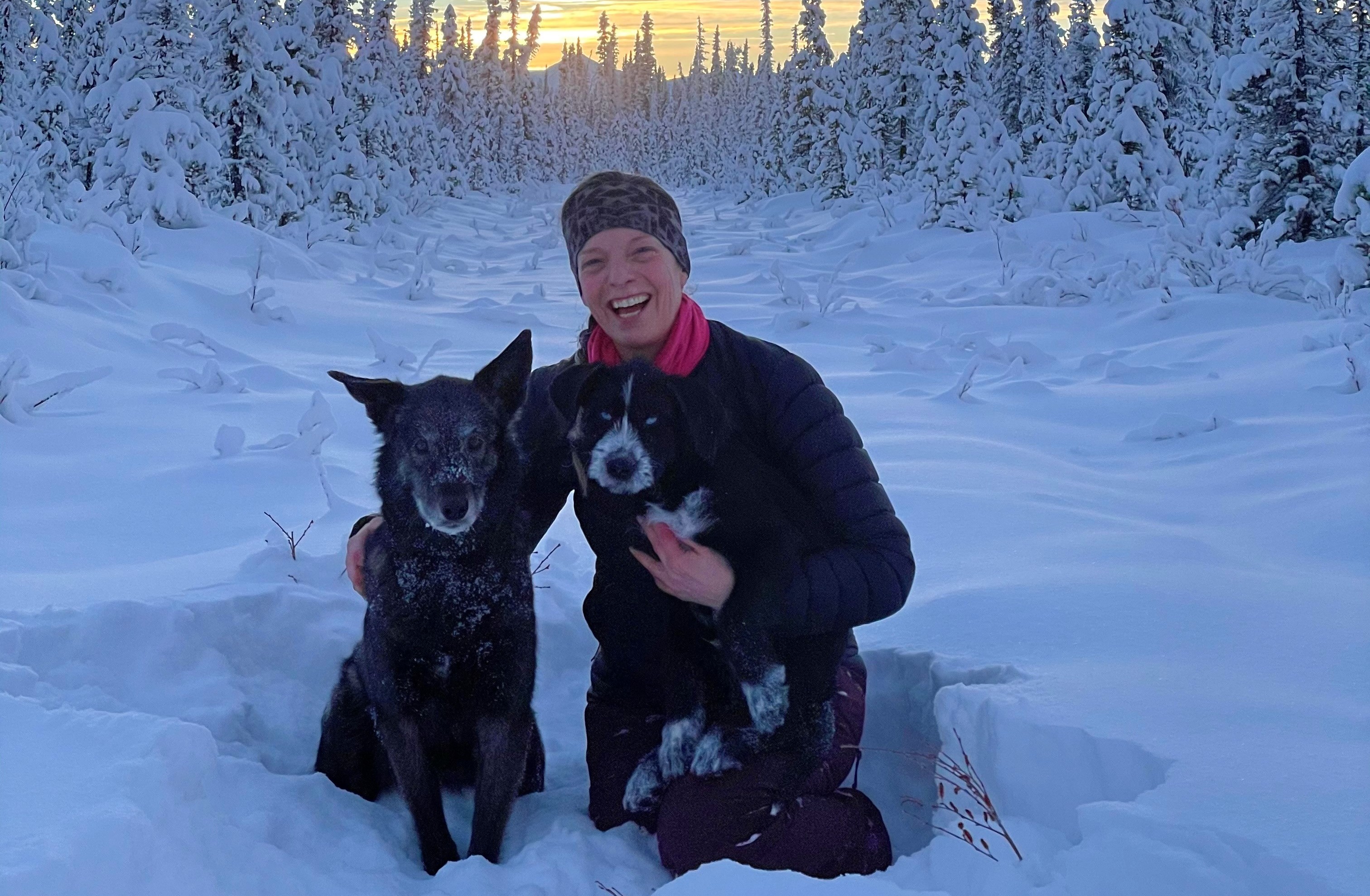
Heidi Warren sits in the snow, with snow-covered trees behind her, while hugging two dogs

"Students have taught me more lessons about myself than I ever could have expected," says educator and Lakehead alum Heidi Warren, above.

One moment in particular stands out for her. She was trying to lead an elementary school class outside, but as she was hurrying the children along, a young student tried to get Heidi to stop.

"I was feeling overwhelmed and rushed, and I said, 'Come on, let's go,' and he started to cry. He wanted to show me this incredible picture of a rainbow and hearts that he'd drawn for me on the chalkboard.

I realized that I needed to take a breath, connect with that student, and look at his picture. It only took a moment, but it made a huge difference."

A green chalkboard with a drawing of rainbows, hearts, and a car on a highway

"To keep planting seeds for meaningful change in education," is Heidi's mission. "I want to continue creating spaces where hearts and minds can grow (including my own)." Above is the chalk drawing created for her by her young student.

Taking the time to build connections shapes Heidi's approach to learning.

She's currently on a secondment as a whole child coach with the First Nation School Board in Yukon. Her regular job is as the principal of the White River First Nation's Nelnah Bessie John School in Beaver Creek, Yukon.

"I want to support kids so that they thrive because when I was a student, sometimes I got support and sometimes I didn't," she says.

Embracing Community in the Arctic

Heidi spent much of her childhood in the Northwest Territories, including Fort McPherson and Inuvik.

"There's no separation between Indigenous and non-Indigenous people in the north; we all lived in community together," she says.

"My parents taught me that we were visitors and that we should take our lead from Elders and Indigenous people. This gave me a much stronger relationship to the land and to the community."

Heidi Warren's mother stands in front of a sign saying Yukon Territory Canada; her arm is around Heidi and she holds Heidi's sister on her shoulder

Heidi received her Bachelor of Arts and Science and Bachelor of Education in 2010. She's happy to be teaching in Yukon, where she spent part of her childhood. Above, she stands beside her mother who's holding her little sister.

Both of Heidi's parents were educators. "As a young child, I loved being in the classroom with them, surrounded by books and chalkboards."

These early experiences made her want to be a teacher, but Heidi first tried out several different careers before embarking on an education degree as a mature student.

"I started at a large university close to Toronto—by that time, my family had moved to southern Ontario—but I found it hard to be in such an impersonal environment."

Stepping into a New World

Things changed when her mother told her that a university would be opening in Orillia.

This news prompted Heidi to enrol in Lakehead Orillia's Bachelor of Arts and Science program (specializing in biology and anthropology) and concurrent Bachelor of Education program.

She began her studies in 2006, becoming a member of Lakehead Orillia's charter class.

"It was perfect. The professors had high expectations, but they offered great support, and the classes were small.

Heidi Warren and other Lakehead Orillia alumni award winners stand together while holding their awards

Heidi (4th from the left) received an Exceptional Alumni Award at an October 25, 2025, ceremony at Lakehead Orillia. "It was lovely to be back again. The ceremony was heartfelt and true to the Orillia way."

I remember every single one of my instructors. Anthropology Professor Dr. Tim Kaiser's belief in me and his passion for his subject were inspirational. Biology professor Dr. Nanda Kanavilil was incredible, too. He always wanted us to strive for the deepest understanding of genetics and biology."

Nurturing Children's Self-Worth and Curiosity

In her role as a whole child coach, Heidi works with First Nation School Board education assistants and teachers committed to using a holistic lens with their learners.

Through her coaching, she enables educators to support students academically, culturally, and cognitively to create the sense of safety that's necessary for a supportive learning environment. "Historically, school hasn't been a safe space for Indigenous children," she explains.

Elementary school students and chaperones sit at the edge of a lake with a mountain on the far shore

First Nation School Board students at a fall camp that helps them stay connected to their culture and language through activities including setting fish nets, moose hunting, duck hunting, camp meal prep, and storytelling.

This fall, Heidi returned to the Orillia campus to receive an Exceptional Alumni Award for her transformative work as an educator. "I was very honoured and surprised," she says.

"I want to fan the flame of kids' passions and interests," she adds. "Helping children discover who they are gives me my sense of purpose."
Supporting the Decolonization of Higher Education

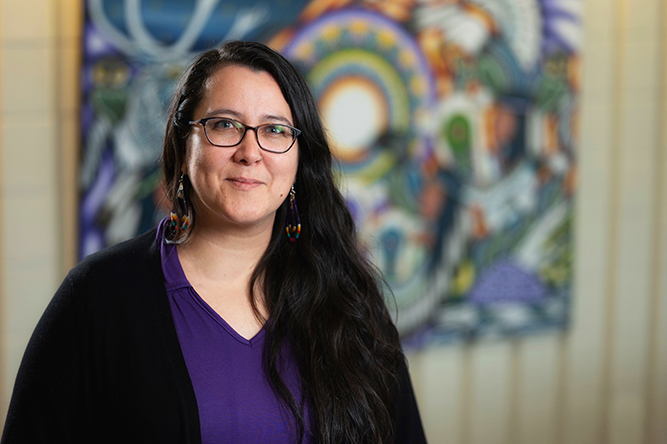
Jerri Lynn Orr

Lakehead's Jerri-Lynn Orr, Indigenous Curriculum Specialist with the Teaching Commons, is a founding member of the national Indigenous Curriculum Specialist Network.


By Rick Garrick

A group of Indigenous curriculum specialists from Lakehead University, the University of Ottawa, and Western University, have created the Indigenous Curriculum Specialist Network (ICSN) to share challenges, successes, strategies, techniques, tools and resources with others in their roles at post-secondary institutions across Canada.

Their roles involve supporting faculty and staff in engaging respectfully with Indigenous Peoples, Knowledges, Histories, and Ways of Knowing, Doing, and Being. This also includes working with all levels of the university towards decolonizing the academy and the road to truth and reconciliation. “The work that we do in universities is different from research and teaching,” says Jerri-Lynn Orr, Indigenous Curriculum Specialist at Lakehead and ICSN co-founder. “We just don’t close the door at the end of the day when we do these jobs, we carry this work into our everyday lives and sometimes that’s the challenging piece of it, because we’re consistently reading about the tragedies or what happened in residential schools.

I feel like we have to give the people we’re working with, the faculty and the staff, the foundation, which goes back to what happened pre-contact all the way up until residential schools and the policies and legislation that was put into place that led us to where we are. We’re consistently talking about that history so we can help people set their own foundation to be able to do this work in a good way.”

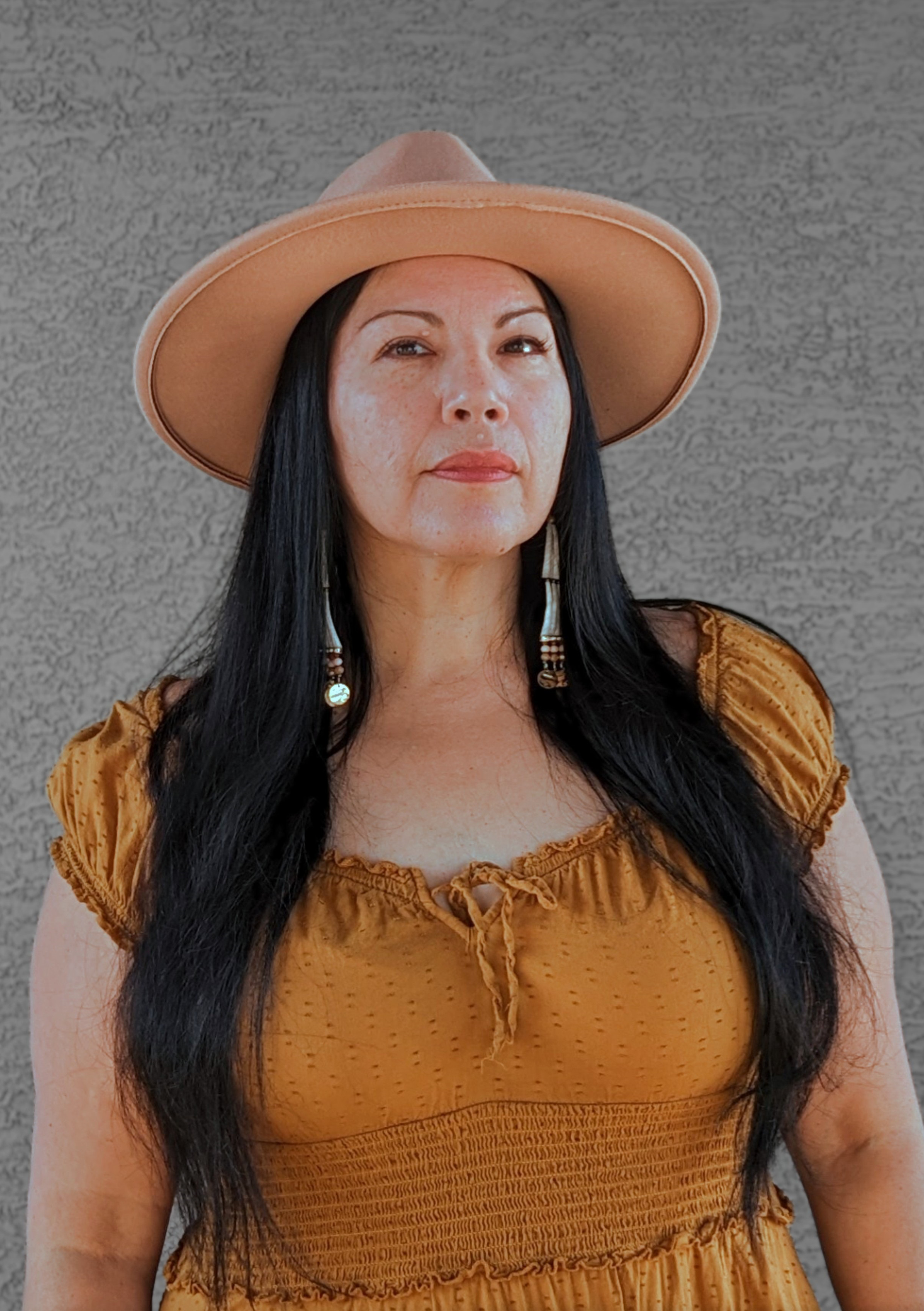
Mona TolleyICSN co-founder Mona Tolley, Indigenous Curriculum Specialist at the University of Ottawa, and ICSN member Sara Mai Chitty, Indigenous Curriculum and Pedagogy Advisor at Western University, add that the ICSN enables participants to share their perspectives with others.
“We’re all working towards this same vision of having Indigenous education be front and centre, but to come at it in a good way where we are building with it, not just having content or not just having a tokenistic approach,” Tolley says. “Being able to come together and having more people join … brings in all of these different perspectives. We’ve always been doing this, but now having more of a space to be able to do that and hear how other areas are working towards and trying new things, it’s really been a huge learning curve and I really appreciate hearing from everyone.”

“You get really good ideas and you want to share those with people that can kind of geek out about it, too,” Chitty says. “It helped me feel less alone when I was starting, because I’m like: ‘Oh, here are all these people across what is now known as Canada that have been in these roles or also were just starting.’ I’m not alone and they know some of the challenges and tribulations of the role.”

The ICSN, which has been meeting for about a year-and-a-half, includes a general meeting for all members to discuss their issues, obstacles and successes and to share their resources and materials and a Tea Time sharing circle for only Indigenous participants.

“This is a national network and we’re still trying to grow and get more people involved,” Orr says. “We’re listening to members trying to figure out what would work best, and how we can get more people involved in the planning side of it. We have a Facebook page where if we have questions or we need an extra resource for something we can post on there.”

Chitty says they have had about 20 to 25 participants in attendance at the ICSN meetings over the last year-and-a-half.

“It’s not always the same people and we know there are many more out there,” Chitty says. “A lot of the people that are attracted to it are people that are new in the role or new at the institution. We would love to have some seasoned vets in there because their expertise is invaluable.”

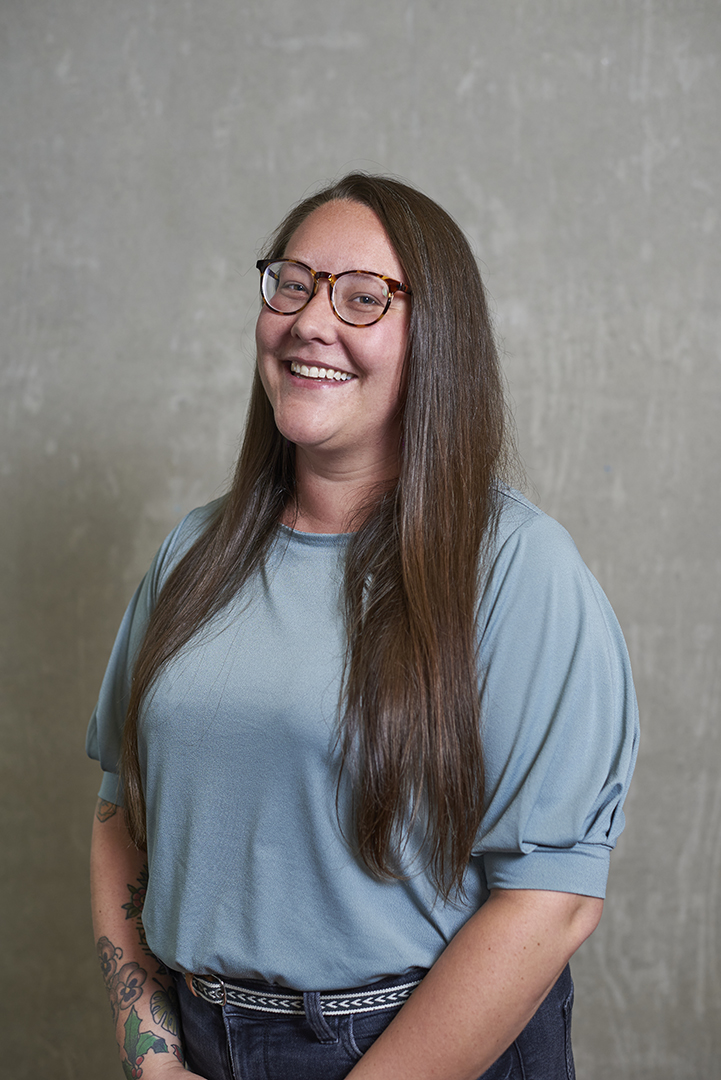
Sara Mai ChittyChitty says her role at Western came out of the Truth and Reconciliation Commission Calls to Action #62.
“That is a huge responsibility because those are the Calls to Action from survivors and families of people who didn’t survive,” Chitty says.

The Indigenous Curriculum Specialist Network is planning to hold a three-day gathering to meet in person now that COVID-19 pandemic restrictions have lifted.

“We are talking about meeting in person, because we never have for the past two years, having this gathering would be ideal,” Tolley says. “We wanted to have a day on the land where we are learning so we come together as learners. We haven’t fleshed out the details, but we talked about how we want to be learners. On the second day we want to maybe be together in terms of what can we produce that’s going to help us in our positions and then the third day would be sharing with everyone what we have to say about this kind of work, so taking a different approach to coming together.”

Orr says the ICSN plans to continue holding their regular meetings over the Zoom platform because they are able to reach more participants.

“I think we're going to keep doing Zoom,” Orr says. “That’s the only way that we can stay connected in this day and age to be able to gather everybody from across the nation.”

Biology Technicians and Contract Lecturers Attend Inaugural Teaching Commons Summer Institute

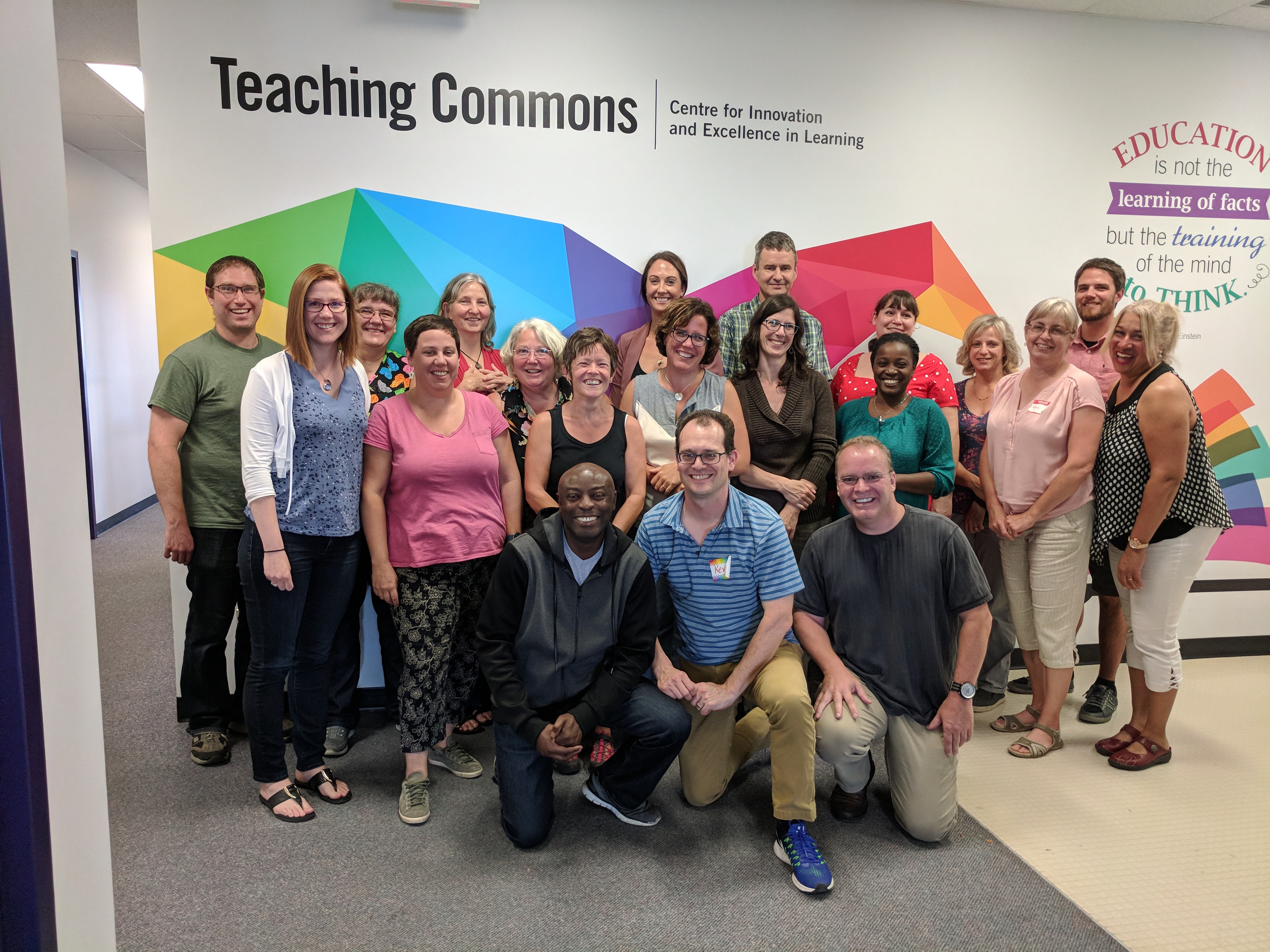
Technicians/Contract Lecturers Micheal Moore and Susanne Walford, along with Contract Lecturer Nancy Serediak, attended the first ever Summer Institute hosted by Lakehead University's Teaching Commons.  Over the course of three days, participants partook in conversation, activities, and reflections to enhance and diversify their approaches to student based learning.  Meeting a myriad of faculty, staff, and lecturers from across campus was a great opportunity to share strategies and struggles in the classroom and beyond.  Topics ranging from active learning, inquiry-based learning, experiential learning, incorporating Indigenous content, incorporating high and low tech, setting the tone in the classroom, and contemplative pedagogy were covered by knowledgeable people from the Teaching Commons and experienced invited guests.  

Thanks to the enthusiasm and breadth of knowledge provided by instructors during this event, our heads are overflowing with ideas and resources which will enhance the learner-centered student experience this fall.  Also, many thanks to the Dean's who provided both breakfast AND lunch over the three days.   Faculty and staff from the department are encouraged to peruse the myriad of resources available on the Teaching Commons web site and partake in any number of workshops they offer throughout the year.

Graduate

All classes are taught online (asynchronously)

GRADUATE:

  • EDUC 5010 (Researching in Education)
  • EDUC 5614 (Trends and Issues in Distance Education and Technology)
  • EDUC 5414 (Social Media for Learning)
  • EDUC 5414 (Myths, Legends, and Lies in Education)
  • EDUC 5414 (Introduction to Instructional Design)

UNDERGRADUATE:

  • EDUC 3910 (How Learning Works)
  • EDUC 3910 (eLearning and Teaching at a Distance)

Teaching

My philosophy and approach to teaching is based on 5 principles of teaching:

  • Instill a Passion for Learning
  • ‘Hands On’ Means Deeper Understanding
  • Connect Academia to the Real World
  • Train Students, Don’t Just Lecture
  • Show and Interest and Inspire by Example

These principles have inspired me through my academic training, and based on the realization that, although Phd’s can obtain large research grants and develop meaningful research programs, it is ultimately our devotion to the student that will make our contributions realized and meaningful.


Fall 2023

Winter 2024

  • GEOG / ENST 1190 - Indigenous Knowledge, Science and the Environment
  • GEOG / ENST 4411 - Water Resource Management
  • ENST 4810 - Environmental Sustainability

Teaching

Fall 2019

  • ECON 3117 - Mathematical Economics I

Winter 2020

  • ECON 4611 / 5315 - Game Theory
  • ECON 5113 - Advanced Microeconomics
Subscribe to Teaching