


Dr. Gary Pluim Champions Citizen Participation
OVERVIEW:
- Lakehead Education Professor Dr. Gary Pluim is leading the "Educational Transfer Between Small States of the Commonwealth" research project
- This initiative follows how curriculum is shared between small Commonwealth countries—from the Caribbean to the Pacific to sub-Saharan Africa
- Dr. Pluim and his team also collaborated with Ministries of Youth and Education in Commonwealth countries to develop youth-worker courses
- Youth work is a national priority in many small states because they often have large youth populations and high youth unemployment
From Botswana to the Bahamas, Young People Are Stepping Up
"People should have voice and power in the decisions that most affect their lives," says Education Professor Dr. Gary Pluim.

Dr. Pluim develops teaching methods that address youth rights, political engagement, mental health, and the climate crisis.
Dr. Pluim spent several years carrying out grassroots international youth volunteer projects around the world—like community-driven school-building and youth skills summits—before becoming an academic. It was during this period that he first became interested in fostering citizen participation, especially for younger people.
In 2025, he witnessed the power of citizen participation at Lakehead Orillia. Youth from 12 countries—including Botswana, Guyana, Turkey, the Bahamas, Malta, Fiji, Afghanistan, and Canada—arrived on campus for the "Global Citizenship Summit for Youth Voice, Policy, and Action."
Lifting Up Young People's Voices
The summit was organized by Dr. Pluim, his team of students, and his research partners as part of his "Educational Transfer Between Small States of the Commonwealth" research project. This initiative tracks how curriculum is shared between small countries—from the Caribbean to the Pacific to sub-Saharan Africa.
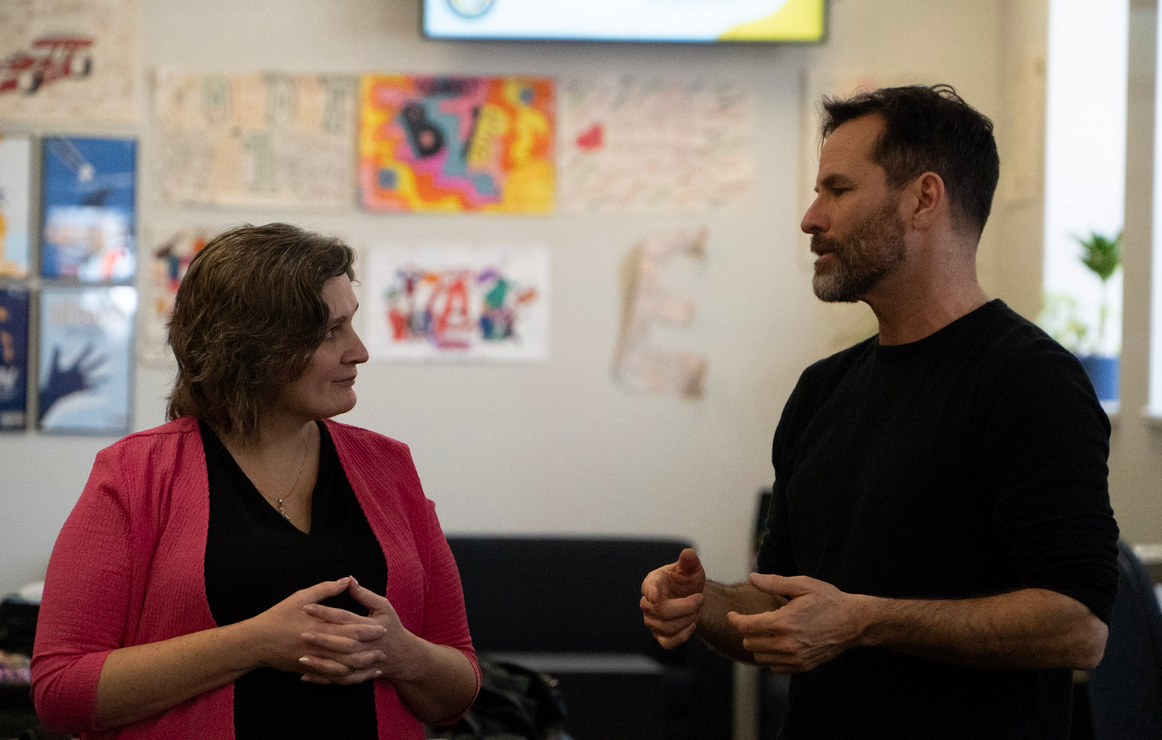
Advancements in online and distance learning during the pandemic have increased access, and accelerated opportunities, for educational transfer. Above, Dr. Pluim chats with Lakehead Orillia Principal Dr. Linda Rodenburg at the Global Citizenship Summit.
"We collaborated with Ministries of Youth and Education in these countries to develop youth-worker courses. These micro-credentials give current and aspiring youth workers opportunities to upgrade their qualifications," Dr. Pluim says.
"In addition to government ministries, we partner with camps, youth agencies, community organizations, and YMCAs (or their equivalents) to offer this training."
On one hand, this sharing of resources allows countries to save money, train more youth workers, and strengthen their economies. But on the other hand, local voices and cultures risk being overpowered by institutional priorities.
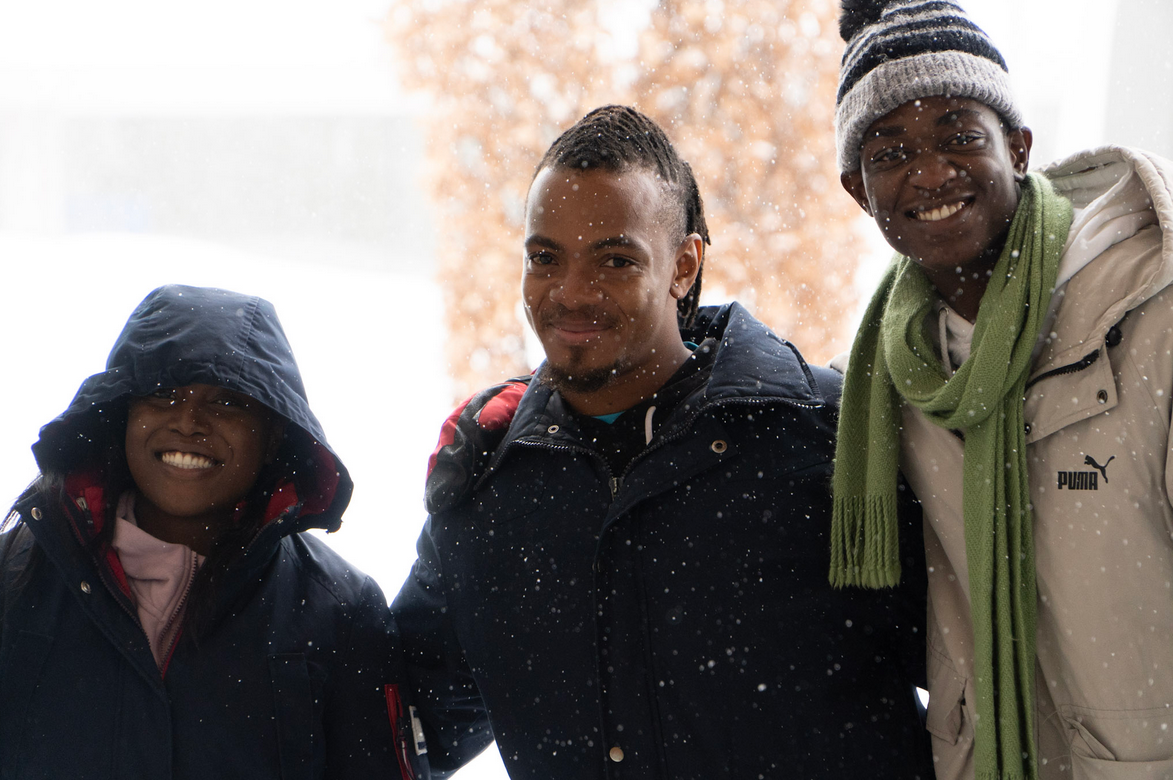
Over 1,000 people have now taken Commonwealth of Learning modules, like "Youth and Climate Change" and "Youth Entrepreneurship." Above, youth leaders at the Global Citizenship Summit for Youth Voice, Policy, and Action enjoy some winter weather.
"We're studying promising practices and approaches to education sharing, as well as the factors that inhibit the transfer of curriculum."
Dr. Pluim's work is a partnership with the Commonwealth of Learning (COL), an intergovernmental organization that provides funding to develop and curate open-access online courses in the youth-work field.
Eager to Take Their Place in Society
Youth workers typically support young people with developing life skills, finding employment, and addressing challenges such as mental and physical health issues.
"One reason that youth work is a national priority in many small states is because they often have large youth populations and high youth unemployment," Dr. Pluim says.
In the Bahamas, for example, nearly 40 per cent of the population is 24 years old or younger, and 25 per cent of people between the ages of 15-24 are unemployed, according to the World Bank.
"In today's world, we see massive inequalities and a global climate crisis that are predicated on colonialism and power imbalances," Dr. Pluim explains. "So it's not just about wealthy countries transferring money to poorer countries—it's about local autonomy and possibilities for youth to determine their own futures."
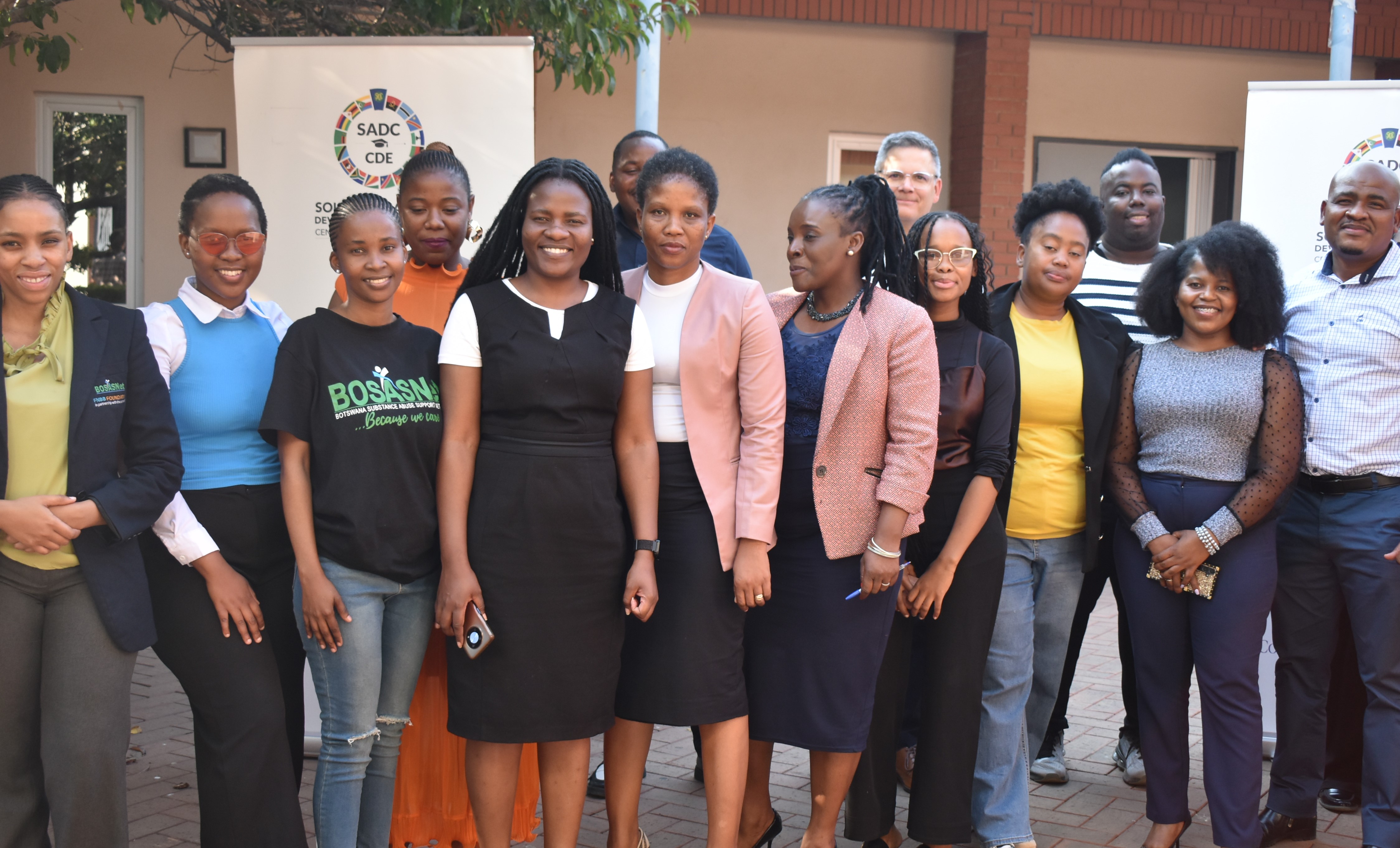
Botswana has a large youth population and a pressing need for youth workers. That's why members of the Botswana Open University (above) are considering adopting existing COL youth-worker courses.
Dr. Pluim cautions that even exchanging curriculum between countries comes with risks.
"In many cases, there could be language barriers or curricula that don't reflect the experiences or culture of a country. This research draws upon post-colonial theory when looking at contemporary cultural influences on education."
A Transformative Summit
At the Global Citizenship Summit at Lakehead Orillia, young people shared their perspectives about their countries and their cultures.

"Watching the Global Citizenship Summit youth participants (above) come to the realization that they had more in common than they did differences really blew me away," Dr. Pluim says.
They also analyzed how global challenges, such as climate change, are affecting them. Participants discussed rising sea levels in the Pacific Ocean, extreme forest fires in Canada, and more frequent hurricanes in the Caribbean.
Some participants were nervous about the prospect of coming to the summit—they thought they'd have nothing in common with people from other countries. But Dr. Pluim says that the opposite actually occurred.
"It was inspiring to see these young people connect through music, dance, and sharing meals together. Listening to stories about their families, their communities, and their lives reaffirmed the potential of these kinds of educational experiences to bring us together and create change."
Dr. Pluim's research was funded by the Commonwealth of Learning and by a Social Sciences and Humanities Research Council Partnership Engagement Grant. Dr. Pluim's work supports multiple United Nations Sustainable Development Goals, including SDG 1: No Poverty, SDG 4: Quality Education, SDG 8: Decent Work and Economic Growth, and SDG 10: Reduced Inequalities.