



If You’re Seeking Peace, Try Walking a Labyrinth
Amidst the bustle of campus life, the Wellness Path near the Faculty of Education offers a place to slow down—a quiet refuge from the stresses and demands of modern life. Open to individuals, families, and the university community, the labyrinth welcomes anyone who ventures its way.
"The labyrinth is a walking, meditative path," says Devon Lee. Its twists and turns are sometimes seen as a symbol of those we experience on our own life journeys.
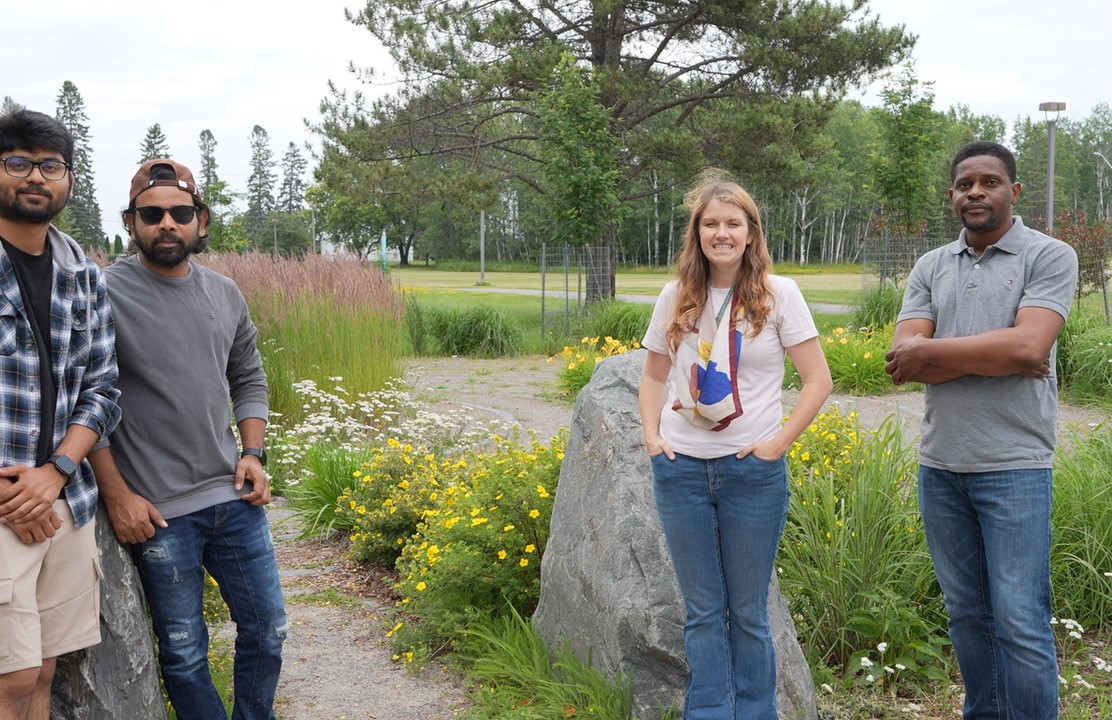
Devon Lee (third from left) and her Philosophy of Education students (L to R): Arafat Alamgir Shanto, Shakil Zaman, and Ayoola Jegede at the entrance of the Wellness Path. Devon's work focuses on climate education, the environment, and folk schooling (non-formal education for adults). Devon also worked on Lakehead’s Labyrinth Learning Project as a graduate assistant and as Lakehead’s sustainability coordinator.
Lee is a Lakehead PhD student in Educational Studies and a contract lecturer who has been closely involved with the labyrinth since its inception.
"People can experience deep emotions in the labyrinth, and it can be a powerful way to deal with grief. As a teacher, I've also used it to help people get to know each other and to answer complex questions. Labyrinths can be a pilgrimage in both a secular and a religious sense," she adds.
Labyrinths Versus Mazes
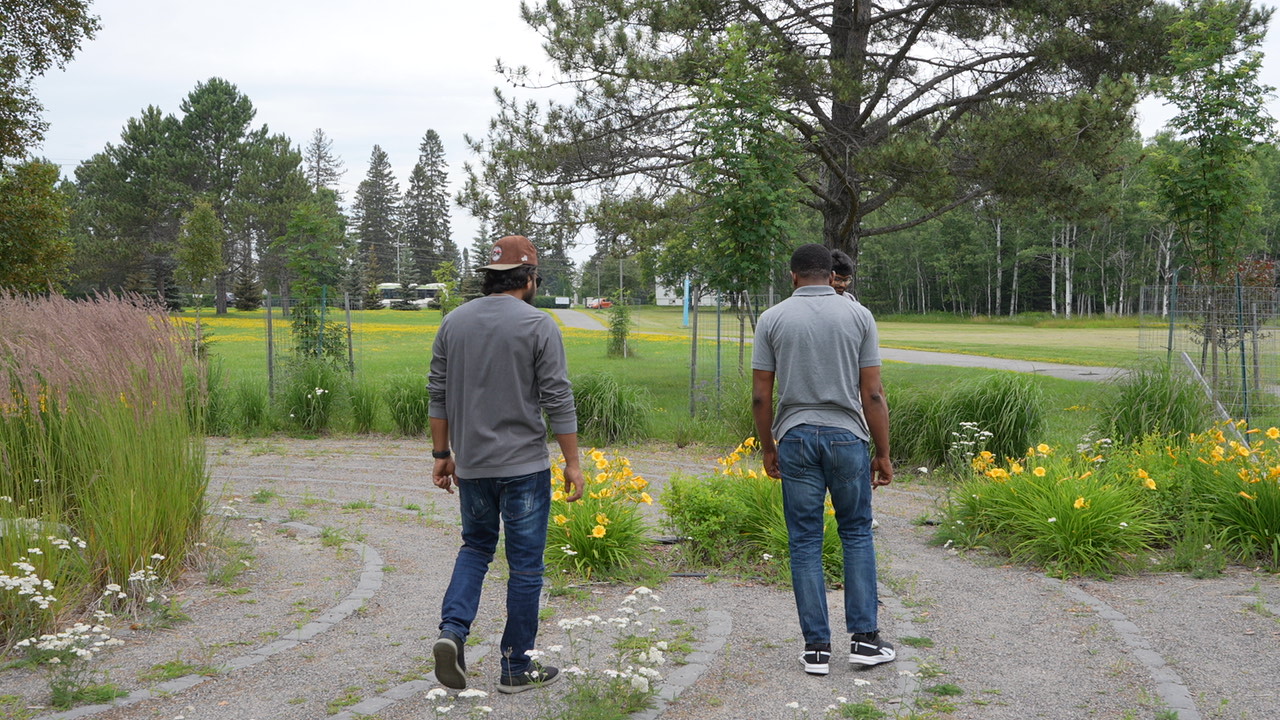
The Wellness Path (above) isn’t the only labyrinth on the Thunder Bay campus. There’s a second labyrinth next to the CASES building. This labyrinth has a dual purpose—to encourage contemplation and to act as a stormwater catchment area.
The words "labyrinth" and "maze" are sometimes used interchangeably, but they are different in both purpose and design.
Mazes often have multiple entrances and branching paths that lead to dead ends. They're a puzzle meant to confuse the walker. Labyrinths are a single path that takes the walker to their centre. You can never lose your way in a labyrinth.
A labyrinth is a walking meditation that encourages the walker to slow down and reflect.
"No one really knows where labyrinths originated," Lee says. "They're ancient and they're found in cultures all over the world that had little or no contact with each other."
A labyrinth etched into a rock face at least 11,000 years ago in Nevada and the French medieval labyrinth found in Chartres Cathedral are just two examples.
"Recently, labyrinths have gained traction in schools, hospitals, and churches as a wellness or mindfulness practice," Lee says. "K-12 schools are using them indoors and outdoors to help children decompress."
Welcome to the Wellness Path
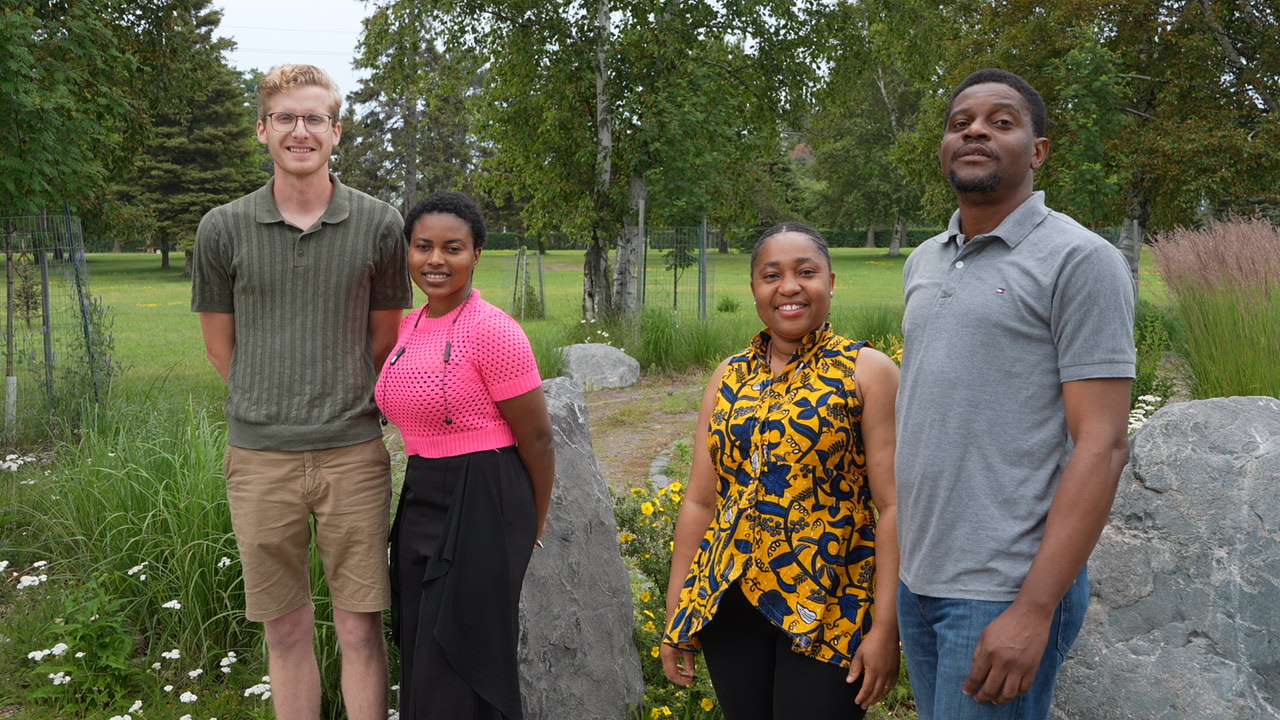
Philosophy of Education students Nicholas McPherson, Natasha Nkrumah, and Portia Addai Adusei relax at the labyrinth after class. Besides walking labyrinths, there are also labyrinths that are painted on walls or printed on paper that allow people to trace their paths using their fingers.
Lakehead Professor Emeritus Dr. David Greenwood led the group that advocated for the construction of the Wellness Path. At the time, he was the university's Canada Research Chair in Environmental Education, within the Faculty of Education.
Dr. Greenwood worked with landscape architect Werner Schwar to design the labyrinth, which was completed in 2022.
It has 11 switchbacks and is modelled on the "Path of Peace" labyrinth form. It takes 5-20 minutes to complete, depending upon the walker's pace.
Some of the boulders in the labyrinth were quarried locally, including the two at the centre where people can sit once they've completed their journey.
Lakehead's labyrinth is also notable for fostering environmental wellness alongside human wellness.
"It's a place that was previously a monoculture of grass," Lee says. "Now, there's mountain ash, yarrow, coneflower, and other native plant species that are encouraging biodiversity."
Learning from the Labyrinth
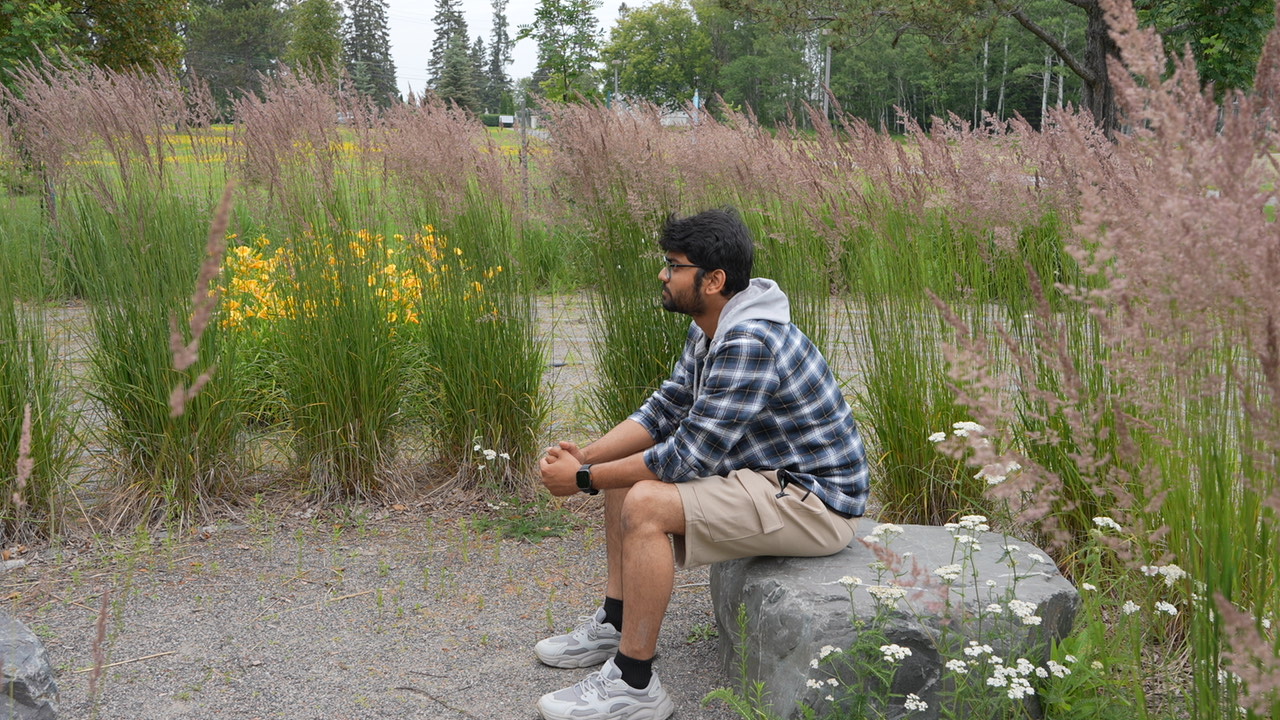
"I find that people are often a little bit reluctant to walk the labyrinth, but once they do it, they feel more comfortable and walk it again and again," Devon Lee says.
Lee uses the labyrinth as a form of holistic and embodied learning. "That means using movement, our whole body, and our senses to learn," she explains.
"My education students walk the path with a specific question in mind, which they then journal about," Lee says. "For one of my recent classes, their question was, 'How can educators promote the conditions for democracy to thrive?'
The sense of inquiry and contemplation is much greater than if they were sitting in a classroom or writing an essay on their computers."
The Wellness Path supports two United Nations Sustainable Development Goals (SDGs)—SDG 3: Good Health and Well-Being and SDG 13: Climate Action. Visit the Wellness Path beside the Faculty of Education on Oliver Road to discover the power of a labyrinth.