



A Powerful Video by SSHRC Storytelling Finalist Casey Oliver Wins Acclaim
Content Warning: This story contains discussion of sexual violence.
"Good morning cutie. U didn't text me back last night??? Too busy dreaming about me?"
This brief text is the beginning of a barrage of intrusive and increasingly threatening messages received by a young woman in the short video "Sexual Violence through Technology: Exploring Vulnerability, Distress and Coping in Women."
The video—which immerses viewers in a hostile online world that Canadian women face every day—was created to highlight Casey Oliver's research into a form of violence that's migrated online. Oliver is a Lakehead clinical psychology PhD student supervised by Dr. Dwight Mazmanian and her video has been chosen as one of 20 finalists in the 2025 SSHRC Storytelling Challenge.
This challenge is a highly competitive nation-wide contest organized by the Social Sciences and Humanities Research Council (SSHRC) that asks postsecondary students to show Canadians how social sciences and humanities research is affecting our lives, our world, and our future for the better. Oliver was one of hundreds of students from across Canada eager to share their SSHRC-funded research in three-minute-long videos.
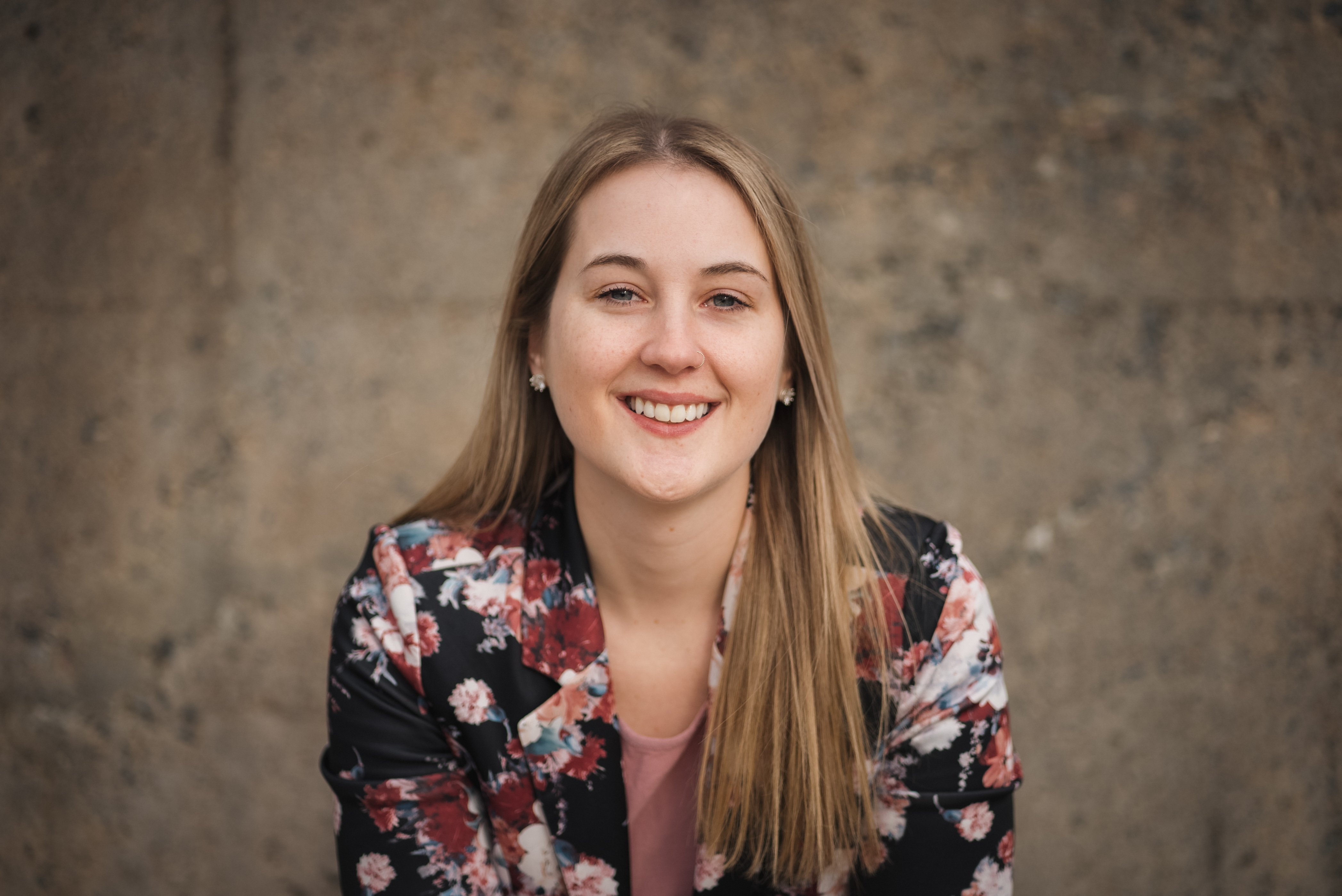
Casey Oliver is pursuing a PhD in clinical psychology focused on gender-based violence so that “I can practice clinical psychology with survivors of violence and also conduct research—it’s the best of both worlds.”
"Technology-facilitated sexual violence (TFSV) is a form of gender-based violence that disproportionately affects women," Olivers says. "It's an umbrella term for many different non-consensual behaviours such as sexual comments and harassment about someone's gender or sexual identity." TFSV can include deepfake nude photos and videos, unwanted photos of genitalia, cyber-stalking, unwanted in-person sexual experiences facilitated by technology, and doxxing (releasing personal details, such as a home address, and falsely claiming someone is available for sexual behaviours). It can happen via social media, text messages, gaming sites, and dating platforms as well as in every other corner of the online world.
"What caught my attention is that we don't have a clear understanding of the effects technology-facilitated sexual violence is having on women," Oliver says. This gap motivated her to make it the subject of both her master's and PhD dissertations.
Antisocial Media

"Men are a critical part of the solution to technology-facilitated sexual violence (TFSV), both the perpetrators and those in their social circle who need to stand up and say that this is not okay," Casey Oliver says. "I also want to be clear that men can be the victims of TFSV and that women can be perpetrators, however, there is a clear gendered pattern." Photo Credit: Pexels/MART PRODUCTION
Social media is one of the top locations for technology-facilitated sexual violence and women in the LGBTQ+ community appear to be at the highest risk for this type of violence. "Regardless of who they are," Oliver says, "the women I've spoken to have said that TFSV has life-altering consequences."
In the aftermath of TFSV, women may experience anxiety, depression, hypervigilance, substance-use problems, and problematic eating patterns. In her master's research, Oliver found that these behaviours may be linked to the self-objectification that can develop when repeated incidents of TFSV cause women to believe that they are sexual objects rather than human beings with value and dignity.
Some women cope by disguising their identities online or completely removing themselves from the technology world. "That's concerning because women cut themselves off from job opportunities and social and recreational networks. When human beings are monetized, our safety is eroded, and we're placed in danger."
Oliver also points out that the culture of hate and violence that's thriving online is spilling over into our real lives. "The 2023 stabbing attack in a gender studies class at the University of Waterloo is a horrific example of what TFSV can lead to."
Big Tech, Educators, and Governments Must Step Up
"One of the greatest perils to overcoming this issue is everyone—especially the technology giants—pointing the finger at each other and saying that it's someone else's problem to solve," Oliver says. "Governments and educational institutions have a lot of power, too, and they need to do their job. I focused on adults in my research, but many parents have told me they're terrified about their kids being targeted because this kind of abuse starts in middle school."
Oliver will use the findings of her project to help educate the public, governments, online platforms, and other stakeholders about the destructiveness of technology-facilitated sexual violence so that the online world can become a welcoming place for women and girls.
"An SSHRC doctoral fellowship is enabling me to carry out my research and the SSHRC Storytellers Challenge allowed me to get out of my research comfort zone and have a broader impact by communicating to a larger audience," Oliver says.
"It's a hard field to be in," she adds, "but if it makes a difference in terms of human suffering, it's worth it."
In addition to the SSHRC funding for her research, Casey Oliver is grateful to Lakehead University's Office of Graduate Studies and Research Services for facilitating and funding her SSHRC Storytelling Challenge video as well as the film production expertise of Apple Wagon Films. She also appreciates the support for her research from the Canadian Federation of University Women, the Canadian Psychological Association, the Kappa Kappa Gamma Foundation of Canada, and the Province of Ontario.
Watch the video that earned Casey Oliver a spot as a 2025 SSHRC Storytelling finalist.