



Supporting Educators to Accelerate Climate Change Education
Teenagers are often stereotyped as self-centred, but Dr. Ellen Field knows this couldn't be further from the truth. The Lakehead education professor and researcher has been amazed by the inventive ways that young people are taking the lead in fighting climate change and their determination to create a future where everyone–and every living thing–can thrive.
"I was drawn to the field of climate change education (CCE) because while doing PhD research in 2013, I discovered that teenagers around the world were using social media for environmental conversations and learning, as well as for organizing community actions to address local climate issues," Dr. Field says. "They were taking matters into their own hands because they weren't getting enough climate information in their classrooms."
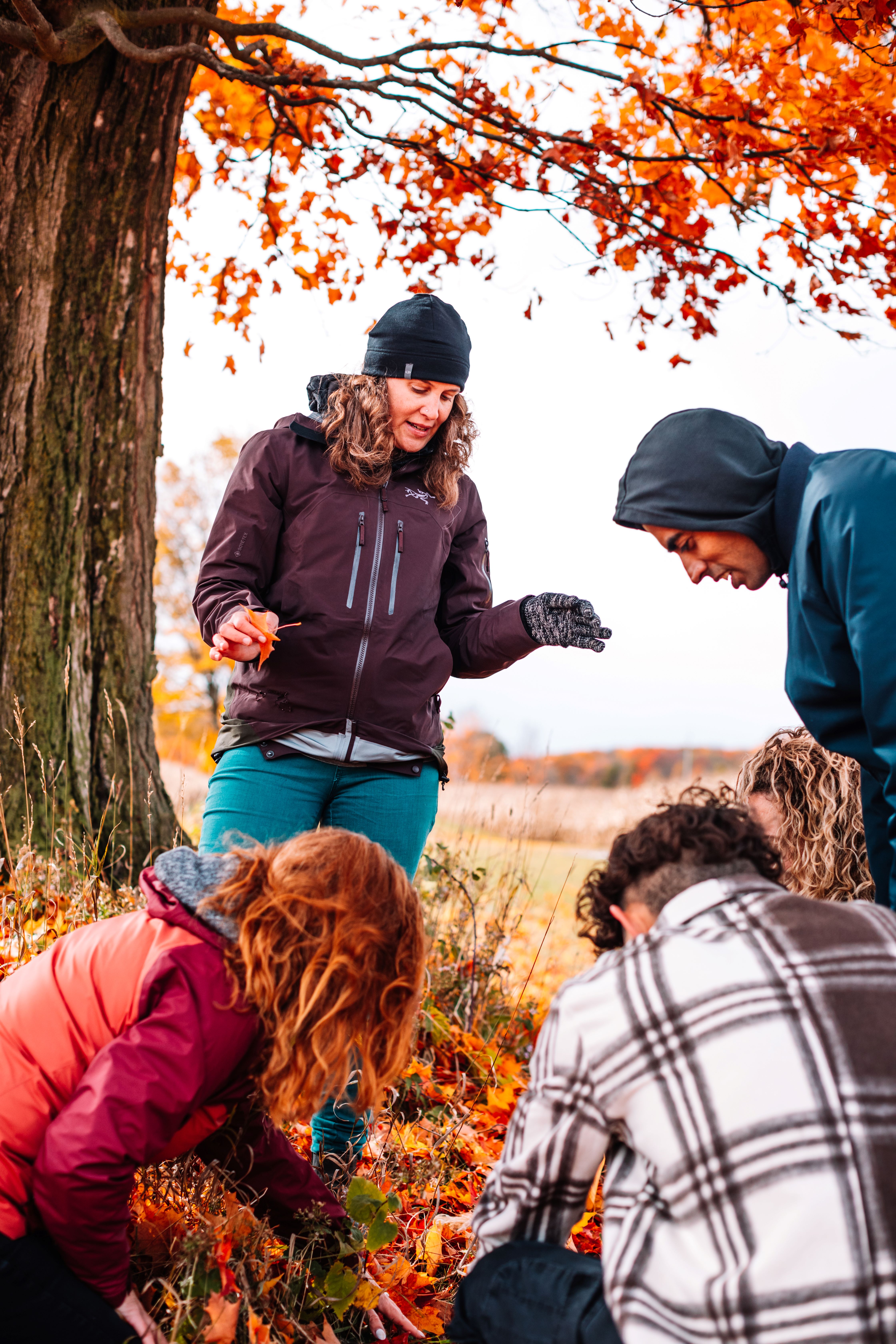
Fast forward to 2025, and Dr. Field is channelling young people's concerns about the environmental crisis into developing and deepening the climate change education taught in Canadian schools.
Achieving this ambitious goal is being made possible by the Accelerating Climate Change Education in Teacher Education (ACCE-TE) project, which provides learning opportunities for practising teachers, teacher candidates, and faculty of education members through funding from Environment Climate Change Canada.
The two-year project is being led by Dr. Field and Dr. Hilary Inwood at the Ontario Institute for Studies in Education (OISE) at the University of Toronto and a network of researchers and collaborators. "Educators at all levels are well-positioned to lead the cultural shifts needed for equitable, just, and sustainable forms of living on Earth."
In addition to being a Lakehead professor and researcher, Dr. Field Ellen is an associate editor of the Canadian Journal of Environmental Education and co-chair of the Canadian Regional Hub of Monitoring and Evaluation of Climate Change Education (MECCE).
The ACCE-TE project is giving educators the tools to do this through its free national e-course, two webinar series, and by encouraging educators to share promising CCE learning strategies with their colleagues. "For example, an elementary teacher who took the e-course facilitated by Dr. Maria Vamvalis and Indigenous educator Kahsenniyohstha Lauren Williams began implementing what she'd learned by inviting an Indigenous knowledge keeper to speak to her class about plants and Indigenous history through a climate change lens," Dr. Field says.

The far-reaching environmental, social, physical, mental, and economic effects of our warming planet mean that climate change education needs to be integrated into every school subject, especially since the most vulnerable people and habitats often face the harshest consequences. Hotter temperatures and extreme weather, for instance, are forcing schools to create emergency plans to prevent heat stroke, dehydration, and injuries.
A climate clock installation in New York City showing the countdown until the Earth's collective carbon budget has been exhausted, unless more direct action is taken, and it's no longer possible to keep global warming below the 1.5-degree Celsius threshold.
The ACCE-TE has also made a difference by offering funding to 17 university faculties of education to develop CCE programming that ranges from a three-day climate camp for preservice and in-service teachers to nine new climate change education courses being delivered throughout Canada.
Dr. Field's commitment to this project is strengthened by her desire to reduce the distress that climate change causes—a 2023 survey of respondents aged 16 to 25 she conducted with Lakehead's Canada Research Chair in Social-Ecological Health Dr. Lindsay Galway found that 80 per cent reported that climate change negatively affects their overall mental health.
"We need to find ways for young people to engage in these problems directly while in school because most young people want to solve the climate crisis," Dr. Field says.
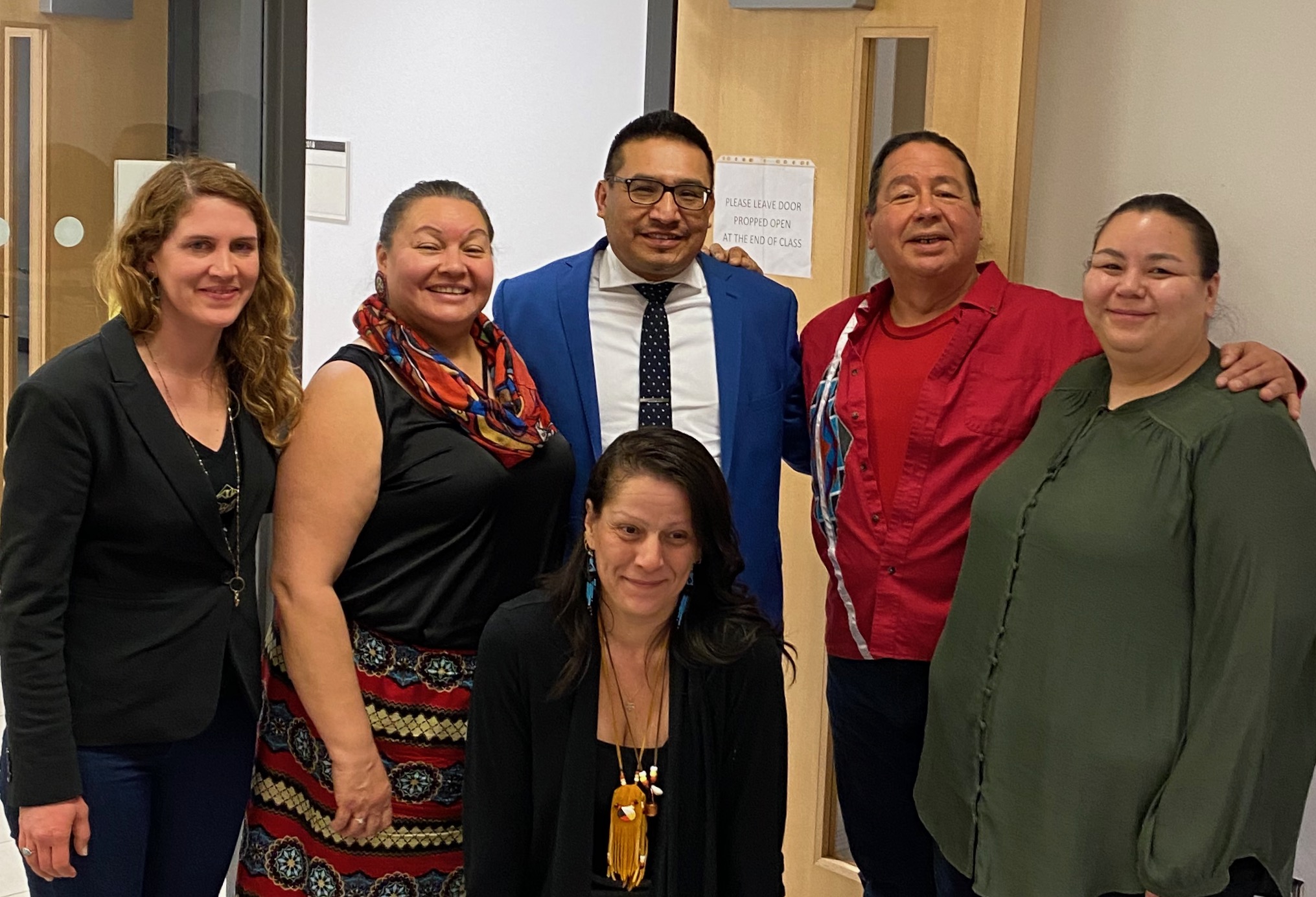
MPP Sol Mamakwa (centre) was invited by two students to their Ontario classroom as part of a climate change education assignment. "The students also facilitated a water ceremony. It was a powerful experience that speaks to the importance of including inquiry and student choice in course designs," Dr. Field says.
In addition to her work in Canada, Dr. Field was selected by the United Nations Educational, Scientific, and Cultural Organization (UNESCO) as one of six global scholars to create a curriculum framework for climate change education. "UNESCO's goal of having 90 per cent of countries around the world adopt and implement a climate curriculum by 2030 means that we need to be bold and ambitious in ensuring that schools develop and implement policies and practices quickly."
Uppermost in Dr. Field's mind is the climate mantra "Every fraction of a degree matters." It motivates her to continue her work of helping "students understand that it's possible to have a more stable and just future if we reduce greenhouse gas emissions and plan appropriately."
This vital research project is funded by the Environment and Climate Change Canada, Lakehead University, and University of Toronto OISE: Ontario Institute for Studies in Education. ACCE-TE is also thankful to educators and graduate students that work to keep programs going including Dr. Marie Tremblay, Dr. Maria Vamvalis, Kahsenniyohstha Lauren Williams, Sarah Urquhart, Felicia Mikrogianakis, Caitlin Hastings, and Daniel Paradis, and many educational and community collaborators.