
Lakehead Orillia

Orillia Campus Expands Athletics With Introduction of Varsity Outdoor Soccer Program
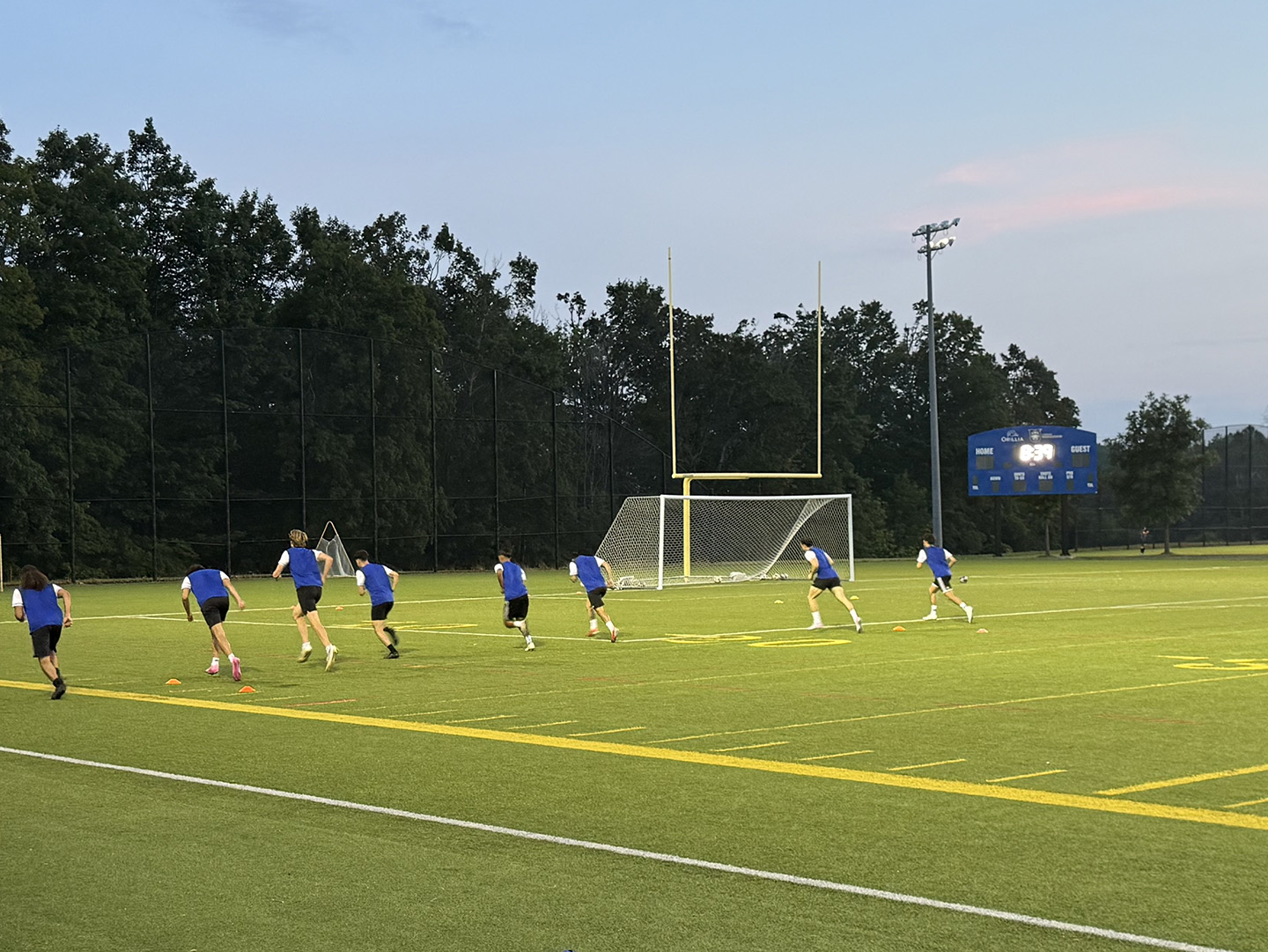
Student-athletes practice under the lights of the artificial turf field at the West Orillia Sports Complex.


Student-athletes practice under the lights of the artificial turf field at the West Orillia Sports Complex. The field will host home matches for Lakehead's men's and women's outdoor varsity soccer teams.


Orillia, Ont. – 
Varsity outdoor soccer has been added to the growing athletics lineup at Lakehead University’s Orillia Campus, providing new opportunities for student-athletes to engage in competitive-level sport.

Led by head coaches Briesk Kouji (men) and Brodie Brown (women), the Orillia Thunderwolves men’s and women’s outdoor soccer programs will kick off their first season in the Ontario Colleges Athletics Association (OCAA) on September 5. The Orillia Thunderwolves also compete in the OCAA in indoor soccer.

“It is a great step forward for Lakehead Orillia and the Orillia Thunderwolves varsity sport program,” said Dr. Chris Glover, Associate Vice-President, Administration. “We are excited to expand and enhance the student experience and our athletic program offerings with the addition of men’s and women’s varsity outdoor soccer. We look forward to cheering on our teams in their first season.”

Through a partnership with the City of Orillia, the West Orillia Sports Complex on University Ave. will host home matches and serve as the team's training facility. The addition of a brand-new scoreboard at the southwest end of the field only enhances the experience for student-athletes, coaches, and supporters.

“Access to the City’s facilities gives our student-athletes the space and support they need to train while strengthening our connection to the community,” explained Dr. Glover.

“Orillia is thrilled to support Lakehead University as it launches its new varsity men’s and women’s soccer teams,” said Orillia Mayor Don McIsaac. “With the City’s brand-new scoreboard, we’re excited to welcome these teams to their new home at the West Orillia Sports Complex. We look forward to seeing these young athletes thrive and create lasting memories during their time in Orillia and at Lakehead University.”

The first official home matches are scheduled for Sunday, Sept. 7, at the West Orillia Sports Complex.

Cheer on the Orillia Thunderwolves this season!

Lakehead University welcomes spectators and fans to cheer on our student-athletes at the West Orillia Sports Complex! The full list of Orillia Thunderwolves outdoor soccer home games can be found at orilliathunderwolves.ca.
 

Lakehead Orillia Rallied Together When the 2025 Ice Storm Hit

A catastrophic ice storm descended upon central Ontario during the final week of classes at Lakehead—forcing the City of Orillia, the County of Simcoe, and surrounding municipalities to declare a state of emergency. What happened next was a testament to the resilience and ingenuity of Lakehead students, faculty, and staff.

"One morning, I drove past closed roads covered with trees and power lines looking for gas for my home generator," Dr. Chris Glover says. "The devastation was shocking, and so was the eerie quietness. It was like a scene from an apocalyptic show like The Walking Dead." Video Courtesy of Shinomedia

"Everything was fine on March 28 and then things started to fall apart," says Lakehead Orillia Principal Dr. Linda Rodenburg. "I activated our emergency response group as soon as I realized that it would present a serious academic challenge as well as a major weather event. Our approach was to communicate as much as possible and recognize that people were experiencing diverse situations."

Freezing rain rapidly encrusted trees with ice, causing them to crack and fall on power lines. Electricity was cut to the Orillia campus, homes, schools, and businesses across the region—leaving people without heat, power, and water.

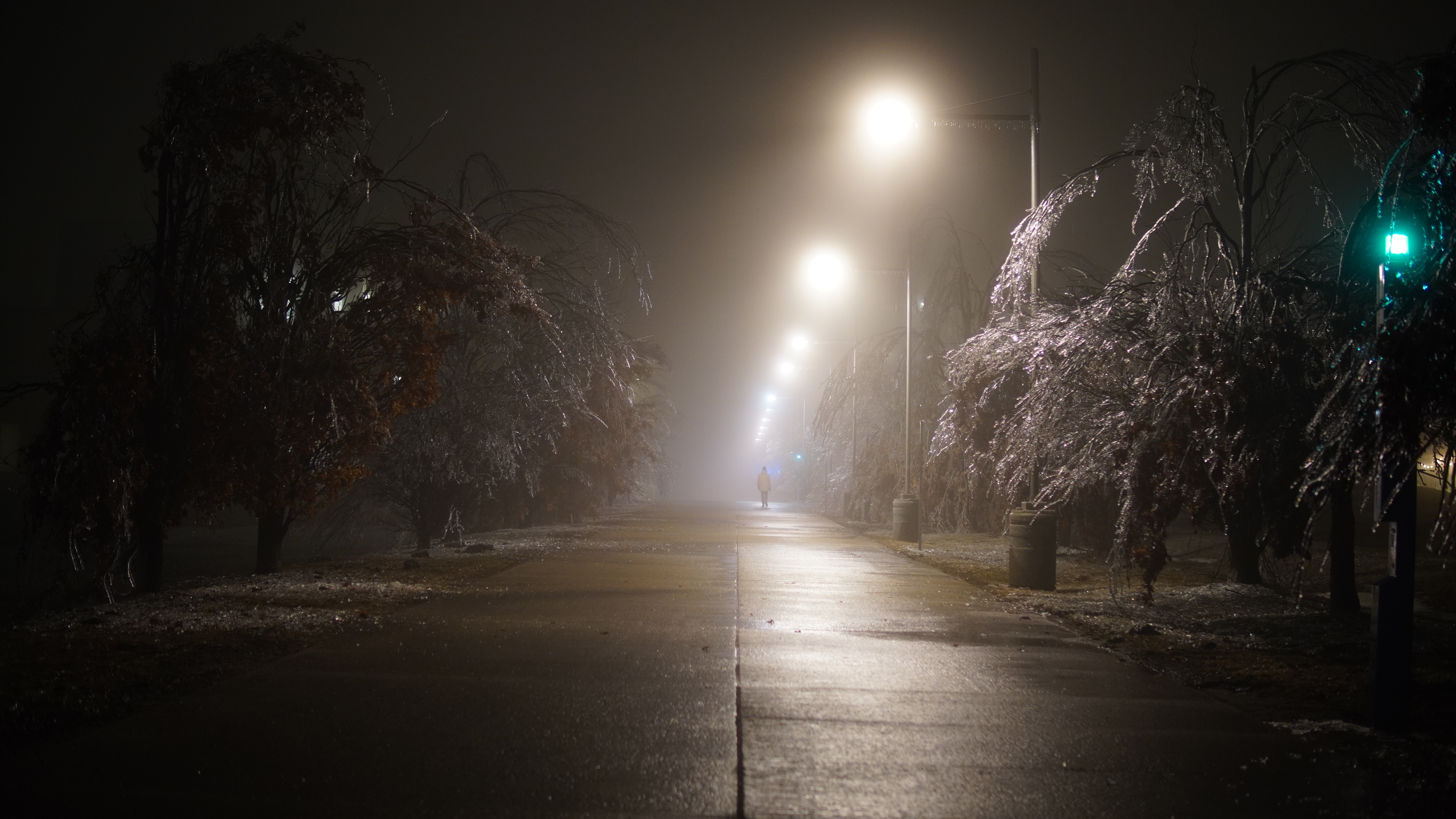
Lakehead Orillia campus at night during the 2025 ice storm

"Our priority was keeping students safe, secure, and fed," Dr. Chris Glover says. Orillia Security Services manager T-Bird Prisciak was one of many who stepped up, even finding time to bring a laptop and Tim Horton's coffee and doughnuts to a faculty member trapped in their home by a downed power line in their yard. Photo Credit: Shinomedia

"There were a lot of hardships at once," Dr. Rodenburg says, whose own home lost power. "Damage to property and cars, and food going bad at a time of high grocery costs. The sewage plant also caught fire."

Despite the unfolding crisis, Dr. Rodenburg says that "people immediately came together to help each other. I knew that our community would be amazing, and they were."

"There was a chat group where people offered assistance and things like hot showers," adds Orillia Associate Vice-President Dr. Chris Glover. "Faculty and staff were doing wellness checks to see if people were okay, and LUSU students kept the campus food bank open."

Dr. Glover's greatest concern was for students in residence, even though he was contending with his house being flooded.

"How do we feed students when we can't use the kitchen to cook hot meals?" he says. "The campus had generators that kept refrigerators and freezers running, but not generators to operate the hood fans necessary for cooking on our gas stoves."

His worry was soon eased by Lakehead's food-services provider, who quickly began serving cold breakfasts and lunches. "Dana Hospitality and our cafeteria staff went above and beyond," Dr. Rodenburg says.

And without Lakehead's stellar security and residence life teams, the situation would have been much worse.

"Security immediately rushed to Home Depot and bought charging cords and devices for their office in Simcoe Hall, which has a back-up power system. The staff on campus worked together to ensure that students could power their electronic and medical devices and stay in touch with loved ones," Dr. Glover says.

Ice-encrusted trees on the Lakehead Orillia campus

"I want to thank our Thunder Bay team members who checked in with the Orillia team, offered support, and helped with their workloads," Dr. Rodenburg says. Photo Credit: Shinomedia

Fortunately, power was restored to campus after 32 hours, turning it into a haven where faculty, staff, and their families could have a meal and warm up. "The morning the power came back on at my house, I baked 50 cookies and handed them out to people on campus, and I got 50 different stories about the storm," Dr. Rodenburg says.

The campus was a stark contrast to the city and region itself, much of which remained without power for 13 days. "As Simcoe County continues to clean up after the storm," Dr. Rodenburg says, "I want to thank everyone for responding with grace, patience, and gratitude." Dr. Glover is in total agreement. "I'm incredibly thankful to be part of the Lakehead Orillia community."

The video and photos in this story were taken by Shinowa Okumura, a fourth-year Honours Bachelor of Arts and Science in Media Studies student who is graduating this June.

Outstanding Lakehead Students: Meet the Canadian Hearing Services National Scholarship Recipients

Lakehead students Rylind Davis and Seth Mandel have set the bar high when it comes to academic excellence and their determination to be changemakers.

They are among only 30 students from across Canada chosen to receive 2024-25 Canadian Hearing Services National Scholarships. "The scholarship is an immense honour that I hold close to my heart," Seth says. "It has had a significant impact on my ability to focus on my studies because it has alleviated some of the financial burdens that come with being in law school." The scholarship has made Rylind's educational journey easier, too. "I've been able to use the scholarship for expenses like computers, commuting costs, and books. Being a hybrid student and a student in the age of technology, I needed to have a good, reliable computer to complete coursework with."

Seth was Born a Fighter

Seth Mandel seated at an outdoor restaurant table in the eveningA premature baby who weighed just one pound and 10 ounces, Seth was given a less than a 1% chance of survival. "Growing up, I faced many challenges, including ADHD and severe hearing impairment," says the Toronto native and first-year student at Lakehead's Bora Laskin Faculty of Law in Thunder Bay. "These obstacles led others to doubt my ability to succeed, but I've always been determined to prove the naysayers wrong."
"I have a deep love for sports, particularly the Toronto Maple Leafs," Seth says. "I'm also blessed with two younger siblings, supportive parents, and my six-year-old dog, Mishka, who all play a huge role in my life."

Today, the former amateur athlete is channeling his ambition into becoming a lawyer. "I realized that a career in law would not only allow me to make a meaningful impact on society but also stand up for those who need a voice—something I'm passionate about.

At this point, I'm still deciding between criminal defence and sports law. I feel drawn to criminal defence because of my commitment to defending marginalized communities. On the other hand, my love for sports and the influence of movies like Jerry Maguire have sparked an interest in becoming a sports agent or corporate lawyer."

Seth says that Lakehead is helping him achieve his bold ambitions. "My experience has been incredibly positive. The ability to connect personally with professors and peers has made Bora Laskin a great fit for me, both academically and socially."

Rylind is a Mentor and Activist

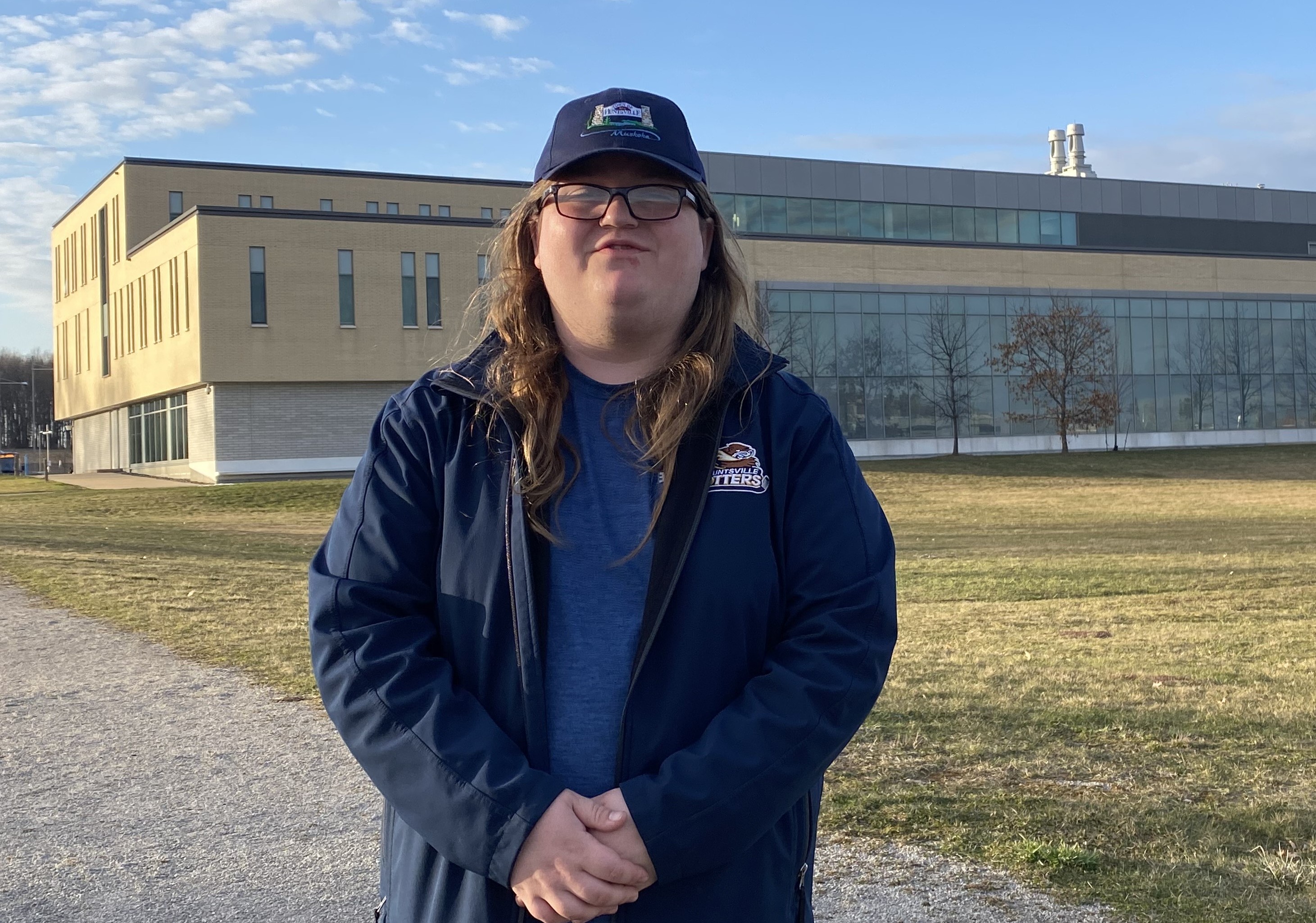
Rylind Davis wearing a baseball cap stands on a path on the Lakehead Orillia campus"I was diagnosed with hearing loss when I was 13 and have used hearing aids ever since," Rylind says. The second-year history and political science student explains that "the Orillia campus being about an hour from my home in Huntsville has been beneficial for creating connections with friends and profs and the small class sizes are great."

Rylind believes "it's important for young people to be involved with politics because politics affects all of us in our everyday lives and our generation that must deal with the long-term effects of political decisions made today."

Despite his young age, Rylind is already a keen advocate for his fellow community members. In particular, he's an outspoken member of the Town of Huntsville's Accessibility Advisory Committee. "Seventy per cent of disabilities are invisible, and when it comes to advising the town council, those with invisible disabilities must have their voices heard," he says.

Rylind is considering becoming a high school teacher because it would give him the opportunity to help students "who may not understand a concept the first time it's taught, but who have a light-bulb moment when it's explained in a different way."

Teaching youth in conflict with the law is another career option he's mulling over. "Two of my very good friends spent time in Ontario youth detention centres and they didn't receive the same quality of education I did. Although kids in detention may have made serious mistakes, these mistakes shouldn't hold them back for the rest of their lives."

Rylind also wants to make it clear that "having a disability or hearing loss does not make students stupid, it just means that we need different tools and resources in order to be successful."

Congratulations Seth and Rylind on your Canadian Hearing Services National Scholarships!

Canadian Hearing Services is the country's leading provider of professional programs, services, and products that enable Deaf and hard of hearing Canadians to overcome barriers to participation in society.

Research in Action: Uncovering the importance of human capital

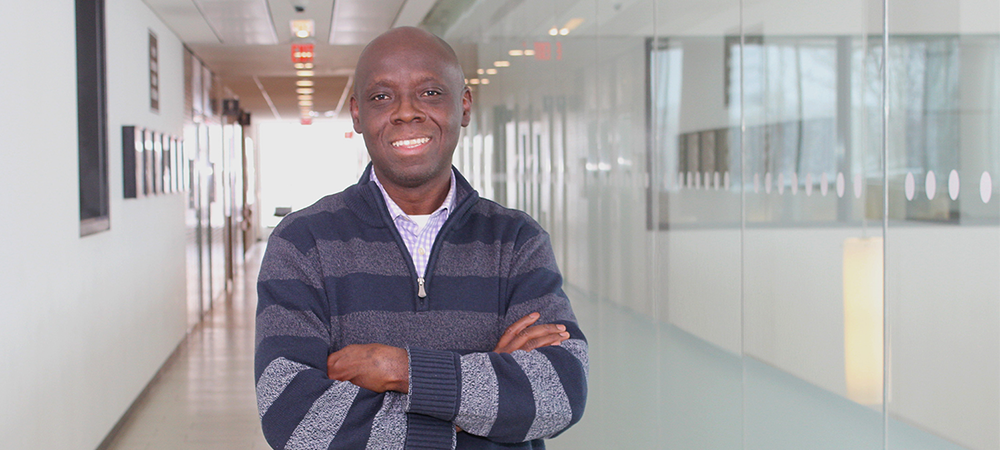
Before he became a university professor and author, Dr. Kunle Akingbola had a successful career as a Human Resources (HR) professional. He was the HR manager for the Canadian Red Cross in Toronto while working on the second of his three Master’s degrees. As he grappled with choosing a thesis topic, his research advisor made a suggestion that would change the course of Akingbola’s work and his life.

At the time, the Red Cross had just taken over managing a homeless shelter over the winter for the City of Toronto, which was downsizing services to the non-profit sector. On top of their regular programs, Red Cross employees had to create and staff a completely new program that they would give up in six months time, only to bring back another six months after that.

Akingbola took his advisor’s advice and used the Red Cross case study as the basis for his Master’s thesis on non-profit HR management. That line of study eventually led to his Ph.D. dissertation, which examined the entire strategy of non-profit organizations across Canada and the impact of government funding and the environment.

Akingbola’s growing expertise led to part-time university teaching. He eventually left his HR career to become a full-time professor. Today he is Associate Professor of Human Resource Management and Organizational Behaviour in the Faculty of Business Administration at Lakehead University’s Orillia campus.

With numerous publications including books, chapters in edited books, and articles in leading journals, research continues to be a large part of Akingbola’s work, which looks at ways to optimize the effectiveness of non-profit organizations while increasing employee satisfaction and improving outcomes for the communities they serve. He encourages his students to get research experience by helping him do surveys and data sorting.

“Prior to my study, no one had ever looked at HR management in non-profit organizations, says Akingbola. “There had been research on volunteers, but not employees of non-profit organizations that make up a major part of the Canadian social sector and account for about nine per cent of Canada’s Gross Domestic Product (GDP).”

His vast personal experience in HR in non-profit and healthcare sectors combined with his extensive ground-breaking research give Akingbola rare insight and expertise into social purpose enterprises. He understands the fine line organizations are forced to walk to secure the funding that is essential to support their services. It’s especially frustrating in the face of what Akingbola calls “mission drift.”

“How do you manage people who joined your organization because they believe in your mission, but now you have to go in a different direction because that’s where the funding is dictating you go?” says Akingbola.

One thing he is certain of is the importance of the human component in non-profit activities.

“The nature of service is emotional and it is human based,” says Akingbola. “You can install an ATM on Jarvis Street in Toronto that gives out blankets and coffee to the homeless on a cold winter’s night. But it can’t dispense compassion. In that regard you can’t replace human capital.”

Dr. Kunle Akingbola is the lead author of the book "Change Management in Nonprofit Organizations: Theory and Practice" (Palgrave Macmillan, 2019) and the author of "Managing Human Resources for Nonprofits" (Routledge, 2015).

A male professor stands with his arms crossed in a hallway at Lakehead University

Research in Action: Making mathematics more meaningful through culturally responsive education

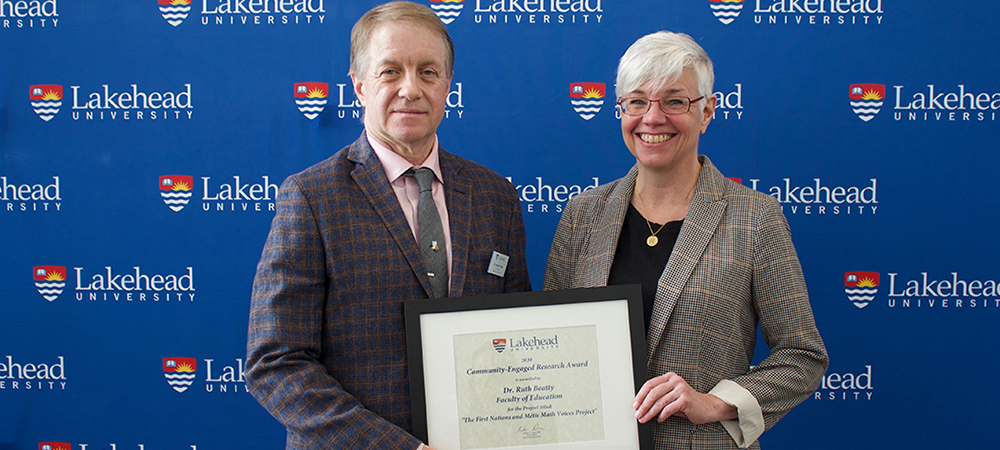
Women smiling wearing pink frame glasses and a blue flowered shirtMath is not a four-letter word. But to those with rampant math phobia, it certainly feels like it. Dr. Ruth Beatty, Associate Professor in the Faculty of Education at Lakehead University’s Orillia campus often sees students who actively dislike or even fear math. To her the problem isn’t with math itself, it’s with how the subject traditionally has been taught.
She started her research career looking at how children understand math and how educators can best teach the subject. She found that by looking beyond numbers and symbols and by taking a more holistic approach to what it means to think “mathematically” teachers could make math more accessible and fun.

Nine years ago, while teaching in the Master's program at Lakehead’s Thunder Bay campus, Beatty made a fascinating connection that has guided her work since then.

“Some of my students were First Nations educators or had been teaching in First Nation schools and we were talking about the disconnect between Indigenous culture and mathematics education in Ontario curriculum,” said Beatty. “I started visiting communities to learn more.”

While working with the Elders she realized that math is naturally embedded in Indigenous cultural practices like beadwork or birch-bark basket-, snowshoe- and moccasin-making.

“Take a beaded bracelet, for example,” says Beatty. “There's so much math in it. There is patterning and algebraic reasoning, there’s geometric transformations, proportional and spatial reasoning. There's number sense and numeration.”

With that cultural connection in mind, Beatty began a study in 2012 with the Algonquins of Pikwakanagan First Nation and teachers from the Renfrew County District School Board at a school with 20 per cent Indigenous students and 80 per cent non-Indigenous students. The project partnered community members, artists, Elders, and Knowledge Keepers with Indigenous and non-Indigenous educators to co-plan math instruction for Grade 3 and 6 students based on Algonquin loom beading. Cultural and language teachings were also integrated into the math unit.

The results were overwhelmingly positive. Indigenous students got to share their heritage and gain a sense of pride in their own knowledge systems that were valued on the same level as Western curriculum. Non-Indigenous students gained an appreciation of Indigenous culture. Most importantly, both groups learned exciting new math skills in a fun and engaging environment.

Perhaps the best endorsement of the math classes came from the students themselves. At the end of a session, with students working in their designs, making calculations to determine how many beads they would need, the teacher told them to wrap it up, math class was over. They looked up in surprise. Wait? What? Math? They had spent three hours absorbed in their learning with no idea they were, in fact, doing math.

Beatty and her team have collaborated with nine more communities around the province including The Chippewas of Rama First Nation and Simcoe County District School Board. Her work shows that math doesn’t belong to Eurocentric culture or scholars. Math is all around us and if taught in inventive, positive, and culturally responsive ways, no one needs to be afraid of it.

Faculty of Education professor Dr. Ruth Beatty and her school board partners received funding from the Social Sciences and Humanities Research Council of Canada, CanCode, and the Council of Ontario Directors of Education to carry out this important research.

Man presents black framed award to woman during award ceremony

Research in Action: Research helping to improve the efficiency of motors

As the negative climate effects of fossil fuel-based energy sources become more apparent, governments, scientists and industries around the globe are putting more resources into developing sustainable and environmentally friendly alternatives.

Locally, Dr. Mohammad Nasir Uddin is contributing to the effort with his research, funded through Natural Sciences and Engineering Research Council of Canada (NSERC) Discovery Grants, on optimizing the efficiency of wind energy and electric motor drives.

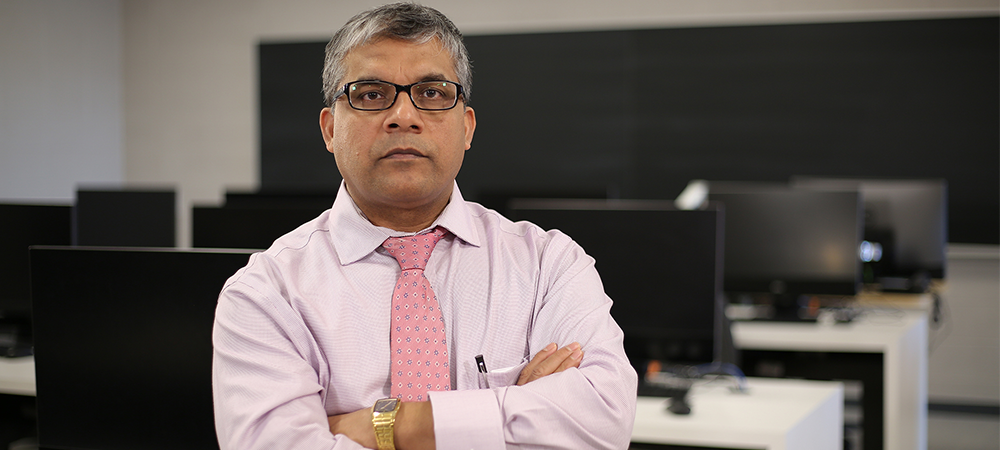
A professor in the Department of Electrical Engineering at Lakehead University, Uddin and his graduate students are working on wind energy conversion systems to achieve maximum power extraction from the wind and maximum output from wind generators. They do this by creating intelligent algorithms that mimic the human brain by telling the system what to do in any given circumstance.

To illustrate what an algorithm is, Uddin gives the example of a commuter on the way to work in Toronto. “As she heads down the highway, her brain has planned out the shortest and fastest route. That’s an algorithm. Then she hears on the radio that there is an accident up ahead. Her brain takes that new information and creates an alternate route. That’s another algorithm.”

Uddin’s team has also developed control algorithms that improve the power quality and dynamic performance of wind generators by responding appropriately and quickly to unpredictable abnormal variations of wind speeds or power system fault conditions. Thanks to this kind of research the creation of a cost effective and sustainable wind energy system can be achieved.

Another area of Uddin’s research involves loss minimization in electric motors. “Fifty-five per cent of the total electric energy produced in the world is consumed by electric motors,” says Uddin. “If we use the algorithms to force the motor to follow certain conditions so that voltage and current give the minimum loss, then we can improve the overall efficiency of the system and achieve the best motor performance.”

Uddin has shared his findings in 228 papers that have published or accepted in refereed journals and conferences including 53 papers in IEEE Transactions which is considered the top ranking journal in his area of research. In 2010 he won the Lakehead University’s Distinguished Researcher Award.

Uddin’s impact in the field of Electrical Engineering goes beyond his own research. After more than 25 years of teaching and research experience at various universities in Canada, the United States, Bangladesh, Japan and Malaysia he has mentored and inspired many students. They include 50 highly qualified engineers (nine Ph.D., 24 Master’s, 14 Research Associates and three Postdoctoral fellows) and 82 undergraduate students. Most have gone on to work for companies like General Motors, Mercedes Benz, Rockwell Automation, AMEC, Caterpillar and Schneider Electric where they continue to develop optimization algorithms that improve efficiencies in motor drives used in transportation, robotics, automotive and oil industries.

Dr. Mohammed Nasir Uddin is a professor in the Department of Electrical Engineering at Lakehead University; Coordinator of the Electrical Engineering program under the Lakehead-Georgian Partnership; and the Director of the Renewable Energy, Power Systems and Drive Research Lab located in Barrie.

A man stands facing the camera in a computer lab

Research in Action: Community-led study aims to reduce childhood stress, boost learning

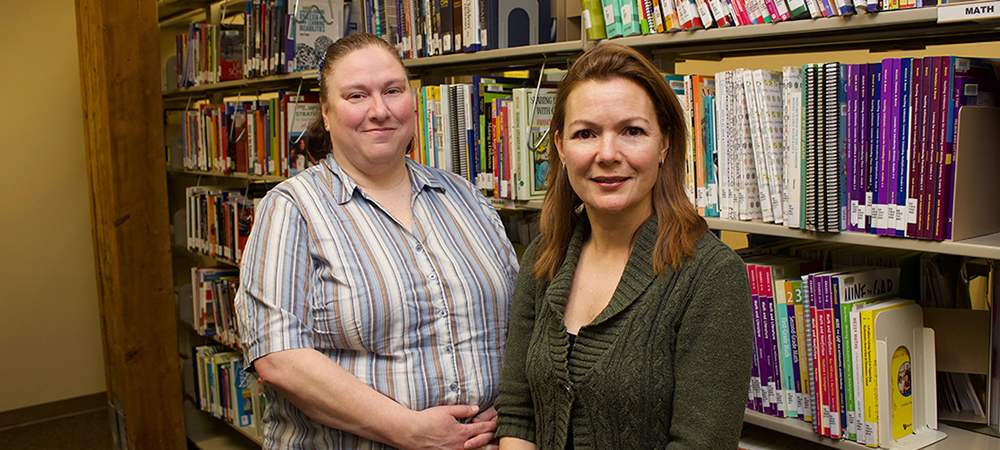
How do you come back to calm? This question is the powerful message driving a new community-based project by Lakehead University professors Drs. Sonia Mastrangelo and Meridith Lovell-Johnston.

Based in the Faculty of Education at the University’s Orillia campus, Mastrangelo and Lovell-Johnston use the concept of self-regulation to engage young children in learning and literacy. Over the next three years, they’re working in partnership with six First Nations community schools in northern Ontario, focusing specifically on self-regulation in kids Kindergarten-age to grade three.

“As the foundation of healthy social development, self-regulation can be learned and is vital to helping us become resilient and cope with the stressors of daily life,” says Mastrangelo, a specialist in child exceptionality and self-regulation. “When our coping mechanisms are derailed, so is our ability to learn new skills, like reading and writing.”

“We always stress that self-regulation in the classroom is as important for teachers as it is for students,” adds Lovell-Johnston, whose expertise spans literacy, language learning and teaching methods. “Offering local teacher workshops and professional development is a key way we’ll support the development of self-regulation and practices that foster literacy and learning.”

Through classroom observation, interviews, focus groups, sharing circles and storytelling, the project will explore how to identify and reduce sources of stress and provide different strategies that help kids return to calm. Anything from dimming lights, using lavender scents and offering safe spaces to regroup can all create stable, homeostatic classrooms says Mastrangelo, adding that what works for one child may not necessarily be effective for another.

While the current work is based in northern Ontario, Mastrangelo notes that the principles of self-regulation apply to any classroom, and any child. “It’s trial and error to find what works for each student, but they eventually learn to communicate and regulate their feelings independently, so that they can get back on track for learning.”

The children will also lend a hand in making videos, pictures and stories in English and their community language, Oji-Cree, that capture their experiences including “what makes them feel happy and safe and want to learn,” says Lovell-Johnston. At the end of the project, each child will have helped create their own e-book; a documentary-style film will also be produced and shared with the public and other education scholars.

Mastrangelo and Lovell-Johnston’s project launched in January of 2020 with the first of several planned spaghetti-dinner and information nights for parents, underscoring their community-led and partnership approach to setting research objectives and sharing knowledge.

“We work together to address challenges and offer supports in the places the communities themselves have told us they need it most,” says Mastrangelo. “This partnership work is essential to empower northern educators and communities to support their children with culturally relevant practices for lifelong learning, resiliency and achievement.”

Faculty of Education professors Drs. Mastrangelo and Lovell-Johnston work in partnership with the Kwayaciiwin Education Resource Centre in Northwestern Ontario community schools. Their three-year Partnership Development Grant is funded by the Social Sciences and Humanities Research Council.

Research in Action: Bringing new life to 17th century choral music

If you haven’t heard of Henry Aldrich, the famous 17th century composer, architect and Oxford dean, you’re likely not alone.

But Lakehead University music professor and Orillia campus principal Dr. Dean Jobin-Bevans wants to convince you to tune in.

“I was immediately drawn to his work as it’s the music I love to hear and perform myself,” says Jobin-Bevans, who came across Aldrich’s archived manuscripts in 2013 during a sabbatical researching in the Christ Church Library, Oxford. “There is also a modern appeal to his music – it’s still accessible and relevant all these centuries later.”

Aldrich’s music, most of which are anthems composed for the cathedral at Christ Church, was written for both unaccompanied choirs or those singing with an organ accompaniment. Typically thought of as an English style of church music, choral anthems have a long history of performance in the Anglican tradition and are almost exclusively sung in English.

Henry Aldrich collected, transcribed and composed as many as 8,000 scores of choral music for cathedral performances during his career at the University of Oxford’s Christ Church college, as a way to inspire his own creative work and religious musical expression. A prolific 17th century English writer, theologian, philosopher, composer, and architect, he also served as Dean of Christ Church and as the University of Oxford’s Vice-Chancellor.

Intrigued by Aldrich’s unique approach to choral music, Jobin-Bevans set out to transcribe select pieces from the 300-year old collection, editing and creating musical scores for contemporary church choirs, instrumentalists, and music scholars. Working his way through original leather-bound, handwritten manuscripts, Jobin-Bevans spent six years editing and digitizing 20 different scores, updating elements such as time signatures and adding musical bars and vocal clefs.

A CD of the new editions was released in November of 2019 and some of Aldrich’s original manuscripts are also captured on the project website. Jobin-Bevans says that hearing the music performed for the first time by the Cathedral Singers of Christ Church, who also recorded the music for the CD, was hugely rewarding and speaks to the lasting quality of Aldrich’s work.

Viewing history through the late composer’s musical lens is another takeaway of the project, says Jobin-Bevans. “Aldrich grew up, was educated and appointed Dean during the period of the English Restoration, a time of great upheaval, politically and socially. His work reflects that history and tells us a lot about what his creative mind was thinking concerning the role and function of Restoration church music and liturgy.”

Jobin-Bevans also agrees a parallel can be drawn between himself and Aldrich that goes beyond the music.

“He was passionate about connecting architecture, logic, and math through music to both teach and inspire,” reflects Jobin-Bevans. “His work has been an inspiration to me and has kept me engaged in new ways to teach, lead as a principal, and continue building this lasting digital archive of his legacy.”

Dr. Dean Jobin-Bevans’ research is a partnership with the Christ Church Library, Oxford. Samples of the music are available at:https://www.chch.ox.ac.uk/library-and-archives/henry-aldrich-project. The full album, Henry Aldrich: Sacred Choral Music, can be purchased on iTunes or borrowed from the NAXOS Music Library through your local library.

Discover Lakehead University at Orillia Campus Fall Open House

November 5, 2019 – Orillia, ON

Future students, their family and friends, are invited to visit and experience Lakehead University first-hand at our Fall Open House on Saturday, November 9. See for yourself why Lakehead is among Canada's Top 10 undergraduate universities according to Maclean's 2020 University Rankings.

Drop by the Lakehead Orillia Campus between 10 a.m. and 2 p.m. this Saturday to discover our wide range of programs, experiential learning opportunities, and what it’s like to be a Lakehead student. Register today at mylakehead.ca/openhouse.

Why come to Fall Open House? Here are the things that you’ll be able to do:

  • Take a student-led tour of campus, including classrooms, labs and residence
  • Meet future professors, staff and current students
  • Participate in interactive presentations
  • Learn about financial aid, scholarships and awards
  • Discover the amenities Lakehead has to offer – on campus and within the community

Attend for your chance to win a Freshman Prize Pack valued at $2,000 containing everything a student needs to make their first-year epic!

Can’t make it to Fall Open House? Book a campus tour at a time that works for you at www.lakeheadu.ca/tours.

– 30 –

Media: For more information or interviews, please contact Jaclyn Bucik, Media, Communications and Marketing Associate, at 705-330-4008 ext. 2014 or mediarelations@lakeheadu.ca.

Lakehead University is a fully comprehensive university with approximately 8,500 students and over 2,000 faculty and staff at two campuses in Orillia and Thunder Bay, Ontario. Lakehead has 10 faculties, including Business Administration, Education, Engineering, Graduate Studies, Health & Behavioural Sciences, Law, Natural Resources Management, the Northern Ontario School of Medicine, Science & Environmental Studies, and Social Sciences & Humanities. Maclean’s 2020 University Rankings, once again, included Lakehead University among Canada’s Top 10 primarily undergraduate universities, and in 2018, Research Infosource named Lakehead Research University of the Year in its category for the fourth consecutive year. Visit www.lakeheadu.ca.

A future student speaks to Lakehead University faculty member during open house

Lakehead University invites alumni to “come home” during Homecoming Week

October 9, 2019 – Orillia, Ont.

Lakehead University is excited to welcome alumni “home” to the Orillia Campus during the biggest weekend of the year.

Lakehead Orillia’s annual Homecoming celebration takes place from Friday, Oct. 18 to Saturday, Oct. 19, with activities taking place on and off campus. From sporting events to quiz night and the Principal’s brunch, Homecoming offers something for everyone.

“Lakehead has more than 63,000 alum around the globe,” said Debra Woods, President of the Alumni Association of Lakehead University. “During Homecoming we look forward to seeing alumni and celebrating their achievements since graduating from Lakehead.”

A full list of Homecoming Weekend events can be found below or on our website at lakeheadu.ca/homecoming.  The community is welcome to attend, but are encouraged to register in advance.

Friday, Oct. 18

  • Quiz Night at Flying Monkey Brewery, 8 p.m., Flying Monkeys Craft Brewery

 Saturday, Oct. 19

  • Principal’s Homecoming Brunch, 11 a.m., Lakehead Orillia cafeteria
  • Wolfie’s 9-Hole Golf Tournament, 1:30 p.m., Hawk Ridge Golf Club
  • Alumni vs. Student Hockey Game and Tailgate, 5:30 p.m., Rotary Place

 – 30 –


Media: For further information or to arrange an interview, contact Jaclyn Bucik, Media, Communications and Marketing Associate, 705-330-4008 ext. 2014, or jaclyn.bucik@lakeheadu.ca.

Lakehead University is a fully comprehensive university with approximately 8,500 students and over 2,000 faculty and staff at two campuses in Orillia and Thunder Bay, Ontario. Lakehead has 10 faculties, including Business Administration, Education, Engineering, Graduate Studies, Health & Behavioural Sciences, Law, Natural Resources Management, the Northern Ontario School of Medicine, Science & Environmental Studies, and Social Sciences & Humanities. Maclean’s 2020 University Rankings, once again, included Lakehead University among Canada’s Top 10 primarily undergraduate universities, and in 2018, Research Infosource named Lakehead Research University of the Year in its category for the fourth consecutive year. Visit www.lakeheadu.ca.

Join us for Homecoming Weekend at the Lakehead Orillia campus

Pages

Subscribe to Lakehead Orillia