



Local Farmers Count on Agricultural Expert Dr. Tarlok Singh Sahota
This Canadian Society of Agronomy Award Winner is Eager to Help
When northwestern Ontario farmers need advice, they turn to Dr. Tarlok Singh Sahota.
He's the director of the Lakehead University Agricultural Research Station (LUARS).
"I search throughout Canada for ideas to help local farmers and agribusinesses flourish," he says. "Rural communities have really rallied behind us."
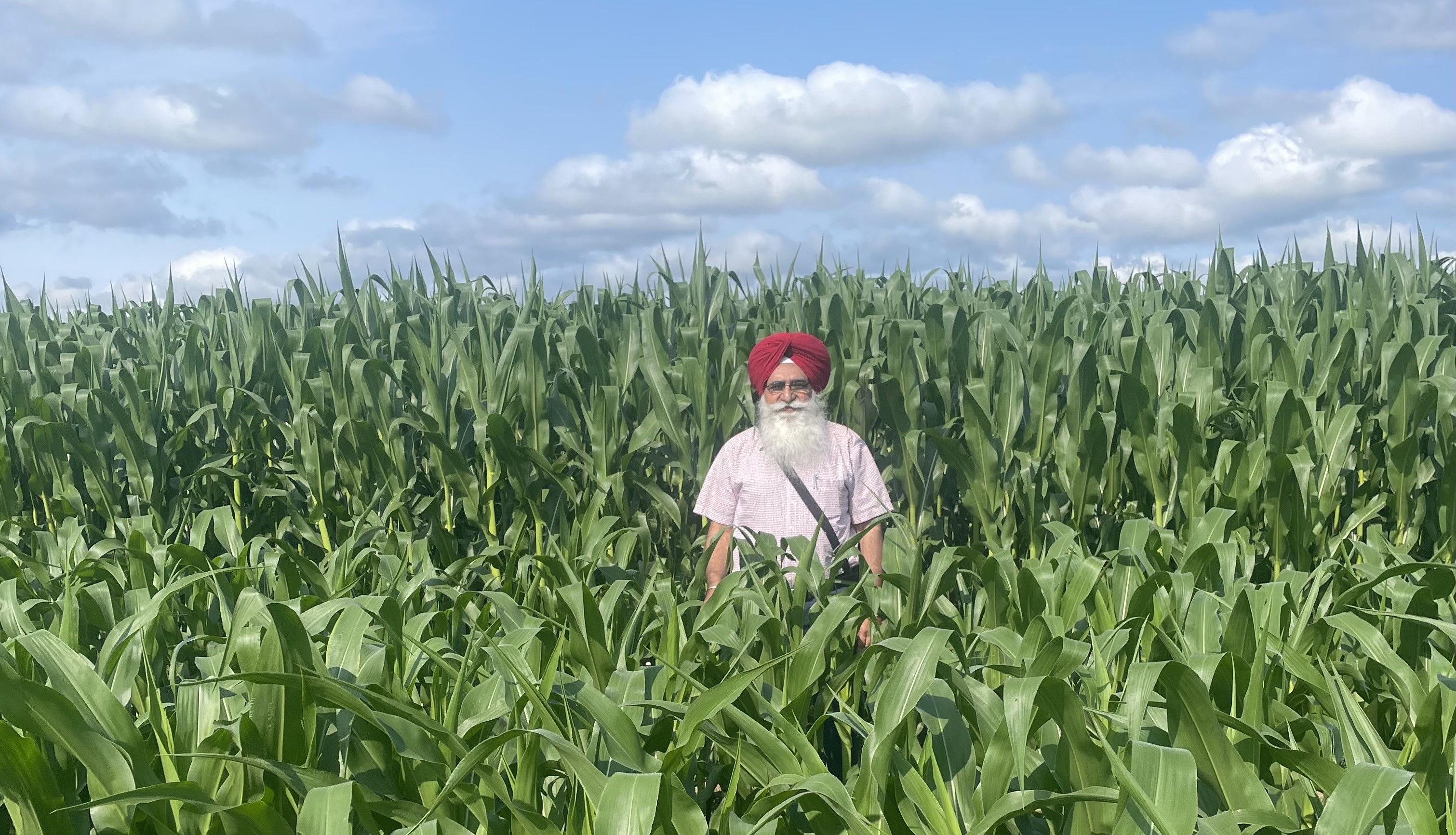
Above, Dr. Singh Sahota demonstrates how plastic mulch can increase the yield of corn crops. The shorter corn plants in front of him were grown without plastic mulch while the taller plants behind him were grown with plastic mulch.
Dr. Singh Sahota has been with LUARS since 2004.
It's there, on the outskirts of Thunder Bay surrounded by the Nor'wester Mountains, that Dr. Singh Sahota conducts experiments and crop testing. He also takes the time to co-supervise graduate students in Lakehead's Faculty of Natural Resources Management and offers students experiential research opportunities.
If he's not at LUARS, he is likely to be out visiting farmers, assisting them with crop planning and troubleshooting.
A Farm Boy at Heart
Dr. Singh Sahota's love of agriculture has deep roots. Growing up, his family had a 10-acre farm in India's Punjab state.
"We grew corn, wheat, rice, sugar cane, cotton, and some foraging crops for cattle," he says.
"I did fieldwork after school, cultivating the fields with a pair of oxen. When I was in university, we got a tractor and I would go home on weekends to help my father and brothers with farm work."
Since then, Dr. Singh Sahota has garnered three university degrees and over 40 years of agricultural experience on four continents.
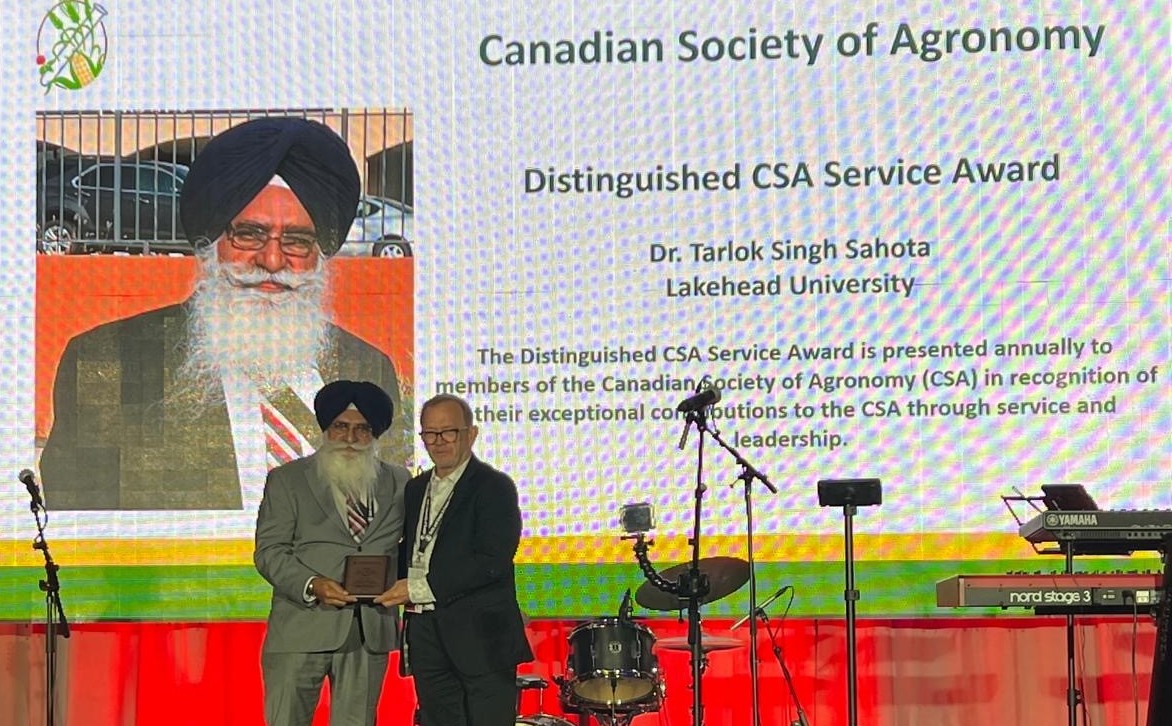
Dr. Singh Sahota at the 2026 Canadian Society of Agronomy award ceremony at the University of Guelph.
His achievements have earned him three awards from the Canadian Society of Agronomy (CSA).
He's the proud recipient of a 2018 CSA Fellow Award, a 2021 CSA Distinguished Agronomist Award, and on June 24, 2026, he received the inaugural Distinguished CSA Service Award.
The Distinguished CSA Service Award recognizes individuals who've demonstrated exceptional contributions to the CSA through dedicated service and leadership.
The North Faces Tough Agricultural Challenges
"Before I came to Thunder Bay, I knew the region had a short growing season because it's colder than other parts of Canada," Dr. Singh Sahota says.
Farmers also struggle with northwestern Ontario's shallow, rocky, and acidic soils.
That's why LUARS has two main focuses: improving fertilizer nutrient management and developing new high-yield disease-resistant crops varieties suited to the north.
"When I arrived, farmers were only growing foraging crops to feed their livestock," Dr. Singh Sahota says. "But I knew that by improving the soil fertility they could grow cash crops, too." Cash crops refers to crops that are planted with the intention of selling them after they've been harvested.
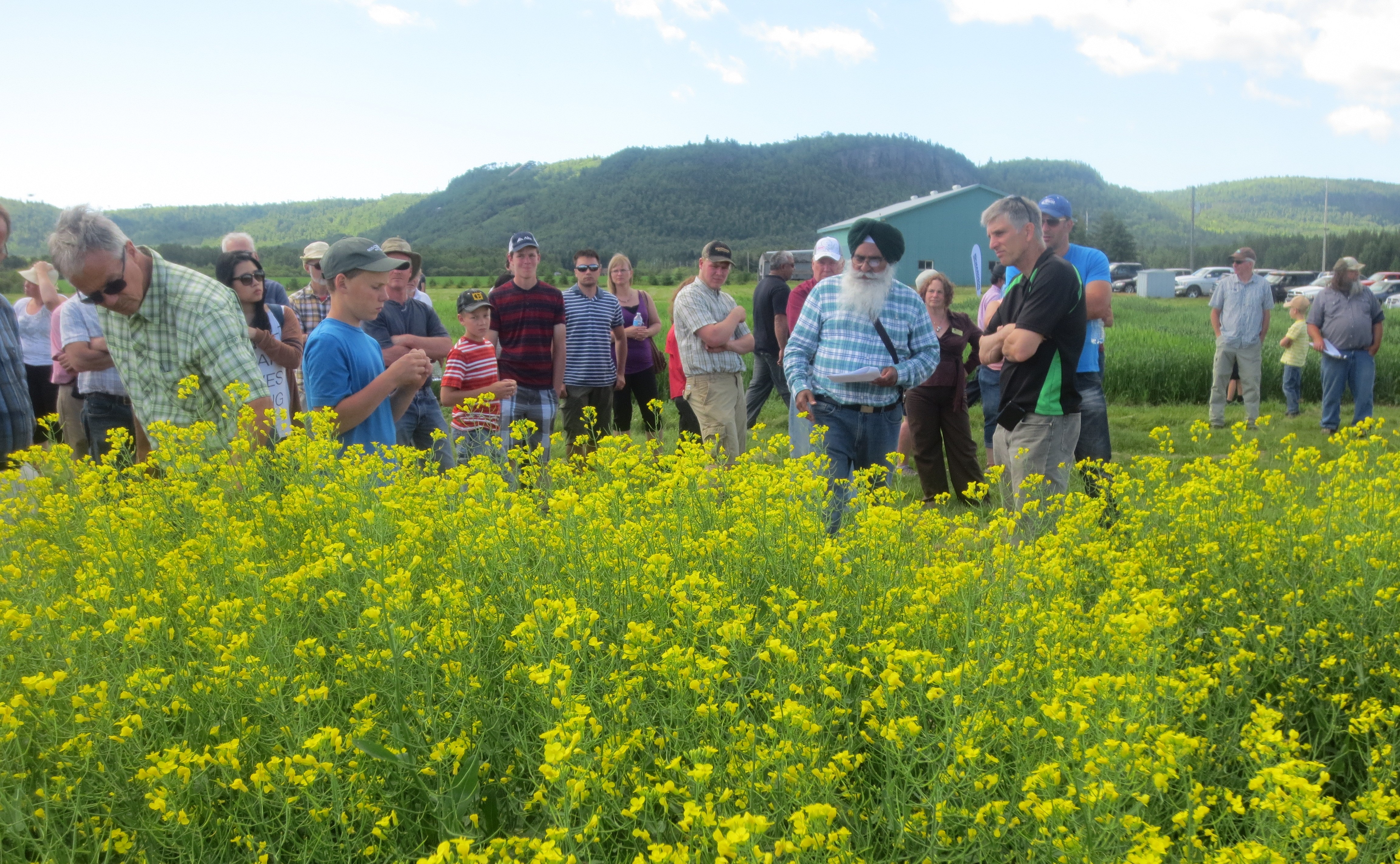
Dr. Singh Sahota has been responsible for many farming innovations in northwestern Ontario, such as encouraging disc harrowing in the fall and cultivation ploughing in the springtime. "Previously, farmers had been mouldboard ploughing in the fall," he explains. "By making this change, they were able to eliminate mouldboard ploughing in the fall and save 30-40% in fuel and time." Above, Dr. Singh Sahota gives farmers a tour of LUARS.
With Dr. Singh Sahota's guidance, local farmers have been successfully cultivating malting barley, winter wheat, winter rye, and canola among other cash crops.
"Winter wheat and winter rye are hardy crops that can be planted in September after the spring crops have been harvested. It's a way to create more income for farmers, and protect the soil," he adds.
Recently, Dr. Singh Sahota has been testing pink barley, black barley, and purple barley—varieties he chose because they don't have hulls and can be used as food for people.
If these varieties can adapt to northwestern Ontario's growing conditions, farmers will save time and money by eliminating dehulling from their harvesting process.
Healthy Soil Creates Healthy Crops
Nutrient deficiencies, which make crops unhealthy and more susceptible to disease, were a persistent problem that Dr. Singh Sahota has been able to address.
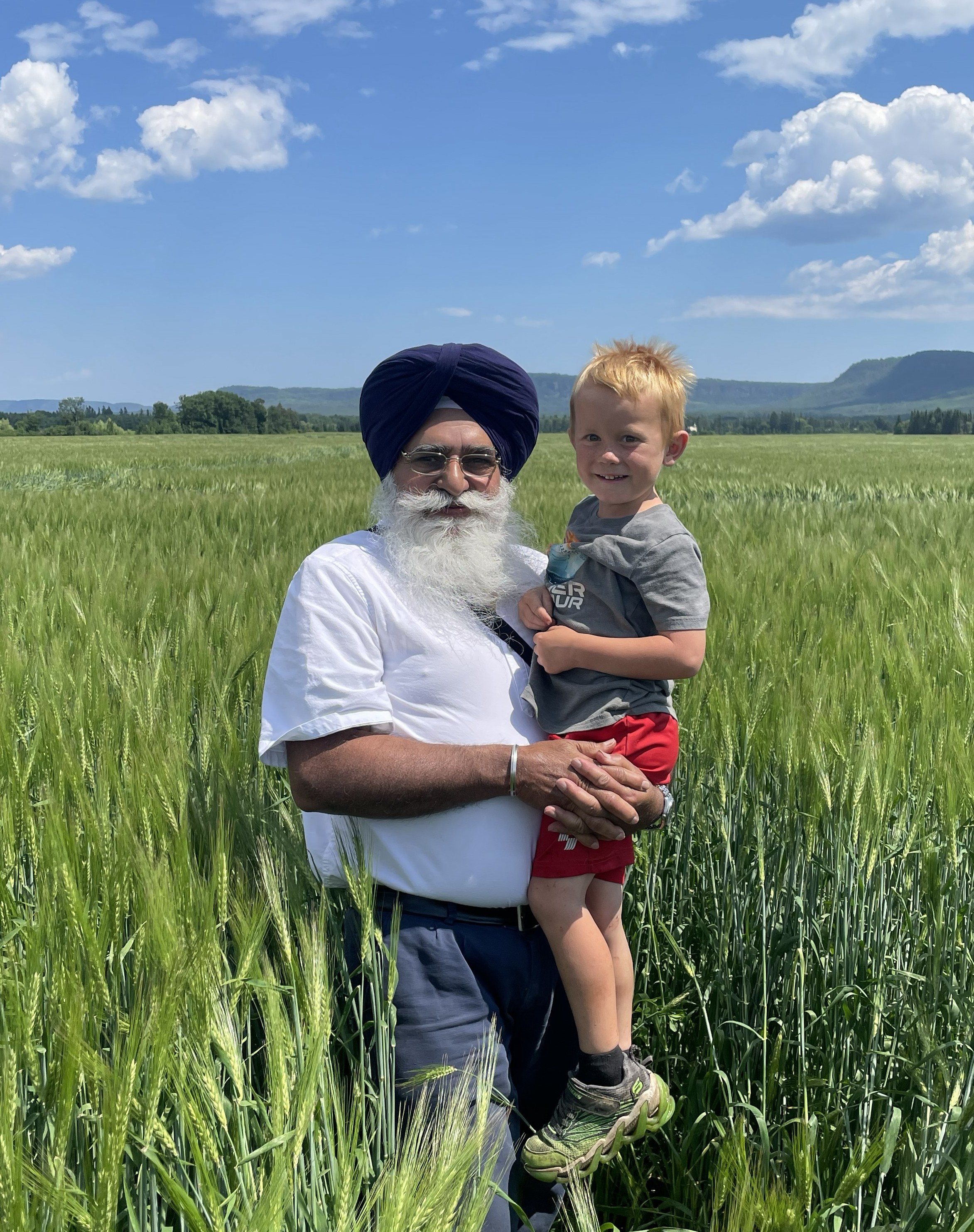 Dr. Singh Sahota convinced Richardson International, an agribusiness with grain elevators in Thunder Bay, to buy cash crops from local farmers. "I've found that western varieties of crops do better in Thunder Bay than southern Ontario varieties," he says. Above, he and a future farmer survey a barley crop at a local farm.
At his urging, farmers have switched to using an ammonium sulfate fertilizer to correct sulphur deficiencies, and they've improved their crop yields, especially for canola, by using a three-fertilizer blend developed by Dr. Singh Sahota.
They're also supplying their soil with micronutrients by spreading their fields with wood ash—an industrial waste product farmers acquire from Resolute Forest products.
"Our farmers now grow more than half a dozen crops, compared to southern Ontario where they usually grow just three crops: soybeans, corn, and winter wheat," Dr. Singh Sahota says.
The latest crop he's excited to be testing is called winter camelina. It's an oil-seed plant that can be used as sustainable jet-engine fuel, with the added benefit of protecting the soil in winter.
"My philosophy is that unless we try new crops, we'll never know if they can thrive here."
LUARS is funded in part by the Governments of Canada and Ontario under the Sustainable Canadian Agricultural Partnership (Sustainable CAP), a federal-provincial-territorial initiative administered by Agricultural Research and Innovation Ontario.
Watch Seeds of the North, a short documentary about the Lakehead University Agricultural Research Station.