
Lakehead University Agricultural Research Station

From John Deere Tractors to High-Tech Drones

Overview:

  • Dr. Muditha Heenkenda is advancing agricultural sustainability in northwestern Ontario by mitigating climate unpredictability, reducing labour-related costs, and increasing crop resilience.
  • The Lakehead University Agricultural Research Station (LUARS) promotes sustainable northern agriculture by applying precision-farming techniques and introducing resilient crop varieties.
  • Dr. Heenkenda is using drone images to develop site-specific fertilization plans and predict the amount of yield for winter wheat crops.
  • A 3D-robotic camera system is being designed to help local farmers monitor their fields more efficiently and inexpensively.

A drone buzzes over a wheatfield on a sunny summer day in northwestern Ontario. It's not on military manoeuvres or taking part in a recreational flying competition.

It's gathering information so that farmers can better tend their crops.

Dr. Muditha Heenkenda stands in a field holding a clipboard at the Lakehead University Agricultural Research Station

The drone is piloted by geo-spatial scientist Dr. Muditha Heenkenda. Once a week she sends the drone on flyover missions over an experimental plot on the Lakehead University Agricultural Research Station (LUARS).

This region's short growing season and cold temperatures, combined with unpredictable weather caused by climate change, means that good crop management is imperative.

Dr. Muditha Heenkenda is a LUARS researcher and Lakehead Geography & the Environment associate professor in the Faculty of Science and Environmental Studies.

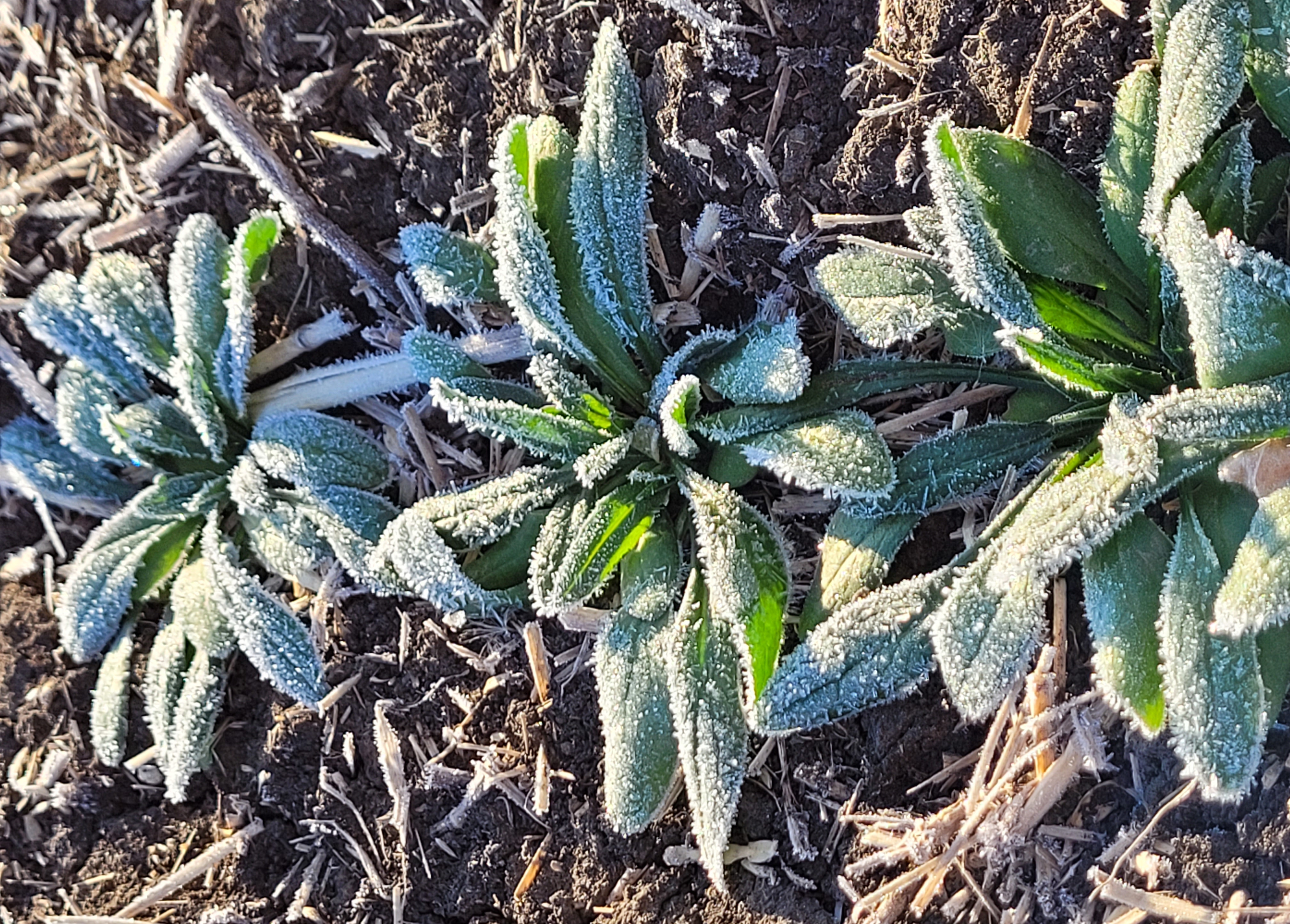
"I'm capturing video footage to see how many plants emerge after a frost and to track their growth," Dr. Heenkenda says. The goal is to boost northwestern Ontario's food production.

The technology Dr. Heenkenda is deploying reflects the growing sophistication of precision agriculture.

From Sky to Soil: Giving Farmers a Vital Edge

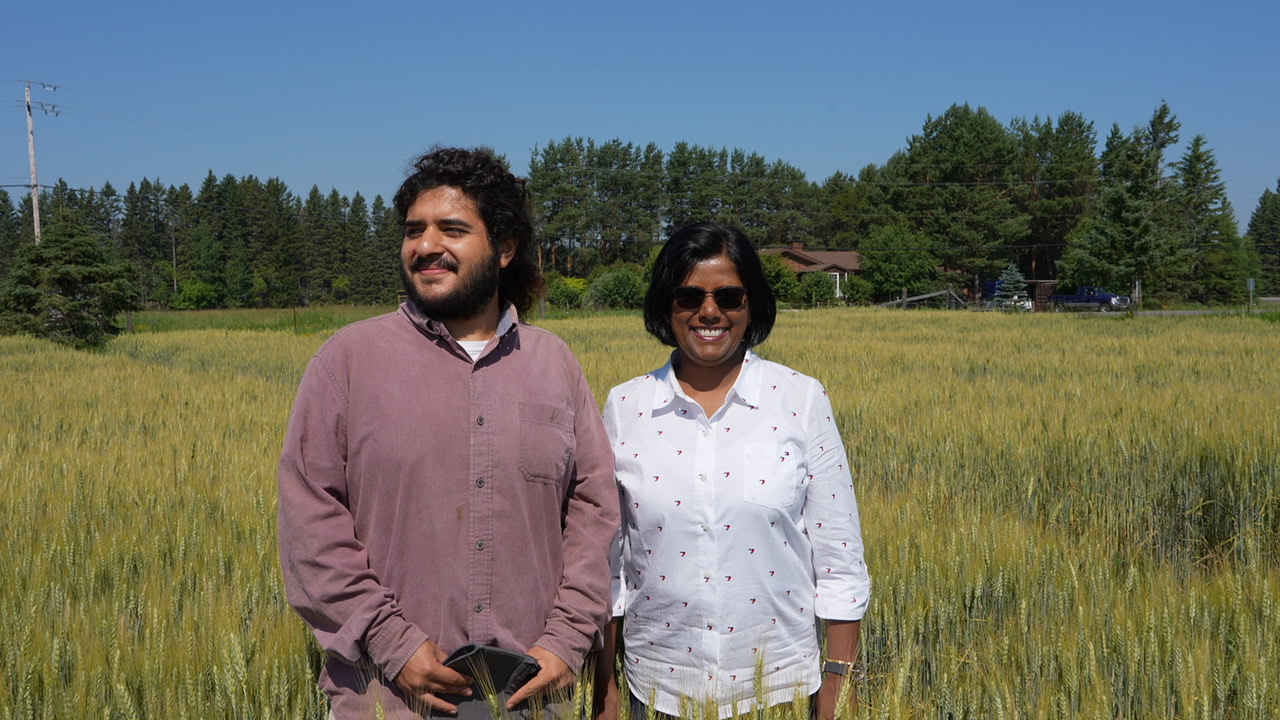
Research Student Alexander Betancourt and Dr. Muditha Heenkenda

Advances in remote sensing and artificial intelligence are rapidly improving precision agriculture," says Dr. Heenkenda, pictured here with research student Alexander Betancourt.

Besides monitoring crops, drones carry out tasks like the targeted sprayings of pesticides and fertilizers, which saves farmers money.

Reducing the amount of fertilizers and pesticides has the additional benefit of protecting the environment from the negative effects of excessive amounts of these chemicals.

Fertilizers, for instance, bring a risk of acidifying soils and causing algae blooms.

On the ground, LUARS researchers are developing a robotic-camera system to continuously photograph crop plots. This system will create 3D models of plant structures and analyze chlorophyll levels, allowing the early detection of nutritional deficiencies and diseases.

"Precision agriculture enables farmers to make more accurate decisions about all aspects of farming, which is essential as climate change pressures grow," Dr. Heenkenda says.

A Unique Research Station Built for the North

Lakehead University Agricultural Research Station

In 2023, Dr. Heenkenda was part of the LUARS team that constructed a solar-powered camera system to monitor the amount of chlorophyll—a crucial plant nutrient—in an experimental soybean crop. Precision agriculture—also known as site-specific crop management—is revolutionizing farming with robotic cameras, smart sensors, and drone technology.

The Lakehead University Agricultural Research Station is on the outskirts of Thunder Bay, Ontario. It's a university research centre that introduces new crop varieties and sustainable agricultural practices to the local farming community.

The LUARS advisory board is made up of members of the local farming community like Fritz Jaspers, who runs a dairy farm and manages approximately 1,000 acres of crops.

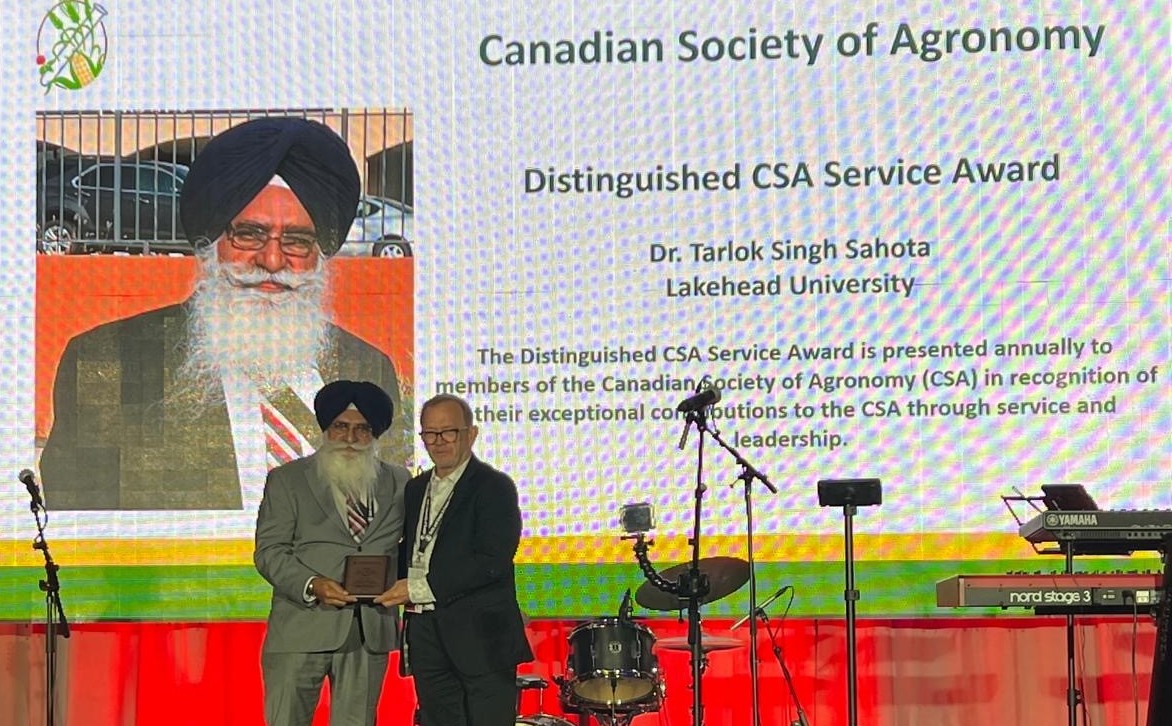
"Farmers get advice from LUARS Director Dr. Tarlok Singh Sahota about the best crops to plant, when to plant seeds, and the quality and quantity of fertilizers to apply," Dr. Heenkenda says.

Some of the new crops that farmers have been able to successfully grow because of LUARS research initiatives include perennial rye, winter canola, frosty berseem, and chicory.

Testing Crops for Extreme Weather

"I'm part of a current LUARS research project that's monitoring several varieties of winter wheat, a plant that does well in this region," Dr. Heenkenda says.

"We're looking at the density of seeds planted and the amount of nitrogen used. As a result, we'll be able to understand how these factors affect the height of plants and the health of winter wheat varieties—including when plants flower and develop pods."

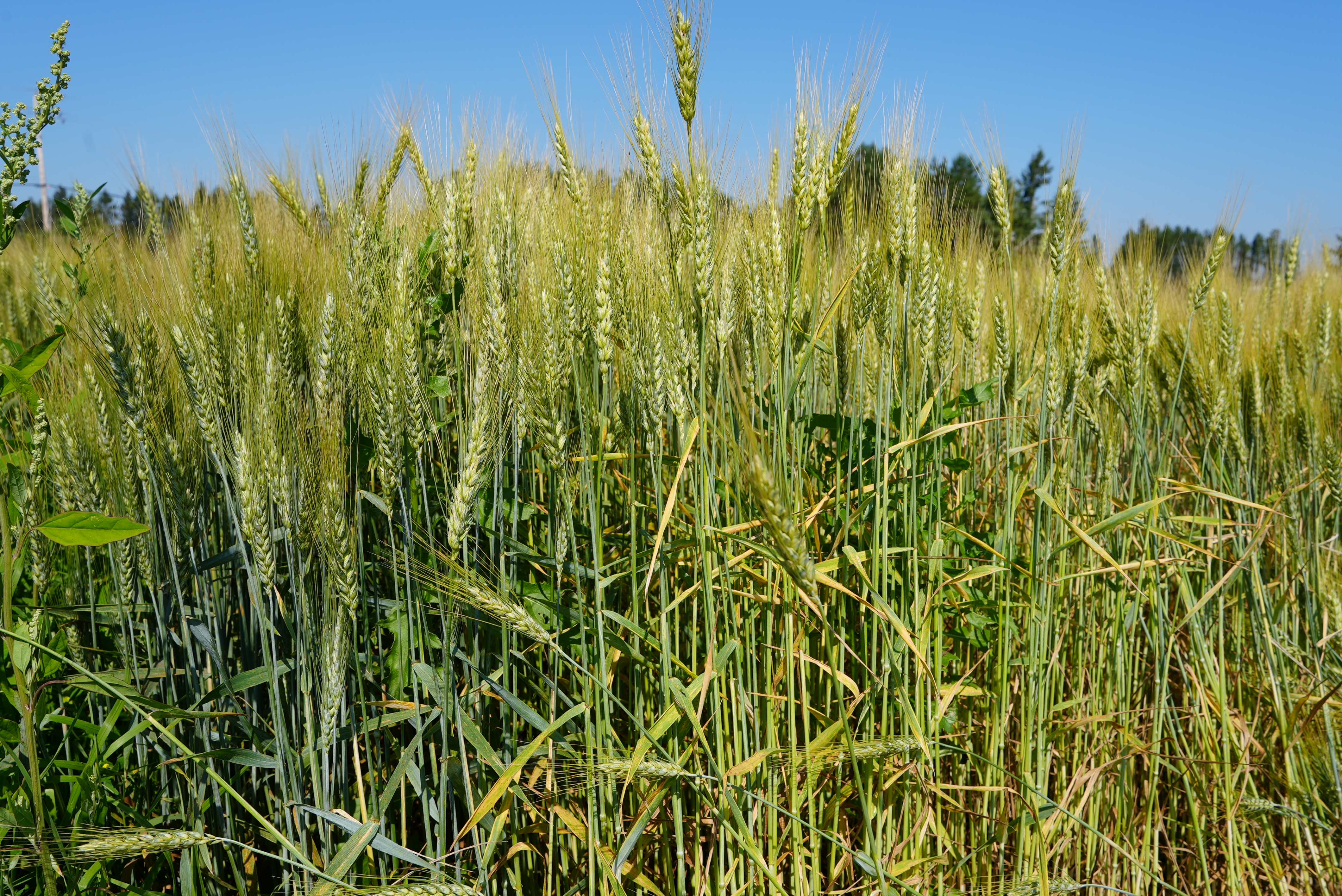
A close up of winter wheat growing on the Lakehead University Agricultural Research Station

The information they collect will be used to predict crop yield and draft site-specific fertilization plans for farmers in the area.

LUARS will also share their high-resolution 3D-camera system with them. "Most farmers still go into their fields and gather plant information manually, which is time consuming and expensive," Dr. Heenkenda explains.


LUARS is helping farmers modernize and expand their operations and start small-scale commercial activities, leading to more prosperity for rural farm communities.

"The exciting news is that farmers will be able to remotely analyze any of their crops, not just winter wheat, and then take actions when and where necessary to ensure that they thrive."

This project is funded in part by the governments of Canada and Ontario under the Sustainable Canadian Agricultural Partnership, a federal-provincial-territorial initiative. The winter wheat project is also funded by the Lakehead University Agricultural Research Station: Agricultural Research Capacity Development Program. By fostering food security and promoting sustainable agriculture, this research project is supporting United Nations Sustainable Development Goal 2—ending hunger around the world by 2030.

The Lakehead University Agricultural Research Station is testing winter camelina, Anvol and Holganix

Winter camelina

Winter camelina

September 22, 2022 – Thunder Bay, Ont.

The Lakehead University Agricultural Research Station in Thunder Bay is always looking for new opportunities for its area producers by testing new crops and products. This year these include:

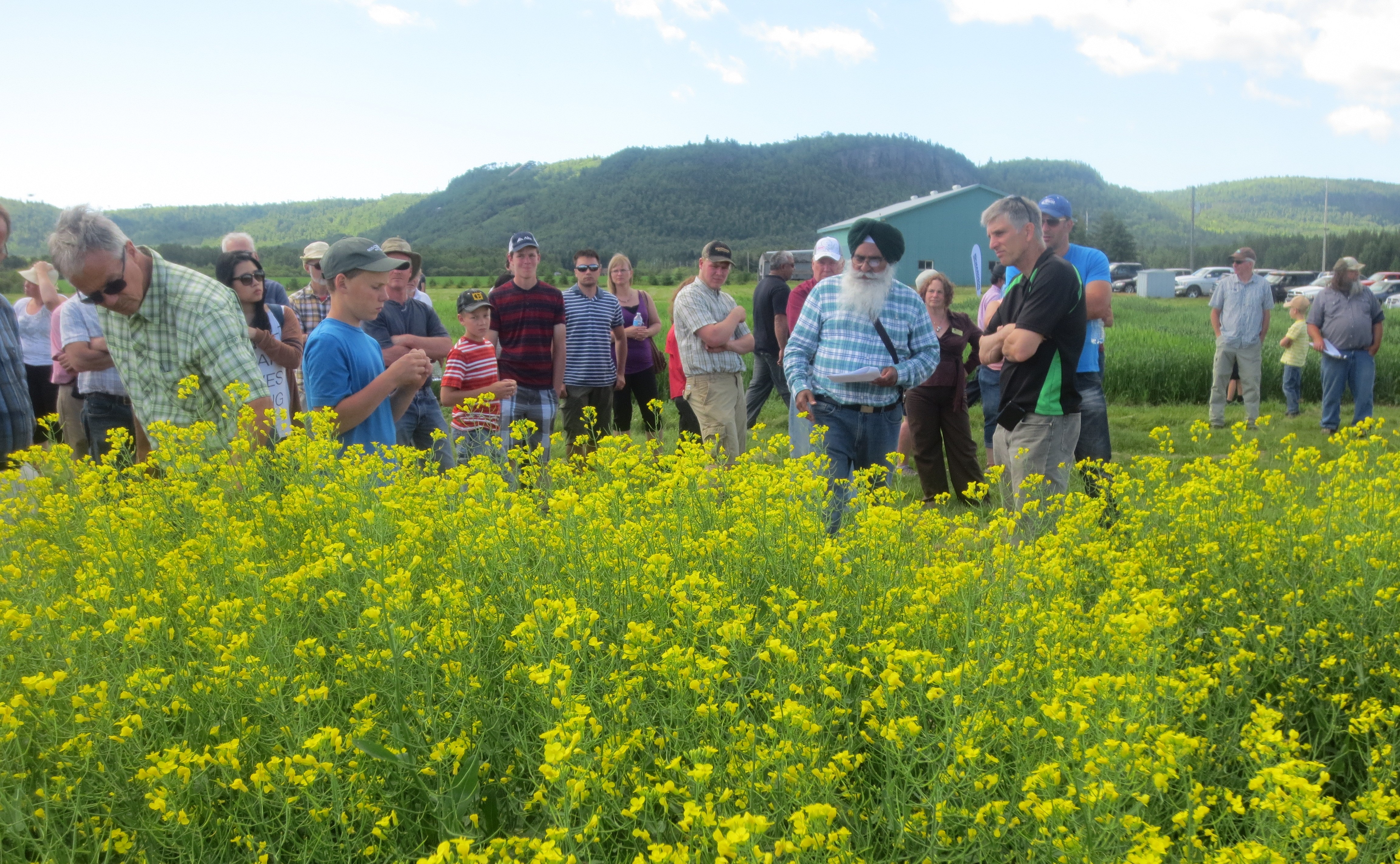
1. Winter camelina: Winter camelina is an oil seed crop from the mustard family. Dr. Tarlok Sahota, LUARS Director, obtained this seed from Christina Eynck, Research Scientist, Oilseed Breeding for Biofuels and Bioproducts, AAFC Saskatoon.  This is a short-season crop that possesses very good frost tolerance in the seedling stage and the full-grown plants exhibit good drought tolerance. It is resistant to flea beetles and black leg disease. Pod shattering is not an issue in camelina, therefore it can be straight cut.

Winter camelina flowers in late April, earlier than other crops – and even earlier than most spring-flowering wild plants. Consequently, its flowers are prized by many native pollinators as well as honey bees. Camelina flowers provide abundant pollen and nectar for them. Late August to mid September is considered an optimum window for seeding winter camelina in the Prairies. LUARS is trying to determine its optimum time of seeding and winter survival potential under the region’s agro climatic conditions by seeding it at 10 days interval from August 25 to September 25.

 2. Anvol: Anvol is a urease inhibitor, a nitrogen stabilizer, with double ingredients - NBPT (Agrotain) and Duromide from Koch Agronomy Services, Calgary. Urease is an enzyme that catalyzes the hydrolysis of urea, forming ammonia and carbon dioxide. Untreated urea quickly hydrolyses in moist soils and is subject to losses of N as ammonia through volatilization. Anvol gets to work faster and provides a longer duration of protection from nitrogen loss through volatilization. Koch Agronomy Services sells urea treated with Anvol; farmers therefore don’t have to treat urea with it. LUARS is comparing Anvol treated urea with urea, ESN, urea superU and their blends in spring and winter wheat.

3. Holganix Bio 800+:  Holganix contains more than 800 species of microbes. It is claimed to improve plant performance and yield by maximizing soil health and uptake of nutrients, minerals and water, increasing plant resilience against various stresses, boosting root architecture, faster crop establishment, improving nutrient use efficiency and lowering fertilizers and herbicide needs. Some of the soil microbes contained in Holganix Bio 800Agriculture include both Phosphorus and Micronutrient Solubilizing Bacteria, Nitrogen Fixing Bacteria, Plant Growth Promoting Bacteria, Plant Debris Degrading Bacteria and Fungi, Mycorrhizae Fungi, Trichoderma Fungi, Penicillium Fungi, Beneficial Nematodes, and Protozoa. LUARS is testing Holganix in winter wheat and winter rye.

For more information, you can reach Dr. Sahota at tssahota@lakeheadu.ca or (807) 707-1987.


– 30 –


Media: For more information or interviews, please contact Brandon Walker, Media, Communications and Marketing Associate, at (807) 343-8110 ext. 8372 or mediarelations@lakeheadu.ca.


Lakehead University is a fully comprehensive university with approximately 9,700 full-time equivalent students and over 2,000 faculty and staff at two campuses in Orillia and Thunder Bay, Ontario. Lakehead has nine faculties, including Business Administration, Education, Engineering, Graduate Studies, Health & Behavioural Sciences, Law, Natural Resources Management, Science & Environmental Studies, and Social Sciences & Humanities. Lakehead University’s achievements have been recognized nationally and internationally, including being ranked, once again, among Canada’s Top 10 primarily undergraduate universities in Maclean’s 2021 University Rankings; as well as included in the top half of Times Higher Education's 2022 World Universities Rankings for the third consecutive year, and the number one university in the world with fewer than 10,000 students in THE’s 2022 Impact Rankings (which assesses institutions against the United Nations’ 17 Sustainable Development Goals). Visit www.lakeheadu.ca.

Ontario Supporting Agri-Food Research in Thunder Bay

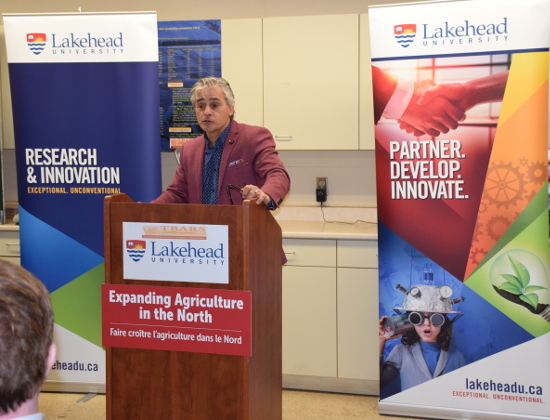
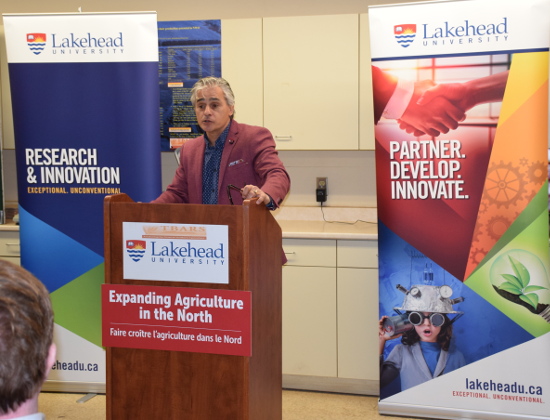
Photo of MPP Bill Mauro making the important announcement.

Bill Mauro, MPP for Thunder Bay-Atikokan, made the announcement on Friday, Dec. 8, 2017

December 8, 2017

Ontario is transferring the operating and research programming of the Thunder Bay Agricultural Research Station to Lakehead University to help foster innovation and strengthen Ontario's competitive edge by expanding agri-food research in Northwestern Ontario.

Bill Mauro, MPP for Thunder Bay-Atikokan, made the announcement on behalf of Jeff Leal, Minister of Agriculture, Food and Rural Affairs in Thunder Bay today.

The partnership with Lakehead University will support the long-term sustainability of the Thunder Bay Agricultural Research Station and will increase the university's capacity to build new programming and research that will benefit Northwestern Ontario.


The investment builds on the province's efforts to develop a sustainable, coordinated plan to expand agriculture in Northern Ontario, such as the Northern Livestock Pilot and field crop and beef research in New Liskeard.

Supporting agriculture in the North is part of Ontario's plan to create fairness and opportunity during this period of rapid economic change. This plan includes a higher minimum wage and better working conditions, free tuition for hundreds of thousands of students, easier access to affordable child care, and free prescription drugs for everyone under 25 through the biggest expansion of medicare in a generation.

Quick Facts

  • The agricultural research station will now be known as the Lakehead University Agricultural Research Station (LUARS).
  • Through a new partnership with Lakehead University, Ontario is providing up to $1.65 million over five years to support Northwestern agriculture research at the provincially owned facility.
  • The Thunder Bay Agricultural Research Station, founded in 1991, uses small-plot research to introduce and assess crop varieties and agricultural management practices.
  • The province supports several agriculture research operations in Northern Ontario, including facilities in Thunder Bay, New Liskeard and Emo.
  • Northern Ontario is home to more than 920,000 acres of farmed land and over 2,200 farms.


Quotes

“I am pleased with today’s funding announcement of $1.65 million, from the Province, to Lakehead University as it brings the Thunder Bay Agricultural Research Station under its administration through the creation of the Lakehead University Agricultural Research Station. I am confident that today’s announcement will ensure the future sustainability of the Station and allow it to benefit from Lakehead’s tremendous research expertise and capacity. This will also provide Lakehead with the opportunity to expand its research capacity and add to its already impressive achievements and reputation in the areas of research and innovation. I want to congratulate and thank both the Thunder Bay Agricultural Research Association and Lakehead University for their dedication and perseverance as we’ve worked together on bringing this partnership to fruition.”
Bill Mauro
MPP for Thunder Bay – Atikokan

“For well over a decade, our government has been supporting the important research that is taking place at the Thunder Bay Agricultural Research Station. I would like to thank Minister Leal and Minister Matthews for investing in this important partnership, which will support the sustainability of the station and contribute to the economic development of our agri-food sector here in Northwestern Ontario.”
Michael Gravelle
MPP for Thunder Bay – Superior North


“This investment reaffirms our government’s commitment to expanding agriculture in Northern Ontario. By investing in research and innovation, we are boosting the competitiveness of Ontario’s agri-food sector and ensuring that our farmers in Northwestern Ontario have the tools and resources they need to succeed.”
Jeff Leal
Minister of Agriculture, Food and Rural Affairs


“The Agricultural Research Station’s partnership with Lakehead University will create so many new opportunities for students to learn about and innovate in Northwestern Ontario’s growing agri-food sector. Thunder Bay offers a unique learning experience for students and researchers interested in diverse soil and climate conditions. I’m excited to see the positive effects of this collaboration on the region’s economy and reputation in agri-food excellence.”
Deb Matthews
Minister of Advanced Education and Skills Development


“We thank OMAFRA for this contribution and look forward to growing our partnership through the Agricultural Research Station. The expertise from Lakehead University's faculty and researchers will further enable and expand the important work being conducted at this station for the agri-food sector in our region.”

Dr. Andrew P. Dean
Vice-President, Research and Innovation, Lakehead University


“Northwestern Ontario's agri-food business continues to be an important economic driver for the region. This facility will help push innovation and train future scientists in the field. We thank the Ministry for providing this opportunity for Lakehead University researchers, faculty, and staff to contribute to the work being conducted at this station and its field of research.”

Dr. Brian Stevenson
President & Vice-Chancellor, Lakehead University


“This investment will help build Northwestern Ontario’s agri-food capacity, sustainability and competitiveness by supporting an important partnership between local farmers and a world class research institution such as Lakehead University. It also recognizes the importance of northern agri-food research and the region’s ability to contribute data and knowledge which benefits the entire province.”
Kevin Belluz
President, Thunder Bay Agricultural Research Association

Photo of MPP Bill Mauro making the important announcement.
Subscribe to Lakehead University Agricultural Research Station