



Mateo Velasco Alva Taps into the Power of the United Nations
This Lakehead Student is Already Skilled in International Diplomacy
Environmental sustainability student Mateo Velasco Alva isn't standing on the sidelines when it comes to protecting the planet.
He's been involved with the youth branch of the United Nations Environment Assembly (UNEA) since he was a teen and has participated in Model United Nations conferences since middle school.
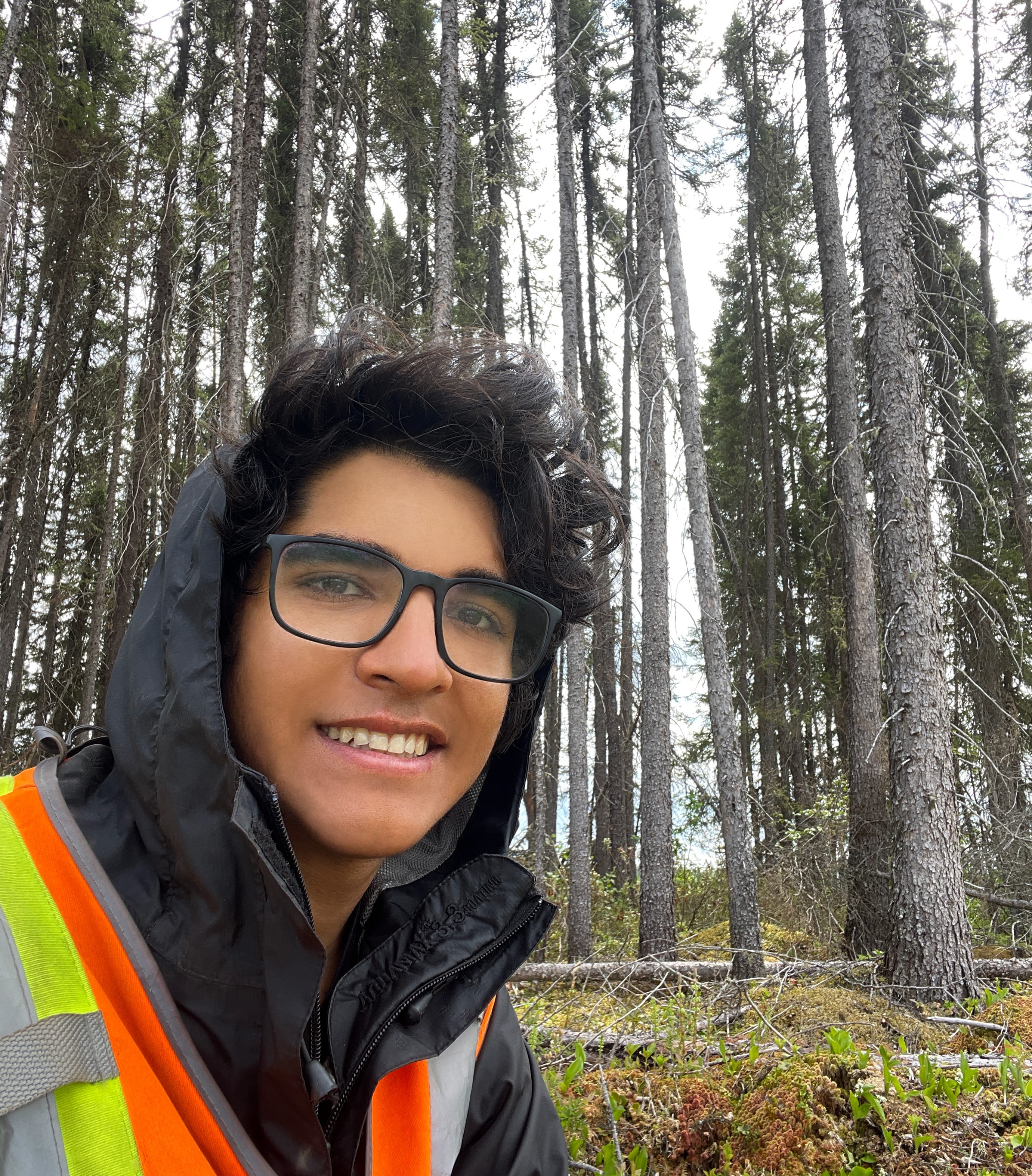
Mateo is beginning his fourth year in Lakehead's Honours Bachelor of Arts and Science program in Environmental Sustainability. "I'm from Mexico City where there isn't a lot of nature, so when I got to Canada I decided to do a truly Canadian outdoors activity," he says. "I did tree planting for two summers in northern Ontario."
These experiences have instilled in Mateo a determination to become a diplomat and to use his advocacy skills to help overcome the climate crisis.
"Seeing the ravages caused by extreme weather has been mind boggling," he says. "The saddest part is that the poorest countries are the most vulnerable.
We need to work together so that all people can thrive. We also need to acknowledge that humans aren't the only living creatures we share our world with."
Students Gather at the United Nations
Mateo recently had the chance to practice statesmanship at the very highest level through the Global Model United Nationsers (GlobalMUNers).
"I co-organized the 2026 GlobalMUNers New York City (GMNYC2026) summit held at the UN's ECOSOC Building."
Global MUNers is a non-profit organization that arranges student debates around the world to engage young people in civil society and to give them the tools to create real change.
Mateo was given this challenge after being chosen as the GMNYC2026 President of the UNEA Committee.
He and Vice-President Inés Belkhodja spent months planning the conference before welcoming over 2,000 student delegates to the headquarters of the United Nations.
"They came from middle schools, high schools, and universities from across the globe, including North Africa, Europe, North America, and the Caribbean," he says.
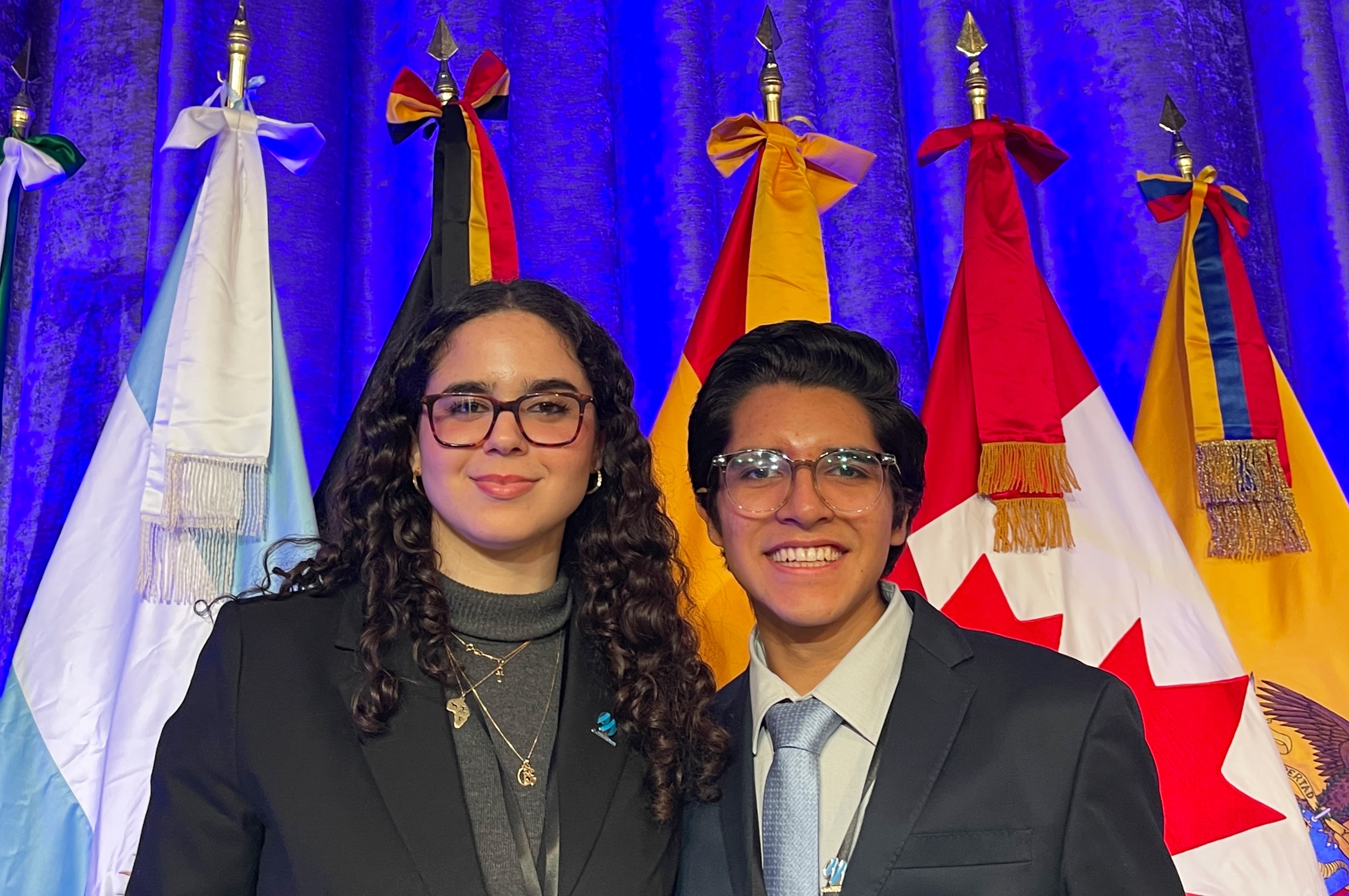
One of the highlights of Mateo's UN trip was a visit to the headquarters of the Permanent Mission of Germany to the United Nations. "We had a discussion with Germany's official representative and got to experience what a real diplomat does. It was great!" Above, Mateo with GMNYC2026 Vice-President Inés Belkhodja.
The summit's opening ceremony was held at the UN General Assembly.
"I never imagined that I would be at the United Nations headquarters, so it felt like a mission accomplished," Mateo says.
Keynote speeches were delivered by two of Mateo's heroes—UN Secretary-General António Guterres and GlobalMUNers Director-General Pilar Sandoval.
But this was just the start of a whirlwind week.
The student delegates participated in two working sessions per day. These sessions focused on GMNYC2026's selected debate topics: plastic pollution and climate change.
"I moderated the debates and the vice-president took notes and answered questions," he says.
Preparing for the Unthinkable
The GMNYC2026 organizers also gave students the opportunity to address an impending real-world crisis—Greenland's melting ice sheets.
"The disappearing ice sheets are leading to rising sea levels," Mateo says, "and since 60 per cent of the world's population lives in coastal regions, it will become a massive humanitarian crisis.
When we introduced the crisis, the delegates were very shocked to learn about it," he adds.
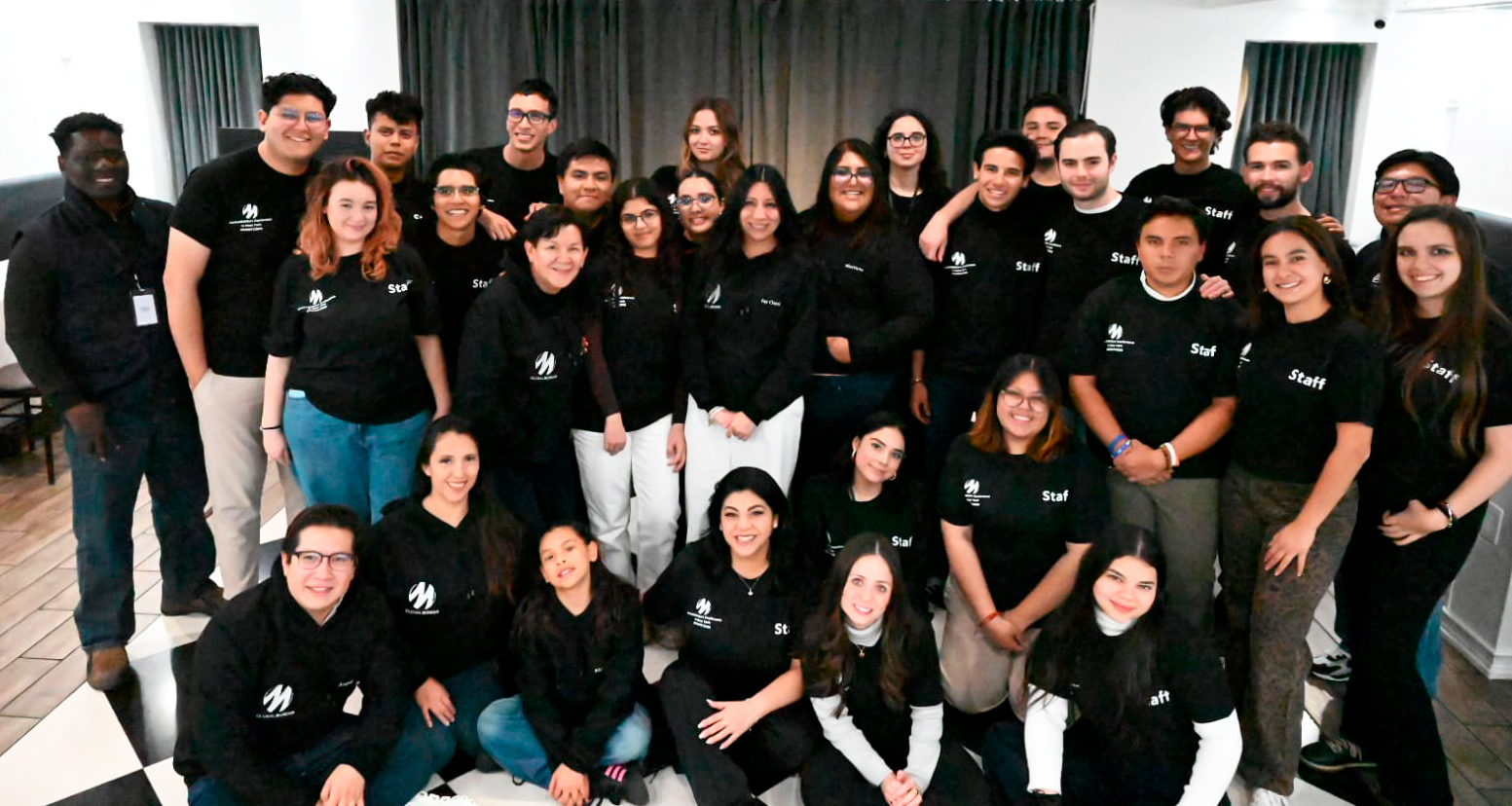
Above, Mateo with fellow students who helped run GMNYC2026. "I got to make new friends and new international connections," he says. "The best part of it is that I'll be going to another GlobalMUNers session in the Dominican Republic this September."
Students were asked to debate solutions and to draft an international non-binding agreement outlining these solutions.
"The UNEA doesn't have the power to compel governments to adhere to their conventions, so all UNEA agreements are non-binding," Mateo explains. "Countries have to want to adopt them."
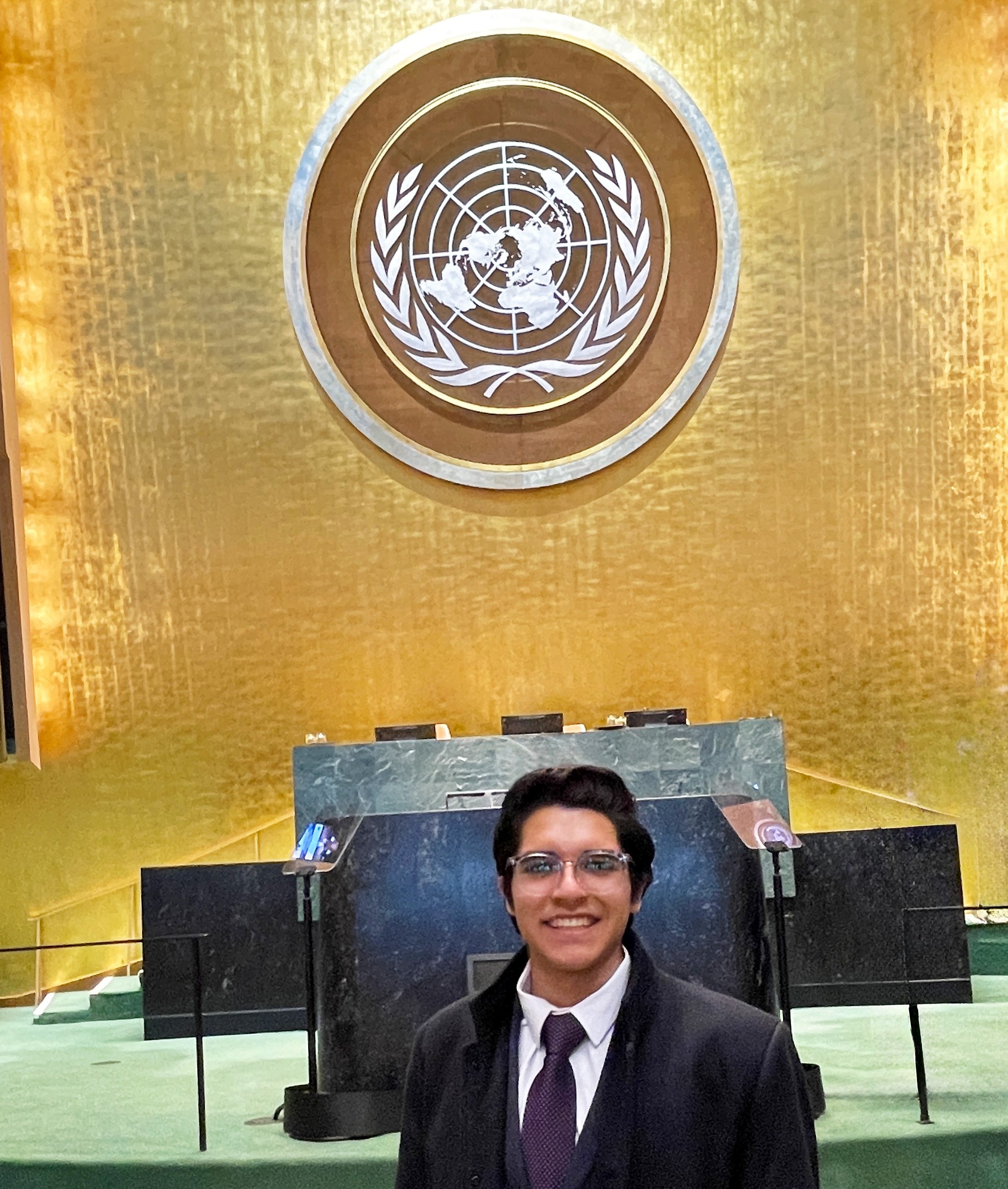
Last year, Mateo further enhanced his foreign affairs skills as an intern with the Organization of the American States (OAS) in Washington, DC. Above, Mateo in the UN General Assembly Hall.
This made the students' job even more challenging. When it came time to ratify the agreement, delegates had to vote along the lines that their countries vote at actual UN summits, forcing them to get creative.
"They knew the United States and Russia would be unlikely to accept an environmental agreement, so it was presented to them as a military crisis," Mateo says. "Both countries have strategically important military bases in Greenland and melting ice will affect their operation."
Solutions outlined in the agreement ranged from land reclamation projects to the establishment of atmospheric weather stations that would provide data needed to develop mitigation plans.
Mateo's leadership role with the GlobalMUNers has strengthened his decision to follow a diplomatic career path.
"Seeing all those young people gave me hope and the belief that younger generations can solve the problems created by older generations."