



Lakehead’s Natural Resources Expertise Draws International Attention
Ghana Forestry Professionals Wowed by Hands-On Learning Experiences
"The summer has been a whirlwind," says Dr. Mathew Leitch, a professor of wood sciences at the Faculty of Natural Resources Management.
Throughout June, he hosted and trained forestry professionals from Ghana committed to making their forest industry more sustainable and profitable. 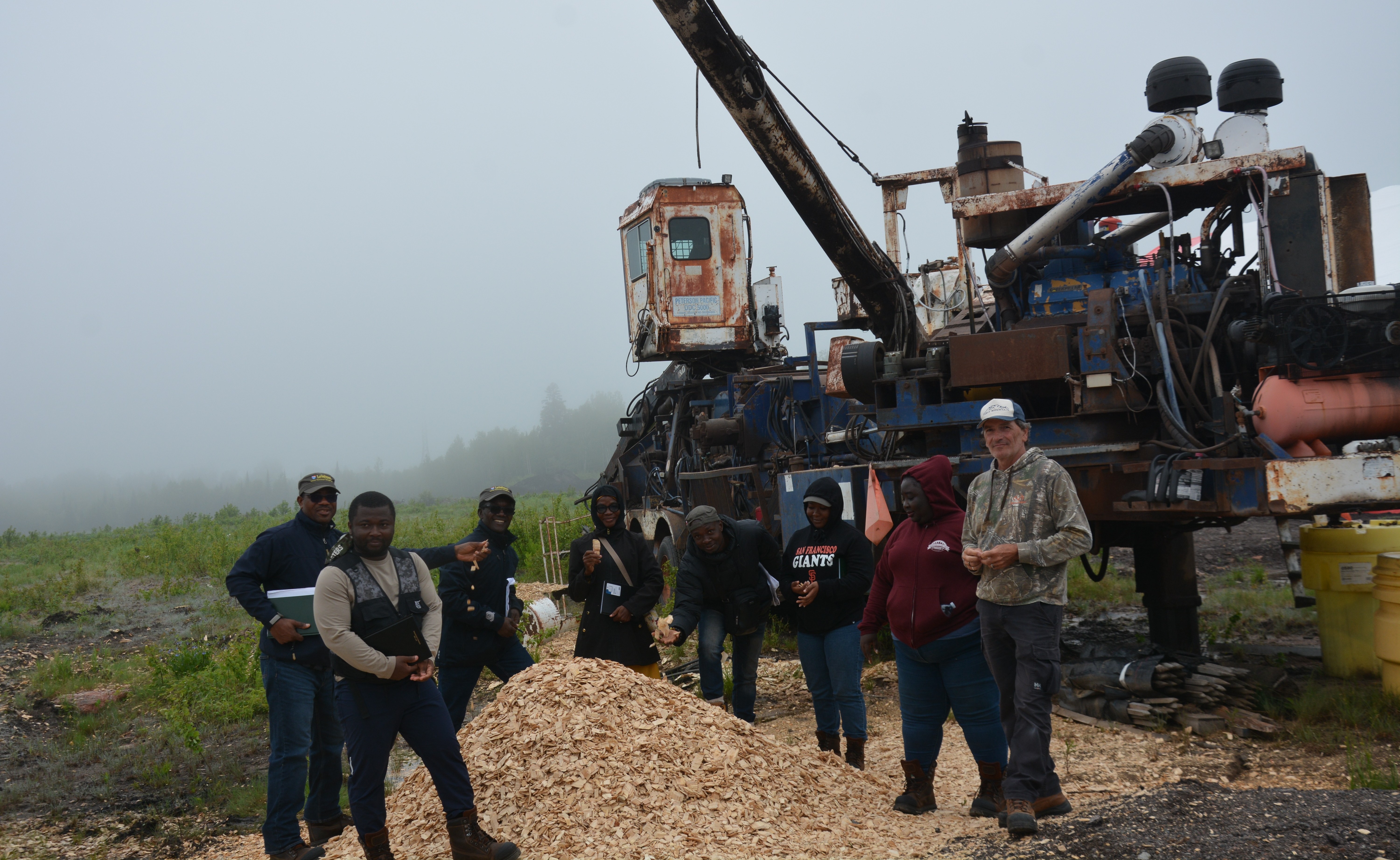
"We get thousands of products from trees including mass timber products, phenols, formaldehyde, flocculants, and cellulose fibres that are so strong they're used to create bullet-proof flak jackets," Dr. Leitch says. Above, participants visit the Hurkett Biohub facility with Scott Rubin and his team at Lake Nipigon Forest Management to look at the facility's biochar location, merchandising yard, and other wood value-adding initiatives.
It took over a year to organize the month-long "Workshop in Wood Science and Forest Products," which was hosted on Lakehead University and Confederation College's Thunder Bay campuses.
The session was the first of three customized training workshops that are part of Lakehead's five-year "Best Practices in Sustainable Natural Resources Management" project.
Dr. Leitch received a Global Affairs Canada grant worth nearly $570,000—through the Canadian International Development Scholarships 2030 (BCDI 2030) program—to run the project.
It includes funding for the workshops and visiting researchers as well as scholarships for master's degree students.
Forging Bridges Across Continents
BCDI scholarships—which are open to small island developing states and 26 Francophonie and Commonwealth countries—harness the power of education to strengthen economic and social development.
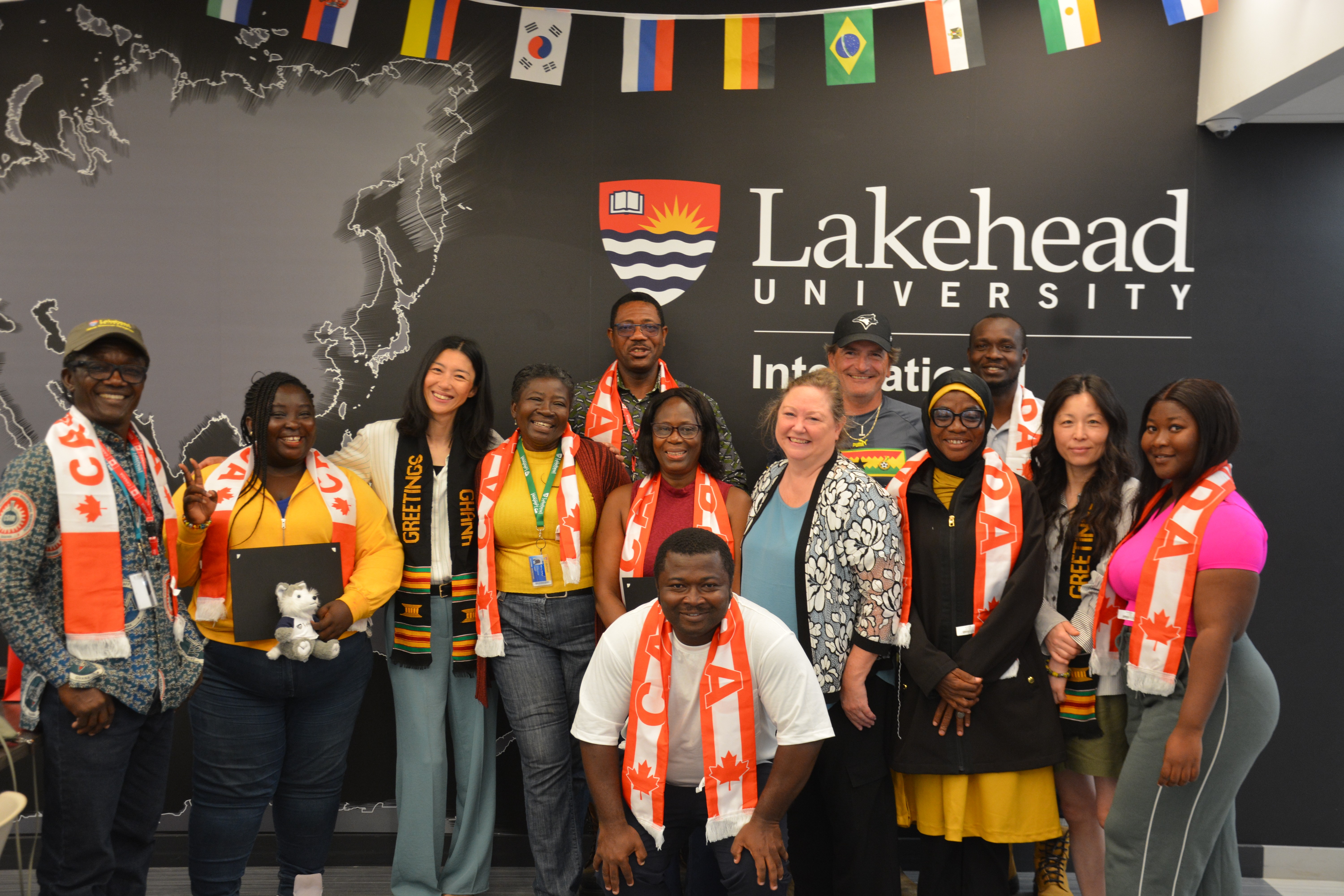
Dr. Leitch's BCDI 2030 grant will enable him to continue training Ghanaian forestry professionals at Lakehead. In 2027, he will host a remote sensing and geomatic workshop and, in 2028, he will host an ecological studies workshop. The workshops are part of a customized training approach to address skill development needs identified by the Government of Ghana. Above, the BCDI participants celebrate completing the workshops.
"Many women in Ghana live in extreme poverty, so one of the goals of my program is to bring more women into the workforce so that they're economically independent," Dr. Leitch explains.
Over the course of Lakehead's project, an estimated 35 professionals and students will receive advanced training in natural resources management.
The resulting network of professionals within Ghana will share their knowledge and skills with their students and colleagues.
A Land of Colossal Trees, Elephants, and Cocoa Plantations
Ghana is a West African country known for its diverse ecosystems.
The southern region—where Dr. Leitch has forged many longstanding partnerships—has tropical rainforests with more than 200 species of hardwood trees.
"The main trees harvested for commercial purposes are African mahogany, iroko, sapele, utile, and teak," he says. "Ghana's trees grow impressively fast," he adds. "In 40 years, African mahogany grows to 4-8 feet in diameter."
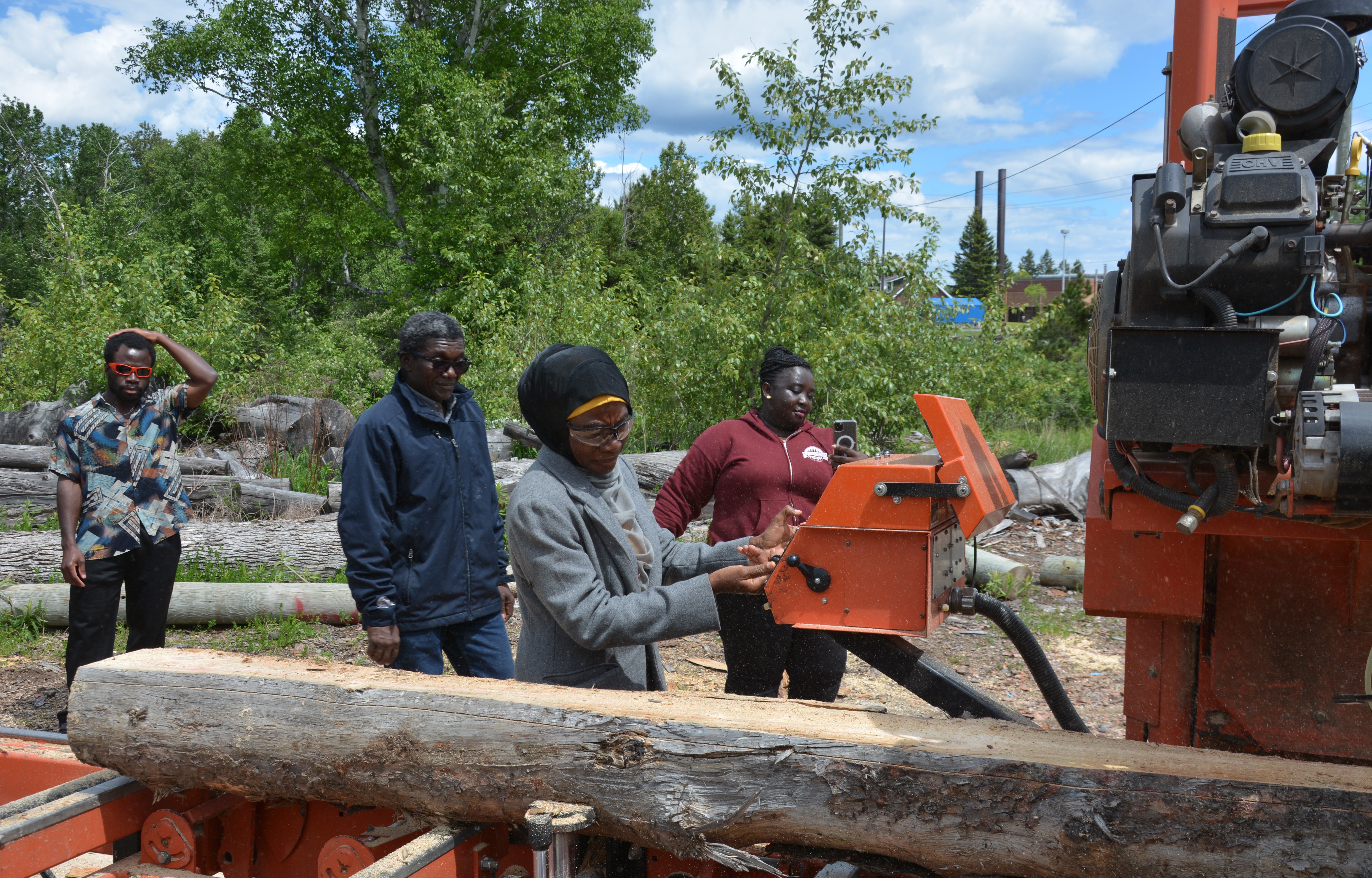
Above, a participant practices using a portable mill at Dr. Leitch's campus facility. "Everyone learned how to run the mill and cut wood because these types of mills are readily available in Ghana," Dr. Leitch says. The BCDI grant funded the participants' costs of attending the workshops.
Ghanaians use their forests primarily as sources of lumber, plywood, and charcoal.
"Ghana is the second biggest charcoal producer in the world," says Dr. Leitch, who shared strategies for more efficiently producing charcoal with the visiting professionals and students.
From Tree Farms to Sawmills and Everything in Between
The workshop participants arrived at Lakehead for training in remote sensing, geomatics, wood science, property mapping, and ecological monitoring.
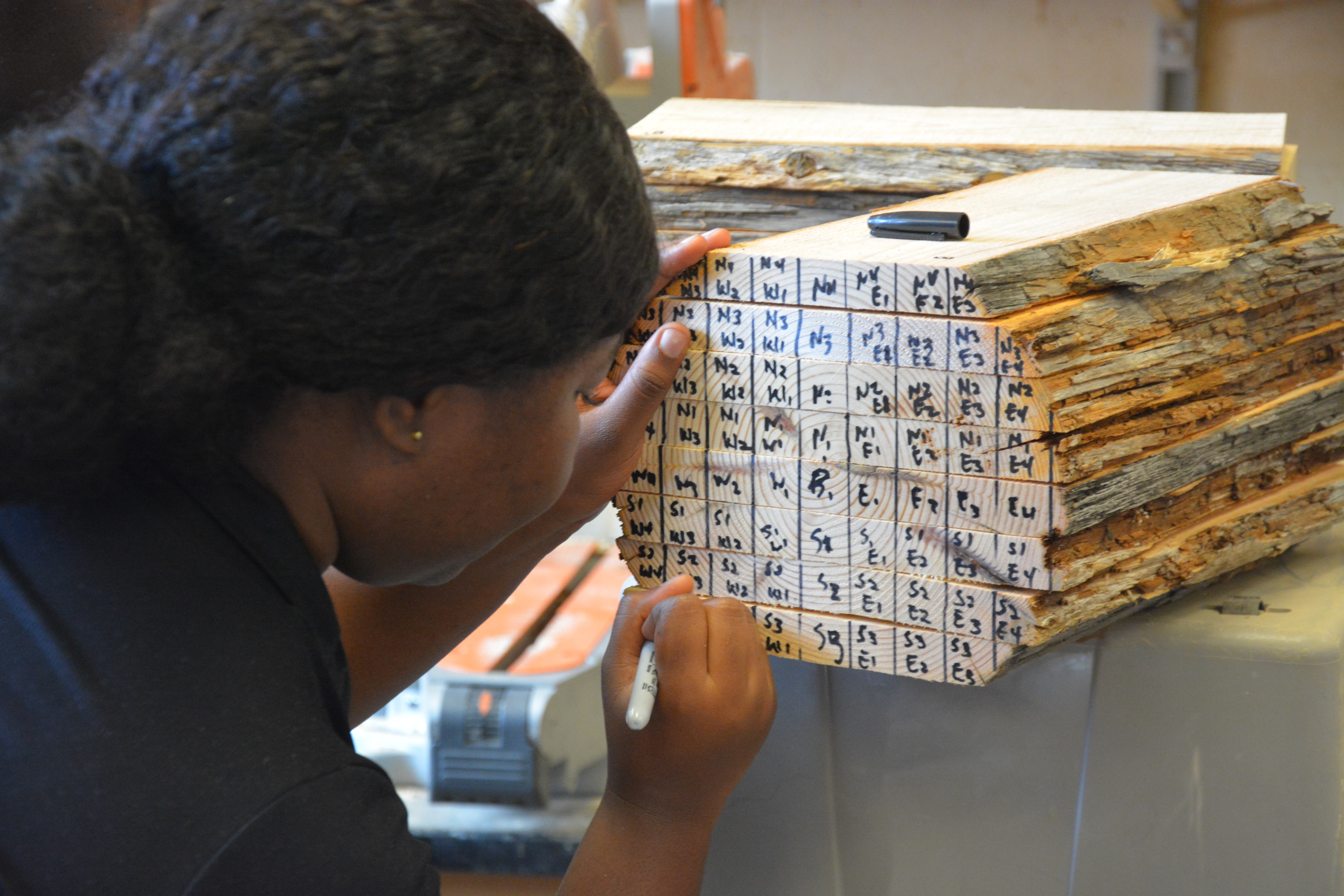
Wood science is a multifaceted discipline that studies the properties of wood species and how they can be used. Above, one of the participants prepares a sample in Dr. Leitch's Wood Science Testing Laboratory.
Dr. Leitch welcomed faculty, staff, and PhD students from Kwame Nkrumah University of Science and Technology, the University for Development Studies, the University of Energy and Natural Resources, and CSIR-College of Science and Technology.
There were also scientists and staff from the CSIR-Forestry Research Institute of Ghana and Lakehead University Master of Science in Forestry students.
"We looked at everything from high-value forest products like engineered wood used in housing construction to low-value products like wood pellets used for heating and barbecues," Dr. Leitch says.
Northwestern Ontario is a Forestry Innovator
All the workshop participants found their time at Lakehead to be worth the long journey.
"They wanted to learn everything they could about our approaches to forest management," Dr. Leitch says.
The participants enjoyed field visits to tree farms, biomass facilities, sawmills, and pulp and paper mills. Another highlight was seeing Lakehead's state-of-the-art research facilities and testing equipment in action.
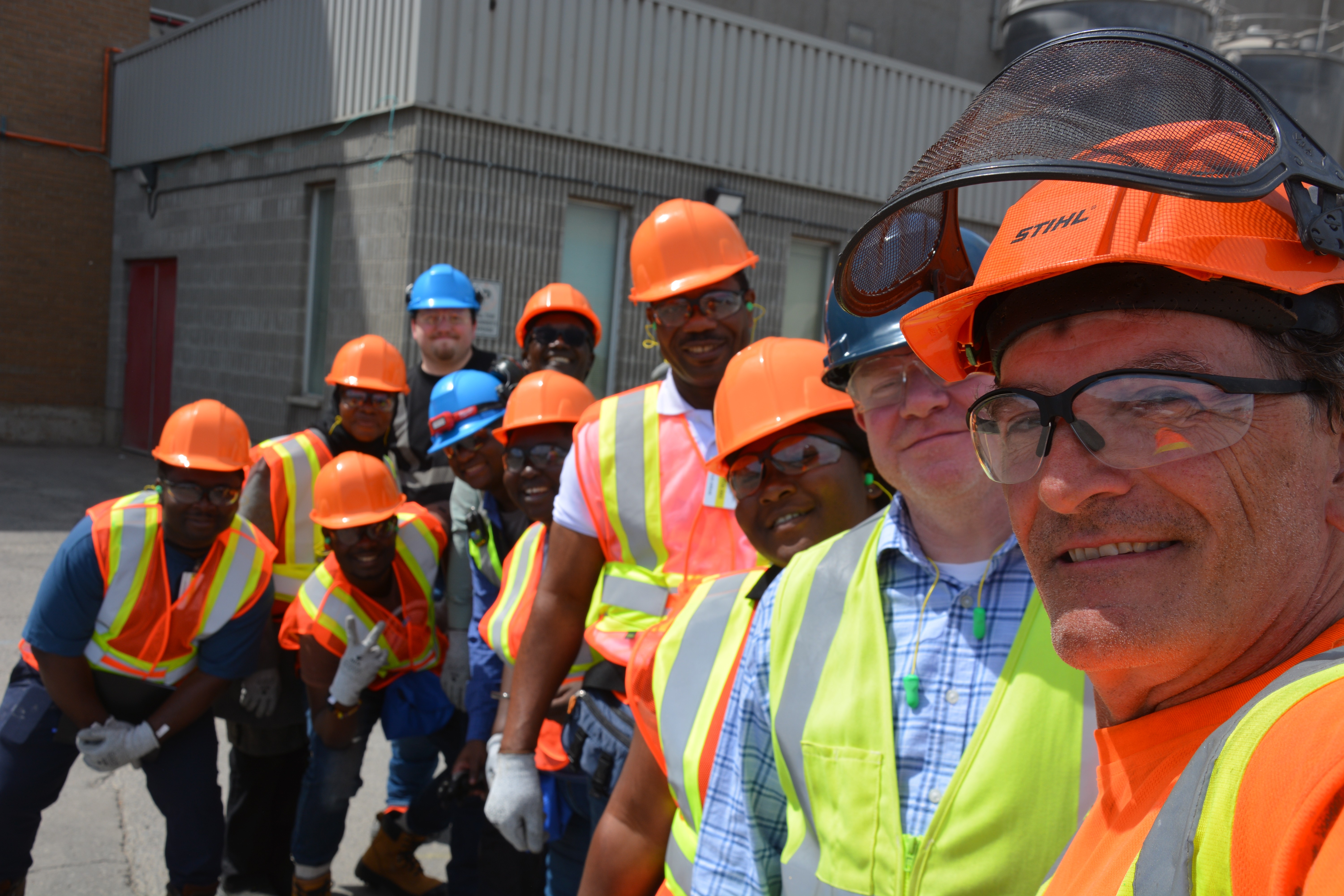
A tour of Thunder Bay Pulp and Paper, led by Fibre and Logistics Manager Mike Furniss, provided insight into how wood is processed into pulp, energy production from boilers, waste use, and the production of value-added chemicals. Dr. Mat Leitch is pictured on the far right.
"We showed them how we use silviculture to grow, manage, and manipulate the properties of trees and bring products to market," he says.
"I could see their wheels spinning. Even before the workshops were over, they were writing up draft plans to implement when they got back home."
Dr. Leitch greatly enjoyed his time at the workshops, too.
"Ghanaians are some of the nicest people you'll ever meet. The participants were so gracious and appreciative that they were selected for this prestigious program.
They are eager for anything that will help them move forward as a country."
Lakehead gratefully acknowledges the nearly $570,000 Global Affairs Canada grant that made The Best Practices in Sustainable Natural Resources Management (BPSNRM) project possible.
Thank you to Confederation College and the following government and industry partners in Ghana, including: the Forestry Commission of Ghana, The Council for Scientific and Industrial Research — Forestry Research Institute of Ghana (CSIR-FORIG), Samartex Timber and Plywood Company, and the Charcoal Chamber of Commerce.
Lakehead would also like to thank the following partner higher education institutions: CSIR College of Science and Technology (CCST), Kwame Nkrumah University of Science and Technology (KNUST), the University of Cape Coast (UCC), the University of Development Studies (UDS), the University of Energy and Natural Resources (UENR), and the University of Ghana-Legon.