



Helping Indigenous Young People Flourish on Campus
SSHRC Storyteller Teagan Neufeld Seeks Better Mental Health Tools
Universities are familiar places to Teagan Neufeld.
But feeling welcome on campus was a long process for this accomplished researcher and psychology graduate student.
"I grew up Métis in northwestern Ontario," she explains. "Going to university in Sudbury meant moving 18 hours away from my hometown of Kenora."
The sudden disconnection from her family and her culture was challenging.
"It made me realize how crucial it is that Indigenous youth have access to culturally relevant mental health services," she says.
This insight helped shape the direction of Teagan's Master of Clinical Psychology research, which is now in the national spotlight.
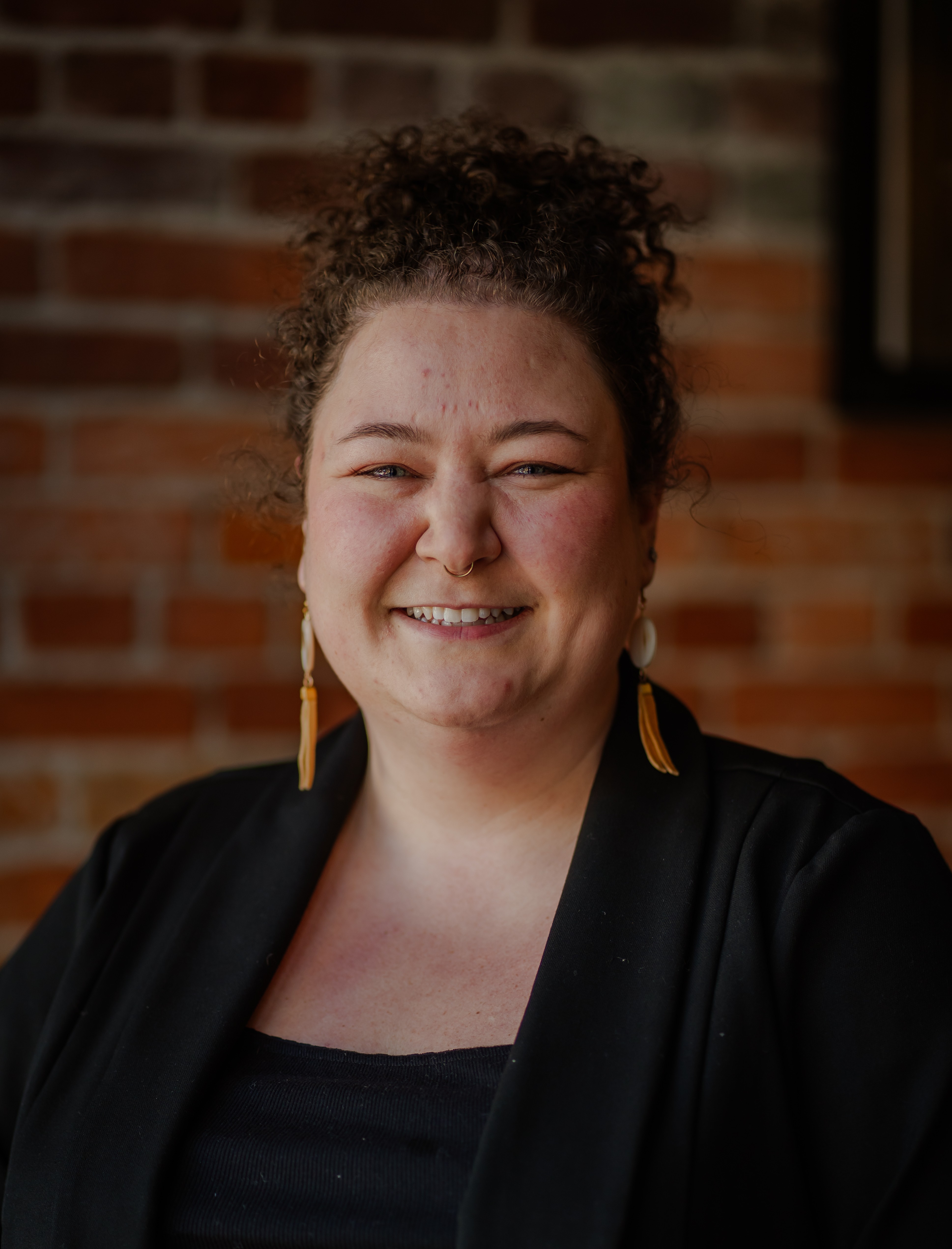
In September 2026, Teagan will begin a PhD in Clinical Psychology at Lakehead, supervised by Dr. Aislin Mushquash, where she will continue her mental health research. She previously gained hands-on experience helping young people as a childcare worker with Tikinagan Child & Family Services.
She has been chosen as one of 20 finalists from across Canada in the 2026 Social Sciences and Humanities Research Council (SSHRC) Storytellers Challenge.
"Learning that I was a storytelling finalist was very exciting," she says. "It feels good to translate knowledge in a way that's accessible to the broader public."
In her award-winning video, Teagan describes the alienation that Indigenous young people can feel as they adapt to life away from their communities.
"You reach out for help, and a counsellor hands you a standard questionnaire to assess your mood.
No one asks about your family, your culture, your language, or your connection to the land.
The support you truly need doesn't exist...yet."
Finding that support is the driving force behind Teagan's master's research, "Evaluating Acceptance of Aaniish Naa Gegii: The Children's Health and Wellbeing Measure."

Central to Teagan's methodology is the embrace of two-eyed seeing—honouring both Indigenous and western ways of knowing.
Her research is being supervised by Lakehead Associate Professor Dr. Aislin Mushquash and is also supported by Dr. Christopher Mushquash, a Canada Research Chair in Indigenous Mental Health and Addiction at Lakehead.
Indigenous Students Are Often Overlooked
Psychologists and mental health professionals regularly use health and wellbeing measures to get a baseline assessment of an individual's wellbeing and to track their mental health over time.
"The problem is that virtually none of the existing measures are Indigenous," Teagan says.
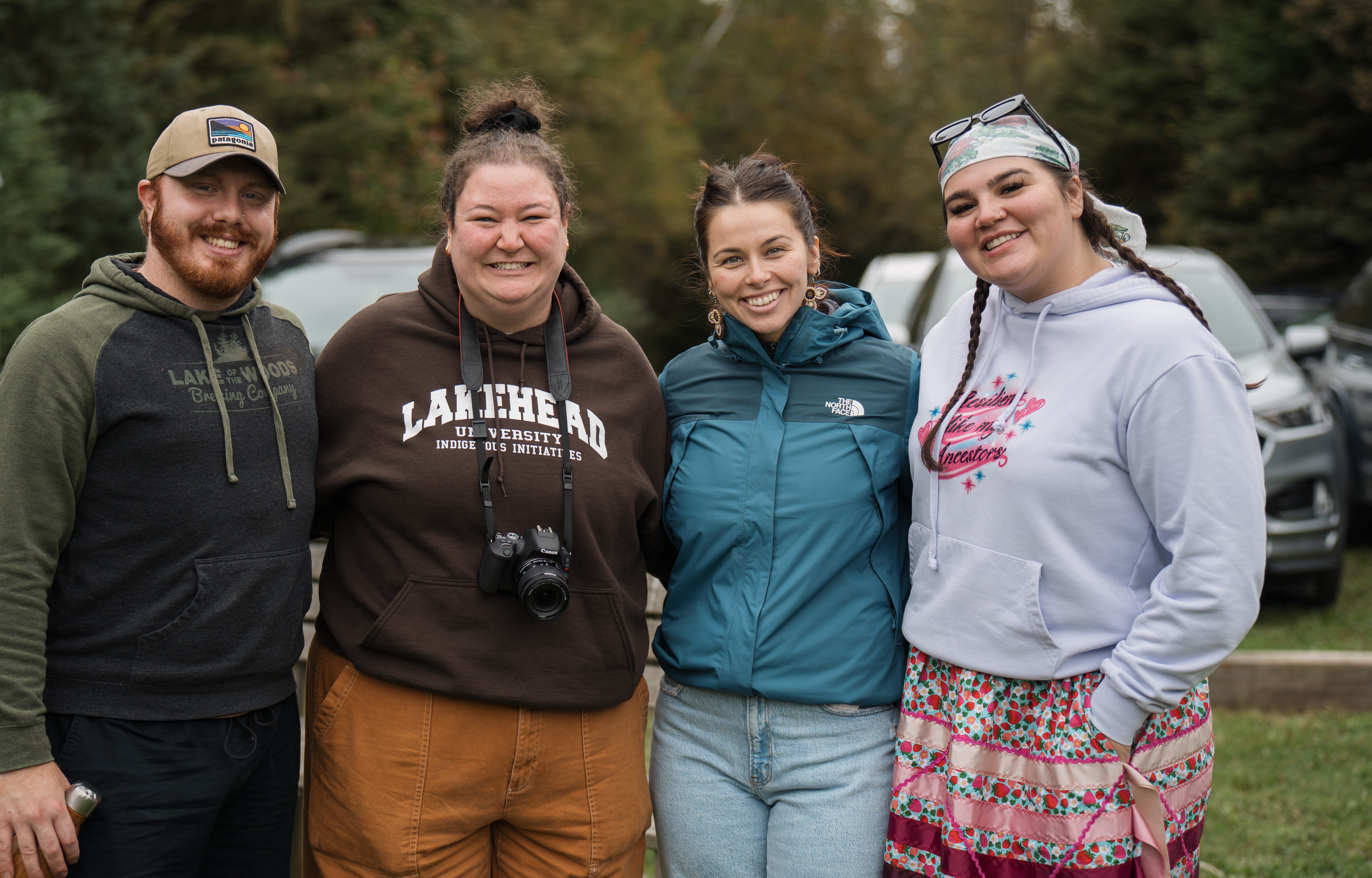
Teagan (second from left) enjoys spending time with fellow students Joshua Wetendorf, Abbey Radorf, and Céline Wick at the 2025 Fall Harvest festival organized by Lakehead’s Indigenous Initiatives.
"Standard western measures don't take into account what it's like growing up on a reserve or in a small community. They also don't recognize the spiritual component of wellbeing, which is an essential part of life in Indigenous communities."
In 2011, this gap in care led researchers Mary Wabano and Dr. Nancy Young to design a new clinical tool.
They partnered with Indigenous children, youth, and communities to create Aaniish Naa Gegii: The Children's Health and Wellbeing Measure for Indigenous youth aged 8 to 18.
Aaniish Naa Gegii is a greeting in the Anishinaabemowin language that translates to: "How are you?"
Young people completing the assessment respond to questions based on the four quadrants of the Medicine Wheel to gauge their emotional, physical, spiritual, and mental wellbeing.
"It's been proven to accurately identify a person's strengths as well as areas where they need support. For example, becoming more involved in cultural events, getting additional help with schoolwork, or talking to a counsellor."
Drawing Strength from Community and Culture
"My research—which is funded by a SSHRC Indigenous Scholars Award—is looking at how to adapt Aaniish Naa Gegii for Indigenous postsecondary students," Teagan says.
Before embarking on her research, she went to Lakehead's Indigenous Student Service Centre (ISSC) to see if students had an interest in more culturally relevant mental health tools.
Both ISSC students and staff were enthusiastic about the proposal, and now they're collaborating with Teagan on the evaluation of Aaniish Naa Gegii.
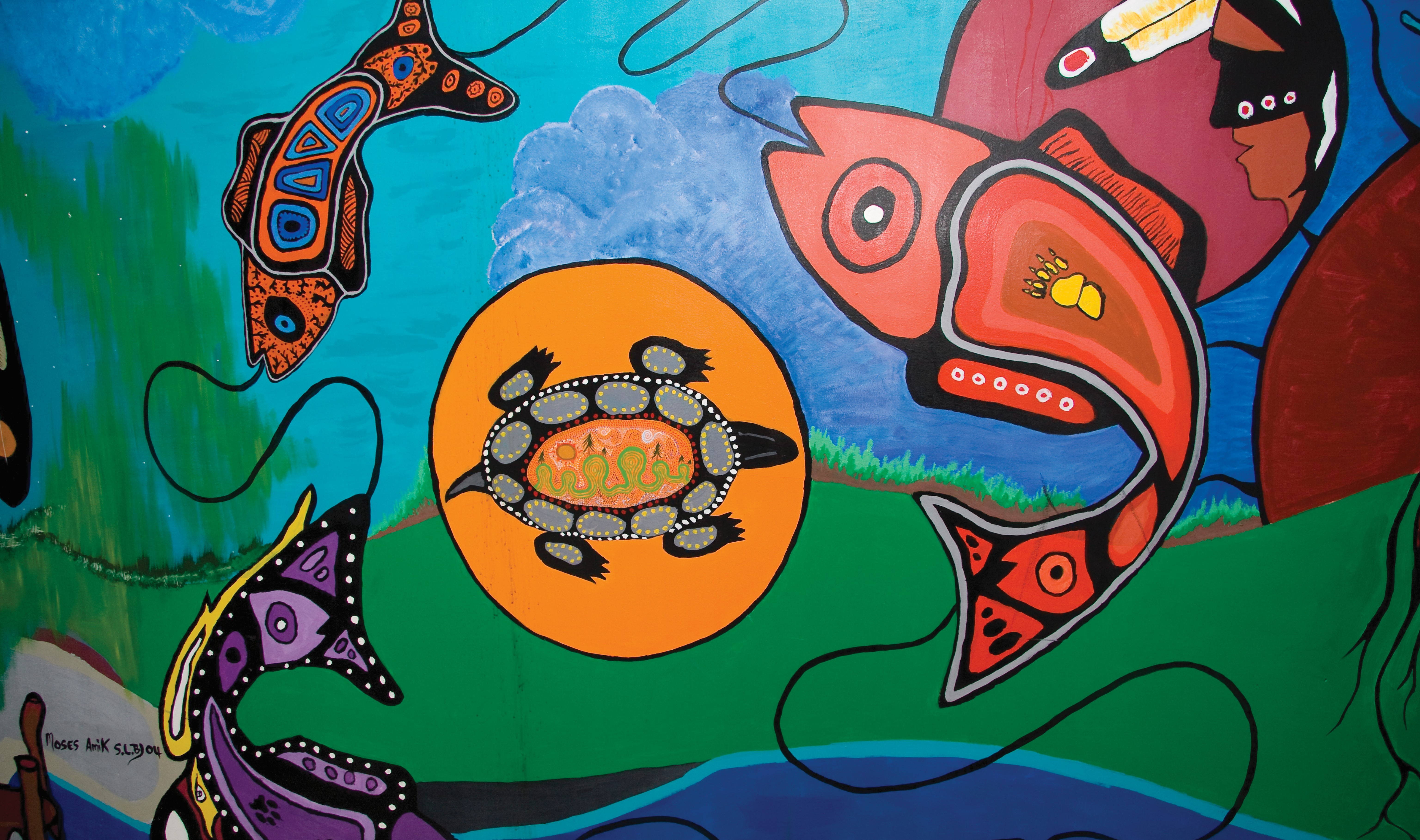
"My research follows the Cree and Metis principle of Wâhkôhtowin, which recognizes that everything and everyone is connected," Teagan says. Artwork credit: Moses Amik
"We're at the information-gathering stage, trying to determine how to adapt the measure to best reflect the students' experiences," Teagan says.
"It's important to me to take a participatory and community-based approach to my research," she adds.
The next steps will be to modify the measure and run a statistical analysis to see if Aaniish Naa Gegii is still valid and reliable.
"This research is where my heart goes because it affects the people in my life," Teagan says.
"The power of representation, and what it can do for Indigenous youth, is transformative."
SSHRC's Storytellers Challenge asks postsecondary students to show Canadians how social sciences and humanities research is impacting our lives, our world, and our future for the better. In June 2026, the national SSHRC Storytellers finalists, including Teagan, will present their research at the Science Writers and Communicators of Canada conference in Montreal. Based on their presentations, five winners will be chosen.