



The Courage of her Convictions
Law Student Jigme Tsering Stands Up for the Marginalized
"There's a saying in my community: If you're born Tibetan, you're born an activist," says third-year law student Jigme Tsering.
As a first-generation Canadian born of refugee parents, she decided to study law as the next step in her longtime interest in environmental justice, social justice, and humanitarian work.
 The Tibetan Canadian Cultural Centre in Etobicoke has been one of the places where Jigme has been able to reconnect with her cultural heritage and engage in advocacy.
It was at the centre that she co-founded Nyamdo Mentorship, a program that pairs youth members with mentors to help them plan for academic and career success.
"To be Tibetan is to inherit a history of displacement and resilience," Jigme explains.
"Following the annexation of Tibet by the People's Republic of China and the 1959 Tibetan uprising, many Tibetans, including my grandparents, were forced into exile."
A Law School Like No Other
Jigme, who grew up in the Toronto area, chose to study at the Bora Laskin Faculty of Law because it's the only Ontario law school to offer a specialization in Indigenous and Aboriginal law.
Since arriving in Thunder Bay, she's become a vital part of the legal community.
She was the Dean's Fellow in Indigenous Law, a position created to foster law students' understanding of Anishinaabe legal traditions.
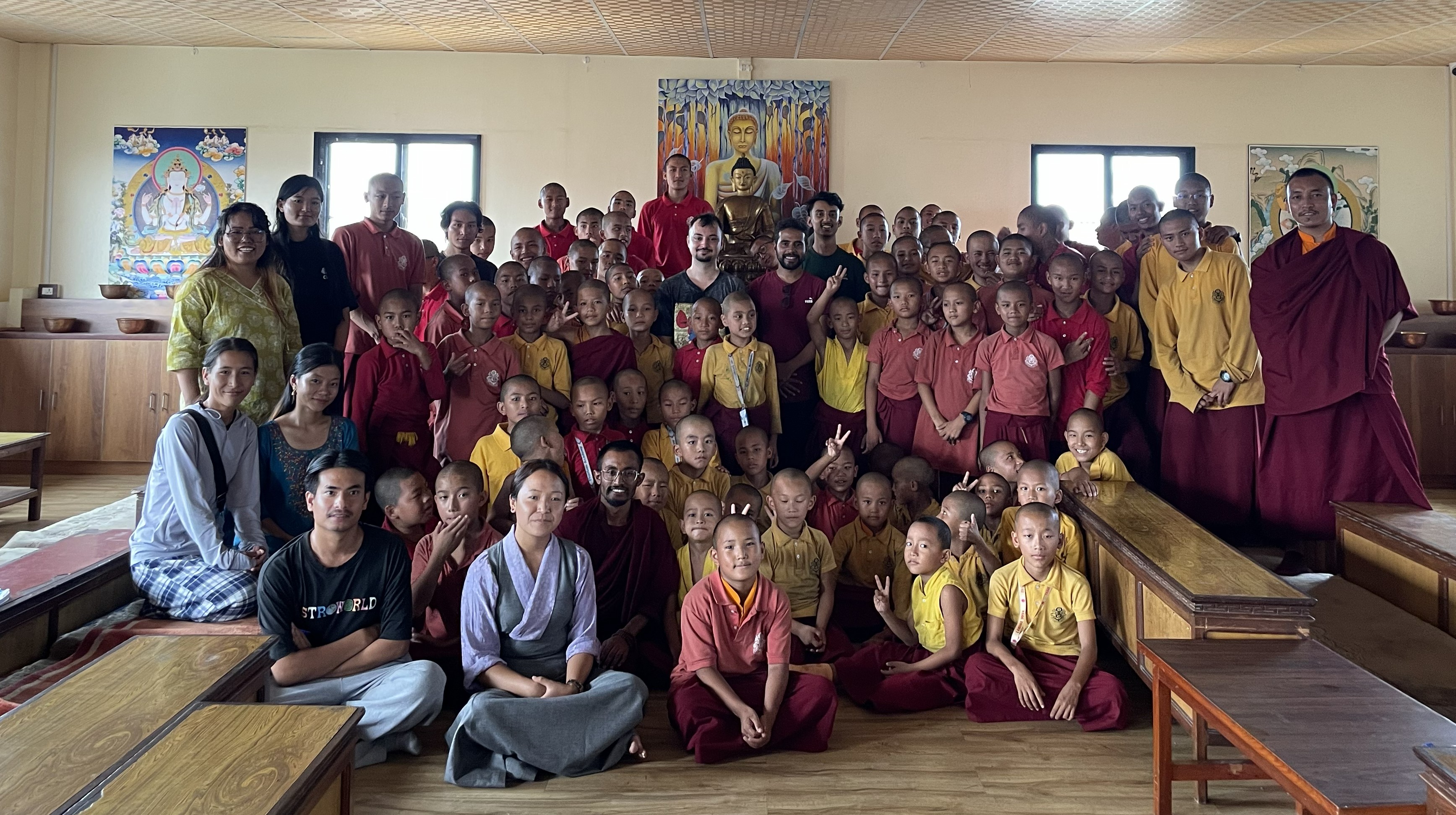
"My grandparents, and other exiled Tibetans, carried their language, faith, and identity across the Himalayas on foot and sought refuge in India and Nepal," Jigme says. Above, some of the students, teachers, and staff of the Tharlam Monastery and Tharlam Academy in Nepal.
She also worked for the Lakehead University Community Legal Services, completed a placement with Legal Aid Ontario's Indigenous Services Division, and was part of the team that helped establish the Indigenous Human Rights Clinic at the Thunder Bay Indigenous Friendship Centre.
"One of the reasons for coming to Bora Laskin was because I wanted to be up north," Jigme says. "I wanted to better understand what the lived experience was like for people."
Equally important to her has been her pro bono work with Legal Advocates for Nature's Defense (LAND) and a summer position with the Canadian Environmental Law Association (CELA).
Fighting Persecution and Environmental Degradation
Jigme's background as the daughter of Tibetan refugees has drawn her to the intersection of economic development and human rights.
"To speak Tibetan, to practice our traditions, or to tell our stories are acts of quiet resistance. This reality has shaped my understanding of the law not just as a system of rules, but as a tool that can either constrain or protect identity, dignity, and self-determination."
Since the 1960s, China has been displacing Tibetans to get access to minerals in the region, damaging sensitive ecosystems in the process.
"Nomadic activists protesting mining on their traditional lands can be disappeared into prisons, and small towns are displaced and flooded for the sake of hydro projects," Jigme says.
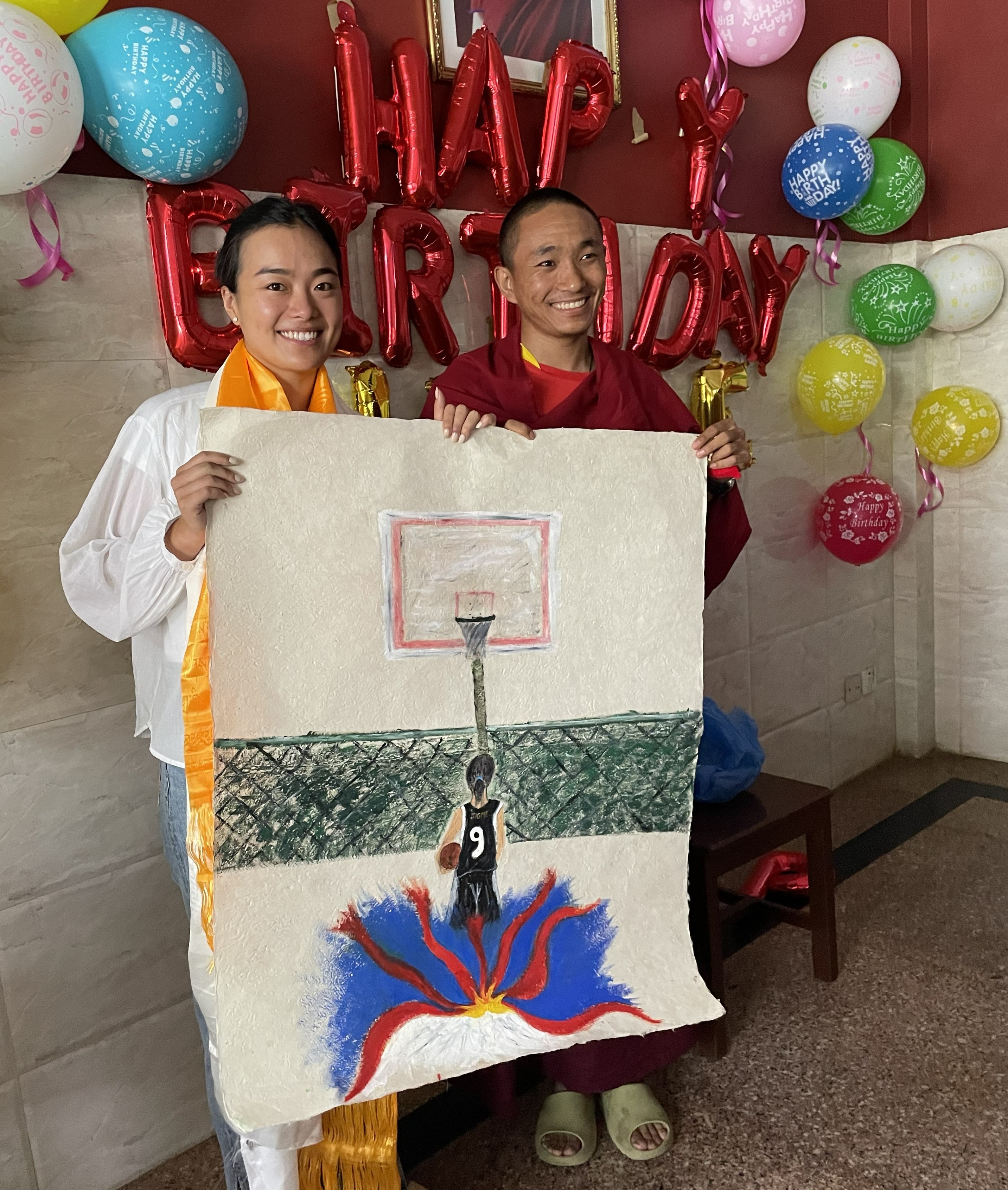
For Jigme's birthday, Sonam, a monk at Tharlam Monastery drew this picture of Jigme playing basketball. "We have a shared love of sports, for him, it's soccer and futsal, and for me, it's basketball," Jigme says.
She sees parallels between the treatment of Indigenous Peoples in Canada and the treatment of Tibetan people by the Chinese government.
For her, mining projects like northwestern Ontario's proposed Ring of Fire, which targets critical minerals on Indigenous lands, raise alarm bells.
"Canada's economy is built on the exploitation of Indigenous land, just as China's is on Tibet.
I decided that the best avenue to confront these issues would be through law by amplifying Indigenous voices, ensuring their interests are meaningfully represented, and demanding accountability when they are not.
I see economic development as a foundation for self-governance, and I am committed to contributing to that work."
Advocating at Home and Overseas
Between 2023 and 2025, Jigme worked as a project coordinator and funding liaison at the Tharlam Monastery in the Kathmandu District of Nepal.
Her time there had a profound impact on Jigme.
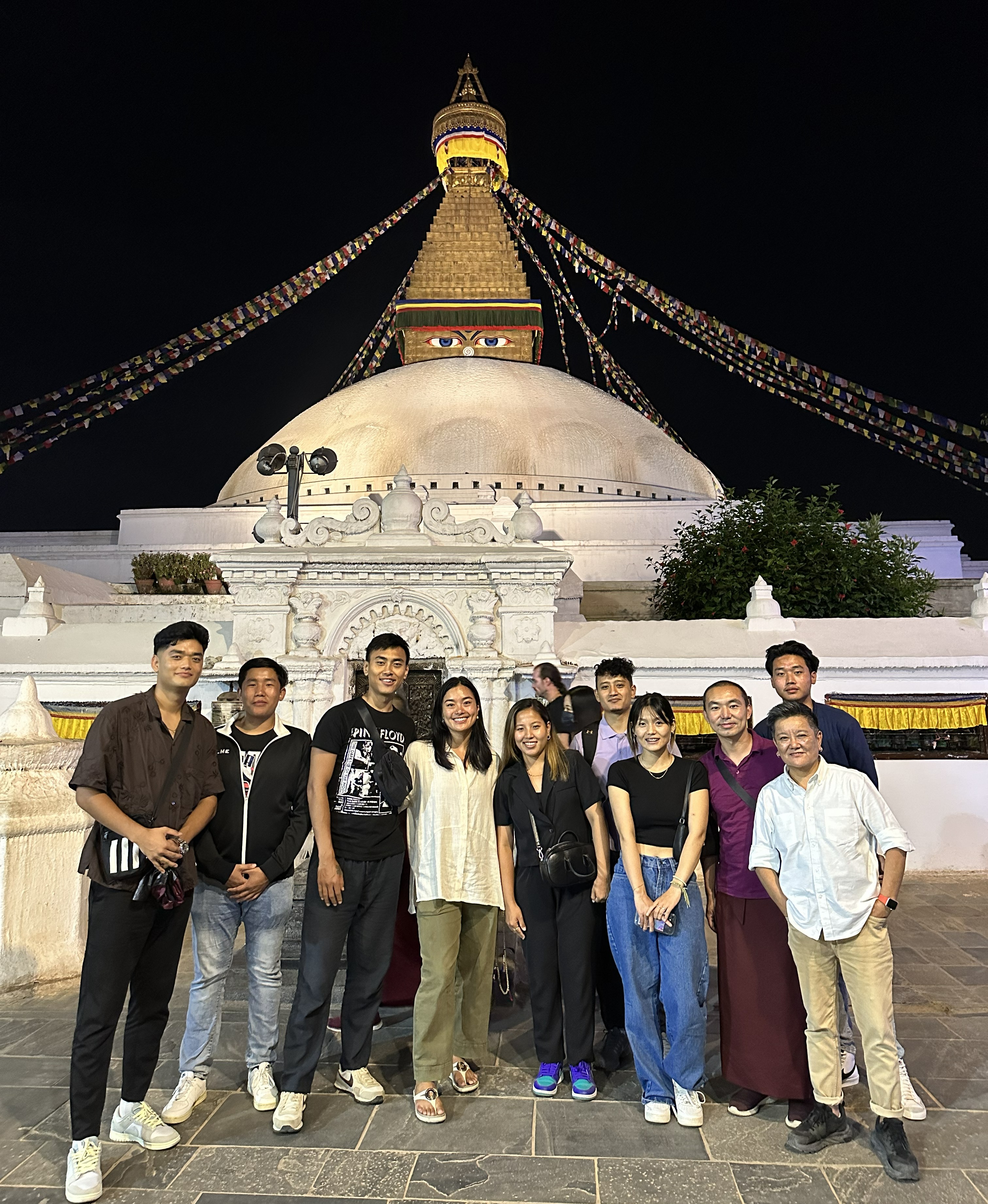
"The landscape surrounding Tharlam Monastery is a very striking contrast between stillness and movement," says Jigme (centre wearing white shirt). "It's a place that offers many opportunities to practice mindfulness and patience." The monastery itself is a quiet refuge tucked away on a residential lane that sprouts off from the busy main road leading to the iconic Boudhanath Stupa (pictured above).
"Despite having no prior connection to Nepal—even though my dad grew up there—it was the first place where I truly felt like I blended into the community, especially in terms of appearance.
That sense of belonging, along with the monastery's quiet energy, made the experience feel both grounding and unexpectedly familiar."
In her role at the monastery, she secured over $100,000 USD for initiatives such as infrastructure for clean potable water. She also got involved in hands-on projects, like helping develop a waste management system where glass, metal, and plastic could be recycled and sold to raise funds.

"As a Tibetan, it was interesting to see the inner workings and management structure of the monastery, something I would not typically be privy to," Jigme says. Left, young boys training to be monks enjoy some down time at the entrance of the monastery.
After graduating from Lakehead this spring, Jigme will work at a private law firm in Toronto that collaborates with Indigenous organizations.
"I'm committed to thinking globally while acting locally and using the law as a means of safeguarding communities whose voices are too often marginalized."