Indigenous

Raising Up the Voices of People Affected by the Opioid Crisis

SSHRC Storyteller Sydney Ambury Advocates for Care and Compassion

The opioid epidemic is taking a toll on families and communities across the country.

In northern Ontario alone, 324 people died from opioids in 2024.

A head-and-shoulders photo of Sydney Ambury smiling and wearing a black shirt, a pendant, and glasses

“Being able to showcase my SSRHC-funded research is huge,” says Sydney, who just successfully defended her master’s thesis. “It’s important to show how we transform grant money into research.”

"Watching this crisis unfold and seeing how people who use drugs are treated as less deserving of care sparked my research," says Master of Social Work student Sydney Ambury.

In 2024, she became a research assistant on a project funded by a Social Sciences and Humanities Research Council (SSHRC) Institutional Grant and led by Lakehead social work professor Abigale Sprakes.

The research—done in partnership with Thunder Bay's Safer Supply Program (SSP)—documented the impact of accessing opioid alternatives.

Safer Supply prescribed alternative drugs to people with opioid-use disorders, allowing them to avoid the unregulated toxic drug supply.

A key component of Sydney's research involved inviting Safer Supply clients to share their experiences in short videos they created together.

A poster saying "I heart someone who uses drugs because..." with reasons written below in marker

"The digital stories are an important piece of advocacy calling for evidence-based and compassionate systems of care," Sydney says. "We need to remind community members that the lives of people who use drugs matter."

"We wanted these digital stories to spotlight the real human beings who relied on the program and to show how the program changed their lives," she says.

This powerful research project led SSHRC to select Sydney as one of 20 national finalists in the 2026 SSHRC Storytellers Challenge.

"It was very exciting to learn I was a finalist," Sydney says. "SSHRC's research funding has allowed the voices of people who are often dismissed to be heard."

A Life-Changing and Life-Saving Program

Thunder Bay's Safer Supply Program had an impressive track record.

It was responsible for a 92% reduction in drug poisonings for participants enrolled in the SSP and a significant decrease in their Fentanyl use, one of the deadliest drugs contributing to the opioid crisis.

"Not a single program participant died the entire time that Safer Supply was running," Sydney reports.

Sydney Ambury, wearing a white sweater and glasses, points at a laptop screen while standing beside a man wearing a black hoodie and a black hat who is seated in front of the laptop

Safer Supply increased clients' connection to family, friends, and the larger community. The program's wraparound services also had a huge positive impact. Safer Supply's support led to an 86% increase in housing for its clients and reduced the amount of time they spent in hospital emergency rooms by 50%.

Many other participants reduced their drug use or stopped using drugs entirely.

But SSP's impact went far beyond reducing the harms of drug use.

"The staff did a great job of being welcoming and inclusive," Sydney says. "Safer Supply provided meals if clients were hungry, a place to nap, and connected them with health and social services, including housing."

Vulnerable People are Falling through the Cracks

"I am healthier, happier, and loved because of Safer Supply," says Peanut, one of the digital storytellers.

"Before Safer Supply, I wanted to die," adds Solo. "Safer Supply helped me want to live."

Unfortunately, the federal government stopped funding Safer Supply Programs in March 2025—putting the people who relied on them in jeopardy.
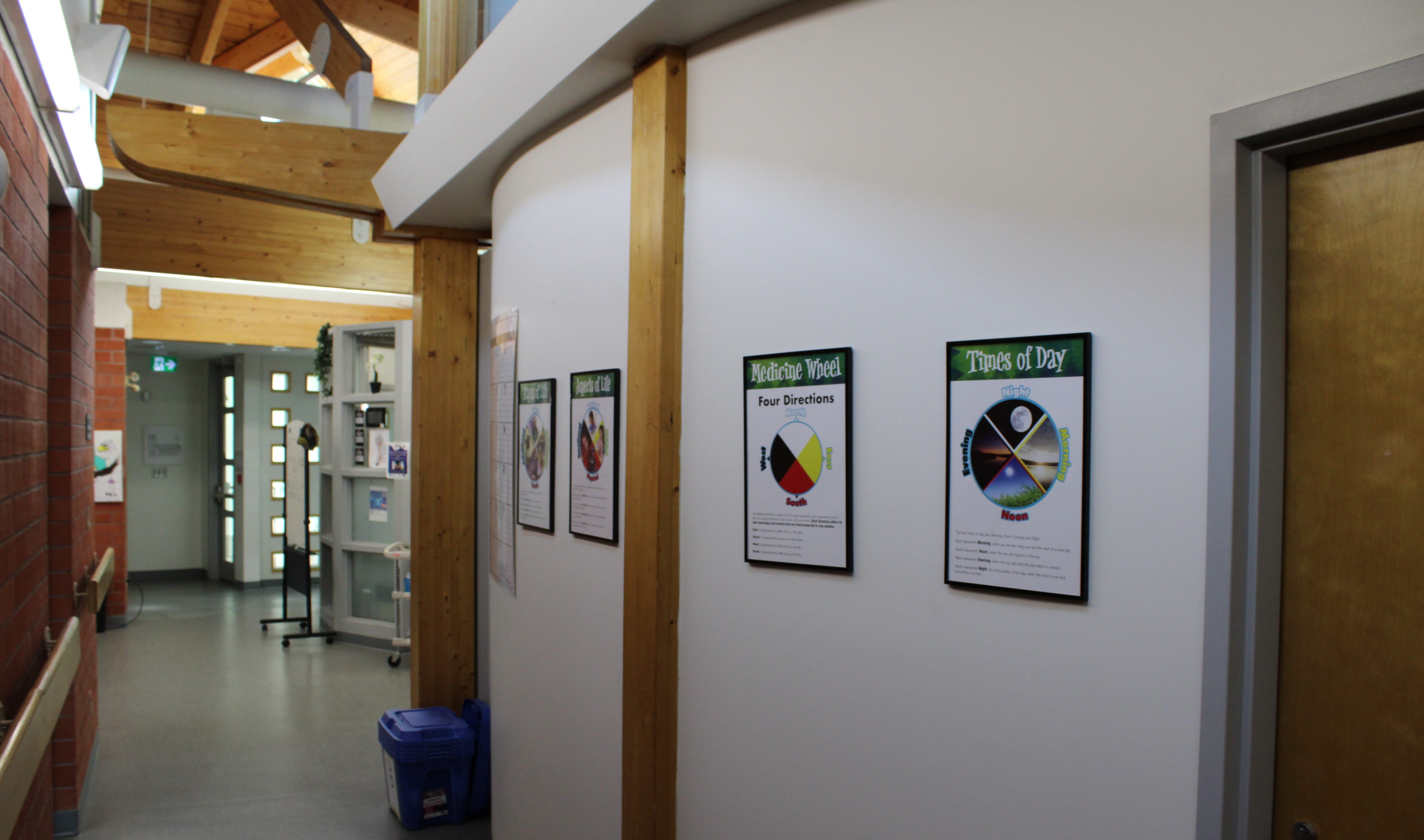
A view of a curved hallway and the doorway of a building with a brick wall and wooden ceiling beams

Thunder Bay's Safer Supply Program was shut down while Sydney was conducting her research in 2025. "I saw how cared for and valued Safer Supply participants felt, and their grief and fear when they learned that the program was closing," she says.

"Provincially, there's been a shift to an abstinence model when it comes to treating drug use," Sydney says.

"It ties into the misguided idea of expecting people to pull themselves up by their bootstraps, without taking into account all the factors affecting them."

Exterior view of the NorWest Community Health Centres building

As an undergraduate student, Sydney conducted opioid research with Lakehead social work professor Abigale Sprakes. "I was part of the Thunder Bay Safer Supply program evaluation team. During the evaluation, some of Safer Supply's clients and staff said they wished they could show people what was happening at Safer Supply.

While there's no typical substance user, clients of SSP were more likely to be struggling with challenges like homelessness and food insecurity.

Now, their primary treatment option is the new Homelessness and Addiction Recovery Treatment (HART) Hubs.

"These hubs focus entirely on abstinence and offer no harm-reduction services," Sydney says.

"But we need both approaches to provide the full scope of care required, rather than trying to force people who use drugs into societal beliefs about what they 'should' want."

She believes that the decrease in harm-reduction approaches makes it even more crucial to share the stories of Safer Supply clients with educators, healthcare providers, and policymakers.

As Sydney says in the closing of her SSHRC finalist video:

"These stories advocate for compassion. They are people asking to be heard. Are you listening?"

SSHRC's Storytellers Challenge asks postsecondary students to show Canadians how social sciences and humanities research is impacting our lives, our world, and our future for the better. In June 2026, Sydney, and 20 other national SSHRC Storytelling finalists, will present their research at the Science Writers and Communicators of Canada conference in Montreal. Based on their presentations, five winners will be chosen.
A rare ecosystem has survived an ice age, but can it survive humans?

Researcher Dr. Gerardo Reyes is Working to Protect Alvar Landscapes

Ecologist Dr. Gerardo Reyes's curiosity has been captured by alvars—a habitat found in only a few places around the globe.

These unusual and biodiverse landscapes are characterized by exposed limestone bedrock and a patchwork of thin mineral-rich soils.

"Alvars are relics," says Dr. Reyes, a Lakehead Orillia Biology and Sustainability Sciences associate professor.

"They've remained virtually unchanged since the last ice age 12,000 years ago."

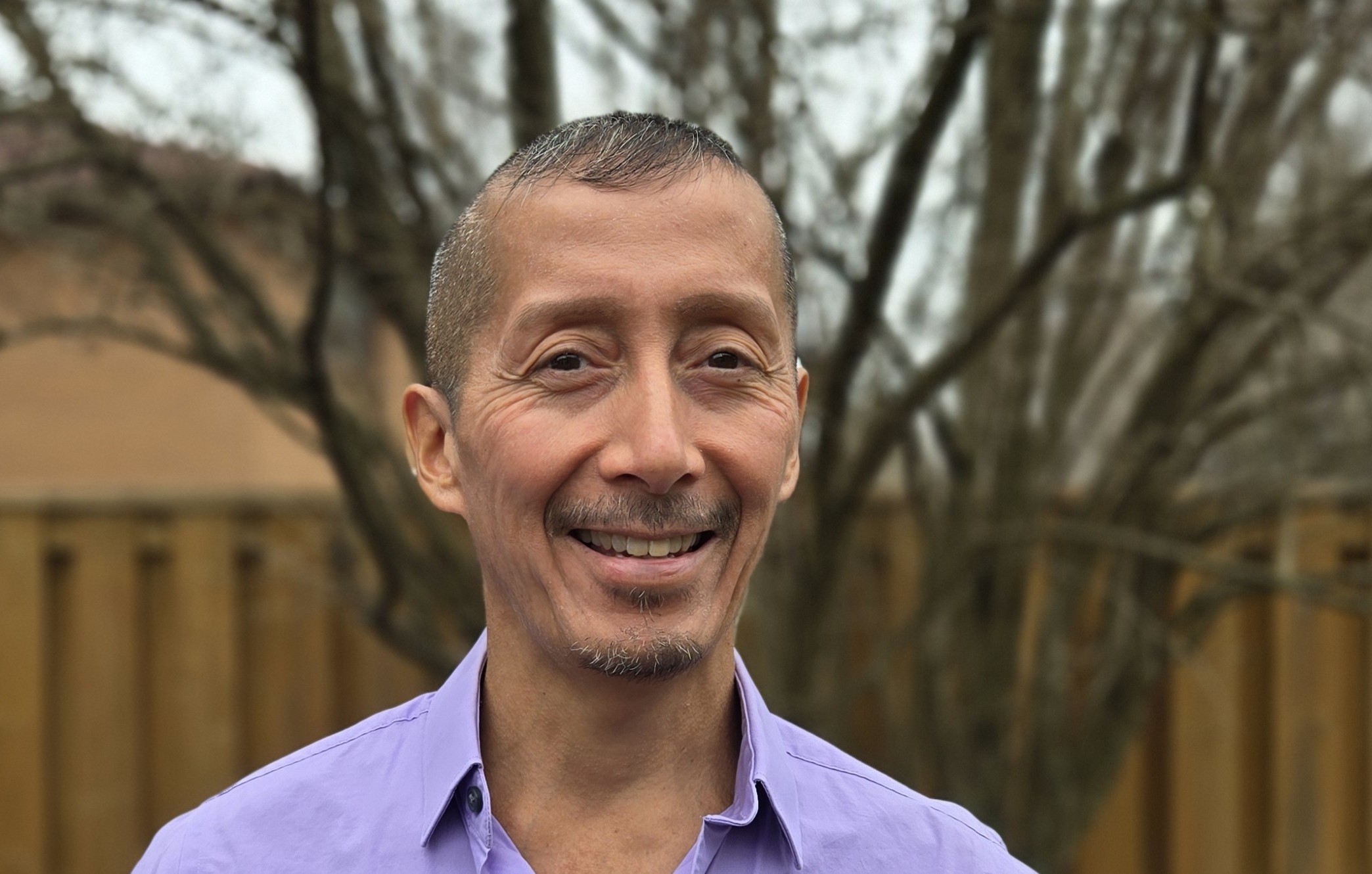
A head-and-shoulders photo of Dr. Gerardo Reyes, wearing a purple shirt, standing in a yard with a tree and a wooden fence visible in the background

Dr. Reyes is a population and community ecologist focused on species conservation, socioecological resilience, and the scholarship of teaching and learning.

Dr. Reyes and his research team want to develop sustainable grazing practices to balance the needs of agriculture with the conservation of alvar ecosystems.

They're doing this through fieldwork analyzing the vegetation and abundance of alvar species and by mapping land use over time.

Endangered Species Thrive in Alvars

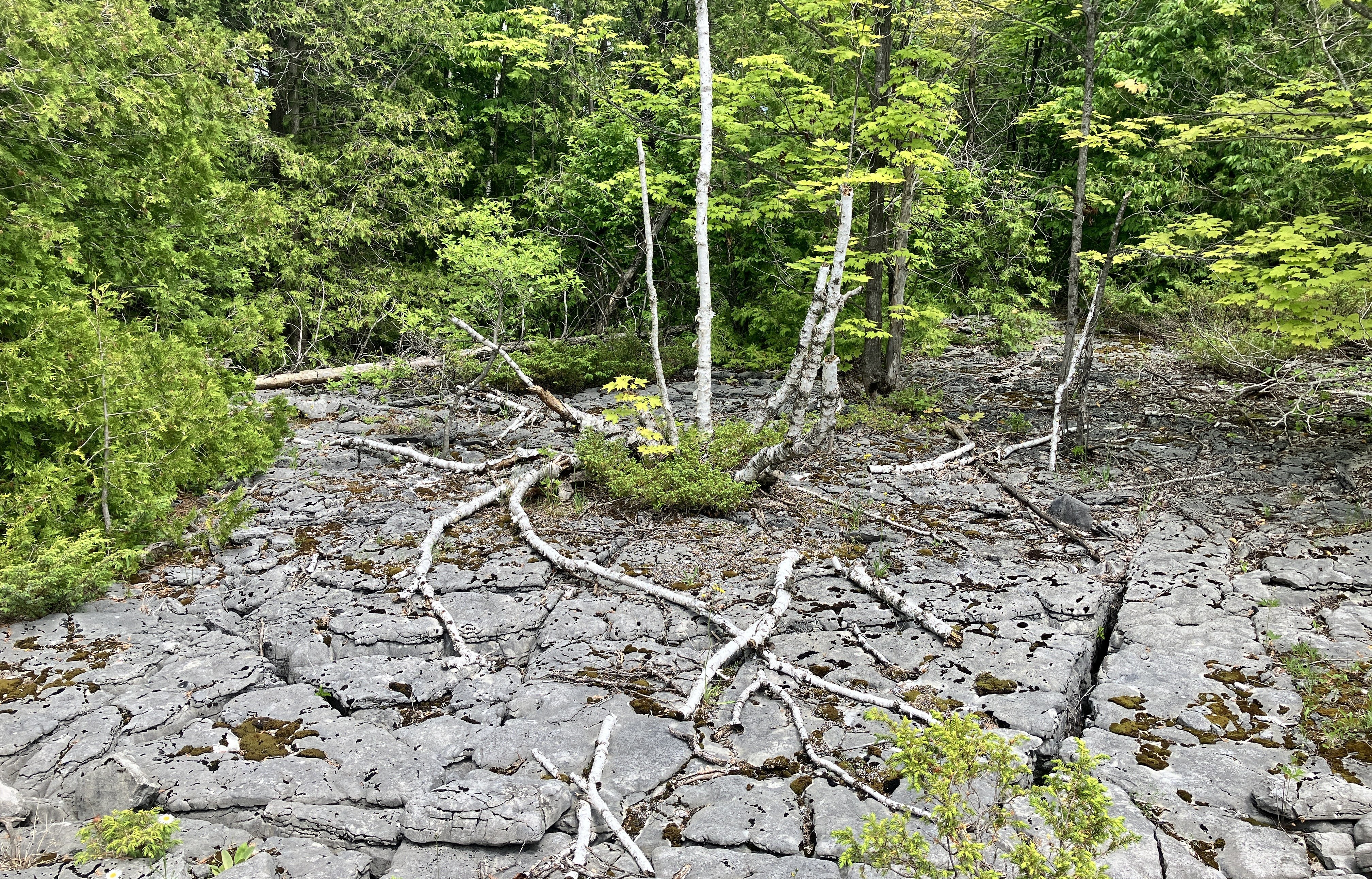
In the spring the alvars flood, in the summer they sizzle through drought, and the rest of the year they crack and heave with frost.

Much of the vegetation found in alvars is a mishmash of what would normally grow in alpine, grassland, or arctic conditions.

Rocky ground covered with lichen and surrounded by trees and bushes; a dying birch tree is in the middle of the outcropping

Trees such as white birch can grow in the fissures of alvars, provided enough soil and moisture is retained. Trees also deepen the fissures through root development. The microhabitats they help create can maintain vegetation cover during the drought periods of late summer.

Alvars are also the home of rare and endangered plants, as well as plant species that have been separated from other populations of the same species found further north or south.

Despite the rarity of alvars, Dr. Reyes doesn't have to venture far from his doorstep to study them.

Remarkably, 75% of the world's alvars are found in Ontario.

The Carden Plain, around the Kawartha Lakes region, is the site of Dr. Reyes's research.

It's there that native fauna including the juniper hairstreak butterfly and the bobolink songbird flit among dwarf lake iris, tiny mousetail, and juniper sedge.

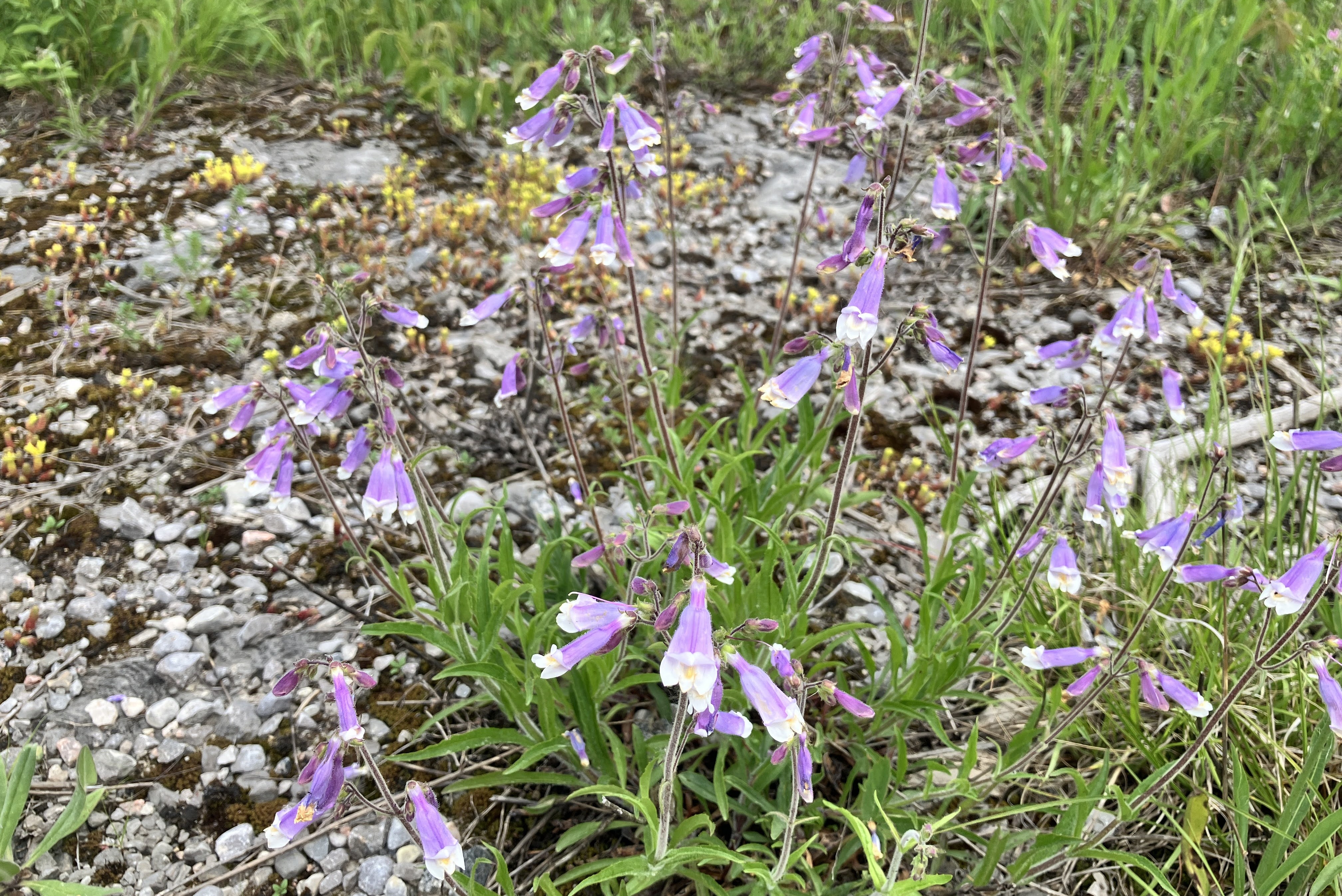
A cluster purple bell-shaped wildflowers growing in a rocky area

Beardtongue plant (Penstemon hirsutus) is a drought-tolerant native perennial that attracts native checkerspot butterflies and many bee pollinators, making it important for maintaining biodiversity.

Not surprisingly, areas like the Carden Plain are a popular spot for birders and nature lovers.

They are attracting unwelcome visitors, too, which concerns Dr. Reyes.

He says that the Carden Plain is under pressure from urban development, quarrying, livestock grazing, off-road vehicle use, and invasive species.

Can cows help save this fragile habitat?

Dr. Reyes—along with Biology and Sustainability Sciences professor Dr. Nanda Kanavillil and graduate student Brandon Guoth—are taking a closer look at these pressures, particularly at how cattle grazing affects this unique environment.

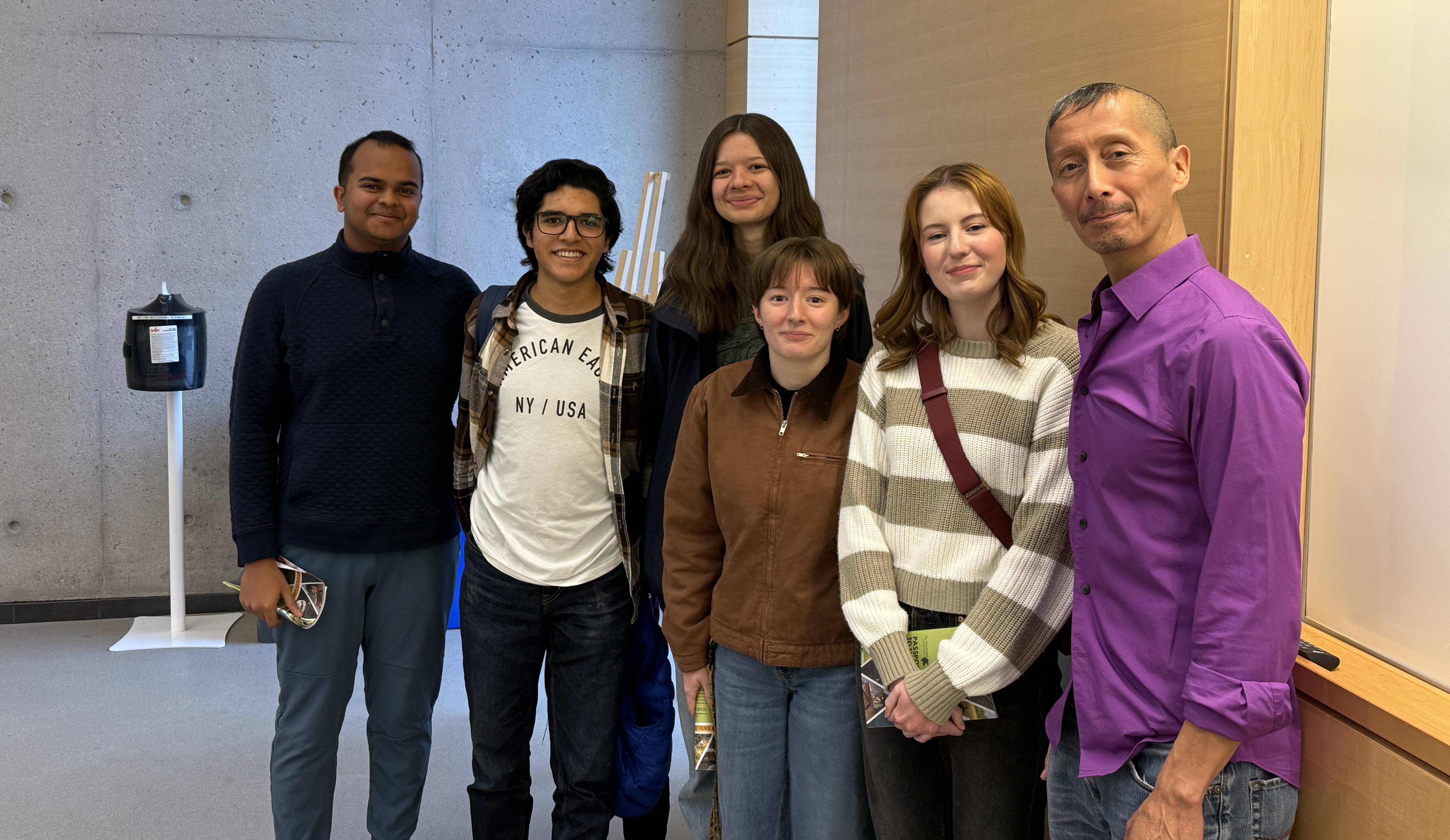
A group of six people, including Dr. Gerardo Reyes, stand beside each other in a building with concrete walls and wooden panelling

Dr. Reyes and Lakehead sustainability sciences students (left to right): Avi Balroop, Mateo Velasco, Emily De Geus, Holland Dunlop, and Mika Mackay. Emily and Holland are members of Dr. Reyes's alvar research team.

A portion of the Carden Plain is owned by conservation groups who lease it to ranchers so that groups of 50 to 100 head of cattle can graze there in the spring and early summer.

"We're trying to determine what level of grazing is okay to maintain biodiversity and natural conditions," Dr. Reyes says.

"At what point is it too many cattle for too long a period of time?"

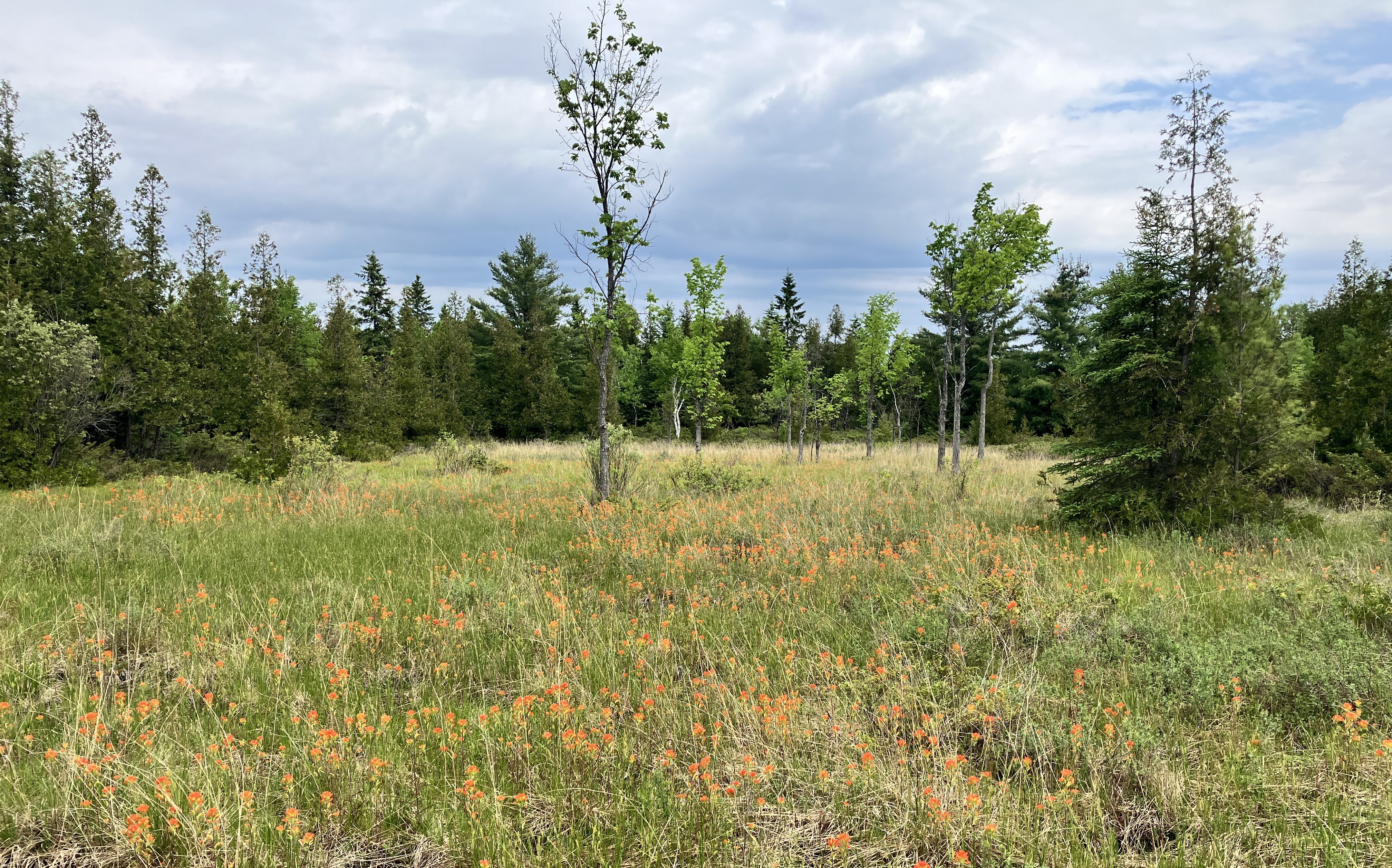
A field filled with orange wildflowers and surrounded by trees

Cattle may stop trees from encroaching on open alvar habitat. This could conserve grassland habitat for at-risk bird species like the bobolink and the eastern meadowlark.

One negative effect may be that the cattle are inadvertently spreading invasive species—or aggressive native species—by scattering seeds as they walk or via their droppings.

On the other hand, cattle grazing may protect alvars by enriching the soil and maintaining its open grassland structure and plant diversity.

Taking Action to Safeguard Biodiversity

Dr. Reyes's alvar research is a newer field of study for him, but it connects with his commitment to socioecological resilience.

"Historically, I've worked mostly in forests," Dr. Reyes explains.

"I study the impacts of harvesting practices such as clear-cutting and partial cutting on forest regeneration and look for ways to better manage our forest resources.

Alvars are a different ecosystem, but they face the same issue—trying to make sure that natural resource use is carried out in a sustainable way.

We want to ensure that we're stewards of our resources."

Dr. Reyes and Dr. Kanavilil's alvar research has received funding from Lakehead's Office of Research Services, the City of Orillia, and private donors. Research team member Brandon Guoth also received funding from the Orillia Fish and Game Conservation Club.

Red Dress Day Calls on Us to End a National Tragedy

Activist Tamara Bernard is Fighting Alongside Indigenous Women and Girls

Content Warning: This article discusses physical and sexual violence

Tamara Bernard often tells the story of two Indigenous women—Jane Bernard, a 43-year-old wife and mother, and 18-year-old Doreen Hardy, who was just beginning her life.

After a visit to Thunder Bay in 1966, Jane and Doreen needed to return home to Gull Bay, Ontario, so they accepted a ride from a seemingly helpful stranger.

They were never seen again by their loved ones.

"They were murdered in what remains an unsolved double homicide," Tamara says.

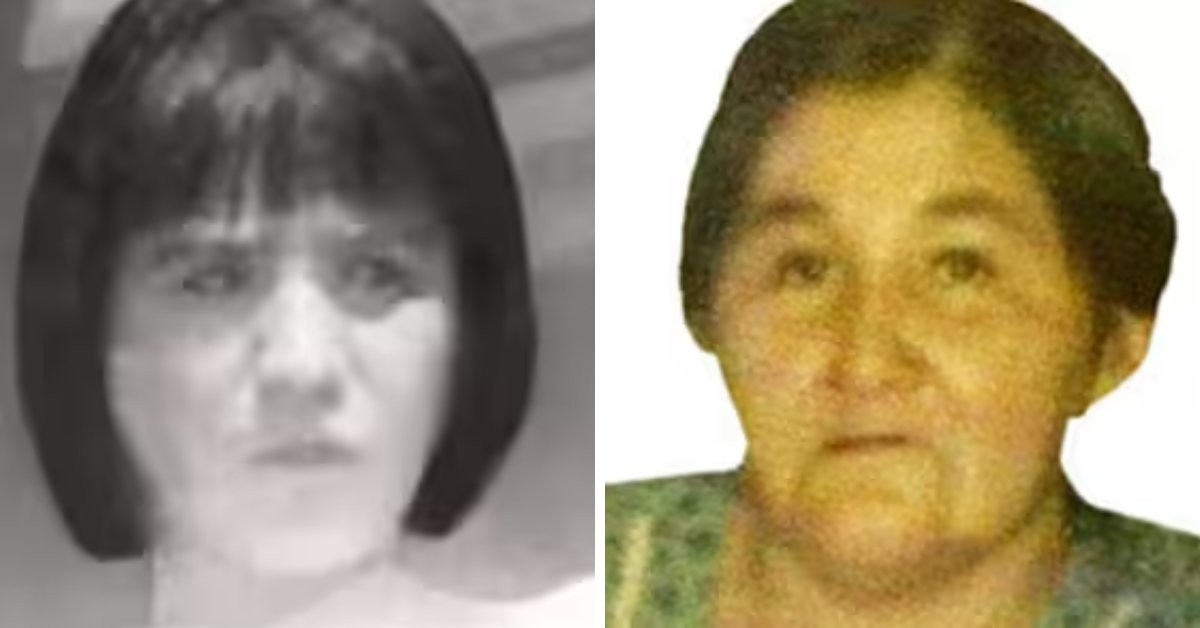
A black-and-white photo of Doreen Hardy next to a colour photo of Jane Bernard

 Doreen Hardy (left) and Jane Bernard (right) were murdered in 1966.

Jane Bernard was Tamara's great-grandmother. "Trauma from colonial violence has defined my career," she adds.

Tamara is a Lakehead University PhD Educational Studies student, researcher, and activist engaged in thought-provoking public education work aimed at spurring change.

An Enduring Crisis

Although violence against Indigenous women and girls is commonly perceived as a newer phenomenon, it's longstanding and entrenched.

Despite this reality, most research investigating violence against Indigenous women and girls in Canada concentrates on the period between 1980-2012.

Tamara's family case from 1966 falls outside this narrow and misleading timeline.

Addressing this gap and advocating for recognition that violence has existed since first contact has become a focus of Tamara's work.

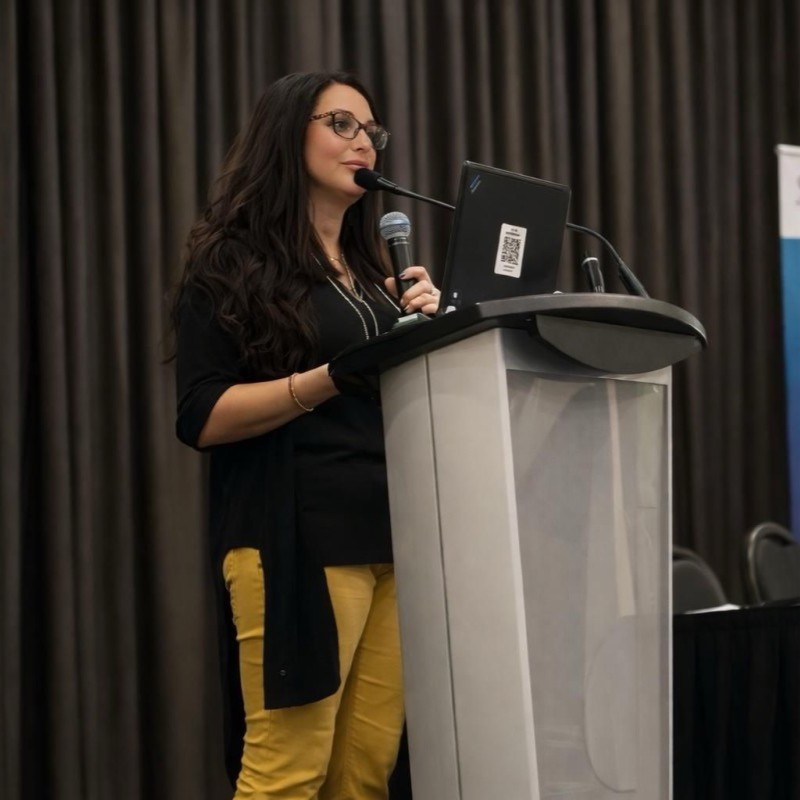
Tamara Bernard stands at a podium holding a microphone

Tamara teaches at Lakehead University's Department of Indigenous Learning and at the Seven Generations Education Institute. She also delivers specialized training to municipal, provincial, and Indigenous police services, parole and probation officers, and other organizations.

"Our women were traded as commodities in the Hudson's Bay Company beginning in the 1600s. This has been normalized and has led to the dehumanization and sexualization of Indigenous women and girls.

In fact, Canada was developed through the enslavement of Indigenous women and girls, predominantly in the Ontario and Quebec regions," says Tamara, who is herself a survivor of violence.

"It was the government's agenda to civilize us to death.

This dehumanization, and ideologies that view Indigenous girls as less human and of less value, are predominant in contemporary society's thinking, which is clear when looking at the crisis of violence against Indigenous women and girls."

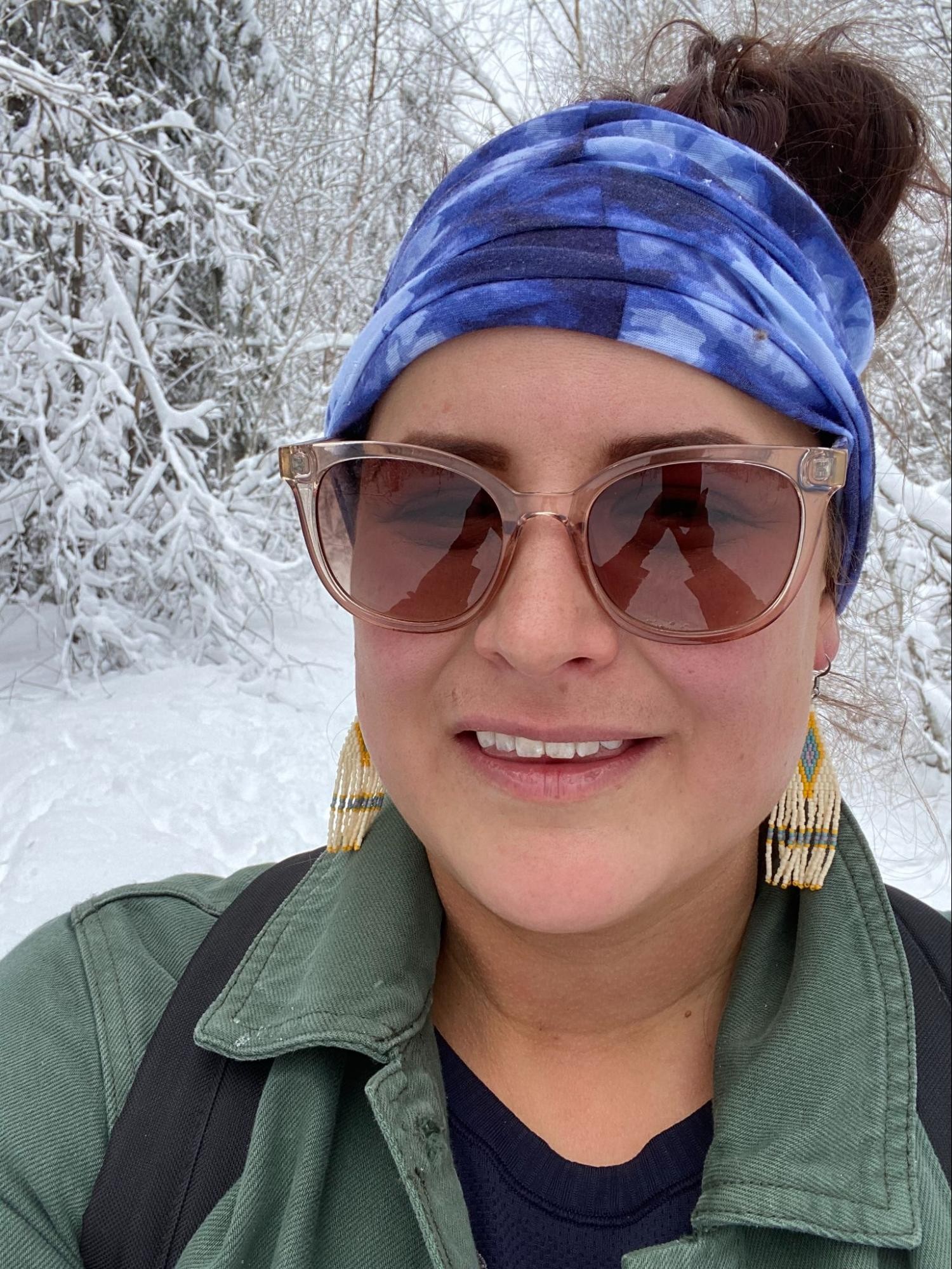
A head-and-shoulders photo of Tamara Bernard, wearing sunglasses and beaded earrings, standing in front of snow-covered trees

"We focus on the Highway of Tears in British Columbia when we think about Missing and Murdered Indigenous Women and Girls, but if we don't act now, Highway 11-17 will become the new Highway of Tears," Tamara says.

'The homicide rate for Indigenous women and girls is over six times higher than that of non-Indigenous women and girls. A staggering 63% of Indigenous women in Canada have also experienced physical or sexual assault in their lifetime.

The National Inquiry into Missing and Murdered Indigenous Women and Girls also revealed that Indigenous women and girls are 13 times more likely to experience violence compared to non-Indigenous females.

Now they are contending with a dramatic increase in human trafficking.

More than Murdered and Missing

This violence led Tamara to establish Tamara Kwe Indigenous Consulting in 2014 to respond to the missing and murdered Indigenous women, girls, and 2SLGBTQI+ (MMIWG2S+) crisis.

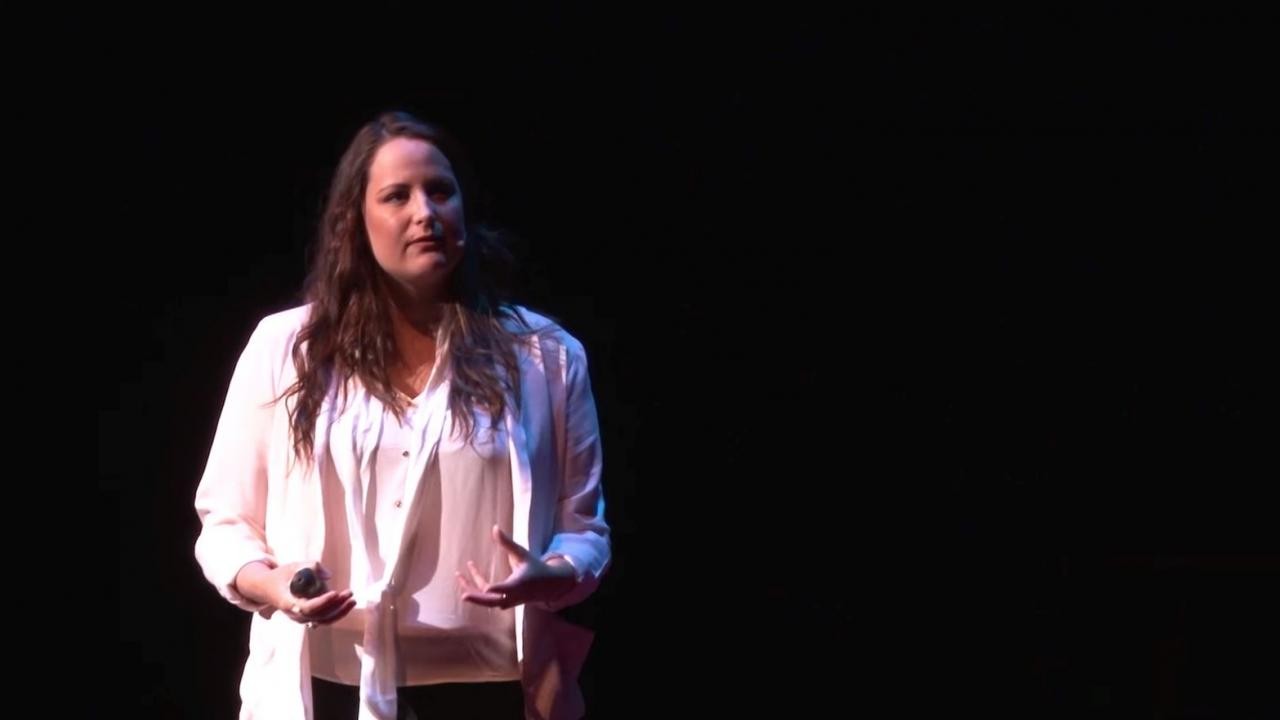
Tamara Bernard holds a microphone in one hand and gestures with her other hand

Racism and sexism cast a long shadow in Canada. "I don't know a single system that doesn't need to be dismantled and rebuilt to adequately support Indigenous women and girls' needs, whether it's the health care, justice, education, or social services systems," Tamara says.

Tamara is also a member of the Ontario Domestic Violence Death Review Committee, and its Indigenous Subcommittee, where she does death reviews. Her goal is to reduce intimate partner violence by examining and analyzing how systems are responding and identifying any points of missed interventions.

"We are in this space of grief that is hard to overcome," she says, "but I don't want other Indigenous young women or girls to experience what I did when I was growing up.

I'm always asking how we can fill the cups of younger women and children so that they learn about Indigenous women in a positive and strengths-based way and not through deficient ideologies or a dehumanizing culture."

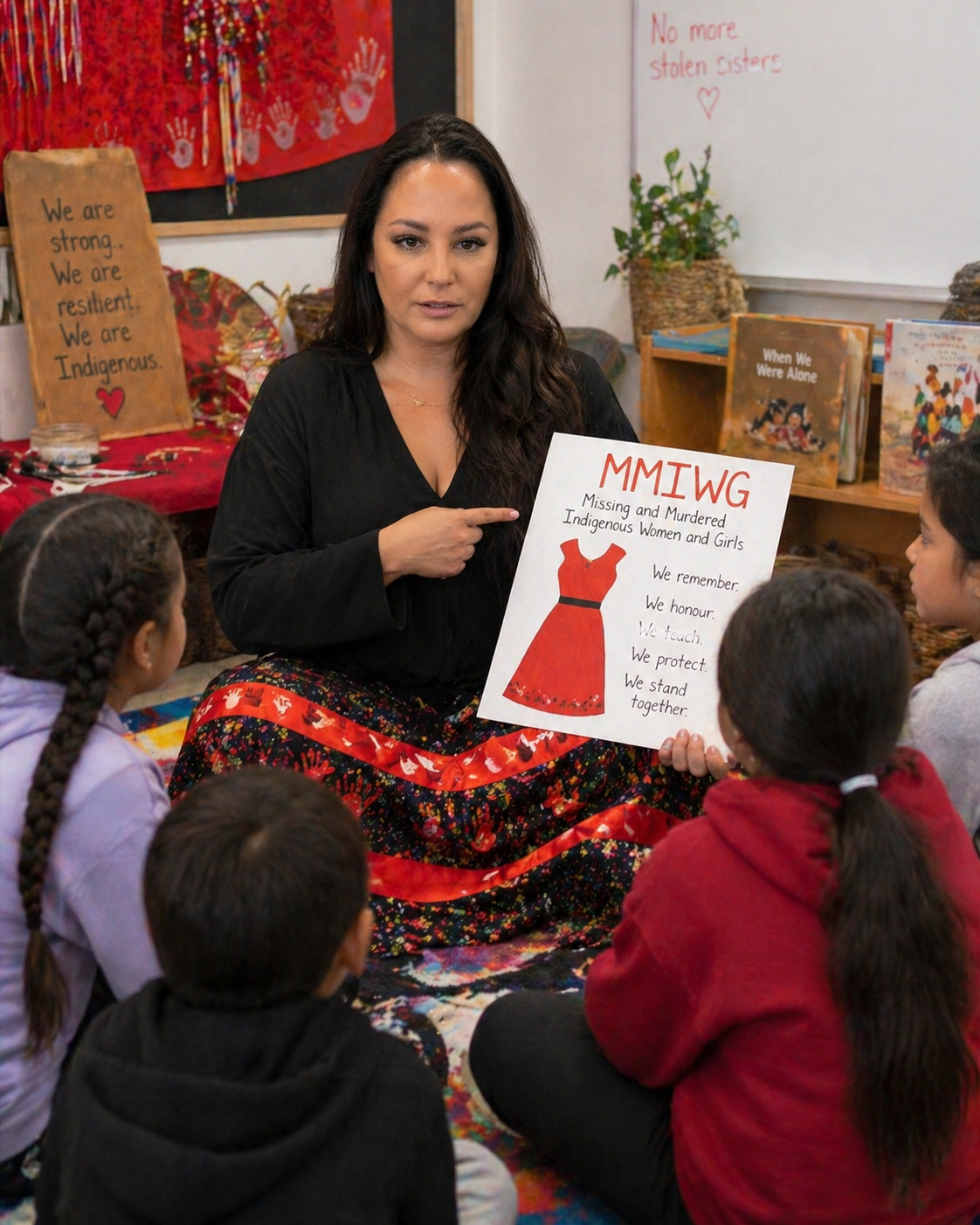
Schoolchildren seated on the floor around Tamara Bernard listen to her speak

Tamara speaks nationally and internationally, but some of her most important work is speaking to grade 6-8 students. “As a prevention strategy, part of my talks discuss love bombing, grooming, and how to identify a safe adult because girls these ages are at risk of being trafficked.”

One way that Tamara does this is through her Lakehead research.

Her master's thesis—the first of its kind in Canada—used intergenerational storytelling between a grandmother and granddaughter to honour her great-grandmother, Jane Bernard, who is one among MMIWG.

In her study, Tamara and her grandmother shared their stories through letter writing, kitchen table conversations, sharing meals, ceremonies, and reflections.

"My grandmother was given the opportunity to talk about her mother Jane Bernard and to honour her. It healed her in unexpected ways, and it healed me, too.

This is intergenerational healing between grandmother and granddaughter when gathering and sharing knowledge (Indigenous research) is done in a good way (Mino-Bimaadiziwin)."

Her Grandmother's Bundle

In the process of her master's work, Tamara has become a nationally recognized pioneer of Indigenous, story-based research methodologies.

Her PhD research is building upon this work.

It focuses on Anishinaabe women's experiences in post-secondary education, particularly in northwestern Ontario at Lakehead's Thunder Bay campus.

"I want to better understand how institutions like Lakehead can support Indigenous women—not just in accessing education, but in escaping violence, rebuilding stability, and thriving."

Tamara Bernard, holding a marker in one hand, stands in front of a whiteboard

Tamara's PhD research entitled "My Grandmother's Bundle" is being completed at Lakehead University through a SSHRC-funded grant (a $105,000 Doctoral Fellowship). It examines violence against Indigenous women as a continuation of colonial systems, while also exploring how Indigenous women navigate pathways to safety, healing, and self-determination. "Grounded in Indigenous methodologies and storywork, I centre lived experience to understand how systems like education, justice, and child welfare shape both vulnerability and resilience," Tamara says. "A key focus of my work is how post-secondary education can serve as a pathway out of violence, even as it exists within colonial structures. Ultimately, my research aims to identify systemic gaps and advance culturally grounded, community-driven responses that support Indigenous women's safety and well-being within their education journey."

Tamara's grandmother earned an education degree at Lakehead, which gave her the autonomy to walk away from domestic abuse in the early 1990s. Tamara is seeing this exit strategy repeat itself today with other Indigenous female learners at Lakehead.

"That's why the title of my PhD research is 'My Grandmother's Bundle,'" Tamara says.

"The stories of my matrilineal line—and those of other Indigenous women I have walked with to exit various forms of violence—have guided me to the focus of my PhD dissertation. That is what I mean when I say colonial violence has defined my career.

I often wonder who I would be if these things hadn't happened to me or my family, or other Indigenous women for that matter.

I encourage everyone to talk about the crisis of violence against Indigenous women and girls in Canada, especially in the Thunder Bay District.

Get educated and become aware because discussing these issues is crucial. It's important to note that making crafts and participating in MMIWG2S+ walks is fine, however, this does not change the ongoing issue."

Tamara will be talking about Jane and Doreen's lives in the public lecture, "Stories That Must be Told." This event commemorating Red Dress Day takes place on Friday, May 1, from 6:00 to 7:30 pm at the MacGregor Recreation Centre in Shuniah. Click here for more information. 

Click here to watch Tamara's powerful TEDx Thunder Bay talk, "We are more than murdered and missing."

You can show your support on Red Dress Day by:

  • Wearing red and wearing Red Dress Day pins
  • Hanging a red dress in your window or yard
  • Taking part in walks, vigils, and rallies in your community
  • Donating to the Ontario Native Women's Association or to the Beendigen Indigenous Women's Shelter (Tamara's talk on May 1 is requesting donations to Beendigen)
  • Sharing Red Dress Day images on social media with the hashtags:
    #MMIWG2S
    #RedDressDay
    #WhyWeWearRed
    #NoMoreStolenSisters
    #reddressproject

Learn more by reading:

Supports for Indigenous Community Members:

You can also find more information about this national day of awareness by visiting Amnesty International's Red Dress Day 2026.

Alumni Spotlight: Community Leader Erin Beagle

She's Helped Create a Place Where Everyone Knows Your Name

"I love people," says Lakehead alum Erin Beagle (BEd'05).

Anyone familiar with her long history of community work can attest to this fact.

Erin joined Thunder Bay's Roots to Harvest when it was founded in 2007 and now serves as its executive director.

It's a grassroots organization—now known as Roots Community Food Centre—that uses food to connect people and to foster dignity through meaningful programs, initiatives, and advocacy.

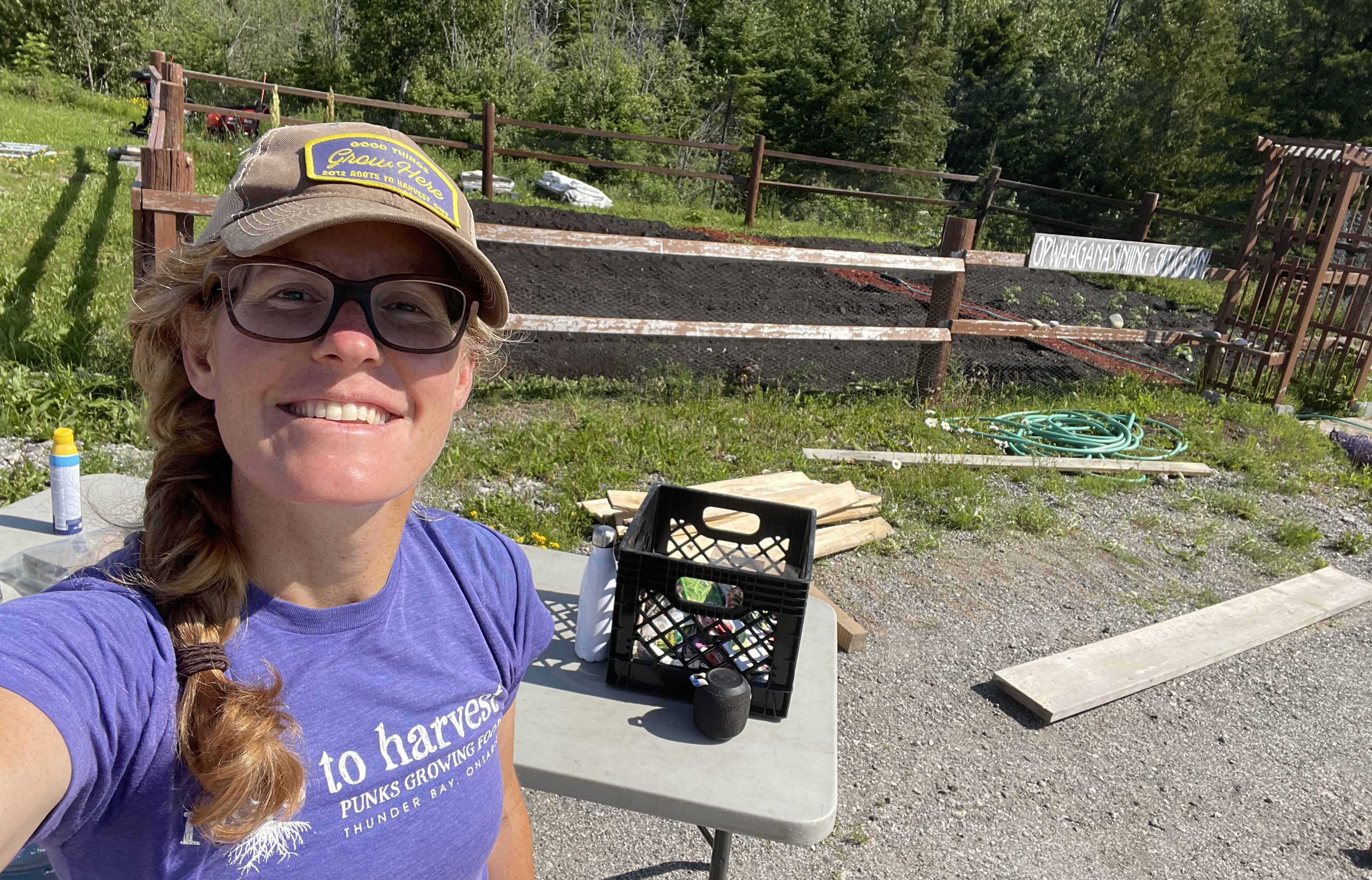
Erin Beagle, wearing a baseball cap and glasses, stands beside a fenced-in garden

Erin (above) says that one of her favourite dishes prepared in the Roots kitchen is their whitefish chowder. "We serve it at the Empty Bowls fundraiser that benefits Shelter House and the Thunder Bay Food Bank."

"People are what keeps me coming back," Erin says. "I get inspired by my staff, colleagues, and the people we serve."

She's also energized by the sheer variety of her work.

"One day I might be writing a grant, the next day I might be changing a car battery, giving a talk at a school, or beekeeping.

"Right now we're learning maple syrup production and accessing local foods to use in school classrooms and the Roots kitchen."

Taking a Walk on the Wild Side

Erin grew up in Prince George, British Columbia, and spent her summers at the Educo Adventure School, which gave her a passion for outdoor education.

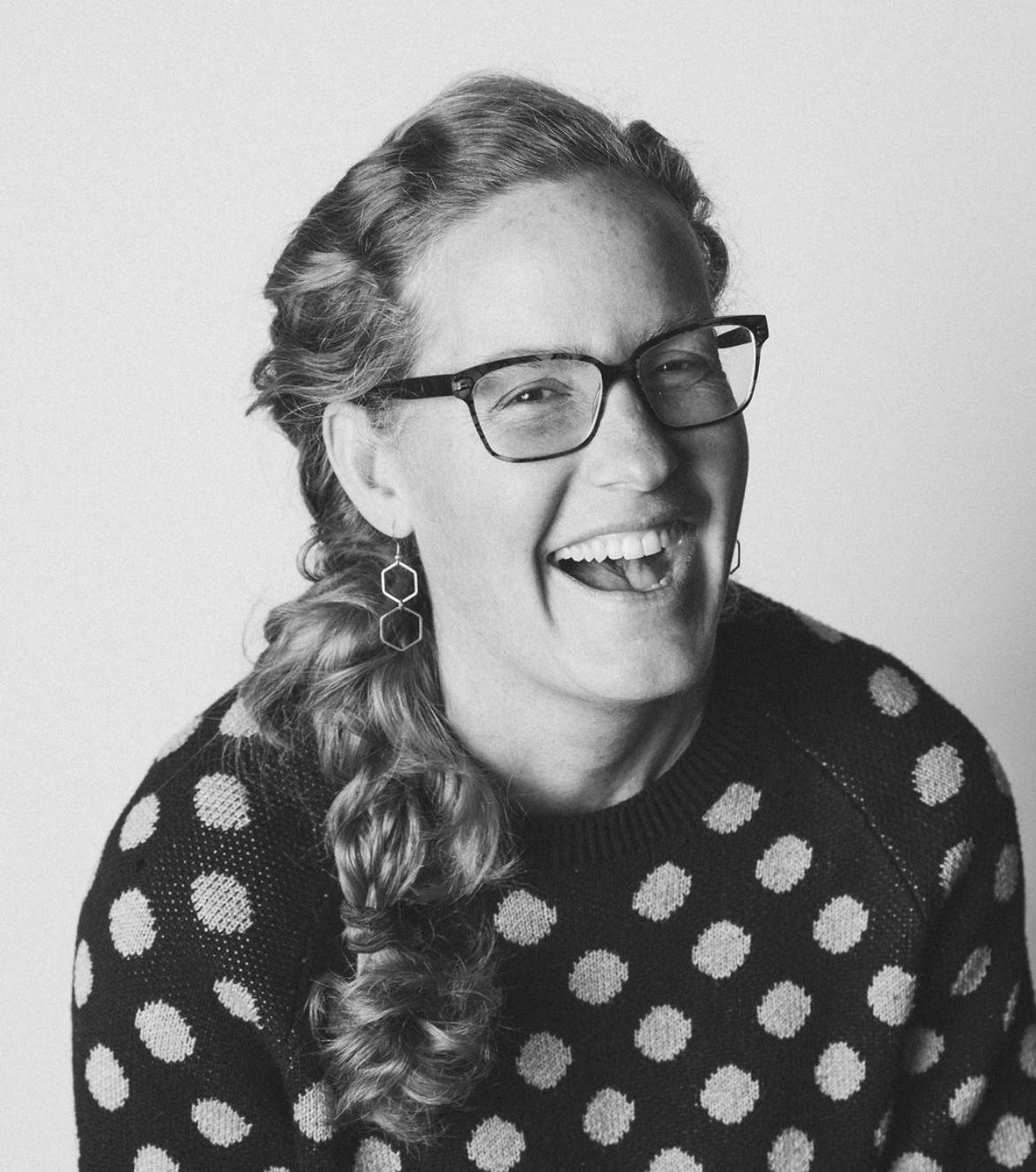
A black-and-white photo of Erin Beagle laughing

"All of my classmates in Lakehead's OE3 program were interested in alternative models of education," Erin says. "Through OE3, I did placements at Churchill High School teaching problem-based learning in science. It was a great way for kids to learn, and I treasured my time there."

Later, as a young adult, she ran Educo's wilderness experience program.

This sparked a desire to open her own experiential school and enrol in Lakehead's Faculty of Education.

At the time, Lakehead was one of only two Canadian universities to offer the Outdoor, Ecological, and Environmental Program (OE3) to prospective teachers.

"I went to Lakehead's website for more information," Erin says.

"When I clicked on it, there was a photo of the OE3 program head, Dr. Tom Puk, rappelling off a cliff. I thought, 'Oh, these are my people.'"

The Start of Something Big

A couple of years after graduation, Erin was working for the United Way on its national Action for Neighbourhood Change initiative.

"I collaborated with residents in the Simpson-Ogden neighbourhood to build engagement and address issues like crime from a neighbourhood level."

Around the same time she connected with Lakehead social work professor Dr. Connie Nelson and political science professor Dr. Doug West. They'd received a grant for an exciting new project called Roots to Harvest.

"The goal was to engage students from grades 6-12 in food security projects," Erin explains.

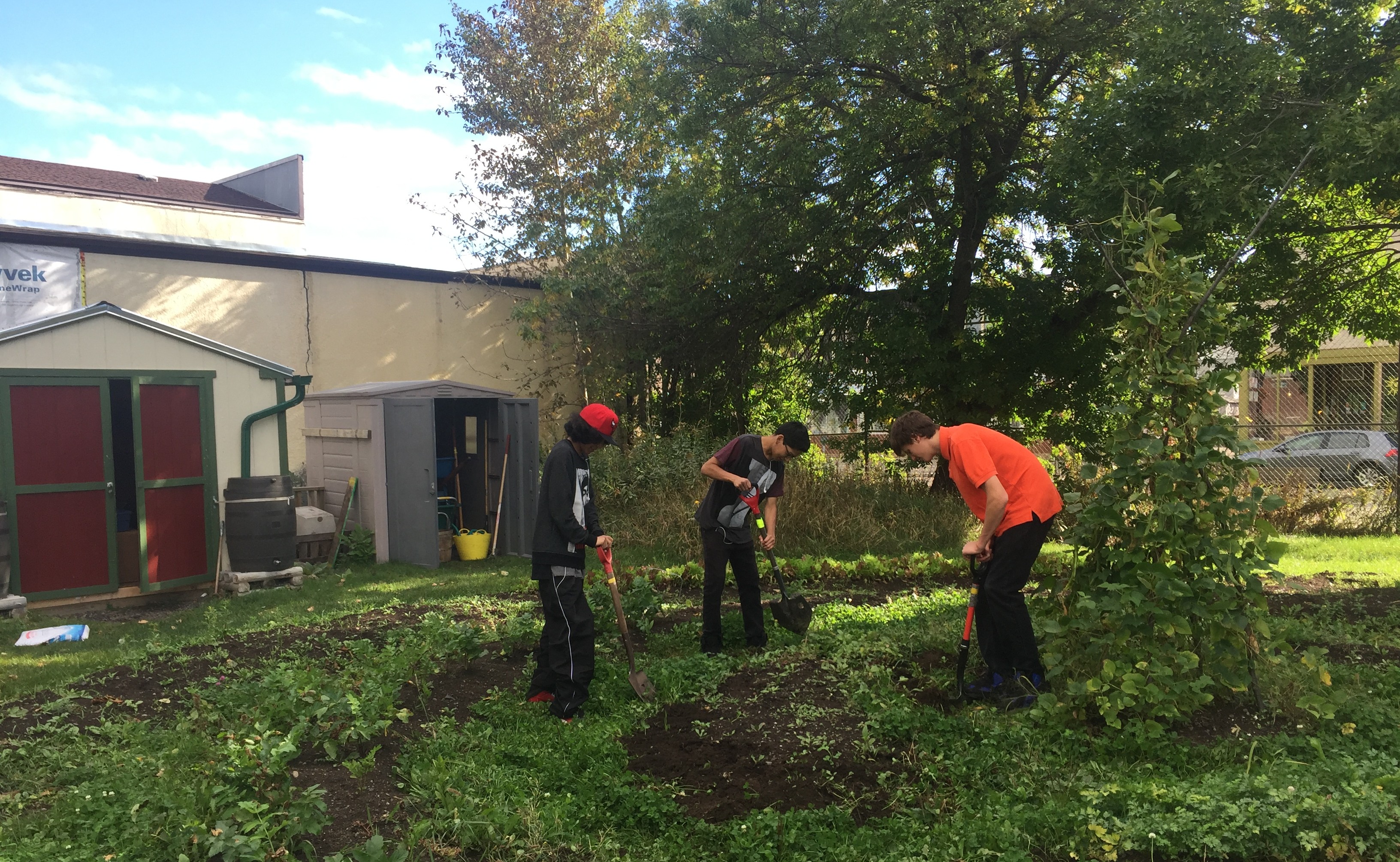
Three boys with spades dig in a garden next to a building and two sheds

Roots has two large urban farms—the Volunteer Pool Garden on Martha Street and the Lillie Street Garden.

Erin became one of Roots to Harvest's first team members and wasted no time getting her hands dirty.

"We started a community garden at the corner of Algoma and Cornwall and promoted farming and food systems at the local level," she says.

She realized that she'd found her calling.

In 2012, Roots to Harvest became a non-profit organization and in 2021, it became part of Community Food Centres Canada, changing its name to the Roots Community Food Centre.

Food, Friendship, and Belonging

Roots excels at delivering transformative programs and services.

Their community food markets in Thunder Bay, Kiashke Zaaging Anishinaabek First Nation, and Whitesand First Nation are improving food security in the region by selling below-cost fruits and vegetables.

In addition, they provide free community meals twice a week to seniors over 60 and—in partnership with the Indigenous Friendship Centre—host a free monthly lunch featuring wild food like moose, berries, and rice.

Roots' urban farm program, which offers employment and skills training to youth aged 15-30, holds a special place in Erin's heart.

"I love that teenager spirit," she says. "Being a young person isn't easy and they meet that challenge."

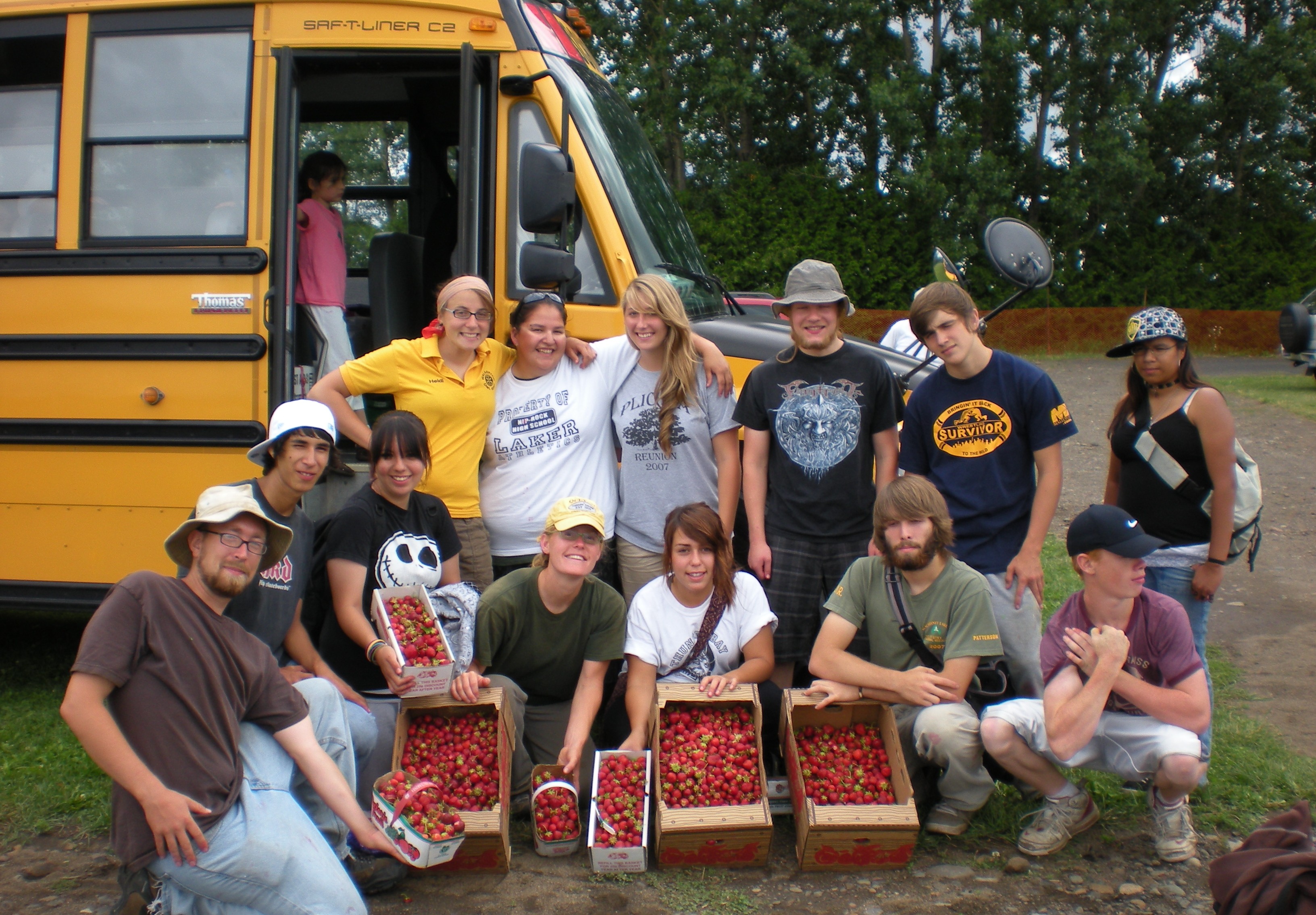
Erin Beagle, students, and staff pose in front of a yellow school bus while displaying baskets and boxes of strawberries

Roots contributes to the community in a multitude of ways, including improving food security and providing services like free income tax clinics open to people with simple taxes whose income is less than $50,000 per year.

Roots also supports aging in place for seniors, senior wellness and fitness programs, and many advocacy programs in partnership with community organizations.

For instance, they recently held a basic ID clinic to help people get documents such as birth certificates and social insurance numbers.

"Roots is so much more than farming and gardening," Erin says. "It's a place that lifts up everyone from elementary school kids to seniors.

Community members have made Roots their own, and northwestern Ontario is more resilient because of it."

GITIGAAN SUMMER GARDENING DAYS

GITIGAAN  SUMMER GARDENING DAYS

EVERY FRIDAY DURING THE SUMMER (with the exception of July 3rd)

2:30 PM to 4:30 PM 

Sweat Lodge Site

Weather permitting (cancelled if it rains)

Join ISSC for a relaxing time in the garden!

Enjoy the summer season and the outdoors.

Tools, gloves and refreshments provided. Drop in anytime, stay as long as you like!

We can’t wait to see you there!

Everyone is welcome.

GITIGAAN SOIL PREP & PLANTING DAY

GITIGAAN SOIL PREP - Tuesday, May 26, 2026 - 5:30 PM to 7:30 PM

PLANTING DAY - Wednesday, May 27, 2026 - 2:30 PM to 4:30 PM

Sweat Lodge Site 

Weather permitting (cancelled if it rains)

ISSC invites you to connect with the land at Gitigaan.

We’re continuing our spring clean-up and preparing the garden for the upcoming planting and growing season. If you’d like to try your hand at tilling, enjoy some time outdoors, and help bring the garden back to life, this is your chance.

GITIGAAN SPRING CLEAN-UP

GITIGAAN SPRING CLEAN-UP

Friday, May 15, 2026 ~ 2:30 PM to 4:30 PM

Sweat Lodge Site

Weather permitting (cancelled if it rains)

ISSC invites you to come get your hands dirty at Gitigaan. Gitigaan means garden in Anishinaabemowin.

Spring is finally here, and we’re excited to gather together for spring clean-up and to prepare the garden for the upcoming planting and growing season.

It’s a chance to connect and spend time outdoors.

Dr. Michael Rennie Gets a Peek Behind the Curtain at Science Meets Parliament 2025

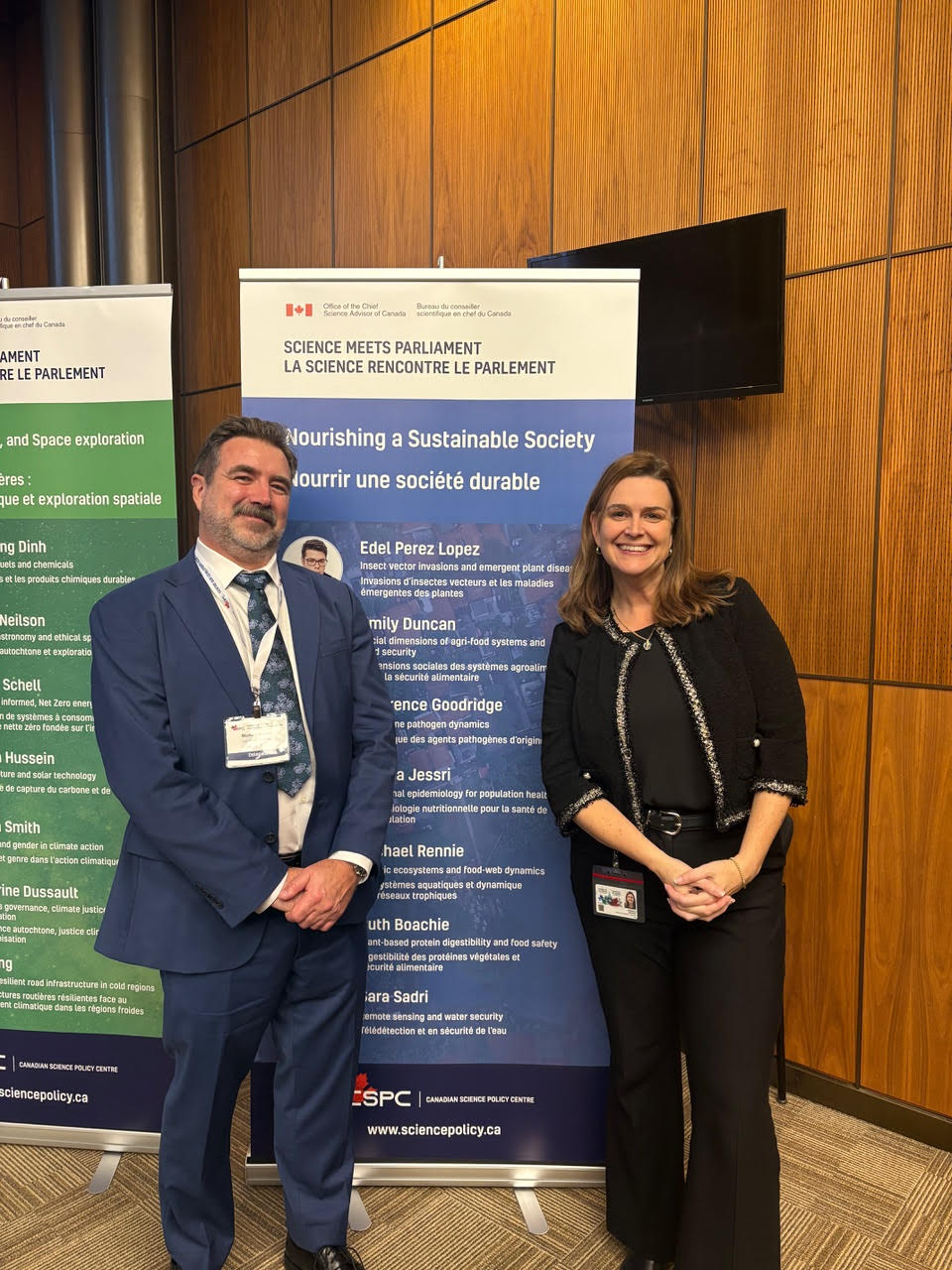
In November 2025, Lakehead associate professor Dr. Michael Rennie took to Parliament Hill to learn what happens at the intersection of science and politics. 

The fifth annual Science Meets Parliament event, organized by the Canadian Science Policy Centre, brought together 43 researchers from across Canada to meet with 56 parliamentarians in Ottawa. 

Dr. Rennie—an applied ecologist and former Tier II Canada Research Chair in Freshwater Ecology and Fisheries—was thrilled to be selected to attend. 

“As a past government scientist, I wanted to learn more about the inner workings of science policy and the mechanics of government from the perspective of members of Parliament (MPs),” he says.  

“Scientists can struggle to understand how their work connects to government funding and priorities, while politicians may not have a science background, but need to make evidence-informed decisions.  

It was great to gain insights into how it all works and make connections,” adds Dr. Rennie, whose research focuses on risks to northern Ontario’s walleye population and how to mitigate these risks through policy. 

Delegates participated in eight training sessions on topics ranging from science policy to science communication and had opportunities to attend committee meetings and Question Period in both the Senate and House of Commons. 

Dr. Michael Rennie and Jennifer McKelvieDr. Rennie was paired with Dr. Jennifer McKelvie, an environmental geoscientist and the MP for Ajax. She sits on the Standing Committee on Science and Research and welcomed Dr. Rennie to her meetings with organizations seeking to connect with government officials on a wide range of issues. 
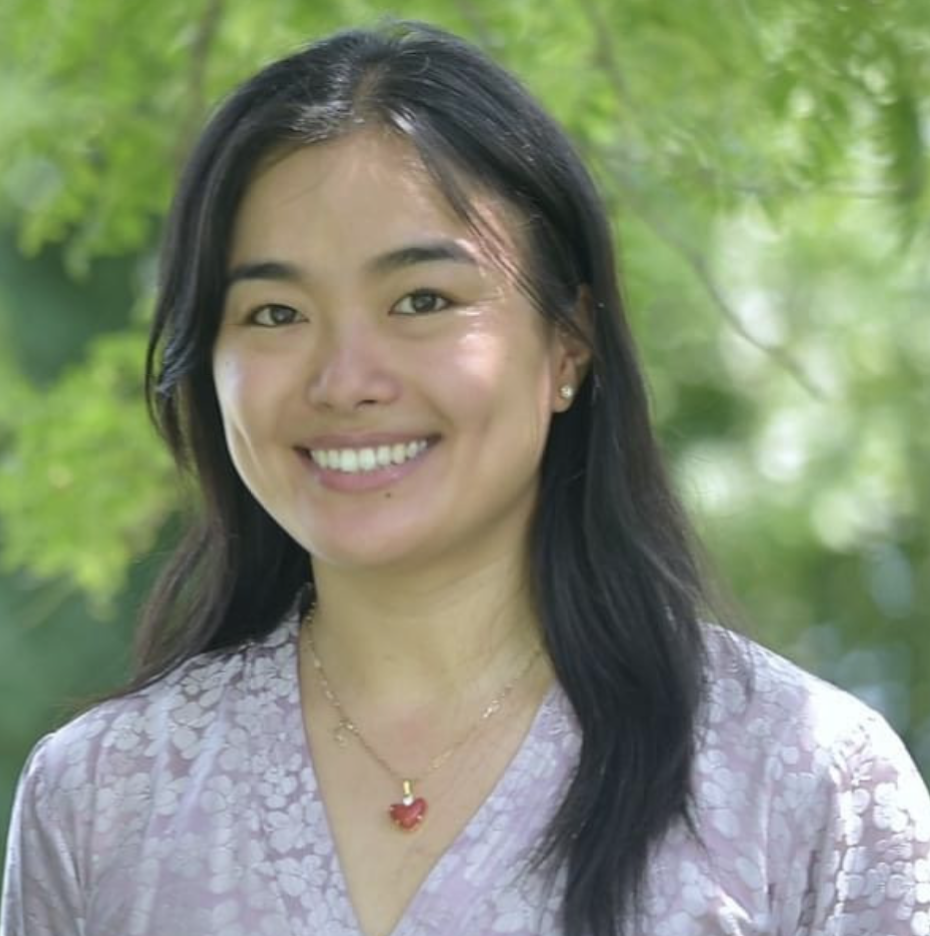
He also had a chance to meet with Dr. Mona Nemer, Canada’s chief science advisor, and hear from representatives of the major federal funding agencies, including the Natural Sciences and Engineering Research Council of Canada (NSERC), the Canada Foundation for Innovation (CFI), and the Canadian Institutes of Health Research (CIHR). 

“I was proud to speak about my research with both Lakehead and the Experimental Lakes Area (ELA), a unique freshwater research facility in northern Ontario,” Dr. Rennie says. “I emphasized the importance of the Lakehead-ELA relationship for training the next generation of scientists in the field of natural resources and fisheries management.” 

But one of his biggest takeaways from the event wasn’t about science at all. 

“Meeting with parliamentarians made me realize that they are much more accessible than many of us think they are,” he says. “They are more than happy to make the time to meet and talk about issues concerning their constituents, and people should feel confident reaching out and engaging with their government.” 

Learn more about Science Meets Parliament and the Canadian Science Policy Centre.

The Courage of her Convictions

Law Student Jigme Tsering Stands Up for the Marginalized

"There's a saying in my community: If you're born Tibetan, you're born an activist," says third-year law student Jigme Tsering.

As a first-generation Canadian born of refugee parents, she decided to study law as the next step in her longtime interest in environmental justice, social justice, and humanitarian work.

A head-and-shoulders image of Jigme Tsering standing outside with trees in the backgroundThe Tibetan Canadian Cultural Centre in Etobicoke has been one of the places where Jigme has been able to reconnect with her cultural heritage and engage in advocacy.
It was at the centre that she co-founded Nyamdo Mentorship, a program that pairs youth members with mentors to help them plan for academic and career success.

"To be Tibetan is to inherit a history of displacement and resilience," Jigme explains.

"Following the annexation of Tibet by the People's Republic of China and the 1959 Tibetan uprising, many Tibetans, including my grandparents, were forced into exile."

A Law School Like No Other

Jigme, who grew up in the Toronto area, chose to study at the Bora Laskin Faculty of Law because it's the only Ontario law school to offer a specialization in Indigenous and Aboriginal law.

Since arriving in Thunder Bay, she's become a vital part of the legal community.

She was the Dean's Fellow in Indigenous Law, a position created to foster law students' understanding of Anishinaabe legal traditions.

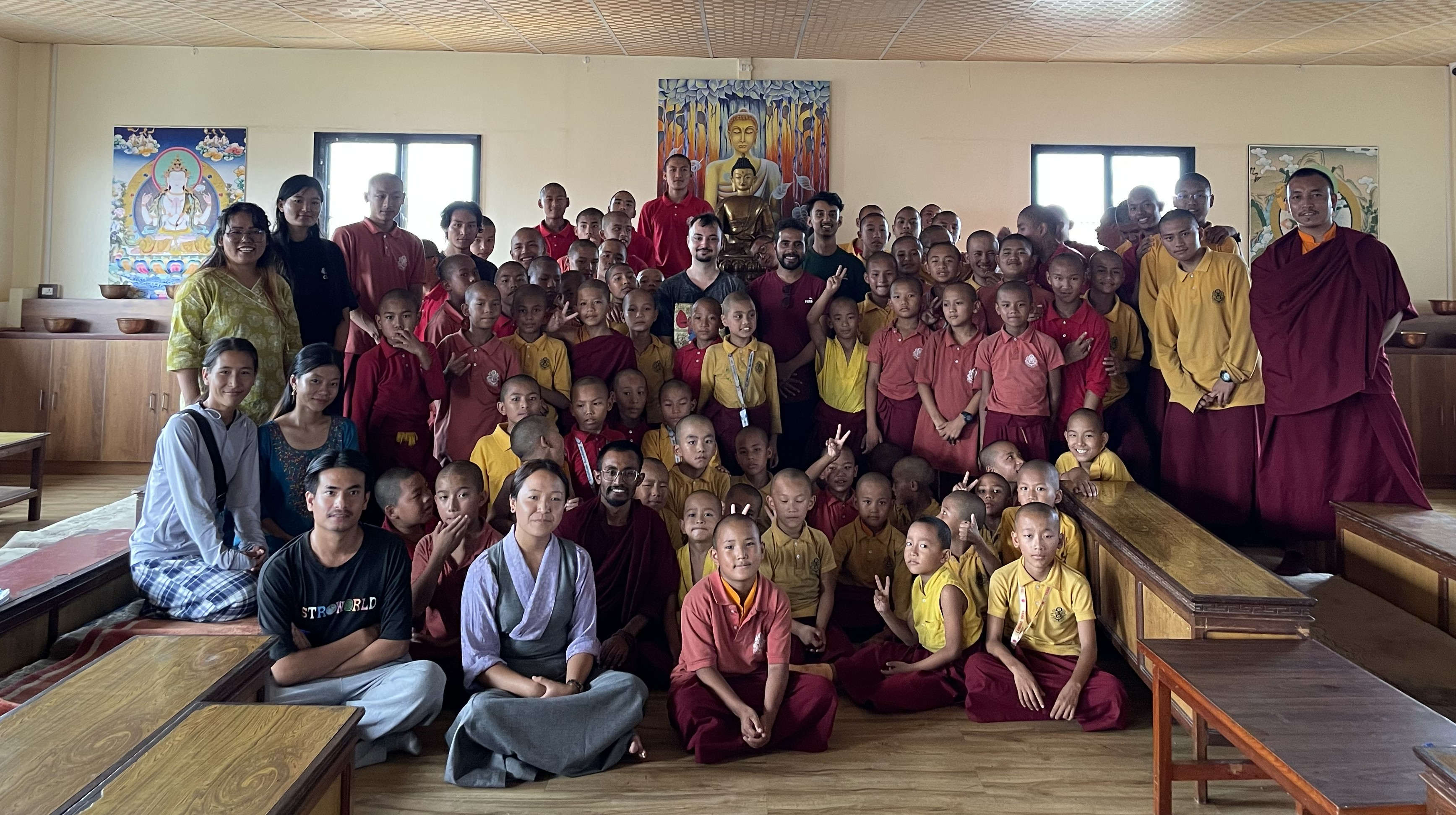
Students and members of the Tharlam Monastery pose for a group photo in a room with images of Buddha on the wall

"My grandparents, and other exiled Tibetans, carried their language, faith, and identity across the Himalayas on foot and sought refuge in India and Nepal," Jigme says. Above, some of the students, teachers, and staff of the Tharlam Monastery and Tharlam Academy in Nepal.

She also worked for the Lakehead University Community Legal Services, completed a placement with Legal Aid Ontario's Indigenous Services Division, and was part of the team that helped establish the Indigenous Human Rights Clinic at the Thunder Bay Indigenous Friendship Centre.

"One of the reasons for coming to Bora Laskin was because I wanted to be up north," Jigme says. "I wanted to better understand what the lived experience was like for people."

Equally important to her has been her pro bono work with Legal Advocates for Nature's Defense (LAND) and a summer position with the Canadian Environmental Law Association (CELA).

Fighting Persecution and Environmental Degradation

Jigme's background as the daughter of Tibetan refugees has drawn her to the intersection of economic development and human rights.

"To speak Tibetan, to practice our traditions, or to tell our stories are acts of quiet resistance. This reality has shaped my understanding of the law not just as a system of rules, but as a tool that can either constrain or protect identity, dignity, and self-determination."

Since the 1960s, China has been displacing Tibetans to get access to minerals in the region, damaging sensitive ecosystems in the process.

"Nomadic activists protesting mining on their traditional lands can be disappeared into prisons, and small towns are displaced and flooded for the sake of hydro projects," Jigme says.

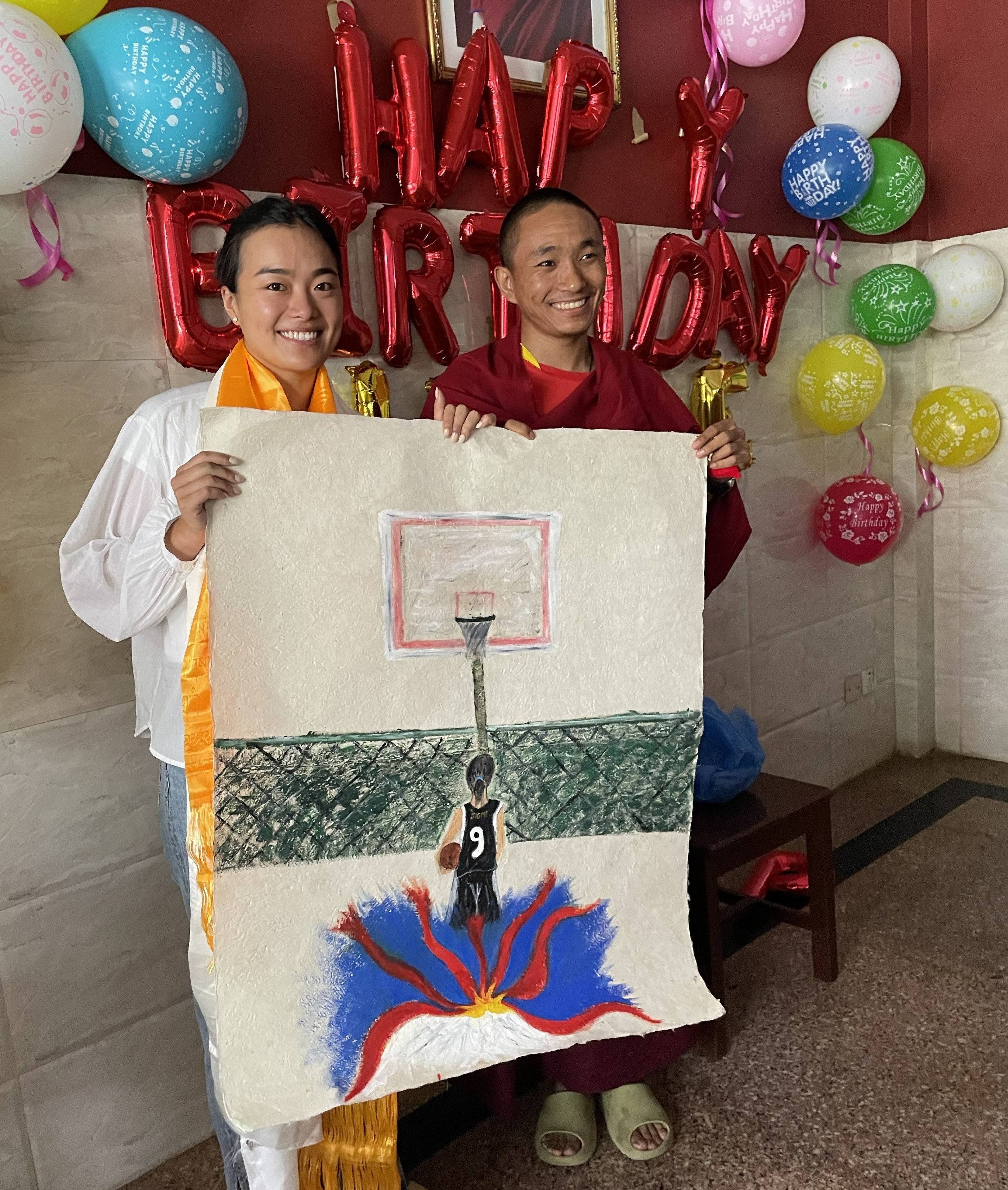
Jigme Tsering and a Buddhist monk stand in a room with balloons saying Happy Birthday and hold up a drawing of a basketball player

For Jigme's birthday, Sonam, a monk at Tharlam Monastery drew this picture of Jigme playing basketball. "We have a shared love of sports, for him, it's soccer and futsal, and for me, it's basketball," Jigme says.

She sees parallels between the treatment of Indigenous Peoples in Canada and the treatment of Tibetan people by the Chinese government.

For her, mining projects like northwestern Ontario's proposed Ring of Fire, which targets critical minerals on Indigenous lands, raise alarm bells.

"Canada's economy is built on the exploitation of Indigenous land, just as China's is on Tibet.

I decided that the best avenue to confront these issues would be through law by amplifying Indigenous voices, ensuring their interests are meaningfully represented, and demanding accountability when they are not.

I see economic development as a foundation for self-governance, and I am committed to contributing to that work."

Advocating at Home and Overseas

Between 2023 and 2025, Jigme worked as a project coordinator and funding liaison at the Tharlam Monastery in the Kathmandu District of Nepal.

Her time there had a profound impact on Jigme.

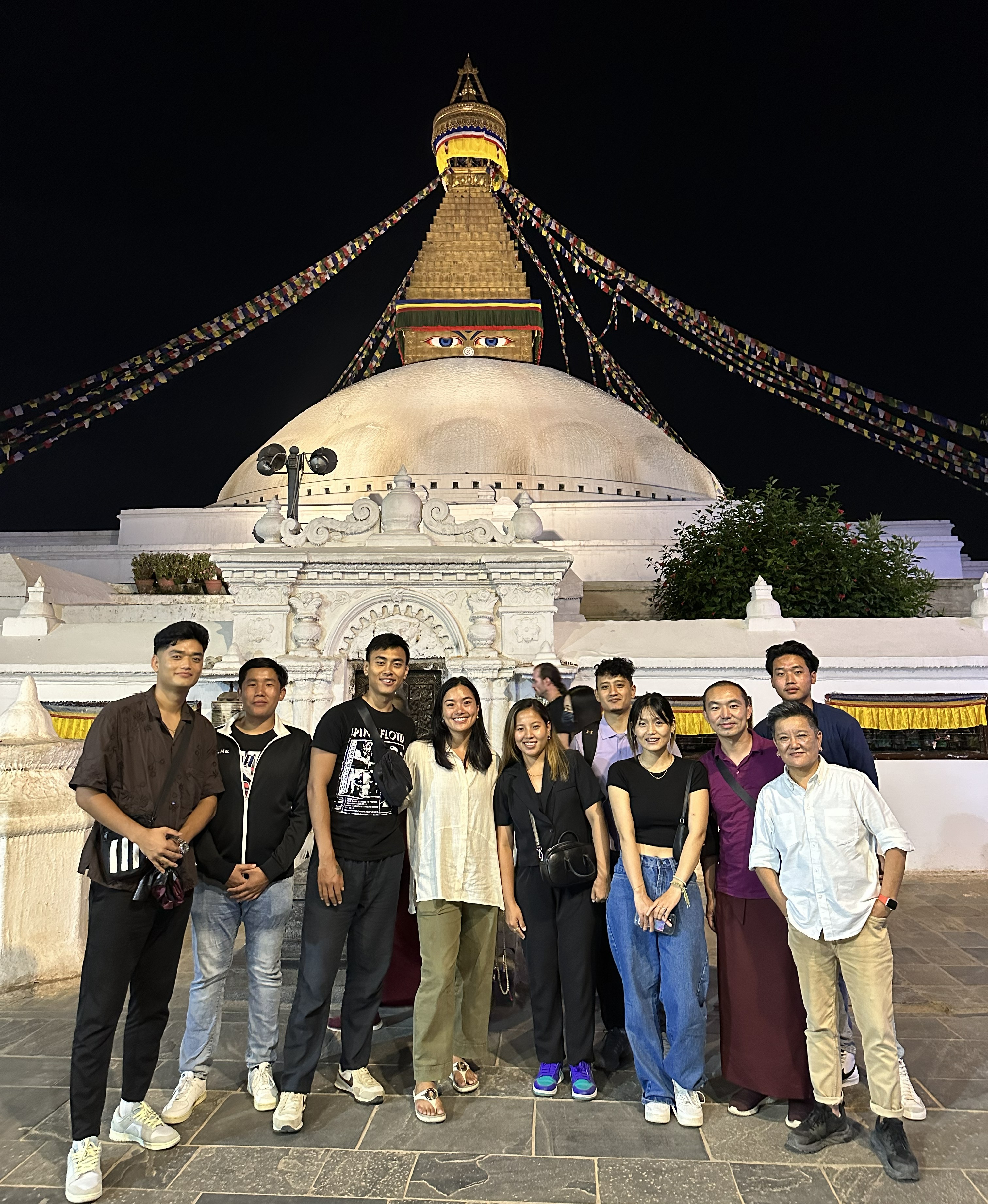
Jigme Tsering and a group of people stand in front of the Boudhanath Stupa at night

"The landscape surrounding Tharlam Monastery is a very striking contrast between stillness and movement," says Jigme (centre wearing white shirt). "It's a place that offers many opportunities to practice mindfulness and patience." The monastery itself is a quiet refuge tucked away on a residential lane that sprouts off from the busy main road leading to the iconic Boudhanath Stupa (pictured above).

"Despite having no prior connection to Nepal—even though my dad grew up there—it was the first place where I truly felt like I blended into the community, especially in terms of appearance.

That sense of belonging, along with the monastery's quiet energy, made the experience feel both grounding and unexpectedly familiar."

In her role at the monastery, she secured over $100,000 USD for initiatives such as infrastructure for clean potable water. She also got involved in hands-on projects, like helping develop a waste management system where glass, metal, and plastic could be recycled and sold to raise funds.

Small boys wearing red and yellow robes stand on the steps of a building while another group of boys plays on the building's forecourt

"As a Tibetan, it was interesting to see the inner workings and management structure of the monastery, something I would not typically be privy to," Jigme says. Left, young boys training to be monks enjoy some down time at the entrance of the monastery.

After graduating from Lakehead this spring, Jigme will work at a private law firm in Toronto that collaborates with Indigenous organizations.

"I'm committed to thinking globally while acting locally and using the law as a means of safeguarding communities whose voices are too often marginalized."

Pages

Subscribe to Indigenous