Indigenous

Make a Mosaic (Orillia, ON)

Mosaics are an art form that long predate our contemporary "pixelated" world. This four-hour session will begin with a short talk about remarkable mosaics from ancient to contemporary times and about the materials, tools and techniques. Then roll up your sleeves to make a stunning geometric or abstracted artwork with guidance from and assistance of the workshop leader. You will leave with a handcrafted memento to adorn your home and newfound skills to create more!

Webinar: Confronting Racism in Health Care

The Encounters in Bioethics Program is an essential part of the Centre for Health Care Ethics’ mission to foster high-quality, ethical health care through research, education, and capacity building. This lecture is one in the program. 

Encounters in Bioethics 2025-2026 offers a free webinar "Confronting Racism in Health Care" on Thursday, March 26, 2026, 12:00-1:00 pm (ET).

Presenter:
Danielle Gibbs Koenitzer, RN, MBA, MScN, CHE, Clinical Nurse Educator, London Health Sciences Centre; Nursing Professor, Fanshawe College, London, Ontario.  

President's Public Lecture Series (Thunder Bay, ON + Online)

The next President’s Public Lecture Series explores how advances in ultra‑sensitive, organ‑targeted Positron Emission Tomography (PET) imaging are transforming the way breast cancer is detected in women at high risk of developing the disease. 
In this lecture, Dr. Alla Reznik will trace the development of a breast‑dedicated PET imaging technology, from fundamental solid‑state physics and detector design in the laboratory to patient‑centred clinical translation, culminating in an FDA‑ and Health Canada–approved, commercially available PET scanner now used in cancer care.

Spring Feast

Spring Feast 

Wednesday, March 25, 2026
12:00 pm – 1:00 pm
Gakina Nindinawemaaganag – UC1007A

Join us as we welcome the change of season with a Spring Feast. 

Take a break from studying, enjoy traditional foods, and spend time visiting with fellow students.

All students are welcome!

Guided by the Stars: Vicki Monague Presents the Anishinaabe Celestial Sphere

As part of Lakehead University’s Research and Innovation Week in February, Anishinaabe scholar, Contract Lecturer, and MEd graduate Vicki Monague delivered an impactful presentation on Anishinaabe star knowledge and her work on the Anishinaabe Celestial Sphere project.

Vicki explains that for Anishinaabe peoples, the stars and constellations carry an entire system of knowledge. They connect people to ancestors and the spirit world while also serving as a calendar, navigation system, and guide for seasonal activities, ceremonies, and storytelling.

“As Anishinaabe people, we love the stars,” she said. “But the night sky isn’t just about constellations. It’s a living system of knowledge that guides all of our relationships with the natural world.”

The Anishinaabe Celestial Sphere Project

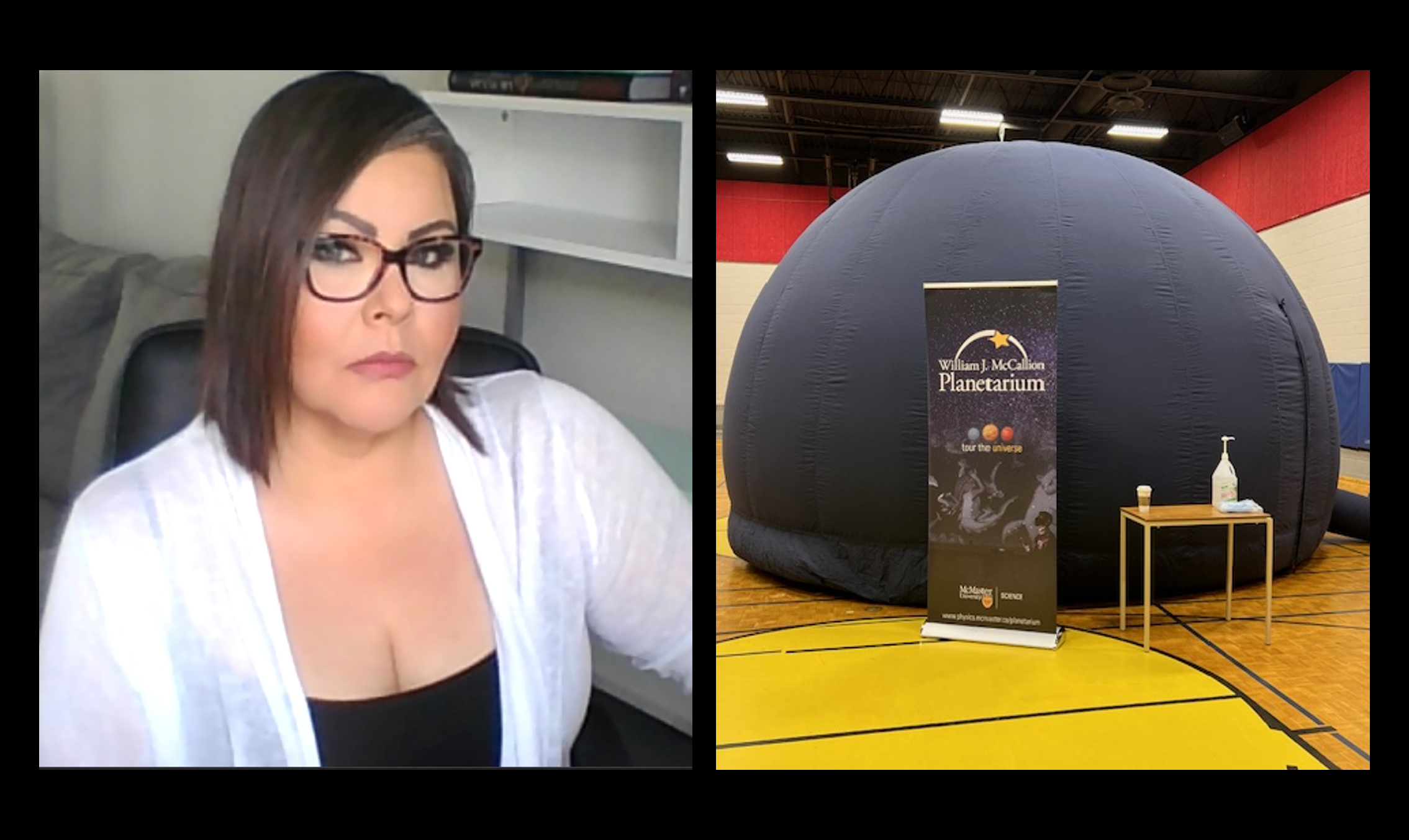
Developed at McMaster University, the Anishinaabe Celestial Sphere program began with a meta-analysis examining the written record of Anishinaabe star knowledge. From that research emerged an Ojibwe star knowledge show presented in a portable planetarium, where students can explore the night sky while learning about Indigenous star knowledge.

The program brings together Anishinaabe gikendaasowin (knowledge) and Western astronomy through a “two-eyed seeing” approach, while aligning with Ontario’s Grades 4–12 science and technology curriculum expectations.

Part of Vicki’s work involves updating the Stellarium software to include Anishinaabe planetary names and constellations. These include clan constellations such as Makwa (the bear, which includes stars from the Big Dipper) and Maang (the Loon, which includes the North Star).

Anishinaabe Natural Law Written in the Stars

“Anishinaabe people are sky beings,” Vicki explains. “Our creation story tells us that we came from the sky.”

Bagone-giizhig, the seven-star cluster known in Western astronomy as the Pleiades and sometimes described as the “hole in the sky,” represents an opening between the Earth and star world, reminding Anishinaabe people of their celestial origins.

Indigenous star knowledge also carries practical teachings that connect to Anishinaabe natural law, guiding people to live in respectful relationship with the land, water, animals, and one another, as well as informing ceremonial practices. For example, the constellation often called the “sweat lodge” in Anishinaabe star knowledge (known in Western astronomy as Corona Borealis) forms a circular pattern that reflects the structure of a sweat lodge. Its seven stars, visible at certain times of the year, are associated with the Seven Grandfather Teachings and serve as a reminder of the responsibilities and protocols involved in holding a sweat lodge ceremony.

There is a deep history and continuity to these teachings, Vicki explains: “People have been here for thousands of years, and our star teachings are older and longer than any established religion or mythology upon the earth.”

By weaving together language revitalization, cultural knowledge, and scientific learning, the Anishinaabe Celestial Sphere program highlights the stars as guides for understanding balance, responsibility, and our relationships with the world around us.

Pictured below: Vicki Monague and the portable planetarium.


Getting to the Bottom of Blue-Green Algae in Northern Ontario Lakes

Published in The Chronicle Journal on March 12, 2026

By EMILY DONTSOS

Nathan Wilson in the field

A quiet threat is slowly emerging in northern Ontario’s lakes—and Lakehead PhD candidate Nathan Wilson is determined to get to the bottom of it. 

Commonly known as blue-green algae, cyanobacteria blooms are increasingly present in the region’s waters. A sign of an out-of-balance ecosystem, cyanobacteria can also produce dangerous liver and neurological toxins that put human and animal health at risk. 

But regular monitoring of the lakes has been virtually non-existent. It was believed that their cold temperatures and lack of human activity meant that they were healthy and pristine.

This assumption allowed cyanobacteria to grow unnoticed. 

That is, until now. 

Under the supervision of Dr. Robert Stewart, associate professor in geography and the environment, Wilson is working to understand what’s causing this change and what can be done to stop it.  

A Growing Body of Evidence 

Wilson first spotted cyanobacteria blooms a decade ago while sampling lake water for his Lakehead University master’s project. 

“When I saw cyanobacteria under a microscope for the first time, I realized how little monitoring is actually done in northern Ontario’s lakes,” he says. “So many unanswered questions emerged from that work, and it’s become a passion of mine to figure it out and raise awareness about this issue.” 

Wilson has spent years collecting samples from remote lakes with the support of lake associations, cottage owners, First Nations communities, and fishing groups as well as individuals who’ve contacted him after spotting blooms. 

Using environmental DNA analysis, he has been able to track changes in the presence of cyanobacteria over time. 

“Nathan’s research shows that the issue is not just about researchers becoming more aware of the problem; there is evidence that cyanobacteria actually has been steadily increasing,” says Dr. Stewart, who has been supervising Wilson’s research since his master’s project. 

Wilson’s research points to both climate change and increasing human activity as key factors in the presence of cyanobacteria. Warming temperatures have disrupted the nutrient balance, while pollution and waste have only exacerbated the problem. 

Despite this growing threat, Wilson and Dr. Stewart say governments have been slow to act. Compared to lakes in southern Ontario, which face significant challenges when it comes to pollution and the impacts of climate change, northern Ontario’s lakes are deemed less of a concern. 

“We’re still living in a system that believes these cold lakes just don’t change,” Dr. Stewart says. “Nathan’s work highlights that things are changing, and we need to invest the money, time, and political will to care for these lakes more seriously.” 

Advocating for Citizen Science and Collaboration 

Regular sampling is required to fully understand and address the presence of cyanobacteria blooms in northern Ontario lakes. But Wilson recognizes that monitoring thousands of lakes across vast distances is not feasible for government agencies. 

That’s why he’s advocating for the formal inclusion of citizen scientists in the region’s monitoring practices. 

“Right now, the government does not typically accept water samples collected by members of the public, which is a major missed opportunity,” he says. “We need accessible, low-barrier participation. Anyone concerned about the health of these lakes should be allowed to provide samples.” 

Wilson and Dr. Stewart are also calling for monitoring standards that are specific to the north and that emphasize collaboration between the government and the public. 

Most of all, Wilson wants northern Ontario residents and visitors to know the region’s lakes are not doomed. 

“Cyanobacteria is a critical threat, but it’s manageable,” he says. “We just need to recognize what’s happening and adjust how we interact with the system.”  

Nathan Wilson’s research project closely aligns with United Nations Sustainable Development Goals on Good Health and Well-Being (#3), Clean Water and Sanitation (#6), Responsible Consumption and Production (#12), Climate Action (#13), and Life Below Water (#14). 

Learn more and get involved at bluegreenlabs.ca. 

Research in Action highlights the work of Lakehead University in various fields of research.

Chronicle Journal - Nathan Wilson


Emergency First Responder Erin Christiansen Overcame the Odds

She Credits the Humanities 101 Program with Changing her Life

"When I began the Humanities 101 program, I was in one of the darkest places of my life," Erin Christiansen says.

"I felt lost, stuck, and unsure if I would ever find a direction forward. I carried a lot of doubt about who I was and what I could become.

Humanities 101 did more than introduce me to new ideas and academic learning—it gave me hope."

Erin Christiansen in a vehicle with her dog Tiny in her lapHanging out with her dog Tiny is one of Erin's favourite ways to spend her downtime.
Humanities 101 is a community outreach program offered by Lakehead University that has been empowering people for 20 years.

This free one-semester, non-credit course introduces students to topics in the humanities and social science fields.

It was created to provide a university-level learning experience to community members facing financial or social barriers to postsecondary education, and to help them believe in themselves.

Triumphing Over Hardships

"From a young age, life felt heavy and uncertain. I grew up in poverty, raised by a single mother while my father battled a terminal illness," Erin explains.

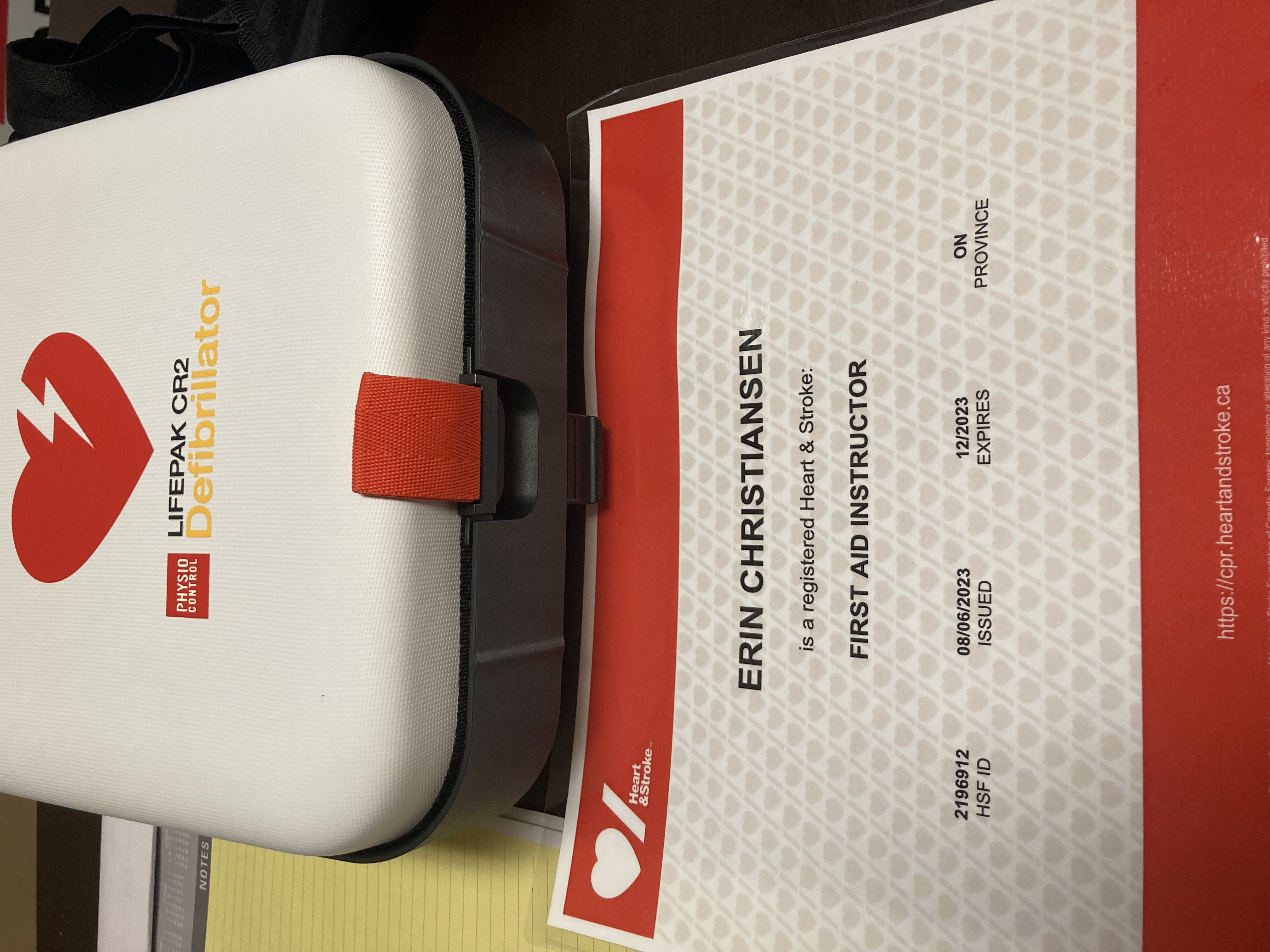
Erin Christiansen First Aid Instructor CertificateBecoming a registered Heart & Stroke first aid instructor was an exciting day for Erin. "Humanities 101 reminded me that growth is always possible and that hope can begin in the most unexpected places," she says.
"As a teenager, I struggled with addiction and eventually found myself homeless, living on the streets. Although I fought my way back to stability, I still felt like I was standing still—surviving but not truly moving forward.

I never imagined that someone with my background would ever see the inside of a university classroom. Higher education felt like something meant for other people—people with stability, money, and confidence. Not people like me.

Humanities 101 changed that."

A Warm Welcome from the Campus Community

The program is very close to the heart of Associate Professor Dr. Christina van Barneveld of the Faculty of Education. She founded Humanities 101 at Lakehead and continues to lead the program in Thunder Bay.

"It's more than a course," Dr. van Barneveld says. "It's an invitation for people to gather into a supportive community to learn and grow together."

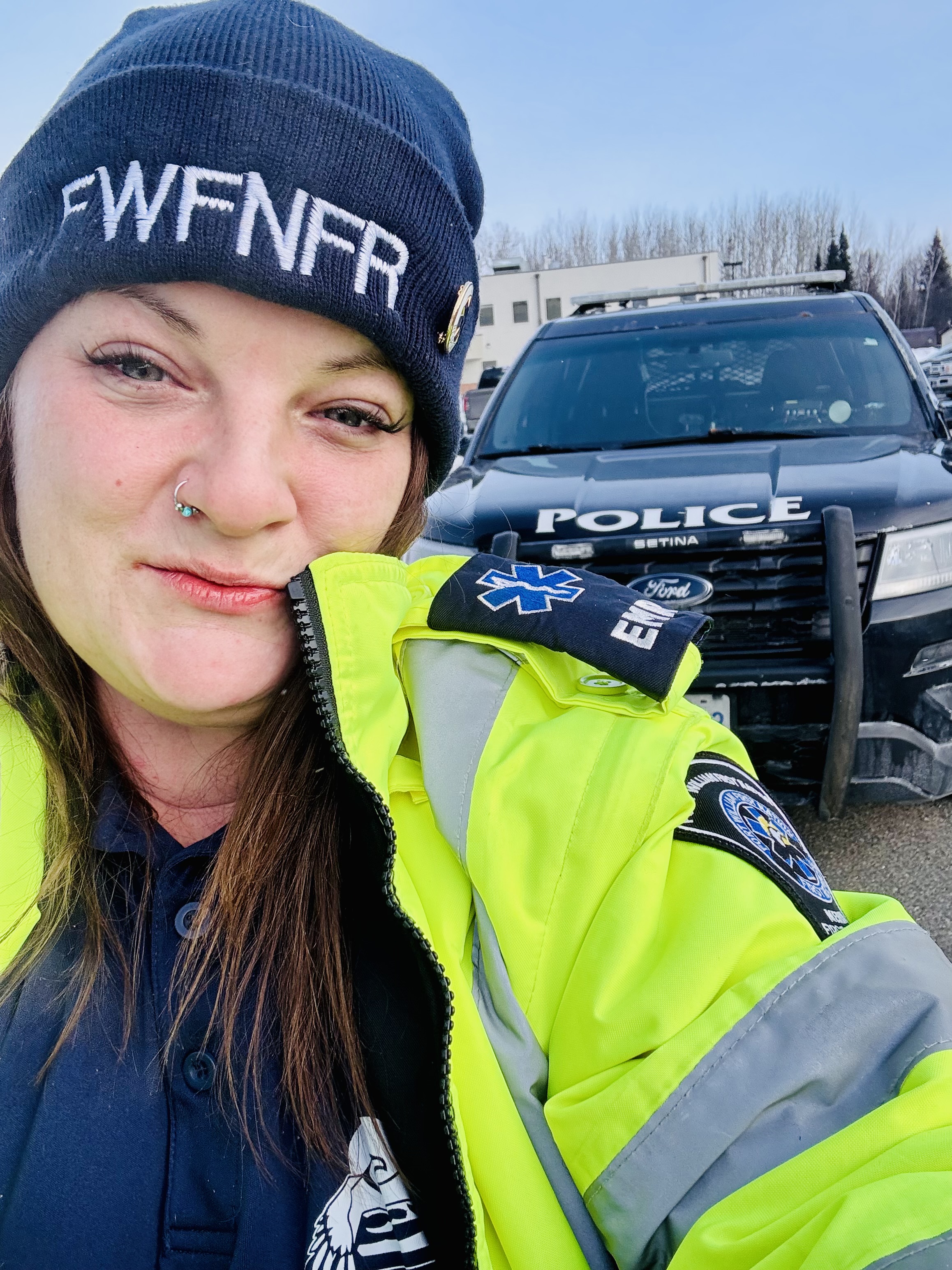
Erin Christiansen, wearing an EMR work jacket, stands in front of a police car on Fort William First Nation

"Humanities 101 was life-changing for me," Erin says. "It opened a door I never thought I would walk through and gave me the courage to keep going."

Erin agrees with those sentiments.

"The connections I have made through Humanities 101 will last me a lifetime," she says.

"I found community, understanding, and people who saw potential in me, even when I struggled to see it in myself. That belief changed everything.

Humanities 101 showed me that my past does not define my future. It reminded me that it is never too late and you are never too old to start again.

For the first time, I began to think that I could do something meaningful with my life and that continuing my education was not just a dream, but a real possibility.

I will carry what this program has given me for the rest of my life."

Erin Launches a Career Helping People in Crisis

After completing the Humanities 101 program at Lakehead University, Erin discovered an opportunity to volunteer as a medical first responder with Fort William First Nation (FWFN).

She completed 40 hours of in-class training and earned her Emergency First Responder certification. She then volunteered in that role for two years before being hired full time. Today, she is the FWFN Medical First Response Team Coordinator.

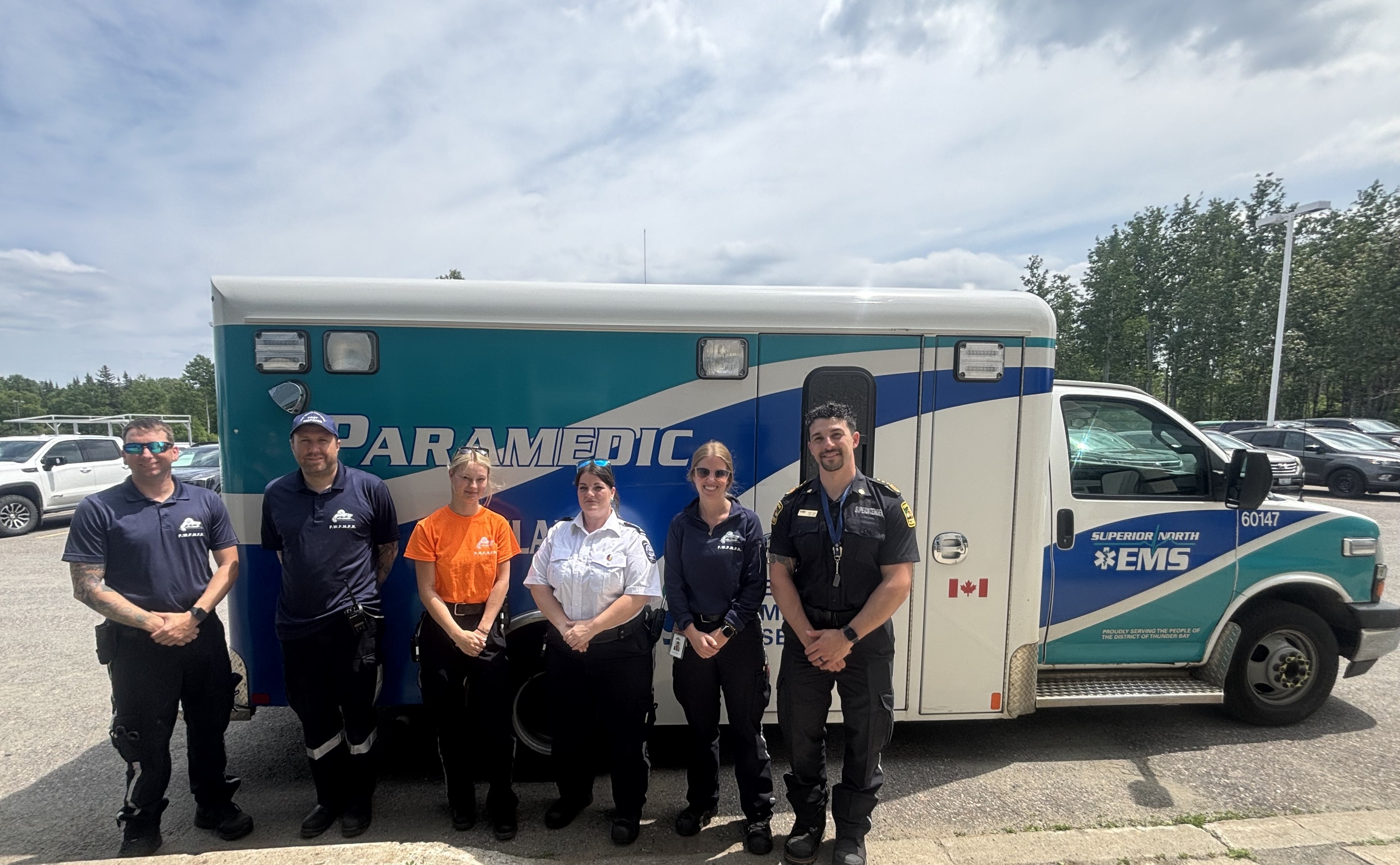
Erin Christiansen and fellow members of the Fort William First Nation Medical First Response Team stand in front of Superior North EMS paramedic vehicle in a parking lot

Fort William First Nation Medical First Response Team Coordinator Erin Christiansen (fourth from left) with fellow members of her team.

"None of this would have happened without Humanities 101," Erin says.

"The program gave me the courage to take a chance on myself and step outside of my comfort zone. It allowed me to see my own potential and believe in the strengths I carried within me.

Humanities 101 changed my life. Without it, I would have remained stuck—doubting myself and never realizing what I was capable of achieving."

Humanities 101 is proud to be celebrating its 20th anniversary. Click here for more information about this transformative community outreach program.

Pages

Subscribe to Indigenous