



Presidents Welcome Breakfast
Welcome to your first day of classes! We know it can be stressful starting up the school year again, so let us ease your stress with a FREE breakfast!!
Kick off your Lakehead journey at The First Howl!
Participate in a variety of activities, games, and more while touring around campus in groups. Have your chance to win prizes, enjoy food, and have an action-packed day filled with fun!
Following The First Howl, students will break into their program areas to meet with their Faculty & Program chairs!
Event details:
Explore your new hometown trekking to the downtown Thunder Bay area and Marina Park. Check in with various local businesses and organizations for discounted offerings while finishing off your exploration bingo card to be entered to win prizes!
Return trip bussing is provided from the Agora Circle to Marina Park. You can also meet us at Marina Park through your own transportation or with you LUSU provided bus pass.
Go all in at Residence Life's Monte Carlo Casino Night!
Provided is “play money” for you to compete in games with your communities or individually for off-campus students. The games include Poker, Black Jack, Roulette, Horse Races, Slots, and so much more!
At the end of the event there will be a live auction where residence houses can pool their money together to win prizes for their house. Off-campus students will be able to bid on prizes provided by the Student Success Centre.
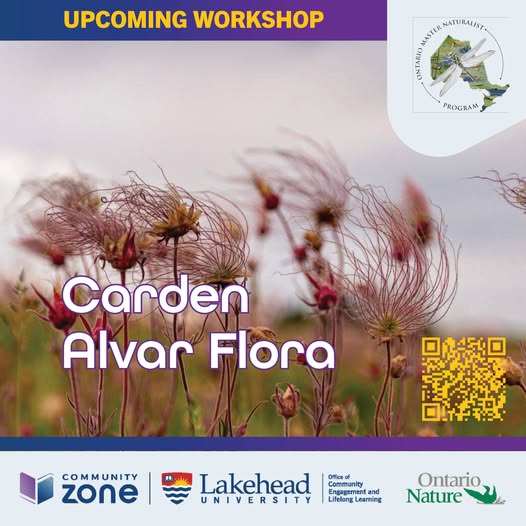
An Alvar is an important yet widely unknown ecosystem. It first appears as unproductive land or a rock barren but holds a unique, rare and stressed ecosystem that floods in spring and experiences drought by mid-summer. We have this rare phenomenon nearby in Carden with a diverse range of flora that can be studied.
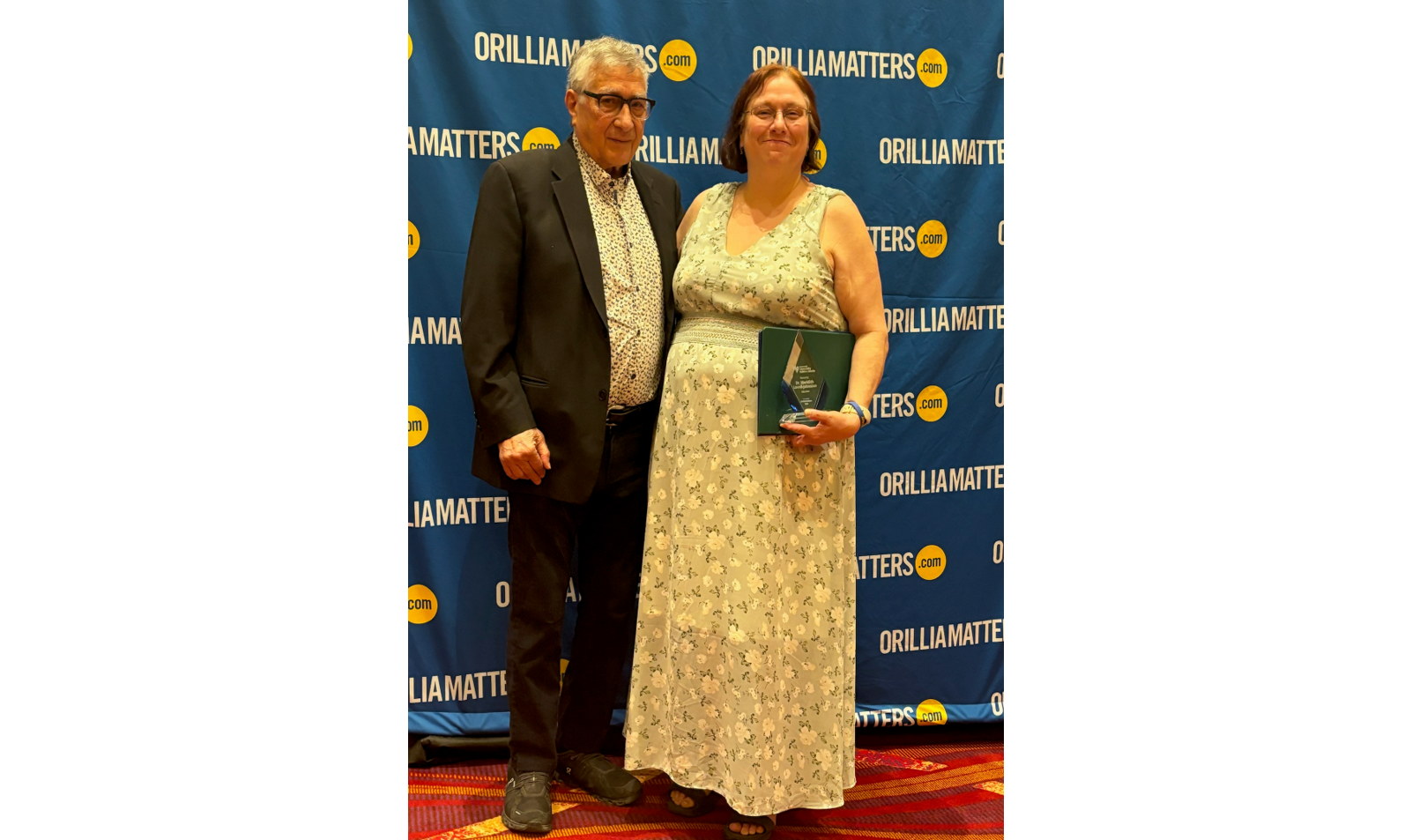
Dr. Meridith Lovell-Johnston (Associate Professor and Chair of Graduate Studies, Orillia) has received the 2026 Orillia Matters Community Builders Education Award, in recognition of her longstanding commitment to student success and her leadership in building pathways in education.
The annual award honours an individual who has significantly contributed to the advancement of education in the Orillia community.
Since joining Lakehead University in 2015, Meridith has consistently worked to empower students, helping them feel capable, confident, and equipped to succeed in their communities. With a research focus on literacy and language arts, she is dedicated to removing barriers and supporting learners at every stage of their academic journey.
“I have taught in classes where I had Grade 12 students who couldn’t read, and I was told that there was nothing we could do about that,” she said. “So, I make sure that I let my students know that, as teachers, there is definitely something we can do about that.”
Her approach to education emphasizes real-world learning, including partnerships with local school boards that place teacher candidates in classrooms. In one initiative, students conducted reading, writing, and math assessments with children in Grades 2–6, gaining hands-on experience while supporting schools.
Meridith has also played a key role in expanding access to Lakehead’s Master’s and PhD programs, opening doors for many first-generation post-secondary students.
Colleagues, in their nomination letters, describe her as a dedicated mentor and leader whose influence extends far beyond the classroom and into the community.
Meridith says she is honoured to receive the recognition and values the opportunity to make a difference in students’ lives.
Below: Dr. Meridith Lovell-Johnston receives award from Orillia councillor Ralph Cipolla.
"As more of young people's lives move into the virtual world, online platforms and apps are increasingly being used to contact, groom, manipulate, and exploit young people," says Lakehead student Taylor Munro.
Taylor and fellow social work students Steven Kearney, Shanta Paudel Khatiwada, Kris Carlson, and Tessa Pasqualino recently investigated this growing problem.

"Social media is now both a place of connection and a place of exploitation," says Taylor Munro (pictured left). She and her fellow students' human trafficking project gave them the opportunity to engage with a complex and urgent social issue early in their academic and professional development.
As part of an undergraduate social work theory course taught by professor Abigale Sprakes, they studied the impact of human trafficking in Thunder Bay and northwestern Ontario.
Their research focused on the online exploitation of young people aged 12–18.
As part of this important work, they developed a social media campaign to raise public awareness about human trafficking.
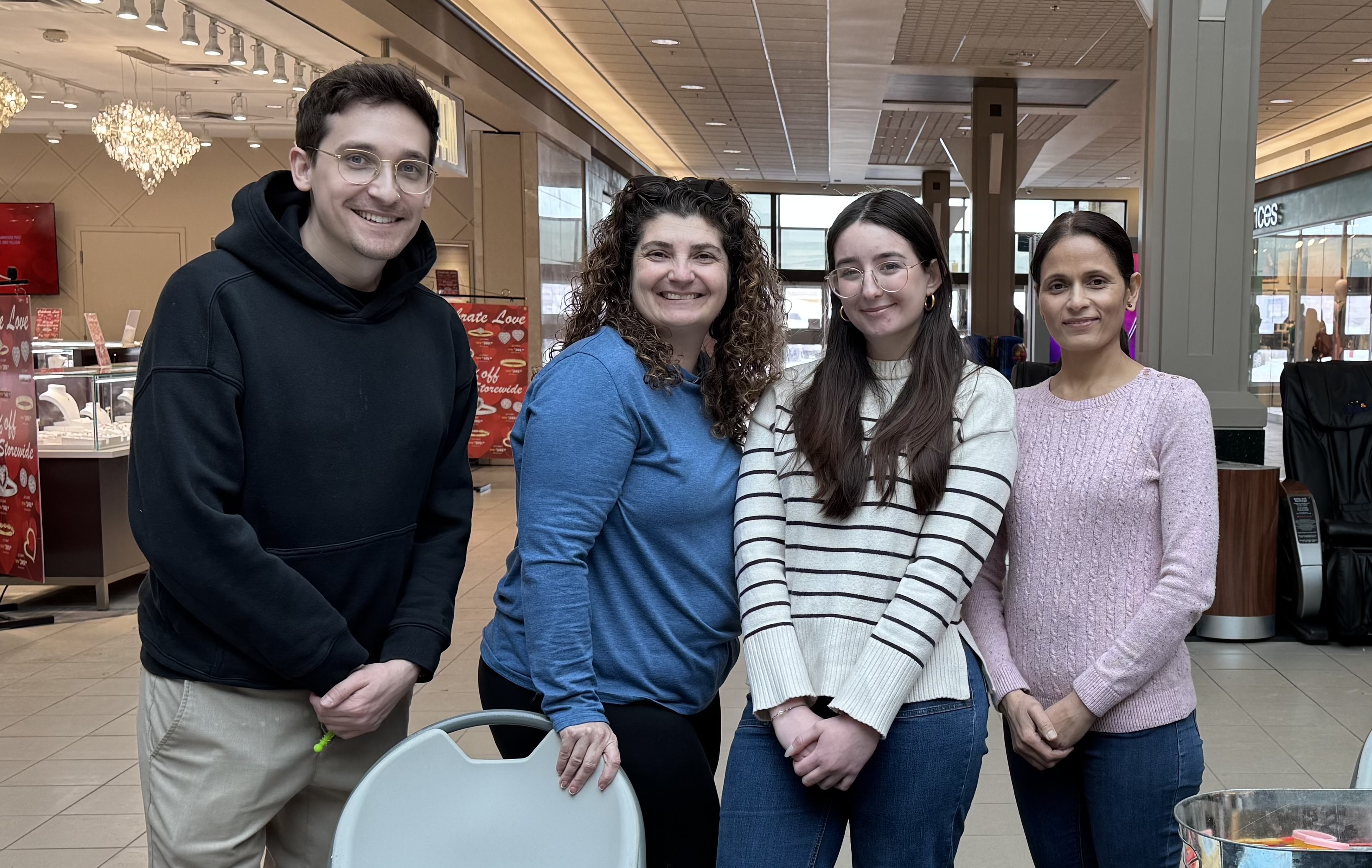
Social work students Taylor Munro and (left to right) Steven Kearney, Kris Carlson, Tessa Pasqualino, and Shanta Paudel Khatiwada hosted an information table about human trafficking at Thunder Bay's Intercity Mall in February 2026. They say that "one of the most important takeaways from our research is the need to shift how we understand vulnerability."
These efforts were bolstered by a letter-writing campaign aimed at key stakeholders and decision-makers with the power to take action against trafficking.
The students also participated in a community awareness event organized by the Thunder Bay Coalition to End Human Trafficking at the Intercity Shopping Centre in February 2026.
The core mechanics of trafficking—recruitment, control, and exploitation—are consistent across Canada, but regional context shapes how it occurs.
In northwestern Ontario, domestic sex trafficking that targets women and youth is the most prevalent form of trafficking.
"It doesn't usually look like what you see in the movies," explains Shanta Paudel Khatiwada.
"Trafficking is less about abduction by strangers, which does happen, and more about abusive relationships, manipulation, and victims being moved between communities."
Trafficking is subtle and embedded in everyday environments, particularly online.
Social media has become a gateway for the trafficking and exploitation of children and youth on an unprecedented scale.
This is particularly the case in northwestern Ontario. The region's geographic isolation and limited access to services and social supports make it more likely that youth will seek connection online.

Approximately 91% of Canadians aged 15–24 report using some sort of social networking platform, making them vulnerable to online predators. This means that young people's access to technology must be balanced with meaningful safeguards and awareness.
Traffickers then deploy a range of online tactics, including grooming through fake identities and sextortion (using images for blackmail).
Luring victims by pretending that they're interested in a romantic relationship, known as the "boyfriend model," is another popular strategy.
"Because of this, many young people do not initially identify as 'victims,'" Steven Kearney says. "But what may appear as a 'choice' is frequently survival within highly controlled circumstances."
Online platform features such as anonymous accounts, disappearing messages, livestreaming, and algorithm-driven connections make it easier to contact, manipulate, and isolate youth—often in a frighteningly short space of time.
The students' research showed that Snapchat is one of the most commonly used social media platforms for trafficking and exploitation.
Traffickers are highly skilled at identifying the unmet needs of young people and positioning themselves as the solution.
"They look for signals, both online and offline, such as loneliness, conflict at home, financial stress, or a desire for belonging," Kris Carlson says.
They then set about exploiting these normal human needs."

The social work students discovered that escaping trafficking is not a single moment but a process. Recovery may involve housing, healthcare, counselling, legal advocacy, and community connection. Photo Credit: Pexels/cottonbro studio
There are also social factors and systemic inequities, such as colonialism, racism, and homophobia, which can increase a young person's vulnerability.
For instance, youth who identify as 2SLGBTQIA+ and BIPOC, and those who've had adverse childhood experiences (ACEs), may be at higher risk because they're part of marginalized groups with less access to support.
Human trafficking is a crime that affects every aspect of a person's life, including physically, psychologically, relationally, and neurologically.
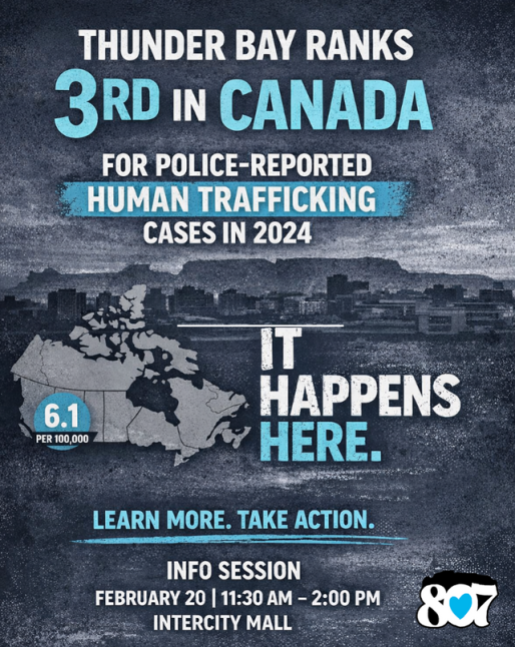
The research students developed infographics, including this one, that they shared with the Thunder Bay Coalition to End Human Trafficking for their use. Some of the students also posted the infographics to their personal social media platforms to further public awareness.
So how can parents protect their children?
"When children feel safe, seen, and supported, they are more likely to recognize risk before a situation escalates," Tessa Pasqualino says.
"Open, non-judgmental conversations about online spaces, relationships, and safety are essential."
The most effective protection is not to control a young person's world, but to prepare them to navigate it safely.
Likewise, schools and social service providers can play a critical role in prevention and early intervention. Developing strong legislation and protections to keep pace with the constantly evolving world of the internet is equally important.
"We want people to remember that young people are not 'seeking attention' when they're online," the student researchers add.
"They are seeking connection, belonging, and safety. When those needs are unmet, they can be exploited."
Parents, educators, and community members can click here to learn more about tools and resources to prevent human trafficking.
If you, or someone you know, may be a victim of trafficking, call the Canadian Human Trafficking Hotline at 1-833-900-1010.
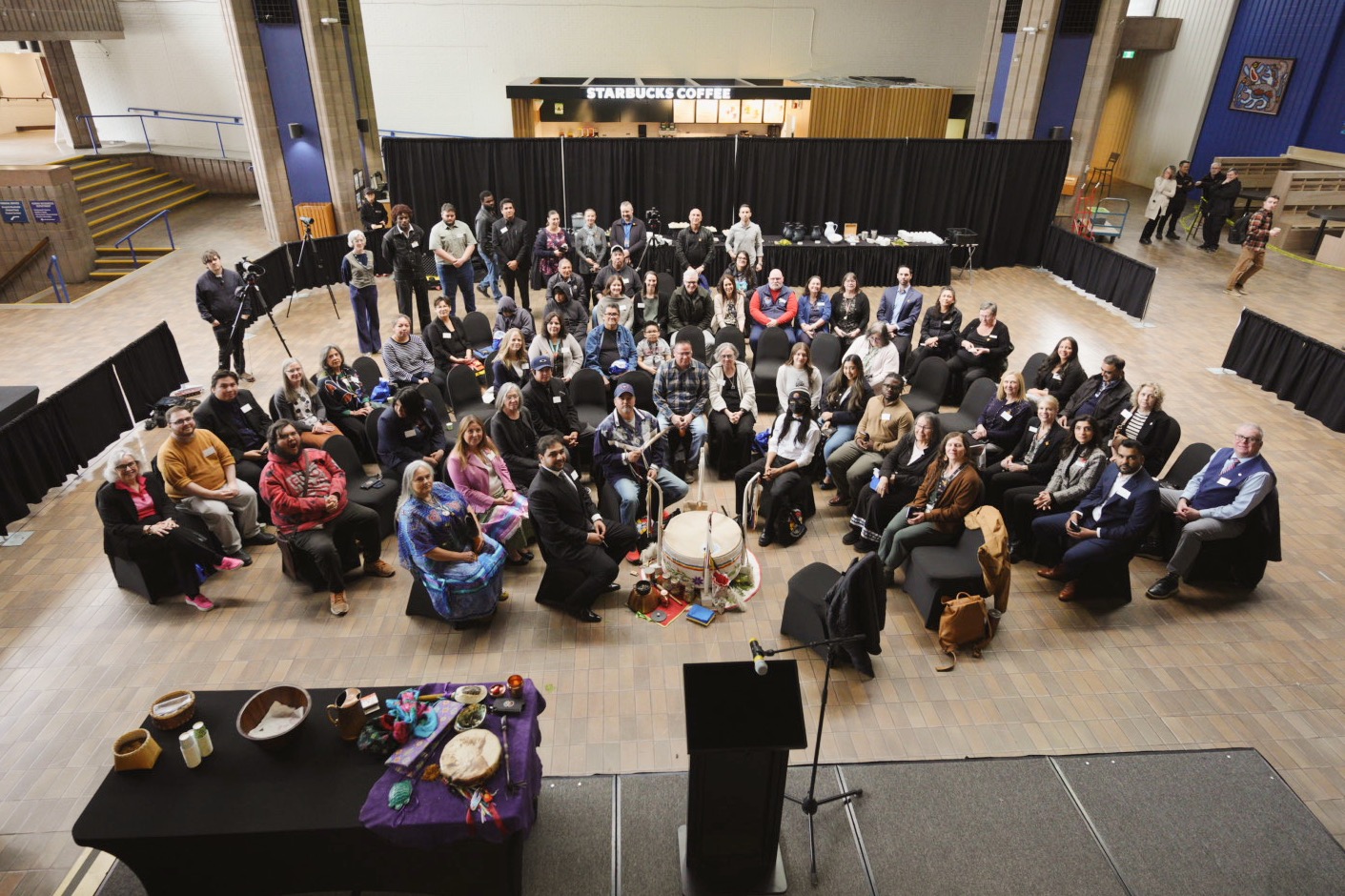 Lakehead University and Paapiiwaaniimaan Grassy Narrows Mercury Care Home (GNMCH) signed a Memorandum of Understanding today to help advance education, workforce development, and community-based research for Grassy Narrows First Nation.
The MOU outlines a shared commitment to expand access to postsecondary education for Grassy Narrows First Nation members, introduce new training programs and micro-credentials, support student placements in the community, and advance research that responds directly to local needs and priorities.
“This collaboration reflects our shared belief in the transformative value of education and the importance of working together in meaningful, community-driven ways,” said Dr. Gillian Siddall, President and Vice-Chancellor of Lakehead University. “We are proud to collaborate with Grassy Narrows in building pathways for Indigenous learners and advancing initiatives rooted in community priorities.”
At the centre of the agreement is an emphasis on the integration of Indigenous knowledge and culturally informed approaches across programs, training, and research, to ensure the partnership aligns with community values and perspectives.
“This is about creating opportunities for our people in ways that respect our knowledge, our needs, and our future,” said Chief Sherry Ackabee of Grassy Narrows First Nation. “We are building something that is guided by our elders, supports our youth, strengthens our workforce, and reflects what matters most to our community.”
For Lauri-Ann Marshall, Executive Director of GNMCH, the partnership with Lakehead helps GNMCH continue to build a model of care that reflects what the community has been asking for. “It supports training, workforce development, continuing and life-long education opportunities, supporting the community vision of ‘care close to home’ for the people of Grassy Narrows,” she explained.
The Memorandum of Agreement between GNMCH and Lakehead’s Faculty of Health and Behavioural Sciences will further support this vision of ‘care close to home’ through health-focused education pathways, student placements addressing local health needs, and initiatives to strengthen the community’s health workforce.
“This partnership creates meaningful opportunities for our students to learn with and from the community,” said Dr. Mirella Stroink, Dean of the Faculty of Health and Behavioural Sciences. “It strengthens experiential learning while supporting culturally relevant approaches to care.”
The work between Lakehead and GNMCH has been ongoing, grounded in the connections that students, faculty, and staff have built together over time.
“It has supported shared learning and helped create safer, more welcoming workplaces, offices, and communities across the partnership, opening pathways for Lakehead students and Grassy Narrows community members to continue these relationships for generations to come,” said Hussain Durrani, Director of HR and Operations at GNMCH and a Lakehead alum.
Following the signing ceremony, Lakehead held a screening of “Sports Education Reconciliation”, a documentary capturing the Lakehead University Student Union and Thunderwolves Soccer Club’s second annual visit to Grassy Narrows. The documentary highlights the strength of relationship-building through youth engagement, athletics, and cultural exchange.
