



Dr. Michael Rennie Gets a Peek Behind the Curtain at Science Meets Parliament 2025
In November 2025, Lakehead associate professor Dr. Michael Rennie took to Parliament Hill to learn what happens at the intersection of science and politics.
The fifth annual Science Meets Parliament event, organized by the Canadian Science Policy Centre, brought together 43 researchers from across Canada to meet with 56 parliamentarians in Ottawa.
Dr. Rennie—an applied ecologist and former Tier II Canada Research Chair in Freshwater Ecology and Fisheries—was thrilled to be selected to attend.
“As a past government scientist, I wanted to learn more about the inner workings of science policy and the mechanics of government from the perspective of members of Parliament (MPs),” he says.
“Scientists can struggle to understand how their work connects to government funding and priorities, while politicians may not have a science background, but need to make evidence-informed decisions.
It was great to gain insights into how it all works and make connections,” adds Dr. Rennie, whose research focuses on risks to northern Ontario’s walleye population and how to mitigate these risks through policy.
Delegates participated in eight training sessions on topics ranging from science policy to science communication and had opportunities to attend committee meetings and Question Period in both the Senate and House of Commons.
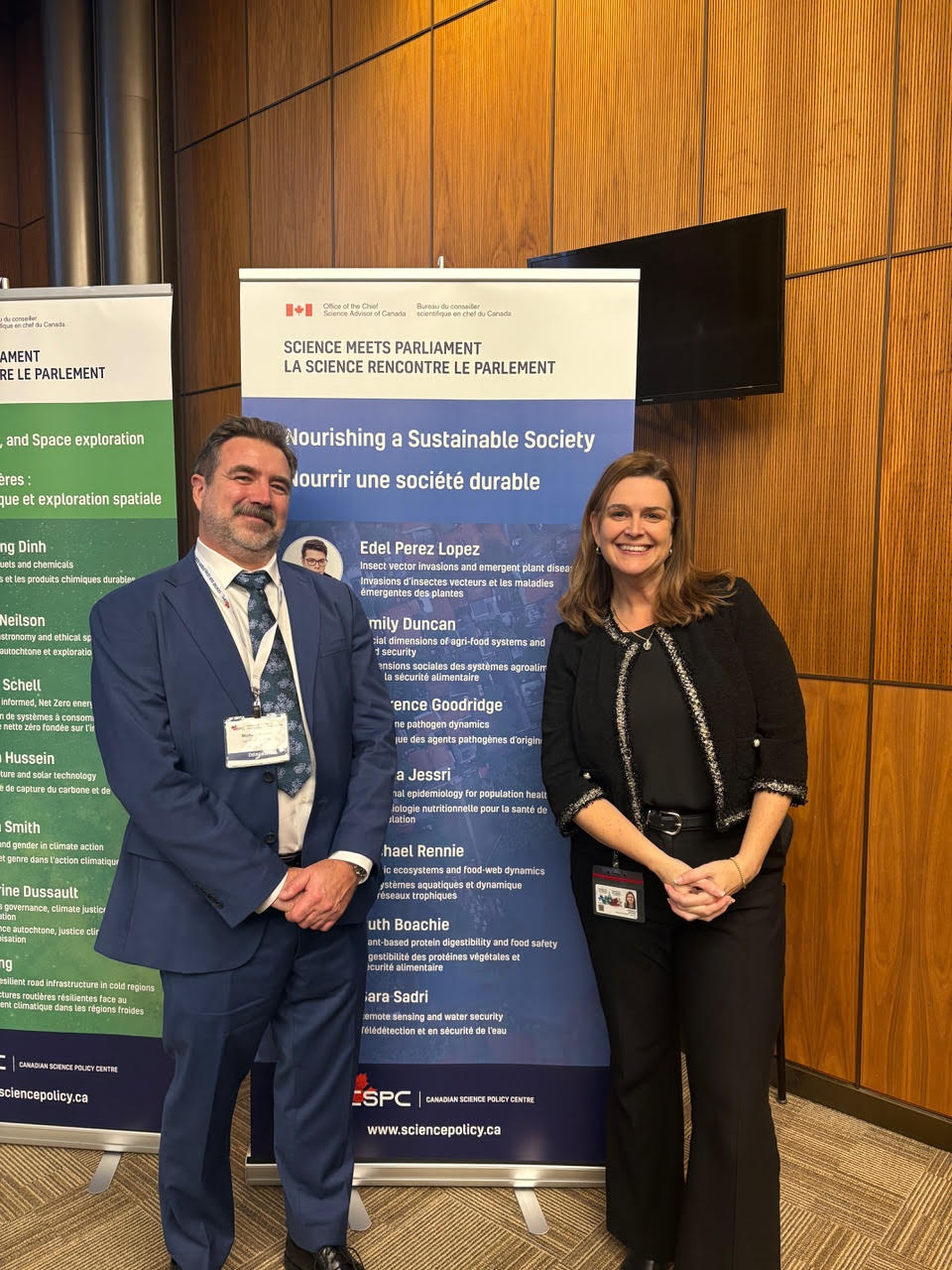 Dr. Rennie was paired with Dr. Jennifer McKelvie, an environmental geoscientist and the MP for Ajax. She sits on the Standing Committee on Science and Research and welcomed Dr. Rennie to her meetings with organizations seeking to connect with government officials on a wide range of issues.
He also had a chance to meet with Dr. Mona Nemer, Canada’s chief science advisor, and hear from representatives of the major federal funding agencies, including the Natural Sciences and Engineering Research Council of Canada (NSERC), the Canada Foundation for Innovation (CFI), and the Canadian Institutes of Health Research (CIHR).
“I was proud to speak about my research with both Lakehead and the Experimental Lakes Area (ELA), a unique freshwater research facility in northern Ontario,” Dr. Rennie says. “I emphasized the importance of the Lakehead-ELA relationship for training the next generation of scientists in the field of natural resources and fisheries management.”
But one of his biggest takeaways from the event wasn’t about science at all.
“Meeting with parliamentarians made me realize that they are much more accessible than many of us think they are,” he says. “They are more than happy to make the time to meet and talk about issues concerning their constituents, and people should feel confident reaching out and engaging with their government.”
Learn more about Science Meets Parliament and the Canadian Science Policy Centre.


