
Outdoor Recreation

New Study Identifies Biggest Threats to Maintaining Fat Bike Trails: Climate Change and Volunteer Burnout

Outdoor recreation voluntary associations (ORVAs) play a crucial role in creating, maintaining and managing trail systems across North America. New research conducted by researchers from the University of Eastern Finland and Lakehead University highlights how climate disruption and volunteer burnout threaten the long-term sustainability of winter trail-based recreation, particularly fat biking.
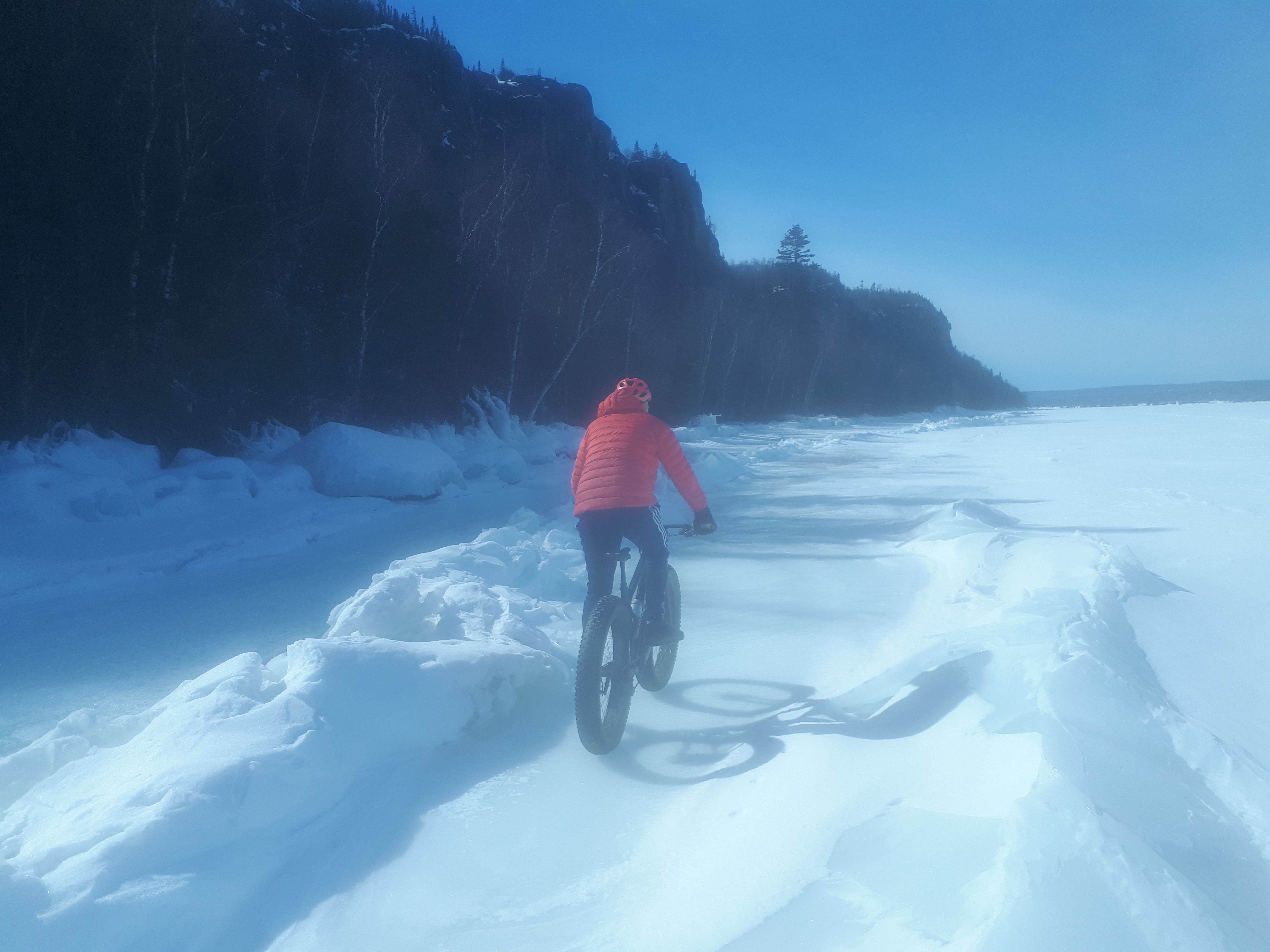
Rider on Fat BikeFat bikes are off-road bicycles with extra-wide tires built for soft terrain like snow and sand. Fat biking lets riders enjoy trails year-round and is quickly becoming a popular winter recreation and tourism activity both in North America and the Nordic countries. 

Published in the Journal of Outdoor Recreation and Tourism, a new study explores how fat biking has unexpectedly emerged as a climate-adaptive strategy for year-round recreation and tourism engagement, and event hosting, in Northwestern Ontario and Northeastern Minnesota. The study surveyed and interviewed fat bikers and outdoor recreation volunteers in both regions. 

“Although a relatively new sport, fat biking, like most winter recreational sports, now faces similar challenges associated with climate change-induced shifts in seasonal weather patterns, like snow accumulation, and following increasingly frequent one-off severe weather events,” says Professor Harvey Lemelin of Lakehead University’s School of Outdoor Recreation, Parks and Tourism.

According to Dr. Lemelin, these unpredictable events strain volunteer resources, and in the absence of effective management solutions to address increased demand, infrastructure growth, and trail maintenance and grooming pressure, they directly contribute to volunteer burnout.

Research shows that while fat biking participation is growing, volunteer support lags. In interviews, volunteers reported increasing strain during heavy snow years, citing higher demands on their time, pressure to maintain trails and lack of effective volunteer recruitment and retention strategies. This is juxtaposed against the fact that, although fat bikers appreciate the work of volunteer trail groomers and event organizers, over 40 per cent of those surveyed said they were unlikely to volunteer with local ORVAs. Volunteer burnout is therefore a growing risk, and without new management strategies, climate disruption and unpredictable weather events risk overwhelming the small pool of dedicated volunteers who sustain trail networks.

The study therefore calls for ORVAs to develop seasonal trail grooming and volunteer recruitment strategies, rotate co-hosting duties for fat bike events to distribute workload, create binational or biannual events to showcase trails while reducing local volunteer strain, and implement volunteer recognition programs and succession planning to strengthen long-term sustainability.

These strategies, the authors argue, are vital to ensuring safe, well-maintained trails and the continued growth of fat biking in regions facing climate disruption.

“While based on research conducted in North America, our study’s findings have implications for regions with similar climates and comparable snowsport development and engagement histories, such as the Finnish Lakeland Region, Jämtland and Västerbotten in Sweden, and the Nordland and Troms regions of Norway,” says Postdoctoral Researcher Kelsey Johansen of the University of Eastern Finland.

“Implementing our recommendations, irrespective of where an ORVA operates, will help ensure their ability to deliver high-quality winter recreational and tourism experiences, including safe, well-groomed trails and regularly occurring events.”

This research received financial support from the UEF Water research program, which is jointly funded by the Saastamoinen Foundation, the Jenny and Antti Wihuri Foundation, and the Olvi Foundation.
Research in Action: Wabakimi partners with Lakehead for research and experiential learning

Published in The Chronicle Journal, Saturday, April 4, 2020.

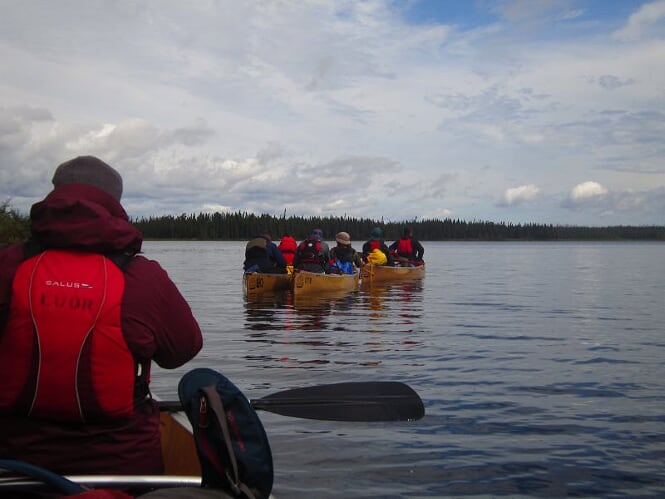
Students canoeing in Wabakimi - view of their backs

For over 20 years, Dr. Tom Potter, Professor in Outdoor Recreation, Parks, and Tourism (ORPT) at Lakehead University, has maintained a working relationship with Wabakimi Provincial Park.
More recently, Alexa Haberer, a Technologist in the ORPT program, has also been involved.
Each year, Potter and Haberer facilitate two-week research journeys for about a dozen third year undergraduate students in the ORPT program.

The journeys are the culminating project for their field exploration course. The trips have three main learning goals: expedition planning and preparation, which they undertake throughout the year; gaining experience in remote back county travel in the northwest ecoregion; and fostering first-hand data collection.

“I am extremely grateful to the staff of Wabakimi Provincial Park who have been highly supportive of our work over the years,” said Potter.

Shannon Lawr, Park Superintendent, Wabakimi Provincial Park, along with Shannon Walshe, Park Biologist, work with Potter and Haberer to identify the types of data collection that students could do to benefit the park, as well as canoe routes through the park that need attention. For example, students might document evidence of caribou, conduct a population study of beaver, identify and document plant species, or evaluate the state of campsites and portage routes.

“The students’ research and recreation-based activities, linked to our canoe routes, fill information gaps in terms of park operations and resource management,” said Lawr.

“The partnership with Lakehead also ensures the next generation of paddlers contributes to Wabakimi’s future and builds understanding as to why it is such a treasure,” he added.

Hannah Terejko, a fourth year ORPT and Natural Sciences student from Brantford, Ont went on last year’s trip, and echoes this sentiment.

“It is one thing to hear about a park and how amazing it might be, but to get to know it and connect to it like it is home creates respect, and drives the motivation to maintain its health,” she said.

Following the journeys, students compile comprehensive research reports that they present to the park. Through the students' detailed investigations, they make meaningful and unique contributions to park planning and management. They also expand their own vision and knowledge of the cultural, recreational and biological aspects of the park.

“It's a joy for me to watch students organise and conduct their data collection, and revel in their research accomplishments as they travel through some very challenging areas and environmental conditions,” said Potter.

During the trip, students are accompanied by qualified guides, including Lakehead faculty or staff. When possible, park staff members join the expedition group, too, which gives the students a chance to learn from someone working in their field. The experts, however, encourage students to lead. Students plan out their roles for the trip, rotating between leader, navigator, chef, head researcher, and assistant researcher positions.

“Everyone gets a chance to do everything, so each gets a chance to let the leadership skills they’ve developed over the program shine,” explained Haberer.

When asked about what she will take from the experience, Terejko reflected on these leadership skills.

“Being able to work with others and take initiative where it is needed, even in small tasks, can be more help to the group than it might seem, and is a great skill to bring into future jobs and careers,” she said.

Potter also noted the unique opportunity for not only hands-on learning but personal growth.

“Their projects encourage them to struggle more, see more, learn more, and appreciate more. And, they get to learn how challenging, exciting, and useful research can be,” he said.

Photo description: Lakehead University Outdoor Recreation Students in Wabakimi Provicial Park summer 2019
Photo credit: Hannah Terejko
Story written by: PhebeAnn Wolframe-Smith
Story published in Chronicle Journal "Research in Action Series" April 4, 2020

OUTD4370 Sailing on Superior

Just prior to the start of fall classes, a fourth year elective class undertook a 12 day sailing experience along the north shore of Lake Superior. Click here to see a video of their experience.

ORPT Students Take Part in International Coastal Cleanup Day

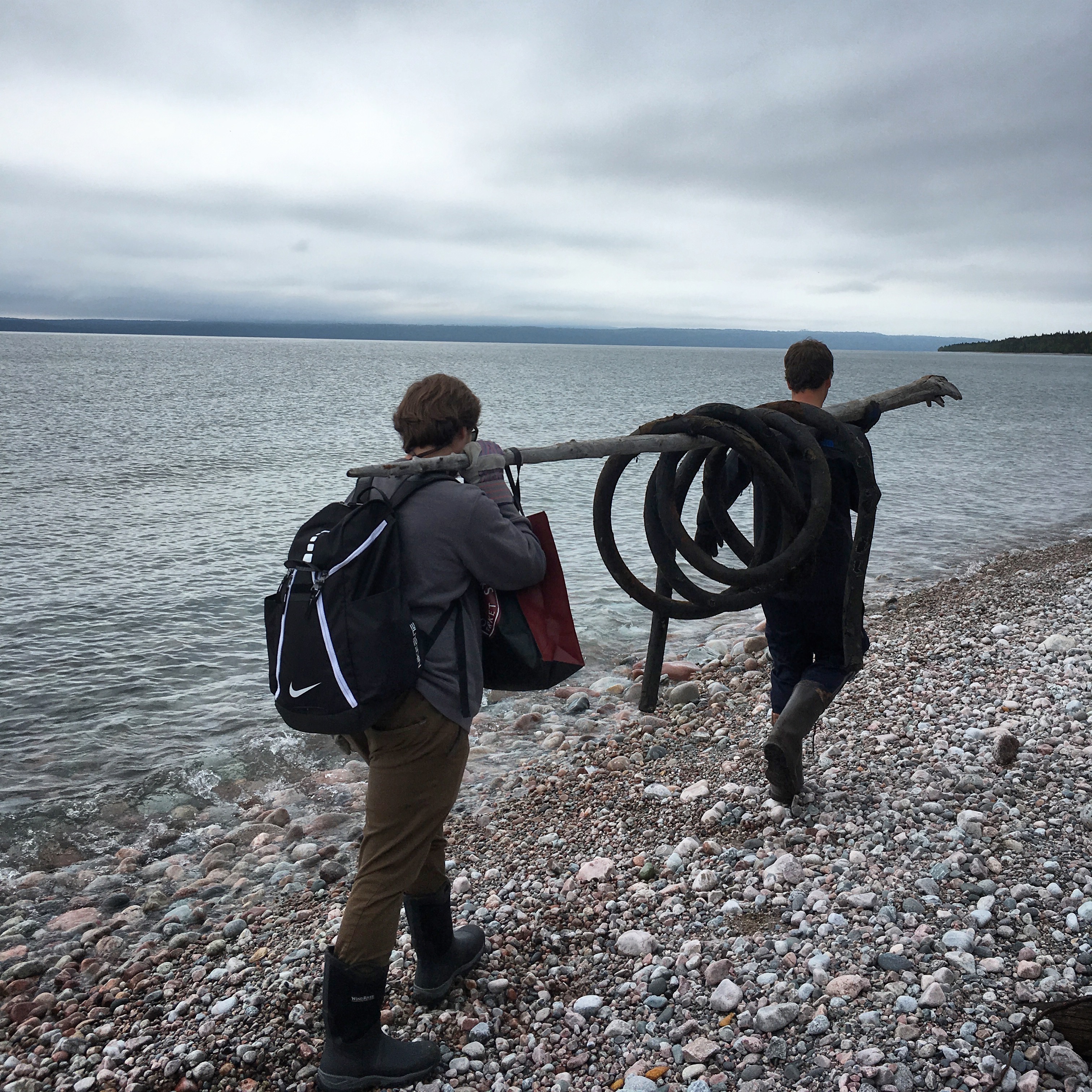
On September 16th, 2017, Parks Canada hosted the International Coastal Cleanup Day along the shores of Mountain Bay, east of Nipigon. The Lakehead University Outdoor Recreation, Parks & Tourism program joined the cause, prepared for a long day’s work and experiential learning.

Chuck Hutterli, a Mountain Bay area resident, has been a long-time ambassador for coastal ORPT students haul garbage from Lake Superior shorelineconservation. He has been extracting nurdles, small plastic pellets, from local beaches for almost ten years. On January 21st, 2008, a CP train derailed west of Rossport resulting in three rail cars spilling their load of plastic nurdles. Due to the tremendously cold and snowy weather conditions at the time, CP was unable to completely clean up the spilled pellets. With wind, rain and snowmelt, the nurdles made their way into Lake Superior. The result was the dispersal of nurdles throughout the area, where they still wash up on the shore. Hutterli hosted the event at his home where we all 37 students gathered to learn and understand the true impact these tiny plastic beads have on the environment. They learned how nurdles are meticulously removed from the sand and were given the choice to either remain in one location collecting nurdles or to be dropped off further away to clean the shoreline of debris.

After a delicious lunch, students set out with one goal in mind; to make the area cleaner than when they arrived. Some of the larger items found included a number of unusual objects, some of which are toxic to the environment. From cigarette packs, inhalers, to rusted empty oil drums, more than a dozen bags were filled to the brim. Five kilometres of beach were combed, accumulating fifty pounds of trash and nearly 200, 000 nurdles.

The overall experience was extremely eye-opening. At the end of the day, students better understood the impact humanity has on our waters. Our oceans, lakes, and rivers are all fragile biotic zones which need our attention. In some areas in the world, fifty pounds of debris on a shoreline certainly does not stretch for five kilometres. The level of waste washed up on shore must be reduced significantly to see a positive change in our Earth’s waters.

The Outdoor Recreation team can’t wait for next year! Thank you, Parks Canada and Chuck Hutterli, for setting up an excellent initiative.


Faculty & Staff

Director

Dr. Leigh Potvin standing beside a Norwegian reindeer

Leigh

Potvin

Director

Campus: Thunder Bay

Phone Number: 807-343-8010 ext. 8377

Email: lcpotvin@lakeheadu.ca

Read more about Leigh Potvin

Full-Time Faculty

Photo of Professor Harvey Lemelin on his bicycle on a nice day

Harvey

Lemelin

Professor

Campus: Thunder Bay

Office Location: SN 2005H

Phone Number: +1 807-343-8010ext. 8745

Email: rhlemeli@lakeheadu.ca

More: Read more about Harvey Lemelin

Dr. Leigh Potvin standing beside a Norwegian reindeer

Leigh

Potvin

Associate Professor, Director

Campus: Thunder Bay

Office Location:

Phone Number: +1 807-343-8010ext. 8377

Email: lcpotvin@lakeheadu.ca

More: Read more about Leigh Potvin

Headshot of Julie Rosenthal

Julie

Rosenthal

Associate Professor

Campus: Thunder Bay

Office Location: SN 2005B

Phone Number: +1 807-343-8010ext. 8753

Email: jrosenth@lakeheadu.ca

More: Read more about Julie Rosenthal

Gail

Kuhl

Assistant Professor

Campus: Thunder Bay

Office Location: SN2001

Phone Number: +1 807 343 8010ext. 8876

Email: gjkuhl@lakeheadu.ca

More: Read more about Gail Kuhl

Keira

Loukes

Assistant Professor

Campus: Thunder Bay

Office Location: SN2005D

Phone Number: +1 807-343-8010ext. 8744

Email: kloukes@lakeheadu.ca

More: Read more about Keira Loukes

Professors Emeriti

This is an image of Dr. Tom G. Potter

Tom

Potter

Professor Emeritus

Campus: Thunder Bay

Office Location:

Phone Number:

Email: tpotter@lakeheadu.ca

More: Read more about Tom Potter

Staff

Lori Kapush

Lori

Kapush

Administrative Assistant

Campus: Thunder Bay

Office Location: SN2002A

Phone Number: +1 807-343-8010ext. 8759

Email: lskapush@lakeheadu.ca

More: Read more about Lori Kapush

Technologists

Alexa

Haberer

Technician, Technologist

Campus: Thunder Bay

Office Location: SN 2005C

Phone Number: +1 (807) 343-8756

Email: alexa.haberer@lakeheadu.ca

More: Read more about Alexa Haberer

Portrait of Joey Miller outdoors

Joseph

Miller

Technologist

Campus: Thunder Bay

Office Location: SN 2005F (on main campus)

Phone Number: +1 807-343-8010ext. 8584

Email: jfmiller@lakeheadu.ca

More: Read more about Joseph Miller

This is an image of Mr. Rodney Swatton

Rodney

Swatton

Technologist

Campus: Thunder Bay

Office Location: SN 2005M

Phone Number: +1 807-343-8010ext. 8611

Email: rodney.swatton@lakeheadu.ca

More: Read more about Rodney Swatton

Subscribe to Outdoor Recreation