
climate change

New Study Identifies Biggest Threats to Maintaining Fat Bike Trails: Climate Change and Volunteer Burnout

Outdoor recreation voluntary associations (ORVAs) play a crucial role in creating, maintaining and managing trail systems across North America. New research conducted by researchers from the University of Eastern Finland and Lakehead University highlights how climate disruption and volunteer burnout threaten the long-term sustainability of winter trail-based recreation, particularly fat biking.

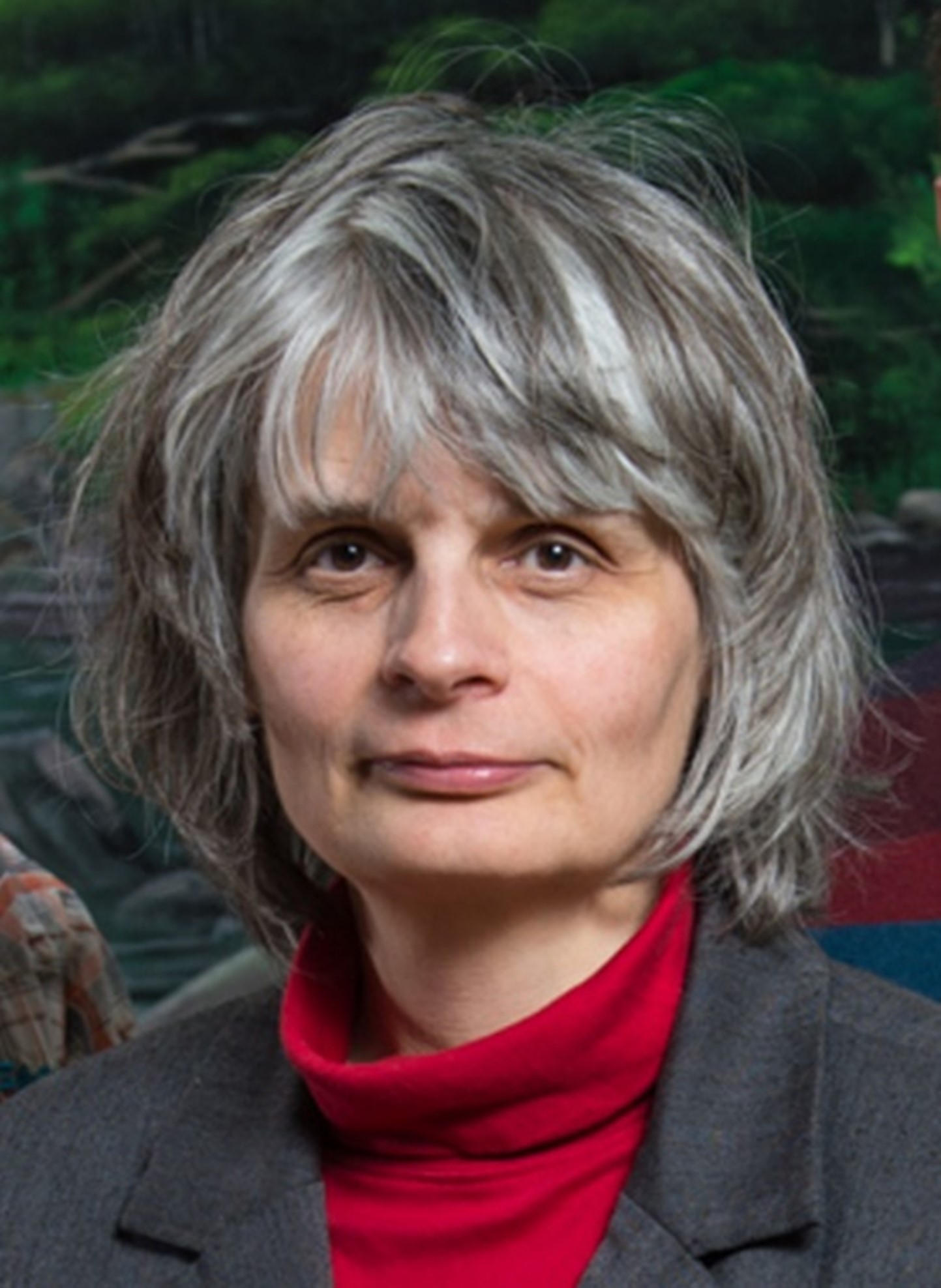
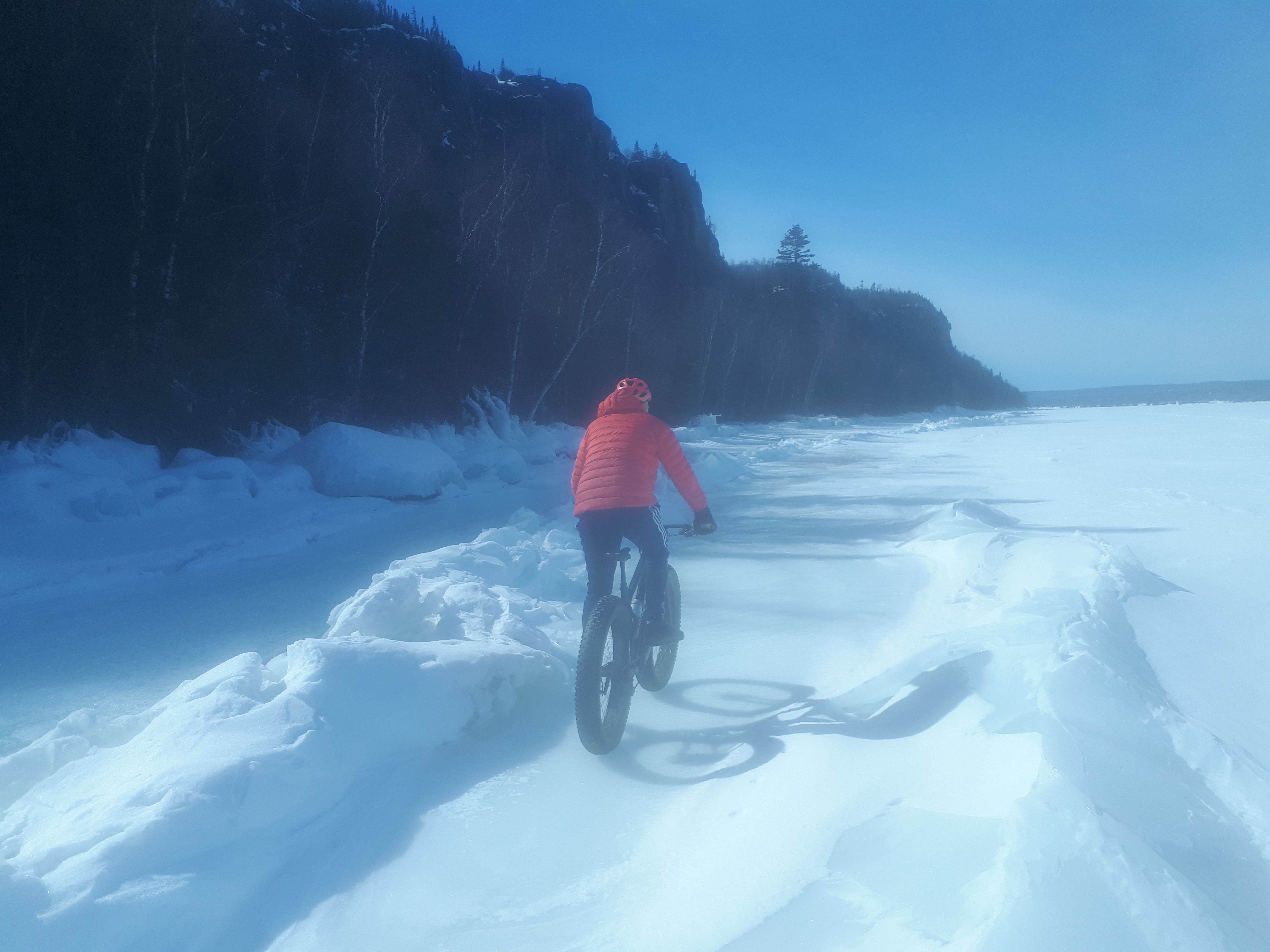
Rider on Fat BikeFat bikes are off-road bicycles with extra-wide tires built for soft terrain like snow and sand. Fat biking lets riders enjoy trails year-round and is quickly becoming a popular winter recreation and tourism activity both in North America and the Nordic countries. 

Published in the Journal of Outdoor Recreation and Tourism, a new study explores how fat biking has unexpectedly emerged as a climate-adaptive strategy for year-round recreation and tourism engagement, and event hosting, in Northwestern Ontario and Northeastern Minnesota. The study surveyed and interviewed fat bikers and outdoor recreation volunteers in both regions. 

“Although a relatively new sport, fat biking, like most winter recreational sports, now faces similar challenges associated with climate change-induced shifts in seasonal weather patterns, like snow accumulation, and following increasingly frequent one-off severe weather events,” says Professor Harvey Lemelin of Lakehead University’s School of Outdoor Recreation, Parks and Tourism.

According to Dr. Lemelin, these unpredictable events strain volunteer resources, and in the absence of effective management solutions to address increased demand, infrastructure growth, and trail maintenance and grooming pressure, they directly contribute to volunteer burnout.

Research shows that while fat biking participation is growing, volunteer support lags. In interviews, volunteers reported increasing strain during heavy snow years, citing higher demands on their time, pressure to maintain trails and lack of effective volunteer recruitment and retention strategies. This is juxtaposed against the fact that, although fat bikers appreciate the work of volunteer trail groomers and event organizers, over 40 per cent of those surveyed said they were unlikely to volunteer with local ORVAs. Volunteer burnout is therefore a growing risk, and without new management strategies, climate disruption and unpredictable weather events risk overwhelming the small pool of dedicated volunteers who sustain trail networks.

The study therefore calls for ORVAs to develop seasonal trail grooming and volunteer recruitment strategies, rotate co-hosting duties for fat bike events to distribute workload, create binational or biannual events to showcase trails while reducing local volunteer strain, and implement volunteer recognition programs and succession planning to strengthen long-term sustainability.

These strategies, the authors argue, are vital to ensuring safe, well-maintained trails and the continued growth of fat biking in regions facing climate disruption.

“While based on research conducted in North America, our study’s findings have implications for regions with similar climates and comparable snowsport development and engagement histories, such as the Finnish Lakeland Region, Jämtland and Västerbotten in Sweden, and the Nordland and Troms regions of Norway,” says Postdoctoral Researcher Kelsey Johansen of the University of Eastern Finland.

“Implementing our recommendations, irrespective of where an ORVA operates, will help ensure their ability to deliver high-quality winter recreational and tourism experiences, including safe, well-groomed trails and regularly occurring events.”

This research received financial support from the UEF Water research program, which is jointly funded by the Saastamoinen Foundation, the Jenny and Antti Wihuri Foundation, and the Olvi Foundation.

The Fragile and Fascinating World of Frogs

Amphibians and reptiles have long captivated biologist Dr. Adam Algar. These cold-blooded animals—known as ectotherms—can help us understand how animals evolved, how they survive in ecosystems across the globe, and how they're responding to Earth's warming environment.

Dr. Adam Algar stands in marsh wearing hip waders and holding a measuring stick

Dr. Algar joined Lakehead in 2021 after spending 10 years at the University of Nottingham in the United Kingdom where his research focused on lizards that are native to the Caribbean and Southeast Asia.

"Are ectotherms struggling, or is climate change enabling them to expand their geographic ranges?" Dr. Algar asks. "We need to understand how species are living now to better predict how they'll be affected by climate change. Gathering this information is crucial to developing conservation policies and strategies."

Dr. Algar primarily studies frogs living in northwestern Ontario. "It's a really exciting ecosystem because northwestern Ontario is a boreal forest in the transition zone from hardwood to coniferous trees."

He has a team of graduate and undergraduate researchers who are part of his laboratory dedicated to studying the ecology and evolution of ectotherms. One current project, in partnership with the Lakehead Region Conservation Authority (LRCA), is recording and monitoring frog and bird calls to determine which species are present and track long-term changes. "We're already learning about what affects their breeding season," Dr. Algar says.

It's Not Easy Being Green

A gray tree frog clings to marsh grasses

A gray tree frog hangs out at a pond. "I became really interested in animal biodiversity after growing up running around the woods of Cape Breton, Nova Scotia," Dr. Algar says. "Globally, we probably don't know about more than half of the species that exist."

One of the reasons Dr. Algar studies frogs is that they're sensitive to environmental changes. "They're the canary in the coalmine—an early warning sign of what's happening in an ecosystem."

Specifically, he investigates how frogs behave throughout the short northwestern Ontario breeding and growing season when they are active. Dropping temperatures prompt frogs to bury themselves under leaf litter and wait for snow to insulate them. "That's why it's a problem when we have cold winters and no snow." During the winter, frogs' hearts almost stop and they go into a state of torpor. Incredibly, several frog species create antifreeze to replace much of the water in their bodies to stop their cells from bursting.

The gray tree frog is one of the species Dr. Algar's lab is studying. "They're a stunning little frog, one to two inches in length, with bumpy skin that changes colour from grey to vibrant green. They also have bright yellow legs and large toe pads to stick to trees." Their range begins in Texas and, in recent decades, has expanded into the Thunder Bay region. "Any species that inhabits such a vast area must be harbouring some fascinating eco-evolutionary secrets," Dr. Algar says.

If people are lucky enough, they might see these frogs stuck to the windows of their camps on summer evenings. "They're attracted to light because the insects they eat are attracted to light," he explains. "And they start calling around 10 o'clock at night. It's a loud short trill often mistaken for a bird."

A brown anole lizard with an inflated dewlap stands on piece of dead wood

Ectotherms like this brown anole lizard (Anolis sagrei) get their heat from their environment, often by basking the sun, instead of generating it internally like mammals. "This means they have a low metabolic rate and require less food. But  when the temperature tips too far, either hot or cold, it can have deadly consequences," Dr. Algar says.

Dr. Algar's research is dissolving traditional boundaries between localized field ecology and large-scale macroecology that uses modelling and large datasets. "I use our fieldwork data to test and inform our macroecology models to see if the models are working.

We also measure how temperature affects how far frogs can jump and how fast tadpoles can swim. It's like the animal Olympics."

Dr. Algar engages in this painstaking work to lay the foundation for conservationists. "I don't want to live in a world where springtime is no longer greeted by the choruses of frogs."

Lakehead University is in the top 10 per cent globally of universities making an impact by advancing sustainability and positive societal change and was named the top-ranked university with under 10,000 students in Canada and North America in the Times Higher Education Impact Rankings. These prestigious rankings assess universities' success in delivering on the United Nations 17 Sustainable Development Goals (SDGs) to solve our planet's most pressing challenges. Dr. Algar's work addresses SDG 13: Climate Action, SDG 14: Life Below Water, and SDG 15: Life on Land.

Canadian school boards urged to take bold climate action as new report reveals limited progress

Climate Leadership Within School Boards chart

November 15, 2023 – Orillia, Ont. 

A comprehensive new report from researchers at Lakehead University highlights the need for greater commitment from Canadian school boards to address the climate crisis.

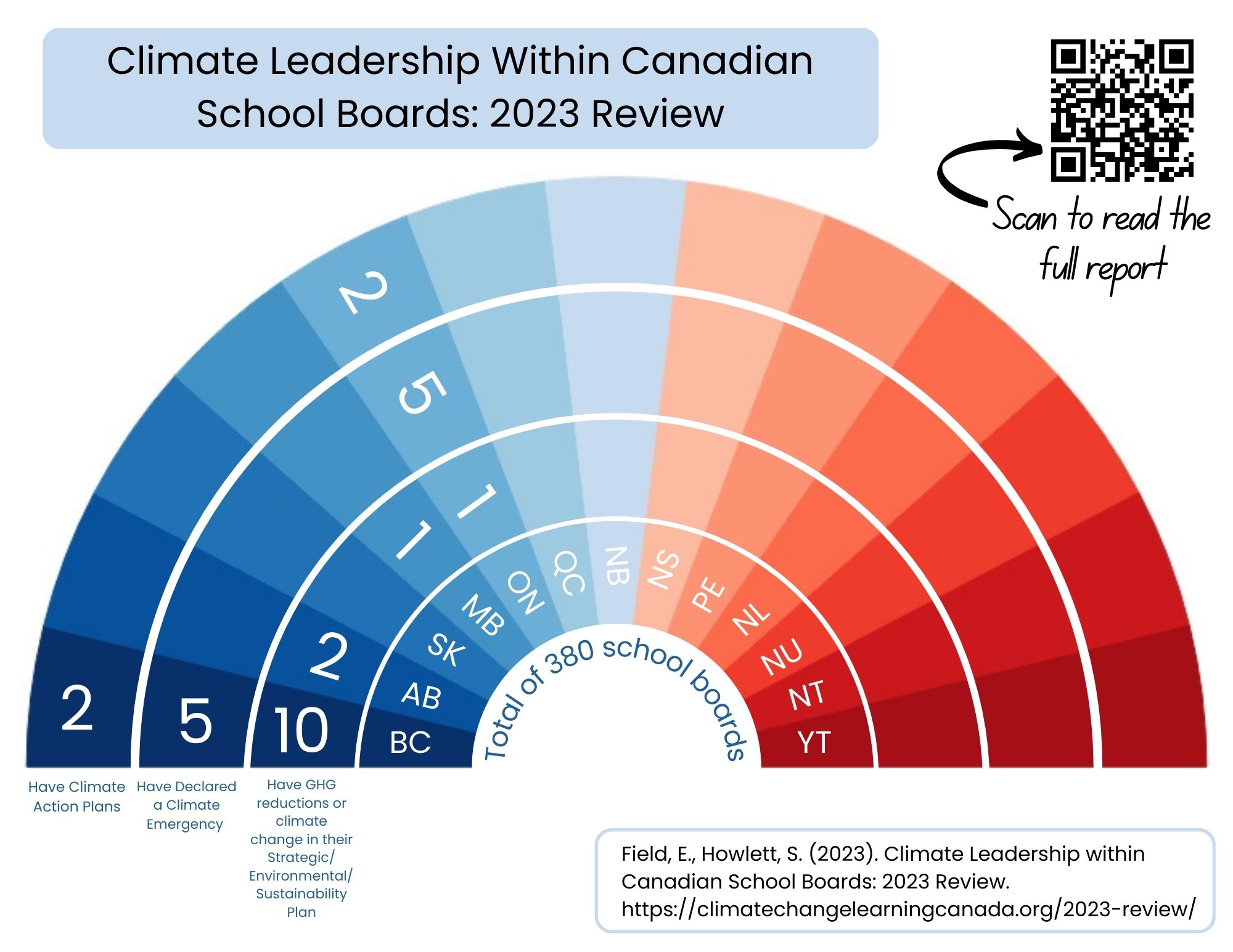
The report, “Climate Leadership Within Canadian School Boards: 2023 Review”, published by Dr. Ellen Field, Assistant Professor in the Faculty of Education, and Sidney Howlett, Master of Education candidate and research analyst, benchmarks climate leadership practices across 380 Canadian school boards through policy indicators such as the existence of Climate Action Plans, climate emergency declarations, and the integration of climate change and greenhouse gas reduction goals into strategic or environmental and sustainability plans.

“School boards are pivotal actors in shaping the educational landscape and inspiring future generations,” explains Field. “The potential impact of school board leadership across all schools in Canada, if greenhouse gas emission targets were set and acted upon in line with the Paris Agreement, could have a ripple effect in reducing emissions and improving climate literacy across Canada.”

Overall, the report reveals a mixed landscape where progress is limited but the potential for impact is immense. Highlights of the findings include:

  • Only four school boards in Canada had published Climate Action Plans: Toronto District School Board, Trillium Lakelands District School Board, Richmond School District, and Greater Victoria School District.
  • Five school boards have environmental and sustainability plans, and nine have strategic plans that mention climate change or greenhouse gas reductions.
  • Only 10 school boards in Canada have declared a climate emergency, all from either British Columbia or Ontario.
  • B.C. and Ontario are the only provinces that require some form of mandatory reporting, with variability in ambition and level of detail required by school boards.

“Our research demonstrates that provincial mandates can enhance school boards’ leadership, fostering a more proactive approach to climate action,” Howlett says.

On average, Ontario school boards are aiming for less than two percent annual greenhouse gas reductions, with the most frequent target set at one percent reduction annually. With the current five-year plans ending in 2023, Field and Howlett state that there exists an opportunity to advocate for more ambitious, science-based targets for reducing energy consumption and greenhouse gas emissions in schools across Ontario. Collectively, these boards produce more than 650,000 tonnes of carbon dioxide equivalent annually.

“Our intention with this report is to encourage superintendents and senior leaders of school boards to see their schools as important stakeholders for taking climate action, not only through the energy efficiency of their schools but also as community actors that have climate action plans and are working for more-stable futures in alignment with the Paris agreement,” Field says. “We also recognize that this may mean advocating for provincial or federal funding or mandatory reporting to improve climate governance across the system.”

In addition to the report, Field and Howlett have provided resources for school boards to support the development of climate action plans, including specific examples of school board leadership, a pledge for superintendents to commit to driving climate action within their school boards, and a way for school boards to provide updates on new climate policies.

“In Canada, 492 municipalities have already declared a climate emergency and more than 52 municipalities have climate action plans. The urgency and momentum surrounding climate action is at the regional level. We see opportunity for school boards to work with regional partners to develop climate action plans and implement solutions,” adds Howlett.

The full report is available at https://climatechangelearningcanada.org/

- 30 –

Media: For more information or interviews, please contact Jaclyn Bucik, Media, Communications and Marketing Associate, at 705-330-4010 ext. 2014 or mediarelations@lakeheadu.ca.

Lakehead University is a fully comprehensive university with approximately 9,700 full-time equivalent students and over 2,000 faculty and staff at two campuses in Orillia and Thunder Bay, Ontario. Lakehead has nine faculties, including Business Administration, Education, Engineering, Graduate Studies, Health & Behavioural Sciences, Law, Natural Resources Management, Science & Environmental Studies, and Social Sciences & Humanities. Lakehead University’s achievements have been recognized nationally and internationally, including being ranked in the top half of Times Higher Education's 2023 World Universities Rankings for the fourth consecutive year, and the number one university in the world with fewer than 9,000 students in THE’s 2023 Impact Rankings (which assesses institutions against the United Nations’ 17 Sustainable Development Goals). Visit www.lakeheadu.ca.

Research in Action: Project guides climate change communication strategies

BY PHEBEANN WOLFRAME-SMITH 

Originally published in The Chronicle Journal on Wednesday, June 3, 2020

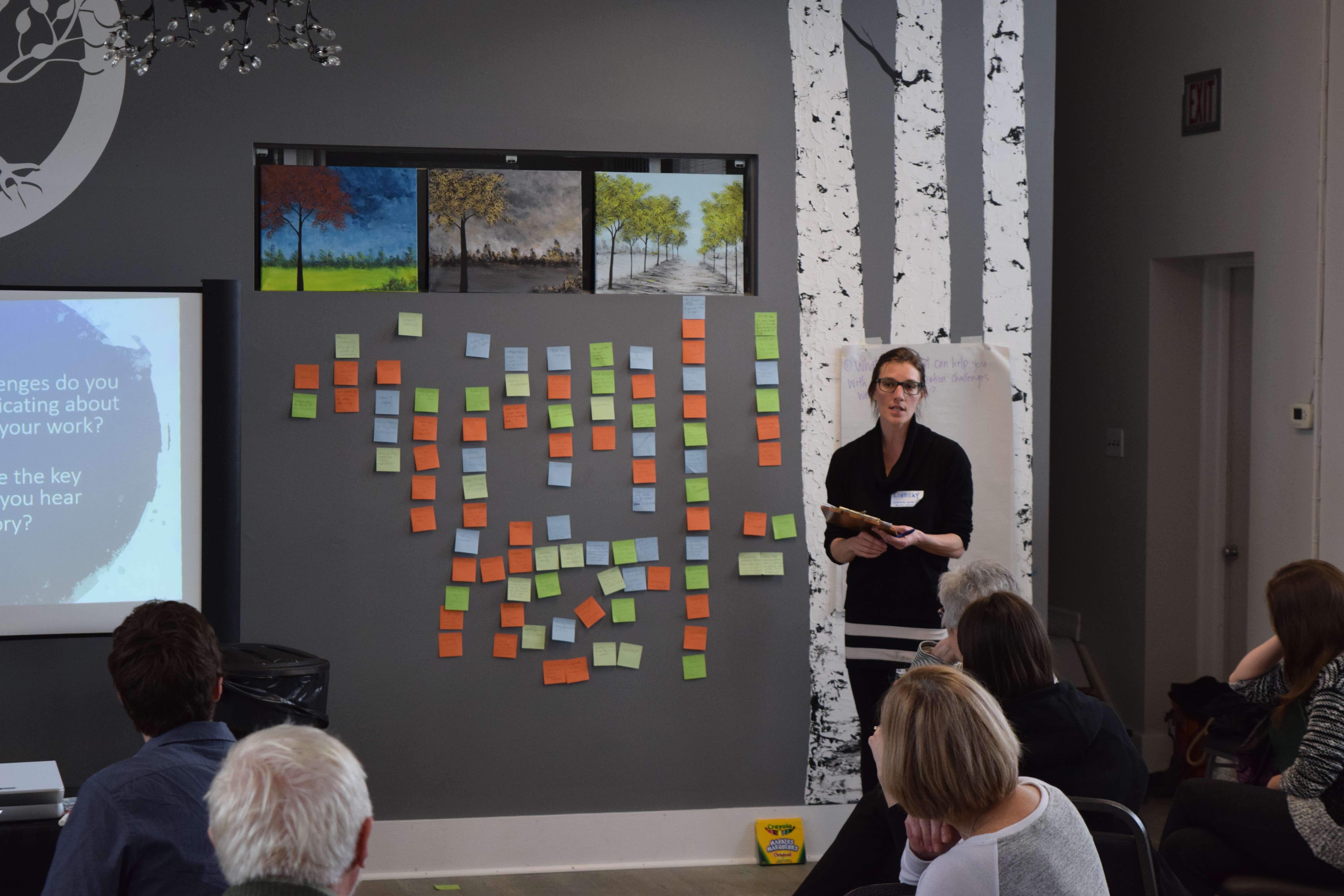
Dr. Lindsay Galway giving a presentation

Photo: Dr. Lindsay Galway speaking at the March climate change communication workshop.

That climate change is one of the greatest challenges facing humanity is not news. This awareness, however, does not always translate into action. To move people to action, governments and organizations need to understand how best to communicate climate change information.

In March 2020, Dr. Lindsay Galway, Associate Professor in the Faculty of Health and Behavioural Science at Lakehead University and her team completed a project that sought to understand how citizens in Thunder Bay, Ont., and Prince George, BC, can become better engaged with climate change. Northern communities are particularly vulnerable to the effects of climate change. Although research has been conducted in the arctic, until now, little was known about public responses to climate change in the provincial norths.

“Provincial norths are unique case studies, because their economic wellbeing, culture, and history is often closely connected to resource extraction. They are also more remote and politically marginalized. But there is also a strong sense of place, of community, and of connection to the land,” said Galway.

The two-year project, funded the Social Sciences and Humanities Council of Canada, involved three components: representative postal surveys in Thunder Bay and Prince George; interviews with “climate champions” in each community who are engaged in climate change education and action; and lastly, the development of climate change communication strategies based on the gathered data.

The postal surveys involved using Canada Post’s address database to randomly select 2000 households for each community and then adjusting based on census data to make sure these households represented the demographics of the community as a whole. Surveys were mailed to these households asking about climate change beliefs and attitudes, impacts of climate change, and climate change action. The team received just under 400 completed surveys for Thunder Bay which is considered a strong response rate.

Key findings from the Thunder Bay postal survey in regard to attitudes and beliefs include that 95% of respondents believe climate change is happening, and 86% feel very or somewhat worried about climate change. 40% of respondents report experiencing climate change impacts in Thunder Bay such as shifts in seasonal patterns, changing frequency and intensity of precipitation, and extremes of weather.

Other key findings, those that relate to action, highlight areas for education and change. 70% feel that addressing climate change will have positive effects on the long-term health of our communities, but paradoxically, 51% are concerned about whether addressing climate change will increase taxes. Similarly, while 80% felt Thunder Bay community members should do more to address climate change, only 60% reported taking action themselves. 70% of respondents felt that climate change is more likely to be a threat in the future than in the present.

“People still think of climate change as a threat of the future – that’s key. Climate science clearly illustrates that it is problem of now. If we are going to act to address climate change, we need to do it in the next five years” emphasized Galway.

The research was supported by an advisory group in each community made up of representatives from organizations who are working to address climate change. Following analysis of the data, 30 people from the advisory group and other organizations took part in a climate change communication workshop in March 2020 to discuss the results of the research, and to build best-practices for communicating about climate change in Thunder Bay, facilitated by Galway and Dr. Paul Berger, Associate Professor in the Faculty of Education at Lakehead.

“Dr. Galway's research provides a solid foundation from which to take strong action. Scholarly evidence of strong local support for addressing climate change helped to secure a unanimous vote in favour of the City of Thunder Bay’s declaration of a climate emergency” said Aynsley Klassen, Program Coordinator at EcoSuperior, and a member of the research advisory group.

“Eco-superior is also able to use Dr. Galway's research to guide program development, increase the effectiveness of climate-related communications, and engage community residents in climate actions,” she added.

Another outcome of the project has been a video which recently was a finalist in the Social Sciences and Humanities Council Storytellers competition. The video was created by Robert Sanderson, a Master of Health Sciences Student at Lakehead, who was a research assistant on the project.

“Working on the project expanded my own interests and knowledge – it was a great opportunity to learn and make connections and gain research experience. I got to see a whole project from start to finish – to see the steps, the challenges and how to overcome them,” he said.

Sanderson’s video can be viewed at here and the final report from the project can be accessed here.

Photo credit: Paul Berger 

Storying Climate Change

Sat, 16 November 2019, 1:00 PM – 3:00 PM EST
Location: Leacock Museum National Historic Site, 50 Museum Drive, Orillia, ON L3V 7T9
 

Storying Climate Change seeks to provide a bridge between the everyday and the oft-apocalyptic sentiments surrounding climate change.

About this Event

Canadian writers Kyo Maclear (Birds Art Life, Orillia’s Big Read 2017 selection) and Catriona Sandilands (Queer Ecologies) will be joined by local writers and storytellers to read, tell stories, and discuss a new collection of climate change stories, titled Rising Tides: Reflections for Climate Changing Times. Although climate change is global and dramatic, its effects are also experienced locally by people who are struggling to understand the impacts of climate change on their daily lives. Including more than forty works of short fiction, memoir, and poetry, Rising Tides emphasizes the need for intimate stories and thoughtful attention, and also for a view of climate justice that is grounded in ongoing histories of colonialism and other forms of environmental and social devastation. Bringing stories about climate change—both catastrophic and subtle—closer to home, this event will inspire reflection, understanding, conversation and action.

Storying Climate Change seeks to provide a bridge between the everyday and the oft-apocalyptic sentiments surrounding climate change discussion. As part of a series of readings and discussions taking place across Canada, Storying Climate Change invites communities to discuss and reflect on what climate change means for them now.

The event is free. If possible, please register in advance.

Sponsored by "Storying Climate Change," a Pierre Elliot Trudeau Foundation Fellowship (https://storyingclimatechange.com/about/), the Lakehead University Research Chair in Environmental Humanities, Caitlin Press, and Manticore Books.

As part of a series of readings and discussions taking place across Canada, Storying Climate Change invites communities to discuss and reflect on what climate change means for them now.

Dr. Todd Dufresne Publishes New Book Examining Climate Change

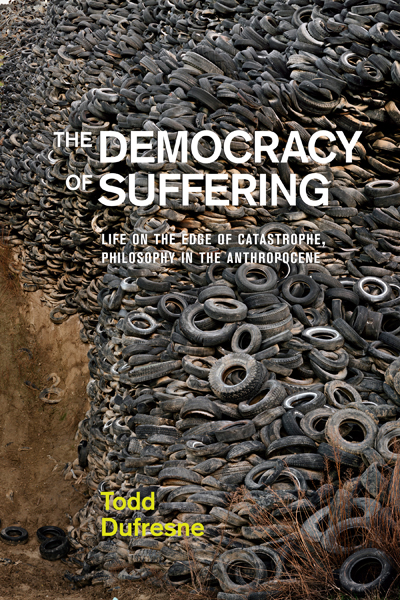
The Democracy of Suffering: Life on the Edge of Catastrophe, Philosophy in the Anthropocene (McGill-Queen's UP, October 2019) by Dr. Todd Dufresne, Department of Philosophy, will be released this year. Noted famous American environmental activist, Bill McKibben writes "This is a very fine book: philosophy perfectly attuned to our precise -- and unique -- moment, a moment when our species became suddenly very big indeed."

Dufresne publication photo book jacket The Democracy of Suffering

New Article Proposes New Approach to Exploring Climate Change

A new article by Dr. Pallavi Das proposing a new approach to doing history, a people's history of climate change, appears in the most recent issue of the journal History Compass.

While social scientific studies have provided useful insights into the phenomenon of climate change, they, however, do not take a historical approach to the impacts of climate change, and people's perception of it.

Historians have studied climate and its impact on the whole society but have neglected the everyday experiences and perceptions of climate change within a society such as ordinary people versus the elite perceptions, men versus women's experiences of climate change. Moreover, historians of climate have largely dealt with natural climate change in the distant past, but not with climate change caused by human activities.

Since climate change that the world is witnessing in the past century is largely anthropogenic, historians therefore cannot neglect present‐day climate change and its impact on society. Furthermore, although climate change is a global environmental phenomenon, the poor and the marginalized social groups are vulnerable to the impacts of climate change more than others. Hence, climate change and the history of climate change needs to be understood from the perspective of these vulnerable groups in a society.

"People's history of Climate Change" proposes a new approach to doing history: people's history of climate change.

The article appears in History Compass 16, no. 10 (October 2018). https://doi.org/10.1111/hic3.12497

Subscribe to climate change