



Lakehead Professors Among New and Renewed Canada Research Chairs
By: Melissa Burton
Three Lakehead University researchers have been recognized by the Government of Canada with new and renewed Canada Research Chair (CRC) appointments for their outstanding scientific contributions to our local and global communities.
Dr. Christopher Mushquash was appointed as a new Tier 1 CIHR CRC in Indigenous Mental Health and Addiction. Dr. Alla Reznik, Tier 1 CRC in Radiation Medical Imaging Physics, and Dr. Lindsay Galway, Tier 2 CRC in Social-Ecological Health, received renewals.
“The work of Dr. Mushquash, Dr. Reznik, and Dr. Galway perfectly aligns with Lakehead’s research priorities, especially in areas like health and well-being; First Nations, Métis, and Inuit research; and sustainability, resources, and the environment,” explains Dr. Langis Roy, Vice-President of Research and Innovation. “These appointments affirm our standing as a research-intensive university committed to generating innovative solutions for our regions and advancing knowledge that matters for both people and planet.
 Dr. Mushquash, Psychology Professor and member of Pawgwasheeng (Pays Plat First Nation), is Lakehead’s first Tier 1 CRC holder from the Canadian Institutes of Health Research (CIHR). Blending traditional scholarly activities with Indigenous ways of knowing, he has influenced national policy and improved systems of care for Indigenous people during his previous two terms as a Tier 2 CRC.
Over the next seven years, Dr. Mushquash and his research team will expand their community-based research program to develop culturally- and contextually-appropriate targets of intervention, develop methods for testing outcomes, and share knowledge with Indigenous and academic communities, clinicians, policy-makers, and decision-makers.
“This appointment provides the platform to broaden our impact, not only through community-driven research, but by training the next generation of researchers to engage in respectful engagement with Indigenous communities,” he says.
Canada Research Chair Renewals
Dr. Alla Reznik, Tier 1 CRC in Radiation Medical Imaging Physics (NSERC)
 Physics Professor Dr. Alla Reznik is revolutionizing the early detection and diagnosis of cancer. Dr. Reznik and her team have developed a low-dose Positron Emission Tomography (PET) scanner for breast imaging that has shown promising results in clinical settings.
They are currently refining their device to target other organs and provide clearer and more detailed diagnostic images compared to current technologies while minimizing patients’ exposure to radiation. “The PET scanner is designed to be versatile, capable of imaging various body parts such as the breast, brain, heart, and prostate with improved accuracy and detail,” she explains.
Dr. Reznik's innovations in medical imaging technology are improving patient health outcomes and advancing the field of personalized medicine by tailoring scans to individual patient needs.
Dr. Reznik was renewed for a seven-year term.
Dr. Lindsay Galway, Tier 2 CRC in Social-Ecological Health (SSHRC)
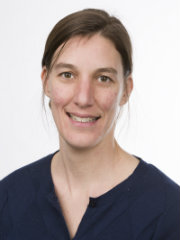 Dr. Galway, Associate Professor in the Department of Health Sciences, investigates how urgent global challenges, including climate change, pollution, biodiversity loss, and ecosystem degradation, directly impact the well-being and equity of people.
“My research falls under the umbrella of planetary health - the idea that human health and the health of ecosystems and the planet are deeply interconnected,” says Dr. Galway.
Building on the successes of her first term, Dr. Galway and her interdisciplinary team are co-constructing place-based solutions that prioritize the perspectives and experiences of marginalized groups. By promoting both environmental sustainability and social justice, Dr. Galway aims to build a more resilient and equitable future for all.
Dr. Galway was renewed for a five-year term.
