Indigenous

People are Going Hungry and Farmers are Struggling

Dr. Jennifer Jarman Wants to Fix a Canadian Food System in Crisis

Abundant and affordable food is something Canadians once thought they could always count on.

But this is no longer true for many of us.

"We're experiencing multiple food crises as more families are plunged into food insecurity," says Lakehead Interdisciplinary Studies Chair Dr. Jennifer Jarman.
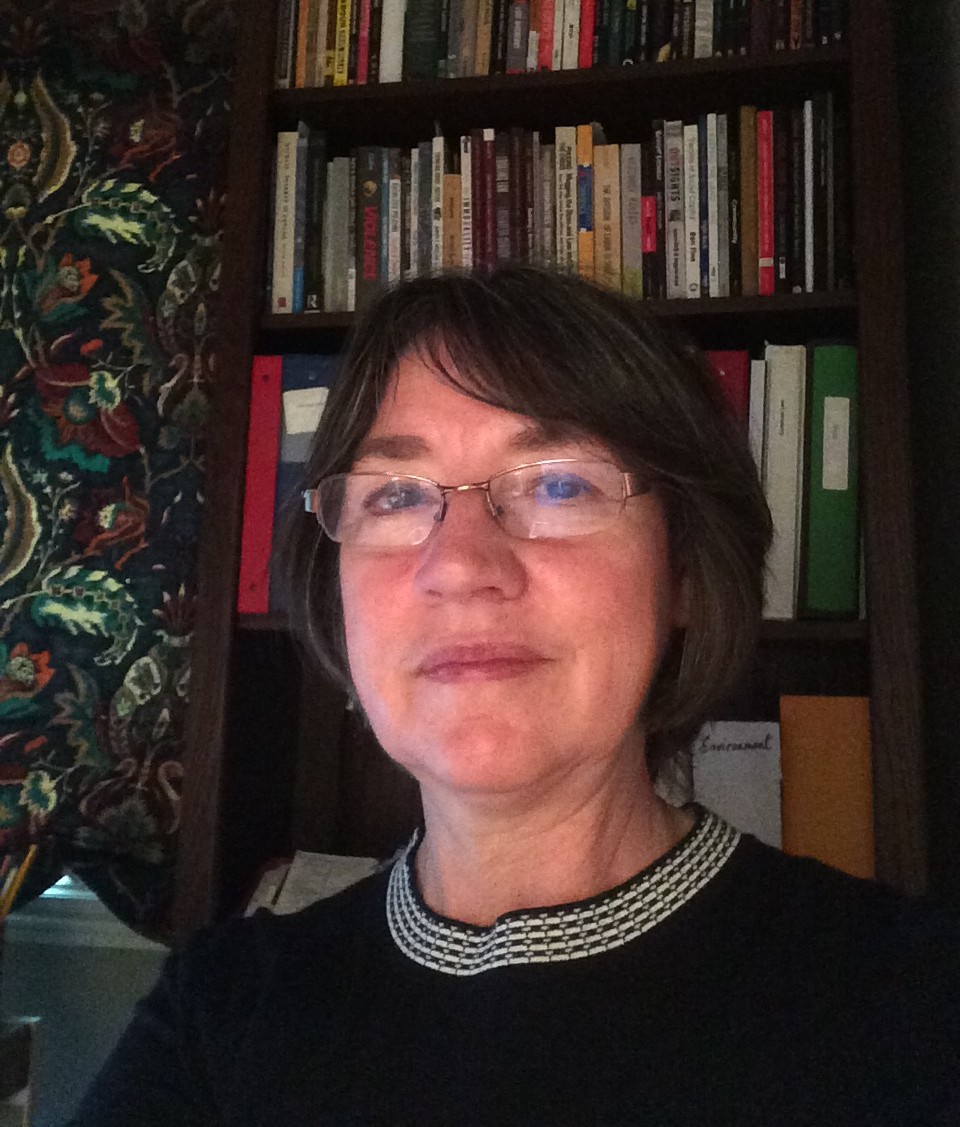
Dr. Jennifer Jarman, wearing glasses and a black top with a white-and-black collar stands in front of a bookcase

Dr. Jarman's research is centred on social inequality and social justice. "I became interested in rural employment issues when I joined Lakehead," she says. "This led to the book 'The Right to Be Rural,' which I co-edited with Karen Foster at Dalhousie University in 2022.

"This situation has been steadily deteriorating since the pandemic, which was one of the factors that triggered rising grocery prices."

Dr. Jarman is a sociology professor who studies social inequality and its effects. She is also on the board of directors of the Sharing Place Food Centre, a food bank in Orillia.

"We're seeing disturbing trends at the centre," she says.

"More people are becoming homeless, and people with full-time jobs and housing don't have enough money for groceries. Many are paying their rent first and then having to skimp on food."

Food Insecurity is Not Inevitable

Dr. Jarman is part of a movement to change this state of affairs.

She and fellow Lakehead professor Dr. Charles Levkoe are co-investigators with the Common Ground Network—a Social Sciences and Humanities Research Council (SSHRC) project led by Dalhousie University.

They've received research funding to establish a national research network of social sciences and humanities (SSH) researchers focused on supporting sustainable agriculture, forestry, fisheries, and food systems in Canada.

"The goal is to harness social sciences and humanities expertise to create affordable and ecologically sustainable paths for producing and distributing food. For example, growing more food locally," Dr. Jarman says.
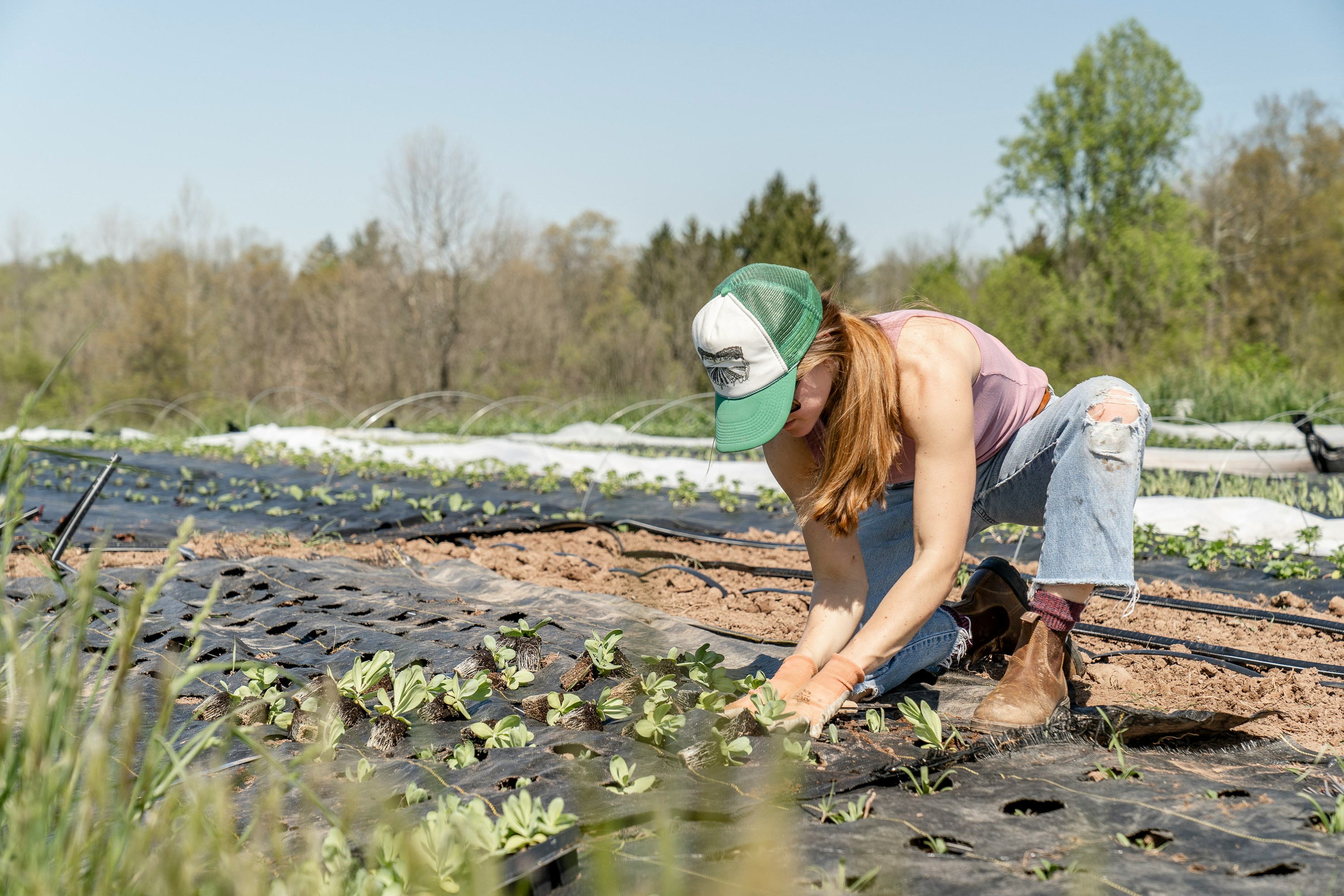
A woman wearing a baseball cap, a t-shirt, and jeans, plants seedlings in a field

"More local agriculture could help address food insecurity," Dr. Jarman says. "There's a debate about whether the problem is food prices or insufficient income." Photo Credit: Unsplash/Zoe Richardson

"When tackling food and agricultural issues, input is generally sought from scientists and agricultural experts," she adds.

"Unfortunately, many are often unaware of social sciences and humanities researchers doing related agriculture and food systems work.

That's why we're bringing these researchers together with community stakeholders to create strong teams and networks that make both SSH and community-based research more visible, impactful, and reflective of local and regional needs and realities."

Currently, Common Ground has over 200 SSH researchers.

This is in addition to hundreds of agricultural, fisheries, forestry, community, and industry organizations as well as government partners and Indigenous and settler communities.

Helping Canadian Farmers and Food Producers

For the past year, Dr. Jarman has been a co-lead of Common Ground's 'Relationships Across and Between Rural Communities' pillar.

She—along with PhD student and Lakehead Farm Lab Coordinator Jacob Kearey-Moreland—have been investigating whether smaller Canadian agricultural producers have the necessary infrastructure to get their food to market locally.

This infrastructure encompasses storage warehouses, distribution methods, and secondary facilities such as grinding mills for grain farmers.
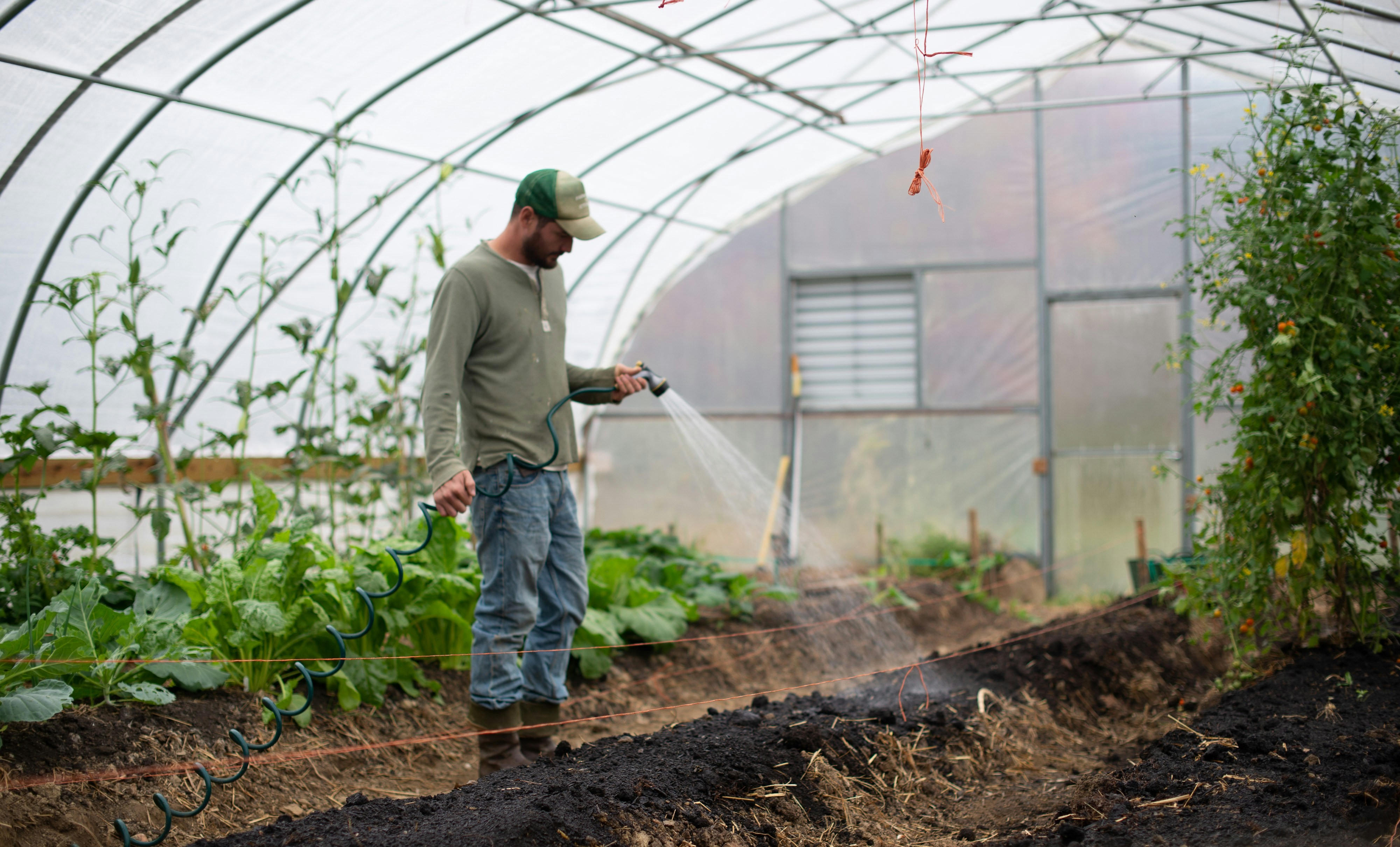
A bearded man wearing a baseball cap, long-sleeved shirt, and jeans stands inside a greenhouse spraying water from a hose on a row of soil

A tool assessing the needs of Ontario agricultural producers will be tested in Thunder Bay and Simcoe County. It's being developed by Dr. Jarman and Common Ground collaborators including Dr. Charles Levkoe—a Lakehead health sciences professor and a Canada Research Chair in Equitable and Sustainable Food Systems. Photo Credit: Unsplash/Zoe Richardson

Dr. Jarman is also working with Dr. Levkoe, the Food Action Network of Northwestern Ontario, the Sharing Place Food Centre, Sustain Ontario, and the Food Communities Network on a pilot project to create an assessment tool for Ontario municipalities.

The tool will allow municipalities to engage their stakeholders in building more equitable and sustainable food systems.

"Canada needs more baseline information about its agricultural producers and their needs," Dr. Jarman explains.

"We want to identify these needs before making policy recommendations and engaging in lobbying.

We're particularly interested in infrastructure for socially just food systems for vulnerable people."

Coming Together at the Common Ground Food Forum

Dr. Jarman is excited to be helping coordinate the Common Ground Food Forum taking place June 15-19 on the Lakehead Orillia campus.

Fresh leeks, carrots, and other vegetables displayed on a table and on shelves

"The Common Ground Food Forum will be an opportunity to share experiences from diverse regions," Dr. Jarman says. "Food distribution looks very different depending upon which part of the country you live in." Photo Credit: Unsplash/Peter Wendt

The forum will welcome delegates from the Common Ground Network, the Canadian Association of Food Studies, the Food Communities Network, and Food Secure Canada.

The theme of the conference is "Building a Bigger Table."

"We want to introduce people who've never met before to find common areas of interest and forge research and policy alliances," Dr. Jarman says.

A large blue cargo ship stacked with many rectangular cargo containers sails near a coastline with trees and a house

"From the 1970s onwards, food systems have become globalized," Dr. Jarman says. "This has caused carbon emissions to soar because we're shipping food halfway around the world. It's better to switch back to older ways of doing things—growing food locally and eating food in season." Photo Credit: Unsplash/Andreas Dittberner

She believes that shifting away from globalized food production monopolized by large grocery chains is critical to ensuring food security and the long-term health of the planet.

"People have lived on this continent for thousands of years with sustainable food systems," she points out. "Vegetable crops like potatoes, tomatoes, squash, and berries flourish here and so do wild game, fish, and livestock.

Everyone in Canada should have access to healthy food at affordable prices."

Click here for more information about the 2026 Common Ground Food Forum running from June 15-18 at Lakehead Orillia.

The Common Ground Network was launched in 2024 and is being funded by a five-year Social Sciences and Humanities Research Council (SSHRC) grant led by Dalhousie University in partnership with Agriculture and Agri-Food Canada (AAFC).

Other Common Ground partners include Lakehead University, Arrell Food Institute, Canadian Association for Food Studies, Canadian Centre for Food and Environment, Centre for Studies in Food Security, Centre for Sustainable Food Systems, Collège Boréal, Dalhousie University, Ecology Action Centre, Farmers' Markets of Nova Scotia, Farm to Cafeteria Canada, FarmWorks Investment Co-operative Ltd, Food Communities Network – Réseau Communautés Nourricières,Food for All NB / Ailments Pour Tous NB, Food Secure Canada, HSI Canada, JustFOOD (Ottawa), National Farmers Foundation, National Farmers Union, Northern Ontario Farm Innovation Alliance, Organic Agriculture Centre of Canada, Organic Nova Scotia, Reimagine Agriculture, Selkirk College, Territorial Agrifood Association, The Sharing Place Food Centre, Thunder Bay and Area Food Strategy, the University of Alberta, and Wilfrid Laurier University.
Caribou Workshop Advances Collaborative Solutions for Conservation in Ontario

Thunder Bay, ON – The Faculty of Natural Resources Management at Lakehead University organized a two-day Caribou Workshop on May 26 and 27, 2026 that brought together a diverse group of researchers, practitioners, policymakers, and students to address one of Ontario’s most pressing environmental challenges - woodland caribou conservation. The workshop was sponsored by a grant from the Ontario Ministry of Environment, Conservation, and Parks.

NRM Caribou workshop 2026
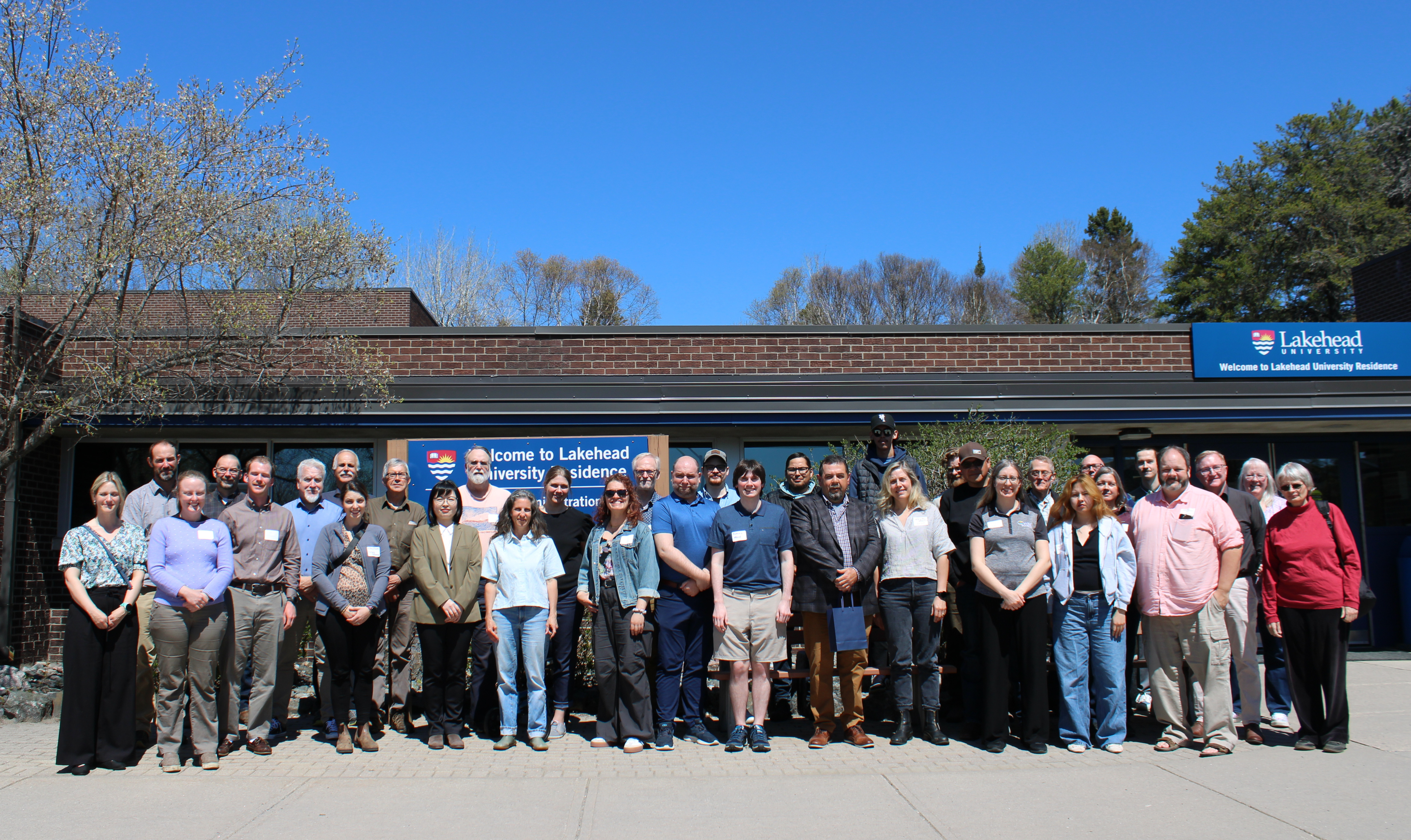
Group picture of the in-person attendees on Lakehead University, Thunder Bay campus

Woodland caribou are widely recognized as a species at risk in Ontario, facing pressures from habitat disturbance, climate change, and human activities. The Caribou Workshop was designed to identify key issues in caribou conservation and develop practical, science-based solutions.

The workshop was delivered over two days in a hybrid format at the Thunder Bay campus and online, with 30+ participants in person and 20+ online participants. Day 1 brought together all stakeholder groups and featured a keynote by Dr. Darren Sleep (Forest Products Association of Canada). Day 2 focused on Indigenous and First Nations perspectives, with a keynote by Roger Wesley, Constance Lake First Nation.


 “This workshop highlighted the Faculty of Natural Resources Management ongoing leadership in fostering dialogue and advancing applied solutions in caribou conservation and research”

- Dr. Brigitte Leblon, Dean of the Faculty and Professor of Remote Sensing.

“This workshop brought together various voices from across sectors to come up with meaningful solutions to caribou management within the context of forest management in Ontario.”
- Dr. Michel Laforge, Caribou Research Chair and Faculty’s professor.

“Collaboration is essential to preserve caribou and at the same time, promote sustainable forestry, secure critical minerals, achieve economic prosperity, and support Indigenous cultures.”
- Darren Sleep, Forest Products Association of Canada.

“The relationship between Indigenous communities and academia, such as Lakehead’s Faculty of Natural Resources Management, is key to moving forward on caribou conservation”
- Roger Wesley, Constance Lake First Nation.

“The workshop provided the opportunity to understand diverse points of view while emphasizing the need to merge the on-going scientific data with local and Indigenous knowledge.”
- Tom Ratz, Registered Professional Forester, Retired Chief Forester Damtar.

“The workshop has enhanced my understanding of real-world conservation challenges by providing a valuable opportunity to share knowledge and ongoing projects.”
- Jake O'Flaherty - Master Student, Lakehead’s Faculty of Natural Resources Management.


 About the Faculty of Natural Resources Management

Protecting Canada's Parliamentary Democracy

Professor Ryan Alford Takes Free Speech Case to the Supreme Court

Law professor Ryan Alford launched a landmark legal challenge that took him all the way to the Supreme Court of Canada in April.

He undertook this arduous years-long journey to fight for the right to free speech in the House of Commons and the Senate.

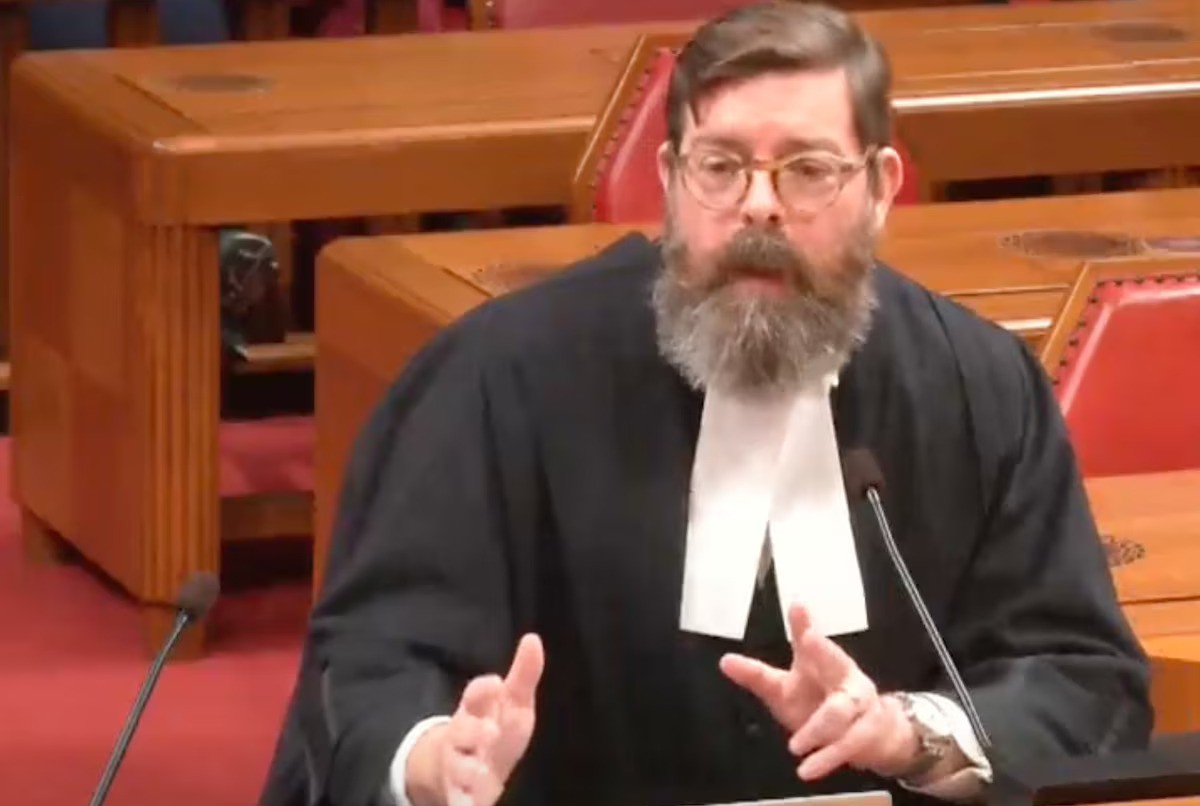
Ryan Alford, wearing glasses, a black robe, and a white jabot, sits a table with two microphones in a red-carpeted courtroom with empty wooden tables and chairs behind him

Above, Professor Alford argues his case before the Supreme Court. The Canadian Civil Liberties Association, the BC Civil Liberties Association, the Canadian Constitution Federation, and other civil liberties associations intervened in parallel to Professor Alford to move his legal challenge through the court system.

For 150 years, free speech was an uncontested and fundamental right.

But that changed in 2017 when the National Security and Intelligence Committee of Parliamentarians (NSICOP) was established to allow the Canadian Security Intelligence Service (CSIS) to share information with MPs and senators.

To regulate the committee, the federal government passed the National Security and Intelligence Committee of Parliamentarians Act (NSICOP Act).

Section 12 of the act specifies that NSICOP members—and anyone invited to participate in their proceedings—can't reveal anything they've learned to the public.

If they do disclose information, for whatever reason, they can be imprisoned for up to 14 years.

What is Parliamentary Privilege?

Professor Alford challenged section 12 for limiting constitutionally guaranteed freedom of speech and parliamentary privilege.

"I wanted to raise public awareness because NSICOP wasn't front-page news when it was enacted and this legislation isn't compatible with our parliamentary system," he says.

"Parliamentary privilege is part of Canada's 600-year-old constitutional architecture," he adds.

"So before anyone takes a hatchet to this architecture, as the NSICOP Act did, they should first consider if it is a load-bearing element of our constitution."

A view of Parliament Hill in Ottawa showing an ornate Gothic-style stone building with a central clock tower flying a Canadian flag

An example of how parliamentary privilege can hold the government to account happened during the 2007 Afghan detainee crisis. Canada was one of the countries belonging to the International Security Assistance Force in Afghanistan. A part of this military operation, Canada was handing over prisoners to Afghan security forces known to use torture. MPs used their parliamentary privilege to bring this situation to light and halt the federal government's actions. Photo Credit: Unsplash/Benoit Debaix

According to Canada's House of Commons website, "parliamentary privilege encompasses rights and immunities essential for the House of Commons and its members to perform their duties without external interference.

These privileges are vital for legislating, deliberating, and holding the government accountable.

This includes freedom of speech and collective rights of the House, such as the ability to institute inquiries, demand documents, and call witnesses to appear."

An exterior view of the Supreme Court of Canada at night

In 2023, the consequences of the NISCOP's Act section 12 became clear. Even though it was discovered that foreign governments had persuaded several federal MPs to interfere in Canada's 2019 and 2021 federal elections, the MPs' identities were prohibited from being released. Above, the Supreme Court of Canada where Professor Alford argued his case. Photo Credit: Unsplash/Tom Carnegie

Safeguards Already Existed to Protect Confidential Information

Professor Alford believes that the NSICOP Act has made Canada's executive branch—the prime minister and the cabinet—too powerful.

"The NSICOP Act was presented as a grand bargain that would give MPs and senators access to highly sensitive security information on the condition that this information wasn't made known outside Parliament.

The unintended effect of the NSICOP Act has been the destruction of a safety mechanism for bringing government transgressions to light. It has made Parliament responsible to the government, rather than the other way around.

"The NSICOP Act could lead to corruption, the eroding of parliamentary democracy, and the degeneration of the rule of law," Professor Alford says.

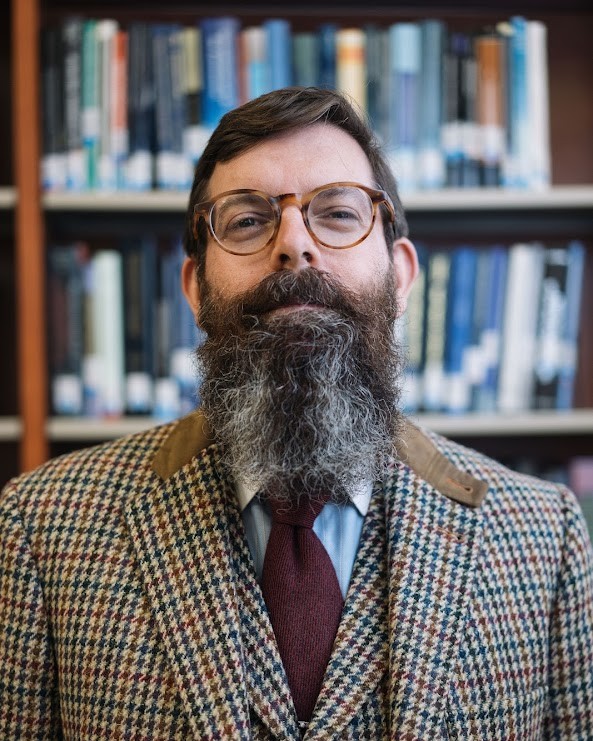
Ryan Alford, wearing glasses, a tie, and a houndstooth-checked vest and blazer, stands in front of a bookcase

Professor Alford is a law professor, lawyer, and a distinguished legal scholar. "Canada has become the only country with a Westminster parliamentary system that has limitations on parliamentarians' freedom of speech," Professor Alford says. "Embarrassing the government can now be a valid reason for prohibiting MPs and senators from speaking out if they belong to the NISCOP committee."

"Parliamentary privilege is an essential protection against these wrongs."

Professor Alford is also convinced that section 12 is unnecessary because highly confidential matters have always been discussed in Parliament.

He points to an example from World War Two that hits close to home for him.

"My grandfather was a member of the 1st Canadian Parachute Battalion that landed behind the beaches of Normandy on D-Day," Professor Alford says.

"Although the D-Day invasion plans were reviewed in the House of Commons, this information wasn't leaked. If it had been, I might never have been born."

If, in a rare case, a security breach does occur, Parliament has the power to punish these offences, including expelling MPs.

A Historic Ruling

At the end of April, Professor Alford spent two days before the Supreme Court of Canada arguing his case and answering questions from the justices.

An interior view of the Bora Laskin Faculty of Law Library with a young woman standing behind a low bookcase with an open book and a seated woman reading a book at a table in the background

"Much of my work is focused on uncovering errors that creep into legal reasoning and attempting to correct them," Professor Alford says. "It's crucial that Canada has legal scholars who can concentrate on the forgotten fundamentals of the constitution because lawyers don't have the time to engage in these issues. Scholars can point out where something could, or has, gone wrong. That's one of the functions of law schools." Above, a view of Lakehead's law library.

In an 8-1 ruling, the justices decided not to strike down section 12. Despite this decision, they accepted a significant amount of Professor Alford's argument.

"The justices said the sole reason that section 12 stands is because NISCOP committee members volunteered for the committee," he says.

"They also determined that there are no limits on what non-NSICOP members can say in Parliament. This is something the Supreme Court hadn't previously recognized, so the case created an important legal precedent.

Only extremely narrow limits can be imposed on Parliament's freedom of speech and guardrails that hadn't previously existed have been constructed."

Learn more about this issue by reading Professor Alford's newly released book, "By Authority of Parliament: The Constitutional Boundaries of Legislative Power in Canada," published by McGill Queen's University Press.

Faculty of Natural Resources Management Gains Six-Year Accreditation Renewal for HBScF/BScF Programs

NRM Accreditation Renewed

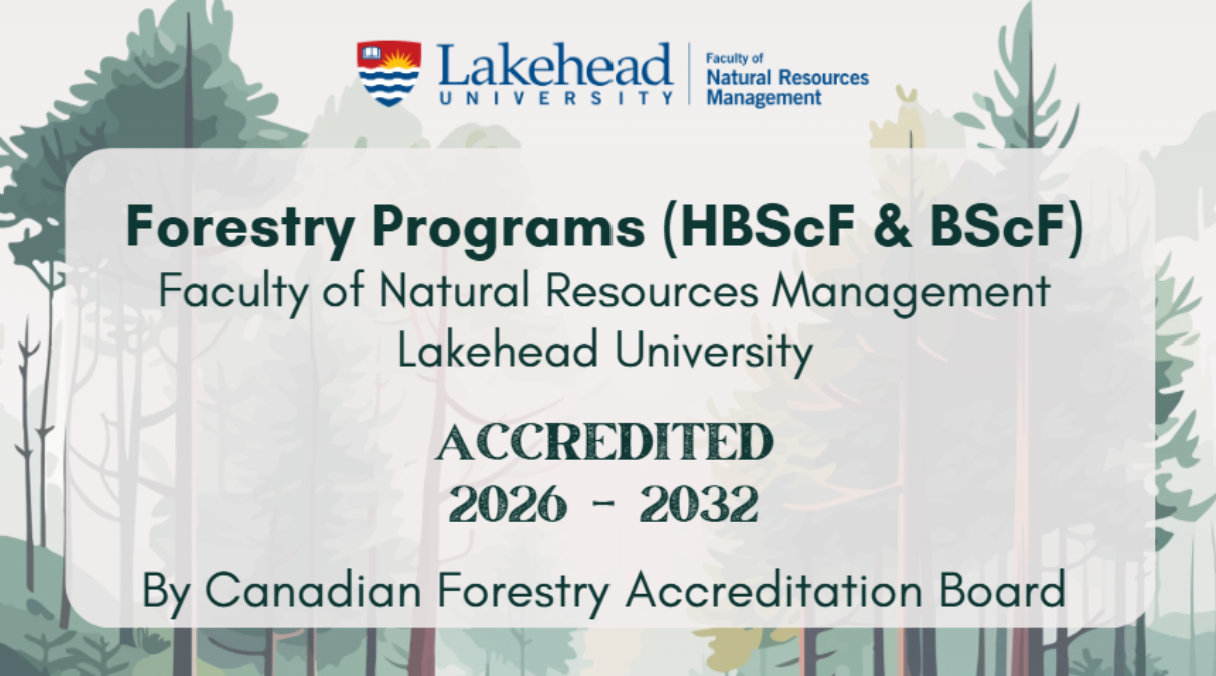
Thunder Bay, ON – The commitment of the Faculty of Natural Resources Management at Lakehead University in setting graduates up for success has been recognized with a six-year accreditation renewal for its Honours Bachelor of Science in Forestry (HBScF) and Bachelor of Science in Forestry (BScF) programs. The Canadian Forestry Accreditation Board (CFAB) has renewed the accreditation for the Faculty of Natural Resources Management, effective July 1, 2026, through June 30, 2032.

This renewed full-term national accreditation confirms the program’s quality and relevance, ensuring that the forestry education at the Faculty of Natural Resources Management at Lakehead University meets professional standards. It guarantees that students receive both a strong academic foundation and essential practical training to tackle evolving environmental and resource management challenges.

The renewed national accreditation means that graduates from both co-operative and non-co-operative streams have met the academic requirements to become Registered Professional Foresters with Canada’s provincial professional forestry associations, including those serving British Columbia, Alberta, Saskatchewan, Ontario, Québec, New Brunswick, Nova Scotia, and Newfoundland and Labrador.

“Such an accreditation is excellent news for the Faculty and for Lakehead University. It reinforces the Faculty’s dedication to supporting the next generation of professional forestry workforce across Canada” - said Dr. Brigitte Leblon, Dean of the Faculty of Natural Resources Management

“This accreditation renewal recognizes the HBScF/BScF program’s excellence and our commitment to the success of students, who will become professionals involved with the sustainable management of Canada’s forests.” - said Dr. Amishev, Program Chair of the Honours Bachelor of Science in Forestry (HBScF) and Bachelor of Science in Forestry (BScF) programs

“This accreditation not only supports national labour mobility for graduates of the program but also reinforces the Faculty’s commitment to equipping the foresters of the future with the tools to manage our natural resources sustainably and professionally” - said Louise Simpson, CAE, Executive Director & Registrar of Ontario Professional Foresters Association (OPFA).

Yorkton Film Festival Awards for Department of History Faculty

Congratulations to Kelly Saxberg and Ron Harpelle for their win in the Research category at the Yorkton Film Festival for A Tale of Two Qallunaat.  Kelly co-directed this film with Navalik Tologanak, and the film was researched by Kelly, Ron, Navalik, and Dianne Brothers.  Kelly will be screening A Tale of Two Qallunaat across Canada in the upcoming year as part of her recent Canada Council grant.

Also nominated in the Research category was The View From Up Here - Getting Ready for the Big One, directed by Ron and researched by Ron, Kelly, and two current or former Lakehead faculty members, Tom Peotto and Nathan Hatton.  The View From Up Here will be broadcast on local television in Thunder Bay in August and September of 2026.

https://yorktonfilm.com/2026-winners-%26-nominees

https://www.shebafilms.com/a-tale-of-two-qallunaat/

https://www.shebafilms.com/the-view-from-up-here-2025/


Interested in naturalizing your yard and garden?

These Lakehead Farm Lab Educators Will Help You Go Wild

With the arrival of spring, people are eager to put their green thumbs to use.

And many of us—from novice to expert gardeners—are wondering how to create more eco-friendly green spaces.

Fortunately, Linda Grant and Lindsay Sargent have some easy-to-implement advice to transform your yard into a garden blooming with native plant species and locally adapted vegetables.

Linda and Lindsay are both garden-based educators with Lakehead Orillia's Farm Lab.

It's a small on-campus model farm that grows food and flowers to help elementary, high school, and Lakehead students understand sustainable food systems and immerse themselves in hands-on ecological learning. The Farm Lab is supported by a three-year Natural Sciences and Engineering Research Council of Canada (NSERC) PromoScience grant.

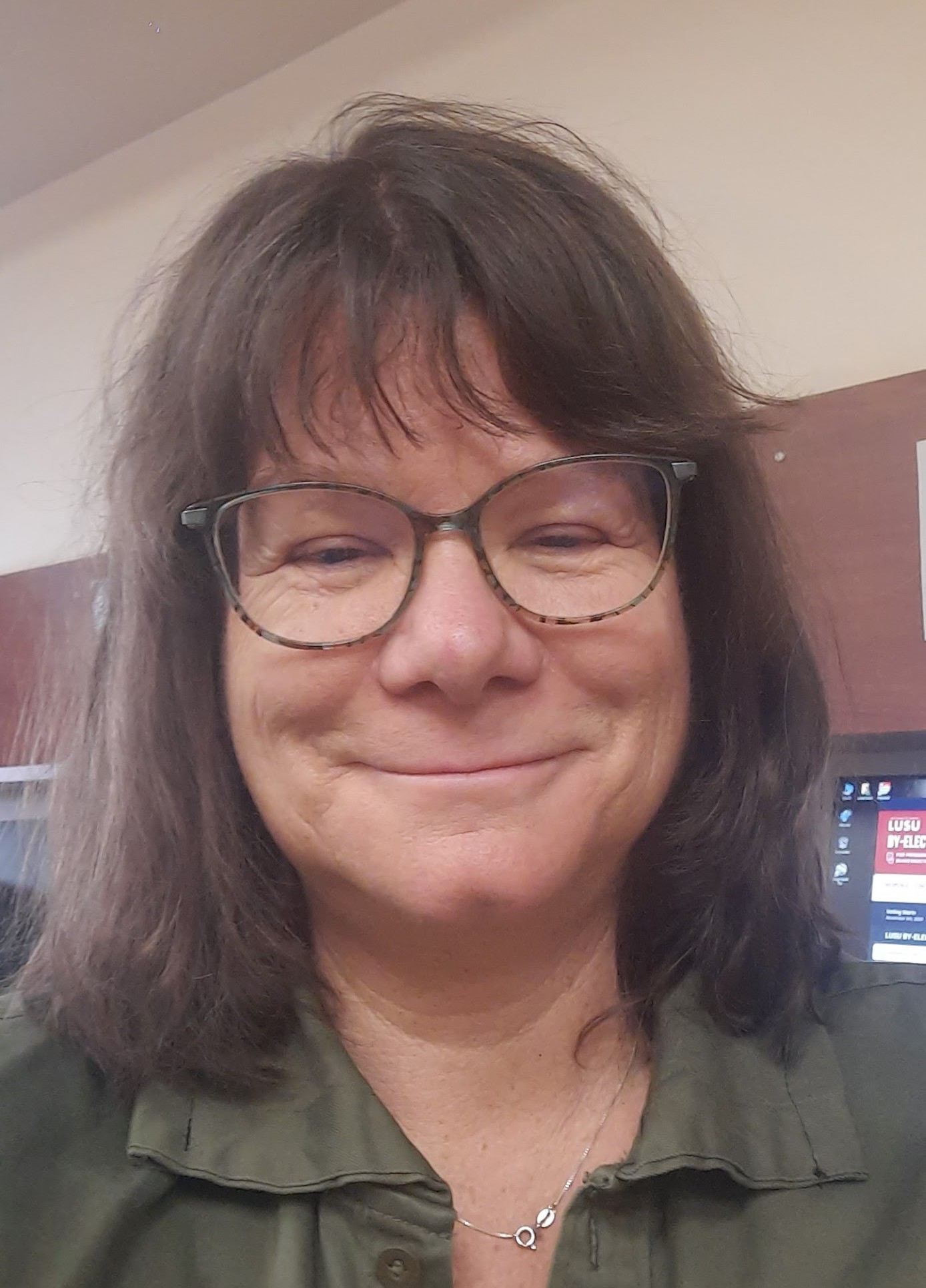
A head-and-shoulders photo of Linda Grant wearing a green blouse, silver chain, and glassesLinda Grant, who has a Master of Education in Mathematics and Gardening, has been an educator for 30 years, including at the elementary and secondary levels. She integrates First Nations Ways of Knowing, outdoor education, and experiential Learning into her work. Currently, she teaches K-6 mathematics education at Lakehead University and works at the Farm Lab as a garden-based educator.

Both Linda and Lindsay agree on some simple ways to become an environmentally friendly gardener.

First, try seeking out neighbours who've already naturalized their yards for ideas you can put into practice. It's a great way to share tips, gardening tools, plants, and seeds with one another.

Another way to jumpstart this process is to not mow a section of your yard.

"Soon, a variety of species will begin growing there," Linda and Lindsay explain. "This will encourage biodiversity, which birds and pollinators love."

To naturalize large sections of your lawn and replace traditional grass, mow it very short and then spread clover seeds over it.

"And, if you're clearing out parts of your yard, put the brush at the back of your property to give animals a place to live," Linda adds.

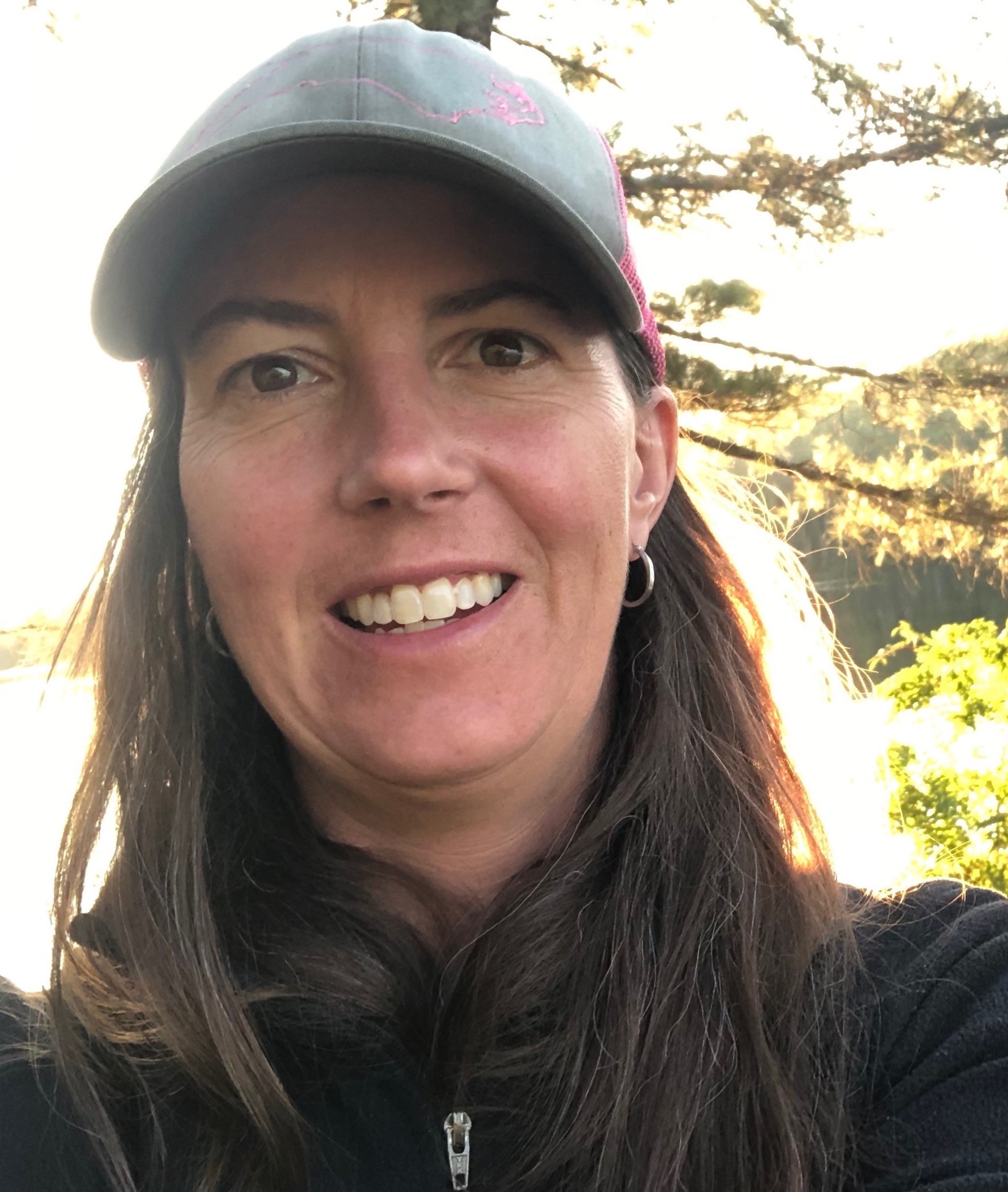
A head-and-shoulders photo of Linsday Sargent outside wearing a grey fleece zip-up, baseball cap, and hoop earring; a tree and a lake are visible in the background

Lindsay Sargent has taught in K-7 classrooms and has recently completed a Master of Education at Lakehead University. Currently, she's a sessional instructor with Lakehead's Faculty of Education and a Farm Lab garden-based educator. Her teaching and research interests include environmental education, garden-based learning, place-based approaches, and reconciliation rooted in the land. Lindsay is also the food literacy coordinator at Farm to Cafeteria Canada.

Another key element of sustainable gardening is avoiding chemical fertilizers. Instead, spread compost and manure to give your soil the nutrients it needs.

"In the fall, you can cover up the soil with compost and leaf litter, which will keep pests and weeds away," Linda says.

"Rotating plants every year and using row covers will also deter pests—like voles and insects—so that you don't have to use pesticides," Lindsay says.

"Sustainable gardening can be a wonderful lifelong learning journey that's good for the Earth and that allows you to pass your along your knowledge to others," Linda says.

Read on to discover a few of the plants that thrive in Ontario and for more tips about naturalizing your yard.

A patch of brown-eyed susan flowers with pink and purple flowers visible in the background

Learn which plants grow in your region—for example, these brown-eyed susans—and then introduce them into your yard or garden. "Google 'rewilding my yard' or 'sustainable gardening practices,' for inspiration," Linda says. "Plant nurseries and garden centres that sell native plants are a good resource, too." Photo Credit: Unsplash/Caroline Sterr

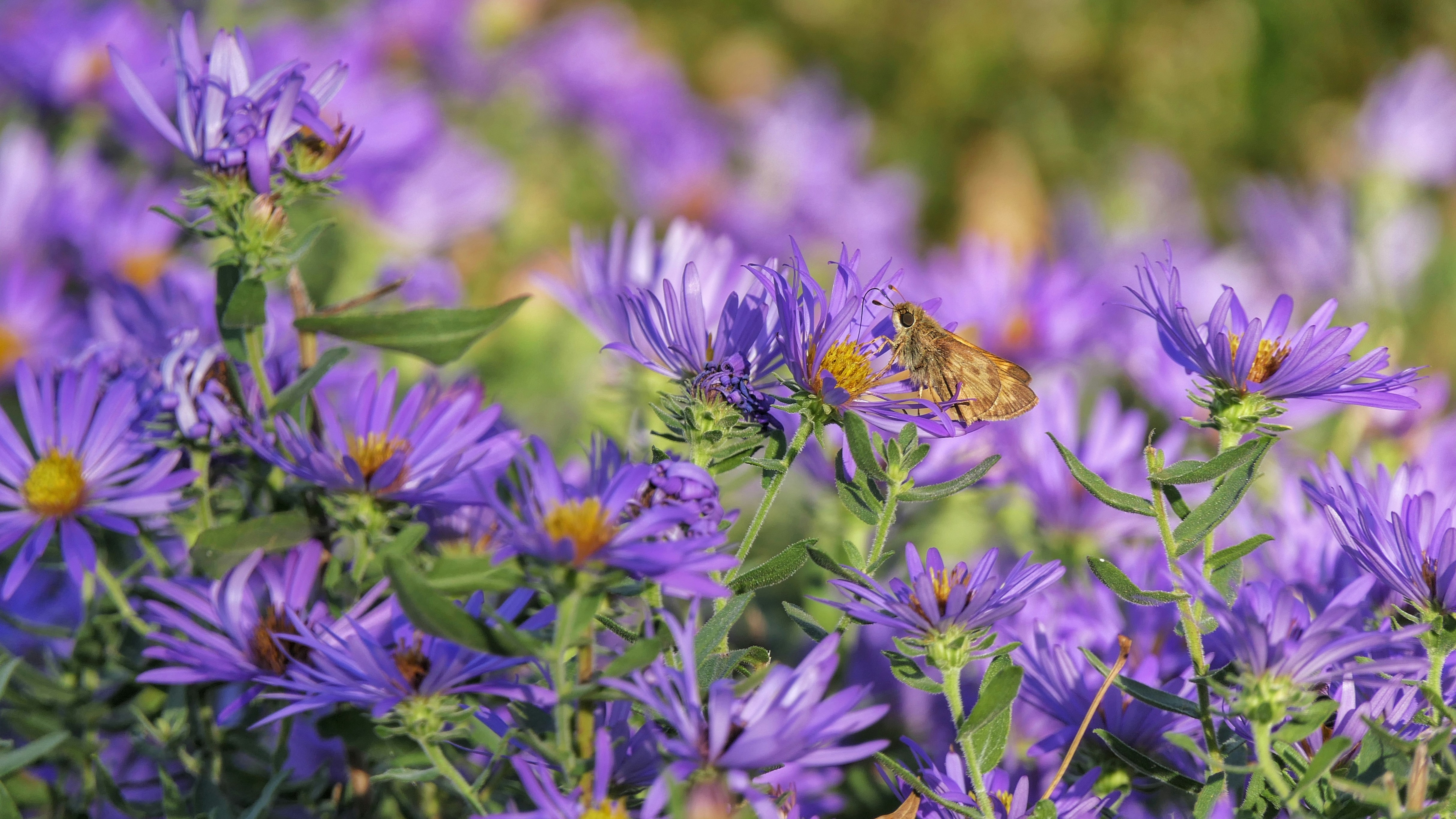
A close-up of a patch of purple aster flowers with yellow centres; a small moth sits on one of the flowers

To get started on your rewilding adventure, you’ll need just a few simple tools: a shovel, a hand trowel, a rake to even out planting surfaces, and a watering can or hose. Before long, you’ll be able to enjoy colourful flowers in your yard like these native purple asters. Photo Credit: Unsplash/Patti Black

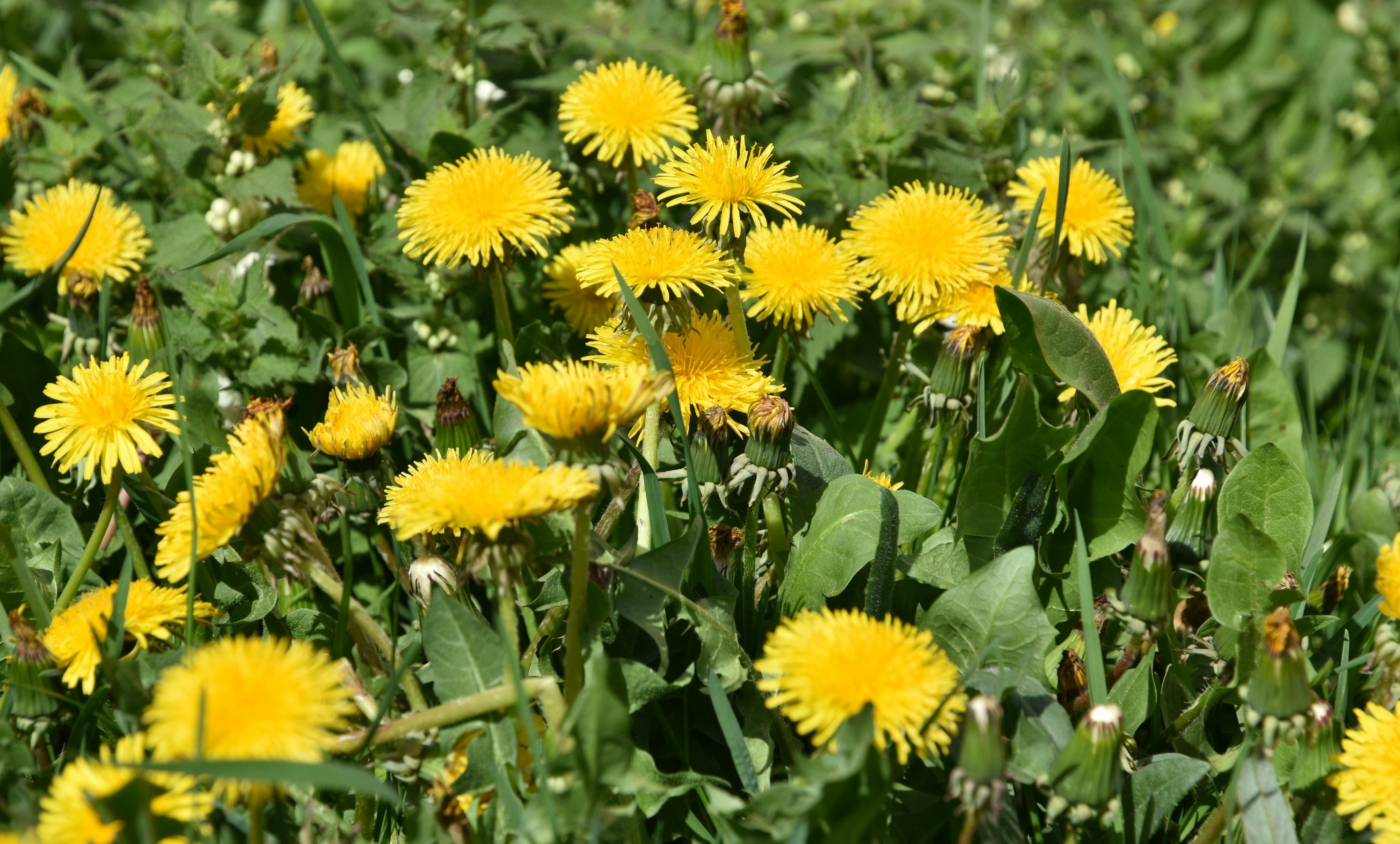
A clump of yellow dandelion plants with green stalks and leaves

Traditional lawns are monocultures that are hostile to pollinators. Instead of spending time and energy trying to kill off plants considered weeds, let dandelions, creeping thyme, wild violets, and clover grow on your lawn. “At Farm Lab, we say that a weed is in the eye of the beholder,” Linda says. “Usually, it just means a plant that’s growing where you don’t want it to,” agrees Lindsay. Dandelion flowers are one of the first available foods for pollinators in the spring, so it’s important not to mow them down. A good practice to follow is “no-mow May.” Photo Credit: Unsplash/Alyona Milch

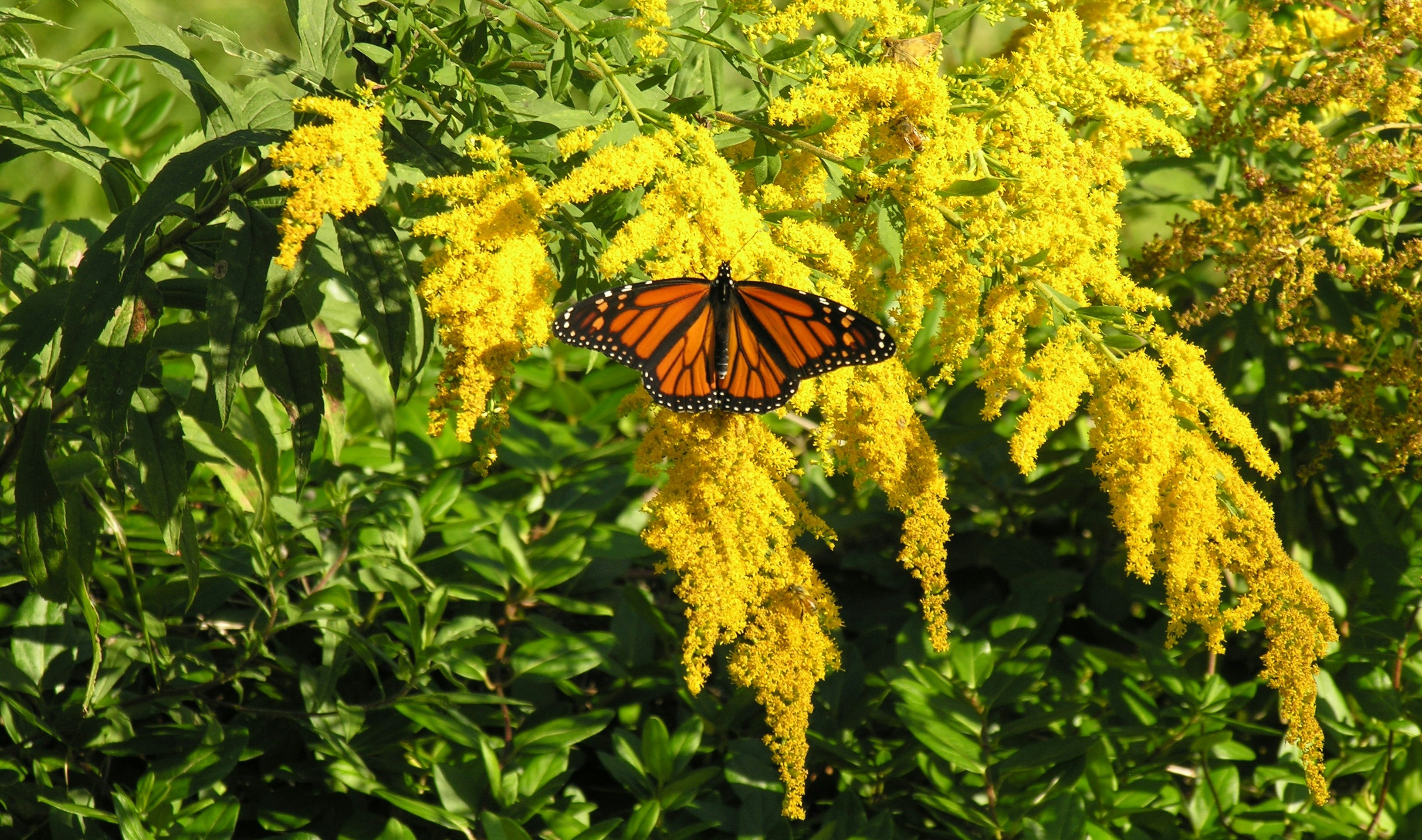
A group of drooping yellow goldenrod flowers with green leaves and stalks; an orange-and-black monarch butterfly with outstretched wings rests on one of the blooms

Colourful goldenrod is an excellent native species to plant for fall colour. Pollinators flock to it in late summer and early fall and, in the winter, it provides food for birds, mice, and other animals because it sticks up above the snow. While of tremendous ecological value, keep in mind that goldenrod spreads quickly. Cut it back in the late fall to contain it to the areas you want it to grow in. Photo Credit: Unsplash/Michael Barrick

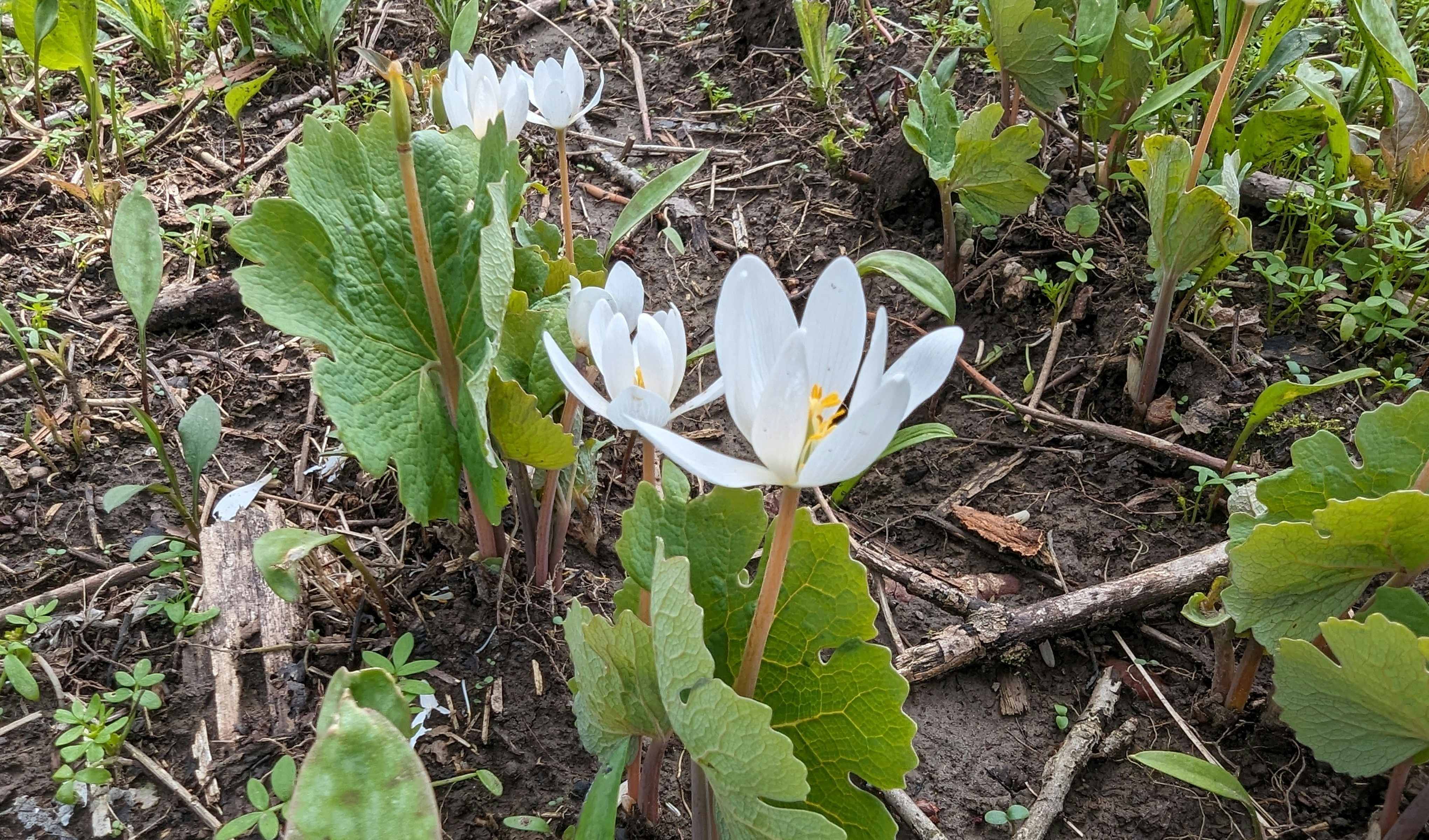
A patch of bloodroot plants with green leaves growing in a muddy area with broken twigs; several plants have white blooms with yellow centres

Native forest plants like bloodroot (above), trilliums, fiddlehead ferns, and mosses can provide visual interest in shady areas of your yard. “Because I’ve naturalized my lawn, I only mow it two or three times a year in the sunny spots,” Lindsay says. Photo Credit: Unsplash/TR

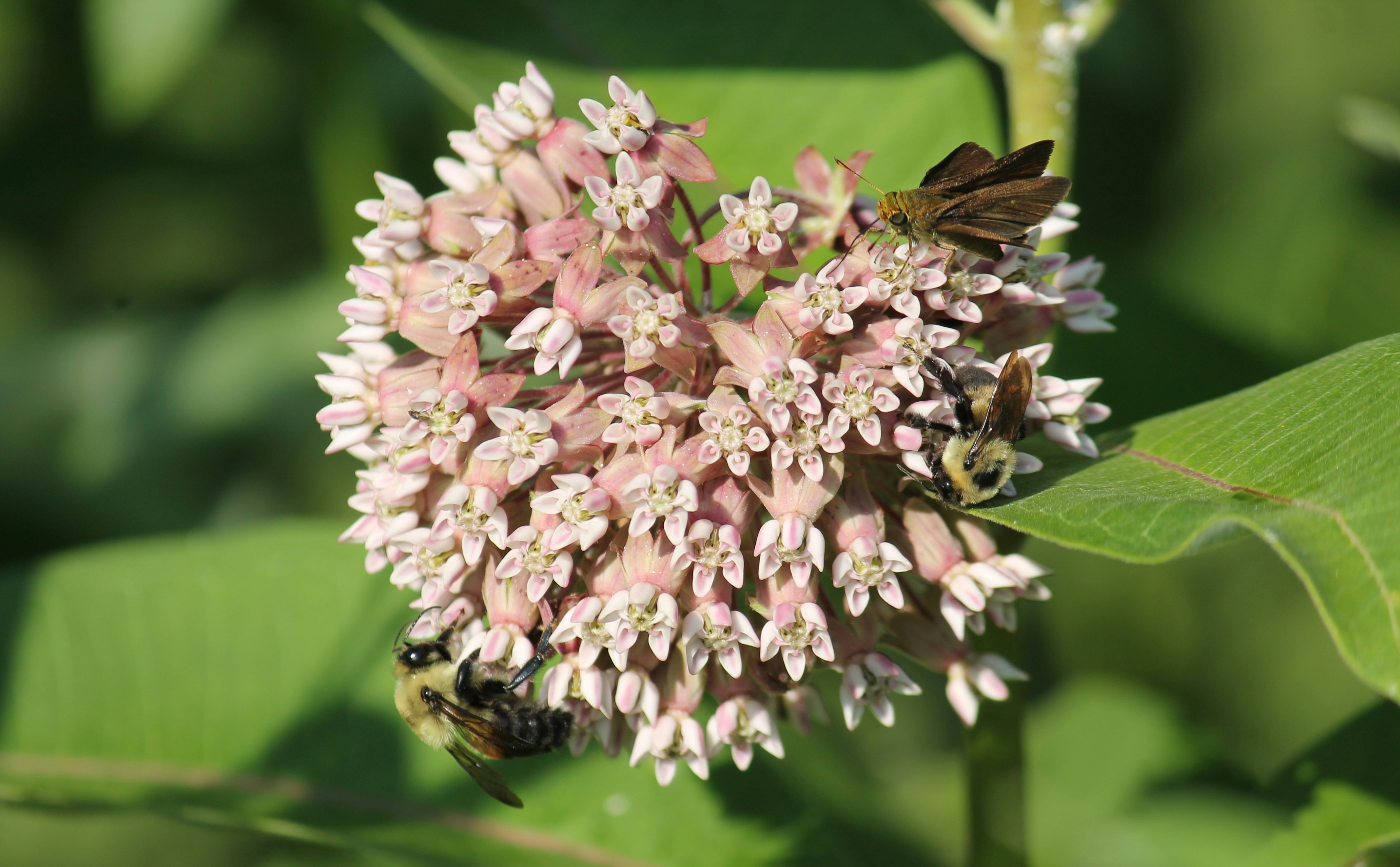
A close-up of a milkweed plant with green leaves and a pale pink flowerhead; two bees and a moth are feeding on nectar from the flower

Having a variety of plants in your garden provides more food for pollinators, including butterflies, birds, and bees. The nectar of the milkweed plant is a favourite of insects, including the monarch butterfly. Photo Credit: Unsplash/Annette Meredith

A group of white potatoes covered with dirt lying on the groundChoose an area of your yard that receives a lot of sun to establish a vegetable garden. Linda and Lindsay recommend starting small, perhaps with a container garden, while you build up your horticultural skills. Potatoes (above), onions, and leafy greens are easy crops to grow and are well adapted to Canada's climate and geography. Photo Credit: Unsplash/Javier Albuja
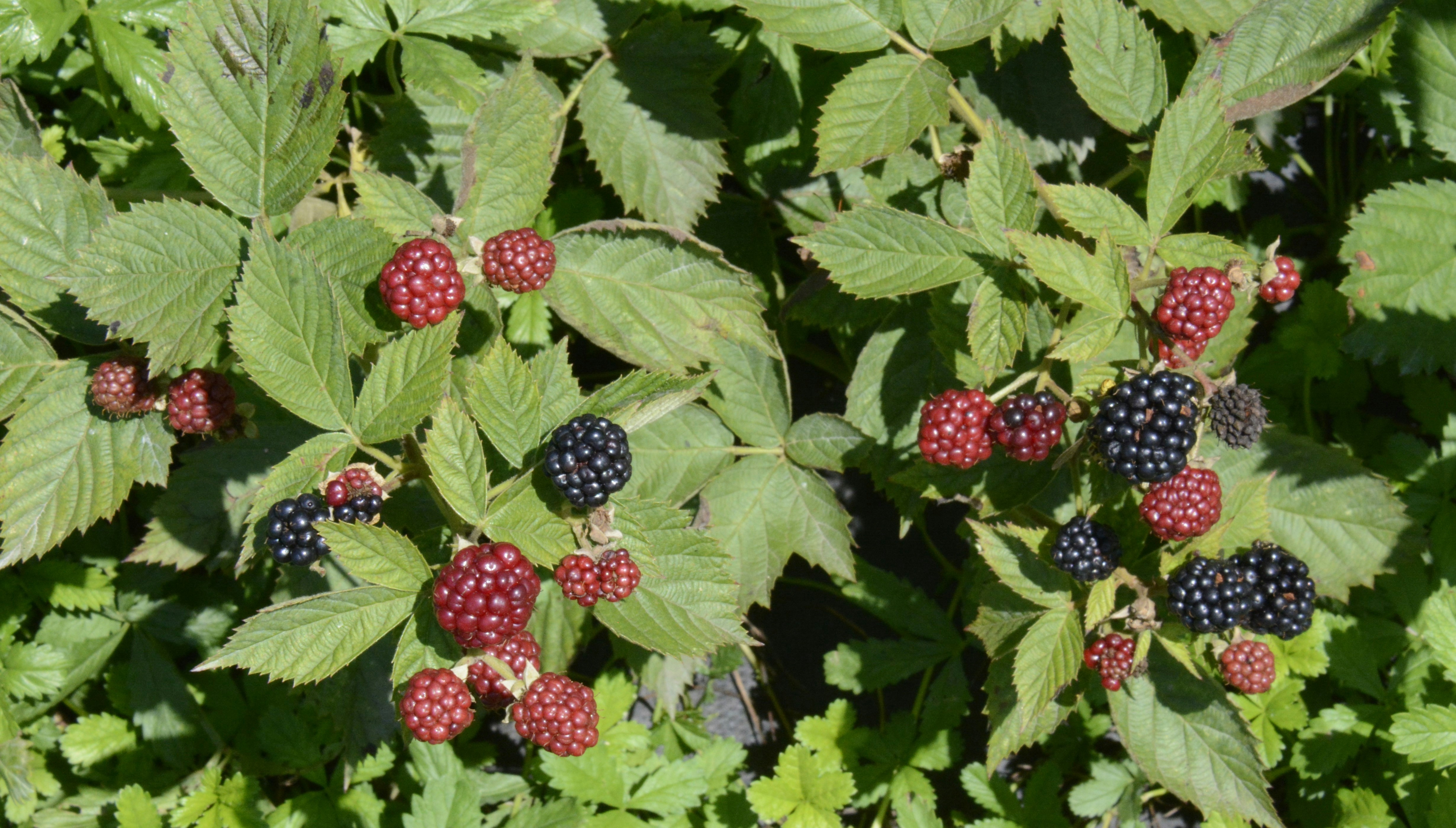
Several raspberry plants with green leaves and red and dark purrple berries

These delicious black raspberries are native to Ontario and they’re a popular species at the Farm Lab. “This spring, a baby rabbit found a safe spot behind the raspberries' prickly canes to protect itself from foxes and other predators,” Linda says. Photo Credit: Unsplash/Nadine Eggenberger

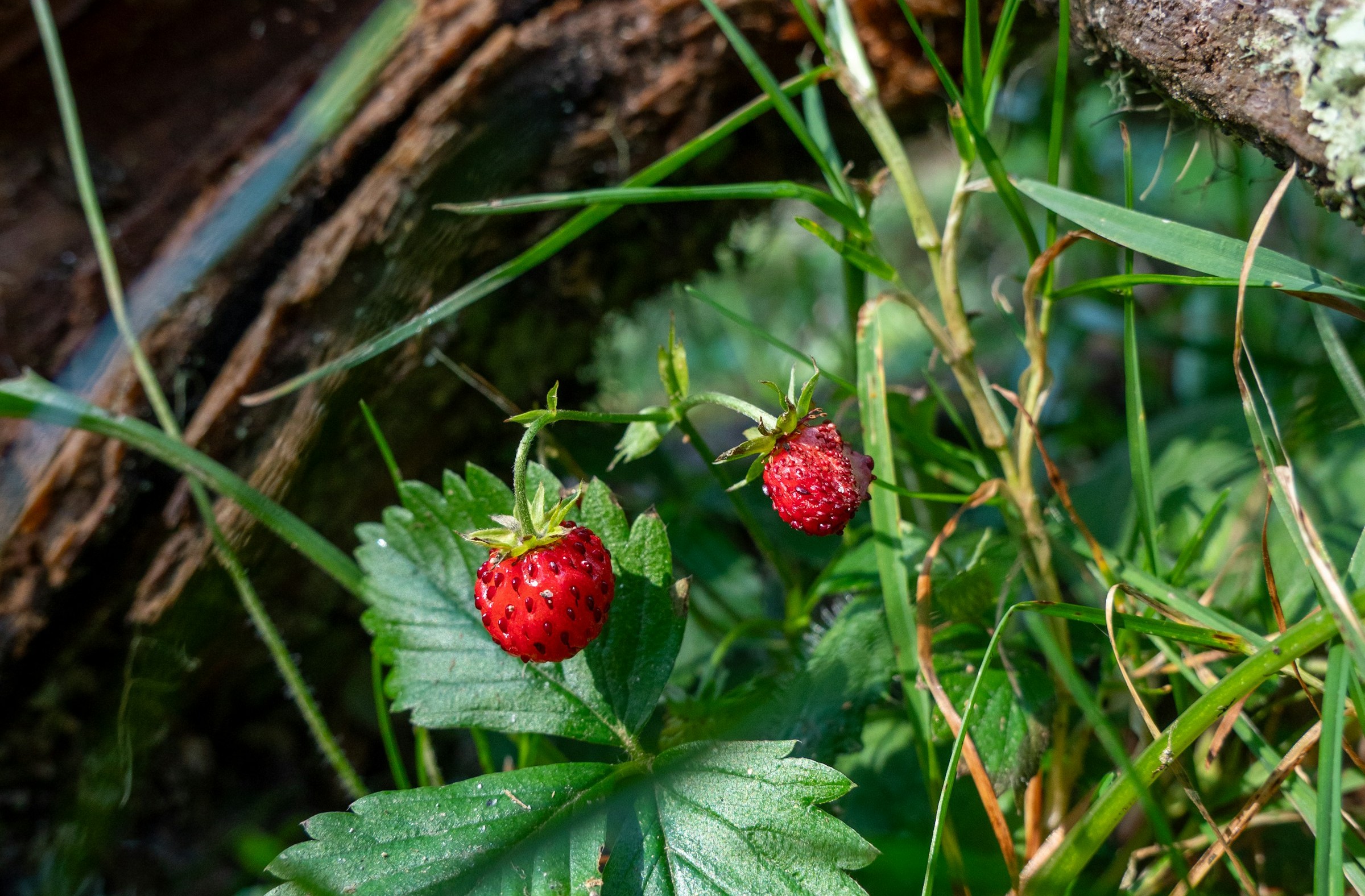
A close-up of wild strawberry plant with two red berries; one berry has been partially eaten and a fallen log with lichen is visible in the background

When naturalizing, think about the shady and sunny parts of your yard and choose plants accordingly. Good native plants to grow include wild strawberries (above) and wild leeks. Photo Credit: Unsplash/Eric Prouzet

Check out these resources for eco-friendly gardening:

Lakehead University celebrates graduating students and honours distinguished Canadians during the 2026 Thunder Bay convocation ceremonies

Lakehead University will celebrate the achievements of graduating students at its Thunder Bay campus convocation ceremonies on May 28 and 29.

Lakehead University will celebrate graduating students during its 2026 convocation ceremonies in Thunder Bay and Orillia, while also recognizing distinguished Canadians and community leaders whose contributions have had a lasting impact on education, Indigenous knowledge, public service, arts and culture, advocacy, and community development.

“Crossing the convocation stage signifies not just the conclusion of a chapter—it represents a transformation,” said President and Vice-Chancellor Dr. Gillian Siddall. “During their time at Lakehead, our graduates have developed their knowledge, confidence, and resilience. The entire university community is honoured to celebrate their achievements and to be a part of their journey. Congratulations to the class of 2026!”

In addition to celebrating the graduating class of 2026, Lakehead will recognize three outstanding individuals with honorary degrees and honour two individuals with the title of Fellow of the University, recognizing their contributions to education, Indigenous knowledge, public service, arts and culture, and community leadership.

Theresa Redsky Fiddler, Dr. Gary Polonsky, and William (Bill) Heibein will each be conferred honorary degrees. Kevin Cleghorn and Brian McKinnon will be recognized as Fellows of the University.

“The Lakehead community is proud to recognize the work and dedication of this year’s honorary degree recipients and fellows,” said Dr. Siddall. “Each has made meaningful contributions to their communities and professions, and their stories will inspire our graduates as they move forward into the future.”


Honorary Degree Recipients

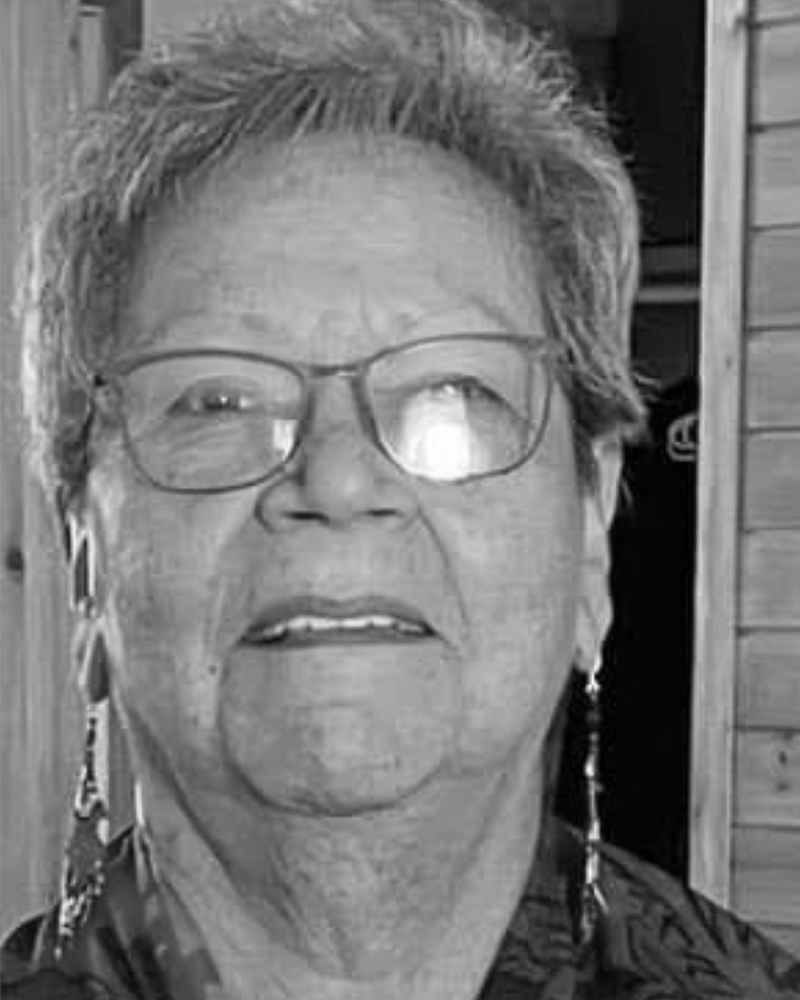
FiddlerTheresa Redsky Fiddler 
Doctor of Humane Letters

Theresa Fiddler, also known as Teri Redsky Fiddler, is a respected Knowledge Keeper, Traditional Practitioner, and community leader from Treaty #3 territory. Raised in Big Grassy River First Nation and Shoal Lake 40 First Nation, she has devoted her life to supporting Indigenous communities through leadership, teachings, and traditional knowledge.

After raising five children with her late husband Josias Fiddler, Teri Redsky Fiddler returned to complete her education as an adult learner, graduating high school alongside two of her sons before earning a diploma in Social Service Work. She later served for 14 years as a Band Councillor for Sandy Lake First Nation.

Today, Teri Redsky Fiddler continues to share teachings with provincial and national organizations and serves as a Knowledge Keeper to the Assembly of First Nations, Chiefs of Ontario, and Nishnawbe Aski Nation. She also serves as Traditional Practitioner Consultant for Sandy Lake First Nation.

The degree of Doctor of Humane Letters will be conferred on Thursday, May 28 at 9 a.m.


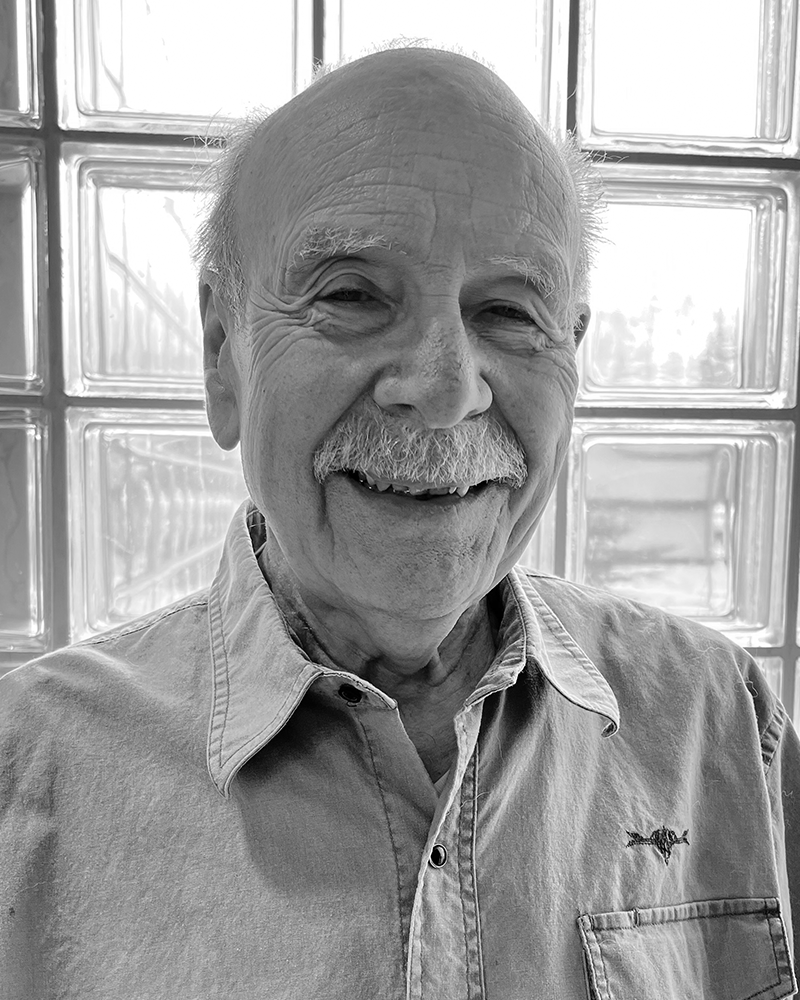
PolonskyDr. Gary Polonsky
Doctor of Education

Dr. Gary Polonsky is one of Canada’s most influential post-secondary leaders, with a career spanning more than 40 years across colleges and universities in five provinces. A native of Thunder Bay, he played a key role in expanding access to education, advancing applied research, and strengthening partnerships between institutions and communities.

He served as President of Durham College from 1988 to 2006 and became the founding president of the University of Ontario Institute of Technology, now Ontario Tech University, in 2001 while continuing concurrently as President of Durham College — a unique achievement in Canadian higher education.

Gary has also contributed extensively to public service and community leadership, including serving as Chair of the Board behind the development of the Thunder Bay Community Auditorium. His many honours include national leadership awards and two Queen Elizabeth II Golden Jubilee Medals.

The degree of Doctor of Education will be conferred on Thursday, May 28 at 2 p.m.


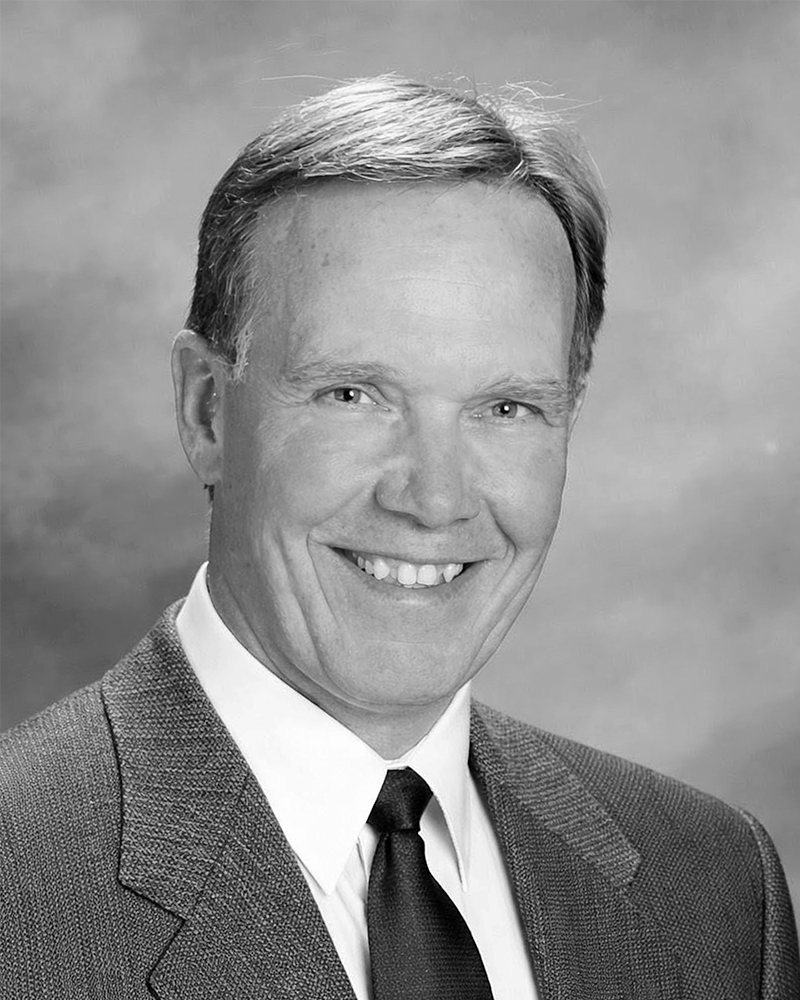
HeibeinWilliam (Bill) Heibein
Doctor of Humane Letters

For more than 50 years, William (Bill) Heibein has contributed to the cultural and civic life of Thunder Bay through volunteerism, music, advocacy, and community leadership. His involvement has included leadership roles with the Rotary Club of Port Arthur, Thunder Bay Symphony Orchestra, Magnus Theatre Northwest, and the Thunder Bay Chamber of Commerce.

Following his dementia diagnosis, Bill became a leading advocate for dementia awareness and inclusion. As a founding member of the Ontario Dementia Advisory Group, he helped shape national conversations on dementia care and contributed to programs including Dementia Café and the Dementia Gardens initiative in Northwestern Ontario.

A lifelong musician, Bill continues to perform with the Bottom of the Barrel jazz and dixieland band, which for nearly five decades has brought music to hospitals, senior homes, and community spaces. In 2025, he was awarded the King Charles III Coronation Medal.

The degree of Doctor of Humane Letters will be conferred on Friday, May 29 at 10 a.m.


Fellows of the University

CleghornKevin Cleghorn
Fellow of the University

Kevin Cleghorn is a Thunder Bay-based lawyer with a distinguished career in family law, legal education, and public service. A graduate of the University of Manitoba and Osgoode Hall, he is a certified specialist in family law, accredited mediator, and member of the Canadian Academy of Distinguished Neutrals.

Kevin has served as a deputy judge for Small Claims Court in Northwestern Ontario since 1999 and is a past chair of Lakehead University’s Board of Governors. He has taught at Lakehead University since 1994 and received the university’s Contribution to Teaching Award in 2007. In 2025, he received both the James L. Murray Memorial Award and the Law Society Medal for his contributions to professionalism, legal education, and access to justice.

The title of Fellow of the University will be bestowed on Friday, May 29 at 10 a.m.


McKinnonBrian McKinnon
Fellow of the University

Brian McKinnon’s lifelong dedication to education and community leadership has had a lasting impact on Thunder Bay and Lakehead University. A member of Lakehead’s second graduating class, Brian played on the university’s first varsity basketball team and contributed to early campus development initiatives.

Following a distinguished career in education leadership, including serving as Principal of Partnerships with the Lakehead Board of Education, Brian continued supporting future educators as an instructor in Lakehead’s Faculty of Education. He also served for 16 years on Lakehead University’s Board of Governors, helping strengthen connections between the university and the broader community.

The title of Fellow of the University will be bestowed on Thursday, May 28 at 2 p.m.


For more information, visit Lakehead University Convocation

Meet the 2026 Lloyd Dennis Award Winner

Business Grad Rechal Parmar is Always Ready to Rise to a Challenge

Rechal Parmar, an Honours Bachelor of Commerce student, has been a formidable presence on campus since arriving at Lakehead Orillia four years ago.

During that time, she's evolved into a leader that fellow students can reach out to for support and encouragement.

Rechal Parmar, wearing a white shirt and black suit, stands in front of a white backdrop

"When I started my degree, I was more drawn to accounting, but I now plan to make human resources my major focus because I like to solve people-centric challenges," Rechal says.

"I've always loved community work, but hearing the phrase 'When your community grows, you grow,' gave me a new purpose!" she says.

"It became my motivation for doing more campus work and volunteering."

Rechal's diverse contributions have earned her the 2026 Lloyd Dennis Award for Outstanding Citizenship.

"Being recognized for what I've done for the Lakehead and Orillia communities really means a lot to me—it shows that I belong here and that I'm valued," she says.

"I'm always keen to collaborate and make a difference."

A Natural Entrepreneur

For Rechal, coming to Lakehead presented a steep learning curve.

"English is my second language and I'm from a small town in India where the culture is very different from Canada's," she explains.

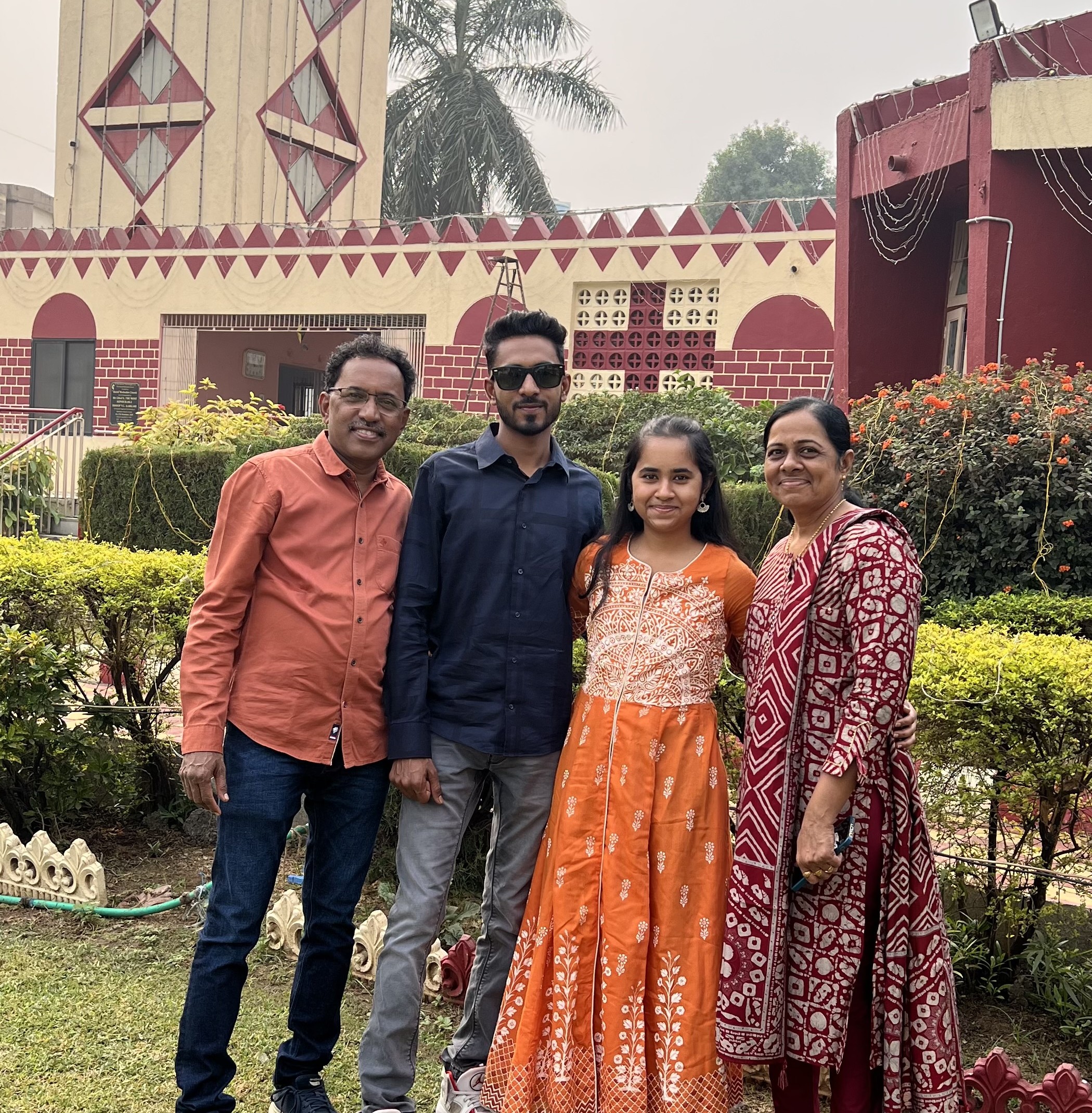
Rechal Parmar, wearing a long orange-patterned dress stands in a garden with her father, brother, and mother; in the background is a large red and cream-coloured building with geometric shapes and a palm tree

Rechal with her parents and her brother. Rechal's parents were a big influence on her decision to earn an Honours Bachelor of Commerce degree.

Despite these seismic changes, Rechal found her footing with the help of a Lakehead International (LUI) peer mentor.

"My mentor really had an impact on me," she says. "She made me feel at home."

With her growing confidence, Rechal joined Enactus Lakehead—part of a global network of Enactus clubs that empower youth leaders to create positive change through entrepreneurship.

"Enactus allows college and university entrepreneurs to pitch their business proposals to companies," she says.

As co-president of the Lakehead Enactus Social Entrepreneurship Club, she and her fellow Enactus members applied their commerce skills outside the classroom to help Simcoe County businesses.

A Friend You Can Count On

On campus, Rechal fostered an appreciation of Indian and American culture through annual presentations at the Welcome the World Fair and became a warm and welcoming face as the president of Lakehead University Christian Fellowship Club.

Rechal Parmar, wearing a white winter sweater, black pants, and black winter boots leans against a sculpture of the letters "ndy" in a large building with a Christmas tree in the background

Rechal spent one semester as an exchange student in Indianapolis, Indiana, while attending Lakehead.  

But perhaps the moment she knew she was truly an integral part of campus life happened in her second year.

"A LUI staff member asked me to become a peer mentor," Rechal says. "Now, it was my turn to help international students adjust to university and navigate cultural differences," she says.

"I also helped students with practical things like how to use the transit system and shop at grocery stores."

Getting Ready to Fly

As Rechal's graduation day approaches, she's already jumped feet first into the world of commerce.

She's doing an internship at an Orillia camping centre where she is busy learning different aspects of the business.

Rechal Parmar, wearing a shawl, winter boots, and black clothing, stands outside by the "LU" Sculpture on snow-covered ground

"Although I've completed four years of university, I still have so much more to learn," Rechal says.

When her placement ends in October, she'll return to her hometown—where her love of business was born—to begin charting her future. "My parents have owned a trading and metal manufacturing company since I was a child," she says.

"My dream career path is to build a purpose-driven business that aligns with my Christian faith and values," she adds.

Rechal is also reflecting on the academic and campus experiences she's had, and the foundation they've given her to succeed.

In the end, she says it's the people who've had the greatest impact on her.

"What has stood out most is the warmth of the university community and their willingness to help. That's a big advantage of studying at Lakehead."

Rechal Parmar, wearing sunglasses and a white sweater, stands beside the Wolfie mascot and holds a sign saying "Happy Birthday Wolfie #LoveLUSAA"

Rechal shows her Lakehead spirit by wishing Wolfie a happy birthday.

She urges other graduating students to tap into this community and not go it alone.

"You have this fantastic support network that you can always rely on.

Once a Thunderwolf, always a Thunderwolf!"

The Lloyd Dennis Award for Outstanding Citizenship is presented to a full-time student at the Orillia campus to recognize their contributions to the welfare of the university. The award is named in honour of the late Lloyd Dennis, an Officer of the Order of Canada and the Order of Ontario as well as a highly respected educator and proponent for the creation of the Lakehead Orillia campus.

Pages

Subscribe to Indigenous