



Protecting Canada's Parliamentary Democracy
Professor Ryan Alford Takes Free Speech Case to the Supreme Court
Law professor Ryan Alford launched a landmark legal challenge that took him all the way to the Supreme Court of Canada in April.
He undertook this arduous years-long journey to fight for the right to free speech in the House of Commons and the Senate.
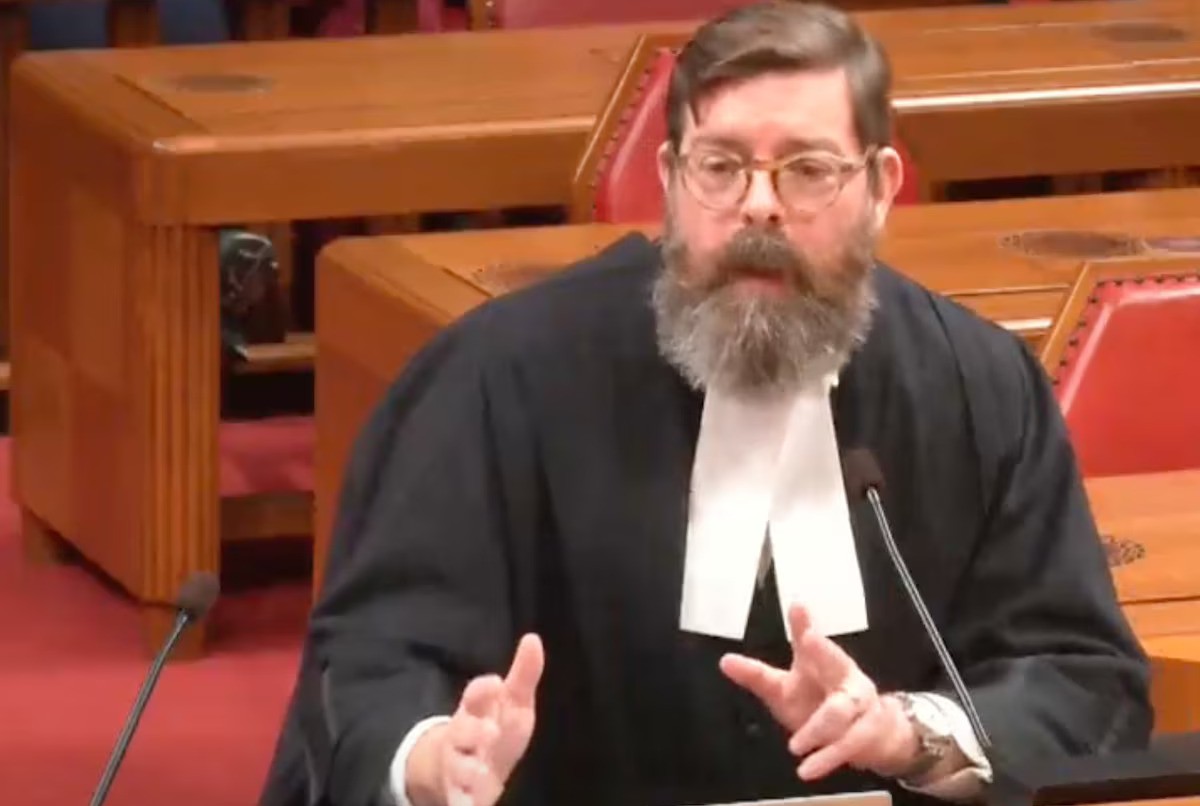
Above, Professor Alford argues his case before the Supreme Court. The Canadian Civil Liberties Association, the BC Civil Liberties Association, the Canadian Constitution Federation, and other civil liberties associations intervened in parallel to Professor Alford to move his legal challenge through the court system.
For 150 years, free speech was an uncontested and fundamental right.
But that changed in 2017 when the National Security and Intelligence Committee of Parliamentarians (NSICOP) was established to allow the Canadian Security Intelligence Service (CSIS) to share information with MPs and senators.
To regulate the committee, the federal government passed the National Security and Intelligence Committee of Parliamentarians Act (NSICOP Act).
Section 12 of the act specifies that NSICOP members—and anyone invited to participate in their proceedings—can't reveal anything they've learned to the public.
If they do disclose information, for whatever reason, they can be imprisoned for up to 14 years.
What is Parliamentary Privilege?
Professor Alford challenged section 12 for limiting constitutionally guaranteed freedom of speech and parliamentary privilege.
"I wanted to raise public awareness because NSICOP wasn't front-page news when it was enacted and this legislation isn't compatible with our parliamentary system," he says.
"Parliamentary privilege is part of Canada's 600-year-old constitutional architecture," he adds.
"So before anyone takes a hatchet to this architecture, as the NSICOP Act did, they should first consider if it is a load-bearing element of our constitution."
.jpg "Parliament Hill")
An example of how parliamentary privilege can hold the government to account happened during the 2007 Afghan detainee crisis. Canada was one of the countries belonging to the International Security Assistance Force in Afghanistan. A part of this military operation, Canada was handing over prisoners to Afghan security forces known to use torture. MPs used their parliamentary privilege to bring this situation to light and halt the federal government's actions. Photo Credit: Unsplash/Benoit Debaix
According to Canada's House of Commons website, "parliamentary privilege encompasses rights and immunities essential for the House of Commons and its members to perform their duties without external interference.
These privileges are vital for legislating, deliberating, and holding the government accountable.
This includes freedom of speech and collective rights of the House, such as the ability to institute inquiries, demand documents, and call witnesses to appear."
.jpg "Supreme Court of Canada")
In 2023, the consequences of the NISCOP's Act section 12 became clear. Even though it was discovered that foreign governments had persuaded several federal MPs to interfere in Canada's 2019 and 2021 federal elections, the MPs' identities were prohibited from being released. Above, the Supreme Court of Canada where Professor Alford argued his case. Photo Credit: Unsplash/Tom Carnegie
Safeguards Already Existed to Protect Confidential Information
Professor Alford believes that the NSICOP Act has made Canada's executive branch—the prime minister and the cabinet—too powerful.
"The NSICOP Act was presented as a grand bargain that would give MPs and senators access to highly sensitive security information on the condition that this information wasn't made known outside Parliament.
The unintended effect of the NSICOP Act has been the destruction of a safety mechanism for bringing government transgressions to light. It has made Parliament responsible to the government, rather than the other way around.
"The NSICOP Act could lead to corruption, the eroding of parliamentary democracy, and the degeneration of the rule of law," Professor Alford says.
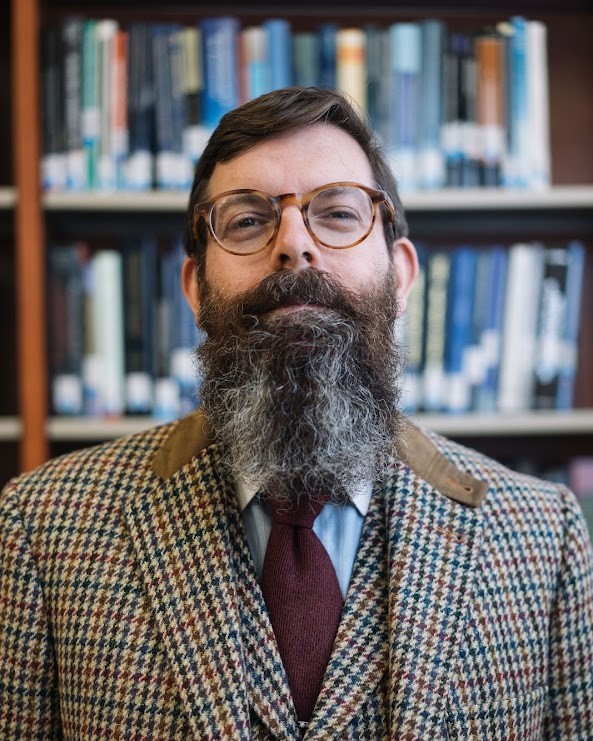
Professor Alford is a law professor, lawyer, and a distinguished legal scholar. "Canada has become the only country with a Westminster parliamentary system that has limitations on parliamentarians' freedom of speech," Professor Alford says. "Embarrassing the government can now be a valid reason for prohibiting MPs and senators from speaking out if they belong to the NISCOP committee."
"Parliamentary privilege is an essential protection against these wrongs."
Professor Alford is also convinced that section 12 is unnecessary because highly confidential matters have always been discussed in Parliament.
He points to an example from World War Two that hits close to home for him.
"My grandfather was a member of the 1st Canadian Parachute Battalion that landed behind the beaches of Normandy on D-Day," Professor Alford says.
"Although the D-Day invasion plans were reviewed in the House of Commons, this information wasn't leaked. If it had been, I might never have been born."
If, in a rare case, a security breach does occur, Parliament has the power to punish these offences, including expelling MPs.
A Historic Ruling
At the end of April, Professor Alford spent two days before the Supreme Court of Canada arguing his case and answering questions from the justices.
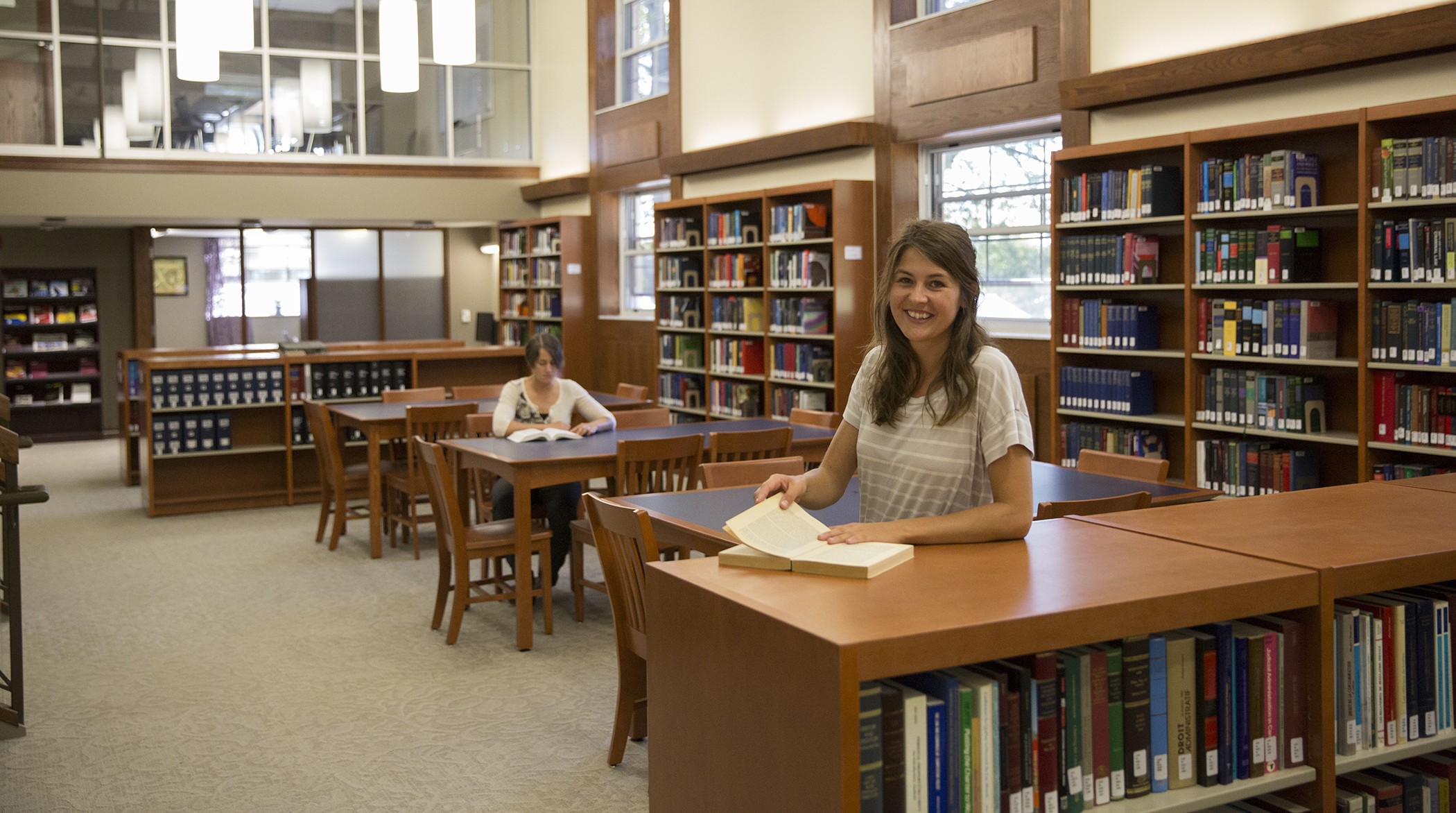
"Much of my work is focused on uncovering errors that creep into legal reasoning and attempting to correct them," Professor Alford says. "It's crucial that Canada has legal scholars who can concentrate on the forgotten fundamentals of the constitution because lawyers don't have the time to engage in these issues. Scholars can point out where something could, or has, gone wrong. That's one of the functions of law schools." Above, a view of Lakehead's law library.
In an 8-1 ruling, the justices decided not to strike down section 12. Despite this decision, they accepted a significant amount of Professor Alford's argument.
"The justices said the sole reason that section 12 stands is because NISCOP committee members volunteered for the committee," he says.
"They also determined that there are no limits on what non-NSICOP members can say in Parliament. This is something the Supreme Court hadn't previously recognized, so the case created an important legal precedent.
Only extremely narrow limits can be imposed on Parliament's freedom of speech and guardrails that hadn't previously existed have been constructed."
Learn more about this issue by reading Professor Alford's newly released book, "By Authority of Parliament: The Constitutional Boundaries of Legislative Power in Canada," published by McGill Queen's University Press.
