Indigenous

Why do we sometimes ignore our gut instincts?

Dr. Beth Visser Wants to Help People Escape Dangerous Situations

Content Warning: This story includes references to sexual violence.

Dr. Beth Visser is an acclaimed forensic psychologist whose work has led her down some dark paths.

Her previous research investigated individuals with narcissistic, Machiavellian, psychopathic, and other socially malevolent traits who manipulate, deceive, and exploit others.

Dr. Visser, who's also a psychology and interdisciplinary studies associate professor at Lakehead's Orillia campus, has now turned her attention in a different direction.

She wants to understand why women-identified victims and survivors of crime may find it difficult to remove themselves from risky or dangerous situations.
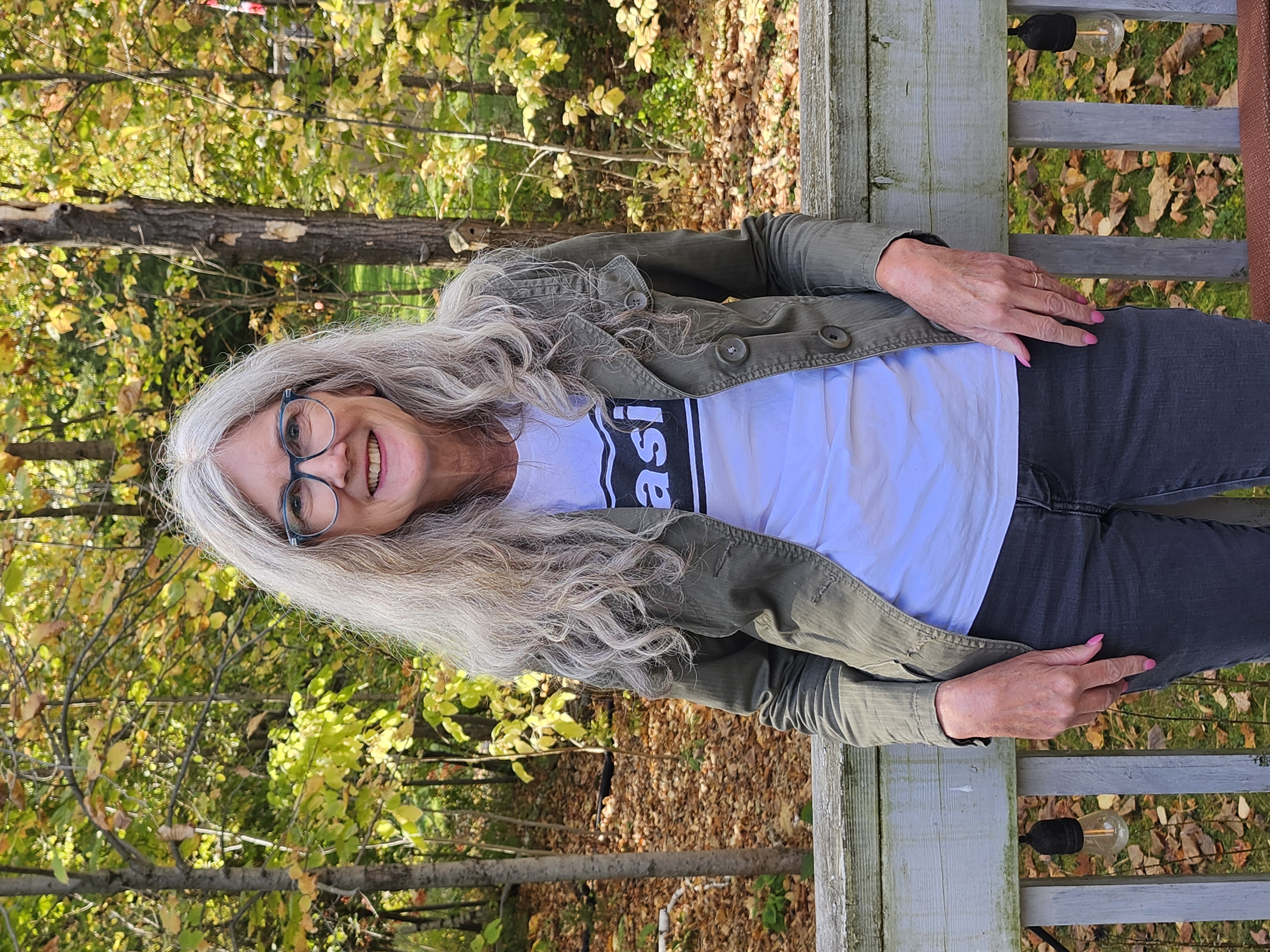
Dr. Beth Visser leans against a wooden deck railing in a yard with trees and fallen leaves

Dr. Visser is an associate editor of both the Journal of Research in Personality and Collabra: Psychology, as well as Lakehead's graduate program coordinator for psychological science. "I want to support talented junior researchers like Theresia Bedard who are doing important work that will have a positive impact on victims and survivors," she says.

Her work is timely, considering the disturbing headlines of the past few years—from the horrifying sexual assault case of Frenchwoman Gisèle Peliquot to the World Junior Hockey sexual abuse scandal to the ongoing Epstein files in the United States.

Dr. Visser's goal is to prevent people from being victimized by sharing her findings with the general public, organizations that support victims and survivors, and fellow researchers.

Victims Are Often Overlooked

"I would go to psychopathy conferences and meet with my peers every couple of years, and none of us were studying victims and survivors," she says.

After a victim's support group representative attended a recent conference and asked how this research relates to victims and survivors, Dr. Visser had an epiphany that has shifted the course of her work.

"I thought it might be more helpful to talk to people who've been exploited by somebody who's psychopathic because they'd probably have better insight into what happened than the psychopathic person," she explains.

"My collaborator Dr. Angela Book and I are exploring why people feel they can't leave a situation when they are afraid."
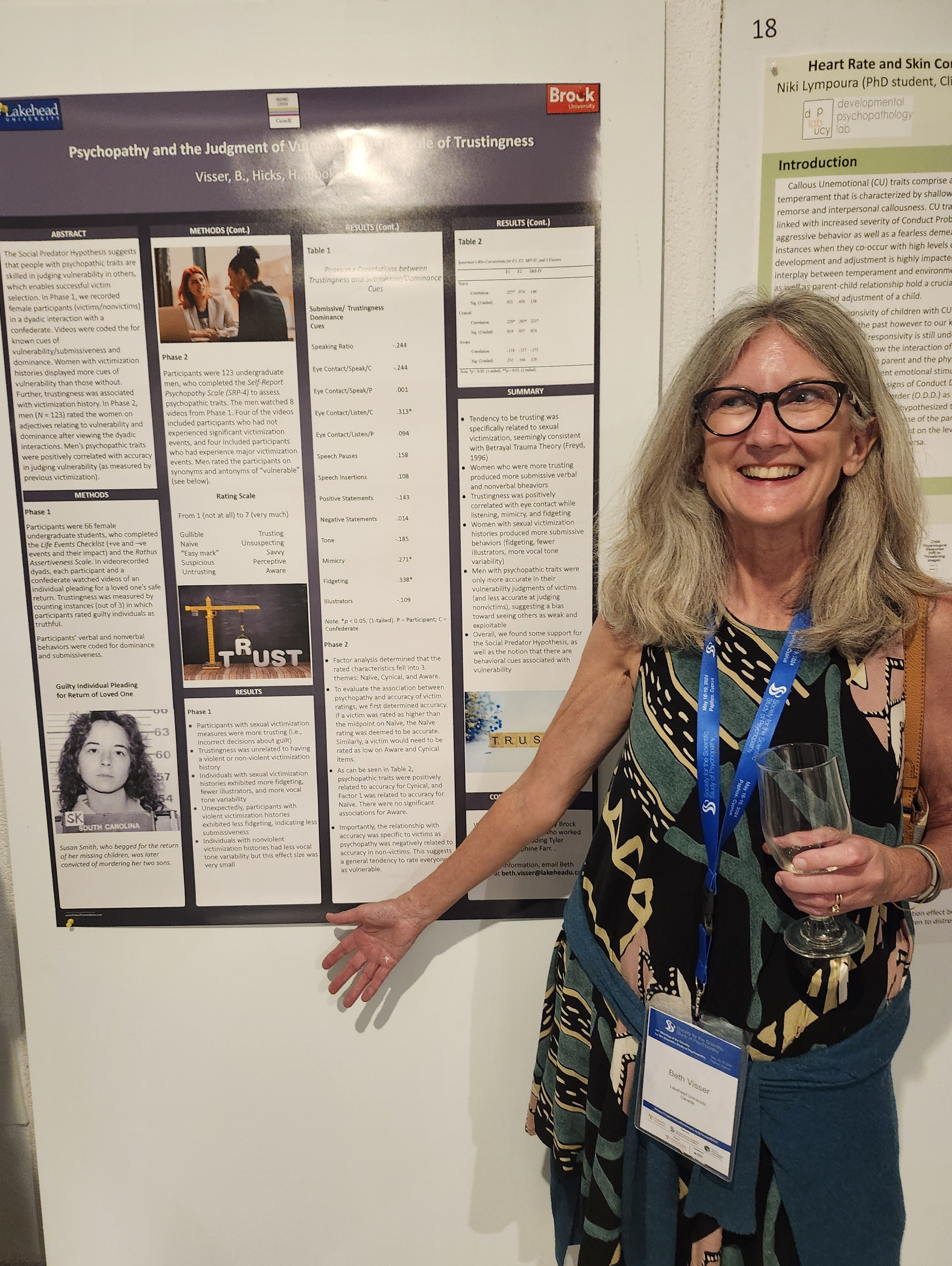
Dr. Beth Visser stands in front of a research poster about the social predator hypothesis Dr. Visser is a research volunteer with the Aftermath: Surviving Psychopathy Foundation, which supports victims and survivors. One of her contributions is to provide accessible translations of research articles, and she will be sharing her own research findings with Aftermath.

In their latest research study, Dr. Book, a professor in psychology at Brock University, recalls buying a used musical instrument for her son from a man who told her that the instrument was in his camper van.

"She's a very experienced forensic psychologist, but she got in the van," Dr. Visser says. "Fortunately, she came away with a well-priced musical instrument, but she knew that, objectively, it was a terrible decision.

As women, we're peacemakers. We might have been taught to avoid conflict. What we've found in our research is that, for women, there's this variable called 'silencing the self' that was the strongest predictor for complying in unsafe situations."

Being Polite Can Leave You Powerless

Whether they get goosebumps or some other physiological reaction, women often know in their gut when something is a bad idea or situation.

Yet Dr. Visser says that they may shut down these signals because they want to avoid anything that will cause a confrontation.

"If you can't bring yourself to be rude when you're concerned about your personal safety, it puts you at even greater risk," she says.

Another complication Dr. Visser notes is that although society has changed somewhat since the #MeToo movement, many of the underlying systemic issues remain the same.

"When you listen to women who've testified and gone through the court process, it's still pretty harrowing."

Dr. Visser and her PhD student, Theresia Bedard, are conducting studies with open-ended questions to learn why people stay in dangerous circumstances or appear compliant.

"When we asked people, 'Have you ever been in a situation that you felt like you couldn't get out of?' almost 50 per cent of the women spontaneously responded with a story about some creepy guy.
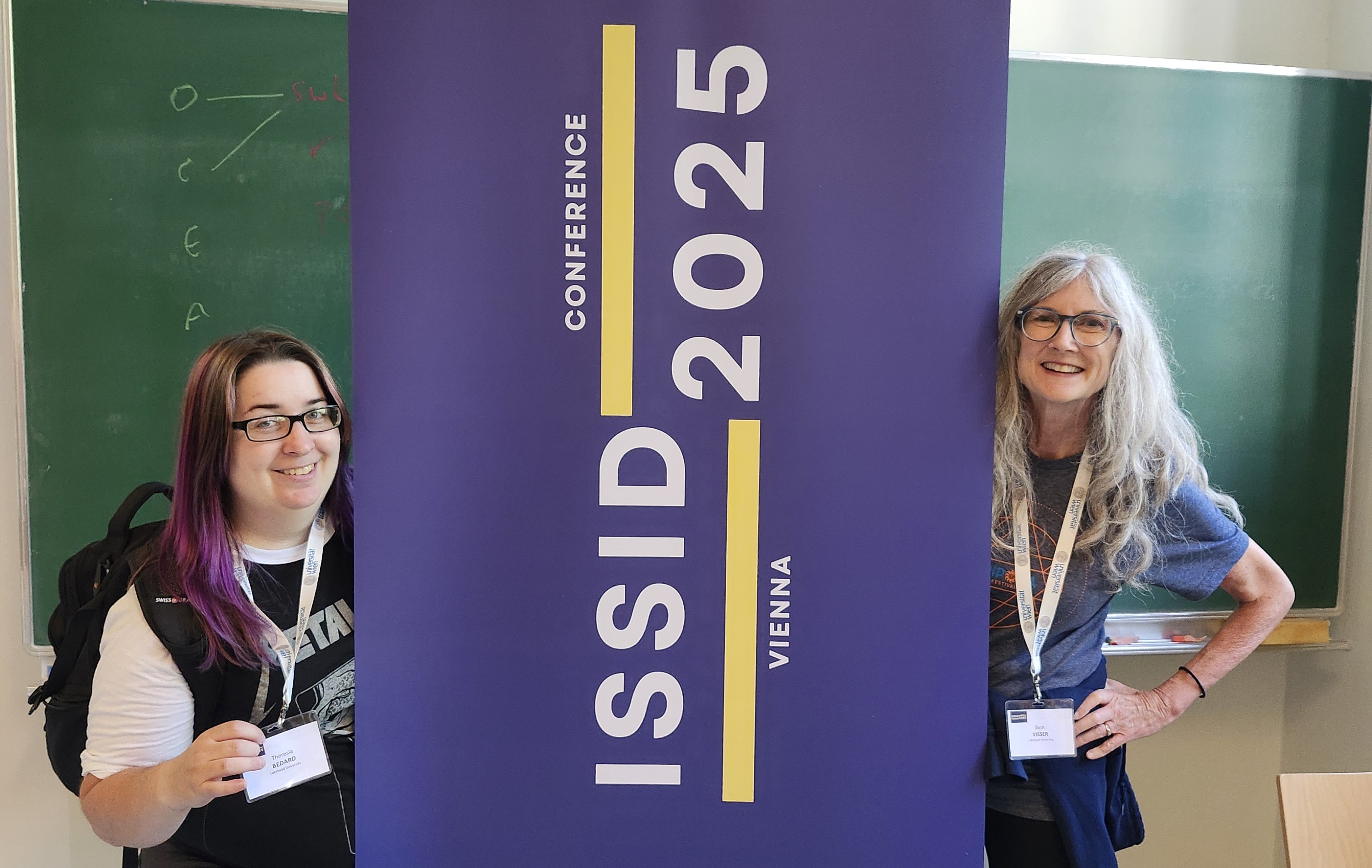
Theresia Bedard and Dr. Beth Visser stand on either side of an ISSID 2025 Conference banner

Dr. Visser (right) and her PhD student Theresia Bedard (left) present their research at the 2025 International Society for the Study of Individual Differences (ISSID) conference in Vienna. They also give public talks to spread awareness of their work. Recently, Dr. Visser spoke to the Psychological Association of Lakehead Students (PALS) and students in Lakehead's Humanities 101 program.

One thing we're learning is that as well as humans' fight, flight, and freeze responses, when faced with a threat, there's a fawning response.

People think, 'If I just make this person happy, they won't hurt me.'"

She's also looking at whether past childhood trauma makes an individual more likely to exhibit a fawning response.

"Maybe you're more likely to try and keep the peace," she says. "We know that previously victimized people are more likely to be victimized in the future."

This is exactly what Dr. Visser hopes her research can help change.

Dr. Visser's research is being made possible by a Social Sciences and Humanities Research Council (SSHRC) Insight grant.

This Rising Changemaker Wants a Better World for Everyone

Student Leader Aliss Chavarri Excels at Taking on Tough Challenges

Caring for others is second nature to third-year biology student Aliss Chavarri.

Growing up in Lima, Peru, her father instilled in her the importance of lending a hand to those in need.

"If there was flooding in interior parts of Peru, my dad and I would travel inland to assist with relief efforts," Aliss says. "We'd carry buckets of water, clean up homes and buildings, look after kids, cook, and do anything else that was needed.

My dad is my hero."

Finding Her Purpose

These childhood experiences have transformed Aliss into a committed advocate and activist.

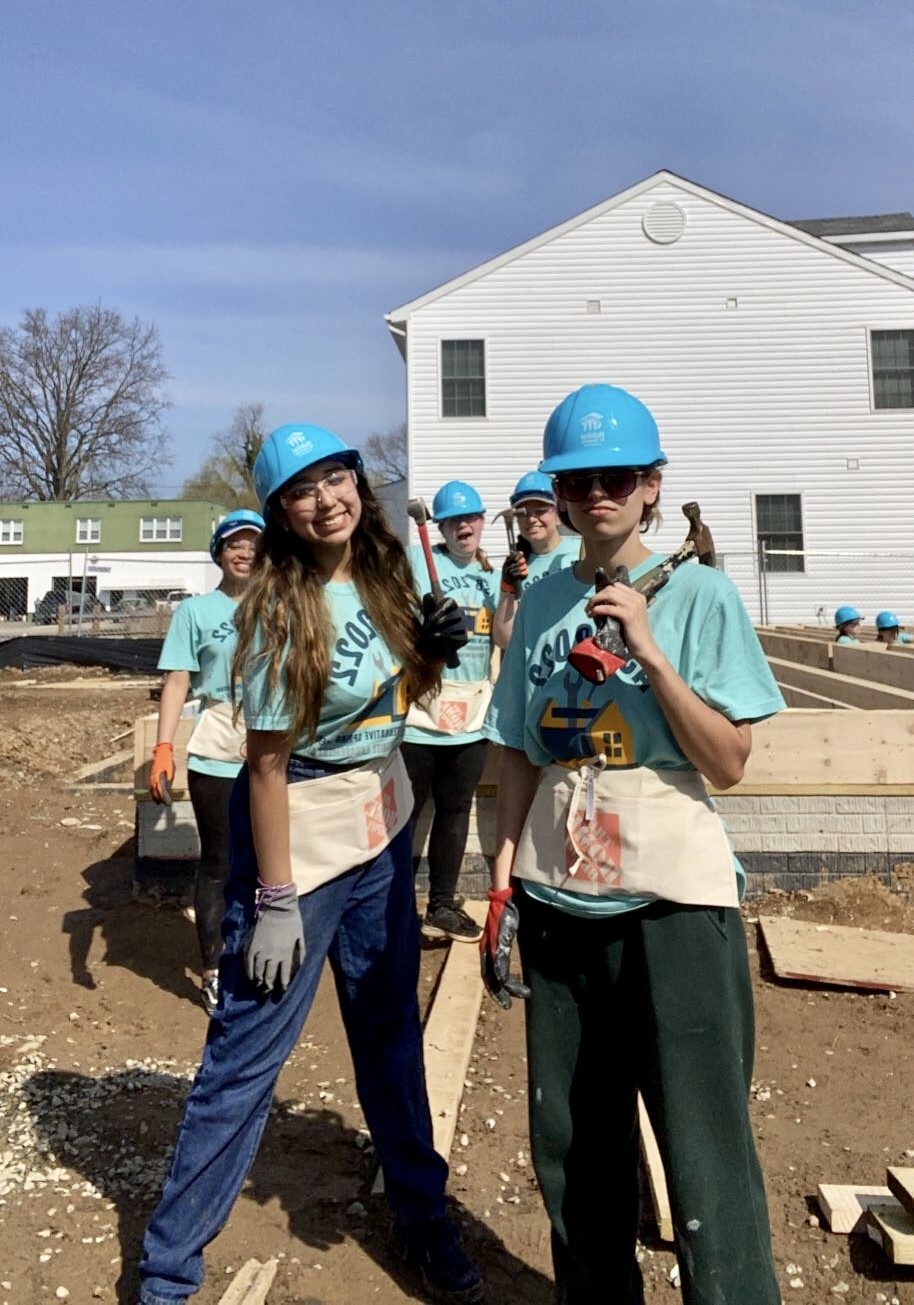
She spent three months in Baltimore, Maryland, for instance, as a student leader with Habitat for Humanity where she built homes for four low-income families.

Aliss Chavarri and four other women wearing blue hardhats and holding hammers stand on the grounds of a construction site

Aliss (left) worked long hours as a Habitat for Humanity volunteer in Maryland.

It was this impulse to help people that prompted Aliss to study biology with the ultimate goal of becoming a doctor.

"I chose Lakehead because I wanted to learn in a small community that was close to nature. I also wanted small classes, environmentally sustainable campuses, and an emphasis on experiential learning," she continues.

"During my first semester, I collected soil samples from Anemki Wajiw (Mount McKay) and water samples from Lake Tamblyn. It wasn't something that I expected to be able to do so early in my program."

Aliss's interests quickly extended beyond the classroom. She began contributing to campus life as an orientation leader and as a student assistant with Lakehead International.

Aliss Chavarri stands at the bottom of the staircase in the Agora next to Student Central

Aliss is the current Lakehead University Student Union president. She's proud of the many services that LUSU provides, such as the new Wolfpack Volunteer Program. "Students who join the Wolfpack give back to the community by volunteering as well as learn new skills and build up their resumes."

These experiences led to a shift in her career ambitions.

"I realized that although I love science, I don't want to be a doctor. Instead, I want to become a lawyer and advocate for fellow community members."

She's doing that now as president of the Lakehead University Student Union (LUSU). In this leadership role, Aliss focused on addressing housing issues and food insecurity as well as promoting diversity and inclusion.

Ending Period Poverty on Campus

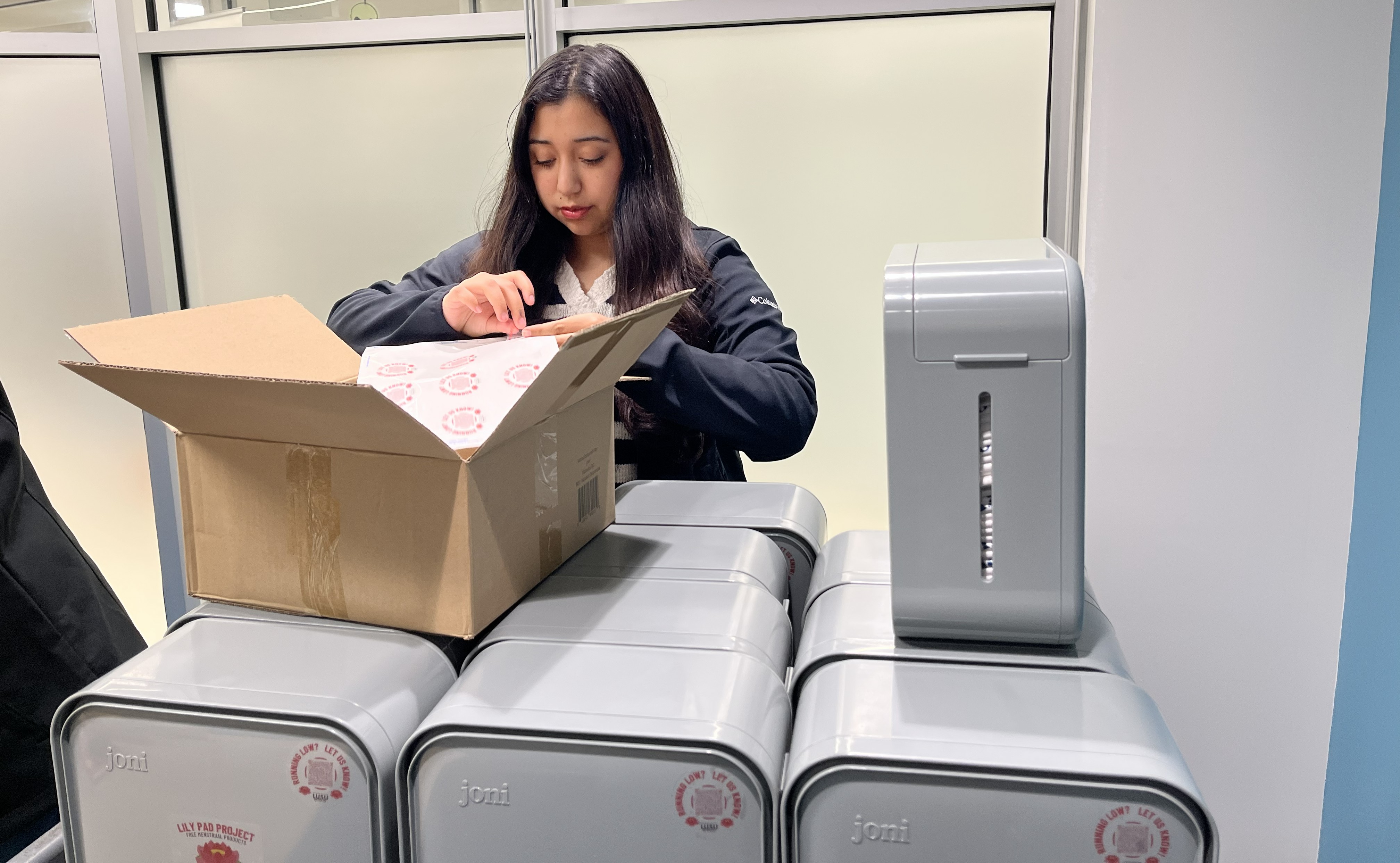
One of the initiatives Aliss is most proud of is the recently launched Lily Pad Project.

It's a partnership between LUSU, Pride Central, and the Gender Equity Centre that provides free organic and non-toxic menstrual products in washrooms on Lakehead's Thunder Bay and Orillia campuses.

Aliss Chavarri stands in LUSU's office peeling a label off a sheet to apply to a Lily Pad dispenser

Aliss stocks Lily Pad dispensers with period products.

"After learning that one in five menstruating students miss school because they lack access to menstrual products, I knew that I needed to act," Aliss says.

"These products are as essential as toilet paper and soap, which are provided for free in public washrooms. Period products should be free, too."

Lily Pads dispensers and products are currently available in 40 washrooms, and there are plans to expand this initiative to include all campus washrooms.

An Ingenious Approach to Housing Challenges

In 2024, Aliss began harnessing her entrepreneurial talents to take on an urgent problem affecting international students.

"I discovered that many of them were having trouble finding housing. Since they're new to the country and don't have Canadian bank accounts, they often can't pay rent deposits," Aliss explains.

"Students were also being scammed by fake landlords."

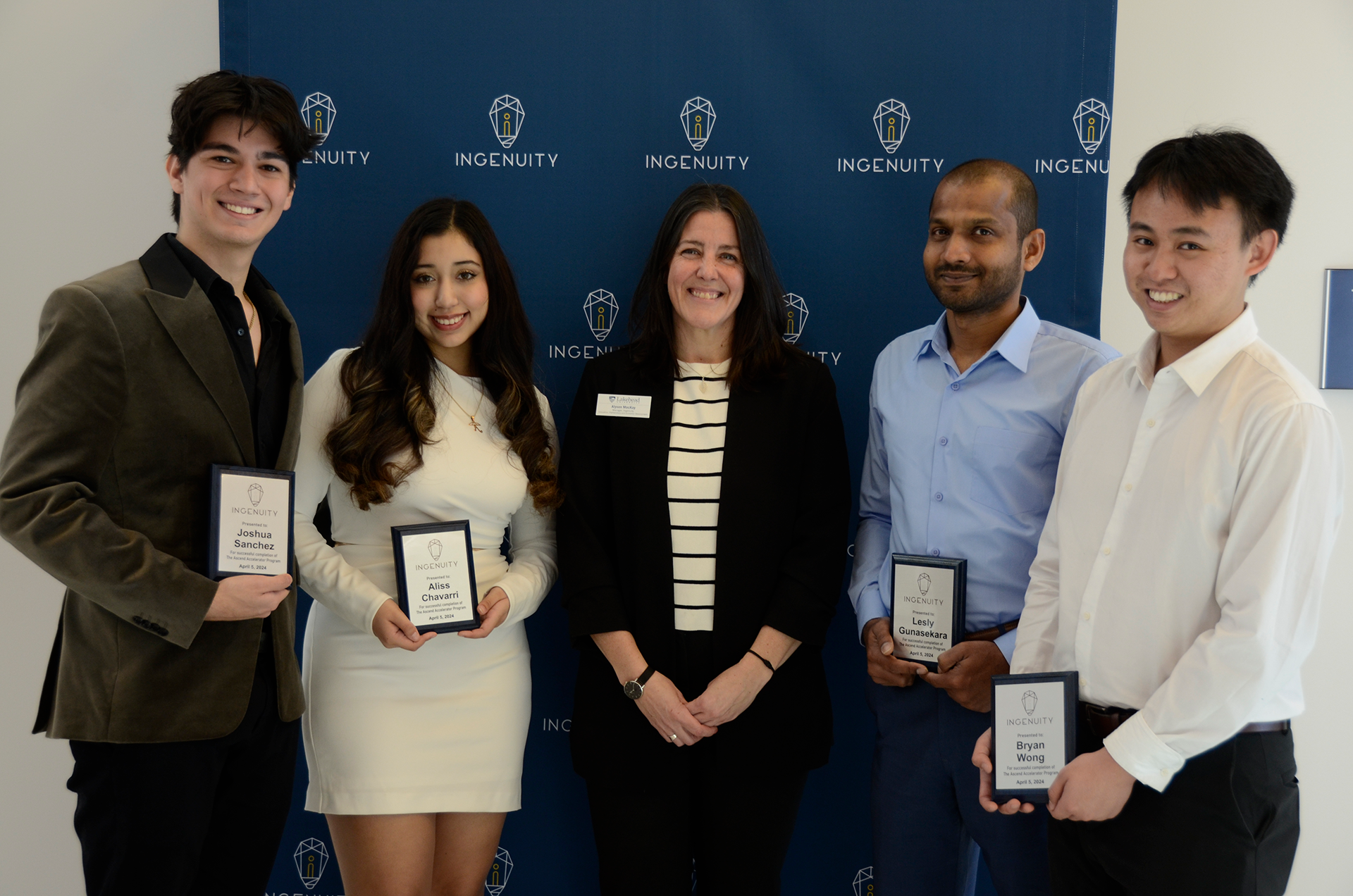
Aliss and fellow biology student Joshua Sanchez created the Nestar website and app to give students safe and accessible housing options.

Joshua Sanchez, Aliss Chavarri, Lesly Gunasekara, and Bryan Wong hold Ascend Accelerator graduation plaques while standing next to Ingenuity Manager Alyson MacKay

Aliss (second from left) and Joshua Sanchez (far left) graduated from the Ascend Accelerator program run by Lakehead's Ingenuity business incubator. The coaching and mentoring they received is enabling them to launch their Nestar rental website and app.

Nestar will connect the right tenants with the right landlords through a sophisticated matching system. Once it's fully operational, students will be able to sign leases electronically, pay their rent via credit cards, and run background checks on themselves to give to prospective landlords.

"Students will be able to rent a verified house before they arrive on campus."

Aliss's advocacy continues to be inspired by her father.

"He's always told me, 'If you're doing well in life, why don't you use your skills and talents to help others?'"

Third Age Learning Lakehead (TALL) Spring Lecture Series: "Feed the Soul"

Date(s): Wednesdays, April 29, May 6, May 13, May 27, June 3 (*NOTE: no lecture on May 20th)
Time: 10:00 am - 12:00 pm
Place:  In-person or Live-streamed at St. Paul's Centre in Orillia
Price:  $80 +HST for the whole 5 lecture series; $20 +HST for a single talk.

Discover the joy of lifelong creativity in this inspiring Spring 2026 lecture series with Third Age Learning Lakehead (TALL).

Ontario Master Naturalist Program (OMNP) - Spring 2026

The Ontario Master Naturalist Program (OMNP) is a community program established by Lakehead University Orillia in partnership with Ontario Nature. The first of its kind in Canada, the OMNP provides naturalists and those interested in nature and environmental stewardship the opportunity to broaden their knowledge and expertise of the natural world through formal training and guidance.

Ontario Benthos Biomonitoring Network (OBBN) - Basic Training Course

The Ontario Benthos Biomonitoring Network (OBBN) is an aquatic macroinvertebrate biomonitoring network for Ontario’s lakes, streams, and wetlands. This course covers biomonitoring theory, sampling methods, benthic-invertebrate identification, and bioassessment calculations. The training is recommended for anyone interested in using benthic macroinvertebrates to monitor streams or lakes using provincially standardized methods. Participants demonstrating proficiency are awarded a certificate of network membership.

Earth Day Event: Documentary Screening and Community Vendors

Celebrate Earth Day!

Explore community vendors, enjoy family-friendly activities and take a tour of the Indigenous Garden any time between 4-6pm.

At 6:00pm settle in for a screening of WorkCabin’s documentary Saving the Night Caller, which follows conservation efforts to protect the elusive and enchanting Eastern Whip-poor-will. The film will be followed by a discussion on local conservation work and community action, led by Mark Bisset.

Department of History Faculty Member Receives Canada Council for the Arts Grant

Congratulations to the Department of History’s Kelly Saxberg, who has been awarded a Canada Council for the Arts grant for a project called the "Reconciliation Through Art Tour.” This project began a decade ago with the scanning by Lakehead students and alumni of the personal papers of Susan Ross and Sheila Burnford. The files and scans are now in the Thunder Bay Museum and available to researchers. These documents include a large number of Ross’s sketch books from her travels to numerous First Nations in Northern Ontario and to hamlets in the Arctic. Using this material Kelly has directed documentaries such as “Silent Cries” and "A Tale of Two Qallunaat“, both of which are currently on the festival circuit. In addition to the films, Kelly developed the "Reconciliation Through Art Tour” which involves sending an art installation and copies of Ross’ sketch books to the communities she and Burnford visited in the 1960s and 1970s. The sketches and writings of these intrepid women are unique in that they visited these communities at a time when the only outsiders were people visiting in an official capacity. Ross’ sketches and Burnford’s stories offer insights that cannot be found elsewhere because they went to learn and not to regulate, exploit, and/or report. In partnership with the Thunder Bay Museum and a number of communities, organizations, and galleries in Northern Ontario and across the Arctic, the "Reconciliation Through Art Tour” will include the installation, workshops, sketch books and Kelly's latest films. Kelly will also travel with the tour to select communities and ensure that copies of the sketch books are available for future generations.

John Mulloy Rebuilt His Life After Facing Devastation

Humanities 101 Program Helped Put Him on a Better Path

John Mulloy says that his life took a terrible turn after accepting an early retirement package from Chrysler Canada.

"Instead of making a fresh start, I became very ill and found myself unemployed, penniless, and without a place to call home," he says.

"At 58 years old, the thought of returning to a manufacturing job was something I could barely contemplate. Physically and mentally, I was at my limit."

John Mulloy, wearing a black cap, sits in the front seat of a car

Wendat Community Programs Case Manager John Mulloy

It was while accessing services at The Lighthouse—a shelter for people experiencing homelessness in Orillia—that John began to envision a different future for himself.

"Lighthouse staff encouraged me to upgrade my education after observing how easily I interacted with the other participants. They suggested that I might make a good social service worker."

John took their advice to heart and returned to school as an adult student in Georgian College's Social Service Worker program.

Then, shortly after his first semester at college, a Lighthouse employee approached him again, this time about enrolling in Lakehead's Humanities 101 course.

Humanities 101 Unlocks Possibilities

For 20 years, Humanities 101 has been empowering people to believe in themselves.

This outreach program was created to provide a university-level learning experience to community members facing financial or social barriers to postsecondary education.

Participants attend a free one-semester, non-credit course that introduces them to topics in the humanities and social science fields. The course also covers students' transportation costs to campus, gives them access to library resources, and provides them with a meal in the cafeteria on course nights.

"Together we learn to celebrate different perspectives and ways of thinking and being," explains Nicky Locker, the director of the Office of Community Engagement and Lifelong Learning (CELL).

"Our Humanities 101 students listen to thought-provoking lectures presented by faculty members and are given opportunities to explore interests, engage in civil discourse, and, sometimes, debate."

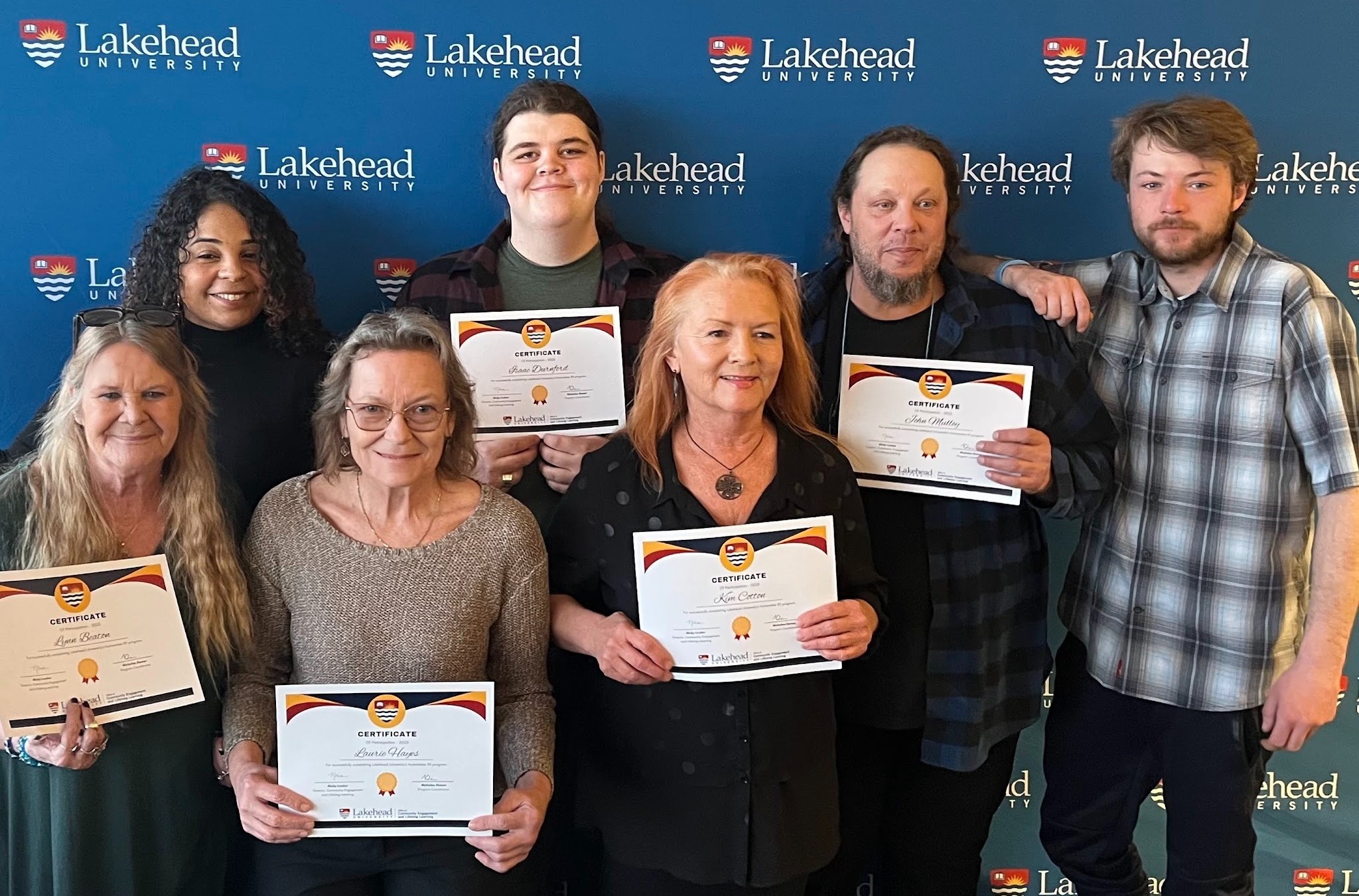
A group of Humanities 101 students hold their graduation certificates

John (sixth from left) at his Humanities 101 graduation ceremony. "Many students begin to carve out a pathway for themselves that they might have previously found daunting or unattainable," says CELL Director Nicky Locker.

John thrived in this new environment.

"I thoroughly enjoyed the course because it brought to my attention how narrowly focused we can sometimes be without fully realizing it," he says.

He particularly appreciated how Humanities 101 helped students look at the world around them through multiple lenses and with an open mind.

"Little did I know at the time how important this way of thinking would become—not only for my college coursework as it progressed, but also for my future employment," John adds.

A Life Transformed

By December 2025, John had completed Humanities 101 and graduated from Georgian College.

Then, the profound change he'd been seeking truly began to materialize. In January 2026, he was hired as a full-time case manager with Wendat Community Programs.

Wendat is a non-profit in Midland, Ontario, that assists seniors with care needs and adults with mental health needs in the Simcoe-Muskoka region.

"The Humanities 101 course has paid dividends every day since I started my position at Wendat," John says.

"I have discovered how important it is—and I am reminded daily—how we as social service workers must learn to see things through the eyes of our clients.

We must be vigilant in how we perceive them and careful about the judgments we make about the people around us."

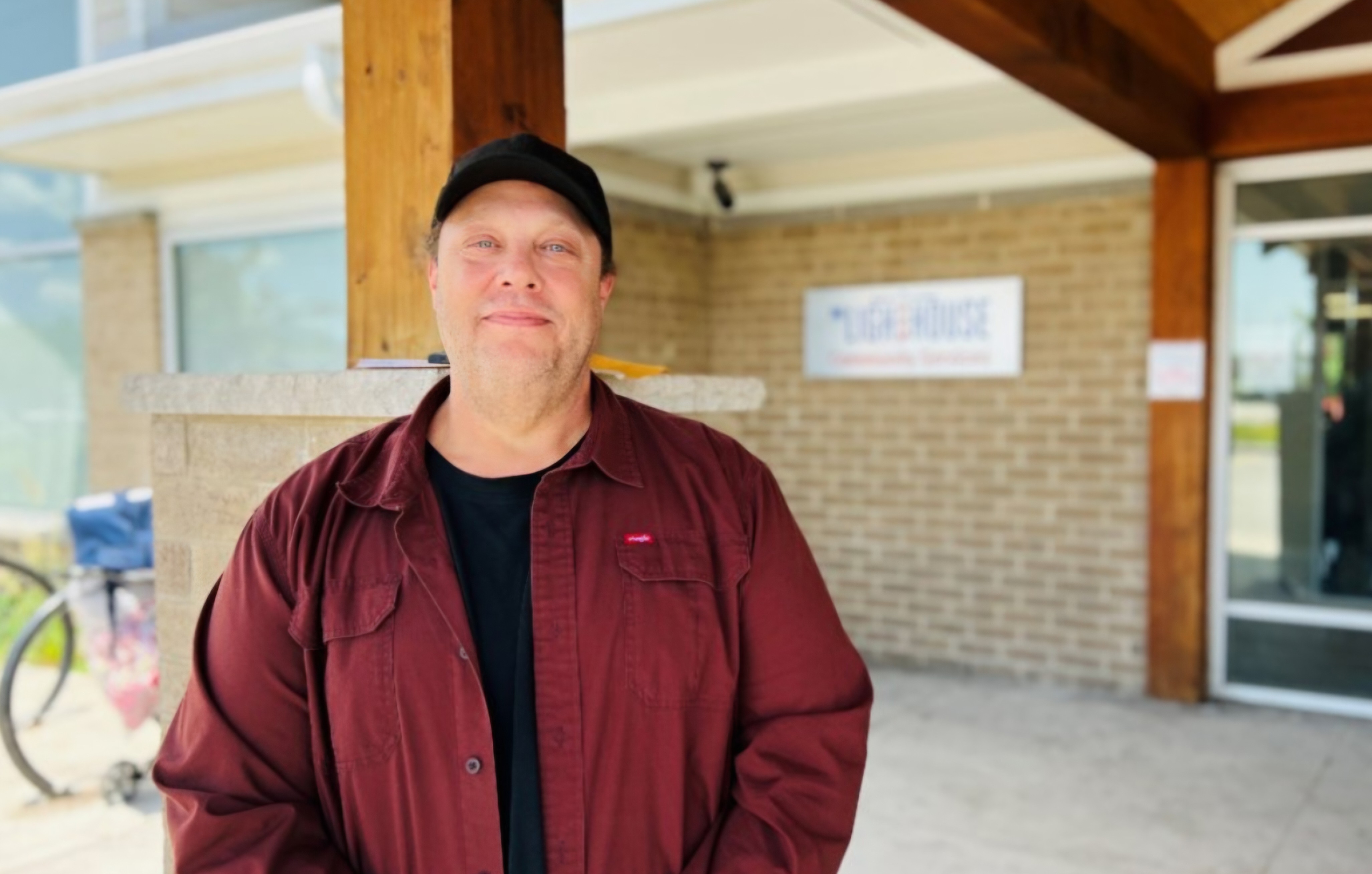
John Mulloy stands outside The Lighthouse building on a sunny day

Humanities 101 fosters relationships, care, and lifelong learning, which are strong contributors to well-being and to removing barriers to success. Above, John stands in front of The Lighthouse in Orillia. Photo Credit: The Lighthouse

John is now eagerly helping guide his current caseload of 11 clients towards more positive mental health and supporting them in making decisions that bring real independence.

"I want to express my sincere gratitude and thanks to CELL's Nicky Locker and Nick Damer for making Humanities 101 so rewarding and educational.

I can honestly say I would recommend this course to anybody, but particularly to those who want to expand how they see and engage with the world."

Humanities 101 is proud to be celebrating its 20th anniversary. Click here for more information about this transformative community outreach program.

John was recently featured on the Orillia Matters news site. Click here to read more about his inspirational journey.

Jessica Nelson Wins Award for Demonstrated Excellence as a French Second Language Teacher

Congratulations to BEd teacher candidate Jessica Nelson, recipient of the Ontario Modern Language Teachers’ Association (OMLTA) Helen G. Mitchell Award.

Presented annually, this award recognizes one graduating student from each Faculty of Education in Ontario who best demonstrates the qualities of an outstanding French as a Second Language teacher.

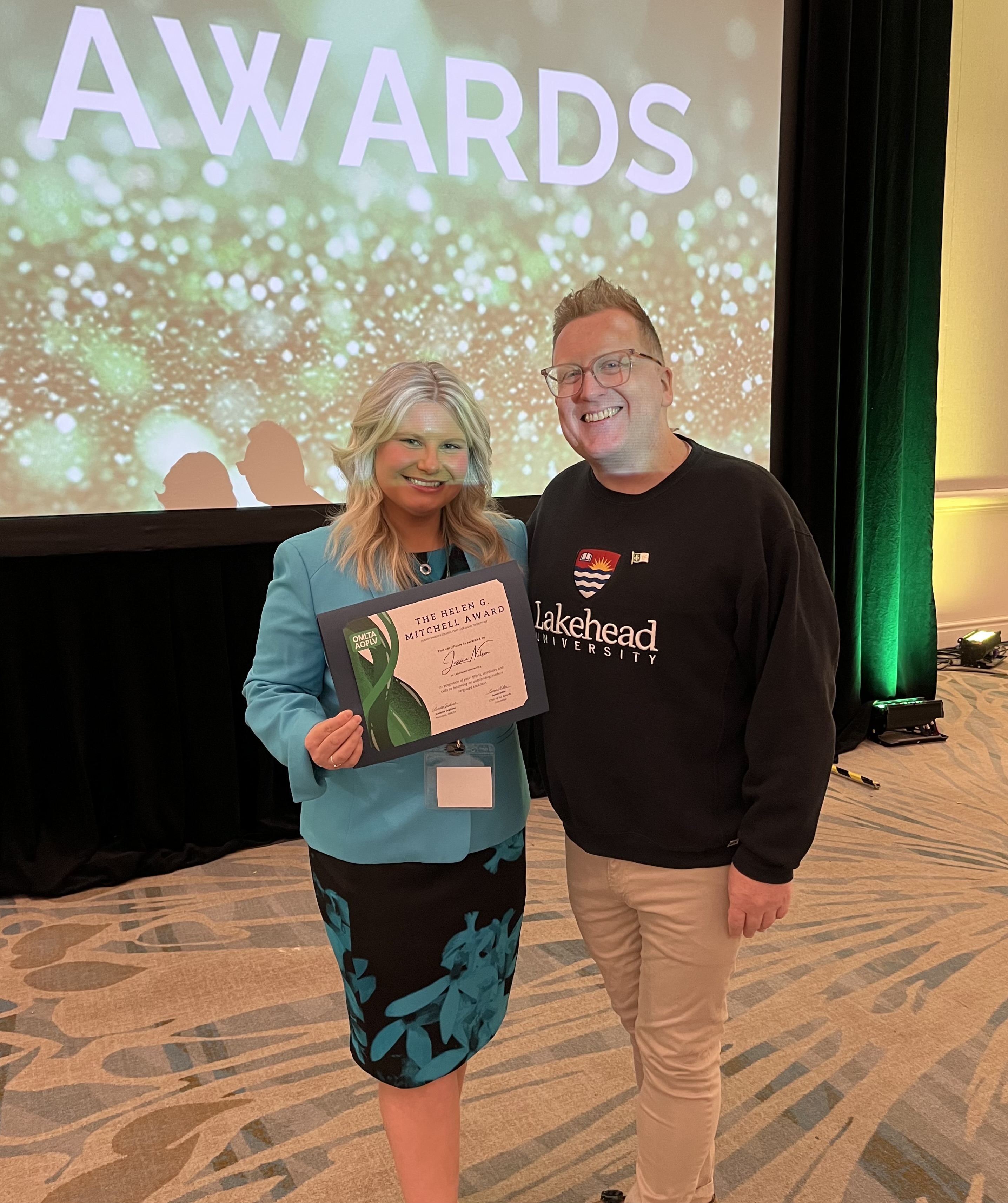
Jessica was Jessica Nelson and James Steelenominated by James Steele, Contract Lecturer in the Faculty of Education (pictured with Jessica, left), in recognition of her exceptional performance in the BEd program, including her work in Curriculum & Instruction: French as a Second Language (I/S), Part 1. She was also recognized for her ability to apply effective second-language teaching methodologies that support student success during her practicum placements.

For Jessica, the award represents both a personal milestone and the beginning of her professional journey.

“Winning the Helen G. Mitchell Award is an incredible honour. As a graduate of the French Immersion program, my passion for the French language has been a part of my life since the beginning of my education and has continued to grow throughout my studies. This recognition is especially meaningful to me as I begin my journey into the teaching profession. I look forward to bringing and sharing that passion in my future classroom, helping my students develop a genuine appreciation for the language and culture. This is a responsibility I am proud to carry forward,” she says.

Jessica attended the OMLTA award ceremony in Toronto in March and will graduate in June.

Congratulations, Jessica!

Pages

Subscribe to Indigenous