

Innovation

From help for the elderly to a seamless locker for selling your products – Ascend Accelerator grads show off their unique ventures
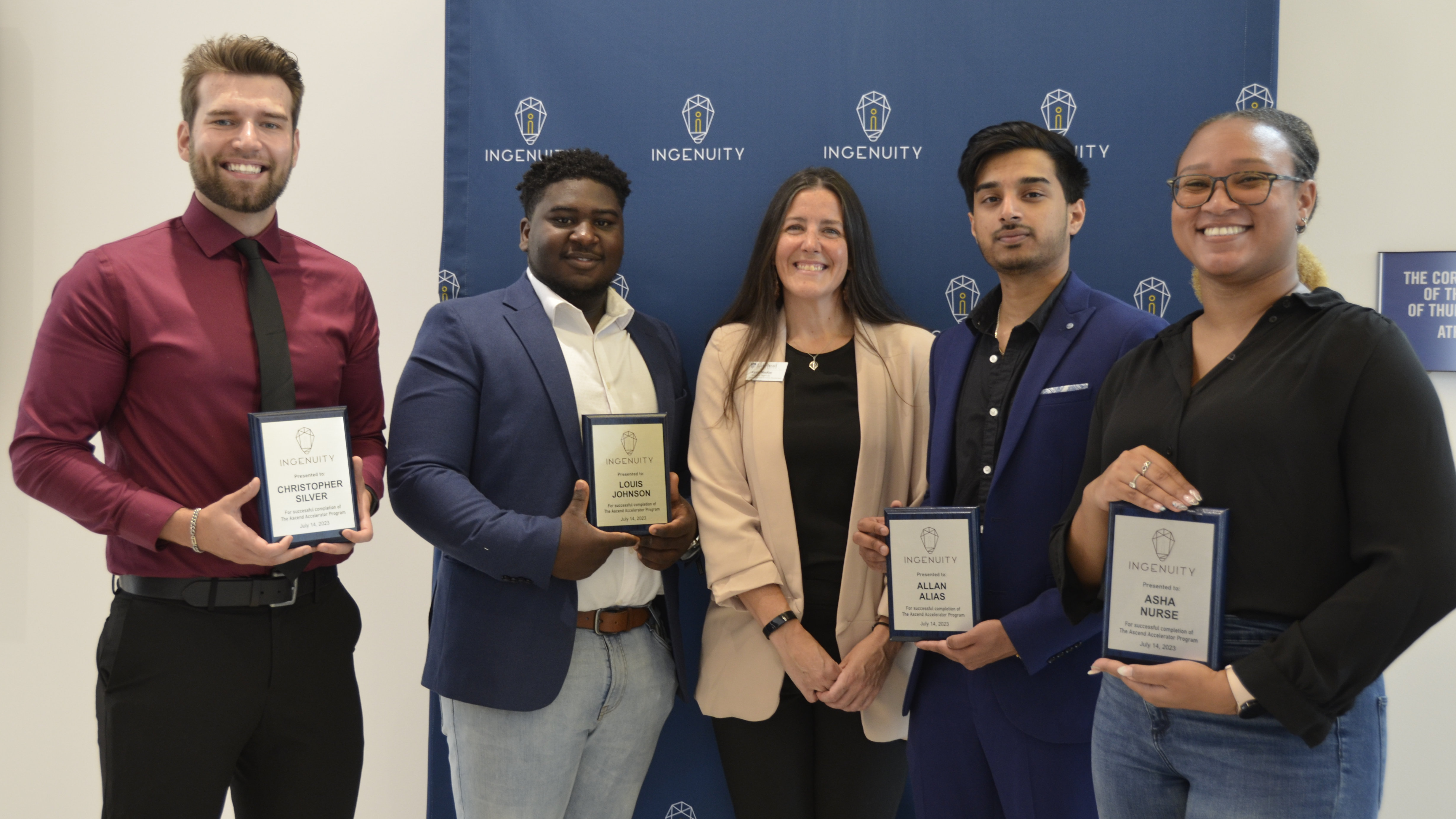
Ascend Accelerator graduates at recent ceremonies

Ingenuity manager Alyson MacKay (centre) is pictured with Ascend Accelerator graduates (from right) Christopher Silver, Louis Johnson, Allan Alias, and Asha Nurse.


July 18, 2023 – Thunder Bay, Ont.  

Lakehead recently celebrated the graduates from its third cohort of the Ascend Accelerator boot-camp-style program, hosted by the Ingenuity incubator space.

Along with FedNor funding, participants in the student-based business ventures received mentorship and weekly workshops. They were held accountable to milestone goals created over the 10-week program, which ran from May 8 to July 14.

This year the cohort included four participants who each explored a separate business venture. Ingenuity manager Alyson MacKay said it was exciting to help the students develop their businesses.

“I can’t believe the third cohort is coming to an end – it's amazing how fast the 10 weeks went by,” MacKay said.

“I’m incredibly proud of all the hard work the students have put into their business ideas and am looking forward to celebrating their success. Their commitment and passion drove the energy in the Ascend program and they’ve come a long way since the first week.”

Dr. Andrew P. Dean, Vice-President, Research and Innovation, congratulated the participants for reaching graduation.

"By providing financial support and access to mentors, Ingenuity Ascend offers a great platform for Lakehead students to transform their ideas into reality and launch their unique business ventures,” he said.

“From using thermal sensors to detect falls to developing automated lockers for artists and entrepreneurs to sell their products, our graduating entrepreneurs have solved gaps in the market and are contributing to the growth of our regional economy.

“Once again, I’d like to congratulate the graduates, and I wish you all the best as you ascend your businesses to the next level,” Dr. Dean said.

Louis Johnson’s project, Liaison, implements a completely automated locker system that allows artists and entrepreneurs to seamlessly market and sell their crafts, products, or services in high foot-traffic venues.

Vendors can simply load their lockers with merchandise and consumers can conveniently purchase them with the push of a button. This solution now gives vendors the opportunity to create more, invest more, and profit more.

“This year's Ascend program hosted by Ingenuity has been an unforgettable experience,” Johnson said.

“As a physics graduate and a mechanical engineering student with no business background, I was doubtful of my capabilities to become an entrepreneur.

“However, over these past 10 weeks I wasn't just exposed to all of the essential aspects of starting a business but was taken through the step-by-step process of how to implement them.

“Alongside the valuable information I've gained from this program, I was able to network with other like-minded entrepreneurs, which created an environment where everyone was able to feed off of each other’s ideas to create innovative solutions.

“Turning your passion into a business is an extremely difficult process, but with guidance and support from Ingenuity the self-doubt started to fade and the end goal became much more attainable,” Johnson added.

Christopher Silver’s project, Silver Vantage Software, uses computer vision and machine learning to create a thermal fall detection system for elderly people. A thermal sensor will monitor a room, sending an alert to a family member or personal support worker if a fall is detected.

Allan Alias is launching Pixel Point, a comprehensive social media management and real estate media solution provider that specializes in management and digital marketing. Pixel Point offers a range of services from content creation to paid ads management.

Asha Nurse created Silver Sands Nail Bar, a home-based and mobile nail salon in Thunder Bay that offers gel polish, gel extensions, and overlays. It specializes in the newest trends in the nail industry.

As a mobile salon, Silver Sands takes the hassle out of finding a nail technician by bringing their services directly to you. The mission of Silver Sands is to understand and meet the needs of its clients, especially young people.

For more about Ingenuity, visit www.lakeheadu.ca/centre/ingenuity

-30-

 Media: For more information or interviews, please contact Brandon Walker, Media, Communications and Marketing Associate, at mediarelations@lakeheadu.ca.

Lakehead University is a fully comprehensive university with approximately 9,700 full-time equivalent students and over 2,000 faculty and staff at two campuses in Orillia and Thunder Bay, Ontario. Lakehead has nine faculties, including Business Administration, Education, Engineering, Graduate Studies, Health & Behavioural Sciences, Law, Natural Resources Management, Science & Environmental Studies, and Social Sciences & Humanities. Lakehead University’s achievements have been recognized nationally and internationally, including being ranked in the top half of Times Higher Education's 2023 World Universities Rankings for the fourth consecutive year, and the number one university in the world with fewer than 9,000 students in THE’s 2023 Impact Rankings (which assesses institutions against the United Nations’ 17 Sustainable Development Goals). Visit www.lakeheadu.ca.
Research in Action: Uncovering the importance of human capital

Before he became a university professor and author, Dr. Kunle Akingbola had a successful career as a Human Resources (HR) professional. He was the HR manager for the Canadian Red Cross in Toronto while working on the second of his three Master’s degrees. As he grappled with choosing a thesis topic, his research advisor made a suggestion that would change the course of Akingbola’s work and his life.

At the time, the Red Cross had just taken over managing a homeless shelter over the winter for the City of Toronto, which was downsizing services to the non-profit sector. On top of their regular programs, Red Cross employees had to create and staff a completely new program that they would give up in six months time, only to bring back another six months after that.

Akingbola took his advisor’s advice and used the Red Cross case study as the basis for his Master’s thesis on non-profit HR management. That line of study eventually led to his Ph.D. dissertation, which examined the entire strategy of non-profit organizations across Canada and the impact of government funding and the environment.

Akingbola’s growing expertise led to part-time university teaching. He eventually left his HR career to become a full-time professor. Today he is Associate Professor of Human Resource Management and Organizational Behaviour in the Faculty of Business Administration at Lakehead University’s Orillia campus.

With numerous publications including books, chapters in edited books, and articles in leading journals, research continues to be a large part of Akingbola’s work, which looks at ways to optimize the effectiveness of non-profit organizations while increasing employee satisfaction and improving outcomes for the communities they serve. He encourages his students to get research experience by helping him do surveys and data sorting.

“Prior to my study, no one had ever looked at HR management in non-profit organizations, says Akingbola. “There had been research on volunteers, but not employees of non-profit organizations that make up a major part of the Canadian social sector and account for about nine per cent of Canada’s Gross Domestic Product (GDP).”

His vast personal experience in HR in non-profit and healthcare sectors combined with his extensive ground-breaking research give Akingbola rare insight and expertise into social purpose enterprises. He understands the fine line organizations are forced to walk to secure the funding that is essential to support their services. It’s especially frustrating in the face of what Akingbola calls “mission drift.”

“How do you manage people who joined your organization because they believe in your mission, but now you have to go in a different direction because that’s where the funding is dictating you go?” says Akingbola.

One thing he is certain of is the importance of the human component in non-profit activities.

“The nature of service is emotional and it is human based,” says Akingbola. “You can install an ATM on Jarvis Street in Toronto that gives out blankets and coffee to the homeless on a cold winter’s night. But it can’t dispense compassion. In that regard you can’t replace human capital.”

Dr. Kunle Akingbola is the lead author of the book "Change Management in Nonprofit Organizations: Theory and Practice" (Palgrave Macmillan, 2019) and the author of "Managing Human Resources for Nonprofits" (Routledge, 2015).

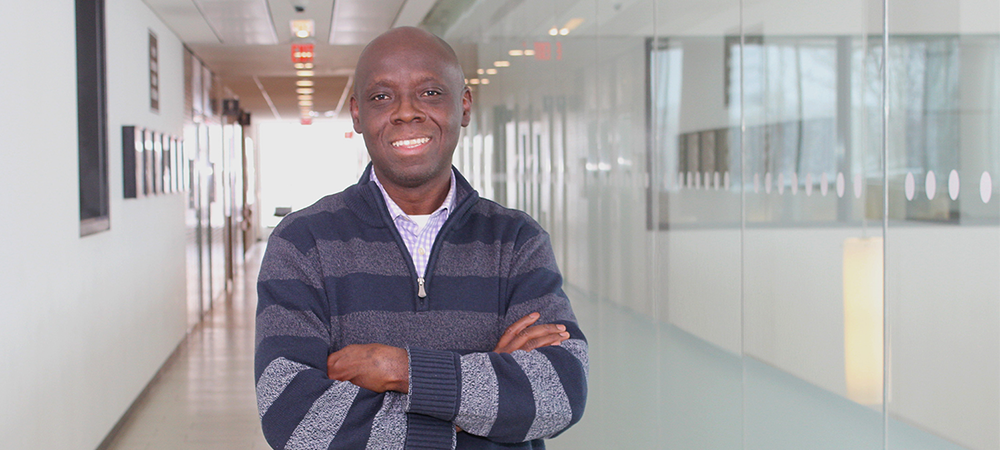
A male professor stands with his arms crossed in a hallway at Lakehead University

Research in Action: Making mathematics more meaningful through culturally responsive education

Women smiling wearing pink frame glasses and a blue flowered shirtMath is not a four-letter word. But to those with rampant math phobia, it certainly feels like it. Dr. Ruth Beatty, Associate Professor in the Faculty of Education at Lakehead University’s Orillia campus often sees students who actively dislike or even fear math. To her the problem isn’t with math itself, it’s with how the subject traditionally has been taught.

She started her research career looking at how children understand math and how educators can best teach the subject. She found that by looking beyond numbers and symbols and by taking a more holistic approach to what it means to think “mathematically” teachers could make math more accessible and fun.

Nine years ago, while teaching in the Master's program at Lakehead’s Thunder Bay campus, Beatty made a fascinating connection that has guided her work since then.

“Some of my students were First Nations educators or had been teaching in First Nation schools and we were talking about the disconnect between Indigenous culture and mathematics education in Ontario curriculum,” said Beatty. “I started visiting communities to learn more.”

While working with the Elders she realized that math is naturally embedded in Indigenous cultural practices like beadwork or birch-bark basket-, snowshoe- and moccasin-making.

“Take a beaded bracelet, for example,” says Beatty. “There's so much math in it. There is patterning and algebraic reasoning, there’s geometric transformations, proportional and spatial reasoning. There's number sense and numeration.”

With that cultural connection in mind, Beatty began a study in 2012 with the Algonquins of Pikwakanagan First Nation and teachers from the Renfrew County District School Board at a school with 20 per cent Indigenous students and 80 per cent non-Indigenous students. The project partnered community members, artists, Elders, and Knowledge Keepers with Indigenous and non-Indigenous educators to co-plan math instruction for Grade 3 and 6 students based on Algonquin loom beading. Cultural and language teachings were also integrated into the math unit.

The results were overwhelmingly positive. Indigenous students got to share their heritage and gain a sense of pride in their own knowledge systems that were valued on the same level as Western curriculum. Non-Indigenous students gained an appreciation of Indigenous culture. Most importantly, both groups learned exciting new math skills in a fun and engaging environment.

Perhaps the best endorsement of the math classes came from the students themselves. At the end of a session, with students working in their designs, making calculations to determine how many beads they would need, the teacher told them to wrap it up, math class was over. They looked up in surprise. Wait? What? Math? They had spent three hours absorbed in their learning with no idea they were, in fact, doing math.

Beatty and her team have collaborated with nine more communities around the province including The Chippewas of Rama First Nation and Simcoe County District School Board. Her work shows that math doesn’t belong to Eurocentric culture or scholars. Math is all around us and if taught in inventive, positive, and culturally responsive ways, no one needs to be afraid of it.

Faculty of Education professor Dr. Ruth Beatty and her school board partners received funding from the Social Sciences and Humanities Research Council of Canada, CanCode, and the Council of Ontario Directors of Education to carry out this important research.

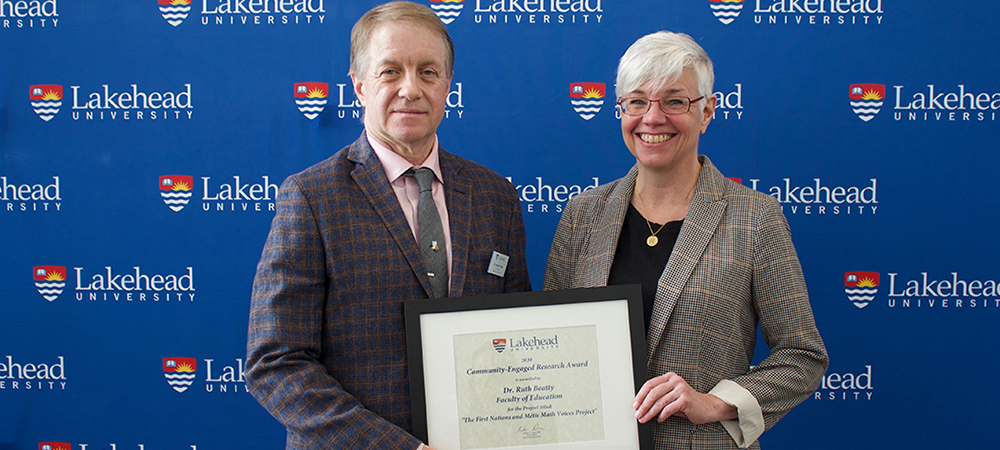
Man presents black framed award to woman during award ceremony

Research in Action: Research helping to improve the efficiency of motors

As the negative climate effects of fossil fuel-based energy sources become more apparent, governments, scientists and industries around the globe are putting more resources into developing sustainable and environmentally friendly alternatives.

Locally, Dr. Mohammad Nasir Uddin is contributing to the effort with his research, funded through Natural Sciences and Engineering Research Council of Canada (NSERC) Discovery Grants, on optimizing the efficiency of wind energy and electric motor drives.

A professor in the Department of Electrical Engineering at Lakehead University, Uddin and his graduate students are working on wind energy conversion systems to achieve maximum power extraction from the wind and maximum output from wind generators. They do this by creating intelligent algorithms that mimic the human brain by telling the system what to do in any given circumstance.

To illustrate what an algorithm is, Uddin gives the example of a commuter on the way to work in Toronto. “As she heads down the highway, her brain has planned out the shortest and fastest route. That’s an algorithm. Then she hears on the radio that there is an accident up ahead. Her brain takes that new information and creates an alternate route. That’s another algorithm.”

Uddin’s team has also developed control algorithms that improve the power quality and dynamic performance of wind generators by responding appropriately and quickly to unpredictable abnormal variations of wind speeds or power system fault conditions. Thanks to this kind of research the creation of a cost effective and sustainable wind energy system can be achieved.

Another area of Uddin’s research involves loss minimization in electric motors. “Fifty-five per cent of the total electric energy produced in the world is consumed by electric motors,” says Uddin. “If we use the algorithms to force the motor to follow certain conditions so that voltage and current give the minimum loss, then we can improve the overall efficiency of the system and achieve the best motor performance.”

Uddin has shared his findings in 228 papers that have published or accepted in refereed journals and conferences including 53 papers in IEEE Transactions which is considered the top ranking journal in his area of research. In 2010 he won the Lakehead University’s Distinguished Researcher Award.

Uddin’s impact in the field of Electrical Engineering goes beyond his own research. After more than 25 years of teaching and research experience at various universities in Canada, the United States, Bangladesh, Japan and Malaysia he has mentored and inspired many students. They include 50 highly qualified engineers (nine Ph.D., 24 Master’s, 14 Research Associates and three Postdoctoral fellows) and 82 undergraduate students. Most have gone on to work for companies like General Motors, Mercedes Benz, Rockwell Automation, AMEC, Caterpillar and Schneider Electric where they continue to develop optimization algorithms that improve efficiencies in motor drives used in transportation, robotics, automotive and oil industries.

Dr. Mohammed Nasir Uddin is a professor in the Department of Electrical Engineering at Lakehead University; Coordinator of the Electrical Engineering program under the Lakehead-Georgian Partnership; and the Director of the Renewable Energy, Power Systems and Drive Research Lab located in Barrie.

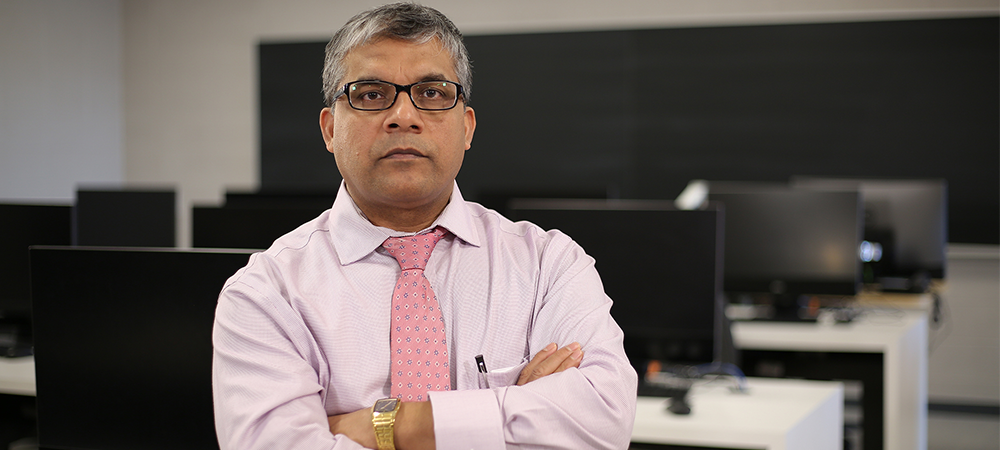
A man stands facing the camera in a computer lab

Lakehead University Innovation Awards

Proudly sponsored by:

IPED logo


The Office of Innovation, Partnerships and Economic Development (IPED) proudly sponsors the Lakehead Innovation Awards. Nominations for these awards open in November of each year and presented during the annual Research & Innovation Week celebrations.  

Pages

Subscribe to Innovation