



Why do we sometimes ignore our gut instincts?
Dr. Beth Visser Wants to Help People Escape Dangerous Situations
Content Warning: This story includes references to sexual violence.
Dr. Beth Visser is an acclaimed forensic psychologist whose work has led her down some dark paths.
Her previous research investigated individuals with narcissistic, Machiavellian, psychopathic, and other socially malevolent traits who manipulate, deceive, and exploit others.
Dr. Visser, who's also a psychology and interdisciplinary studies associate professor at Lakehead's Orillia campus, has now turned her attention in a different direction.
She wants to understand why women-identified victims and survivors of crime may find it difficult to remove themselves from risky or dangerous situations.
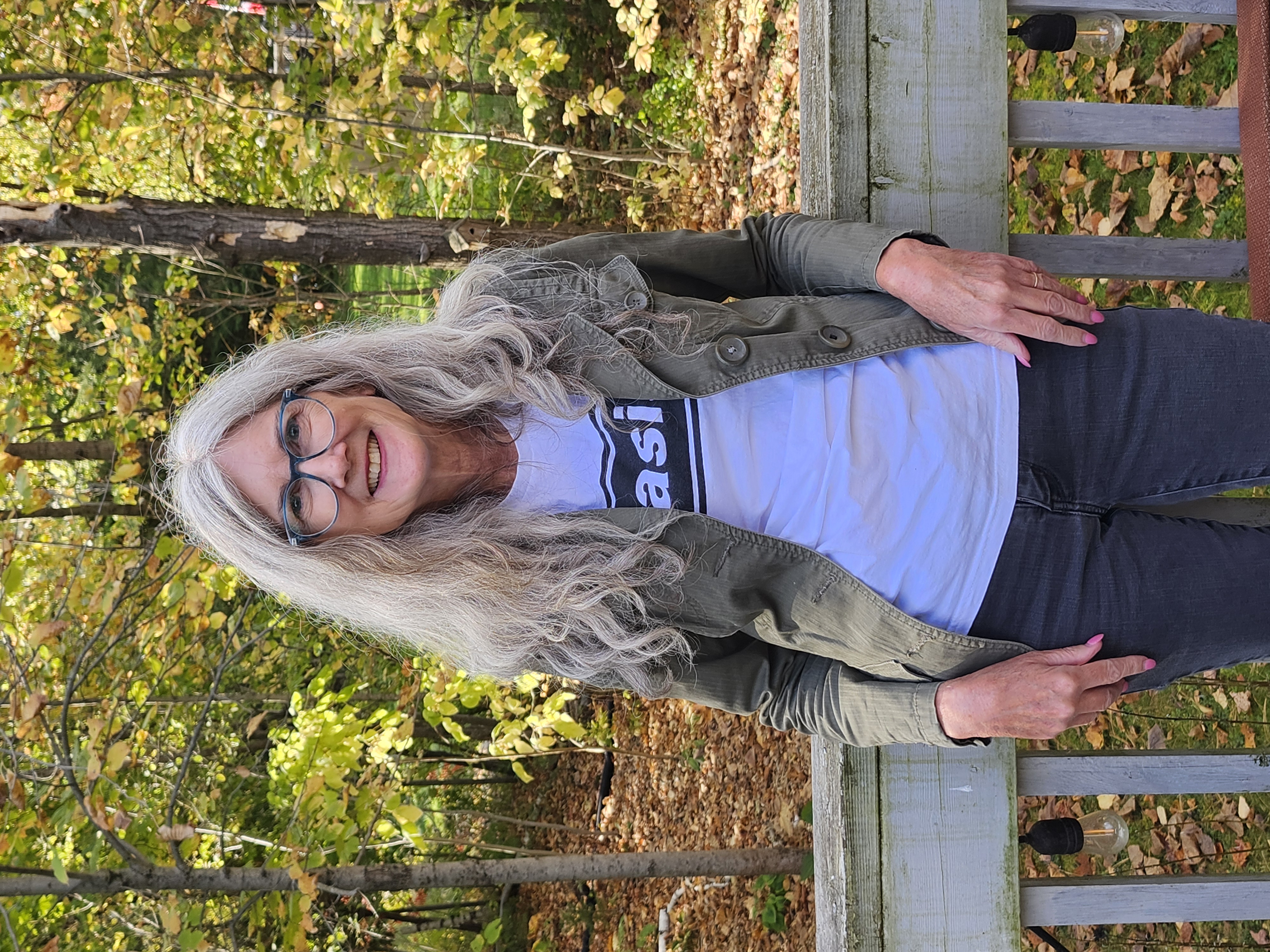
Dr. Visser is an associate editor of both the Journal of Research in Personality and Collabra: Psychology, as well as Lakehead's graduate program coordinator for psychological science. "I want to support talented junior researchers like Theresia Bedard who are doing important work that will have a positive impact on victims and survivors," she says.
Her work is timely, considering the disturbing headlines of the past few years—from the horrifying sexual assault case of Frenchwoman Gisèle Peliquot to the World Junior Hockey sexual abuse scandal to the ongoing Epstein files in the United States.
Dr. Visser's goal is to prevent people from being victimized by sharing her findings with the general public, organizations that support victims and survivors, and fellow researchers.
Victims Are Often Overlooked
"I would go to psychopathy conferences and meet with my peers every couple of years, and none of us were studying victims and survivors," she says.
After a victim's support group representative attended a recent conference and asked how this research relates to victims and survivors, Dr. Visser had an epiphany that has shifted the course of her work.
"I thought it might be more helpful to talk to people who've been exploited by somebody who's psychopathic because they'd probably have better insight into what happened than the psychopathic person," she explains.
"My collaborator Dr. Angela Book and I are exploring why people feel they can't leave a situation when they are afraid."
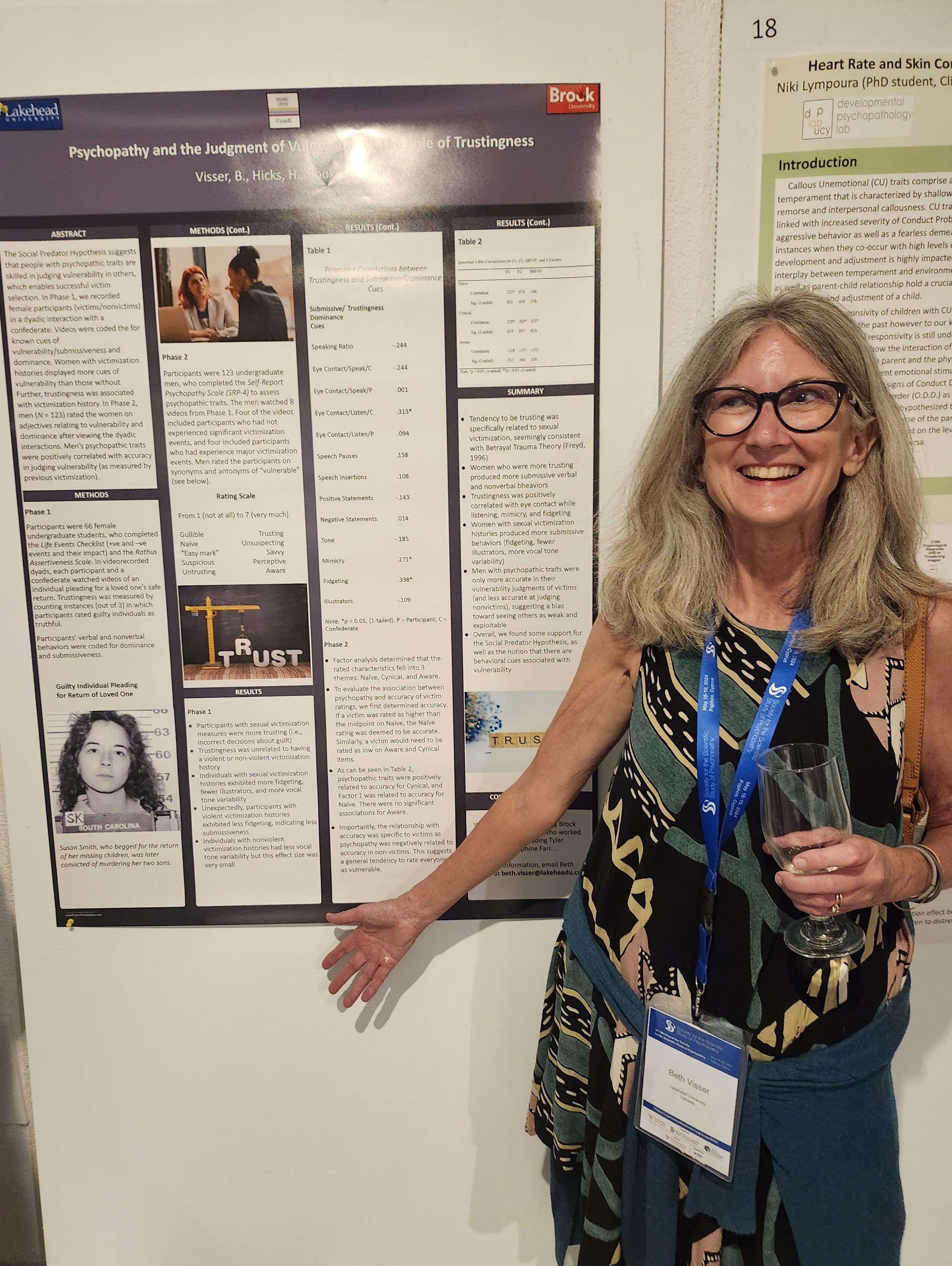 Dr. Visser is a research volunteer with the Aftermath: Surviving Psychopathy Foundation, which supports victims and survivors. One of her contributions is to provide accessible translations of research articles, and she will be sharing her own research findings with Aftermath.
In their latest research study, Dr. Book, a professor in psychology at Brock University, recalls buying a used musical instrument for her son from a man who told her that the instrument was in his camper van.
"She's a very experienced forensic psychologist, but she got in the van," Dr. Visser says. "Fortunately, she came away with a well-priced musical instrument, but she knew that, objectively, it was a terrible decision.
As women, we're peacemakers. We might have been taught to avoid conflict. What we've found in our research is that, for women, there's this variable called 'silencing the self' that was the strongest predictor for complying in unsafe situations."
Being Polite Can Leave You Powerless
Whether they get goosebumps or some other physiological reaction, women often know in their gut when something is a bad idea or situation.
Yet Dr. Visser says that they may shut down these signals because they want to avoid anything that will cause a confrontation.
"If you can't bring yourself to be rude when you're concerned about your personal safety, it puts you at even greater risk," she says.
Another complication Dr. Visser notes is that although society has changed somewhat since the #MeToo movement, many of the underlying systemic issues remain the same.
"When you listen to women who've testified and gone through the court process, it's still pretty harrowing."
Dr. Visser and her PhD student, Theresia Bedard, are conducting studies with open-ended questions to learn why people stay in dangerous circumstances or appear compliant.
"When we asked people, 'Have you ever been in a situation that you felt like you couldn't get out of?' almost 50 per cent of the women spontaneously responded with a story about some creepy guy.
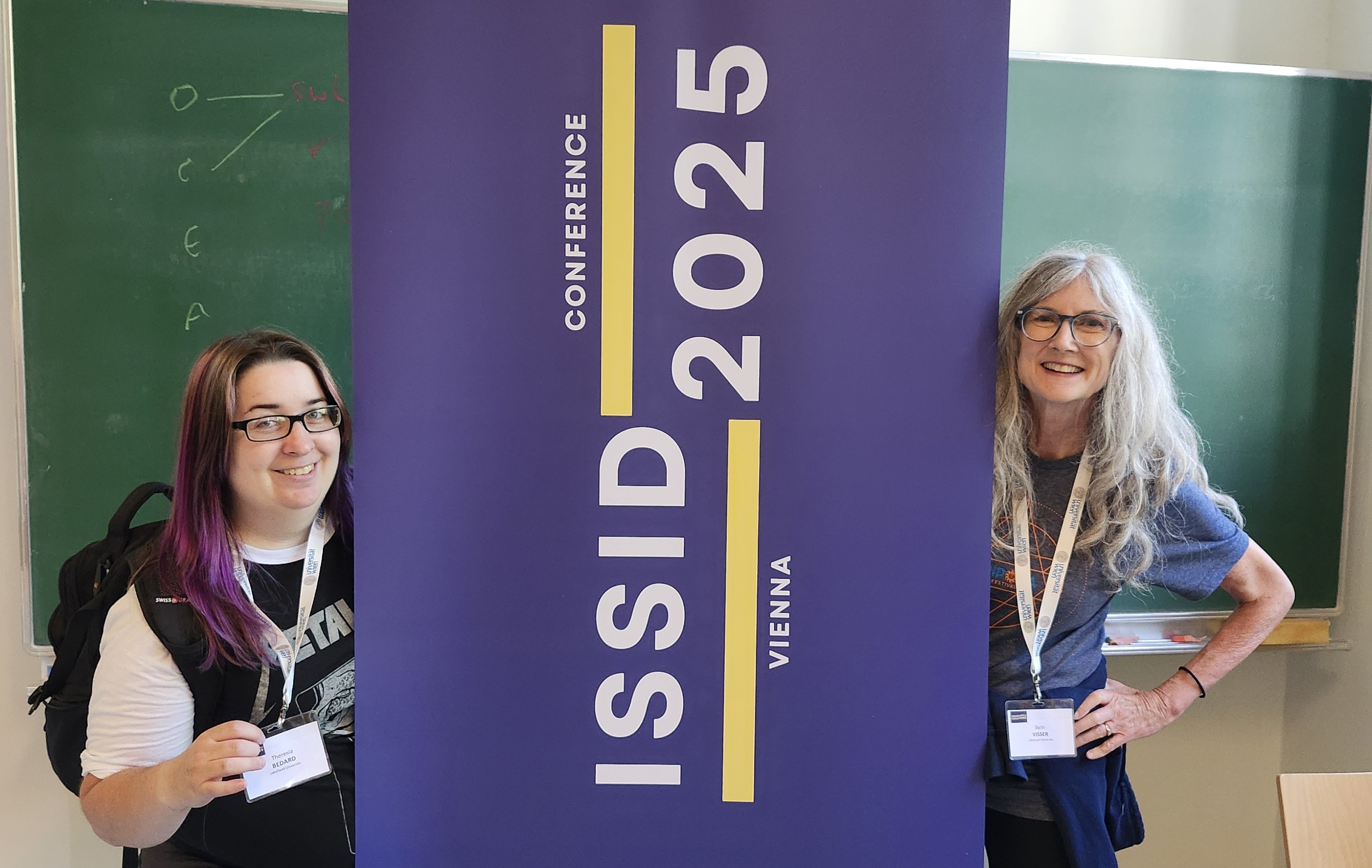
Dr. Visser (right) and her PhD student Theresia Bedard (left) present their research at the 2025 International Society for the Study of Individual Differences (ISSID) conference in Vienna. They also give public talks to spread awareness of their work. Recently, Dr. Visser spoke to the Psychological Association of Lakehead Students (PALS) and students in Lakehead's Humanities 101 program.
One thing we're learning is that as well as humans' fight, flight, and freeze responses, when faced with a threat, there's a fawning response.
People think, 'If I just make this person happy, they won't hurt me.'"
She's also looking at whether past childhood trauma makes an individual more likely to exhibit a fawning response.
"Maybe you're more likely to try and keep the peace," she says. "We know that previously victimized people are more likely to be victimized in the future."
This is exactly what Dr. Visser hopes her research can help change.
Dr. Visser's research is being made possible by a Social Sciences and Humanities Research Council (SSHRC) Insight grant.
