

Indigenous

Counsellor FAQ's

Thunder Bay campus Student Health and Wellness counsellors, Pat Hrabok, Trudy Kergon, and Irene Pugliese, took some time last week to answer some of the more commonly asked questions they receive from students. If you have questions for a counsellor feel free to book an appointment by emailing health@lakeheadu.ca or calling 807-343-8361 in Thunder Bay, or calling 705-330-4008 ext. 2116 or 2115 in Orillia. 

Talking to a Professor

What is normal when grieving

Looking for course accommodations

Dealing with loneliness during COVID-19

Supports during the pandemic

Dr. Tanya Kaefer and Co-Investigators Receive Grant for Research Addressing Achievement Gap in Reading Comprehension

Dr. Tanya Kaefer (Associate Professor, Thunder Bay) is a co-investigator on a research project that has been awarded a grant by the Inter-University Research Network.

The research project—entitled Vocabulary and Knowledge: Powerful Allies in Redressing the Achievement Gap in Reading Comprehension—focuses on increasing intentional vocabulary instruction as a means of closing academic achievement gaps for children in Nova Scotia who are from lower socio-economic status and/or minority linguistic backgrounds.

“Vocabulary knowledge predicts reading comprehension skills throughout schooling, as well as broader critical thinking skills, and high-school achievement. Unfortunately, these are also areas in which there are striking differences between children from impoverished backgrounds and those from more economically advantaged homes. Because knowledge is exponential, early development of knowledge is key to ensuring academic success for all children. These factors have made developing children’s vocabulary a crucial issue in education research,” Tanya explains.

In the study, Tanya and her co-investigators will examine the effectiveness of intentionally targeting students’ vocabulary learning in schools identified as serving a higher proportion of students from lower socio-economic status backgrounds. Grades 1 and 2 teachers and students from Nova Scotia classrooms will participate, with some classrooms employing targeted, intentional vocabulary-building approaches. Post-test learning, as it relates to students’ initial oral language and comprehension skills, will be used to determine the effectiveness in the targeted instructional strategies in addressing vocabulary underachievement.

The outcomes of this study are expected to contribute to our knowledge of teacher-friendly approaches to vocabulary instruction, to help close the achievement gap in reading comprehension.

Dr. Tanya Kaefer

Getting Connected

An individual’s wellbeing and sense of belonging are closely related. Without this feeling of belonging, individuals can feel isolated or lonely, which affects overall wellbeing. Making a connection with others can be especially hard when you are learning remotely.

Make use of your student union.

LUSU's centres provide a supportive and engaging community for students from all kinds of backgrounds. Find like-minded folks who share your experiences and work together to make the world a better place.

  • Aboriginal Awareness Centre

  • Gender Equity Centre

  • Sustainability Initiative

  • Food Bank

  • Pride Central

  • Multicultural Centre

Joining a student club is another opportunity to find others who have similar interests and pursuits as you. You’d be surprised how many clubs LUSU offers and if you don’t find one that piques your interests- you can create your own! 

Learn more about LUSU centres and clubs at LUSU Fest 2020 running this week!

Virtual Study Groups

  • Study groups were always a great way to practice and apply concepts you’re learning in class and to build communication and collaboration skills that are important in the workplace and they might even be more helpful when learning remotely. They create structure and routine for studying, keep you connected with other people, and provide opportunities to get questions answered—and help other students answer questions—outside of office hours.

  • First, you’ll need to find people. There are a number of ways to identify people interested in joining a study group:  

    • Ask your instructor if they’d be willing to post an announcement or start a discussion board thread to collect the names of students interested in joining a study group.  

    • Use discussion board, zoom chat, or other collaborative tools available in your course to find other students interested in forming a study group. 

  • There are many ways to meet with your study group. The best approach is likely to choose a format that all group members are familiar with (Zoom and Google Meet are easily accessed using your Lakehead email account). 

  • Check out this article for more tips on organized a virtual study group. 

Campus Rec at home

  • Campus Rec might not be able to provide their traditional intramurals but you can still compete against fellow Thunderwolves via their online intramurals. You can also join their live and on-demand fitness classes, and Strava activity groups to keep active and motivated.

Explore your new community

Not every connection you make needs to be with someone at Lakehead, getting more comfortable in your city also bolsters your social well-being. Use Facebook or Reddit to find groups with similar interests in your area. If you are living on or near campus, check out the WellU Maps to find out more about what available in the area. 


-Lindsey Wachter, R. Kin

Health and Wellness Promoter

laptop with zoom open

Discussing COVID Boundaries

Socializing during the pandemic is complicated- everyone has their own comfort levels with what they are willing to do. It can be difficult if you are not on the same page as friends and family (more so if you live together). The more you can communicate what you expect and what you are comfortable with, the more you will actually get what you want.

When discussing comfort levels with friends and housemates, it can be hard to know what to ask. Below are some questions you can bring up during those conversations.

For Housemates:

  • How are you feeling today?
  • Is it okay if my friend comes over?
  • How many people are you comfortable having over?
  • What should our cleaning routine look like?
  • What is your class schedule?

Going to a Friend's House

  • Should I bring a mask?
  • How many people will be there?
  • Should I bring my own food/drinks?
  • Will we be sitting outside or inside?
  • Who do you live with?

When you invite someone over

  • Do you mind if we stay outside?
  • Can you bring your own _______ (food, drinks, mask)?
  • _________ is going to be here too. Are you comfortable being around other people and wearing a mask?
  • Please wash your hands once you come in. 

Ultimately you cannot control others’ behaviour and you might not be able to agree, you can respect each other's boundaries and be creative with how you can socialize. 

How to Have COVID Conversations

The Balancing Act of Being a Student and a Parent in a Pandemic

Balancing school and parenting is challenging at the best of times, but back to school season during a pandemic is a whole other level of stress. It’s normal to be anxious or feel stressed about how this year will go and while there may not be a perfect solution to excel as a student-parent in the current climate, here are some tips to help:

Set a schedule. Establishing some routines will help you and your children feel more settled. This could include early morning writing time, working during nap times, or studying after children have gone to bed. If your children are older, maybe everyone can have a regular quiet time for studying, reading, listening to music, watching a movie, etc. Consider taking some time on the weekend to plan activities or crafts for small kids that will keep them busy for 30 minutes at a time during the week.

Connect with other students with families. It can be hard for classmates without children to understand the struggles you are having. Reach out to others in your courses or program who are juggling similar priorities right now. They might be able to share the challenges and successes they have had.

Make a study space for yourself where you can leave all your work or school materials. Pinterest has many suggestions on how to create a home office in unconventional spaces. Studying and attending remote lectures will be easier if you don’t have to pack and unpack your computer and books every time.

If you are parenting with a partner, plan how you will share responsibilities so that you have time to dedicate to your schoolwork. If your children are older, discuss how they can help around the house too. Kids may be more committed to a plan that they help make. The plan will look different for every family, but having those conversations sooner than later can be helpful.

If parenting alone, communication is still important. If your kids are old enough, talk to them about how they can help you by giving you some quiet time when you need it. Reassure them that you will spend time with them after you complete your work. For younger kids, squeeze in your own school work during naps or find age-appropriate activities that allow you to work for short periods of time. Be patient- you might not find the right tactic right away and it might take a while to figure out what works best for you and your kids.

Do your best to create and assert healthy boundaries. While this may not always be possible with children who are younger or have complex needs, do what you can to create boundaries where you can. Explore creative solutions to help carve out time for yourself- not just for school work but also to exercise, get outside or to do something you enjoy, remember that self-care isn’t selfish.

Don’t forget this is stressful for your children too. Going back to school is a big change for them as well but there are a lot of resources available to help them deal with the transition:

Give Yourself a Break. Even if you follow all these tips, there will probably be some days where you feel burnt out and overwhelmed. While you may try your best to not take your frustrations out on your children, there may be times where you lose your temper or raise your voice. Although you may be using the weekend to study or get work done, don’t forget to also plan some family time to enjoy each other’s company. At the end of the day, remember: you love each other and you’re all on the same team.

Know that you are not alone. There are many students, staff and faculty who are experiencing the same challenges. If you are feeling distressed or overwhelmed, remember that you have support available to you.


-Lindsey Wacher, R.Kin, MSc, Health and Wellness Promoter

Dr. Pauline Sameshima Elected to College of Scholars of the Royal Society of Canada

Congratulations to Dr. Pauline Sameshima (Professor and Canada Research Chair in Arts Integrated Studies) for being elected to the College of Scholars of the Royal Society of Canada. This is a tremendous achievement—recognition by the Royal Society of Canada is the highest honour an individual can achieve in the Arts, Social Sciences and Sciences. Pauline was recognized on the basis of her innovative work in curriculum theory, poetic inquiry, teaching, research dissemination, and civic engagement development.

Founded in 1882, the Royal Society of Canada advises the government and the larger society, recognizes excellence, and promotes a culture of knowledge and innovation in Canada and with other national academies around the world.

Announcing the WellU Podcast

We’re happy to announce the launch of a new podcast created in partnership with Compass North! 

Each episode of WellU Podcast will give an in-depth look at a health and wellness topic relevant to Lakehead Students by a Compass North Student member. 

The first episode addresses "Virtual Burnout"- something we have probably all experienced in the past few months with more and more of our lives happening online. 3rd-year medical student Felicia Lotsios breaks down what virtual burnout is and what you can do to help deal with it. Check it out on Spotify- https://cutt.ly/wellupod


Introducing the wellU podcast in partnership with compass North

Barb Parker and Ryan McVeigh have been recognized by the Senate Teaching and Learning Committee.

Barb Parker and Ryan McVeigh have been recognized by the Senate Teaching and Learning Committee for their tireless work and undying devotion to teaching at Lakehead!

 
** Ryan has received the Contribution to Teaching Award (2019-2020)
 
** Barb has received the Teaching Innovation Award (2020)
 
Please join us in extending a hearty congrats to our friends and colleagues.

World Suicide Prevention Day

September 10th marks World Suicide Prevention Day. Death by suicide is the second leading cause of death among Canadians aged 15-24 (Statistics Canada, 2017) and the most recent NCHA survey found that 16% of Canadian post-secondary students had seriously considered suicide in the past 12 months. 

This year, debunking the myths surrounding suicide and bring an increased awareness of signs and symptoms might be more important than ever. The pandemic has caused stress and disruption for everyone and according to a nationwide survey released by the CMHA and UBC, this has caused pronounced mental health concerns- including suicidal thoughts and feelings- especially among: parents, those living with mental illness or mental health issues, Indigenous people, those with a disability or individuals in the LGBTQ+ community. 

It is important to remember that individuals thinking about killing themselves do not want to die, they want to end their suffering. These individuals are feeling helpless and hopeless. It is also important to remember that suicide does not come out of nowhere, warning signs—verbally or behaviorally—precede most suicides. Therefore, it’s important to learn and understand the warnings signs associated with suicide.

The American Association of Suicidology has a mnemonic to remember warning signs frequently experienced or reported within the last few months before a suicide, or suicide attempt: IS PATH WARM? The specific warning signs are: 

I – Ideation. Expressed or communicated suicidal ideation threatening to hurt or kill themself or having thoughts of doing so

S – Substance Abuse. Increased alcohol or drug use

P – Purposelessness. No reason for living; no sense of purpose in life, start giving things away because there’s no purpose in keeping anything, no reason to maintain their hygiene

A – Anxiety. Anxiety, agitation, unable to sleep or sleeping all the time, difficulty concentrating 

T – Trapped. Like there’s no way out and things will never get better

H – Hopelessness. No future orientation 

W – Withdrawal.  Isolating from friends, family and society.

A – Anger. Rage, uncontrolled anger, seeking revenge, irritable 

R – Recklessness. Engaging in high-risk activities, seemingly without thinking, impulsive behavior

M – Mood Changes.  Dramatic mood changes, flat affect, depressed mood, acting out of character

Signs that someone is at more immediate risk of suicide might include:

  • Threatening to hurt or kill themselves, or talking of wanting to hurt or kill themself; and/or

  • Looking for ways to kill themself by seeking access to firearms, available pills, or other means; and/or

  • Talking or writing about death, dying or suicide, when these actions are out of the ordinary.

If you think someone is thinking about suicide- ask them. There is a misconception that bringing up suicide can put the idea into someone’s head, but in reality, talking calmly about suicide, without showing fear or making judgments, can bring relief to someone who is feeling isolated. A willingness to listen shows sincere concern; encouraging someone to speak about their suicidal feelings can reduce the risk of an attempt. If you aren’t sure how to start a conversation with someone who appears to be struggling, check out Jack.org’s Be There golden rules. If they are not immediately at risk, you can encourage them to talk to a counsellor or someone they trust and continue to check in on them.

If you or someone else is in crisis you can:

  • Call 9-1-1.
    • For Thunder Bay Campus security, call 807-343-8911.
    • For Orillia Campus Security, call 705-330-4008 ext. 3912 


  • Call Crisis Response Services, a 24/7 crisis line staffed by Canadian Mental Health Association
    • Thunder Bay- 807-346-8282
    • Orillia- 705-728-5044


  • Not on either campus?
    • National Suicide Prevention Lifeline: 1-800-273-8255
    • Suicide Hotlines Across the World 
    • GOOD2TALK post-secondary crisis line- 1-866-925-5454
    • Crisis Text Line powered by Kids Help Phone- a free, confidential texting service, available 24/7/365. By texting GOOD2TALKON to 686868, post-secondary students in Ontario can be connected to a trained volunteer Crisis Responder who is there to listen and support students with any issue they’re facing.
    • Crisis Service Canada: www.crisisservicescanada.ca
    • First Nations and Inuit Hope for Wellness Help Line: 1-855-242-3310
    • Service is available in Cree, Ojibway, Inuktitut, English and French.
    • Trans Lifeline: 1-(877) 330-6366

To learn more about how talking about suicide can make a difference join the Canadian Association of Suicide Prevention webinar, it begins at 7 pm on Sept. 10 and can be found at https://suicideprevention.ca/event-3956222.

If you aren’t confident that you could support someone who is having suicidal thoughts and feelings- there is training available through Livingworks. 


Man comforting man another man with head in hands

Zehbe Research Group Steps Up Work into HPV-Associated Cancers and Treatments

Dr. Ingeborg Zehbe      

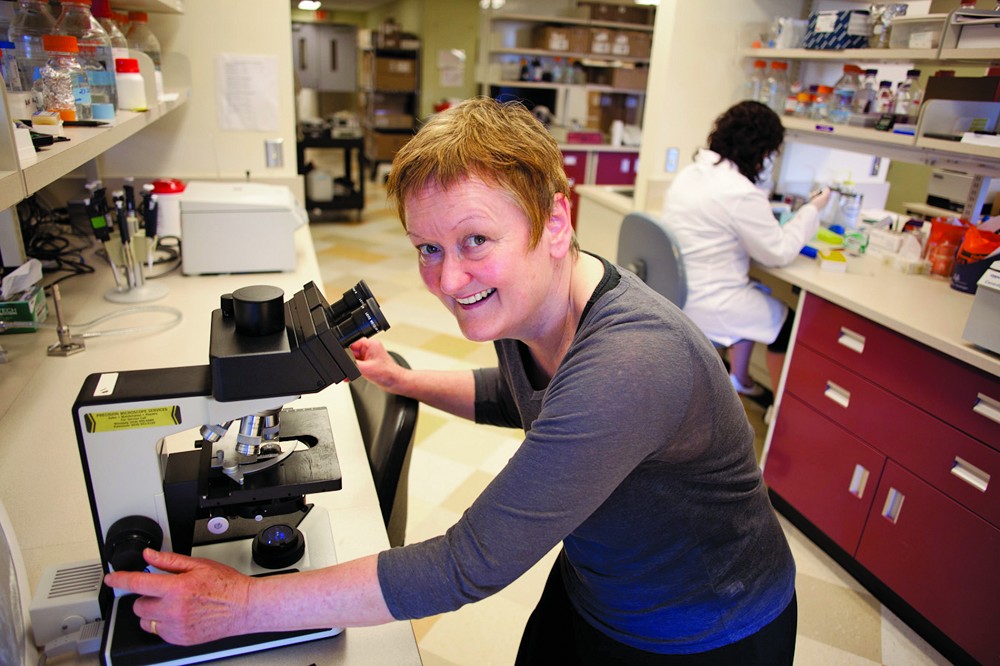
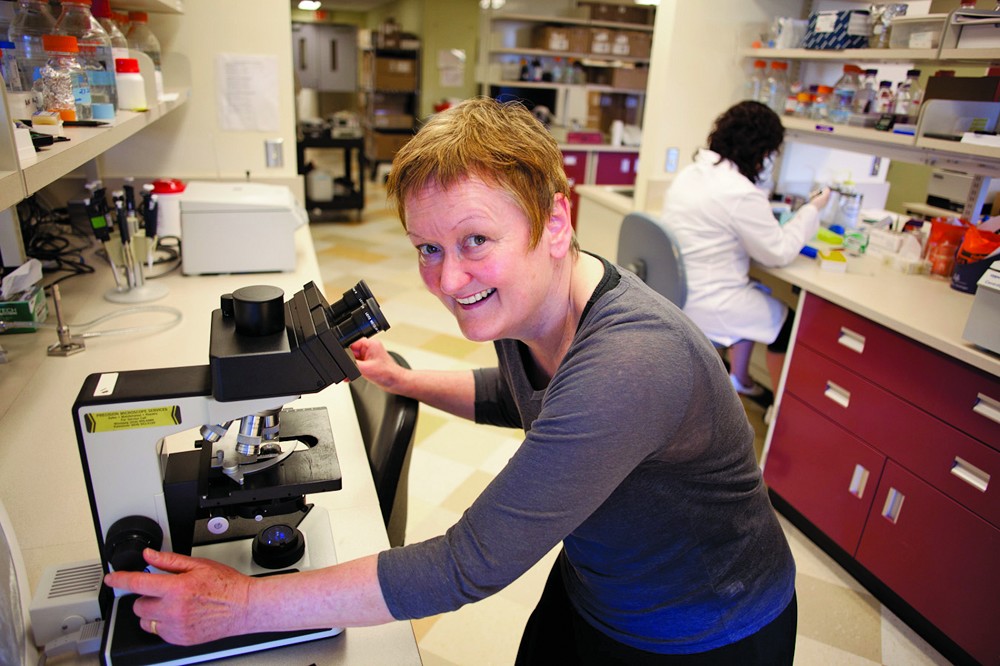
Dr. Ingeborg Zehbe is a cancer biologist and researcher in the field of cancers related to human papillomavirus (HPV). photo credit: Zehbe Research Group; Dr. Guillem Dayer, a post-doctoral fellow, is investigating the use of antibodies against cervical cancer; Graduate student Mehran Masoom assisted on a project identifying proteins in HPV-infected cells.

By Julio Heleno Gomes

 A team of scientists and students affiliated with Lakehead University, the Thunder Bay Regional Health Sciences Centre (TBRHSC) and the Northern Ontario School of Medicine has been conducting research related to certain types of cancers springing from a common infection. The efforts of members of the Zehbe Research Group has earned them a sterling reputation.

“My collaborations with other scientists has carved out a research niche that is unique in Canada and that has been well-rewarded with success and awards in the very competitive research landscape,” says Dr. Ingeborg Zehbe, a cancer biologist and head of the Zehbe Research Group.

Zehbe is a Lakehead University Thunder Bay Regional Health Research Institute Research Chair and an associate professor with the Northern Ontario School of Medicine. The Zehbe Research Group focuses on cancers related to human papillomavirus (HPV), a sexually transmitted infection that can linger in men and women, potentially leading to cancers such as head and neck, cervical and anal. In Northwestern Ontario, for example, there is a significantly higher incidence of cervical cancer, particularly in First Nations communities.

“Indigenous women have a higher risk of developing cervical cancer,” Zehbe says, noting rates can be two to 20 times the national average. The reasons for that discrepancy are due to geographical barriers, limited access to care, and cultural sensitivities.

“There are many logistical issues, but also historical trauma and lack of awareness,” Zehbe says. “It’s really three things — logistics, education and history — that leads to the fact that Indigenous women in our area aren’t screened as much.”

To that end, in 2012 Zehbe and a multi-disciplinary team launched the Anishnaabek Cervical Cancer Screening Study (accssfn.com), which encouraged screening among women from 10 First Nations in the region. By working with women and health-care providers in these communities, the team developed a culturally safe self-testing method, increasing cervical cancer screening for Indigenous women.

Zehbe joined the Thunder Bay Regional Health Research Institute in 2009, having completed post-doctoral research in Germany on HPV as a cancer-causing agent. Her work on HPV screening and prevention involves experts in fields such as physics, engineering and chemistry, focusing on early detection, treatment and follow-up.

“The key is our interdisciplinary approaches,” Zehbe says of those efforts.

The current complement at the Zehbe Research Group consists of graduate students, PhD candidates and post-doctoral fellows. One of them is Dr. Guillem Dayer, who grew up in Africa and became interested in the interaction of different parasites that cause infectious diseases such as malaria and giardiasis. Since arriving in Thunder Bay two years ago he’s been investigating the use of small antibodies to target a specific viral protein that is a main contributor to the development of cervical cancer.

“Understanding protein interactions and functions is essential to target them for the development of therapeutics,” Dayer says. “For my post-doctoral fellowship, I wanted to apply my knowledge in protein interactions to work more specifically on targeting them using antibodies. Dr. Zehbe gave me the opportunity to perform such research in her lab.”

Mehran Masoom, who recently obtained his Master’s degree in Biology, assisted on this project. His role was to develop a method to isolate certain proteins through mass spectrometry analysis.

“This took quite some time but I did succeed in making a protocol that worked and I was able to identify numerous proteins,” Masoom explains.

He’s currently working on confirming the presence of each identified interacting protein within the HPV-infected cells.

“If these pathways or mechanisms are able to be targeted, it can open a new possibility to develop potential therapeutics,” he adds.

Recent members of the Zehbe Research Group are: Robert Jackson and Melissa Togtema (PhDs in biotechnology); Jordan Lukacs (researcher); Statton Eade (research assistant); Alejandro Ortigas Vásquez (bioinformatics researcher); and fourth-year student Simran Bedi.

Zehbe has mentored more than 50 students at all levels and secured more than $2-million in funding, from, among others, the Natural Sciences and Engineering Research Council of Canada, the Canadian Institutes of Health Research, the Canadian Cancer Society, the Ontario Institute for Cancer Research, the Northern Ontario Heritage Fund Corp., and the Northern Cancer Research Foundation.

published in the Chronicle Journal August 31, 2020

Zehbe Research Group Steps Up Work into HPV-Associated Cancers and Treatments

Pages

Subscribe to Indigenous