Research

High-impact clinical and sustainability research projects awarded with CFI grants

November 17, 2023 – Thunder Bay, Ont.

The Canadian Foundation for Innovation (CFI) has awarded a total of $811,056 for six research projects at Lakehead University through the John R. Evans Leaders Fund (JELF). The infrastructure grants will supply researchers with the equipment and space needed to advance holistic forest management, evaluate climate change, and further develop low-dose digital x-ray technology.

Dr. Nathan Basiliko, professor in the Faculty of Natural Resources Management, and co-applicants and colleagues Dr. Seung-Il Lee and Dr. Ashley Thomson, have received $174,996 to study how ecosystems in Canada’s Boreal environments are responding to interrelated stressors, including climate change and industrial forestry.

The team – Basiliko a soil scientist, Thomson a tree geneticist, Lee a forest entomologist, alongside Lakehead undergraduate and graduate students – will look at soil microbial communities, invertebrates, and tree populations to understand how they respond to climate change and other stressors such as invasive species and demand for forest products.

“The exciting part is that we’re using a transdisciplinary approach to study how different parts of forest ecosystems interact and that’s key to understanding how forests function,” explains Dr. Basiliko. “This project will expose Lakehead students to big picture, real-world contexts of forestry management and forest disturbances.”

The research will contribute to knowledge that will guide future forest management with a more holistic lens of biodiversity and help understand mechanisms behind northern ecosystem feedbacks to climate change and other contemporary environmental stressors.

Dr. Alla Reznik, professor in the Department of Physics and Tier 1 Canada Research Chair in Physics of Radiation Medical Imaging, has received $124,574 to support the crucial stages in scaling up of a new photoconductor material for digital X-ray imaging systems.

An evaluation of the photoconductive properties of amorphous Lead Oxide (a-PbO) – the material developed by Dr. Reznik’s group at Lakehead’s Rezniklab – as an important component of X-ray medical imaging detectors offers high-speed imaging and lowering patient exposure to radiation for a variety of diagnostic and image-guided therapeutic procedures.

Funding received through CFI JELF will enable the Rezniklab to optimize the a-PbO technology and fabricate and evaluate full-scale detector prototypes with the goal of developing detectors for fluoroscopic applications used in cardiac intervention and 3D mammography tomosynthesis.

“This is an important scientific and engineering accomplishment in the continuing development of X-ray imaging systems,” said Dr. Reznik. “It will lower the barrier towards harm-free X-ray imaging to the benefit of healthcare in Canada and worldwide.”

Dr. Adam Algar, associate professor in the Department of Biology, has received $119,591 for a five-year project that will look at how climate change and land cover change affect the ecology and evolution of species. Using amphibians, specifically gray tree frogs, Dr. Algar and his research team of graduate and undergraduate students will use lab experiments, field studies, remote-sensing and data modelling to shed light on the future of biodiversity in Canada and worldwide.

“I’m interested in what limits species distributions and ranges, how they survive in their environment, and how they respond when those environments change,” said Dr. Algar. “Northwestern Ontario is the most extreme environment where species like the gray tree frog can survive so it’s a great natural laboratory to study the limits of their physiology and their ecology and how those might evolve or how they may adjust their behaviour to cope with future changes.”

From there Algar and his research team will build data models where they can expand what’s happening now at the local level to try and predict how species will shift its range across all of North America in response to climate change or forest change.

“Lakehead researchers continue to tackle issues that impact people, our communities and the planet,” said Dr. Andrew P. Dean, Vice-President, Research and Innovation. “With support from CFI, our research teams will have access to state-of-the-art equipment that will help them facilitate high quality research. We thank CFI for their continued support.”

Canadian Foundation for Innovation, John R. Evans Leaders Fund (JELF) Awards 2023

Total funding: $811,056

  • Dr. Adam Algar, Department of Biology, "Laboratory for Physiological Macroecology", $119,591
  • Drs. Nathan Basiliko, Seung-Il Lee and Ashley Thomson, Faculty of Natural Resources Management, "Research Infrastructure for Multitrophic Studies of Boreal Forest Landscapes", $174,996
  • Dr. Gautam Das, Department of Physics, "Microscope, and Trace Gas Analyzers (Nitrous Oxide and Ammonia) for Photonics and Bio-Photonics Research Facilities", $166,892
  • Dr. Apparao Dekka, Department of Electrical Engineering, "Design and Development of Powertrain Technologies for Heavy-duty Electric Transportation Applications", $100,017
  • Dr. Ebrahim Rezaei, Department of Chemical Engineering, "Laboratory for Climate Change Mitigation and Air Pollution Control", $124,986
  • Dr. Alla Reznik, Department of Physics and Tier 1 Canada Research Chair in Physics of Radiation Medical Imaging, Scientist, Thunder Bay Regional Health Research Institute, "Low-dose Direct Conversion Radiation Medical Imaging Detectors", $124,574 


-30-


Media: For more information or interviews, please contact Jaclyn Bucik, Media, Communications and Marketing Associate, at 705-330-4010 ext. 2014 or mediarelations@lakeheadu.ca.

Lakehead University is a fully comprehensive university with approximately 9,700 full-time equivalent students and over 2,000 faculty and staff at two campuses in Orillia and Thunder Bay, Ontario. Lakehead has nine faculties, including Business Administration, Education, Engineering, Graduate Studies, Health & Behavioural Sciences, Law, Natural Resources Management, Science & Environmental Studies, and Social Sciences & Humanities. Lakehead University’s achievements have been recognized nationally and internationally, including being ranked in the top half of Times Higher Education's 2023 World Universities Rankings for the fourth consecutive year, and the number one university in the world with fewer than 9,000 students in THE’s 2023 Impact Rankings (which assesses institutions against the United Nations’ 17 Sustainable Development Goals). Visit www.lakeheadu.ca.
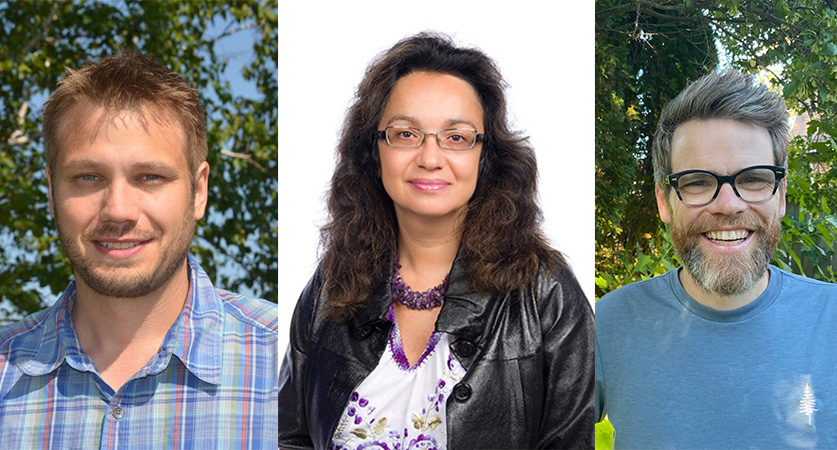
Nathan Basiliko Alla Reznik and Adam Algar

Doctoral student recipient of 2023 Women’s Health Scholars Award

July 31, 2023 – Thunder Bay, Ont.

As a growing number of women across Canada and the United States are choosing to not have children, Erika Puiras’ research aims to shed light on the potential mental health consequences imposed by the stigma associated with being “childfree”.

Erika PuirasPuiras, a doctoral student in the clinical psychology program at Lakehead University, has been recognized for this work with the 2023 Ontario Women’s Health Scholars award, which recognizes ground-breaking women’s health research taking place across Ontario universities.

“It was a bit jaw-dropping to receive this award,” said Puiras, who is one of 10 university scholars receiving this year’s scholarship. “It shows that people are seeing the merit in what we’re doing.”

As part of her dissertation, Puiras is studying the experiences of intentionally childfree women and how stigma, including negative societal messages and discrimination, ultimately affects their mental health and overall wellbeing.

Under the supervision of Dr. Dwight Mazmanian, Professor in the Department of Psychology, she will explore whether childfree women experience self-stigma and how stigma influences their help-seeking behaviour and trust in health-care systems that have historically stigmatized this population.

“For the first-time, both as a researcher and a person – especially a twenty-something woman – I’m seeing a lot of the stigma that gets levelled at people, particularly women in a specific age range, around the decision to not have children,” explained Puiras. “Between 20 and 35, even 40, is when you start to experience the brunt of the stigma in your personal life, people asking maybe a lot of intrusive but well-meaning questions. And, sometimes people are understanding and other times there is a lot of stigma that comes out [in questions and comments].”

“At some point you might start to internalize that and believe these negative perceptions and stereotypes about yourself,” she added.

Over the next year, Puiras hopes to engage with over 1,000 childfree women across Canada and the United States through questionnaires and in-depth interviews to learn more about their journey, hear about the stigma they’ve experienced and how it has impacted them as individuals.

“I’ve had a lot of feedback already from some of the women participating in this research saying, ‘this is the first time I’ve ever seen a survey that’s represented who I am’,” Puiras stated. “It’s one of those things that was a leap into the unknown, then we started doing the research and came to the realization that what we’re doing is resonating with people.”

“If there’s one takeaway from the research we’ve completed so far, the message from childfree women is: our worth as people and our worth as women is not based on our decision to have children.”

The annual Women’s Health Scholars Awards are funded by the Ontario government and administered by the Council of Ontario Universities.

-30-

Media: For more information or interviews, please contact Jaclyn Bucik, Media, Communications and Marketing Associate, at 705-330-4010 ext. 2014 or mediarelations@lakeheadu.ca.

Lakehead University is a fully comprehensive university with approximately 9,700 full-time equivalent students and over 2,000 faculty and staff at two campuses in Orillia and Thunder Bay, Ontario. Lakehead has nine faculties, including Business Administration, Education, Engineering, Graduate Studies, Health & Behavioural Sciences, Law, Natural Resources Management, Science & Environmental Studies, and Social Sciences & Humanities. Lakehead University’s achievements have been recognized nationally and internationally, including being ranked in the top half of Times Higher Education's 2023 World Universities Rankings for the fourth consecutive year, and the number one university in the world with fewer than 9,000 students in THE’s 2023 Impact Rankings (which assesses institutions against the United Nations’ 17 Sustainable Development Goals). Visit www.lakeheadu.ca.

Lakehead University and Shaw Spotlight announce new research talk show

photo

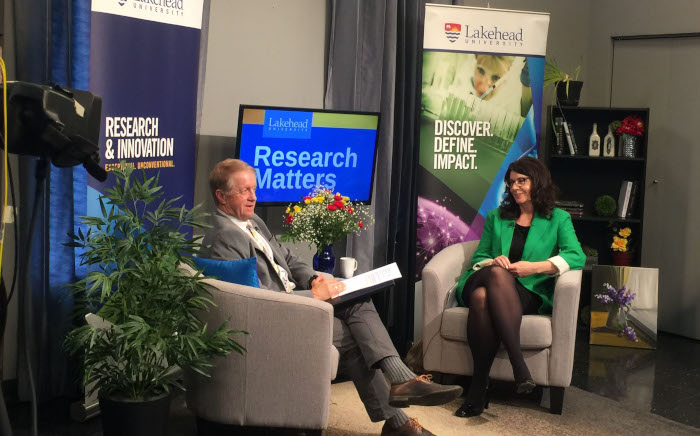
Dr. Andrew P. Dean, Vice-President of Research and Innovation, speaks with Dr. Kathy
Sanderson, Associate Professor in the Faculty of Business Administration, during a taping
of Research Matters.

July 26, 2022 – Thunder Bay, Ont.

Lakehead University is partnering with Shaw Spotlight on a new Community Link television program that will connect the public with university researchers.

Research Matters, a monthly 30-minute talk show, will be hosted by Lakehead's Dr. Andrew P. Dean, Vice-President of Research and Innovation, and have university researchers share their journeys and research outcomes with the public.

"Community-engaged research is an important priority for Lakehead University," said Dr. Dean. "Our faculty and student researchers are often the ones behind the scenes innovating and discovering and making meaningful contributions towards our communities and regions. This series will allow us to raise their profile within the community and publicly share their research's impact beyond the University's walls. We are grateful to Shaw for its support of this programming."

The program will feature interviews with Lakehead researchers from a broad spectrum of disciplines – from natural sciences, engineering, and health to social sciences and humanities. Through conversation, the show will examine the context of research, explore community connections and industry partners, and delve into the relevance and potential impact on society from a regional, national, and international perspective.

Research Matters will be accessible to viewers in Thunder Bay, Atikokan, Fort Frances, Nipigon, and Terrace Bay on Shaw Spotlight channel 10 and can be seen Monday to Friday at 9 am, 2 pm, and 8 pm.

The series is streaming on Lakehead's YouTube channel.

Funded by Shaw Communications Inc., Shaw Spotlight supports community members, local groups and volunteers to create programming and establish a forum for the sharing of locally relevant stories and information. Our passionate local producers bring to life compelling human-interest stories from their communities in diverse short-form documentaries.

Shaw Spotlight supports individuals and groups within our communities to produce content that keeps viewers connected with coverage of local events, festivals, sports and more, and offers opportunities for individuals interested in video production to benefit from training and participate as volunteers.

More information about Shaw Spotlight can be found at shawspotlight.ca

– 30 –


Media: For more information or interviews, please contact Jaclyn Bucik, Media, Communications and Marketing Associate, at 705-330-4010 ext. 2014 or mediarelations@lakeheadu.ca.

Lakehead University is a fully comprehensive university with approximately 9,700 full-time equivalent students and over 2,000 faculty and staff at two campuses in Orillia and Thunder Bay, Ontario. Lakehead has nine faculties, including Business Administration, Education, Engineering, Graduate Studies, Health & Behavioural Sciences, Law, Natural Resources Management, Science & Environmental Studies, and Social Sciences & Humanities. Lakehead University's achievements have been recognized nationally and internationally, including being ranked, once again, among Canada's Top 10 primarily undergraduate universities in Maclean's 2021 University Rankings; as well as included in the top half of Times Higher Education's 2022 World Universities Rankings for the third consecutive year, and the number one university in the world with fewer than 10,000 students in THE's 2022 Impact Rankings (which assesses institutions against the United Nations' 17 Sustainable Development Goals). Visit www.lakeheadu.ca.

Recent books by Dr. Pauline Sameshima win an award and an honourable mention

Two books published last year by Dr. Pauline Sameshima (Professor and Canada Research Chair in Arts Integrated Studies) have been recognized by the Society of Professors of Education — with one winning an Outstanding Book Award and the other, an Outstanding Book Award Honourable Mention.

Parallaxic Praxis: Multimodal Interdisciplinary Pedagogical Research Design, which Pauline co-authored with Dr. Patricia Maarhuis (Washington State University) and Dr. Sean Wiebe (University of Prince Edward Island) was awarded the 2020 Society of Professors of Education Outstanding Book Award. This book outlines the extensive research possibilities of the “parallaxic praxis” framework for interdisciplinary partnerships, cross-sector collaborations, and scholars undertaking research projects in social justice, community engagement, teacher education, Indigenous research, and health and wellness.

Ma: Materiality in Teaching and Learning was awarded a 2020 Society of Professors of Education Outstanding Book Award Honourable Mention. The book, co-edited with Dr. Boyd White (McGill University) and Dr. Anita Sinner (Concordia University), explores the Japanese concept of ma as “the interval between two markers,” as a threshold space where new understanding and learning can occur.

Keywords: 

Research in Action: Uncovering the importance of human capital

Before he became a university professor and author, Dr. Kunle Akingbola had a successful career as a Human Resources (HR) professional. He was the HR manager for the Canadian Red Cross in Toronto while working on the second of his three Master’s degrees. As he grappled with choosing a thesis topic, his research advisor made a suggestion that would change the course of Akingbola’s work and his life.

At the time, the Red Cross had just taken over managing a homeless shelter over the winter for the City of Toronto, which was downsizing services to the non-profit sector. On top of their regular programs, Red Cross employees had to create and staff a completely new program that they would give up in six months time, only to bring back another six months after that.

Akingbola took his advisor’s advice and used the Red Cross case study as the basis for his Master’s thesis on non-profit HR management. That line of study eventually led to his Ph.D. dissertation, which examined the entire strategy of non-profit organizations across Canada and the impact of government funding and the environment.

Akingbola’s growing expertise led to part-time university teaching. He eventually left his HR career to become a full-time professor. Today he is Associate Professor of Human Resource Management and Organizational Behaviour in the Faculty of Business Administration at Lakehead University’s Orillia campus.

With numerous publications including books, chapters in edited books, and articles in leading journals, research continues to be a large part of Akingbola’s work, which looks at ways to optimize the effectiveness of non-profit organizations while increasing employee satisfaction and improving outcomes for the communities they serve. He encourages his students to get research experience by helping him do surveys and data sorting.

“Prior to my study, no one had ever looked at HR management in non-profit organizations, says Akingbola. “There had been research on volunteers, but not employees of non-profit organizations that make up a major part of the Canadian social sector and account for about nine per cent of Canada’s Gross Domestic Product (GDP).”

His vast personal experience in HR in non-profit and healthcare sectors combined with his extensive ground-breaking research give Akingbola rare insight and expertise into social purpose enterprises. He understands the fine line organizations are forced to walk to secure the funding that is essential to support their services. It’s especially frustrating in the face of what Akingbola calls “mission drift.”

“How do you manage people who joined your organization because they believe in your mission, but now you have to go in a different direction because that’s where the funding is dictating you go?” says Akingbola.

One thing he is certain of is the importance of the human component in non-profit activities.

“The nature of service is emotional and it is human based,” says Akingbola. “You can install an ATM on Jarvis Street in Toronto that gives out blankets and coffee to the homeless on a cold winter’s night. But it can’t dispense compassion. In that regard you can’t replace human capital.”

Dr. Kunle Akingbola is the lead author of the book "Change Management in Nonprofit Organizations: Theory and Practice" (Palgrave Macmillan, 2019) and the author of "Managing Human Resources for Nonprofits" (Routledge, 2015).

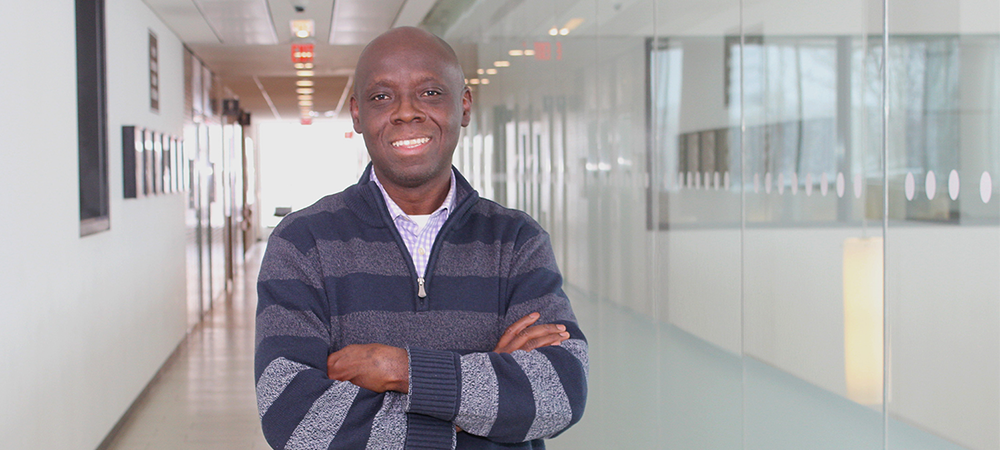
A male professor stands with his arms crossed in a hallway at Lakehead University

Research in Action: Making mathematics more meaningful through culturally responsive education

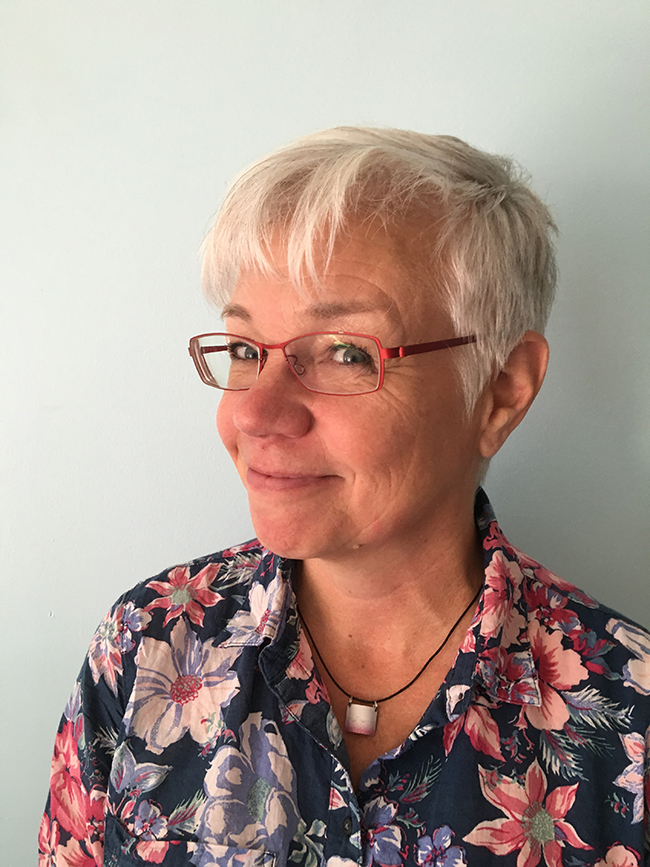
Women smiling wearing pink frame glasses and a blue flowered shirtMath is not a four-letter word. But to those with rampant math phobia, it certainly feels like it. Dr. Ruth Beatty, Associate Professor in the Faculty of Education at Lakehead University’s Orillia campus often sees students who actively dislike or even fear math. To her the problem isn’t with math itself, it’s with how the subject traditionally has been taught.
She started her research career looking at how children understand math and how educators can best teach the subject. She found that by looking beyond numbers and symbols and by taking a more holistic approach to what it means to think “mathematically” teachers could make math more accessible and fun.

Nine years ago, while teaching in the Master's program at Lakehead’s Thunder Bay campus, Beatty made a fascinating connection that has guided her work since then.

“Some of my students were First Nations educators or had been teaching in First Nation schools and we were talking about the disconnect between Indigenous culture and mathematics education in Ontario curriculum,” said Beatty. “I started visiting communities to learn more.”

While working with the Elders she realized that math is naturally embedded in Indigenous cultural practices like beadwork or birch-bark basket-, snowshoe- and moccasin-making.

“Take a beaded bracelet, for example,” says Beatty. “There's so much math in it. There is patterning and algebraic reasoning, there’s geometric transformations, proportional and spatial reasoning. There's number sense and numeration.”

With that cultural connection in mind, Beatty began a study in 2012 with the Algonquins of Pikwakanagan First Nation and teachers from the Renfrew County District School Board at a school with 20 per cent Indigenous students and 80 per cent non-Indigenous students. The project partnered community members, artists, Elders, and Knowledge Keepers with Indigenous and non-Indigenous educators to co-plan math instruction for Grade 3 and 6 students based on Algonquin loom beading. Cultural and language teachings were also integrated into the math unit.

The results were overwhelmingly positive. Indigenous students got to share their heritage and gain a sense of pride in their own knowledge systems that were valued on the same level as Western curriculum. Non-Indigenous students gained an appreciation of Indigenous culture. Most importantly, both groups learned exciting new math skills in a fun and engaging environment.

Perhaps the best endorsement of the math classes came from the students themselves. At the end of a session, with students working in their designs, making calculations to determine how many beads they would need, the teacher told them to wrap it up, math class was over. They looked up in surprise. Wait? What? Math? They had spent three hours absorbed in their learning with no idea they were, in fact, doing math.

Beatty and her team have collaborated with nine more communities around the province including The Chippewas of Rama First Nation and Simcoe County District School Board. Her work shows that math doesn’t belong to Eurocentric culture or scholars. Math is all around us and if taught in inventive, positive, and culturally responsive ways, no one needs to be afraid of it.

Faculty of Education professor Dr. Ruth Beatty and her school board partners received funding from the Social Sciences and Humanities Research Council of Canada, CanCode, and the Council of Ontario Directors of Education to carry out this important research.

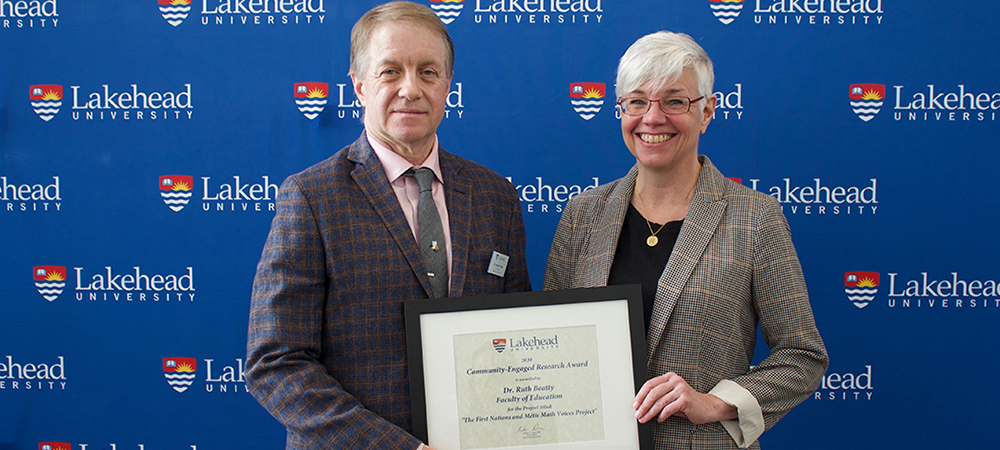
Man presents black framed award to woman during award ceremony

Research in Action: Research helping to improve the efficiency of motors

As the negative climate effects of fossil fuel-based energy sources become more apparent, governments, scientists and industries around the globe are putting more resources into developing sustainable and environmentally friendly alternatives.

Locally, Dr. Mohammad Nasir Uddin is contributing to the effort with his research, funded through Natural Sciences and Engineering Research Council of Canada (NSERC) Discovery Grants, on optimizing the efficiency of wind energy and electric motor drives.

A professor in the Department of Electrical Engineering at Lakehead University, Uddin and his graduate students are working on wind energy conversion systems to achieve maximum power extraction from the wind and maximum output from wind generators. They do this by creating intelligent algorithms that mimic the human brain by telling the system what to do in any given circumstance.

To illustrate what an algorithm is, Uddin gives the example of a commuter on the way to work in Toronto. “As she heads down the highway, her brain has planned out the shortest and fastest route. That’s an algorithm. Then she hears on the radio that there is an accident up ahead. Her brain takes that new information and creates an alternate route. That’s another algorithm.”

Uddin’s team has also developed control algorithms that improve the power quality and dynamic performance of wind generators by responding appropriately and quickly to unpredictable abnormal variations of wind speeds or power system fault conditions. Thanks to this kind of research the creation of a cost effective and sustainable wind energy system can be achieved.

Another area of Uddin’s research involves loss minimization in electric motors. “Fifty-five per cent of the total electric energy produced in the world is consumed by electric motors,” says Uddin. “If we use the algorithms to force the motor to follow certain conditions so that voltage and current give the minimum loss, then we can improve the overall efficiency of the system and achieve the best motor performance.”

Uddin has shared his findings in 228 papers that have published or accepted in refereed journals and conferences including 53 papers in IEEE Transactions which is considered the top ranking journal in his area of research. In 2010 he won the Lakehead University’s Distinguished Researcher Award.

Uddin’s impact in the field of Electrical Engineering goes beyond his own research. After more than 25 years of teaching and research experience at various universities in Canada, the United States, Bangladesh, Japan and Malaysia he has mentored and inspired many students. They include 50 highly qualified engineers (nine Ph.D., 24 Master’s, 14 Research Associates and three Postdoctoral fellows) and 82 undergraduate students. Most have gone on to work for companies like General Motors, Mercedes Benz, Rockwell Automation, AMEC, Caterpillar and Schneider Electric where they continue to develop optimization algorithms that improve efficiencies in motor drives used in transportation, robotics, automotive and oil industries.

Dr. Mohammed Nasir Uddin is a professor in the Department of Electrical Engineering at Lakehead University; Coordinator of the Electrical Engineering program under the Lakehead-Georgian Partnership; and the Director of the Renewable Energy, Power Systems and Drive Research Lab located in Barrie.

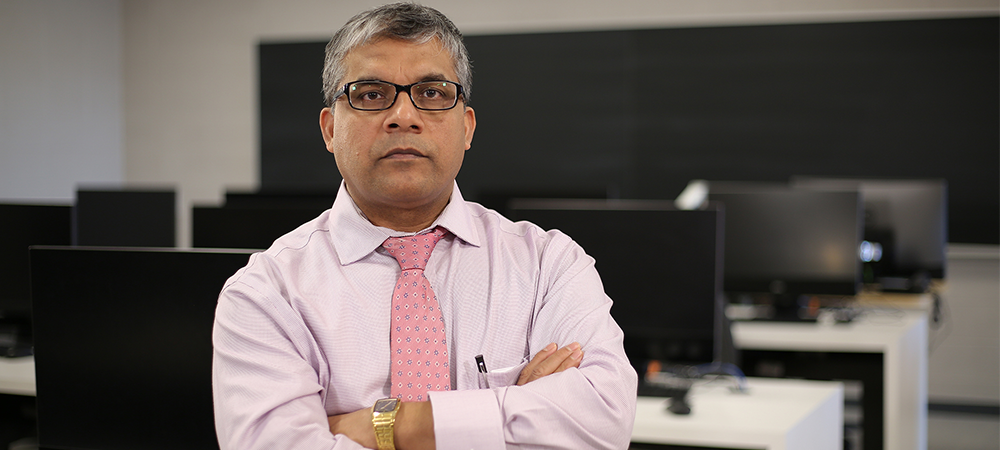
A man stands facing the camera in a computer lab

Research in Action: Community-led study aims to reduce childhood stress, boost learning

How do you come back to calm? This question is the powerful message driving a new community-based project by Lakehead University professors Drs. Sonia Mastrangelo and Meridith Lovell-Johnston.

Based in the Faculty of Education at the University’s Orillia campus, Mastrangelo and Lovell-Johnston use the concept of self-regulation to engage young children in learning and literacy. Over the next three years, they’re working in partnership with six First Nations community schools in northern Ontario, focusing specifically on self-regulation in kids Kindergarten-age to grade three.

“As the foundation of healthy social development, self-regulation can be learned and is vital to helping us become resilient and cope with the stressors of daily life,” says Mastrangelo, a specialist in child exceptionality and self-regulation. “When our coping mechanisms are derailed, so is our ability to learn new skills, like reading and writing.”

“We always stress that self-regulation in the classroom is as important for teachers as it is for students,” adds Lovell-Johnston, whose expertise spans literacy, language learning and teaching methods. “Offering local teacher workshops and professional development is a key way we’ll support the development of self-regulation and practices that foster literacy and learning.”

Through classroom observation, interviews, focus groups, sharing circles and storytelling, the project will explore how to identify and reduce sources of stress and provide different strategies that help kids return to calm. Anything from dimming lights, using lavender scents and offering safe spaces to regroup can all create stable, homeostatic classrooms says Mastrangelo, adding that what works for one child may not necessarily be effective for another.

While the current work is based in northern Ontario, Mastrangelo notes that the principles of self-regulation apply to any classroom, and any child. “It’s trial and error to find what works for each student, but they eventually learn to communicate and regulate their feelings independently, so that they can get back on track for learning.”

The children will also lend a hand in making videos, pictures and stories in English and their community language, Oji-Cree, that capture their experiences including “what makes them feel happy and safe and want to learn,” says Lovell-Johnston. At the end of the project, each child will have helped create their own e-book; a documentary-style film will also be produced and shared with the public and other education scholars.

Mastrangelo and Lovell-Johnston’s project launched in January of 2020 with the first of several planned spaghetti-dinner and information nights for parents, underscoring their community-led and partnership approach to setting research objectives and sharing knowledge.

“We work together to address challenges and offer supports in the places the communities themselves have told us they need it most,” says Mastrangelo. “This partnership work is essential to empower northern educators and communities to support their children with culturally relevant practices for lifelong learning, resiliency and achievement.”

Faculty of Education professors Drs. Mastrangelo and Lovell-Johnston work in partnership with the Kwayaciiwin Education Resource Centre in Northwestern Ontario community schools. Their three-year Partnership Development Grant is funded by the Social Sciences and Humanities Research Council.

Research in Action: Bringing new life to 17th century choral music

If you haven’t heard of Henry Aldrich, the famous 17th century composer, architect and Oxford dean, you’re likely not alone.

But Lakehead University music professor and Orillia campus principal Dr. Dean Jobin-Bevans wants to convince you to tune in.

“I was immediately drawn to his work as it’s the music I love to hear and perform myself,” says Jobin-Bevans, who came across Aldrich’s archived manuscripts in 2013 during a sabbatical researching in the Christ Church Library, Oxford. “There is also a modern appeal to his music – it’s still accessible and relevant all these centuries later.”

Aldrich’s music, most of which are anthems composed for the cathedral at Christ Church, was written for both unaccompanied choirs or those singing with an organ accompaniment. Typically thought of as an English style of church music, choral anthems have a long history of performance in the Anglican tradition and are almost exclusively sung in English.

Henry Aldrich collected, transcribed and composed as many as 8,000 scores of choral music for cathedral performances during his career at the University of Oxford’s Christ Church college, as a way to inspire his own creative work and religious musical expression. A prolific 17th century English writer, theologian, philosopher, composer, and architect, he also served as Dean of Christ Church and as the University of Oxford’s Vice-Chancellor.

Intrigued by Aldrich’s unique approach to choral music, Jobin-Bevans set out to transcribe select pieces from the 300-year old collection, editing and creating musical scores for contemporary church choirs, instrumentalists, and music scholars. Working his way through original leather-bound, handwritten manuscripts, Jobin-Bevans spent six years editing and digitizing 20 different scores, updating elements such as time signatures and adding musical bars and vocal clefs.

A CD of the new editions was released in November of 2019 and some of Aldrich’s original manuscripts are also captured on the project website. Jobin-Bevans says that hearing the music performed for the first time by the Cathedral Singers of Christ Church, who also recorded the music for the CD, was hugely rewarding and speaks to the lasting quality of Aldrich’s work.

Viewing history through the late composer’s musical lens is another takeaway of the project, says Jobin-Bevans. “Aldrich grew up, was educated and appointed Dean during the period of the English Restoration, a time of great upheaval, politically and socially. His work reflects that history and tells us a lot about what his creative mind was thinking concerning the role and function of Restoration church music and liturgy.”

Jobin-Bevans also agrees a parallel can be drawn between himself and Aldrich that goes beyond the music.

“He was passionate about connecting architecture, logic, and math through music to both teach and inspire,” reflects Jobin-Bevans. “His work has been an inspiration to me and has kept me engaged in new ways to teach, lead as a principal, and continue building this lasting digital archive of his legacy.”

Dr. Dean Jobin-Bevans’ research is a partnership with the Christ Church Library, Oxford. Samples of the music are available at:https://www.chch.ox.ac.uk/library-and-archives/henry-aldrich-project. The full album, Henry Aldrich: Sacred Choral Music, can be purchased on iTunes or borrowed from the NAXOS Music Library through your local library.

Complexity, Culture, and Resilience (CCR) Lab

The CCR Lab is a network of collaborators, including students and former students of Dr. Mirella Stroink, with interests in Complexity, Culture, and Resilience. Disciplinary backgrounds are varied and include Psychology, Social Work, Health Sciences, Geography, and Natural Resources. As a lab, we meet a couple of times per year to provide support and a fertile space for the emergence of new ideas and collaborative projects. Students are encouraged to explore research projects beyond their theses in collaboration with other students and researchers in the lab. 

Some examples of current projects include:

  • Systems Thinking
  • Environment of Adaptation
  • Dynamic Psychological Resilience
  • Perceived Food Security
  • Cultural and Psychological Factors in Ecologically Sustainable Food Behaviour 
  • Meaning-making
  • Attachment and Relationship Processes
  • Applications of Social Network Analysis
  •  Consultation to Community groups and organizations interested in the application of Complexity and Resilience concepts (see 180 Institute

Pages

Subscribe to Research