



Two Lakehead Researchers Receive CFI Infrastructure Funding
Projects Will Drive Innovation in Advanced Technologies
The Canada Foundation for Innovation (CFI) has awarded Lakehead University $210,234 to support two research projects through the John R. Evans Leaders Fund (JELF). The Faculty of Engineering’s Dr. Amir Ameli and Dr. Yushi Zhou will lead advancements in power grid cybersecurity and in integrated-circuit technologies for edge artificial intelligence (AI) systems with these infrastructure grants.
“Lakehead University is strengthening our reputation as a leading institution for advanced technology development,” says Vice-President, Research and Innovation Dr. Langis Roy. “These innovations are especially vital in Ontario where resource sectors like mining, forestry, and agriculture increasingly rely on resilient advanced technologies in remote, power-constrained environments.”
Protecting Canada’s Power Grids from Cyber Attacks
 Dr. Amir Ameli, associate professor of electrical and computer engineering at the Barrie STEM Hub, is investigating how to protect Canada’s power grids from cyberattacks. His CFI JELF grant of $121,543 will build a “cyber-physical testbed” —a utility-grade replica of a power grid. Combining hardware, software, and real-time simulators, the testbed will allow researchers to test cyber defense systems against realistic, simulated attacks without risking actual blackouts.
“Current protection systems are vulnerable to attacks that could cause false trips or large-scale outages,” Dr. Ameli says. “Our goal is to develop smart devices that can block attacks in real time while maintaining speed, accuracy, and reliability—a key challenge for Canada’s future power grids.”
Dr. Ameli’s research, led out of Lakehead’s Barrie STEM Hub, will be the first of its kind in central Ontario, supporting collaborative research, student training, and industry testing while advancing national expertise in energy security.
Powering the Next Generation of Smart Chips
As AI becomes part of everyday life, from smartwatches to medical wearables, the tiny microchips powering these devices are being pushed to do more under strict power and energy constraints.
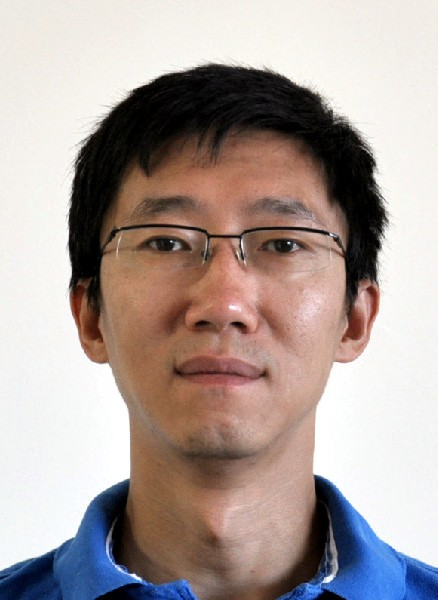 Dr. Yushi Zhou, associate professor of electrical and computer engineering, will dedicate $88,691 in CFI JELF funding to advance new power-management technologies for system-on-chips (SoCs), with applications in edge AI and Internet of Things (IoT) devices.
Dr. Zhou’s team is developing new architectures for low-dropout voltage regulators that can be integrated directly into SoC design to speed up response times when power demands spike, supporting more energy-efficient power management.
“Efficient power management is critical as more functions are integrated into a single chip,” Dr. Zhou says. “This new infrastructure will provide hands-on experience for Lakehead University students in integrated-circuit design, prototyping, and testing, which are currently very limited in northern Ontario.”
By equipping researchers with specialized tools and infrastructure, CFI investments play a critical role in driving technological innovation and expanding Lakehead’s research capabilities.
These research projects support numerous United Nations Sustainable Development Goals, including Goal #7: Affordable and Clean Energy, Goal #9: Industry, Innovation, and Infrastructure, and Goal #11: Sustainable Cities and Communities.