


Advancing Justice for Canada’s “Invisible” Older Canadians
Published in The Chronicle Journal on June 18, 2026
By EMILY DONTSOS
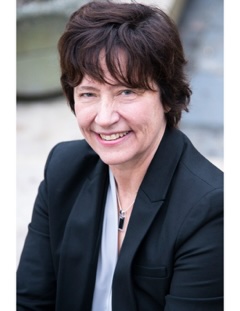 While working as a lawyer in Vancouver, Dr. Joan Braun was recruited to run a new legal aid clinic for seniors, the first of its kind in western Canada.
She expected calls from seniors seeking legal advice on a wide range of issues. But what she didn’t anticipate was the flood of calls from adult children caring for aging parents.
Their worries were vast and complex. Some were concerned that their parents were being taken advantage of by other family members; others wondered how to protect their loved ones in the face of early onset dementia without violating their legal rights.
“These calls raised complicated questions, and I saw so many rights issues that weren’t being addressed at all by the legal system,” Dr. Braun says. “I found them intriguing. They didn’t seem easy to resolve, and I wanted to figure that out.”
Inspired to delve deeper, Dr. Braun pursued a Master of Laws degree followed by a PhD with a focus on elder law. Six years ago, she joined Lakehead University’s Bora Laskin Faculty of Law as an assistant professor.
Today, Dr. Braun is one of just a handful of scholars in Canada focused on advancing the legal rights of older adults.
“Compared to the United States, there is not a big focus in Canada on elder law from an academic perspective,” says Dr. Braun, who is an affiliated researcher with Lakehead’s Centre for Education and Research on Aging & Health. “But I think scholars can bring perspectives and ideas that practitioners don’t necessarily have the time to consider.”
Scrutinizing Canada’s Legal System
Dr. Braun’s research explores how Canada’s existing legal frameworks are being used—or not—to protect older adults without violating their human and legal rights.
One recent project examined the Protecting Canada’s Seniors Act, a 2012 amendment to the Criminal Code designed to ensure tougher sentences for those who take advantage of or commit crimes against elderly Canadians. Dr. Braun wanted to understand how often the act is actually applied by reviewing published court cases.
“I found that it’s used very rarely in cases of elder abuse,” she says. “A lot of people think Canada is doing well in this area because we have this law, but if the courts never use it, it doesn’t actually do anything to protect older adults.”
Building on her findings, Dr. Braun is now designing a study to examine how Canada’s criminal justice system responds to the abuse and neglect of older adults—particularly when it comes to crimes committed against older adults with dementia. This population experiences abuse at a higher rate than older adults without dementia.
Yet they are represented in frighteningly few court cases—suggesting their abusers are not being brought to justice. “Unlike the United States, Canada does not have mandatory reporting laws for older people in the community experiencing abuse,” Dr. Braun says.
Mandatory reporting only applies to older people living in long-term care facilities or retirement homes, which may explain why fewer investigations are initiated. Introducing mandatory reporting laws, however, will not resolve the problem. Preliminary research suggests there are barriers within the criminal justice system that prevent these cases from proceeding.
Dr. Braun’s proposed study will identify these barriers through interviews with police, court personnel, and other stakeholders and make recommendations for addressing them.
Older Adults Shouldn’t be Overlooked or Forgotten
At the heart of Dr. Braun’s research is a desire to shine a light on the experiences of older adults, who are often ignored by society as they age. She’s particularly interested in older adults experiencing barriers that increase their vulnerability, such as language issues, uncertain immigration status, poverty, and cognitive disabilities.
“I find that so many people just don’t think much about discrimination and abuse against older adults,” she says.
Dr. Braun is also bringing her advocacy into the classroom. Through her elder law course, which she created after joining Lakehead, Dr. Braun is helping train new generations of legal practitioners to centre the rights and well-being of older adults in their work—whether or not they go on to specialize in the field.
“Elder law is an issue that Canada’s legal system has not fully addressed, and it’s becoming increasingly urgent as the population ages,” Dr. Braun says. “My goal is to build the capacity of the legal system to fully respect the rights of older adults and help them achieve justice in cases of abuse.”
Dr. Braun’s research project directly aligns with United Nations Sustainable Development Goals (SDGs) #3: Good Health and Well-Being, #10: Reduced Inequalities, and #16: Peace, Justice, and Strong Institutions.
Research in Action highlights the work of Lakehead University in various fields of research.