Indigenous

Festivus - Student Appreciation Day!

A Festivus For The Rest Of Us!!

Join us for our next Student Appreciation Day, highlighting the quirky and entirely made-up holiday of Festivus from the beloved show Seinfeld!

As is Lakehead tradition, Festivus will feature a number of unique activities based on the Festivus holiday where you will get your chance to participate in the Airing of Grievances, Feats of Strength, and if you are lucky... experience a Festivus miracle.

There will be additional holiday programming and activities as well, including:

- Snow Globe Making

- Holiday Card Making

Student Maker Market

Visit the side room of The Study and get your holiday shopping out of the way while supporting your fellow students!

The Student Maker Market is a vendor market for students, by students!

VENDORS WANTED!!

Are you a student creator? Join the Student Maker Market as a vendor to showcase and sell your unique handmade goods!

Veterans Deserve Our Respect and Our Support

Social Work Student Michael Lepard Is Helping Them Get It

"After I was released from the military, I had to wait five months for a Veterans Affairs' case manager to help me apply for my veterans' benefits and services," says Lakehead University Orillia social work student Michael Lepard.

"By that point, I'd already given up and then had to restart the application process. Trying to navigate the system on my own was a nightmare."

These experiences ultimately led Michael to launch the Veteran-To-Veteran Support Network (V2V), a non-profit he operates in addition to his academic studies. "We run on community donations and rely on staff volunteers to assist with website maintenance, marketing, and peer support," he says.

A head-and-shoulders photo of Michael Lepard wearing army fatigues and a military beret

Michael's military experience is one of the things that's made him a strong advocate for veterans, and he's not afraid to think big. At the end of 2024, he drafted a petition with Orillia MP Adam Chambers asking the federal government for $2.24 million to fund non-clinical peer services for veterans. When the petition was unsuccessful, he decided to establish V2V.

"V2V is a unique organization led by veterans to lift up veterans," he explains. "It's common for servicemen and women to feel isolated when they return to civilian life." 

Now, as Michael embarks on the fourth and final year of his Honours Bachelor of Social Work degree, he's excited that Lakehead is letting him complete his last social work field placement at V2V.

"Veterans are often unaware of services they're entitled to and reluctant to ask for help out of a fear of looking weak," Michael says. "But it feels much different to receive help from someone who's been through the same things as you."

A V2V infographic listing the services provided by the Veteran-To-Veteran Support Network

V2V will provide holistic support services to veterans in a way that complements existing services. "When a veteran comes to me and tells me, 'I'd like help applying for this benefit,' I say, 'You also qualify for this, this, and this,' so why don't we apply for these services, too.'"

V2V is there for veterans no matter what problem they're facing—and unlike services offered by Veterans Affairs Canada (VAC)—these challenges don't have to be related to their military service.

"It could be filing a disability claim, applying to school, getting a job, securing addiction or mental health treatment, or finding housing," Michael says.

He established the non-profit to work alongside existing veteran and community organizations, rather than duplicate or replace existing supports. Veterans can connect through V2V's website, at peer-support meetings, or by talking one-on-one with fellow veterans and V2V staff members.

Proud to Serve his Country and his Community

Michael's passion for the military is longstanding.

"I'm a sixth-generation member of the Canadian Armed Forces," he says. "I served as an infantry and combat soldier from 2006 to 2011 and would still be serving if I hadn't been injured."

After leaving the military, he became an active volunteer with many Orillia service organizations.

Michael Lepard and Kyara Craig, wearing black V2V Network t-shirts, stand next to each other

Advocating for veterans is central to V2V's mission, which is why they've connected with several other local and veteran-serving organizations. They're currently in the early stages of developing a partnership with The Lighthouse—an Orillia shelter that supports people experiencing homelessness—and are lobbying for free dental care for veterans. V2V's motto is: "Whatever you're facing, you don't have to face it alone. Ask a vet who knows." Above, Michael and V2V staffer and organizer Kyara Craig.

It was while volunteering with North Simcoe Victim Services that Michael discovered a new path forward in life. He met a Georgian College student doing a placement there and thought, "Maybe that's what I should do?'"

He was eligible for vocational training through Veterans Affairs, allowing him to enrol in Georgian's Social Service Worker program.

After graduating in 2023, Michael transferred to Lakehead University's undergraduate social work program. "I wanted to learn more so that I could help more people," he says.

A National Dream

Michael is currently doing his V2V social work placement, supervised by registered social worker Samantha Walker, as part of his final-year academic requirements.

"The placement involves program planning, community outreach, partnership development, funding applications, and preparing to launch peer-support meetings."

Michael says he's grateful to Lakehead University for his social work education and the opportunity to apply what he's learning to develop V2V. "My field education coordinator Tess Casole's advice and direction has been extremely valuable."

A statuette of clasped hands with a Canadian maple leaf behind it; the base of the statuette has the words "Veteran To Veteran Support Network" on it

Canadian veterans are only funded for mental health services if their mental health disorder is related to their military service. V2V is helping fill this gap by offering non-clinical support from fellow veterans in the form of listening, presence, and shared lived experience. V2V also plans to function as an on-ramp to services offered by organizations like the Mood Disorder Society of Canada and the Canadian Mental Health Association.

Other agencies and organizations have rallied around V2V.

"Several MPs and MPPs have given us a great deal of advice and connections, we've received funding from the City of Orillia, and the Mood Disorders Society of Canada has contributed veteran-focused peer support training through VAC. More recently, the Army, Navy & Air Force Unit 400 asked us to deliver a V2V presentation and agreed to promote V2V through its website, social media, and posters."

Orillia's Branch 34 Royal Canadian Legion is an important supporter, too. They supply V2V with free office space. This is an essential first step in growing the organization because Michael wants to offer in-person services in larger cities across Canada, as well as provide online services so that vets can access V2V wherever they live.

The long-term goal is to become part of Veteran Affairs Canada.

"I want veterans to come to V2V, see what they qualify for, and forward that information to Veterans Affairs," he says.

Michael is also aiming to reduce veterans' wait times, which would relieve some of the burden on Veterans Affairs and offer more veterans access to services.

He is convinced that his vision is both achievable and necessary.

"We believe that since veterans fought for us, we should fight for them."

LivingWorks safeTALK Workshop

LivingWorks safeTALK is an in-person workshop where you’ll learn how to be more alert to someone thinking of suicide, how to reach out to them, and how to help them keep safe by promptly connecting them to further support.

Ink & Ale (Ottawa, ON)

Enjoy some delicious pub fare while socializing with fellow grads in the Ottawa area- organized by the Lakehead Ottawa Alumni Chapter!

Get your likeness drawn by Ottawa Caricatures, and chances to win some fun prizes.

Thursday, November 19th
7 -9 PM
Heart & Crown (Preston location)
$5/person

Lakehead Student is One of Many Indigenous Veterans Who Served with Honour

Master Corporal (Retired) Kevin Wesley Shares His Military Journey

Content Warning: This story discusses war and its impacts.

Kevin Wesley is in his third year of Lakehead University's undergraduate anthropology program, but he has already contributed a lifetime of service to his country as a member of the Canadian Armed Forces (CAF).

Two weeks ago, in October 2026, Kevin retired from the CAF with the rank of Master Corporal, allowing him to fully focus on the next chapter of his career.

Kevin Wesley sits on a staircase

"Everything came together when I decided to take anthropology at Lakehead," Kevin says. "I took an archaeology course when I was younger and really enjoyed it. I was drawn to archaeology again because I wanted to learn more about where I came from." Kevin says he sees parallels between the ethnic cleansing in Bosnia and Canada's residential schools. "This became really clear to me after mass graves started to be imaged on the sites of former residential schools."

"I joined the CAF's Reserve Forces in 2001 at the suggestion of my father, and everything just clicked," Kevin says. "My great grandfather served in the Boer War and World War One and my grandfather served in the Second World War, so I have a strong connection with the military."

During his 25 years as a soldier, Kevin was honoured with a Canadian Forces' Decoration medal, a Canadian Peacekeeping Service Medal, and a Non-Article 5 NATO Medal for Operations in the Balkans.

His sacrifices, and those of his fellow servicemen and servicewomen, are uppermost in the minds of people across the country as we prepare to honour Indigenous Veterans Day on November 8.

Kevin's father's family is Moose Cree from the northeastern part of Ontario, while his mother's family is of European descent. His decision to study anthropology at Lakehead Thunder Bay is motivated by his wish to serve as a bridge between Indigenous and non-Indigenous people and to learn more about his Indigenous culture.

Peacekeeping in War-Ravaged Bosnia

Kevin enlisted in the CAF at a tumultuous moment in the world's history.

"I was a student at Lambton College in Sarnia, Ontario, and was completing my military training with the 1st Hussars reserve unit when the September 11 terrorist attacks happened. I thought: 'What is happening? Is Canada going to war?'"

Kevin Wesley in army gear in a tank

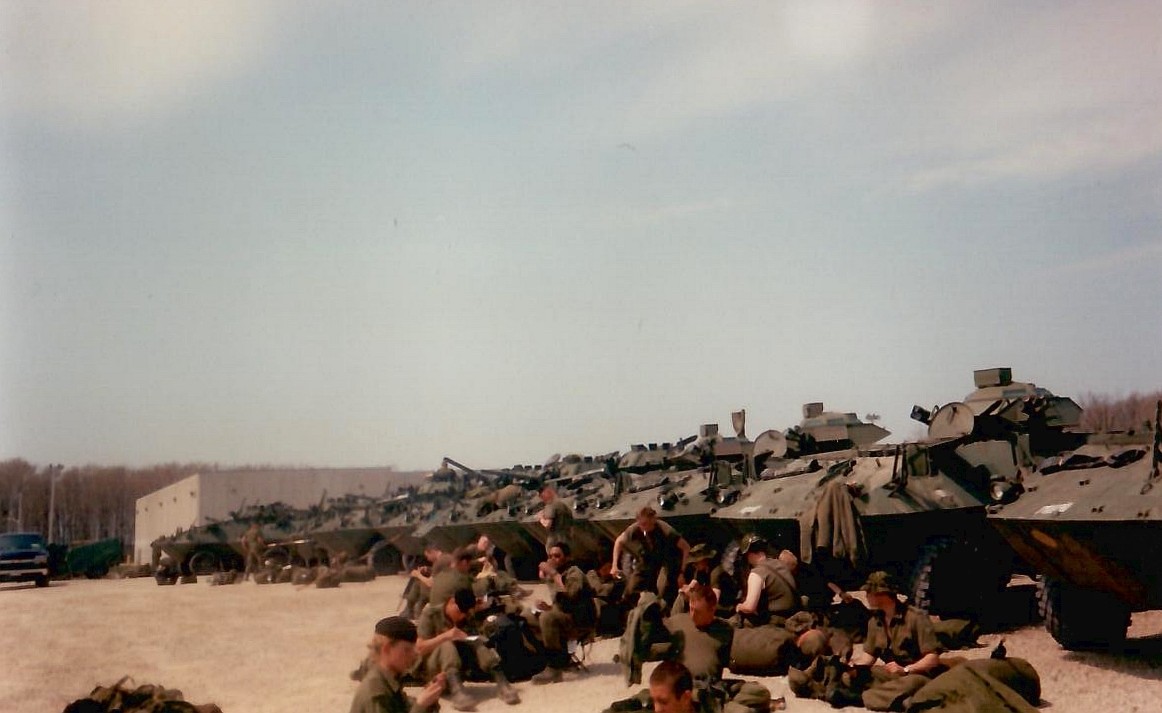
To prepare for his deployment in Bosnia, Kevin did compressed infantry occupational training in Fort Knox, Kentucky, and final training exercises at the Shilo Canadian Forces Base in Manitoba. Above, Kevin in the back of a Grizzly AVGP (armoured vehicle general purpose) tank during a training exercise at Canadian Forces Base (CFB) Wainwright in Alberta. "The Grizzly has room for troops in the back and we were on our way to one of the attack points," Kevin says.

Instead, Kevin received word that his unit would be deployed to Bosnia as part of a NATO (North Atlantic Treaty Organization) peacekeeping mission. NATO, of which Canada is a member, was responsible for maintaining a ceasefire in Bosnia after the end of the Bosnian War in 1995.

Kevin was a good fit for this mission because he was trained in close quarters combat, hand-to-hand combat, and high-performance driving.

"I learned to drive a six-wheeled tank with a cannon in the turret called the Cougar and a Bombardier Iltis, which is a type of jeep," Kevin says. After six months of training in Winnipeg, his reserve unit was attached to the Second Battalion of the Princess Patricia Canadian Light Infantry unit and deployed to the town of Bihac in Bosnia on April 1, 2002.

Military training exercises

Kevin made lifelong friends in the military, and he fondly recalls his training as a reservist in Sarnia. "Part of learning how to drive a Cougar tank involved navigating through the Tim Horton's drive through to get coffees, which was a lot of fun," he says. Above, Kevin and his unit during a firing range training exercise at CFB Wainwright. Behind them is a row of Cougar armoured vehicle general purpose (AVGP) tanks.

"When we arrived, the war had been over for almost a decade and the younger generation wanted to leave the past behind," Kevin says.

Although it was peacetime, the threat of exploding mines was a constant danger on patrols. "Bosnia was the most heavily mined country in the world, so the rule was that you never went off the hard-packed roads."

As a peacekeeper, a significant amount of his time was consumed by going house to house to retrieve weapons that people had cached during the war. "We found machine guns and explosives," he says.

One memory that particularly stands out was being tasked with securing a mass grave. It was uncovered by a United Nations' humanitarian group attempting to identify the remains of individuals who had been killed in the war.

A Call to Remember Veterans

"I have complex PTSD from a combination of my deployment in Bosnia and my 18 years of policing, which eventually forced me to leave the OPP," Kevin says. He subsequently worked with the Workplace Safety and Insurance Board (WSIB) to begin retraining as an anthropologist.

Kevin Wesley stands outside a building in autumn

After he graduates from Lakehead University, Kevin plans to work in the cultural resource management field doing assessments of Indigenous archaeological sites identified during the approval process for provincial infrastructure projects, such as roads and bridges. "I hope to serve as an interpreter between academics, government, and Indigenous communities," he says. "Making right what anthropology and colonialism got wrong in the past inspires me to keep going."

"The psychological impact of deployment is easy to dismiss because you can't see it, but it really changes how a person thinks," he says. "It's more like a brain injury than a traumatic event.

That's one of the reasons that I think that Indigenous Veterans Day and Remembrance Day should be statutory holidays. Veterans don't always come out and say it, but it's just as important to remember the living as it is to remember the service members we've lost."

Indigenous Veterans Day is observed in Canada on November 8. This holiday was established both to commemorate the service of Indigenous veterans and to acknowledge the historical injustices many faced during and after their military service.

Indigenous veterans who need support can contact the Indigenous Veterans Engagement Team (IVET).

EPID@Work Featured in Local Newspaper Column on Diversity and Workplace Health

EPID@Work's Northwestern Ontario Workplace and Worker Health Study (NOWWHS) was featured in The Chronicle Journal's October 24, 2026 Weekend Edition through a guest column written by our Director and Senior Scientist, Dr. Vicki Kristman. The piece was published as part of a monthly series produced by Diversity Thunder Bay, an initiative dedicated to promoting race relations and fostering greater mutual understanding across Northwestern Ontario.

In her column, Dr. Kristman highlights the vital role that local worker experiences play in driving meaningful workplace changes throughout our region. Read it below!

Diverse perspectives sought for workplace health study

BY VICKI KRISTMAN

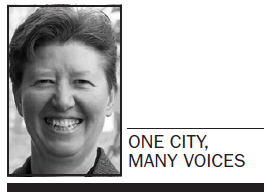
Portrait picture of Vicki Kristman next to the words "One City, Many Voices"As someone who has spent my career studying workplace health and safety, I know that the people of Northwestern Ontario have a story to tell. Our workforce is unique, resilient, and incredibly diverse. This diversity is one of our region’s greatest strengths, but it also reminds us that workers do not all experience the workplace in the same way.

Understanding these differences is essential to advancing equity, inclusion and a sense of belonging at work. Yet across many industries, workers are facing increasing psychosocial pressures that affect their health, well-being, job satisfaction, and ultimately, whether they choose to stay in their jobs. Understanding these experiences is essential if we want to build healthier workplaces and stronger communities.

That is why, in September 2023, the EPID@Work (Enhancing the Prevention of Injury and Disability) Research Institute at Lakehead University, with funding from the Ministry of Labour, Immigration, Training and Skills Development, launched the Northwestern Ontario Workplace and Worker Health Study (NOWWHS).

This is the largest workplace cohort study ever conducted in Northwestern Ontario, and it is designed to capture the lived experiences of workers across our region. Whether you work in healthcare, mining, forestry, transportation, retail, education, public service, construction or another sector, your experiences matter. Every voice contributes to a clearer understanding of what it means to work in Northwestern Ontario today—and how those experiences evolve over time.

One of the things that motivates me most is ensuring that our region is no longer overlooked in conversations about workplace health and safety. Too often, occupational health research focuses on larger urban centres, leaving Northern communities underrepresented. I believe that the unique realities of working in Northwestern Ontario deserve to be understood, recognized, and reflected in research, policy, and workplace practices.

By participating in this study, you are helping to ensure that Northern perspectives are heard. You are contributing to research that has the potential to improve workplaces not only today, but for years to come.

The findings we have gathered so far reinforce why this work is so important. Nearly 50 per cent of participants have told us they have repeatedly considered leaving their jobs during the past six months. That is a significant finding. It tells us that many workers are experiencing challenges that extend beyond individual workplaces and point to broader issues affecting employee well-being, retention, and organizational sustainability.

While these findings are concerning, they also present an opportunity. By better understanding what workers are experiencing, we can identify practical solutions that help organizations create healthier, more supportive workplaces.

Our commitment extends well beyond collecting data. At EPID@Work, we believe research should lead to action. We share our findings, develop practical resources, and work directly with employers to help translate research into meaningful workplace improvements. Organizations with 20 or more participants receive confidential workplace-specific reports that provide valuable insights and evidence-informed recommendations tailored to their organization.

The impact of this work also reaches beyond individual organizations. We collaborate with employers, policymakers, industry leaders, unions, and community organizations throughout Northwestern Ontario to strengthen workplace health across the region. By combining research, lived experience, and community partnerships, we hope to inform initiatives that support healthier workers, stronger organizations, and more resilient communities.

To date, more than 2,000 people from across Northwestern Ontario have already shared their experiences. I am grateful to every one of them. But there are many more voices we need to hear.

If you live and work in Northwestern Ontario, I encourage you to take part. Whether you participate as an individual or register your workplace, your experiences can help shape the future of work in our region.

To learn more or get involved, please visit www.workinghealth.ca or email workinghealth@lakeheadu.ca with any questions.

Your voice truly matters. By sharing our experiences, recognizing the barriers that workers face, and ensuring that diverse perspectives are heard, we can help build workplaces that are not only healthier and safer, but also more equitable, inclusive and welcoming for everyone across Northwestern Ontario.


Vicki Kristman is director and senior scientist for the EPID@Work Research Institute at Lakehead University. The views and opinions expressed in this column are those of the author.

The Chronicle Journal Weekend Edition banner dated Saturday October 24, 2026

EPID@Work Hosts 4th Annual Research into Action Conference in Thunder Bay

The EPID@Work Research Centre hosted its 4th annual Research into Action Conference at the Italian Cultural Centre in Thunder Bay on October 20th 2026, bringing together researchers, community leaders, and workplace health advocates to bridge the gap between academic findings and real-world safety solutions.

The event generated rich, meaningful engagement. Participants traveled from across Northwestern Ontario and as far away as Sudbury, demonstrating the regional significance of workplace health and safety research.

Actionable Research Powered by NOWWHS Data

A central theme of this year’s conference was the practical application of regional data. Presentations highlighted how data from the Northwestern Ontario Workplace & Worker Health Cohort Study (NOWWHS) is actively driving change across diverse sectors.

Researchers showcased findings ranging from the lived experiences of Indigenous workers to addressing severe burnout among nurses in Northwestern Ontario. Additionally, representatives from the Thunder Bay District Health Unit demonstrated how they are utilizing NOWWHS data to inform local community initiatives aimed at fostering mentally healthier workplaces.

Inspiring Keynote & Attendee Insights

Our keynote speaker, Dr. Caitlin Bawn (Research Associate in Global Health and Social Medicine at King's College London), traveled from the UK to deliver an engaging session on staff retention and workplace culture within social care organizations.

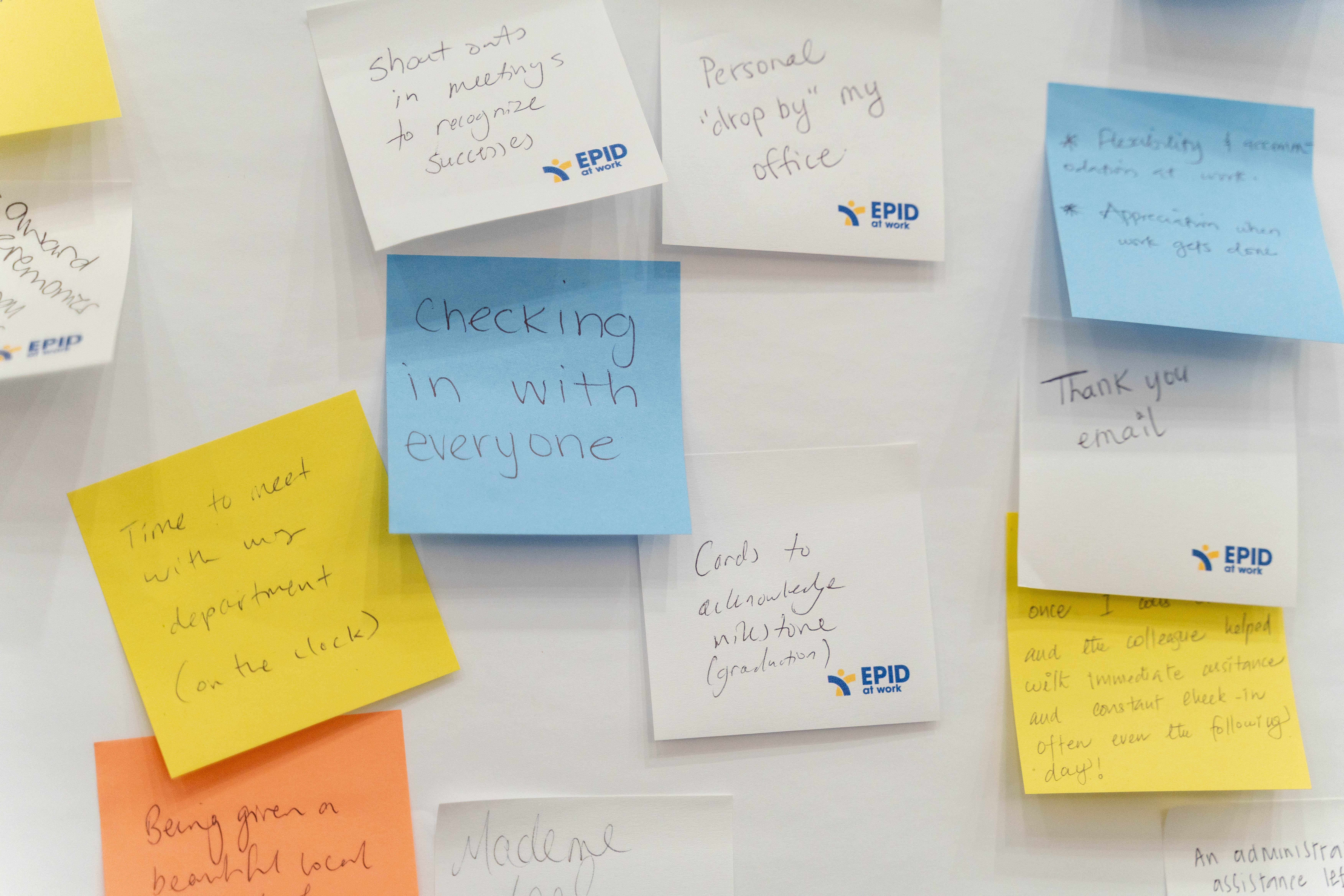
Hand written notes saying "checking in with everyone", "thank you email", "time to meet with my dept", "shoutouts in meetings", "personal drop-by my office", and "cards to acknowledge milestones" Conference attendees participating in Dr. Bawn's interactive session to map actions for workplace mental health.
 

Dr. Bawn led an interactive post-it note activity that actively engaged the room, generating a wealth of crowd-sourced evidence and practical ideas on concrete steps employers can take to support mental health on the job.

Collaborations with Community

The program also emphasized the strength of Community Based Research (CBR). Representatives from several of our core community partners actively participated in research presentations and panel discussions. We extend our gratitude to our community partners who contributed their invaluable insights:

  • Centre for Education & Research on Aging & Health (CERAH)
  • EmployNext
  • Nokiiwin Tribal Council
  • Superior Mental Wellness at Work
  • Thunder Bay & District Injured Workers Support Group
  • Thunder Bay Multicultural Association

Celebrating Student Research

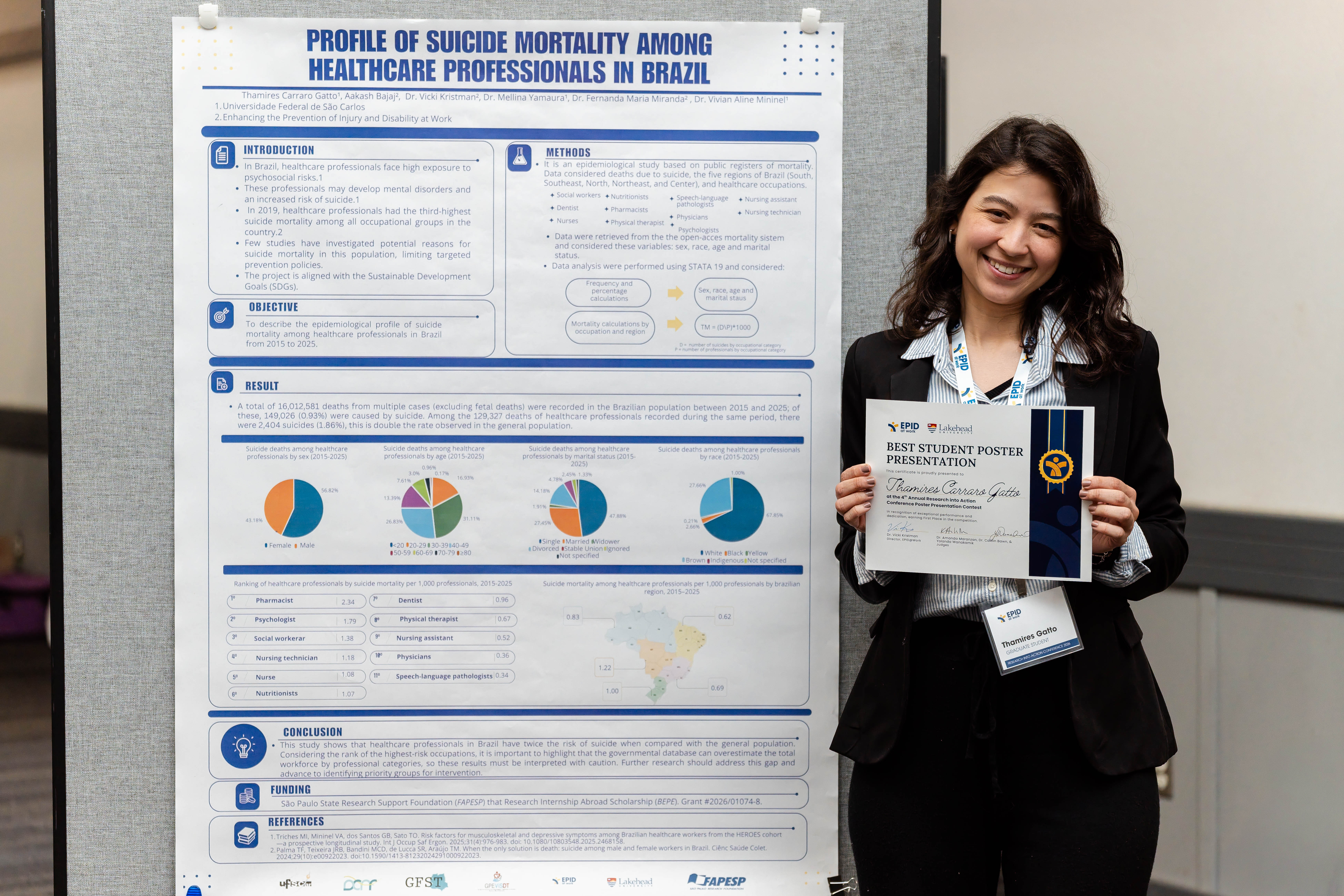
The conference concluded with a celebration of emerging scholars during the poster presentations. Congratulations to Thamires Carraro Gatto, who earned the Best Student Poster Presentation Award for her compelling research on suicide mortality among healthcare professionals in Brazil.

Thamires holding her certificate in front of her research poster.


We extend our sincere thanks to all of our speakers, partners, and attendees who made this day a success. We look forward to building on these conversations and welcoming everyone back for next year’s conference!

Research into Action Conference 2026 banner

Pages

Subscribe to Indigenous