Indigenous

New Work by History professor, Dr. Travis Hay

Dr. Hay is a historian with Lakehead University's History department and Indigenous Learning department who specializes in Canadian federal Indian policy and settler colonialism. He is also a Lakehead University alumnus with a Bachelor of Arts and a Master of Arts in History.

He began researching the hunger strike in 2019 and he's written a book – The Science of Settler Colonialism – that will be released in September 2021 by the University of Manitoba Press.

"I study archival records," says Dr. Hay, "but these can only tell half of the story."

The Science of Settler Colonialism authored with respected Elder Terri Redsky Fiddler, from Sandy Lake First Nation, chronicles medical experiments on First Nations in the 1900s.

Congratulations on your forthcoming publication.


Lakehead University’s Journey online magazine featured a brief of Dr. Hay’s research into the Sandy Lake Five and the Hunger Strike of 1988, lead by then Chief Josias Fiddler, head of Sandy Lake First Nation. You can read the full article here, The hunger strikers who fought for basic health care by Tracey Skehan (Spring 2021).

Read more in APTN National News online, about Dr. Hay’s continuing work and research, written by Sarah Nelson Thunder Bay professor bucks family trend, does his part to deliver reconciliation to city (March 14, 2021).


Dr. Ronald Harpelle, Professor, Department of History Publishing a New Chapter

The Department of History is pleased to announce that Dr. Ron Harpelle has published a chapter on the history of West Indian immigration and settlement in Central America in a collection that focuses on issues of identity within the African Diaspora in Latin America.

The arrival of the British West Indians in Central America challenged the prevailing notions of race and of the place that people African descent occupied in those societies. Beginning in the 1850s and continuing for a century, approximately 500,000 West Indian men, women and children went to Central America in search of opportunities.

Dr. Harpelle’s chapter is entitled, “Anglo-caribenhos transplantados: os povos esquecidos nas margens ocidentais do mar do Caribe,” and it appears in Elaine Pereira Rocha and Nielson Rosa Bezerra (Eds.) Mosaico: A Construção de Identidades na Diáspora Africana, Paco Editorial, 2021.


We look forward to reading his chapter.


LUNSA hosting virtual Powwow

March 12, 2021 – Thunder Bay, Ont.

The Lakehead University Native Students Association (LUNSA) is excited to be hosting a virtual powwow celebration on Saturday, March 20 from 3 to 7 pm. The powwow will be broadcast live on YouTube and Facebook.

The annual powwow is LUNSA’s signature event that showcases tremendous talent and entertainment, while reinforcing traditional aspects of Indigenous culture such as drumming, dancing, singing, and giving thanks.

LUNSA is honoured to have Gene Nowegejick as the Elder and Todd Genno as the Master of Ceremonies. LUNSA will be celebrating resiliency at their cultural celebration this year.

LUNSA is a volunteer LUSU club. The club’s goals are to promote the spirit of unity among Indigenous students at Lakehead University through social, cultural, and recreational events in addition to promoting cultural awareness between club members and the greater student population.

LUNSA Powwow Agenda and Details

  • 3 pm, Opening ceremony
  • 3:30 pm, Dancing and drumming time slots begin
  • 7 pm, Closing ceremony

Master of Ceremonies: Todd Genno (Biigtigong Nishnaabeg)

Elder: Gene Nowegejick (Kiashke Zaaging Anishinaabek)

Watch it live:

For more information, please contact mdbombar@lakeheadu.ca.

-30-

Media:  For further information or to arrange an interview, contact Jaclyn Bucik, Media, Communications & Marketing Associate, at 705-330-4010 ext. 2014 or mediarelations@lakeheadu.ca.


Lakehead University is a fully comprehensive university with approximately 9,700 full-time equivalent students and over 2,000 faculty and staff at two campuses in Orillia and Thunder Bay, Ontario. Lakehead has 10 faculties, including Business Administration, Education, Engineering, Graduate Studies, Health & Behavioural Sciences, Law, Natural Resources Management, the Northern Ontario School of Medicine, Science & Environmental Studies, and Social Sciences & Humanities. Lakehead University’s achievements have been recognized nationally and internationally, including being ranked, once again, among Canada’s top 10 primarily undergraduate universities in Maclean’s University Rankings 2021; as well as included in the top half of the Times Higher Education 2020 World University Rankings for the second consecutive year, and 98th among 766 universities from around the world in THE's 2020 Impact Rankings (which assesses institutions against the United Nations’ 17 Sustainable Development Goals). Visit www.lakeheadu.ca.

Big names set to launch Third Age Learning Lakehead in Thunder Bay

March 10, 2021 – Thunder Bay, Ont.

Canadian activist and author Maude Barlow, the Toronto Star’s Linda McQuaig, and Lakehead University professor Dr. Charles Levkoe are just a few of the speakers set to present during Third Age Learning Lakehead’s (TALL) inaugural five-part series in Thunder Bay, starting March 24.

“Pivot(al): Possibilities for a Post-pandemic World” will discuss the Covid-19 pandemic and its continued impact on community, globalism, climate, politics, the economy and more.

Supported by the Thunder Bay Community Foundation, the goal of TALL Thunder Bay is to provide adults 55-plus with informed presentations from experts in their fields along with an opportunity to socialize.

Dr. Charles Levkoe, Canada Research Chair in Sustainable Food Systems, the Director of the Sustainable Food Systems Lab, and associate professor in the Department of Health Sciences at Lakehead University, will kick off the series with “Food for Thought: Towards More Equitable and Sustainable Systems for All” on March 24. Levkoe will delve into some of the prominent challenges facing our food systems, and share examples of initiatives that aim to ensure more equitable and sustainable food systems for all.

On March 31, award-winning playwright, journalist, novelist, and filmmaker Drew Hayden Taylor will explore connections between theatre, humour, First Nations philosophy, literature, and identity in “Me Tomorrow: Going Native and Indigenous Futurisms”.

Dr. Max Haiven, Canada Research Chair in Culture, Media and Social Justice at Lakehead University, will speak to how we can imagine more fair, peaceful and abundant ways of living together as we face the urge to return to “normal” in his talk, “The Struggle for the Post-pandemic Imagination” on April 7.

Linda McQuaig, journalist, author, activist and contributing columnist for the Toronto Star, will speak to how the Covid-19 pandemic has highlighted a serious flaw in our quest for privatization of public services and enterprises in “Now More Than Ever: Time to End our Misguided Zeal for Privatization” on April 14.

Maude Barlow will close out the series on April 13 with her talk, “From COVID-19 Crisis to Post-pandemic Possibilities: Transitioning to a Better Future”. Barlow will draw on a lifetime of activism to discuss key issues like trade and the water crisis, but she will also distinguish the important differences between false hope, reality, and a ‘wise hope’ that opens up the potential for positive change.

The first 100 households to sign up for this series will receive something special in the mail to commemorate this launch of TALL in Thunder Bay.

The TALL five-part lecture series runs every Wednesday from March 24 to April 13 from 9:30 to 11:30 a.m. via Zoom. There is a registration fee of $59 (plus HST) per person. For more information, or to purchase tickets, head to lakeheadu.ca/tal.

- 30 –


Media:  For further information or to arrange an interview, contact Jaclyn Bucik, Media, Communications & Marketing Associate, at 705-330-4010 ext. 2014 or mediarelations@lakeheadu.ca.


Lakehead University is a fully comprehensive university with approximately 9,700 full-time equivalent students and over 2,000 faculty and staff at two campuses in Orillia and Thunder Bay, Ontario. Lakehead has 10 faculties, including Business Administration, Education, Engineering, Graduate Studies, Health & Behavioural Sciences, Law, Natural Resources Management, the Northern Ontario School of Medicine, Science & Environmental Studies, and Social Sciences & Humanities. Lakehead University’s achievements have been recognized nationally and internationally, including being ranked, once again, among Canada’s top 10 primarily undergraduate universities in Maclean’s University Rankings 2021; as well as included in the top half of the Times Higher Education 2020 World University Rankings for the second consecutive year, and 98th among 766 universities from around the world in THE's 2020 Impact Rankings (which assesses institutions against the United Nations’ 17 Sustainable Development Goals). Visit www.lakeheadu.ca.

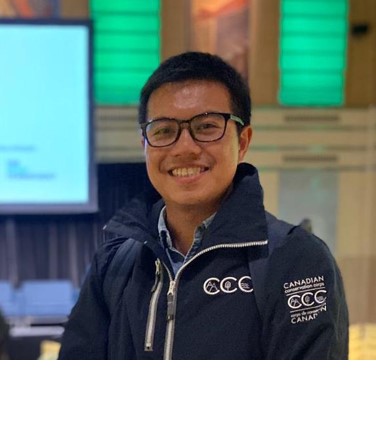
BEd Student Michael Chen Competes in International “Climate Change-Makers Challenge”

Michael Chen, OCT (BEd student, Orillia campus) was part of a team that developed a climate change solution—entitled “Food Forests for All”—that won the “Best of the Rest” prize in the Grand Finals portion of the international Climate Change-Makers Challenge Hackathon.

The Hackathon event took place in February and March, when over 120 youth from across 15 countries and 5 continents came together at the Climate Change-Makers Challenge to build innovations to fight climate change. Each team worked over 48 hours to brainstorm, research, build, and present solutions to address climate change, and the top 12 teams were invited to the grand finals.

Michael, along with three teammates from Dalhousie University, Stanford University, and Rutgers University–New Brunswick, developed an educational website that provides resources and information on starting food forests, emphasizing Indigenous methods to help preserve the environment.

In their five-minute video pitch, Michael explains that transporting food over long distances contributes to higher carbon emissions. The team’s solution is to connect people to mobilize and start their own carbon sequestering food forests locally, while minimizing barriers such as the lack of access to space and funding, and a knowledge gap when it comes to Indigenous gardening practices.

The team’s prototype website outlines the potential of food forests to address climate change, including a guide to develop food forests and the required resources. It also features an interactive Impact Map, identifying Indigenous lands throughout Canada and a mapping of established, in progress, and proposed regions for food forests. The team plans to create a new website which will become a platform to connect Indigenous and non-Indigenous knowledge keepers and those interested in starting a food forest.

Michael Chen

Lakehead, Confederation and Canadore sign MOU to develop seamless transfer opportunities for Indigenous students

February 12, 2021 – North Bay, Thunder Bay and Orillia, Ont.

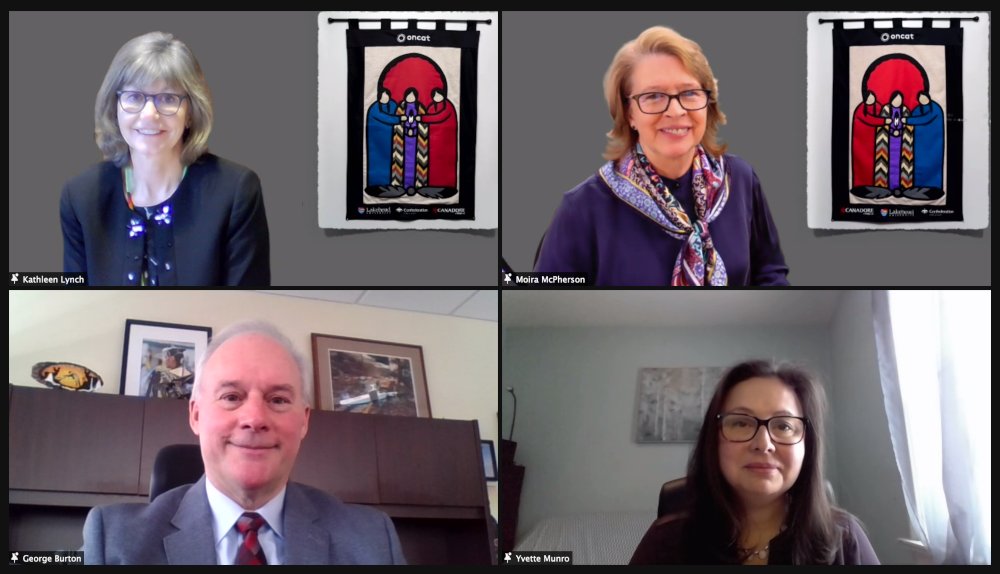
The presidents from Lakehead University, Confederation College, and Canadore College signed a memorandum of understanding (MOU) via Zoom on Friday, February 12 to encourage and facilitate educational opportunities for Indigenous transfer students.

Click here to watch the virtual signing event.

The five-year MOU comes after these post-secondary institutions collaborated on several recent projects funded by the Ontario Council on Articulation and Transfer (ONCAT) exploring the enhancement of wrap-around supports for Indigenous transfer students. These are team-based supports that ensure the post-secondary institutions understand each student's strengths and provide a network of holistic support.

“It’s great to see colleges and universities finding ways to work together to support students in the north,” said the Honourable Ross Romano, Minister of Colleges and Universities. “With support from ONCAT, the ability for Indigenous students to transfer easily and gain a post-secondary credential will strengthen the well-being and economy of Indigenous communities.”

“ONCAT is thrilled to collaborate with our partners at Lakehead University, Canadore College, and Confederation College to improve access to programs and degrees — and reduce cultural barriers to success — for Indigenous transfer students,” said Yvette Munro, Executive Director of ONCAT. “This unique partnership will find new and better ways to support Indigenous students and enrich our learning as a transfer system.”

Specifically, projects led by Lakehead University’s Office of Indigenous Initiatives, Confederation College’s Negahneewin Research Centre (formerly Centre for Policy and Research in Indigenous Learning), and Canadore College’s First Peoples’ Centre have listened to learners, support staff, influencers, and community members.

“We are always pleased to partner with fellow post-secondary institutions that share our vision of excellence in education and support of student success,” said Kathleen Lynch, President of Confederation College. “Through our formalized relationship with Canadore College and Lakehead University on this project, we look forward to reducing barriers and increasing supports for Indigenous transfer students.”  

The MOU outlines how the schools intend to collaborate in planning for, developing, and establishing a seamless transfer agreement to strengthen retention of Indigenous transfer students at each school.

“Canadore has a proud history of commitment to Indigenous students by offering programs and services based on cultural values and practices,” said Canadore College President and CEO George Burton. “This partnership carries on that tradition and creates exciting new educational opportunities for Indigenous learners.”

The schools intend to explore the cultivation of inter- and intra-institutional academic and cultural support for Indigenous transfer students.

“Lakehead University’s commitment to social responsibility recognizes the importance of our role as a regional university in making a difference to all the communities we serve," said Lakehead University President and Vice-Chancellor, Dr. Moira McPherson. "This MOU further demonstrates our continuing and collective commitment to encouraging and facilitating education opportunities for Indigenous learners."

The first point of contact for student-transfer-focused collaboration will be the Coordinator of Indigenous Outreach and Recruitment, Indigenous Initiatives at Lakehead University, the Registrar and Director, Strategic Enrolment Services at Canadore College, and the Registrar at Confederation College.

The schools will establish an internal and external working group. The external working group will consist of the Vice-Provost, Indigenous Initiatives, the Coordinator of Indigenous Student Services Centre, and the Coordinator of Indigenous Outreach and Recruitment at Lakehead University, who will meet with designate(s) from Canadore College and designate(s) from Confederation College to make progress on the principles of the MOU.


– 30 –


Media are invited to reach out to the contact(s) listed below to request more information or an interview from each institution:

Lakehead University

Brandon Walker, Media, Communications and Marketing Associate

(807) 343-8177

mediarelations@lakeheadu.ca


Confederation College

Ashleigh Quarrell, Manager, Communications and Public Relations

(807) 632-5296

aquarrel@confederationcollege.ca


Canadore College

Cindy Males, Public Relations and Communications Specialist

(705) 475-2538

cindy.males@canadorecollege.ca


ONCAT

Ana Skinner, Manager, Funding Programs
(647) 637.8501
askinner@oncat.ca


Lakehead University is a fully comprehensive university with approximately 9,700 full-time equivalent students and over 2,000 faculty and staff at two campuses in Orillia and Thunder Bay, Ontario. Lakehead has 10 faculties, including Business Administration, Education, Engineering, Graduate Studies, Health & Behavioural Sciences, Law, Natural Resources Management, the Northern Ontario School of Medicine, Science & Environmental Studies, and Social Sciences & Humanities. Lakehead University’s achievements have been recognized nationally and internationally, including being ranked, once again, among Canada’s Top 10 primarily undergraduate universities in Maclean’s 2021 University Rankings; as well as included in the top half of Times Higher Education's 2020 World Universities Rankings for the second consecutive year, and 98th among 766 universities from around the world in THE's 2020 Impact Rankings (which assesses institutions against the United Nations’ 17 Sustainable Development Goals). Visit www.lakeheadu.ca. 


Confederation College has been serving the citizens of northwestern Ontario since 1967 meeting the educational needs of students in a catchment area of some 550,000 square kilometres. Along with its main campus in Thunder Bay, Confederation College has eight regional sites located in Dryden, Fort Frances, Greenstone, Kenora, Marathon, Sioux Lookout, Red Lake and Wawa. Confederation College delivers exceptional education and training to an average of 7,000 combined full- and part-time students per year and currently has over 850 full- and part-time employees. Confederation’s regional economic impact and contribution is currently valued at $643.4 million annually. Visit www.confederationcollege.ca.


Canadore College trains people through applied learning, leadership and innovation. It provides access to over 80 full-time quality programs and has outstanding faculty and provides success services to students from nearly 400 Canadian communities and 15 international countries. The College, its students, and alumni add in excess of $244 million to the Nipissing Parry Sound service area economy. Approximately 1,000 students graduate from Canadore each year, and they join 46,000 alumni working across the globe. Canadore receives less than 50 per cent of its traditional funding from the provincial Ministry of Colleges and Universities and relies on its own innovation and entrepreneurial endeavours and generous donors for the balance.


Established in 2011, the Ontario Council on Articulation and Transfer (ONCAT) was created to enhance academic pathways and reduce barriers for students looking to transfer among Ontario’s public colleges, universities, and Indigenous Institutes. Working with our network of Ontario’s 45 colleges and universities, Indigenous Institutes, students, government, guidance counsellors, as well as other stakeholders provincially and nationally, ONCAT is building a culture and understanding of transfer so that students can pursue a more seamless and affordable post-secondary education. ONCAT is funded by the Government of Ontario. For more information, please visit www.oncat.ca.

Lakehead’s Ogimaawin Indigenous Education Council welcomes new members and names the new Chair

February 11, 2021 – Thunder Bay and Orillia, Ont.

Lakehead University’s Ogimaawin Indigenous Education Council (OIEC) has recently undergone a series of transformations following a thorough review of its bylaws, including revisions to its name, its mandate, and its membership.

Formerly known as the Ogimaawin Aboriginal Governance Council, the transition to Ogimaawin Indigenous Education Council came after its members believed that the new name aligned their group with similar Indigenous Education councils at other Ontario universities.

The OIEC continues its evolution as an important advisory body to Lakehead University. Its members include representatives from surrounding Indigenous community organizations and the OIEC has representatives on the University’s Board of Governors and Senate.

The OIEC meets several times a year together as a Council, and also with Lakehead’s President, to discuss and advise on issues related to Indigenous post-secondary education opportunities. The renewed focus elevates the opportunities for membership and input from Indigenous organizations and members at large. 

“The Council members constitute an invaluable resource to our University community, and we are very grateful for the positive impacts they have had, and will continue to have, on Lakehead’s success,” Dr. McPherson said. 

Lakehead University’s Ogimaawin Indigenous Education Council (OIEC) recently named Valerie Stortini as its new Chair.

“The OIEC is an engaged group of people from the University community, as well as the community at large,” said Stortini, who joined the Council in 2017 and is the Employment Counsellor for the Apatisiwin Program at the Thunder Bay Indigenous Friendship Centre.

“We meet regularly and contribute in many ways to advancing Indigenous content in Lakehead University’s curriculum.  I look forward to continuing in my role as Chair of the OIEC,” she added.

Dr. McPherson added, “I look forward to working with Valerie and the other members of the OIEC as we continue to strengthen engagement with Indigenous communities and work together to enhance experiences and outcomes for Indigenous students.”

Through its Strategic and Academic Plans, Lakehead University has committed to continuing to advance the Truth and Reconciliation Commission’s Calls to Action and Universities Canada’s Principles on Indigenous Education, recognizing that education is key to reconciliation and to the creation of a culture of understanding and appreciation throughout the University that will support a more equitable future for Indigenous people.

In alignment with the University’s Strategic and Academic Plans, the OIEC conveys the interests and concerns of Indigenous communities and serves as a channel of communication between Indigenous peoples and the University regarding issues that affect Indigenous post-secondary education.

The OIEC is currently undergoing a recruitment campaign to fill 10 vacancies on the Council. There are currently seven vacancies for members from Thunder Bay and Simcoe County organizations and three for at-large members.

Joining the OIEC is an opportunity to make long-lasting contributions to quality education and experiences at Lakehead University, ultimately benefitting students and the communities that Lakehead serves.

There is no deadline to apply. Nominations are accepted on an ongoing basis. Visit the recruitment section of the website for more information.

To learn more about the OIEC, visit lakeheadu.ca/about/sg/ogimaawin-indigenous-education-council-oiec-/about.


– 30 –


Media: For more information or interviews, please contact Brandon Walker, Media, Communications and Marketing Associate, at (807) 343-8177 or mediarelations@lakeheadu.ca.


Lakehead University is a fully comprehensive university with approximately 9,700 full-time equivalent students and over 2,000 faculty and staff at two campuses in Orillia and Thunder Bay, Ontario. Lakehead has 10 faculties, including Business Administration, Education, Engineering, Graduate Studies, Health & Behavioural Sciences, Law, Natural Resources Management, the Northern Ontario School of Medicine, Science & Environmental Studies, and Social Sciences & Humanities. Lakehead University’s achievements have been recognized nationally and internationally, including being ranked, once again, among Canada’s Top 10 primarily undergraduate universities in Maclean’s 2021 University Rankings; as well as included in the top half of Times Higher Education's 2020 World Universities Rankings for the second consecutive year, and 98th among 766 universities from around the world in THE's 2020 Impact Rankings (which assesses institutions against the United Nations’ 17 Sustainable Development Goals). Visit www.lakeheadu.ca. 


Dr. Sonia Mastrangelo Receives Grant to Explore Well-Being Among Residents of Camphill Communities Ontario

With the support of a SSHRC Partnership Engage Grant, Dr. Sonia Mastrangelo (Associate Professor, Orillia campus) is undertaking a qualitative study to explore the lived experiences of adults with developmental disabilities living in a care farm setting.

Lakehead University has established a partnership with Camphill Communities Ontario, a not-for-profit organization that provides adult-centered residential programs for adults with developmental disabilities. The property, located in Angus, Ontario, is home to a biodynamic farm, garden, herbery, bakery, pottery studio, woodworking shop, and performance hall, and offers day programs, arts and crafts, artistic and wellness activities, and social and cultural opportunities for residents.

Sonia explains that the study will document well-being among the adult residents of Camphill Communities Ontario, and will closely examine the potential benefits and impacts of engaging in a broad range of activities, including farming, animal care, gardening, maple tree syrup collection/production, woodworking, baking, and pottery. The research will proceed using a community-based participatory action research model.

“Using a video-based observation research approach coupled with video-elicitation interviews, the research will honour the voices of marginalized adults (namely, those with developmental disabilities) in the research process and document well-being and outcomes from their perspective. I will explore their experiences, including the impacts and benefits of being involved in farming and program activities in the care farm setting,” she notes.  

Her research project, titled An Exploration of Well-Being in Adults with Developmental Disabilities Residing at Camphill Communities Ontario, marks the first time that Camphill Communities Ontario has undertaken a systematic evaluation of the impacts of their programming during their 30+ years of operation.

The research findings will assist Camphill Communities Ontario with future program development, program expansion, services and policy development. As part of the one-year research project, a documentary will be created and shared with other not-for-profit organizations that provide day and residential services to individuals with exceptional needs.

Sharing Geography Teaching Strategies and Resources: Randy Wilkie

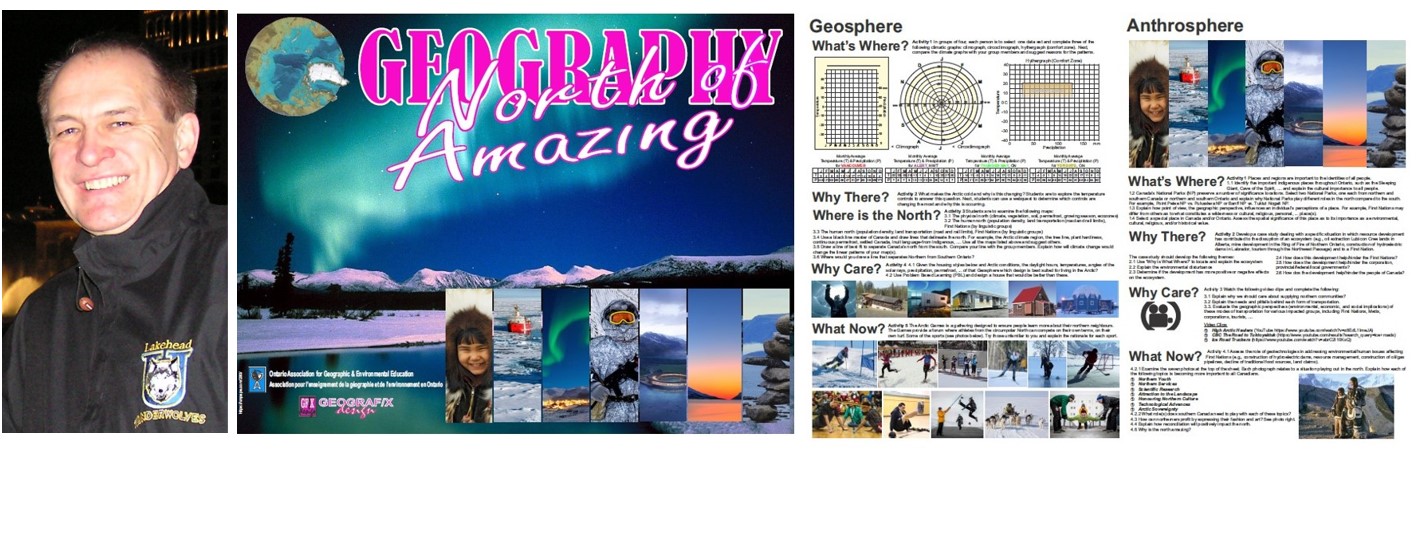
Randy Wilkie (Contract Lecturer, Thunder Bay campus, and retired high school Geography teacher) has a long history of developing and sharing Geography-related teaching strategies, resources, and experiences with pre-service teachers.

He explains: “Geography and teaching are a passion. When I was contemplating retiring as a high school teacher, I witnessed other retiring teachers emptying entire filing cabinets of lesson plans and other resources in the school dumpster. I thought this was such an ignoble end to a great career. While I was about to retire, I knew that I wasn’t really ready; I just needed new challenges. So, when the opportunity to continue my career opened at Lakehead, I brought my resources, strategies, and experiences along for the ride to share with budding teachers.”

In recent months, Randy has developed and shared teaching strategies in a variety of forms: via posters, conference presentations, and publications. Here are three of his recent professional contributions:

  • “North of Amazing” poster with teaching strategies (pictured below): Randy developed his 20th poster for the poster series of the Ontario Association for Geographic and Environmental Education. As OAGEE’s Regional Councilor for Northwestern Ontario, Randy develops annual posters that outline teaching strategies and activities, which he uses in his Faculty of Education teaching.
  • Tree Harvesting in the Boreal Forest: Inquiry and Thinking Skills book: Randy first developed this resource when he was teaching high school, and has perfected it over time. As part of the Forestry Series, this instructional guide for Geography teachers outlines an in-depth simulation activity in which students make decisions about tree harvesting in the boreal forest, using current logging practices within a context of profitability, sustainability, and environmental protection. In December 2020, Randy presented the simulation at the National Council for Geographic Education virtual conference.
  • “Is There a Cost to Living in a Cold Climate?” publication: This article, published in Interaction, an Australian Geography journal, outlines a comprehensive lesson plan to explore the costs of living in the Arctic region, including health, transportation, building design, construction and food costs. Randy notes: “As a member of the Geography Teachers Association of Victoria (AU), I thought, what better than to give the Aussies a perspective of what it is like to live in a northern nation."

Randy’s dedication to promoting geographic literacy among his students has been recognized through the OAGEE Award of Distinction, and his status as a Fellow of The Royal Canadian Geographical Society.

Pictured below: Randy and his “North of Amazing” poster.

Dr. C. Nathan Hatton Guest Speaker on Champlain Society's Podcast Witness to Yesterday

Patrice Dutil  on Witness to Yesterday, talks with Dr. Hatton of Lakehead University about the evolution of wrestling in Winnipeg and Manitoba from the 1880s to the 1930s. He is an Assistant Professor to the Department of History and  also the Public History Program Coordinator for the department.

“Dr. Hatton in the podcast on Witness to Yesterday covers the evolution of the sport from its Indigenous origins and how it reflected the tensions between amateurs and professionals. Dutil and Hatton discuss the enduring popularity of the sport. Hatton explores wrestling as a social phenomenon intimately bound up with debates around respectability, ethnicity, race, class, and idealized conceptions of masculinity.”

Click on the link to listen to the podcast aired December 11, 2020 with interviewer Patrice Dutil, produced by Jessica Schmidt .

Pages

Subscribe to Indigenous