Indigenous

Local high school students get creative in online workshop with Lakehead prof

April 30, 2020 - Orillia, Ont.

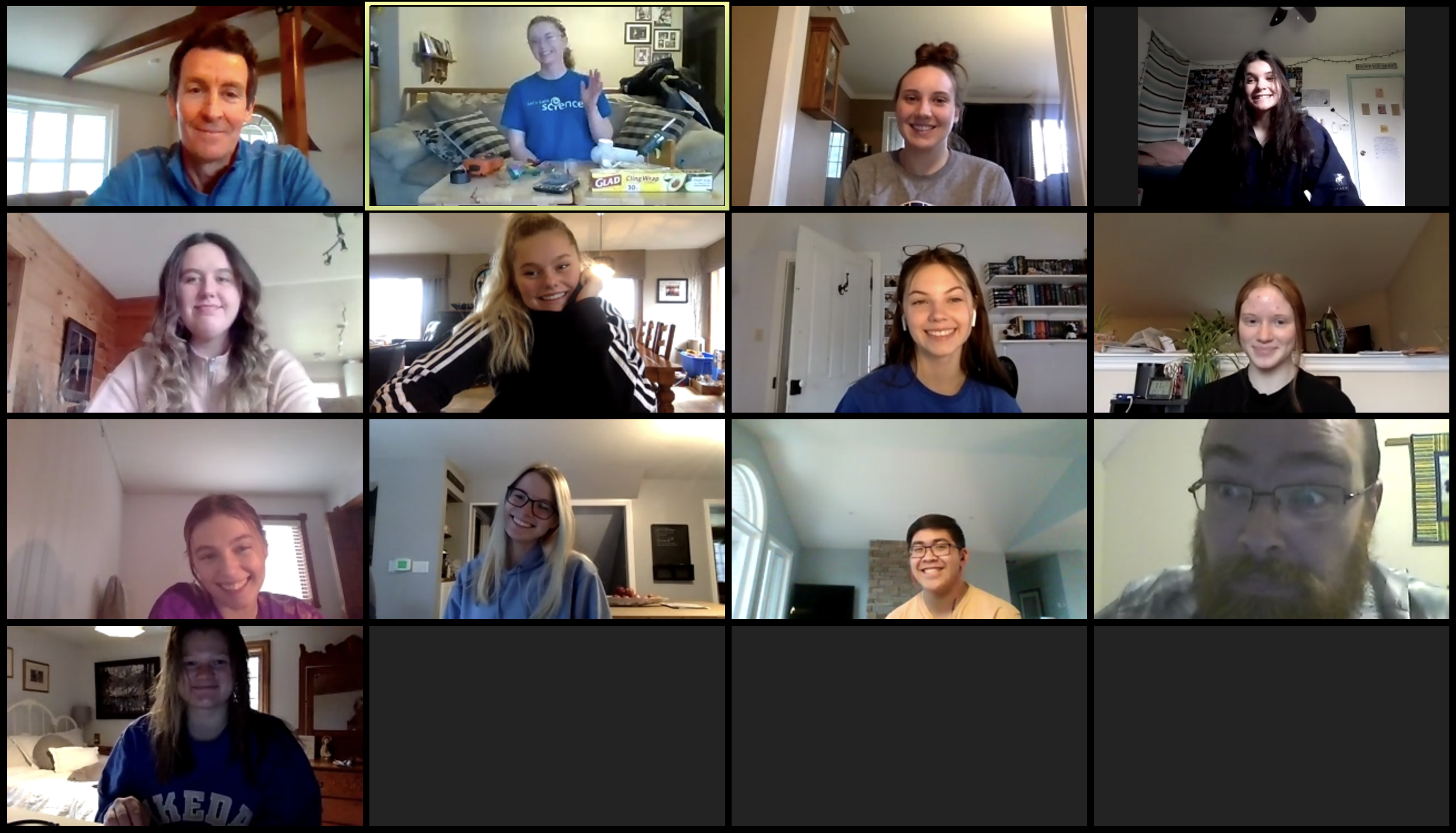
Grade 11 students in Jeff Cole's environmental science class at Patrick Fogarty Catholic Secondary School are continuing to get hands-on Let's Talk Science programming through a unique partnership with Lakehead University professor Chris Murray, associate professor in the departments of sustainability sciences and physics.

In partnership with Cole, Murray has developed a way to keep high school students engaged while schools are closed due to the COVID-19 pandemic. Using materials they find at home students carry out a weekly experiment, following a lesson given through a Zoom session by Murray and his student assistants from Lakehead.

Here is the entire OrilliaMatters story.

Nine local high school students take part in a Zoom Let's Talk Science lesson

Master of Education Students Honoured as Lakehead Leaders

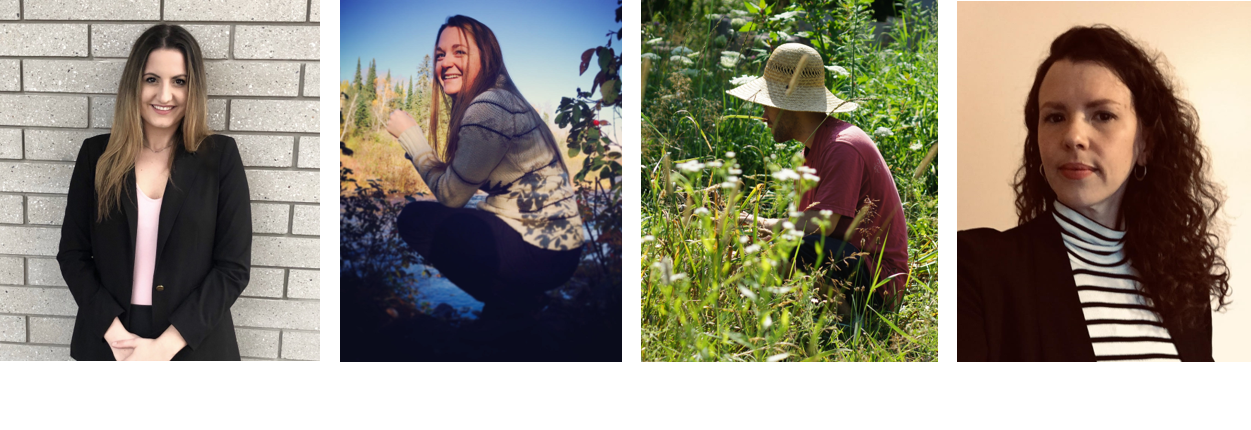
This year marks the fourth year of the Lakehead Leader Recognition Program, a program based on the principles of Lakehead University’s motto: Achievement through Effort. The Faculty of Education extends congratulations to three current Master of Education students and one MEd alumna who have been named Lakehead Leaders, in recognition of their contributions on campus and within their communities. 

Gia Spiropoulos, MEd student (Orillia) has been recognized as a Lakehead Leader in the category of Citizenship and Community Engagement. Gia has taken on a leadership role with the Women’s Extramural Basketball program. She stepped up to fill the vacant coaching position as a player-coach, actively supports her teammates in their academic endeavours beyond the court, and volunteers as a basketball coach with a girls’ team in Barrie, where she is inspiring a future generation of athletes.

Courtney Strutt, MEd student (Thunder Bay) has been recognized as a Sustainability Leader. Courtney plays an active role in organizing climate change-related activism in the community, and her thesis is centered on how community activists can address the crisis of values behind climate change related to solidarity work between Indigenous people and settlers. She supported the curriculum development of the undergraduate Climate Change Pedagogy course and is widely involved in University and community working groups focused on climate action, sustainability, and solutions.

Jacob Kearey-Moreland, MEd student (Orillia) has been recognized as a Sustainability Leader. Jacob is focused on creating opportunities to assist and uplift those facing food insecurity. His work with Lakehead’s Farm Club—which strives to “grow food and farmers of the future” to nourish the whole student body, mentally and physically—is a testament to his dedication. He has produced local organic CSA food boxes for a number of years and hosts events and tours at his farm, to advocate for food sustainability through community supported agriculture.

Erin Chochla, MEd alumnus; current Law student (Thunder Bay) has been recognized as a Lakehead Leader in the category of Academic Excellence. An exceptional student, admired teaching assistant, and excellent research assistant in Lakehead University’s Bora Laskin Faculty of Law, Erin is lauded by faculty for her performance in the classroom and her high degree of integrity and respect for others.  

Further details on the 2020 Lakehead Leaders, and their accomplishments, are published here.

Pictured below: Gia Spiropoulos, Courtney Strutt, Jacob Kearey-Moreland, and Erin Chochla.

Dr. Michel S. Beaulieu and Brian de Ruiter publish article for The Champlain Society online journal

Article written for The Champlain Society published, authored by Dr. Michel S. Beaulieu and Brian deRuiter with a special thanks to Erno Rossi.

Outside the Barbed Wire Fence: Oral History and German POWs in Wainfleet Township examines the richness of oral history recounting POWs in the workforce during WWII in Ontario. The article appears under the link Findings/Trouvailles on The Champlain Society blog page, click here to read.

Research in Action: Studies reveal impacts of police surveillance technology

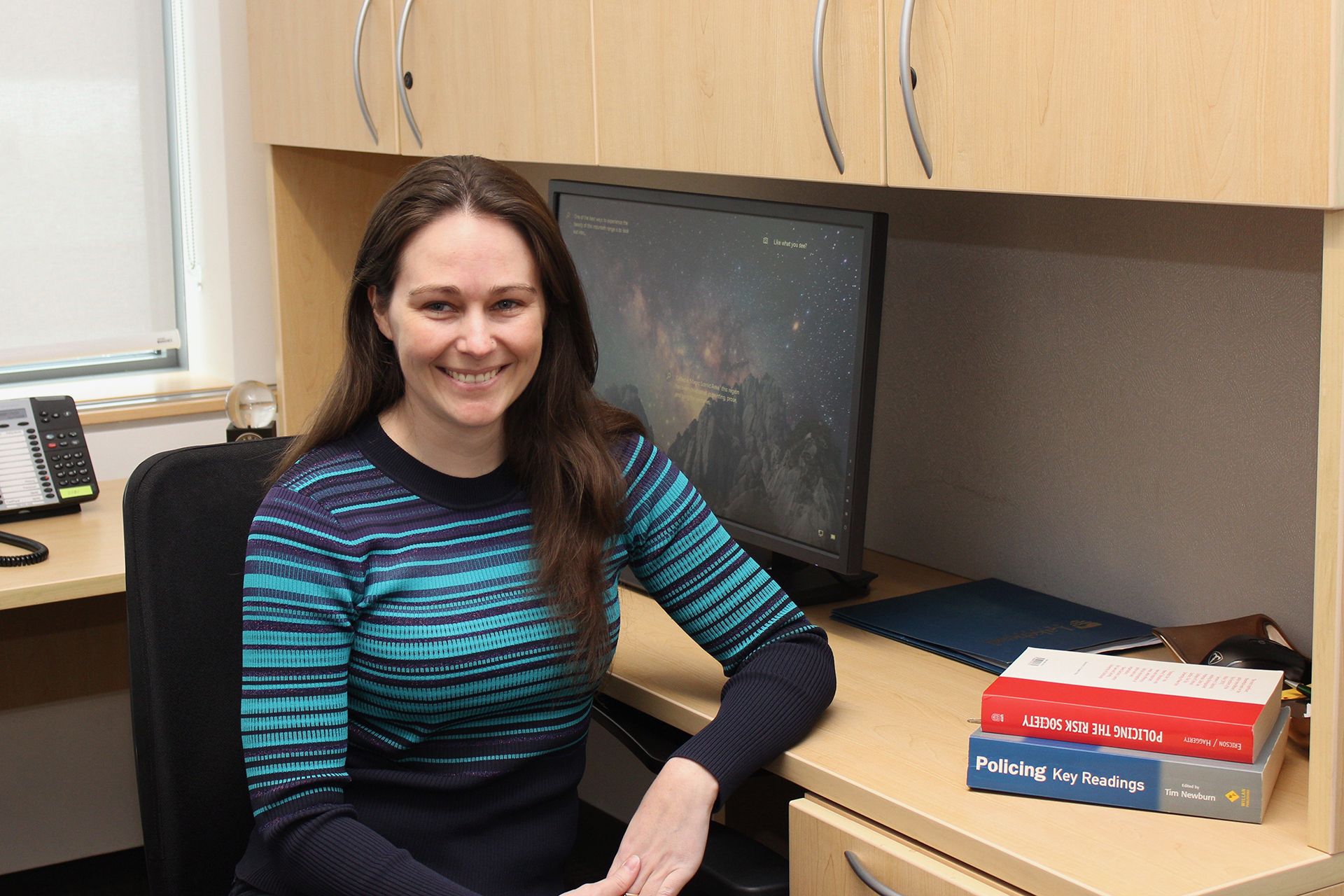
As a researcher studying the use and impacts of police body-worn cameras, Dr. Alana Saulnier is often asked if she’s for or against surveillance technology.

“I always say that I don’t know, and that it’s dependent on the situation and the stakeholder perspective you adopt,” says Saulnier, a criminology professor at Lakehead University’s Orillia campus. “As a researcher, I’m not going in with a bias – I’m there to see what the data can tell us.”

And as Saulnier is proving, the data has a lot to say.

Largely driven by the public push for surveillance technology in the US, body-worn cameras (BWCs) are being piloted and adopted by a growing number of police services across Canada, including Thunder Bay and Toronto. But without rigorous study of the benefit, there are unanswered questions about the cost, additional workload, and best practices for use.

Saulnier’s partnership with the Durham Regional Police Service is in fact the first major external evaluation of the impact of this surveillance technology on policing in Canada. Drawing on dozens of in-depth interviews, more than 300 public surveys, and information from over 30,000 calls for police service, she’s built a rich pool of data to explore.

“It’s a sensitive issue, but the officers were all very open and receptive to the research,” says Saulnier. “Our partnership meant we could really examine if there is evidence to support the intended reasons for using this tech.”

For example, her data showed there does not tend to be a difference in daily workload between officers using or not using a BWC; the exception being BWCs increasing the time taken to resolve traffic calls by roughly six minutes. And when camera footage was flagged and tracked as evidence for prosecutors, it provided significantly more pro-prosecution court resolutions – a procedural insight that could translate to real time and cost savings in the justice system.

During a R.I.D.E. check stop project, Saulnier and her student research assistants also found that people described police encounters as more positive when the cameras were used. One explanation, suggests Saulnier, is that the technology may act as a symbolic gesture to community members that police are attentive to public concerns linked to the uptake of BWCs.

Her interviews with victims of domestic and sexual violence provided further valuable perspective on the use of BWCs, audio vs. video recording, and disclosure and consent of surveillance – information that can help better support vulnerable survivors.

“Police surveillance should always be for the public,” says Saulnier, who will submit her final 140-page report to the Durham Regional Police Services Board in March 2020. “How can we make evidence-based decisions about the use of technologies like BWCs, as well as evidence-based policies when the tech is adopted, that make policing and surveillance for people? These are the critical questions I ask in my classes and in my research.”

Dr. Alana Saulnier is the Criminology Program Coordinator and an Assistant Professor in the Department of Interdisciplinary Studies at Lakehead University, Orillia. Her research on body-worn cameras in partnership with the Durham Regional Police Service was funded by the Social Sciences and Humanities Research Council.

Dr. Alana Saulnier

Fighting Pandemics

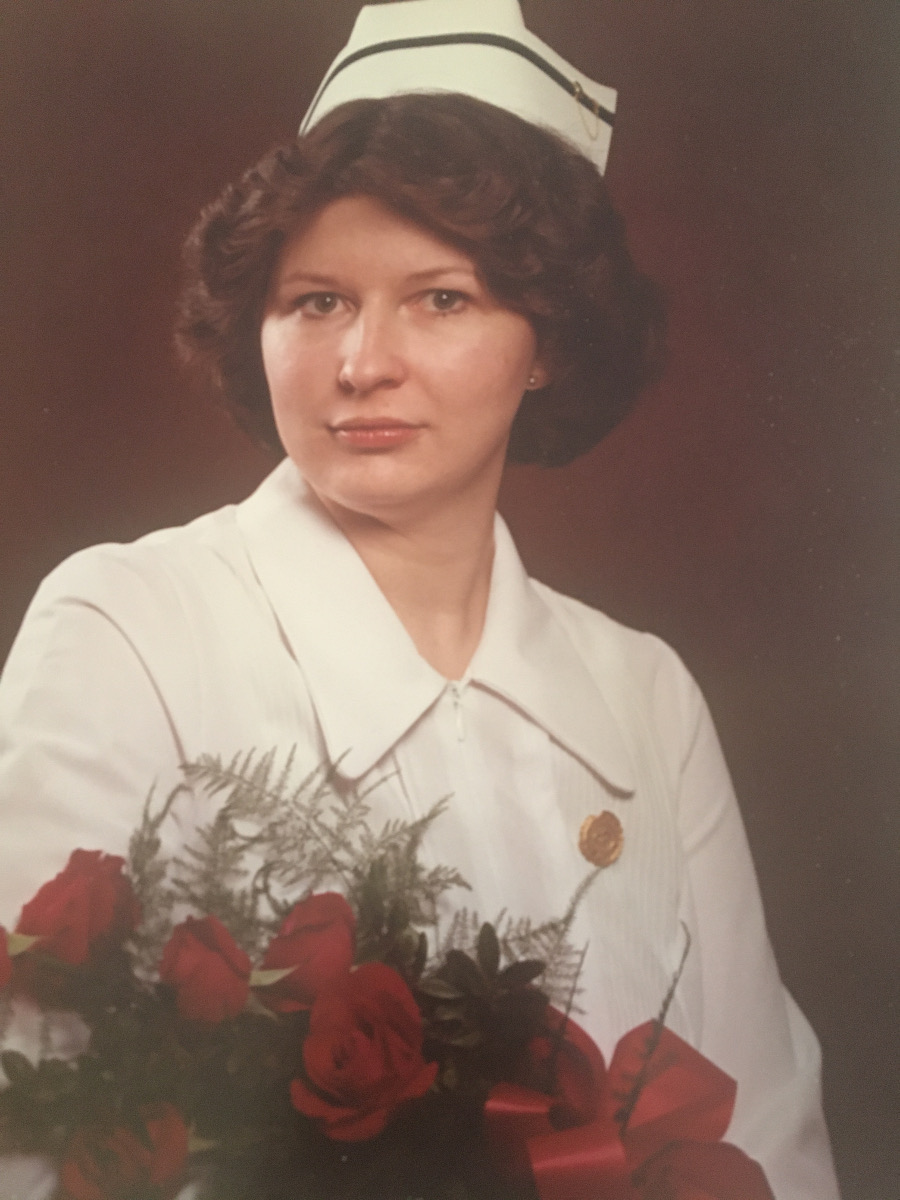
graduation photo

“Lakehead University’s nursing program is outstanding,” Pat says. “My degree prepared me to work in many healthcare settings in acute care, long-term care, community, and government.”

Alumna Pat Piaskowski is a Leader in Infection Control

“It’s so wonderful to be in Canada,” says nursing alumna Pat Piaskowski, “and to have such strong organizations, groups, and networks of individuals working so hard to control COVID-19 and protect the health of Canadians!”

Pat has been an infection control (IC) consultant since retiring from Public Health Ontario in 2015. Now she’s ready to step up and help fight the COVID-19 pandemic – and she has over 40 years of healthcare experience on her side.

She earned a nursing diploma in 1979 from Confederation College in Thunder Bay and several years later enrolled in Lakehead’s nursing program, completing her degree via distance education. She excelled in her studies, graduating with her Honours Bachelor of Science in Nursing, First Class Standing, in 2003.

“I remember doing classes by teleconference at the LU Faculty of Education building with a group of healthcare colleagues who were returning to get their degree. Many of us were already in healthcare leadership positions and wanted, or needed, to upgrade our qualifications.”

Pat’s nursing career began in Thunder Bay homes for the aged where she was eventually took on the role of nursing program developer before moving into infection control.

“During a Norovirus outbreak at the homes I was appointed infection control nurse. A few years later I became the director of care at the former Central Park Lodge.”

Pat received her Certification in Infection Control (CIC) in 1991 and was hired as the sole infection control professional (ICP) at the Thunder Bay Regional Hospital in 1993, now the Thunder Bay Regional Health Sciences Centre (TBRHSC). For nine years she worked with staff, managers, physicians, and local public health professionals to control and prevent infectious outbreaks like resistant bacteria (MRSA, VRE and ESBLs), Norovirus, and SARs.

“I still get emotional talking about the nurses and doctors who became ill or died during SARS. I am very concerned about the health of all our healthcare workers during this current COVID-19 pandemic.”

After leaving the TBRHSC, Pat was instrumental in setting up the first of the Province of Ontario’s regional infection control networks and later became one its first regional network coordinators. This entailed providing infection control training and education materials to healthcare organizations across Northwestern Ontario. An average road trip was over 1,200 km, Pat recalls, and included collaborations with remote and urban First Nation communities.

Dealing with threats to the lives and health of patients and staff has given Pat the ability to thrive in high-stress situations. She volunteers with Shelter House and her church and relies on her religious beliefs and family and friends to keep her strong. “My eight grandchildren give me so much hope for humanity and our future,” Pat says. She’s also a fan of camping, fishing, family dinners, and barbecues – “the noisier the better.”

In the last few months, Pat has been turning her attention to the crisis engulfing the globe.

“I just completed a contract with the Public Health Agency of Canada as a scientific writer for the revised infection control document for COVID-19 in acute healthcare settings,” she explains. Pat has also taken on an unofficial role – confronting and correcting the onslaught of false information about the virus circulating on social media.

The Lakehead University community is honoured to share the story of this distinguished alumna – Pat Piaskowski makes us Lakehead proud.


Pat Piaskowski was an inaugural member on Ontario’s Provincial Infectious Disease Advisory Committee (PIDAC), the editor in chief of the Canadian Journal of Infection Control, and the co-founder of the International Infection Control Council.

Thunder Bay Museum and Lakehead University’s Department of History Team up for Free, Live Webinars

Hump Day History is intended to get you over the mid-week hurdle with a little bit about our region’s past. Every Wednesday evening at 7:00 PM EST (unless otherwise noted) for the months of April and May, the Thunder Bay Museum will be bringing you live broadcasts from local historians, as well as behind the scenes look at the museum’s collections.

These free live and interactive webinars will be moderated by Dr. Michel S. Beaulieu, Professor of History at Lakehead University, and Mr. Scott Bradley, the Thunder Bay Historical Museum Society’s Executive Director.

Please check webinar dates on our Events Column and, to find out more, go to the museum webinar link here.

Dr. Michael Stevenson and co-writer Greg Donaghy article in "The Star" Valuable Read

Dr. Michael Stevenson, History and Interdisciplinary Studies has published an article co-written with Greg Donaghy in The Star (Toronto, online) titled "Lessons from the Second World War on sharing the burden equally."

It is an example of the value that the study of history has in helping to navigate difficult times.

Read the article link here.

Clark and Bettencourt named Orillia Thunderwolves 2019-2020 athletes of the year

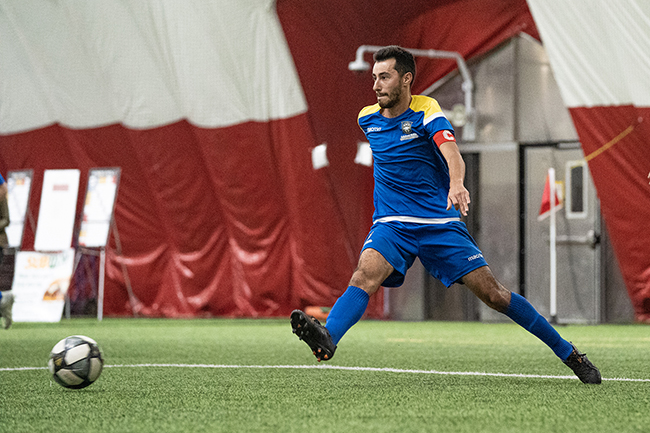
A men's soccer player kicks the ball during a game


Chris Bettencourt member of the varsity men's indoor soccer team.

March 27, 2020 – Orillia, Ont.

The Lakehead Orillia Thunderwolves didn’t let the cancellation of the annual Athletic Awards Banquet stop them from celebrating a successful 2019-2020 athletics season. On Friday, March 27, the Thunderwolves handed out awards to student athletes during a virtual banquet.

“This isn’t the way that we wanted the season to end, but it was important for us to celebrate the accomplishments of our athletes with their teammates and peers,” explained Sarah Batley, Student Athletics and Wellness Coordinator. “Thank you for the incredible spirit and passion you have shown, this year, for your sport. And a special thanks to our graduating athletes. Congratulations to everyone, in particular our award winners.”

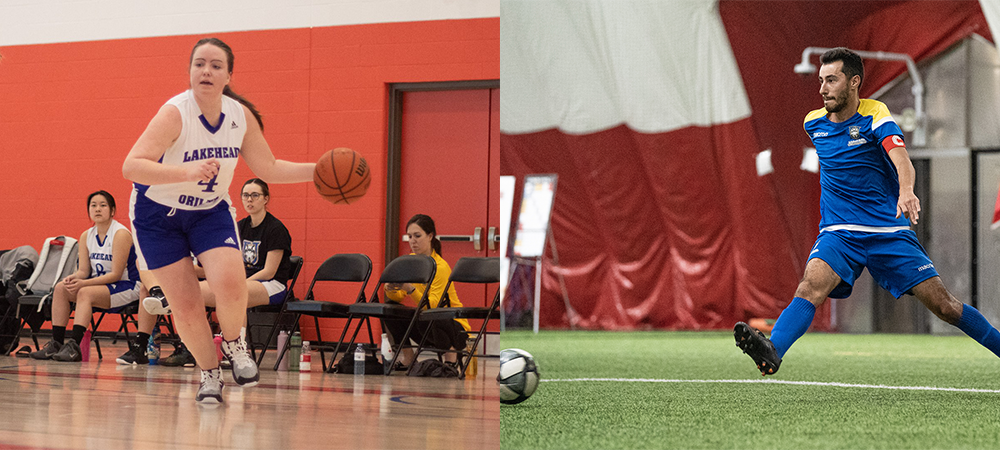
Hannah Clark (women’s basketball) and Chris Bettencourt (varsity men’s indoor soccer) were named 2019-2020 Athletes of the Year.
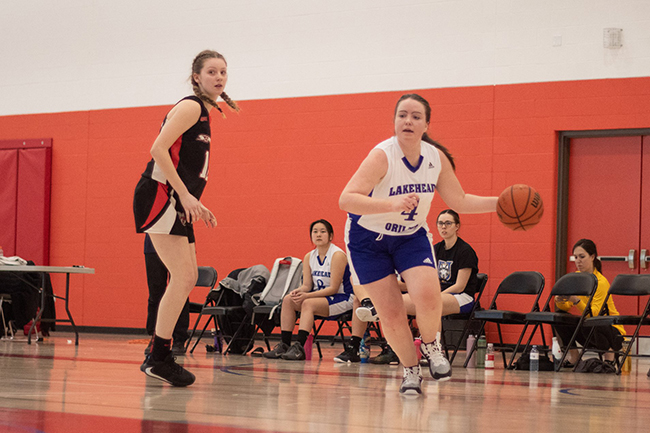
A female basketball player dribbles a basketball down the court

Hannah Clark of the women's basketball team.

Clark, a Master of Education student, helped lead the women’s basketball team to three championships. This year, she stepped up to mentor and welcome new players into the Thunderwolves family, and committed to making the new on-court partnership with the Georgian Grizzlies a success.

Bettencourt, a fourth-year Business Administration student, will leave the program on solid footing. For four years, Bettencourt led the varsity men’s indoor soccer team with dedication, charisma and hard work. As team captain, he took an active role in supporting the first-year players and ensuring that they adapted to the program and the collegiate level of play.
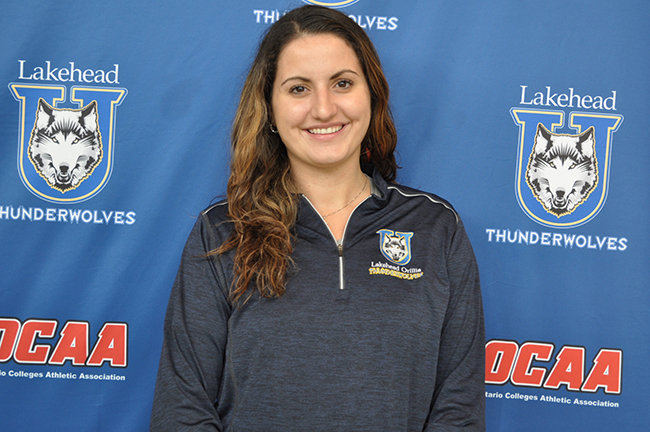
Gia Spiropoulos player-coach

Gia Spiropoulos, player-coach for the women's basketball team.

The new Principal’s Award for Leadership in Athletics and Recreation was presented to Gia Spiropoulos (women’s basketball) and Peter Scholtes (men’s basketball). Both Spiropoulos and Scholtes stepped up to take on player-coach roles for their respective teams in their first year with the Thunderwolves. Neither of these student-athletes needed to take on the role of coach, adding to their already demanding academic programs, but they both did so in order to allow their teammates to continue playing.
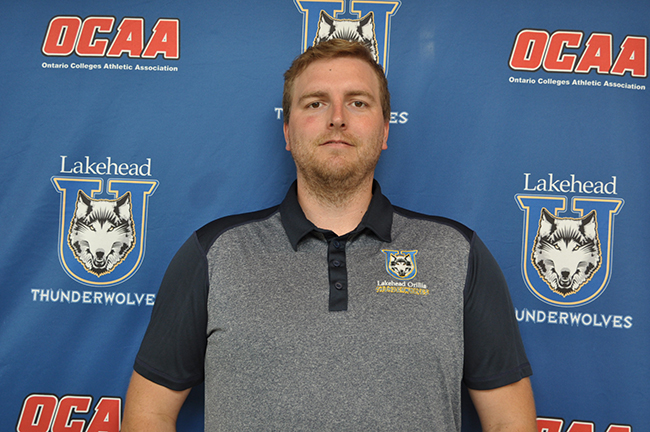
Peter Scholtes player-coach

Peter Scholtes, player-coach for the men's basketball team. 

Another major award winner was varsity golfer Lucas Chiarot who received the Ontario Colleges Athletic Association (OCAA) All-Academic Award. The OCAA All-Academic Award is presented to full-time student athletes who also meet honours academic standards at Lakehead University.
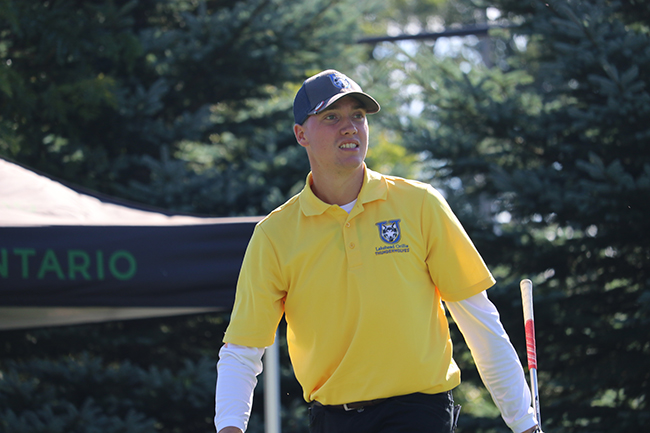
A young man watches his golf ball after a chip shot

Lucas Chiarot, member of the varsity men's golf team and recipient of the OCAA All-Academic Award.

Awards were also presented to top student athletes in each of the University’s sports teams: varsity golf, equestrian, men’s and women’s hockey, dance, men’s and women’s varsity indoor soccer, and men’s and women’s basketball. Most valuable player and rookie of the year were announced and presented by the team coaches, who were also recognized and thanked by the University.

A complete list of award winners from the evening can be found below as well as on our website www.orilliathunderwolves.ca

Athletes of the Year

Hannah Clark – Women’s Basketball
Chris Bettencourt – Varsity Men’s Indoor Soccer

Principal’s Award for Athletics in Leadership and Recreation

Gia Spiropoulos – Women’s Basketball
Peter Scholtes – Men’s Basketball

Team Awards

Men’s Basketball
MVP: Kurtis Page
Leadership Award: Brett Tomlinson

Women’s Basketball
MVP: Breanna Shaw
Rookie of the Year: Avery Williams

Dance
MVP: Lauren Oke
Most Dedicated: Elizabeth Reynolds

Equestrian
MVP: Jill Widdifield
Rookie of the Year: Meaghan Welch

Varsity Golf
MVP: Josh Brown
Rookie of the Year: Alex Castanheiro

Men’s Hockey
MVP: Santino Tonigussi
Rookie of the Year: Kyle Kopko

Women’s Hockey
MVP: Jordan Bolzon
Rookie of the Year: Fairyn Bannerman

Men’s Varsity Indoor Soccer
MVP: Chris Bettencourt
Rookie of the Year: Connor Chowen

Women’s Varsity Indoor Soccer
MVP: Ally Morris
Rookie of the Year: Grace Heywood

- 30 –

Media contact: Jaclyn Bucik, Media, Communications & Marketing Associate at jaclyn.bucik@lakeheadu.ca.

Lakehead University is a fully comprehensive university with approximately 9,700 full-time equivalent students and over 2,000 faculty and staff at two campuses in Orillia and Thunder Bay, Ontario. Lakehead has 10 faculties, including Business Administration, Education, Engineering, Graduate Studies, Health & Behavioural Sciences, Law, Natural Resources Management, the Northern Ontario School of Medicine, Science & Environmental Studies, and Social Sciences & Humanities. In 2019, Maclean’s 2020 University Rankings, once again, included Lakehead University among Canada’s Top 10 primarily undergraduate universities, while Research Infosource named Lakehead 'Research University of the Year' in its category for the fifth consecutive year. Visit www.lakeheadu.ca.

A woman dribbles a basketball and a young male runs after a soccer ball

Research in Action: Making mathematics more meaningful through culturally responsive education

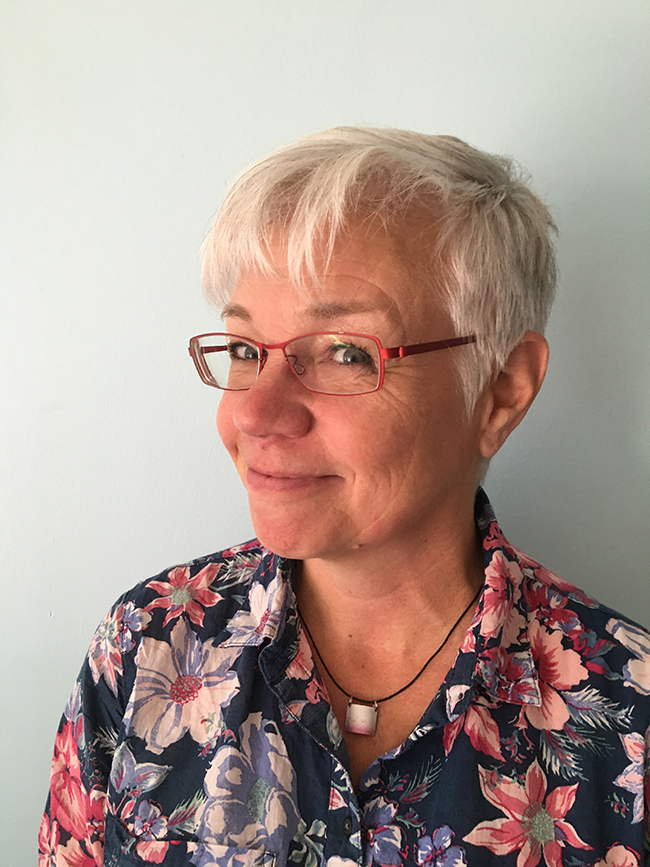
Women smiling wearing pink frame glasses and a blue flowered shirtMath is not a four-letter word. But to those with rampant math phobia, it certainly feels like it. Dr. Ruth Beatty, Associate Professor in the Faculty of Education at Lakehead University’s Orillia campus often sees students who actively dislike or even fear math. To her the problem isn’t with math itself, it’s with how the subject traditionally has been taught.
She started her research career looking at how children understand math and how educators can best teach the subject. She found that by looking beyond numbers and symbols and by taking a more holistic approach to what it means to think “mathematically” teachers could make math more accessible and fun.

Nine years ago, while teaching in the Master's program at Lakehead’s Thunder Bay campus, Beatty made a fascinating connection that has guided her work since then.

“Some of my students were First Nations educators or had been teaching in First Nation schools and we were talking about the disconnect between Indigenous culture and mathematics education in Ontario curriculum,” said Beatty. “I started visiting communities to learn more.”

While working with the Elders she realized that math is naturally embedded in Indigenous cultural practices like beadwork or birch-bark basket-, snowshoe- and moccasin-making.

“Take a beaded bracelet, for example,” says Beatty. “There's so much math in it. There is patterning and algebraic reasoning, there’s geometric transformations, proportional and spatial reasoning. There's number sense and numeration.”

With that cultural connection in mind, Beatty began a study in 2012 with the Algonquins of Pikwakanagan First Nation and teachers from the Renfrew County District School Board at a school with 20 per cent Indigenous students and 80 per cent non-Indigenous students. The project partnered community members, artists, Elders, and Knowledge Keepers with Indigenous and non-Indigenous educators to co-plan math instruction for Grade 3 and 6 students based on Algonquin loom beading. Cultural and language teachings were also integrated into the math unit.

The results were overwhelmingly positive. Indigenous students got to share their heritage and gain a sense of pride in their own knowledge systems that were valued on the same level as Western curriculum. Non-Indigenous students gained an appreciation of Indigenous culture. Most importantly, both groups learned exciting new math skills in a fun and engaging environment.

Perhaps the best endorsement of the math classes came from the students themselves. At the end of a session, with students working in their designs, making calculations to determine how many beads they would need, the teacher told them to wrap it up, math class was over. They looked up in surprise. Wait? What? Math? They had spent three hours absorbed in their learning with no idea they were, in fact, doing math.

Beatty and her team have collaborated with nine more communities around the province including The Chippewas of Rama First Nation and Simcoe County District School Board. Her work shows that math doesn’t belong to Eurocentric culture or scholars. Math is all around us and if taught in inventive, positive, and culturally responsive ways, no one needs to be afraid of it.

Faculty of Education professor Dr. Ruth Beatty and her school board partners received funding from the Social Sciences and Humanities Research Council of Canada, CanCode, and the Council of Ontario Directors of Education to carry out this important research.

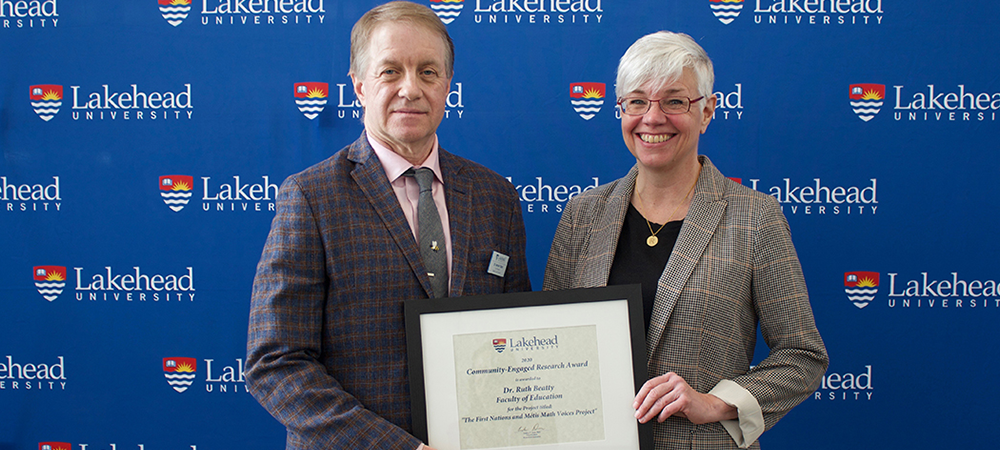
Man presents black framed award to woman during award ceremony

Pages

Subscribe to Indigenous