



ISSC Open House
Stop by for lunch and to learn about everything the Indigenous Student Services Centre has to offer. All students, staff, and faculty are welcome to attend!
Lunch provided and there are awesome student prize draws!
Stop by the ISSC for lunch and to learn about everything the Indigenous Student Services Centre has to offer. All students, staff, and faculty are invited to attend!
A big congratulations to Dr. Theresa Watt, Lakehead Program Officer, Academic and Admissions, and Contract Lecturer in the Technological Education program, on successfully defending her Doctor of Education (EdD) dissertation at Ontario Tech University.
Theresa, who is also Vice-Principal at Bear Creek Secondary School in Barrie, recently defended her dissertation, Exploring the Use of Authentic Assessment in Teacher Education: A Critical Analysis.
"As both a teacher educator and former classroom teacher, I have always been interested in assessment that feels meaningful. My research focused on authentic assessment in teacher education and how assessment tasks can better prepare pre-service teachers for the complex, practical, and reflective work of teaching," she says.
Congratulations, Theresa, on this achievement!
Explore history through multicultural fur trade era cuisine, cooking methods and tools, alongside iconic contemporary Thunder Bay foods.
Everyone is welcome to attend this annual event. Join members of the Lakehead University's Elders Council as they share traditional teachings and showcase various traditional activities. Local Indigenous artisans will also demonstrate different art forms. Participants can sample pickerel, moose, wild rice, blueberry jam and various teas. We will also harvest the medicines from Gitigaan. This event is an opportunity to learn about Indigenous culture through teachings shared by Indigenous community members while celebrating the change of season!
Hydro One and the Faculty of Natural Resources Management (NRM) are embarking on a first-of-its-kind partnership to build a more resilient power system for people across Ontario through transformative research into vegetation management.
As Ontario’s largest electricity transmission and distribution service provider, Hydro One manages over 33,000 kilometres of transmission lines provincewide. These lines are located above power corridors—strips of land that must be kept clear of tall-growing trees and vegetation to reduce the risk of power supply disruption and wildfires.
Hydro One has long been a leader in the targeted use of herbicides for vegetation management, an environmentally conscious approach that enables low-growing vegetation to thrive. But the company is constantly seeking new and innovative ways of applying herbicides to achieve the same outcomes with less product.
That’s why Hydro One’s forestry division decided to undertake its first formal research collaboration, choosing Lakehead’s Faculty of Natural Resources Management as its partner.
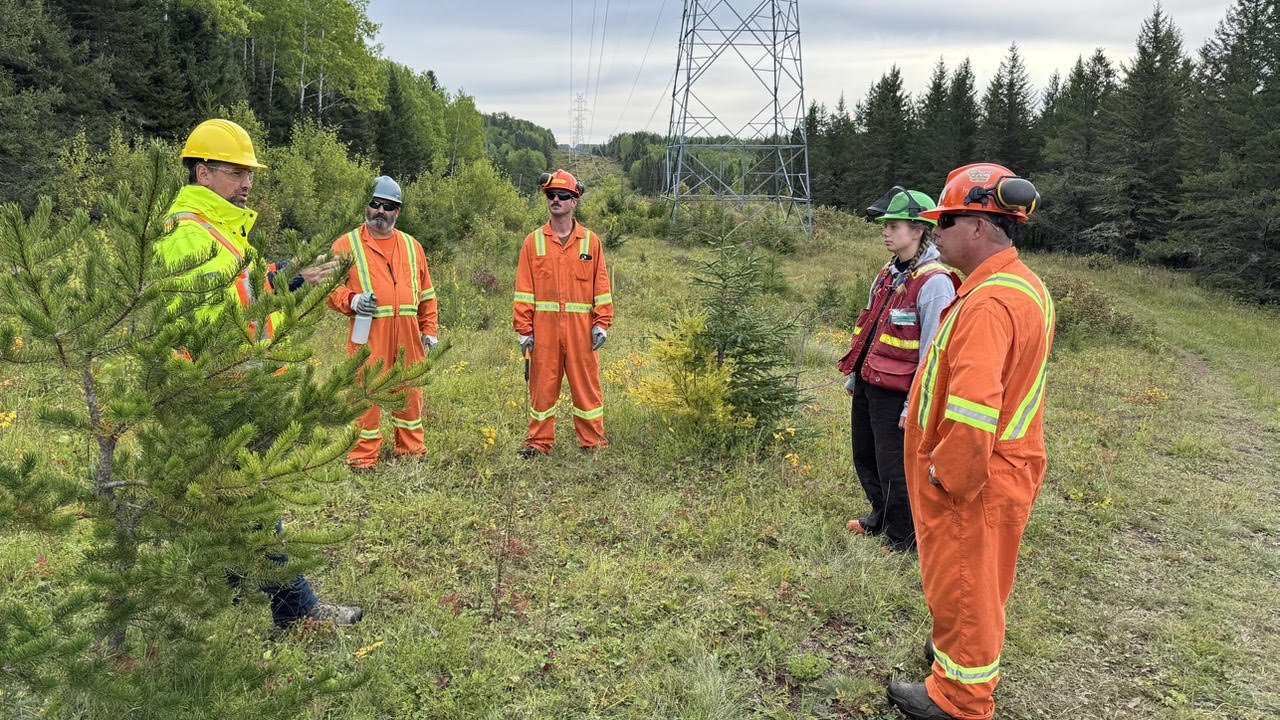
Assistant Professor Dzhamal Amishev (yellow helmet), MSc student Caitlin Stewart (green helmet), and Hydro One staff discuss the herbicide plan along the power transmission corridor in Thunder Bay.
“We spoke to multiple schools, but we chose Lakehead because of the NRM faculty’s expertise and operational on-the-ground forestry-management experience across Ontario’s diverse forest regions,” says Anthony Shi, the Hydro One Forestry program manager who initiated the project. “Their academically rigorous work will allow us to stand behind the research as we make important decisions about evolving our practices.”
Together with researchers and staff from Hydro One, the Lakehead team —including NRM dean, professor of remote sensing, and principal investigator Dr. Brigitte Leblon and co-investigators Dr. Dzhamal Amishev and Dr. Seung-Il Lee—is testing different methods of applying herbicides in two forested regions of Ontario.
They are also leveraging this research opportunity to explore new ways of assessing the effectiveness of each method and how these methods will affect pollinator populations.
Each member of the Lakehead’s research team is leading a different aspect of the project, which is funded by a major grant from the Natural Sciences and Engineering Research Council of Canada (NSERC) and Hydro One.
Dr. Leblon is using aerial imagery and deep-learning methods to detect and assess tree mortality in power corridors before and after herbicide treatment—an innovative approach which will help the research team understand the effectiveness of each treatment method at scale. Her work assessing fuel moisture from radar images will also be used to inform forest-management practices focused on reducing the risk of wildfires in powerline corridors.
“Vegetation in these corridors is difficult to monitor because of the lines, and climate change makes power corridor vegetation more prone to fire. New methods need to be developed for monitoring both fire hazards and vegetation growth,” Dr. Leblon says.
Meanwhile, Dr. Amishev—a forestry professional and assistant professor in forest management and operations—is comparing the effectiveness of several different approaches to highly targeted herbicide application, including methods that reduce the amount of active chemical ingredients required.
Jonathan Marriott (HBSc’06), senior manager of forestry business and innovation at Hydro One and a Lakehead alumnus, says Dr. Amishev’s work aims to identify new methods that can be used at scale across Hydro One’s network.
“If we don’t perform this research, we’ll never know if there are better approaches out there that achieve the same outcome while drastically reducing the amount of chemicals being used,” he says.
And Dr. Lee, whose research focuses on how insects respond to different forest-management practices, is looking at how these alternate methods impact pollinators compared to existing practices.
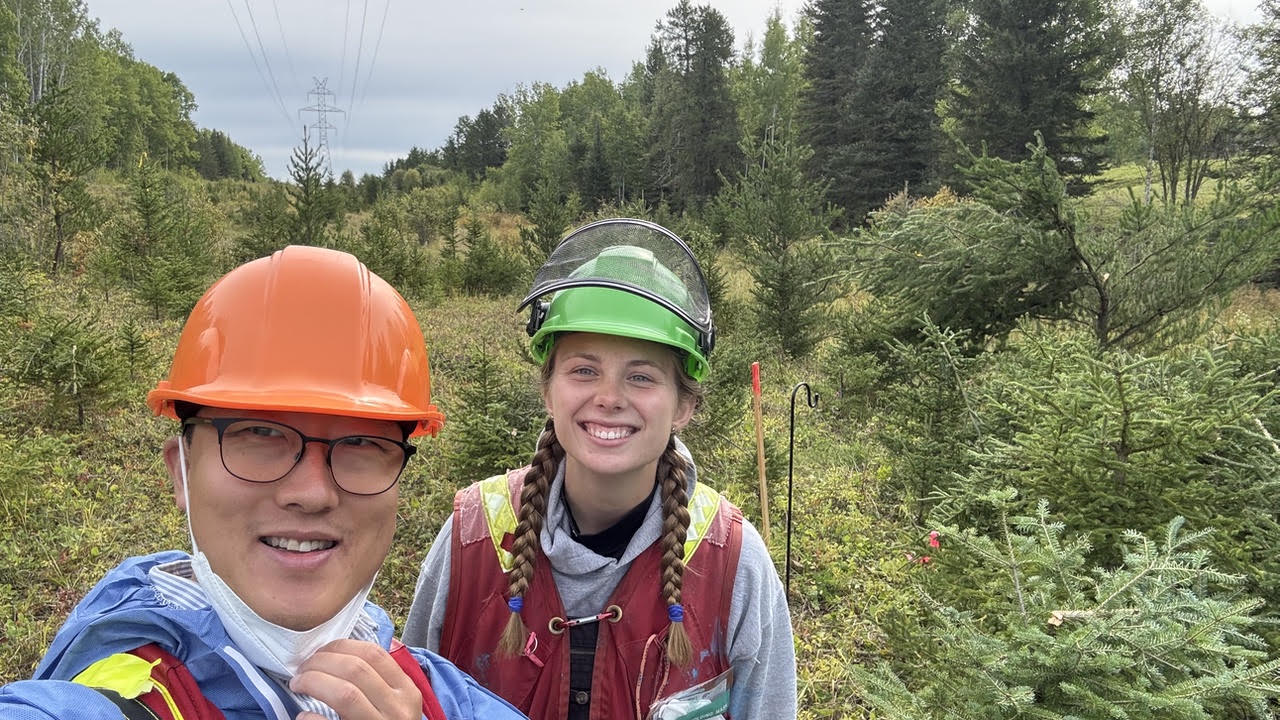
Assistant professor Seung-Il Lee and MSc student Caitlin Stewart in the herbicide experimental site along the power transmission corridor in Thunder Bay
“Power corridors are really important habitats for pollinator populations like bees and butterflies, which also play a crucial role in pollinating crops in nearby farm fields,” Dr. Lee says. “While it’s extremely important to control vegetation in these corridors, we need to understand how different methods of applying herbicides affect pollinators so we can minimize the impact as much as possible.”
Andrew McNeil, manager of Hydro One’s forestry business and innovation group, says this project is especially critical as the company’s power grid expands while storms become increasingly intense in the face of climate change.
“We need science-backed practices that will enable better vegetation management strategies while supporting a strong, reliable power network,” he says. “This research is giving us invaluable insights and tools to work with.”
Through its leadership within Canada’s network of utility companies, Hydro One will share research findings from this project—including with major providers like BC Hydro and Hydro-Québec—to extend its impact nationally.
“We’re really excited to be part of this pioneering work, and we see it bringing real value to the entire utility industry,” Shi says.
This collaborative research project directly aligns with United Nations Sustainable Development Goals (SDGs) #3: Good Health and Well-Being, #9: Industry, Innovation, and Infrastructure, #13: Climate Action, and #15: Life On Land.
"Cities revolve around transportation," says civil engineering PhD candidate Omotunde Adeniran.
For the past few years, Omotunde—under his supervisors Dr. Juan Pernia and Dr. Sam Salem—has been applying his engineering skills to make traffic roundabouts safer for all community members.
It's become a pressing issue as roundabouts become more common in North America.
"Municipalities are embracing them because they ease traffic congestion and reduce severe vehicular collisions," Omotunde says.
They're also cheaper than traffic lights over the long term since they don't require as much electricity or infrastructure maintenance.
Surprisingly, Omotunde wanted to avoid a civil engineering career when he was younger.
He grew up in Nigeria where his elder brother and several family members were civil engineers.
Wanting to do something different, Omotunde studied engineering physics before deciding that he wanted to be a pilot. This led him to a logistics and technical support job with a British Columbia-based helicopter company with a subsidiary in Nigeria.
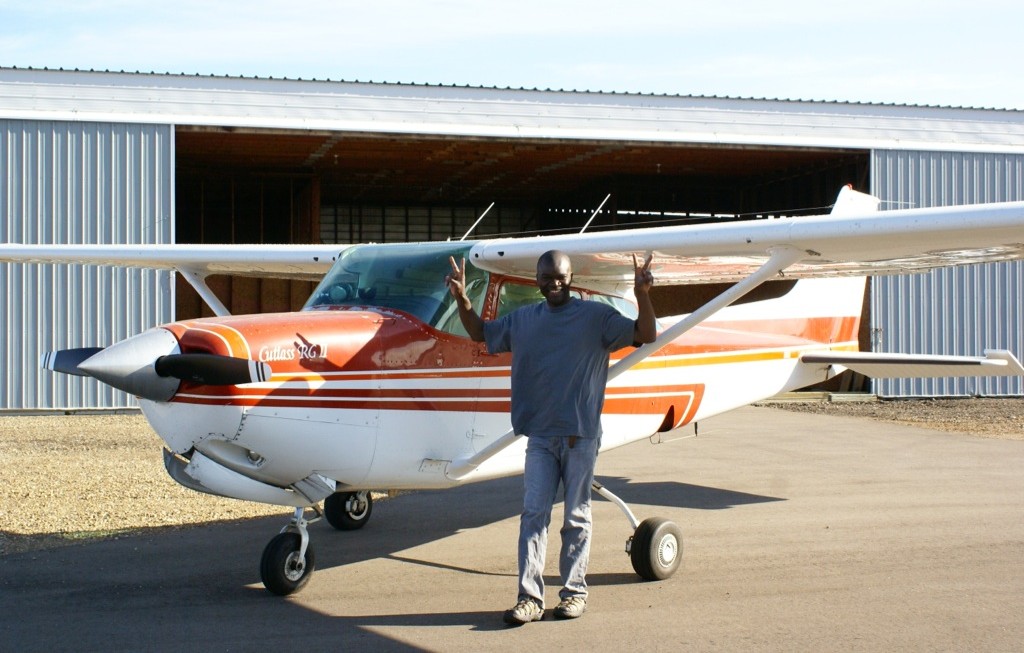
Omotunde learned to fly small single-engine planes and earned a Private Pilot Licence. While working at the Lakeside meat-packing plant in Brooks, Alberta, he liked to go flying with a friend who owned a Cessna plane. At the plant, Omotunde was responsible for food inspection and quality control. Then, for three-and-half years, he was on the crew that cleaned the plant. "I took college and university courses from about 9 am to 4 pm and then worked from 4 pm to midnight and, later, the graveyard shift, so that I could upgrade my education," he says.
He eventually moved to Canada and went back to school after spending several years working in demanding jobs, including one at a meat-packing plant in Brooks, Alberta.
"While taking general engineering courses at the University of Calgary, I realized that civil engineering came naturally to me and that I wanted to do something practical," he says.
He went on to earn a Bachelor of Science in Civil Engineering at the University of New Brunswick and a Master of Science in Civil Engineering at Lakehead and is now in finishing his PhD studies.
Despite the many advantages of roundabouts, they sometimes present challenges for people with vision loss.
In Ontario, drivers are required to yield to pedestrians at designated roundabout crosswalks. Some roundabouts also have rectangular rapid flashing beacons (RRFB), which pedestrians can activate by pressing a button to signal to drivers that they want to cross.
Even so, a small percentage of drivers don't stop for pedestrians.
"This can be dangerous for kids, the elderly, and people with vision loss," Omotunde says. "If cars don't stop, pedestrians have to wait for another opportunity to cross."
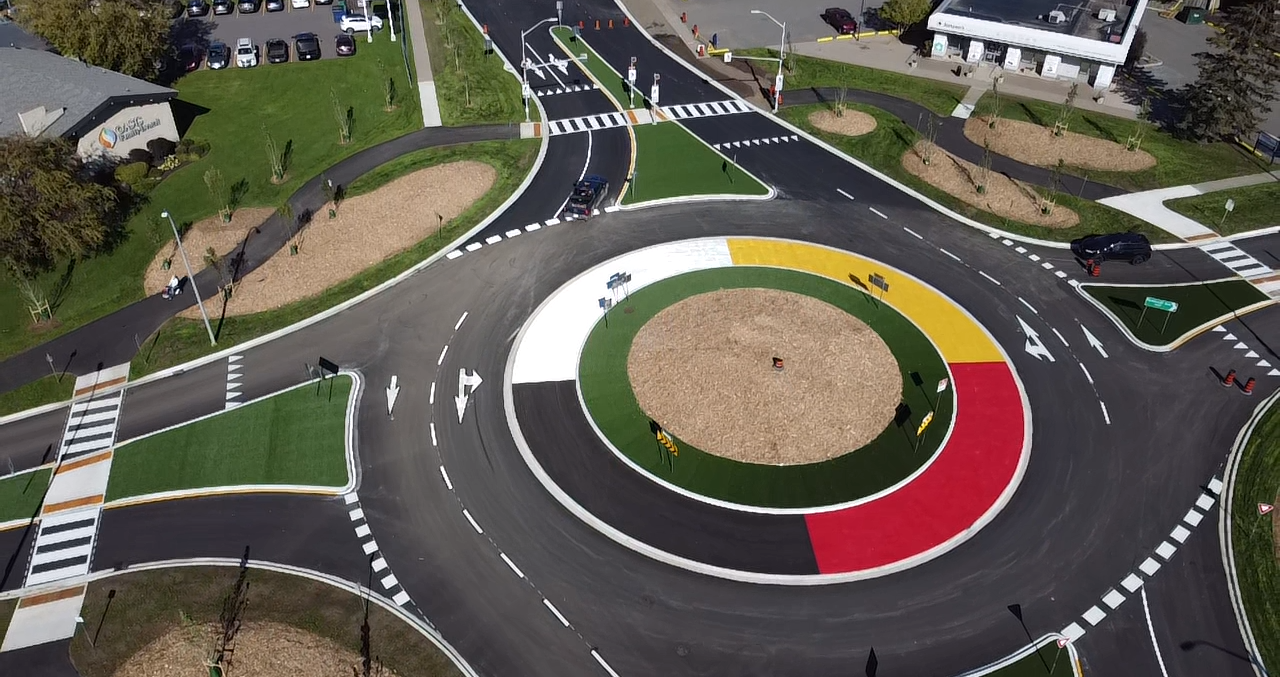
Omotunde’s sensor-based system uses a signal from a camera to alert pedestrians to oncoming vehicles via a loudspeaker. “When activated, the system says: ‘Gap detected, use caution’ or ‘Vehicle approaching,’” he explains. “As an engineer, you always want the simplest option.” Photo Credit: City of Thunder Bay
Even when additional safety measures have been incorporated into roundabouts—such as tactile walking surface indicators and pedestrian refuge islands—people are still vulnerable.
"None of these measures indicate if drivers are yielding to pedestrians or give them a real-time assessment of how long they have to cross a roundabout road," Omotunde says.
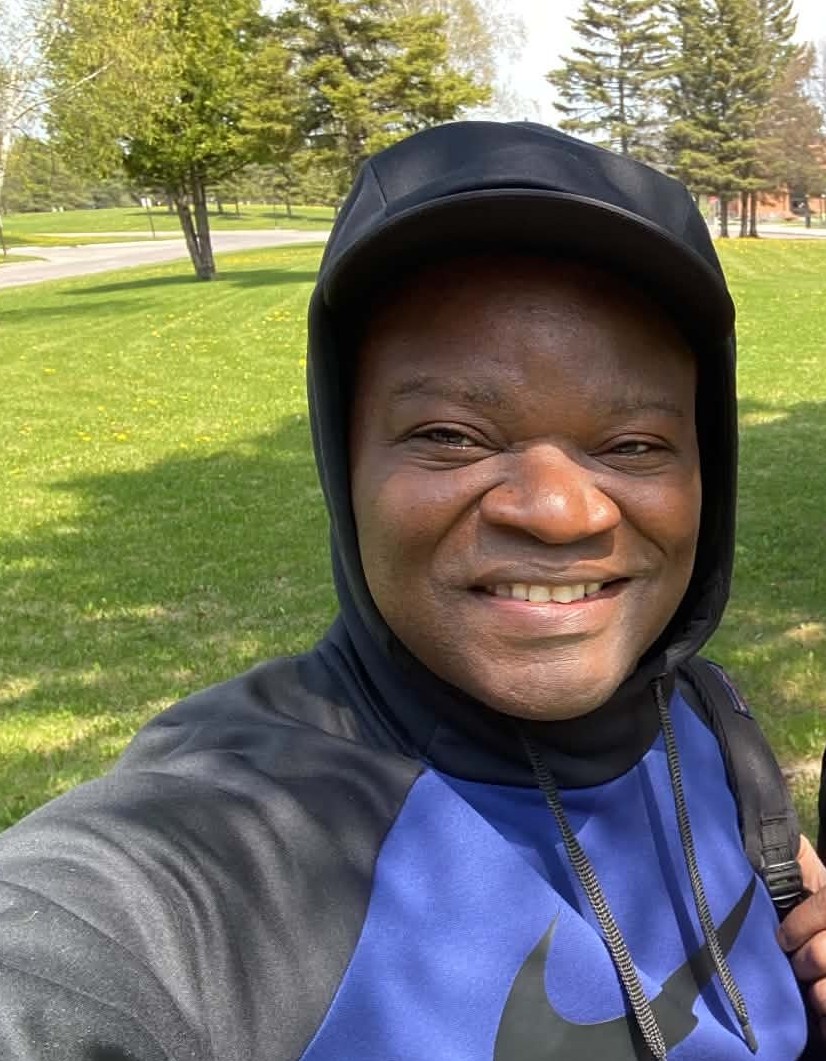
Omotunde started a community newsletter called The Integrand News: Keeping You in the equation! while living in Brooks, Alberta. “I wanted both the non-immigrant and the immigrant communities to see all the good things that were happening in Brooks,” he says. He also joined charitable and service organizations, including Rotary International, where he met educator Dr. Lyle Hamm who encouraged him to go back to university.
Concern about this situation prompted the Canadian National Institute for the Blind (CNIB) to reach out to Dr. Pernia.
"They wanted to know if it was possible to launch a nation-wide study investigating how to make roundabouts safer for people with vision loss," Omotunde says.
"We decided to begin the study at Thunder Bay's Edward Street and Redwood Avenue roundabout because the City of Thunder Bay was willing to support our research."
Omotunde's master's research focused on testing rumble strips that vibrated and made a 'tak tak' sound as cars drove over them, alerting pedestrians to their presence.
Although somewhat successful, this mechanical model had some flaws—including not being sufficiently audible if cars were rolling or travelling at extremely low speeds—that made it unable to completely resolve the concerns of people with vision loss.
For his PhD research, Omotunde switched his attention to developing a sensor-based system that uses computer vision to detect approaching vehicles.
He's now built an impressive prototype that merges AI, coordinate mapping, and Real-Time Streaming Protocol (RTSP) to process camera images taken at roundabouts.
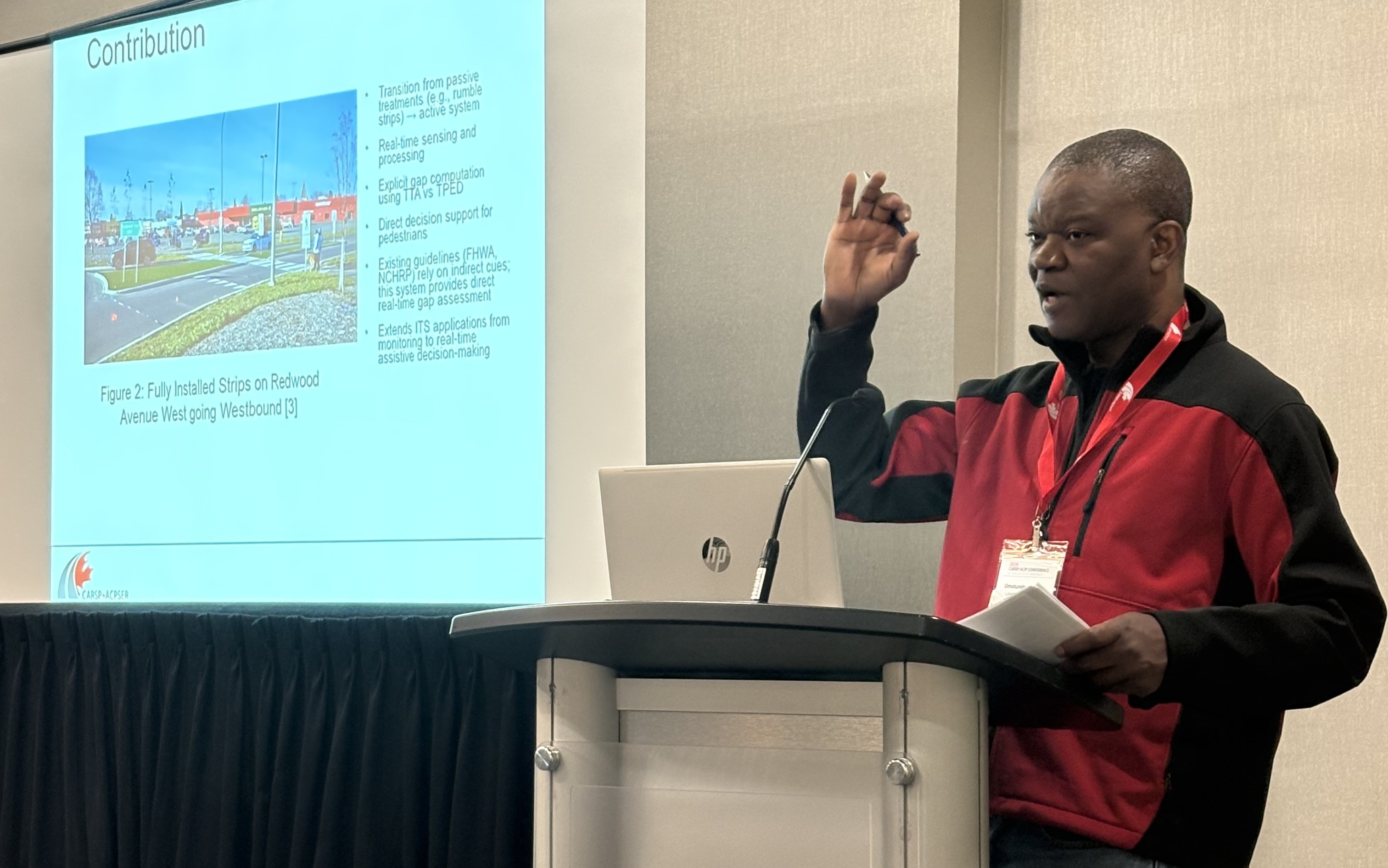
Omotunde won first place in the 2026 Canadian Association of Road Safety Professionals (CARSP) Student Paper Competition for his paper, "Field Testing of an Infrastructure-Mounted Sensor-Based Accessibility System for Unsignalized Roundabouts." Professionals from multiple countries who attended the CARSP conference were eager to learn more about Omotunde's concept. "I'm happy to be an ambassador for Lakehead and thankful for the support of my PhD thesis supervisors," he says.
Once triggered, Omotunde's system estimates vehicle time-to-arrival at a roundabout, computes estimated pedestrian crossing time, and uses a loudspeaker to let pedestrians know when there is a gap in traffic.
He's already conducted technical and field testing of the system and will be running a trial with CNIB volunteers at the Thunder Bay roundabout this summer.
"My work has broad applications," he says. "It could potentially help people with mobility issues and people distracted by their cellphones, as well as people with vision loss."
"We can't change the behaviour of drivers," Omotunde adds, "but we can give pedestrians more information to keep them safer."
Thank you to the City of Thunder Bay and Pioneer Construction for providing equipment, staff assistance, and access to the Edward Street/Redwood Avenue roundabout and its infrastructure.
Omotunde also thanks the multiple volunteers who helped make this research possible, including the CNIB, as well as Oasis Family Dental and Janzen Pharmacy who kindly provided access to their power outlets.
This research project directly aligns with United Nations Sustainable Development Goals (SDGs) #9: Industry, Innovation, and Infrastructure, #10: Reduced Inequalities, and #11: Sustainable Cities + Communities.
Join the Lakehead Alumni Ottawa Chapter and experience the most dramatic skyline views on a 60-75 minute narrated cruise along the Rideau Canal!
Explore the great history of the Ottawa aboard a canal cruise
See Canada's national capital from a different perspective
Benefit from engaging and insightful commentary
"The summer has been a whirlwind," says Dr. Mathew Leitch, a professor of wood sciences at the Faculty of Natural Resources Management.
Throughout June, he hosted and trained forestry professionals from Ghana committed to making their forest industry more sustainable and profitable. 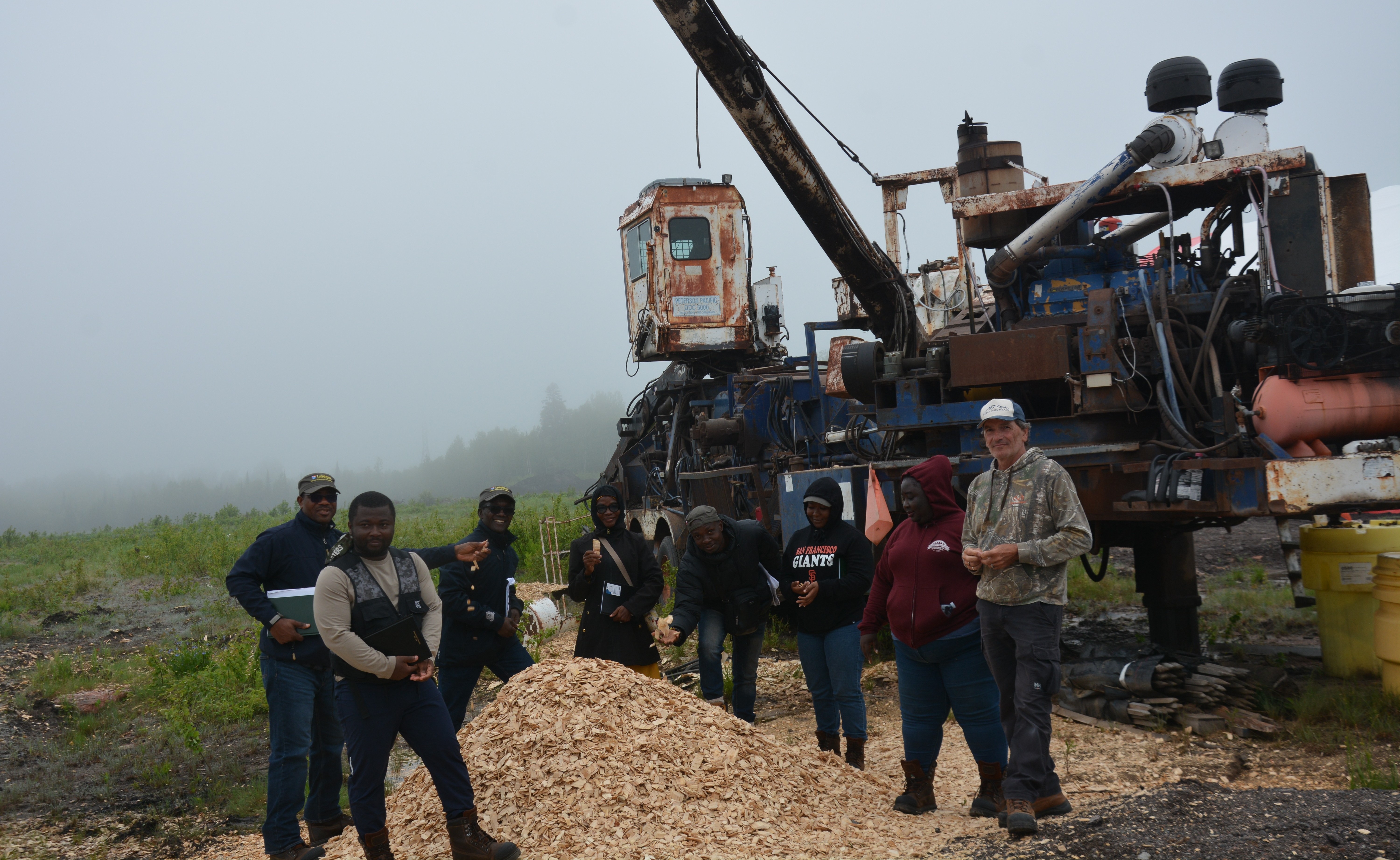
"We get thousands of products from trees including mass timber products, phenols, formaldehyde, flocculants, and cellulose fibres that are so strong they're used to create bullet-proof flak jackets," Dr. Leitch says. Above, participants visit the Hurkett Biohub facility with Scott Rubin and his team at Lake Nipigon Forest Management to look at the facility's biochar location, merchandising yard, and other wood value-adding initiatives.
It took over a year to organize the month-long "Workshop in Wood Science and Forest Products," which was hosted on Lakehead University and Confederation College's Thunder Bay campuses.
The session was the first of three customized training workshops that are part of Lakehead's five-year "Best Practices in Sustainable Natural Resources Management" project.
Dr. Leitch received a Global Affairs Canada grant worth nearly $570,000—through the Canadian International Development Scholarships 2030 (BCDI 2030) program—to run the project.
It includes funding for the workshops and visiting researchers as well as scholarships for master's degree students.
BCDI scholarships—which are open to small island developing states and 26 Francophonie and Commonwealth countries—harness the power of education to strengthen economic and social development.
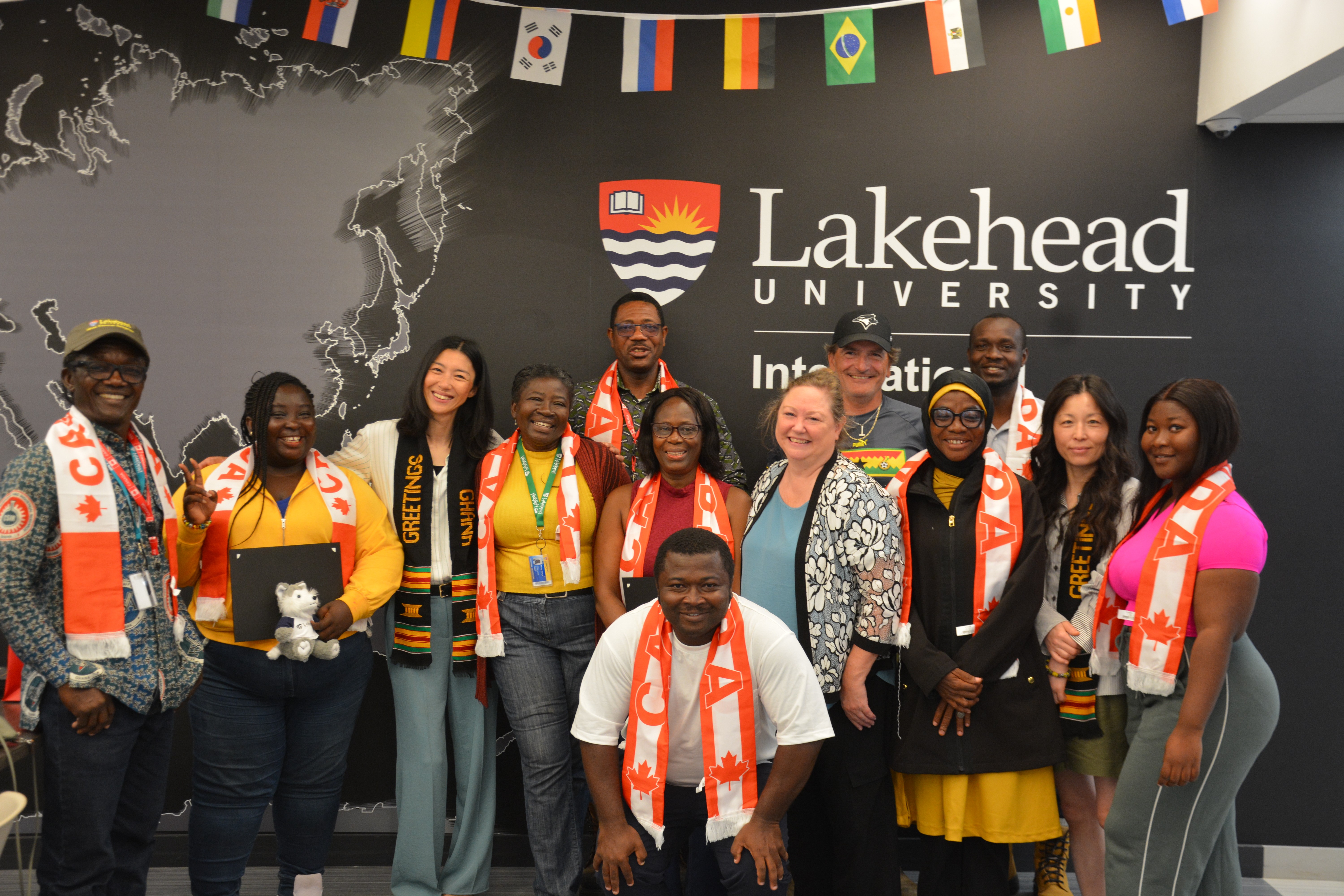
Dr. Leitch's BCDI 2030 grant will enable him to continue training Ghanaian forestry professionals at Lakehead. In 2027, he will host a remote sensing and geomatic workshop and, in 2028, he will host an ecological studies workshop. The workshops are part of a customized training approach to address skill development needs identified by the Government of Ghana. Above, the BCDI participants celebrate completing the workshops.
"Many women in Ghana live in extreme poverty, so one of the goals of my program is to bring more women into the workforce so that they're economically independent," Dr. Leitch explains.
Over the course of Lakehead's project, an estimated 35 professionals and students will receive advanced training in natural resources management.
The resulting network of professionals within Ghana will share their knowledge and skills with their students and colleagues.
Ghana is a West African country known for its diverse ecosystems.
The southern region—where Dr. Leitch has forged many longstanding partnerships—has tropical rainforests with more than 200 species of hardwood trees.
"The main trees harvested for commercial purposes are African mahogany, iroko, sapele, utile, and teak," he says. "Ghana's trees grow impressively fast," he adds. "In 40 years, African mahogany grows to 4-8 feet in diameter."
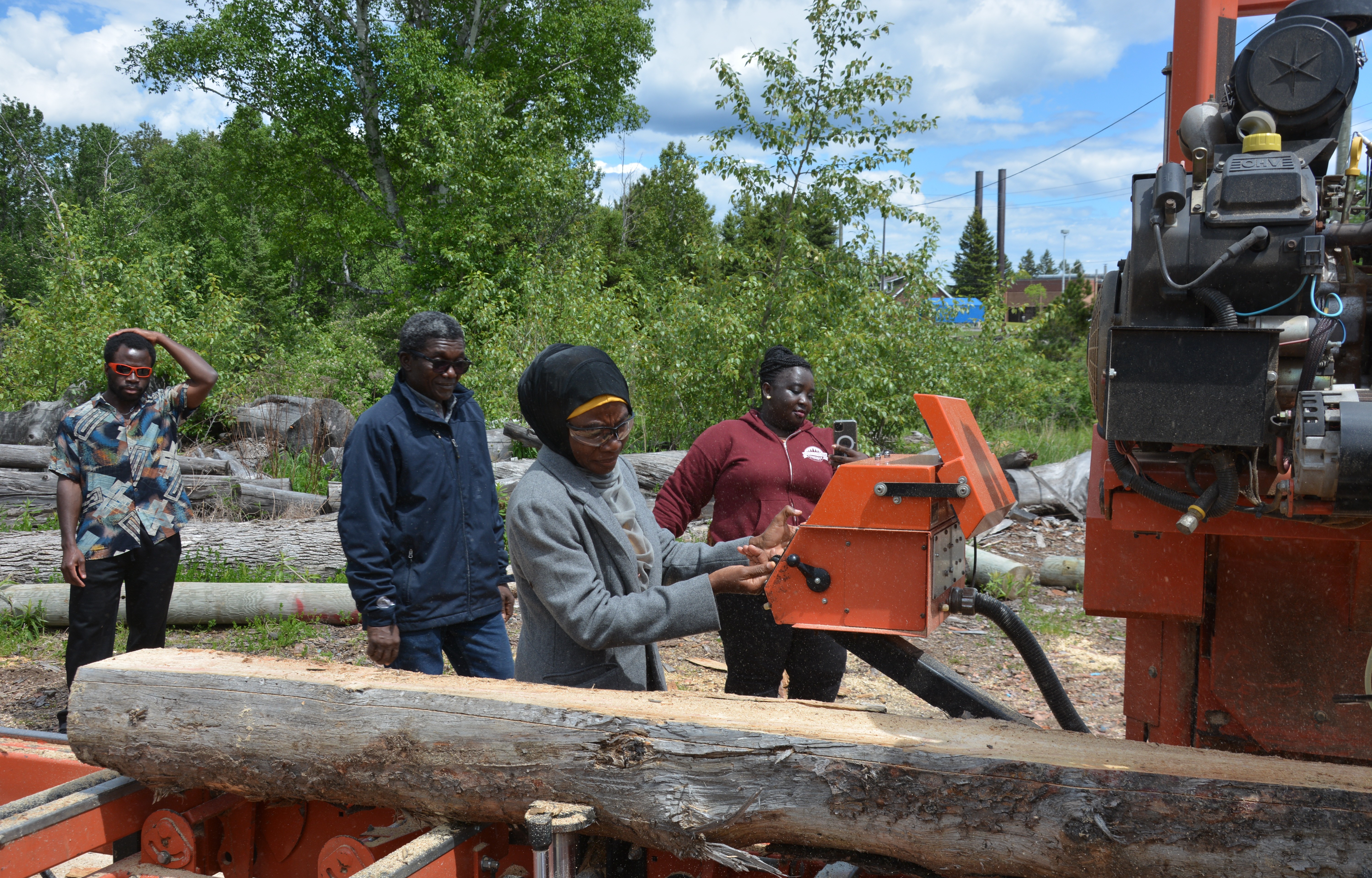
Above, a participant practices using a portable mill at Dr. Leitch's campus facility. "Everyone learned how to run the mill and cut wood because these types of mills are readily available in Ghana," Dr. Leitch says. The BCDI grant funded the participants' costs of attending the workshops.
Ghanaians use their forests primarily as sources of lumber, plywood, and charcoal.
"Ghana is the second biggest charcoal producer in the world," says Dr. Leitch, who shared strategies for more efficiently producing charcoal with the visiting professionals and students.
The workshop participants arrived at Lakehead for training in remote sensing, geomatics, wood science, property mapping, and ecological monitoring.
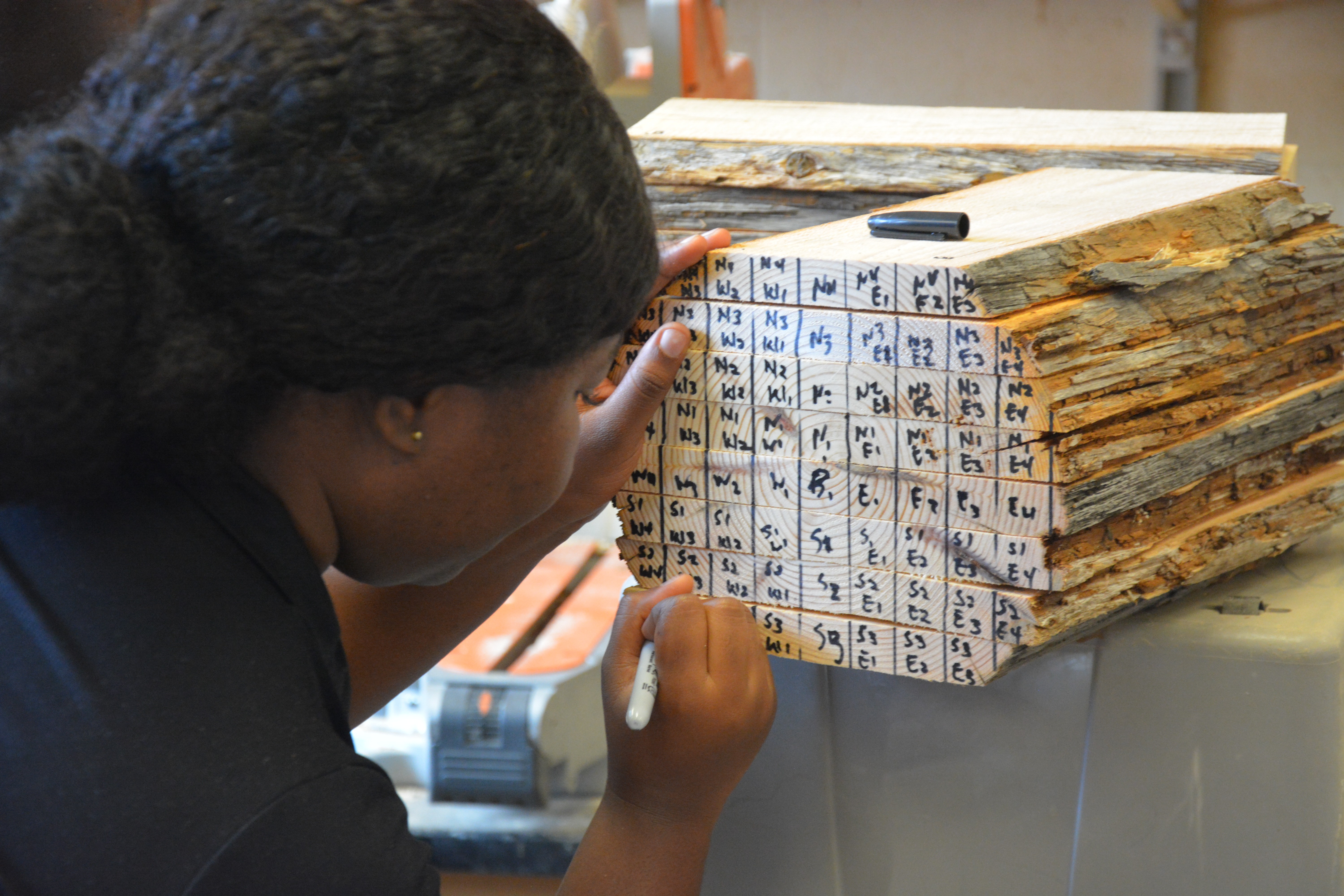
Wood science is a multifaceted discipline that studies the properties of wood species and how they can be used. Above, one of the participants prepares a sample in Dr. Leitch's Wood Science Testing Laboratory.
Dr. Leitch welcomed faculty, staff, and PhD students from Kwame Nkrumah University of Science and Technology, the University for Development Studies, the University of Energy and Natural Resources, and CSIR-College of Science and Technology.
There were also scientists and staff from the CSIR-Forestry Research Institute of Ghana and Lakehead University Master of Science in Forestry students.
"We looked at everything from high-value forest products like engineered wood used in housing construction to low-value products like wood pellets used for heating and barbecues," Dr. Leitch says.
All the workshop participants found their time at Lakehead to be worth the long journey.
"They wanted to learn everything they could about our approaches to forest management," Dr. Leitch says.
The participants enjoyed field visits to tree farms, biomass facilities, sawmills, and pulp and paper mills. Another highlight was seeing Lakehead's state-of-the-art research facilities and testing equipment in action.
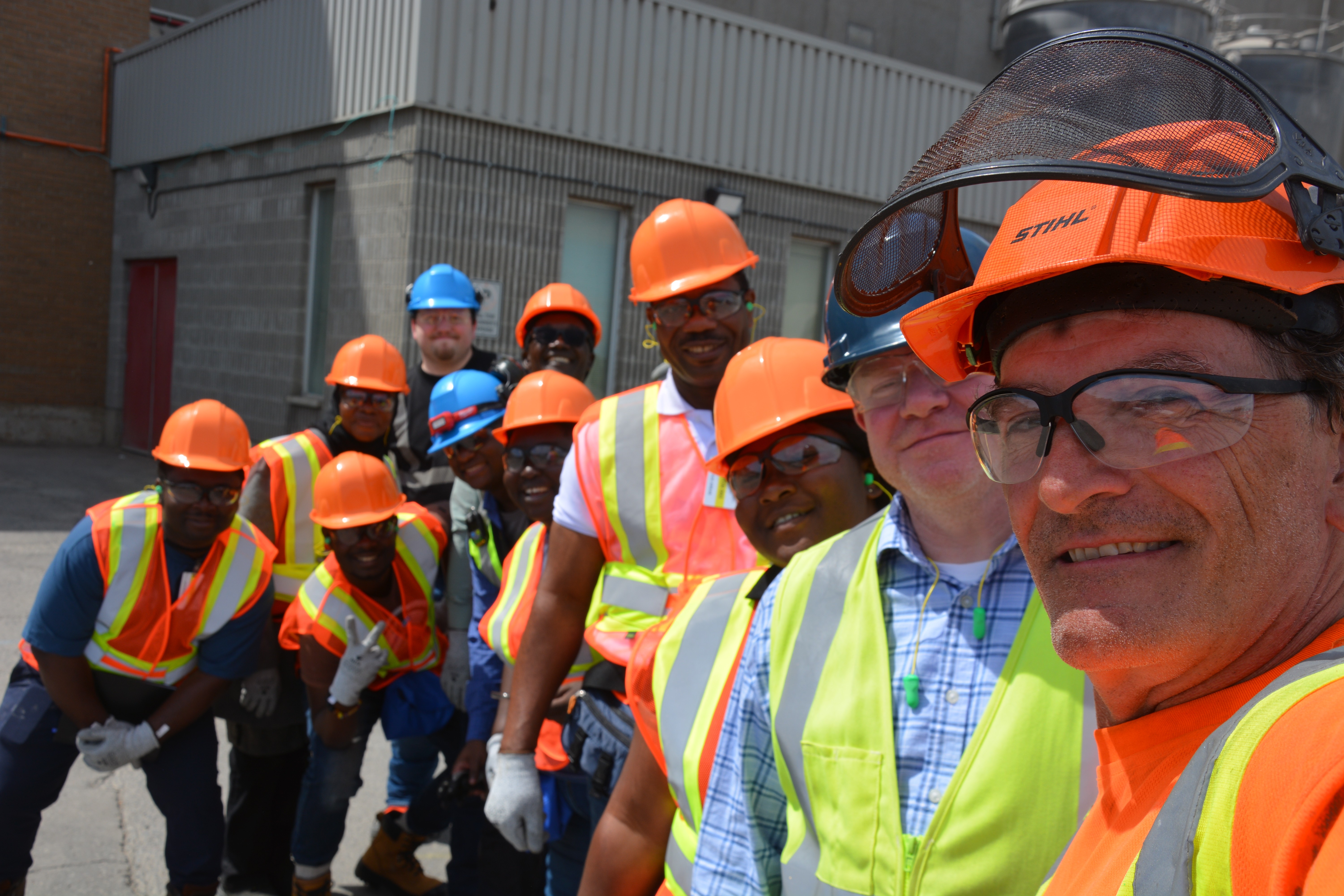
A tour of Thunder Bay Pulp and Paper, led by Fibre and Logistics Manager Mike Furniss, provided insight into how wood is processed into pulp, energy production from boilers, waste use, and the production of value-added chemicals. Dr. Mat Leitch is pictured on the far right.
"We showed them how we use silviculture to grow, manage, and manipulate the properties of trees and bring products to market," he says.
"I could see their wheels spinning. Even before the workshops were over, they were writing up draft plans to implement when they got back home."
Dr. Leitch greatly enjoyed his time at the workshops, too.
"Ghanaians are some of the nicest people you'll ever meet. The participants were so gracious and appreciative that they were selected for this prestigious program.
They are eager for anything that will help them move forward as a country."
Lakehead gratefully acknowledges the nearly $570,000 Global Affairs Canada grant that made The Best Practices in Sustainable Natural Resources Management (BPSNRM) project possible.
Thank you to Confederation College and the following government and industry partners in Ghana, including: the Forestry Commission of Ghana, The Council for Scientific and Industrial Research — Forestry Research Institute of Ghana (CSIR-FORIG), Samartex Timber and Plywood Company, and the Charcoal Chamber of Commerce.
Lakehead would also like to thank the following partner higher education institutions: CSIR College of Science and Technology (CCST), Kwame Nkrumah University of Science and Technology (KNUST), the University of Cape Coast (UCC), the University of Development Studies (UDS), the University of Energy and Natural Resources (UENR), and the University of Ghana-Legon.
