
Civil Engineering

Meet 2025 Distinguished Instructor Dr. Sam Salem

His Teaching Lights a Fire in Engineering Students

Watching a structure you've designed suddenly burst into flames isn't a typical university experience.

But if you're a student in a course taught by Civil Engineering Professor Dr. Sam Salem, that's exactly how a class might unfold.

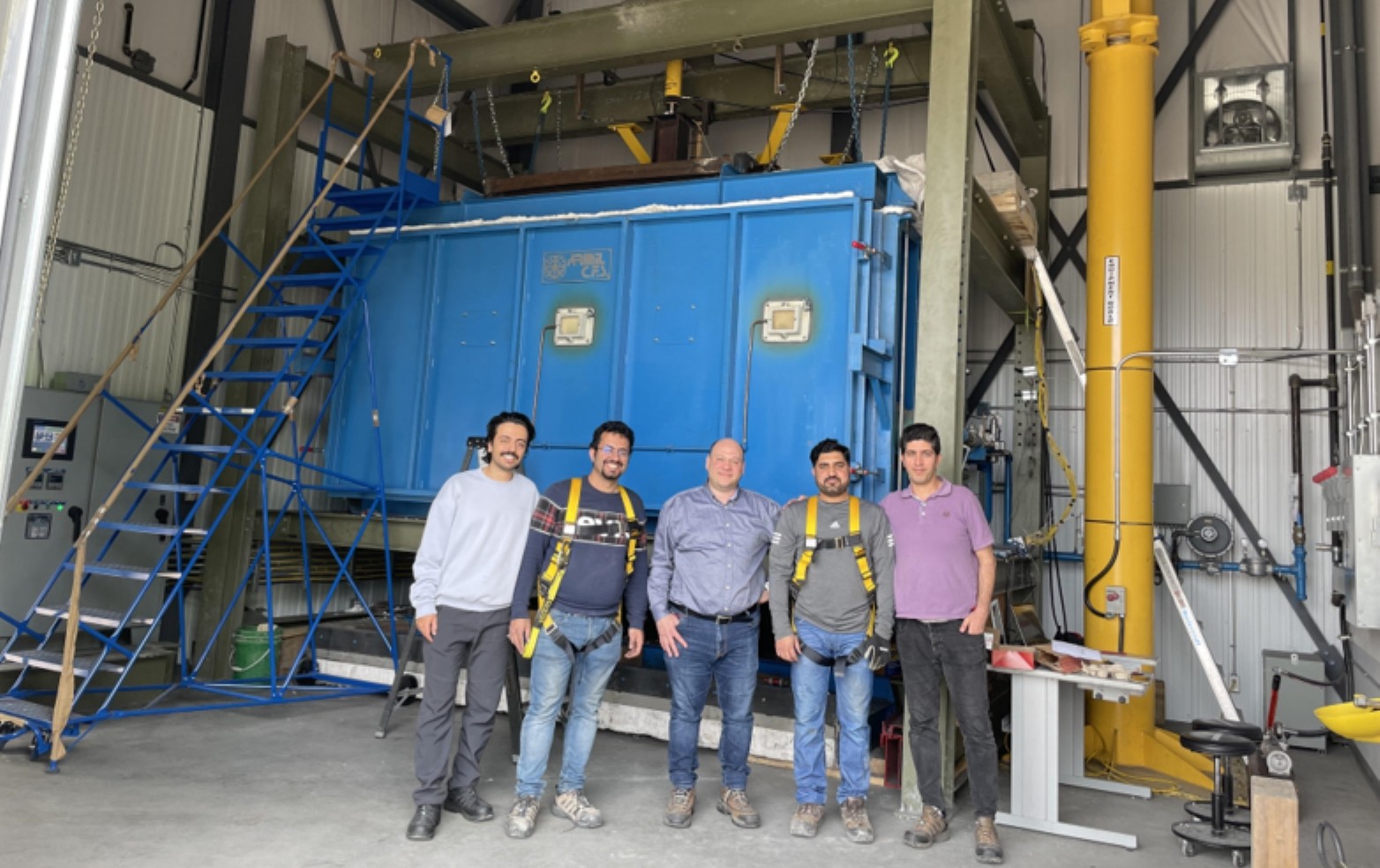
Dr. Sam Salem stands in Lakehead's Structural Fire Testing & Research Laboratory with two of his doctoral students standing on either side of him

Dr. Salem managed Lakehead's Master of Civil Engineering program and led the development of its PhD in Civil Engineering program. He's also supervised over 150 undergraduate students' degree design projects and mentored over 40 personnel. Above, Dr. Salem (centre) with some of his doctoral students.

"Teaching with purpose—inspiring minds and shaping futures—is my foundational principle," says Dr. Salem, who runs Lakehead's Structural Fire Testing & Research Laboratory (LUFTRL).

His intensive and accessible approach to learning sets him apart as an educator.

It has also earned him the 2025 Distinguished Instructor Award—Lakehead University's most prestigious teaching honour—and the appreciation of countless students.

He develops courses that bridge the gap between theoretical engineering concepts and practical industry experience, turning students into successful professional engineers.

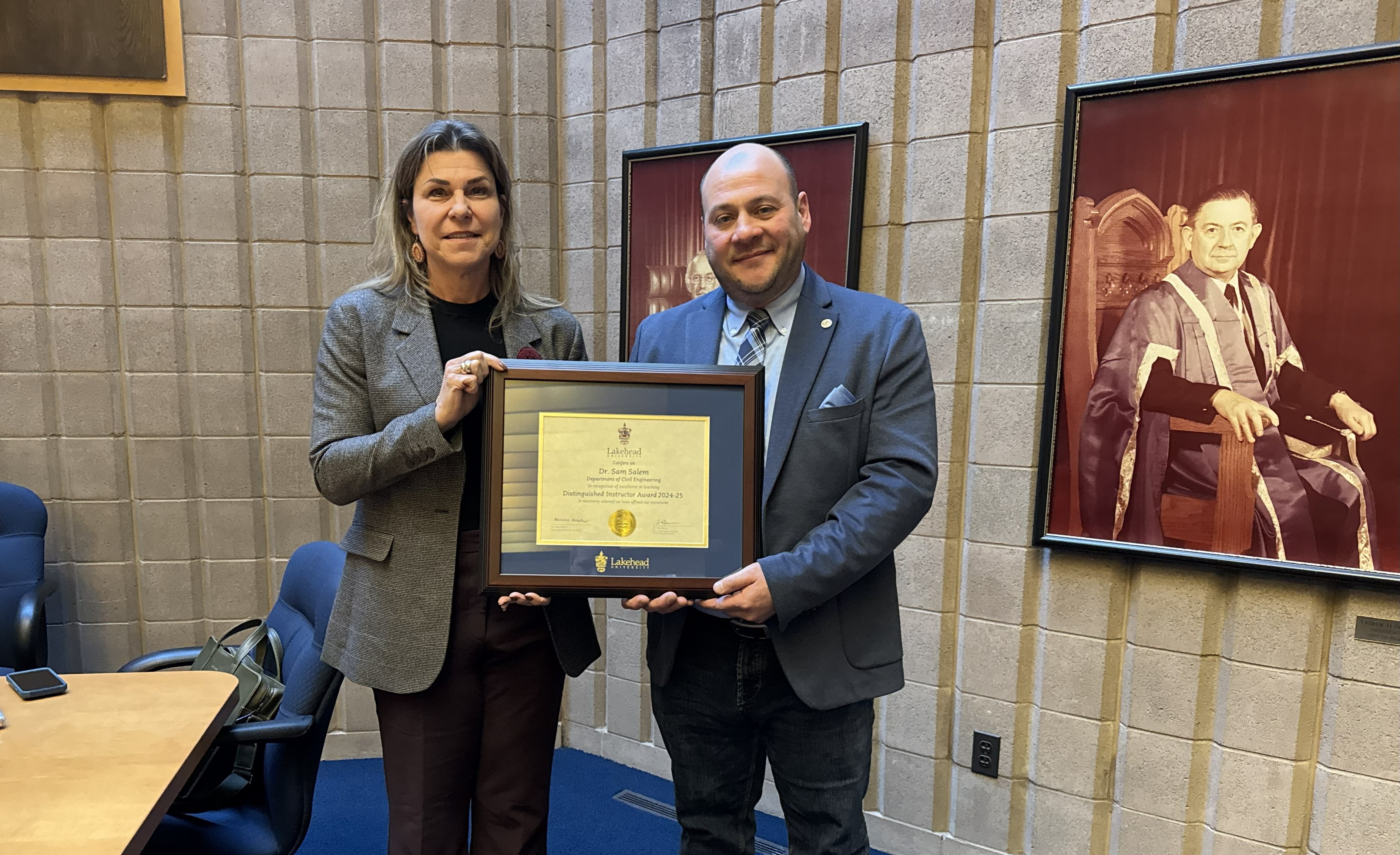
Dr. Gillian Balfour and Dr. Sam Salem stand beside each other in Lakehead University's Senate Chamber holding Dr. Salem's framed 2025 Distinguished Instructor certificate

"I'm also a learner as well as a teacher—I learn from my students' questions and comments," Dr. Salem says. Above, he receives his Distinguished Instructor Award from Lakehead Provost and Vice-President (Academic) Dr. Gillian Balfour.

A Natural Teacher

Dr. Salem is an internationally recognized expert in structural fire engineering—an area he chose to specialize in because fire represents the gravest safety threat to any building and its occupants.

His love of teaching, however, was sparked as an undergraduate student at Egypt's Zagazig University, where he was a top-ranked scholar.

"Many of my classmates and friends would come to me for help with assignments and tricky problems."

It was there that he began to learn how to simplify complex concepts into easily understood information, which would become the bedrock of his teaching practice.

"Students get bored if everything is numbers and textbooks," he explains.

"In my classes, I like to include photos, drawings, and examples of engineering structures that failed. I make connections between what happens on paper and what happens in real life."

This strategy breaks the rigidity of the lecture format and encourages everyone, even those who may feel intimidated, to participate.

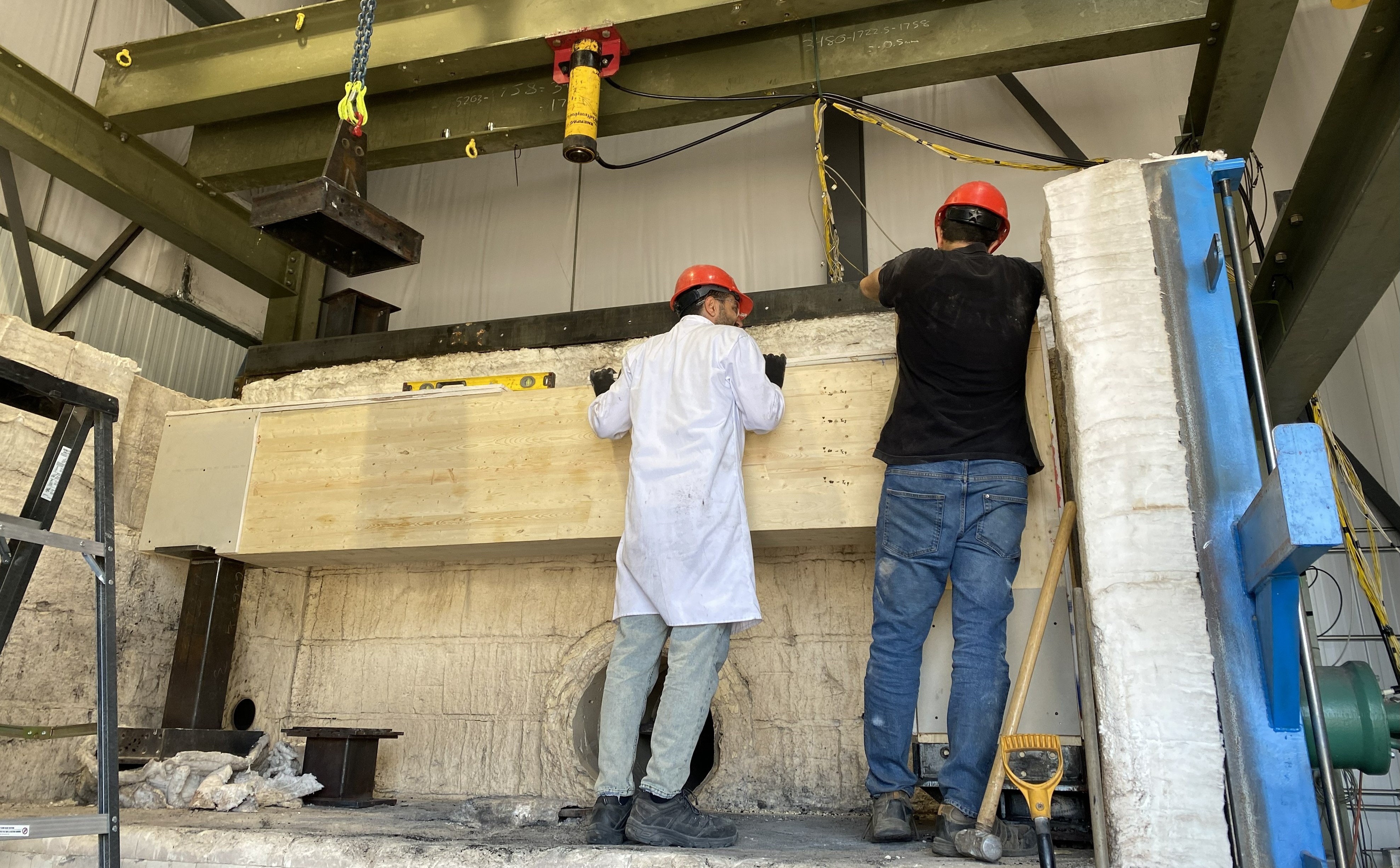
Two members of Dr. Sam Salem's research team, wearing hard hats, set up a fire test in Lakehead's Structural Fire Testing & Research Laboratory

Dr. Salem adjusts the time spent on particular topics based on his students' needs. "Sometimes students learn quickly, other times they have more questions and need additional clarifications." Above, two members of his research team set up a mass-timber building assembly for fire testing.

Fostering student engagement is central to Dr. Salem's teaching.

"I always tell my students to raise their hands whenever they have a question, even if it seems simple. It helps other students, and it also improves my teaching."

His dedication to teaching has only deepened over time, despite the fact that he has to juggle his teaching commitments with an ambitious research program and heavy administrative duties.

"But even if my day has been tough and I'm feeling exhausted, once I'm in the classroom and see the excitement in students' eyes, my tiredness disappears," he says.

A Role Model for Aspiring Engineers

Dr. Sam Salem, wearing a hard hat and safety glasses uses a tool to measure the gap between a wooden beam and a column in the LUFTRL furnace

Dr. Salem holds patents in Canada and the United States for a fire-resistant beam-end connecting mechanism designed for mass-timber buildings. Above, he checks the gap between a beam and a column in a mass-timber assembly before it undergoes a fire-exposure test.

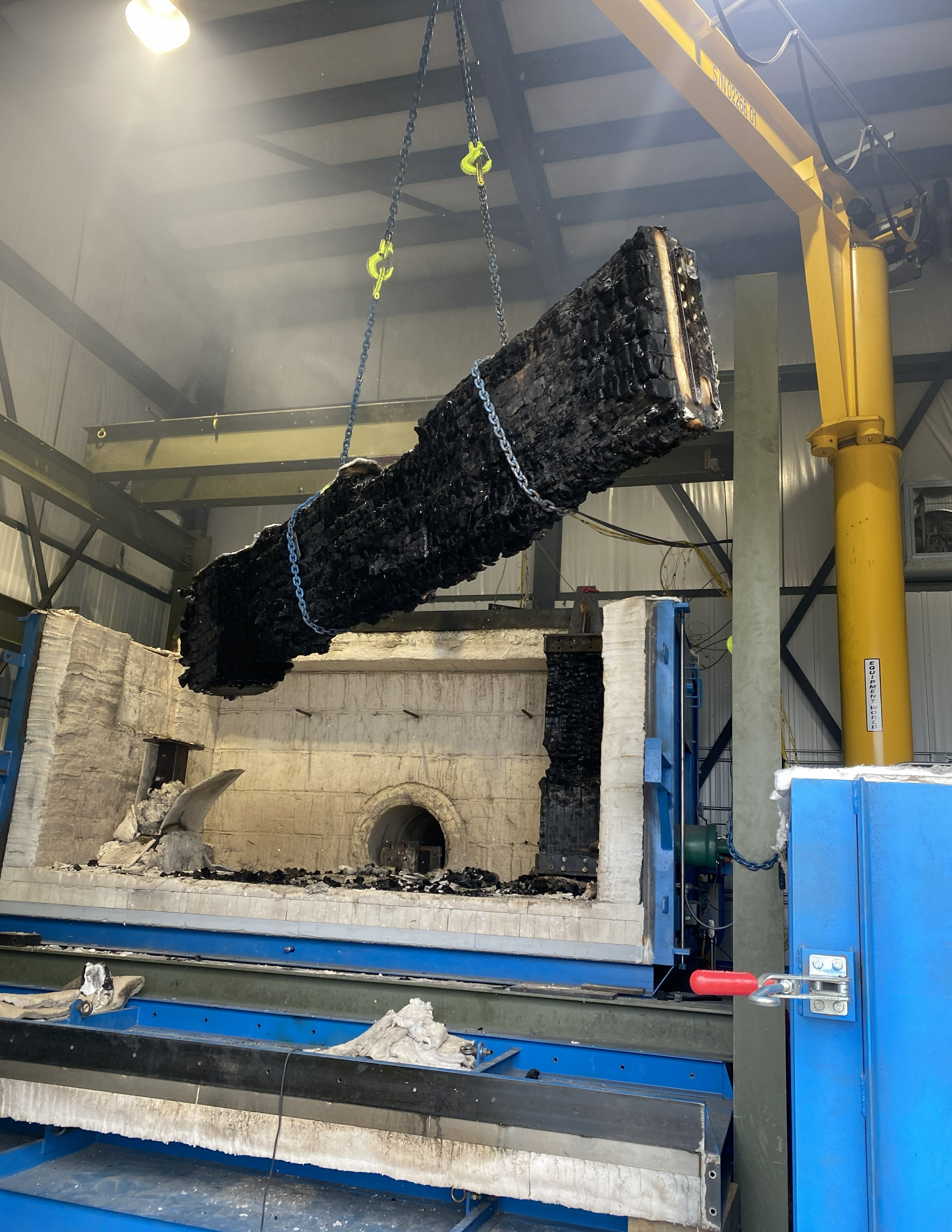
A charred beam is removed from a fire-testing furnace using a craneThousands of people will live in apartment buildings, wander through shopping malls, and drive over bridges designed by civil engineers, so these structures have to be built to the highest standards.

"I continually remind students that as professional engineers, they will be responsible for other people's lives, and that they must act ethically and with the utmost integrity," Dr. Salem says.

"It could be your mother, your son, or your friend who uses a structure you designed."

Fortunately, his students have the opportunity to engage in experiential learning at the Structural Fire Testing & Research Laboratory. Through Dr. Salem's guidance and mentorship, they learn how to meet building code requirements and design standards for resilient, fire-safe structures.

Straight from the Heart

"Even though it's wonderful when my students get good grades, what makes me most proud of them is when they try hard and ask questions," Dr. Salem says. "It shows me that they want to learn."

He often gets messages from former students, including many who graduated years ago, saying: "This issue you discussed in your course just came up at work, and I was able to apply what you taught us."

"For me, teaching is a work of the heart," he adds. "You have to love what you teach in order to inspire students."

Congratulations, Dr. Salem, on being named Lakehead's 2025 Distinguished Instructor!

Dr. Sam Salem, wearing a white hard hat, stands beside a fire-testing furnace at the LUFTRL facility

Almost $3 million in research funding from provincial and national funding agencies has been awarded to Dr. Salem. He has also has authored/co-authored over 80 peer-reviewed, refereed publications in highly-ranked international journals and top-tier conference proceedings.

Every year, Lakehead honours outstanding professors, instructors, and education staff whose commitment to teaching and innovation ensures that our students excel.

Here are the 2025 Teaching Award Winners

Distinguished Instructor Award:
Dr. Sam Salem, Civil Engineering

Contribution to Teaching Awards:
Dr. Kathryn Walton, English
Mr. Brian Weishar, Education
Dr. Davut Akca, Interdisciplinary
Prof. Tenille Brown, Law
Ms. Kaitlin Adduono, Nursing
Dr. Ahmed Elshaer, Civil Engineering

Teaching Innovation Awards:
Prof. Larissa Speak, Law
Dr. Taryn Klarner, Kinesiology and Mrs. Kristen McConnell, Nursing
Mr. Mohit Dudeja, Education

Teaching Support Award:
Mr. Adam Humeniuk, Teaching Commons

Great Northern Concrete Toboggan Race team wins big in first entry

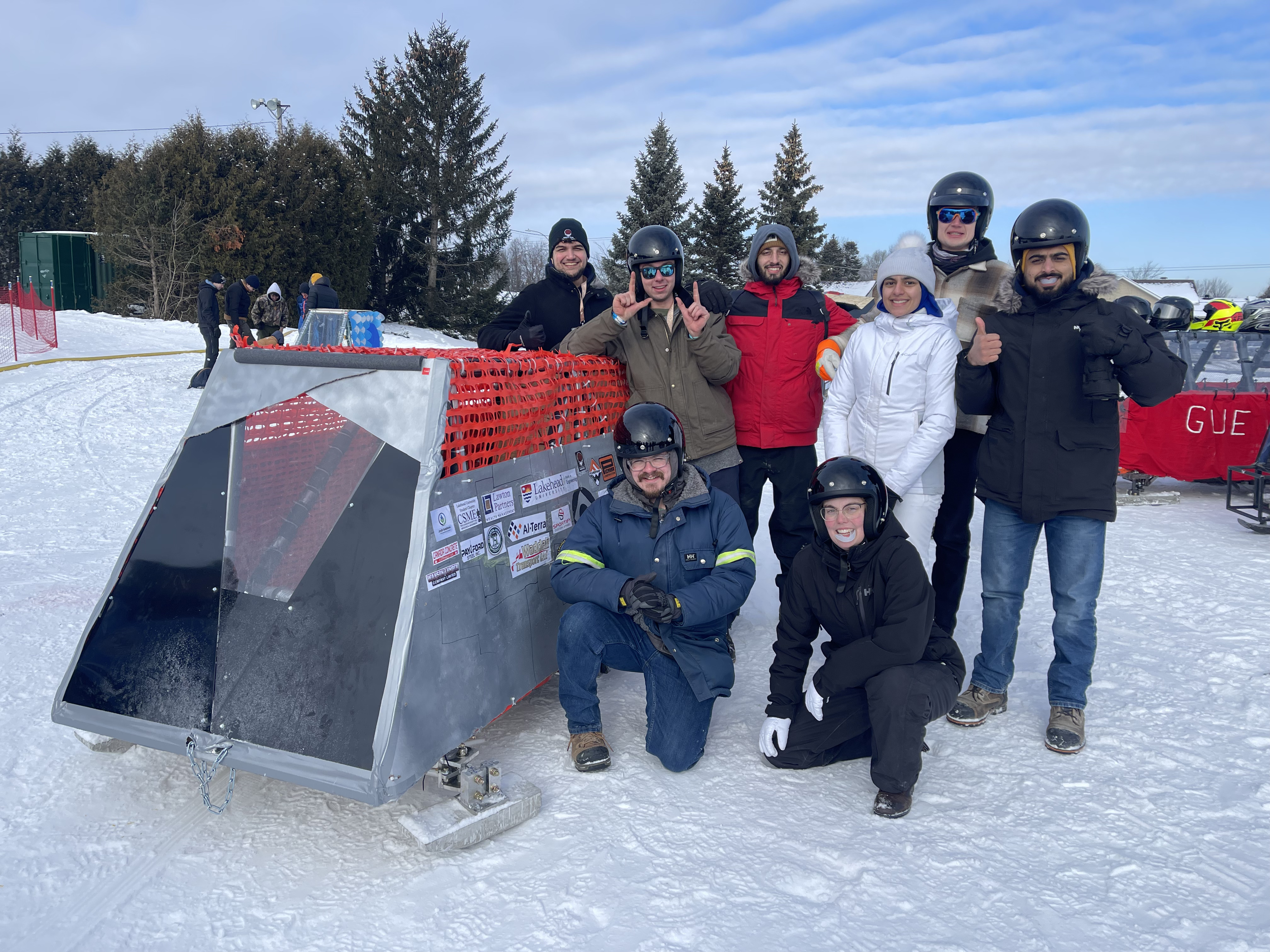
Great Northern Concrete Toboggan Race team

Lakehead University’s very first entry into the Great Northern Concrete Toboggan Race (GNCTR) was a resounding success, scooping the Best New Team Award and Most Inclusive Team Award at the national competition hosted by Concordia University in Montreal.

“Our first-ever GNCTR entry was a huge success, and we’re really proud of what we accomplished. It showed not just our technical skills, but also that we can compete at a national level with other universities across Canada,” said co-captain Elian Drummond. “This is just the beginning for Lakehead University—we’ve built a strong foundation, and we’re excited to see next year's team come back even stronger; improving their designs and making a lasting impact in the GNCTR community.”

The multidisciplinary student team, co-captained by Civil Engineering students Drummond and Faryal Faisal, debuted at 11th overall (out of 18 entries from universities and colleges across Canada) and were the only team in the competition not to receive any deduction points.

“We are immensely proud of the terrific performance of the Lakehead team in their inaugural entry into this competition. This is only the beginning of what will become a tradition with future teams building on the legacy of this pioneering group of students,” said Janusz Kozinski, Dean of Engineering at Lakehead University.

Established last year, the Lakehead GNCTR team made rapid progress in a short time to design and build the Lakehead tobogganGNCTR team poses in front of their concrete toboggan and attract an impressive array of sponsors to support the project.
“Being an inaugural team came with its obstacles, but spearheading the initiative allowed us to curate a skill set we never would have had the opportunity to develop solely in the classroom,” said Faisal. “We got to experience first-hand what it means to be an engineer and how the profession is rooted in strong teams.”

The Great Northern Concrete Toboggan Race is the largest and longest running engineering competition in North America. Teams must design and construct a toboggan with a metal frame and a running surface made completely out of concrete and race it down a steep snow-covered hill. The sled must weigh less than 350 pounds, have a working braking system, and be fitted with a roll cage to protect its five passengers.

"Supervising our inaugural GNCTR team was a lesson in passion and resilience. Their seamless teamwork and impeccable organization transformed every challenge into a breakthrough,” stated faculty advisor Dr. Ahmed Elshaer. “This group showed me that true success lies in the thrill of surprise, not just in the prize. Their awards set a high bar for Lakehead's innovative future.”

Lakehead’s Civil Engineering students win top prizes at Steel Bridge Competition

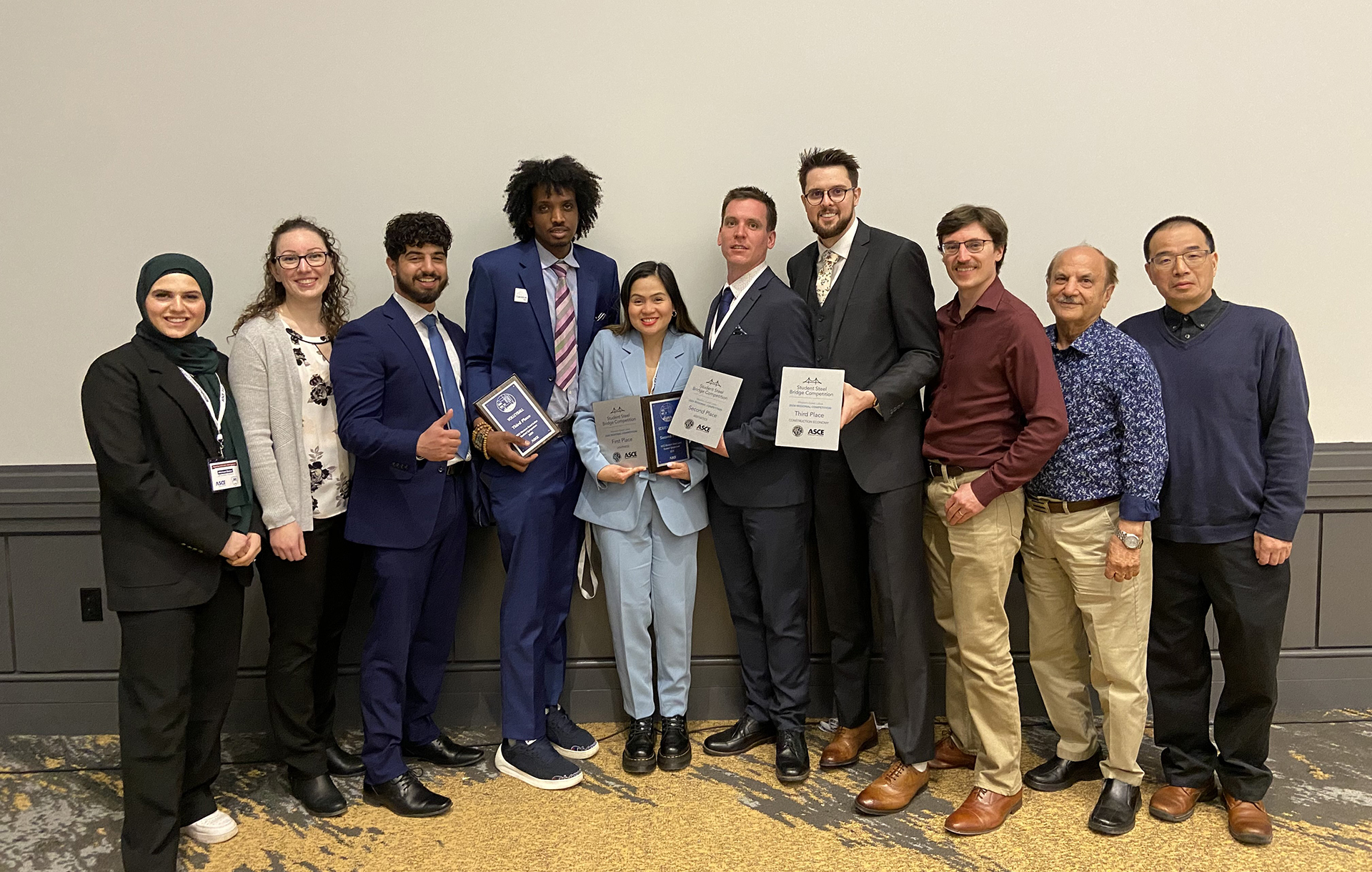
Steel Bridge Team

(from left) Wadika Faisal, Nadine Elmehriki, Ibrahim Shaheed, Mohamed Abi, Lovely Faith Donaldson, Karl Prentice, Zachary Morgan, Cory Hubbard, Kailash Bhatia, and Dr. Yanglin Gong.


April 18, 2024 – Thunder Bay, Ont.

The Lakehead University steel bridge team achieved top prizes at the annual American Society of Civil Engineers (ASCE) Western Great Lakes Student Symposium in Chicago from April 4 to 6.

The Lakehead team won three awards including first place in lightness, second place in aesthetics and third place in construction economy, and were ranked fourth place overall among the 16 universities competing.

The team was made up of third- and fourth-year civil engineering students: captain Zachary Morgan, co-captain Karl Prentice, Lovely Faith Donaldson, Ibrahim Shaheed, Mohamed Abi, and Wadika Faisal.

In this year’s competition, students were challenged to design and fabricate a 1:10 scale model steel bridge spanning 21 feet over an extra-wide eight-foot river and subject to height restrictions to minimize interference with its surroundings. The bridge was then tested under 2,500 pounds of weight to confirm its stability, strength and stiffness.

“Ever since I started at Lakehead, my goal was to be on the steel bridge team,” said Morgan. “I have had an amazing experience learning skills that will impact my life and my future career.”

The competition experience included conceptual design and details design, fabrication, erection, and testing.

“Every challenge we faced was not just an obstacle, but a valuable opportunity for growth and learning, guiding us to redefine success through perseverance and ingenuity,” Prentice explained. “As a team, we embraced the unpredictable knowing that tenacity fuels innovation and resilience.”

“The competition weekend was a fantastic experience, especially seeing the diverse designs and innovations from many different universities,” added Donaldson.

In addition, third-year civil engineering student Nadine Elmehriki participated in a paper competition, representing the Lakehead ASCE student chapter.

The Lakehead delegation was led by faculty advisor Dr. Yanglin Gong and supported by technologists Cory Hubbard and Kailash Bhatia. Construction company Facca Inc. and the Iron Workers Local 759 in Thunder Bay were the major sponsors for the team.

“The bridge competition challenges our students to extend their classroom knowledge to a practical, hands-on design and construction project that grows their professional and interpersonal skills,” said Dr. Gong.

Dr. Jian Deng, chair of civil engineering in Lakehead’s Faculty of Engineering added, “The Department of Civil Engineering is incredibly proud of our students. Their performance was exceptional and they once again demonstrated that Lakehead can compete and win against tough competition from top U.S. universities in the region.”

Lakehead Steel Bridge Team Places First in Regional Competition

(April 9, 2013 – Thunder Bay, ON)

Lakehead University’s Steel Bridge Team placed first overall against eight other teams in the annual regional competition held Saturday, March 16 at Iowa State University.

With the victory, the Lakehead team of Civil Engineering students advances to the US National Steel Bridge Competition in Seattle at the end of May for the 13th time in the past 15 years of competing.

Students Natalie Scalese, Joe Anger, Randy Roth, Cody Johnston and Raquel Almeida comprised the Lakehead team with faculty advisor Dr. Tony Gillies. Kailash Bhatia acted as machinist advisor to the team.

The Lakehead team placed first overall – taking second place for display, first for lightness, first for construction speed, second for stiffness, first for construction economy (based on construction time and bridge weight) and first for structural efficiency (based on bridge weight to stiffness ratio).

“Sometimes what we pictured didn’t pan out in real life. We had to design as we went, leading up to the competition,” said Natalie Scalese.

The competition challenged students to design a steel bridge and then fabricate a 17-foot long, 1:10 scale model of it that satisfied the 40-pages of specifications provided to all teams. The group had to take their bridge from their computer model, build it and then test it.

“We learned that what we assumed and what the computer model gave us didn’t always match up with what worked,” said Raquel Almeida.

“This competition gave us the hands-on experience of what happens in real life. The computer calculates things too perfectly – we have to account for the small tolerances,” Almeida said.

The bridge had to be constructed over a river from foundations set back from the river banks. Leading up to the competition, the bridge was designed and the components were fabricated by students at Lakehead University.

“Coming from a small university, it was awesome to be up against such notable schools,” said Joe Anger. “Some teams had dozens of people – we only have five people on our team. It was amazing to be so successful,” he said.

Faculty Advisor Dr. Tony Gillies said he was proud of the team. “Lakehead University has established a reputation for excellence since we started competing in 1998,” Dr. Gillies said. “This year’s team is no exception; they have succeeded in designing and constructing another very competitive bridge.”

The National Competition, to be held at the University of Washington in Seattle from May 31-June 1, 2013, will host approximately 45 teams. 

“We hope for a strong performance at the national competition,” Dr. Gillies said, “but so do about 45 other universities.”


Overall Ranking at Regional Competition

1)    Lakehead University

2)    Iowa State University

3)    North Dakota State University

4)    University of Wisconsin, Platteville

5)    University of North Dakota

6)    University of Iowa


Support Needed

The students appreciate the support from local companies, unions and associations to assist in meeting the costs of participating in the recent competition. The team would welcome additional sponsors for their upcoming competition at the University of Washington, Seattle in May. Potential sponsors can contact the team’s faculty advisor, Dr. Tony Gillies, at 343-8684.


For more information about the regional competition, visit: http://news.engineering.iastate.edu/2013/03/20/iowa-state-steel-bridge-team-advances-to-nationals/


                                                                             -30-


Media: For more information or to arrange an interview, please contact Brandon Walker, Media Relations Officer, at (807) 343-8177.

Lakehead University is a comprehensive university with a reputation for a multidisciplinary teaching approach that emphasizes collaborative learning and independent critical thinking. More than 8,700 students and 1,850 faculty and staff learn and work at campuses located in Orillia, and Thunder Bay, Ontario, which is home to the west campus of the Northern Ontario School of Medicine. Lakehead University promotes innovative research that supports local and regional socio-economic needs. In Orillia, development continues on building a campus that meets Leadership in Energy and Environmental Design (LEED®) standards. For more information about Lakehead University, visit www.lakeheadu.ca.

Subscribe to Civil Engineering