
Indigenous

Tashie Broadbent Harnesses the Power of Art to Heal

Northwestern Ontario community members made the decision to be part of Canada's journey to reconciliation by creating the stunning painting Maamawi, which now hangs in the Agora on the Thunder Bay campus.

"Maamawi refers to the action of coming together," says Tashie Broadbent, an Anishinaabekwe artist and Lakehead visual arts student who led this powerful community-based art project in September 2024.
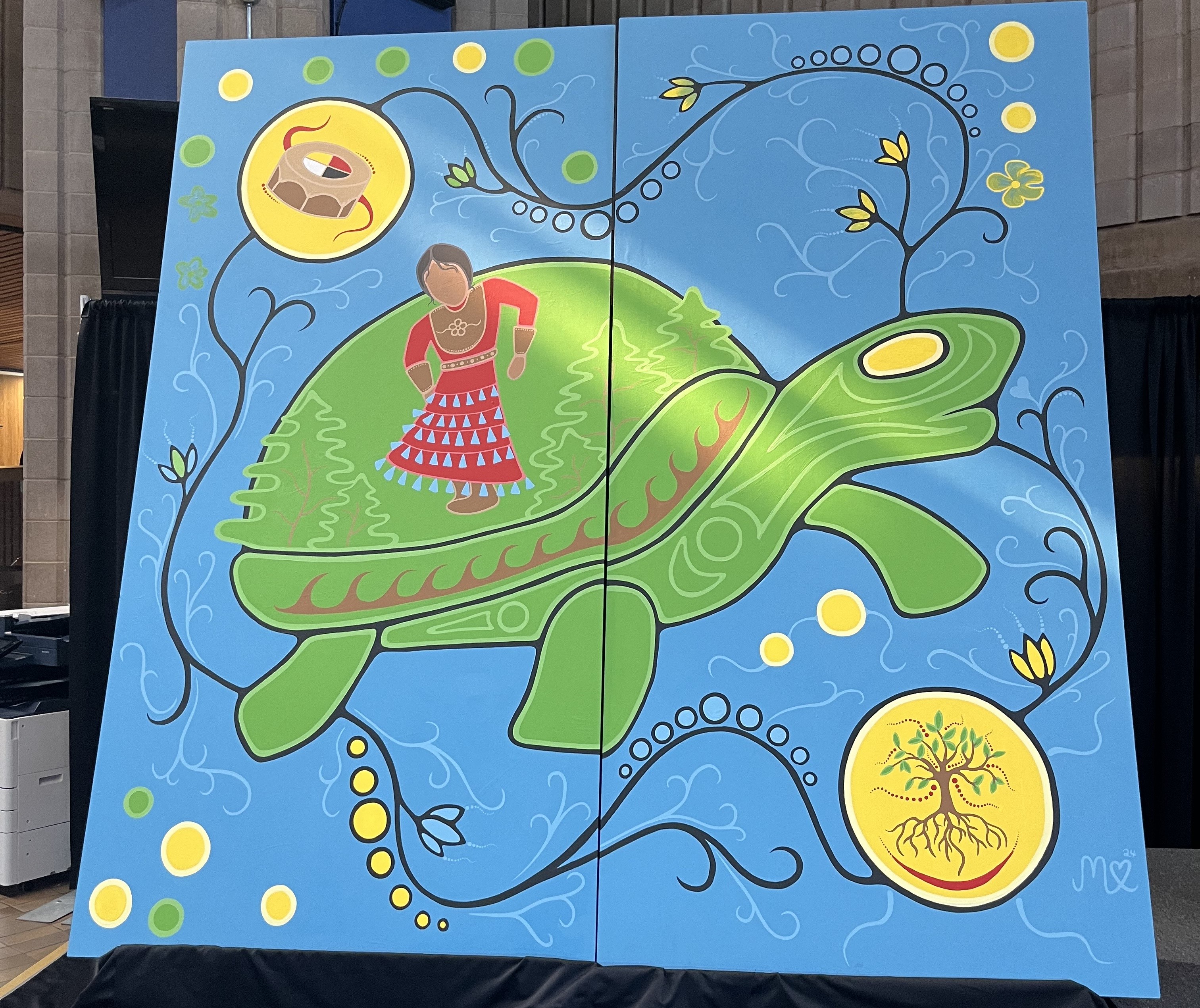
Maamawi painting featuring a turtle and a jingle dress dancer

Lakehead's Office of Indigenous Initiatives reached out to Tashie about leading this unique art project. "Maamawi was a community effort," Tashie says, "and the process of creating the piece was the main point. I'm very grateful that I got to be the carrier of the community's ideas."

Reconciliation has a strong personal resonance for Tashie.

"My father is a Sixties Scoop survivor who began searching for his mother as an adult," Tashie says. After finding her, Tashie's family moved from London, Ontario, to his home community of Manitou Rapids in northwestern Ontario where his mother was living. "This allowed me to absorb cultural influences, especially at powwows," Tashie says. It was in Manitou Rapids that she became familiar with the Woodland style of art that was used to create Maamawi.

"Woodland art employs bold lines, colours, and symbolism to illustrate Indigenous stories and teachings that I take inspiration from," Tashie explains. "There are times when Indigenous knowledge and perspectives should be at the forefront and, for this initiative, painting in the Woodland style made sense."

The Maamawi project was open to the general public, and more than 40 people took part in a brainstorming session to conceptualize the artwork and to talk about how they were fostering reconciliation. Along with community members, grade 7 and grade 8 students from Bishop EQ Jennings school, Lakehead University Indigenous Transition Year students, and Lakehead University Indigenous Learning students engaged in the artistic process.

"The imagery I chose to symbolize reconciliation—and to design the sketch that formed the basis of the painting—came from the participants' thoughts and intentions," Tashie says. "Many of the Indigenous participants said they were advancing reconciliation through practices like singing and dancing to keep their culture alive. Many of the settler participants said it was by educating themselves about the injustices faced by Indigenous Peoples in Canada and by acknowledging the damage this has caused. This is the significance of the turtle in the artwork—in the Anishinaabe Seven Grandfather teachings, the turtle is an embodiment of both the truth and the land. The jingle dress dancer that appears on the turtle is dancing to heal the land and its inhabitants."
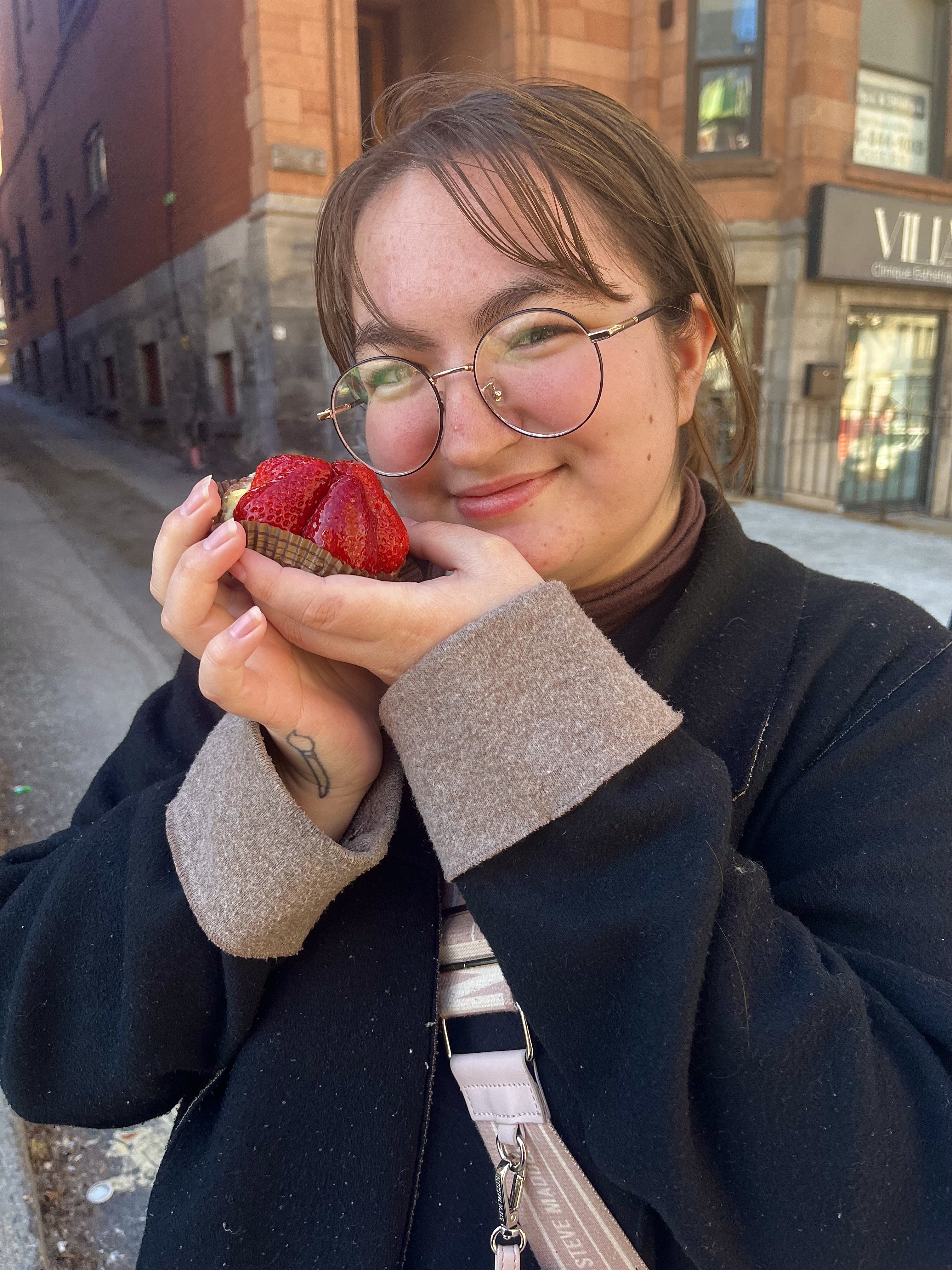
Tashie Broadbent holds a strawberry tart in front of a building

Tashie has loved art since she was a child, but she only began thinking of it as a vocation after her parents began reconnecting with their culture. "My mom motivated me to pursue visual arts and she's given me little lessons over the years about my connection to art."

In the painting's upper left corner, a circle containing a drum represents the Indigenous community, which is joined by a line of connection to a circle in the bottom right corner containing a tree. "The tree represents the settler community and the learning and growth that's transforming it. The line of connection is wavy to signify the detours that reconciliation will take."

The actual painting process, guided by Tashie, happened in a second session. Afterward, Tashie worked nonstop to fix up the line work and the details in the circles and the turtle's shell, not finishing until the night before the artwork's unveiling. She was incredibly nervous about whether people would like it, but she arrived at the ceremony to find her family, friends, and professors there to support her. "It was so special to have people I look up to congratulating me," she says.

Tashie believes that projects like hers are important to reconciliation because "art is medicine and art can bridge cultures. Maamawi wouldn't have come together without people coming together."

Meet Tashie and get a behind-the-scenes look at the making of Maamawi.
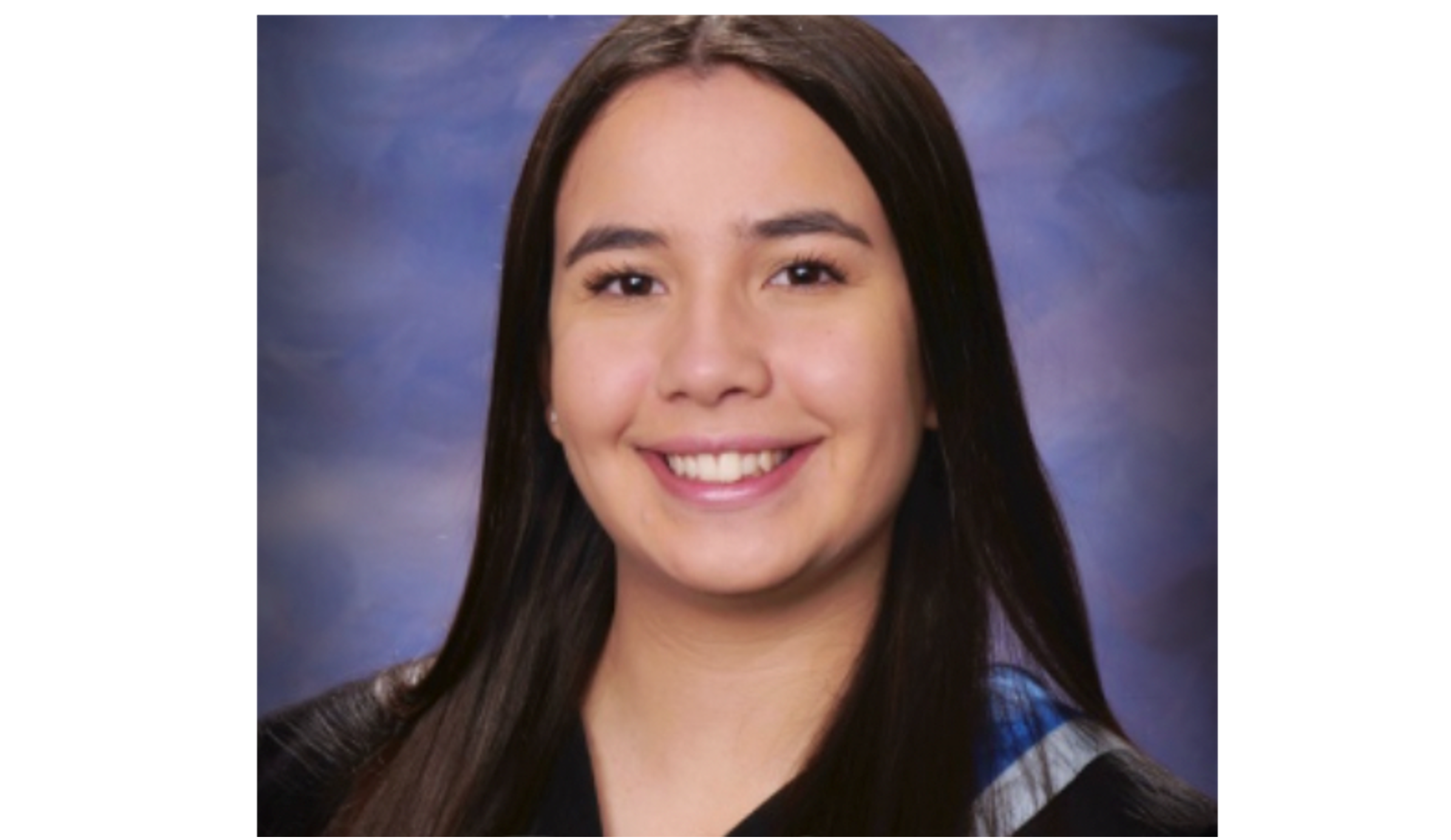
Teacher Candidate Sarah Tassone Wins Award for Demonstrated Excellence as a French Second Language Teacher

Congratulations to Sarah Tassone, a Bachelor of Education (BEd) teacher candidate in the Intermediate/Senior division at the Thunder Bay campus, for receiving the Ontario Modern Language Teachers’ Association’s Helen G. Mitchell Award.

This award recognizes one graduating student from each Faculty of Education in Ontario who exemplifies the qualities of an outstanding French as a Second Language teacher.

Sarah was nominated by James Steele, a Contract Lecturer in the Faculty of Education, with additional support from Mike Filipetti, Placement Experience Coordinator. Her nominations highlighted her excellence in BEd program courses and practicums, as well as her ability to apply effective second-language teaching methodologies that foster student success.

Sarah’s first teachable subject is French, which was also the focus of her undergraduate degree at Lakehead University.

Set to graduate in June, Sarah shared: "I have always been passionate about languages, and have been particularly dedicated to the French language for the past decade. Receiving this award is an incredible honour. As both a student and a future French teacher, I recognize the lack of resources available for French-as-a-Second-Language learners. I can’t wait to change that and make a meaningful impact on the next generation of language learners!"

Congratulations, Sarah!

Dr. Lisa Korteweg Named Chair of Robbins-Olivier Award for Excellence in Equity

Congratulations to Dr. Lisa Korteweg (Associate Professor, Thunder Bay) on being named Chair of the Robbins-Olivier Award for Excellence in Equity committee, administered by the Canada Research Chairs (CRC) program.

This prestigious award, launched by Canada’s three federal research funding agencies—CIHR, NSERC, and SSHRC—supports bold initiatives that address systemic barriers, and promote equity in academia. 

The award honours the contributions of eight academics (Marjorie Griffin Cohen, Louise Forsyth, Glenis Joyce, Audrey Kobayashi, Shree Mulay, Susan Prentice, Michèle Ollivier and Wendy Robbins) whose 2003 Canadian Human Rights complaints led to a 2006 Settlement Agreement and its 2019 addendum, advancing equity, diversity, and inclusion (EDI) in the CRC program and Canada’s research ecosystem. 

The Robbins-Ollivier Award, named after two of the original complainants—the late Michèle Ollivier and Wendy Robbins—provides $100,000 to faculty-led projects that boldly challenge institutional barriers and spark long-term change. The funding supports initiatives that enhance understanding of systemic inequities, and drive innovative solutions within academic institutions. 

Lisa notes that "it is a great honour to be appointed Chair of the Robbins-Ollivier equity award committee, which plays a crucial role in challenging systemic barriers and advancing equity, diversity, and inclusion within academia and Canada's universities. Despite decades of effort, persistent inequities continue to disproportionately affect racialized individuals, Indigenous Peoples, persons with disabilities, women, and individuals from the 2SLGBTQIA+ community; thus, this new award is essential for funding bold, transformative initiatives that disrupt the status quo and create lasting institutional change."

Carden Alvar Flora - OMNP Workshop

An Alvar is an important yet widely unknown ecosystem. It first appears as unproductive land or a rock barren but holds a unique, rare and stressed ecosystem that floods in spring and experiences drought by mid-summer. We have this rare phenomenon nearby in Carden with a diverse range of flora that can be studied.

Spring Feast - New Date!

Spring Feast - New Date!! 

Friday, April 4, 2025 

12:00 pm to 1:00 pm

Gakina Nindinawemaaganag - UC1007A

Join us for a celebration of the change of season with Elder Beatrice Twance-Hynes who will share traditional teachings.

All students are welcome!

Take a break from studying to enjoy traditional food and visit with fellow students.

Pipe Ceremony & Teachings

Pipe Ceremony & Teachings

Friday, March 28, 2025

1:00 pm to 2:00 pm 

Gakina Nindinawemaaganag - UC1007A

Indigenous Student Services Centre is pleased to provide students with the opportunity to attend a pipe ceremony and teachings. Elder Gene Nowegejick will conduct a pipe ceremony and share his knowledge.

Light refreshments will be available.

Everyone welcome.

Pages

Subscribe to Indigenous