


Alumni Spotlight: Keith Ailey Celebrates Art and Community
Meet Ontario's 2025 Post-Secondary Art Educator of the Year
"My teaching style is probably a little bit unconventional," says Lakehead alum Keith Ailey (HBFA'97, BEd'98).
"I'll start each lesson—whether it's in a high school or university class—with an art demonstration.
I show students how to mix paint or how to apply a technique. And then I tell them: 'Let's get some clay on those hands and some paint on that brush!'"
Lakehead Students Learn from a Master
That engaging, joyful approach is one of the reasons Keith was recently recognized with the 2025 Post-Secondary Art Educator of the Year award from the Ontario Art Education Association (OAEA).
He was given this honour for his work in Lakehead's Faculty of Education.
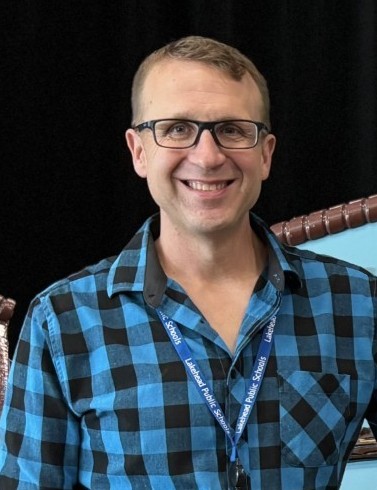
Keith has an Honours Bachelor of Fine Arts (1997) and Bachelor of Education (1998) from Lakehead.
Since 2023, Keith has been teaching visual arts to university students who will go on to become intermediate/senior and primary/junior level teachers.
"I've dedicated my life to teaching art, so to be recognized at the provincial level is amazing!" he says of the OAEA award.
The award celebrates excellence in art education and exceptional teachers who show commitment to nurturing artistic skill, creativity, and critical thinking in their students—all qualities that Keith is known for developing through innovative and inclusive classroom work.
"It's one of the greatest honours of my career. I'm so thankful to my department chair, Dr. Pauline Sameshima, for being so supportive and believing in what I'm doing in the classroom."
Building Connections with Students
As both a longtime high school art teacher in Thunder Bay and a Lakehead Faculty of Education instructor, Keith works hard to forge a connection with his students and meet them where they are.
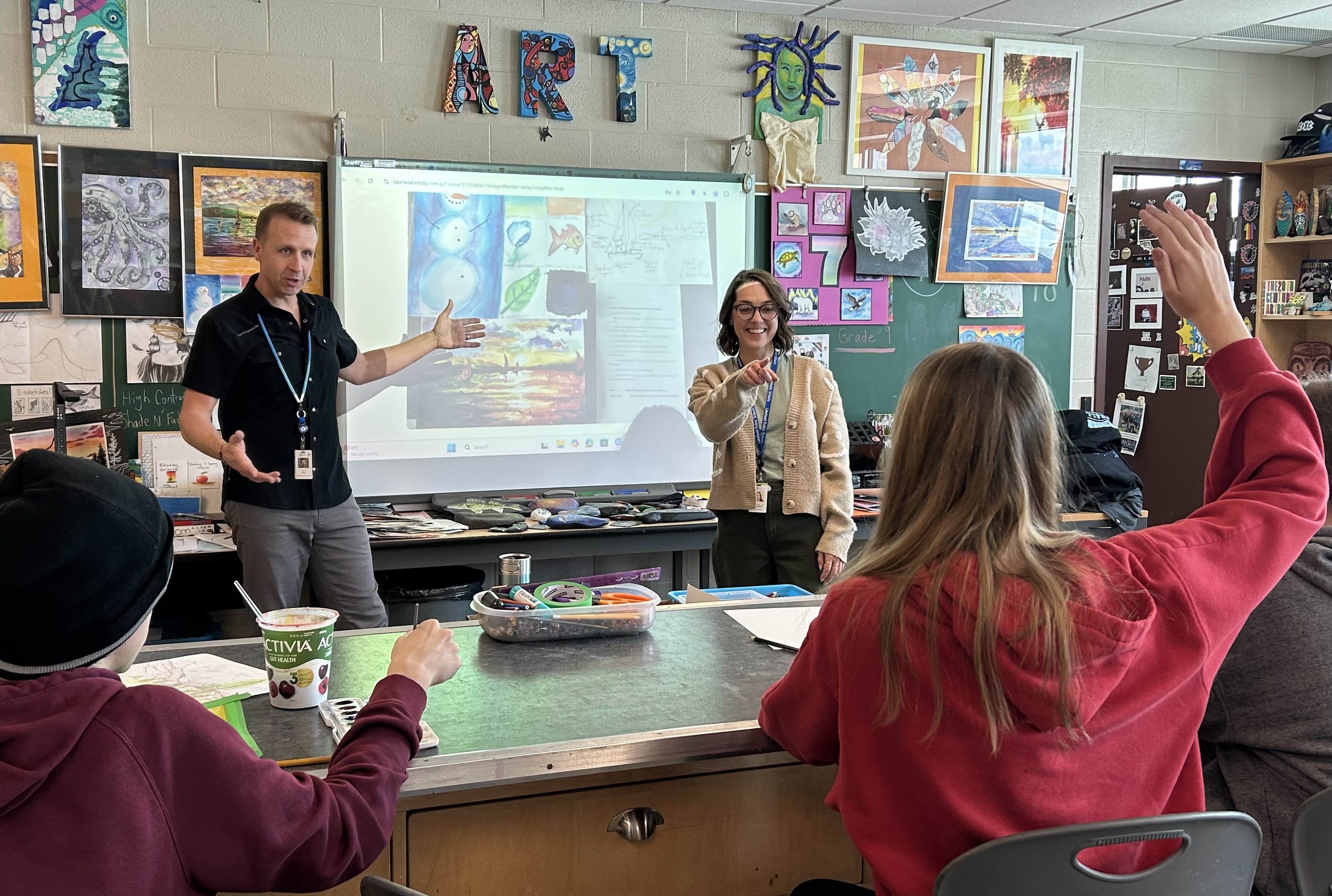
Keith accepted his OAEA Post-Secondary Art Educator of the Year award at a ceremony in February 2026. The award recognizes exemplary teaching practice, commitment to student growth, and outstanding contributions to the art education community. Above, Keith and Lakehead teacher-candidate Taylor Anderson co-teach a grade 10 art class as part of Taylor's practical experience.
"In my university teaching, I focus on what, specifically, do they need," he says, adding that his education students often wonder about writing report card comments, speaking to a parent, or evaluating someone else's art.
"I build my teaching practice around their concerns, and everything has to be practical. If I'm doing it in my high school classroom, it's something that these teacher candidates will use in their classrooms one day."
From the Studio to the Trails
Community involvement is a crucial part of Keith's teaching.
Recently, he was a co-leader of a large multi-year community project to restore the Chippewa Park carousel, a beloved amusement ride built in 1915 that has delighted generations of children.
Artists, art teachers, and high school art students designed and painted 16 iconic northwestern Ontario scenes—including Kakabeka Falls, the Sea Lion, and the pagoda—on the large wooden panels that adorn the carousel's canopy.
"It's something that's going to last another 100 years—our grandchildren will be able to ride that carousel and see that art," Keith says.
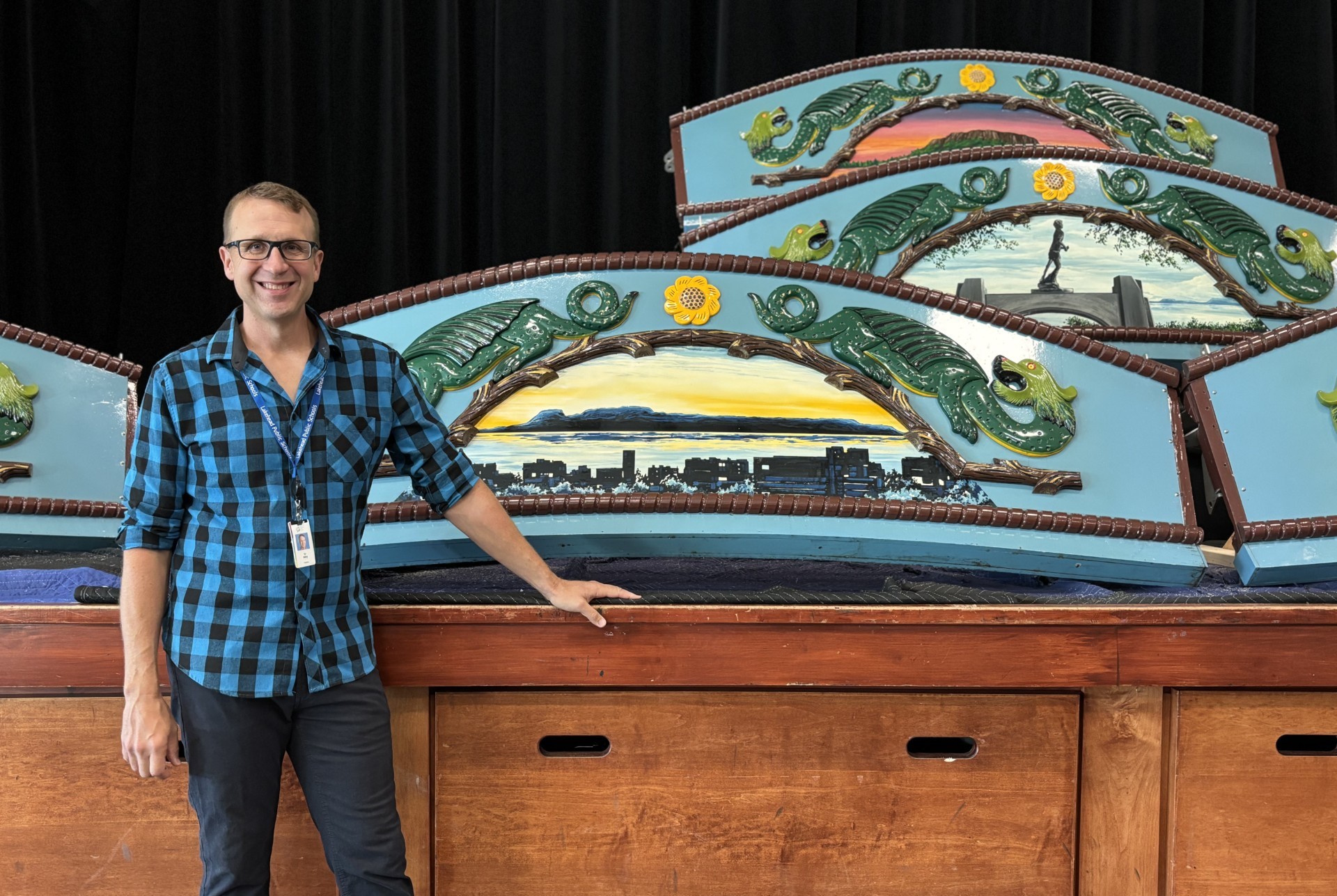
Keith with the Chippewa Park carousel's beautifully refurbished canopy panels. In 1934, the year that the carousel arrived at Chippewa Park, children could have three rides for five cents.
Another ambitious multi-group project he's proud to have helmed was commissioned by Lakehead Public Schools and centred on the theme of Reconciliation.
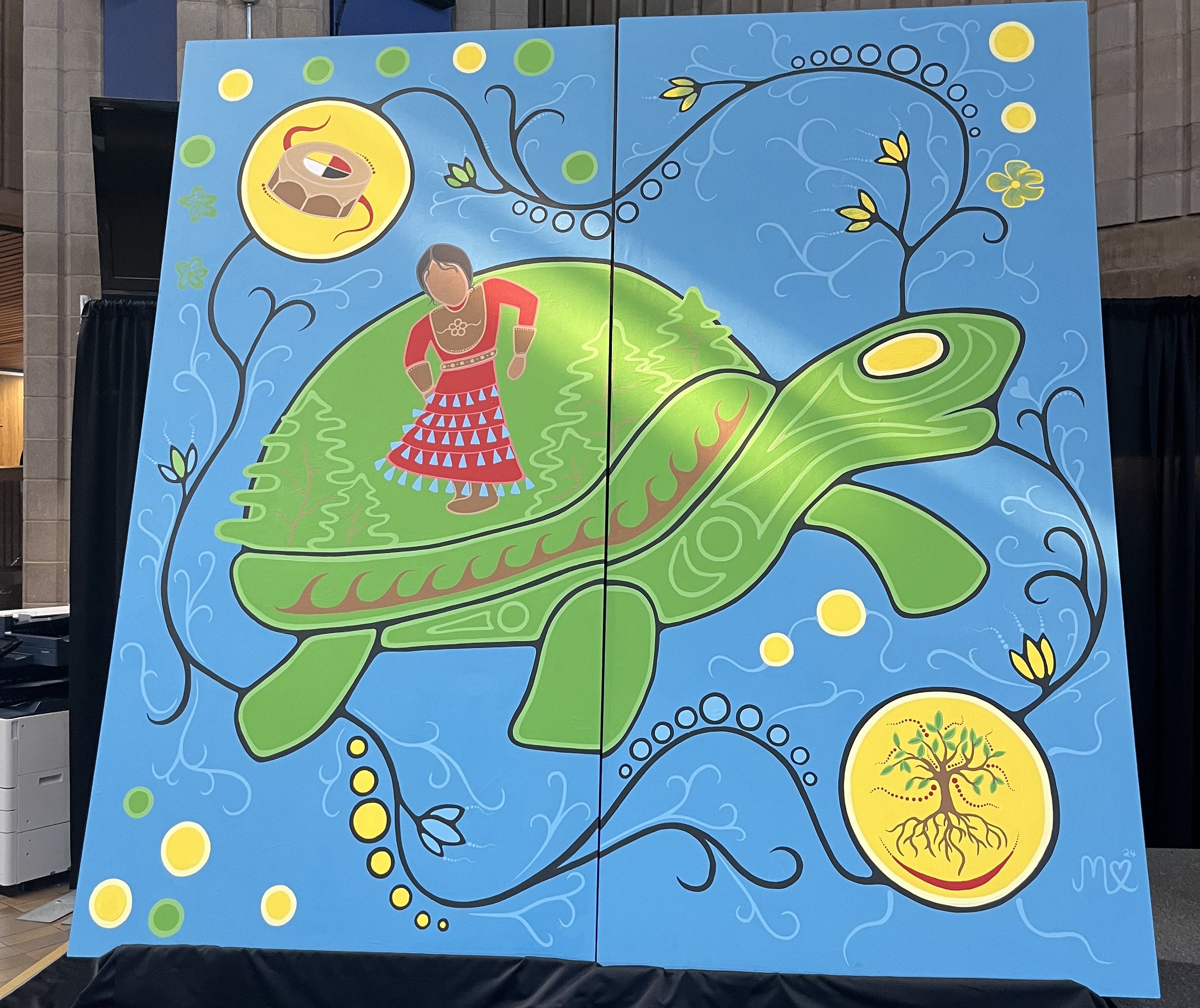
Art students from four local high schools incorporated insights from Indigenous and non-Indigenous community members into four canvases. These paintings were then shown at a Powwow celebration on Anemki Wajiw (Mount McKay) and at Thunder Bay's Folklore Festival. They are now on permanent display at the Lakehead Public Schools board office.
Next up: Public art that beautifies some large refuse bins on the Thunder Bay waterfront.
Besides art, Keith has deep rooted passion for the outdoors, which he shares with students by coaching cross-country skiing, cross-country running, and mountain biking at Superior Collegiate & Vocational Institute. He even teaches his students how to fish at a creek that runs behind the high school.
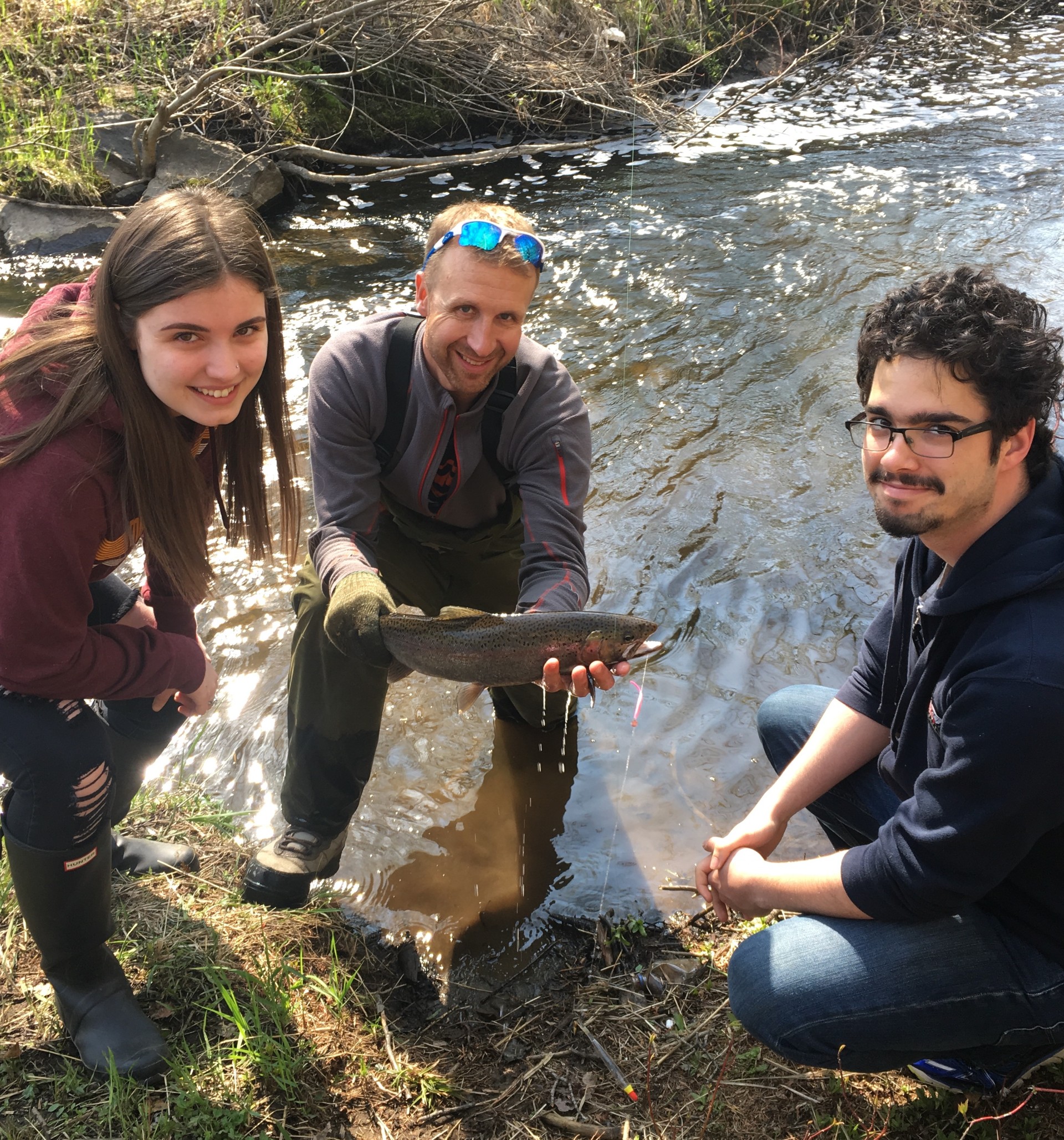
Keith makes sure that students appreciate the outdoors as well as art. Right, he and some students hook a rainbow trout.
Throughout his long career as both an artist and art teacher, Keith has inspired a love of art and fostered the creative thinking, problem solving, and teamwork skills that go along with it.
"I find great satisfaction in seeing my students develop their art skills and knowledge, but also their confidence and enthusiasm to come back the next day and try new things and to grow," he notes.
"It's hugely rewarding."