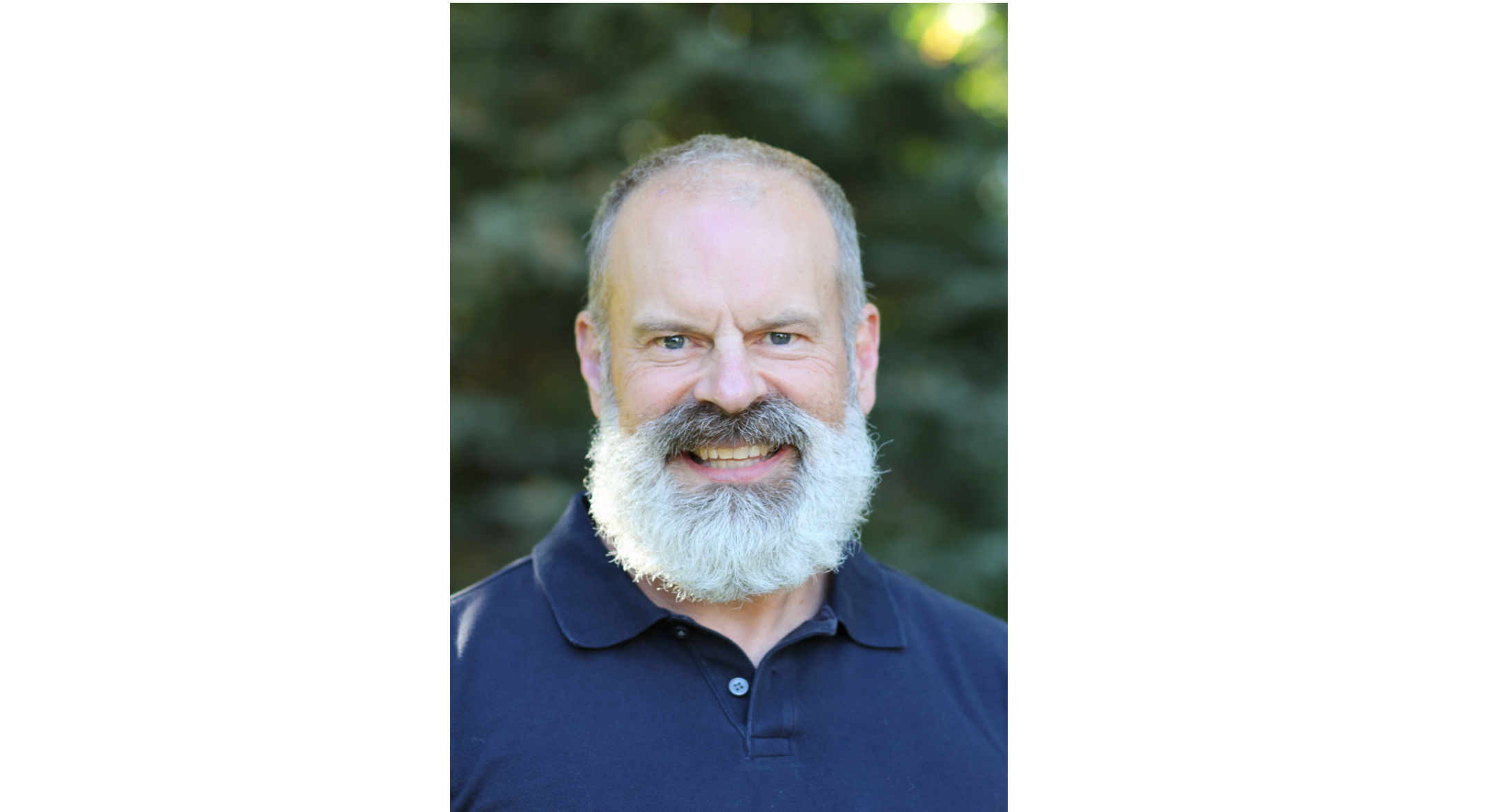
OVERVIEW:
- Lakehead University biologist Dr. Michael Rennie was the chief scientist on a recent expedition of the Blue Heron research vessel
- Dr. Rennie is doing critical research into the Superior Shoal—a 300-metre-high mountain in Lake Superior nicknamed the "Freshwater Everest"
- Data from the Superior Shoal expedition will be used to develop strategies to conserve Lake Superior and other threatened large-lake environments
Behind the Scenes on Dr. Michael Rennie's Unprecedented Expedition
Dr. Michael Rennie has just returned from the nautical adventure of a lifetime.
In early September, he was the chief scientist on a mission to explore a hidden ecosystem. He and a research crew set sail across Lake Superior on the Blue Heron research vessel owned by the University of Minnesota Duluth (UMD).
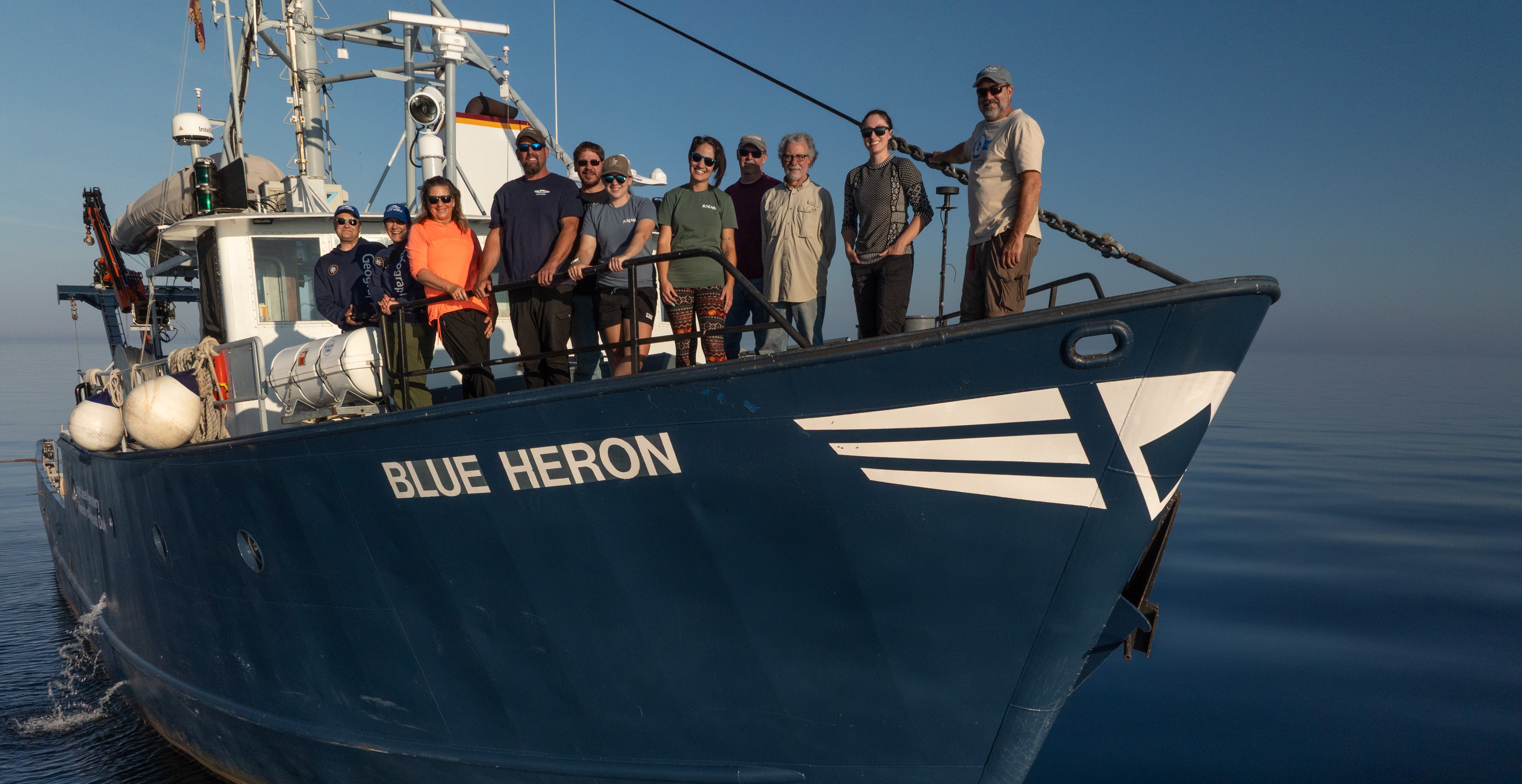
During the week the research crew (above) was at the Superior Shoal, its ROV submersible did two to three dives per day. Left to right: Zach Melnick (Inspired Planet), Yvonne Drebert (Inspired Planet), Lisa Sundberg (UMD), Tom Frantti (UMD), Jason Agnich (UMD), Gwen Phillips (U Vermont), Dr. Bianca Possamai (U Vermont), Rual Lee (UMD), Ted Gephart (UMD), Lydia Paulic (U Windsor), Dr. Michael Rennie (Lakehead). Photo Credit: Zach Melnick
This voyage was the culmination of over a year of planning for Dr. Rennie, who is a Lakehead University professor in the Department of Biology.
It took a day to load the equipment on the boat and a full day to sail to their destination, 70 kilometres from the Canadian shore.
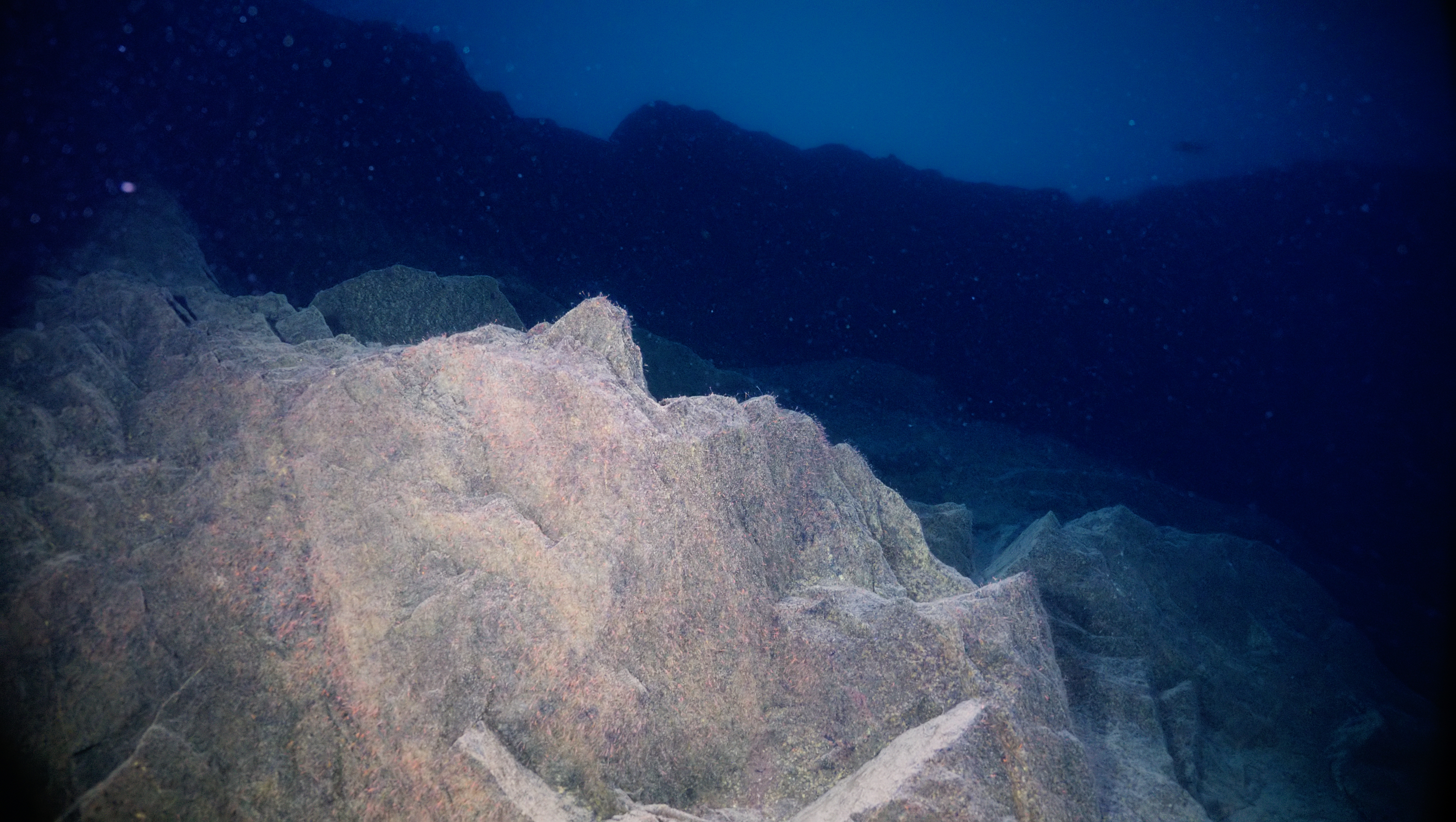
The Superior Shoal is part of the Lake Superior National Marine Conservation Area and was formed from the lava of a long-ago volcanic eruption. Photo Credit: Zach Melnick
A Soaring Mountain Rises from the Abyss
The Superior Shoal, nicknamed the "Freshwater Everest," reaches 300 metres upward from the lake floor and is rumoured to have caused shipwrecks like the infamous 1975 sinking of the Edmund Fitzgerald.
"It's this strange cryptic environment," Dr. Rennie says. "If you were sailing near it on a freighter, you'd never know it was there, even though its highest peak is just six metres below the surface.
It's swarming with fish, and it's a hotspot of biological activity. This kind of biodiversity can also be found on seamounts in oceans."

Dr. Michael Rennie says that Lakehead has an important role to play as the only research-intensive university on the Canadian side of Lake Superior.
A key goal of Dr. Rennie's expedition was to test his hypothesis that the same conditions that create abundant life on seamounts—geological features combined with currents, light, and water columns—are also responsible for the Superior Shoal's biodiversity.
"It's probable that the algae covering the shoal supports an extensive food web, and the shoals act as a spawning ground for fish."
The expedition was a collaboration between Dr. Rennie and researchers from the University of Minnesota Duluth, the University of Wisconsin-Milwaukee, the University of Vermont, and the University of Windsor. Other partners included the Grand Portage Band of Lake Superior Chippewa, the Ontario Ministry of Natural Resources, and Parks Canada.
"It takes a village," Dr. Rennie says.
A Filmmaking Odyssey
To view the Superior Shoal, the Blue Heron used a remotely operated vehicle (ROV)—a small submersible equipped with a high-resolution camera—capable of diving among the shoal's perilous peaks and canyons.
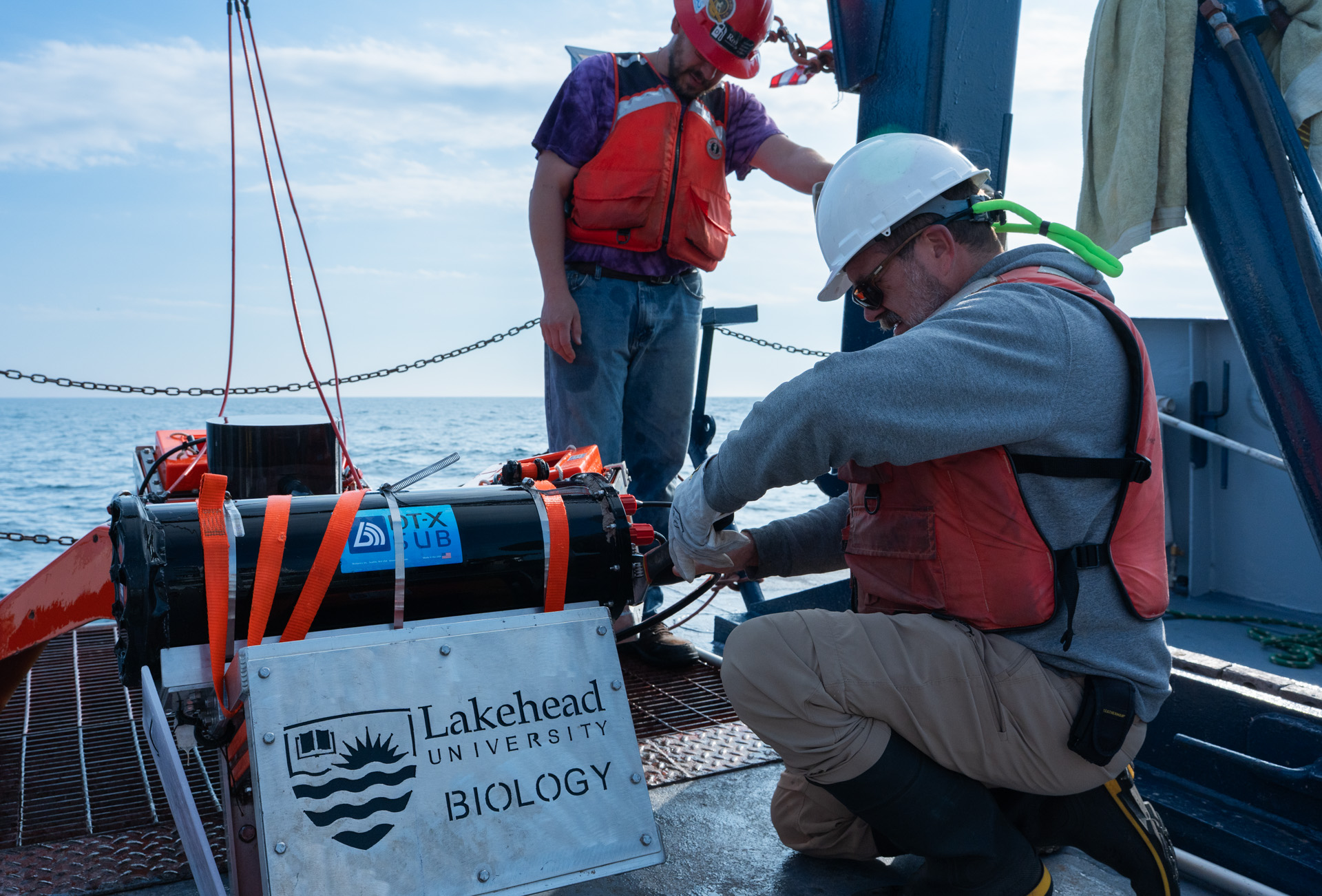
Although Dr. Rennie is a certified scuba diver, regulations make the cost of research dives prohibitive. "This means the ROV footage we shot is even more crucial." Above, Dr. Rennie helps prepare a stationary up-looking hydroacoustic submersible to detect concentrations of fish above the shoal. Photo Credit: Yvonne Drebert
The ROV was operated by Zach Melnick and Yvonne Drebert, the filmmakers behind Inspired Planet Productions. "They were absolutely fantastic to work with," Dr. Rennie says.
The filmmakers—with the sponsorship of Parks Canada, Science North, and Canadian Geographic—produced the first-ever livestream of the Superior Shoal during Dr. Rennie's expedition.
A Haven for Lake Trout
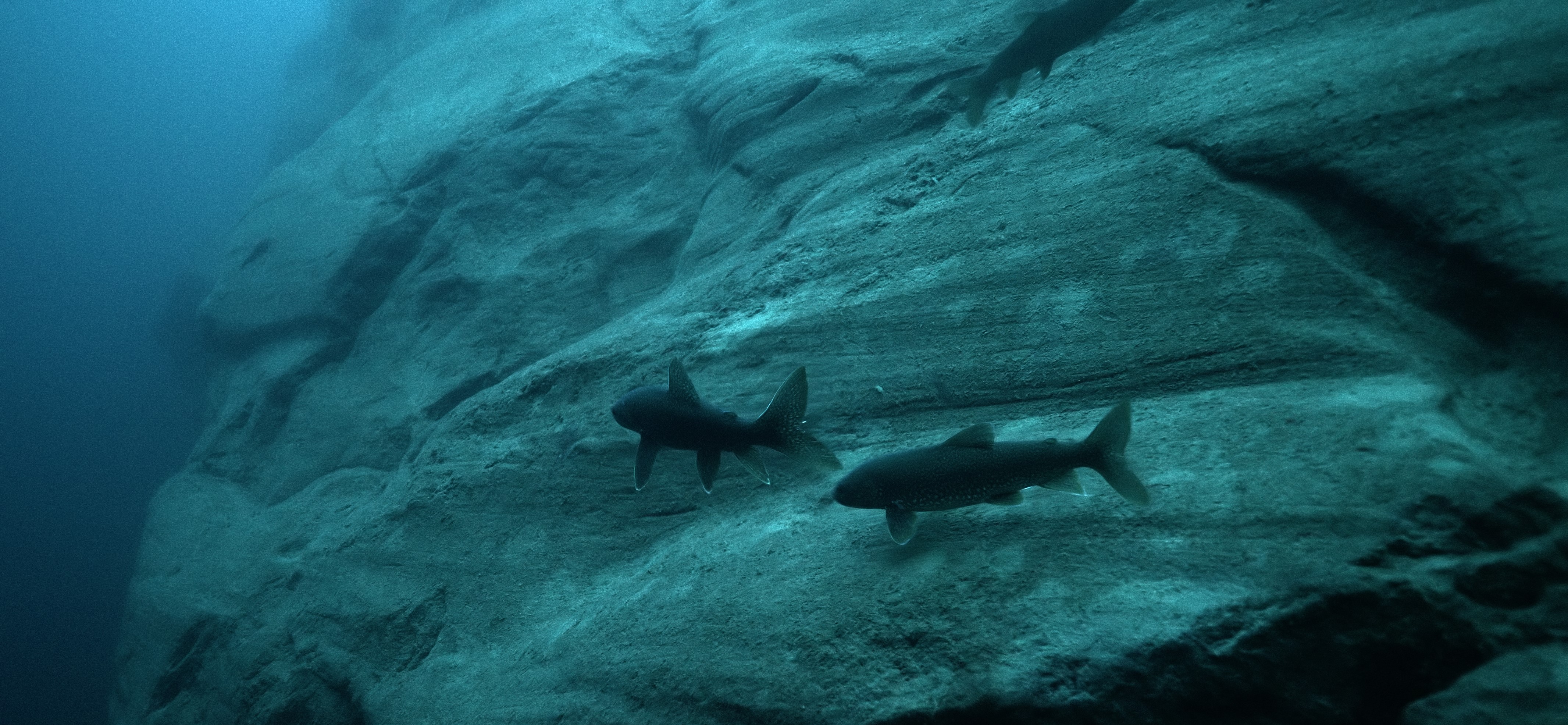
The research crew dropped off acoustic receivers at the Superior Shoal. These receivers detect tags that have been surgically implanted in lake trout, enabling scientists to see where fish like the redfin trout (above) travel, and learn more about their behaviour. Photo Credit: Zach Melnick
Dr. Rennie is investigating whether the Superior Shoal ecosystem is crucial to the well-being of the entire lake.
"We know that the shoal is filled with many species of lake trout. This is encouraging since Lake Superior's lake trout fishery collapsed in the 1960s and has only recently rebounded."
On the expedition, the researchers collected genetic material from lake trout to test how similar or different they are to near-shore lake trout populations, and to determine if these lake trout can help repopulate other areas of Lake Superior.
The Mysteries of the Deep
"Seeing the multitude of fish on the shoal, including sculpins, burbot, and rare redfin, siscowet, and humper lake trout species was amazing," Dr Rennie says.
"The most astounding sight for me, though, was pinky-orange hydras pulsing like a vast garden on the shoal," he says of the tiny anemone-like creatures.
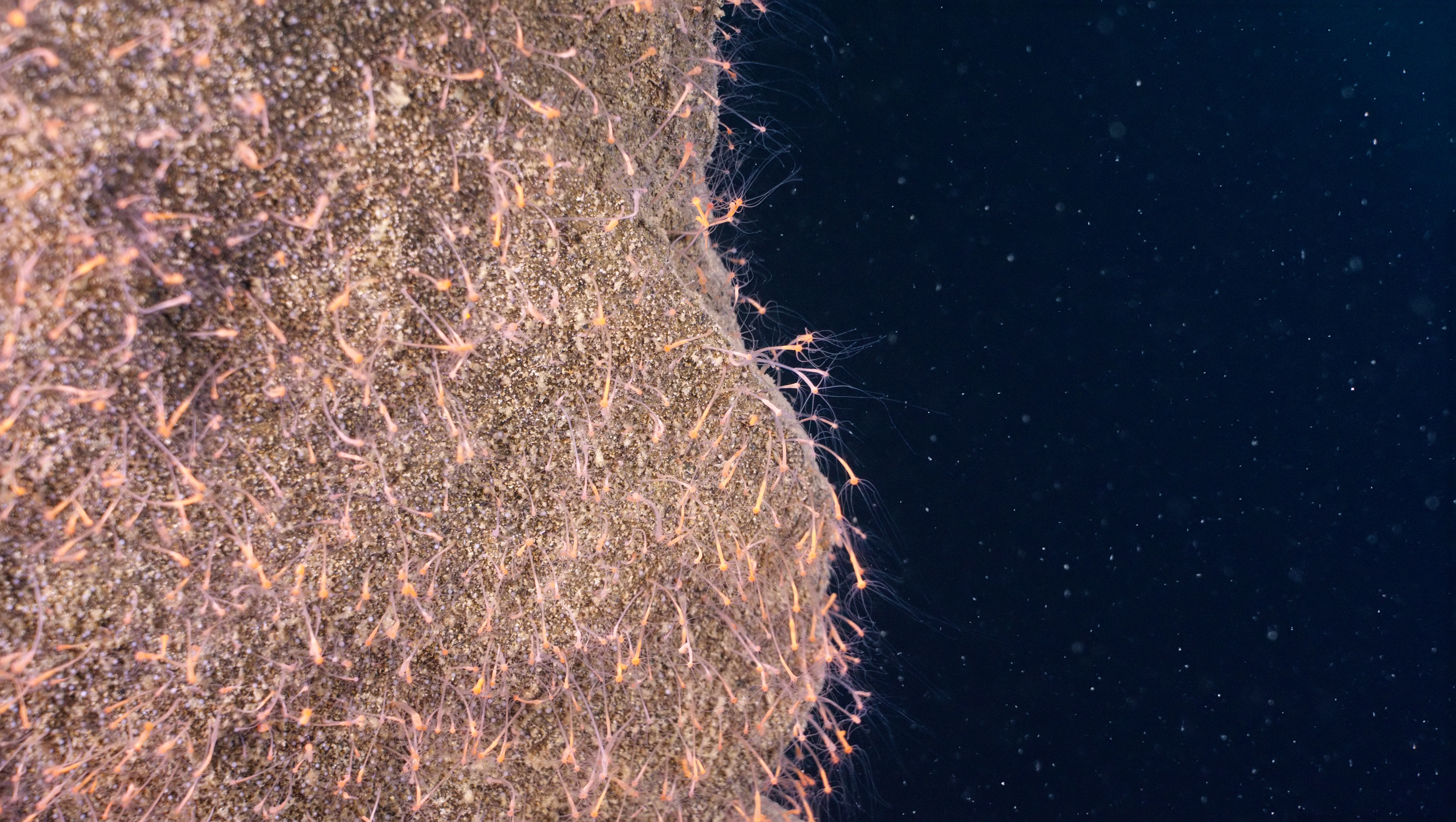
Above, carnivorous hydra cover one of the shoal's cliff faces. Award-winning filmmakers and Royal Canadian Geographical Society Fellows Yvonne Drebert and Zach Melnick hope to make a film about Dr. Rennie's Superior Shoal expedition. Photo Credit: Zach Melnick
The research crew was also transfixed by a never-before-seen hunting behaviour of the redfin lake trout.
"They dragged their fins through the algae to chase out organisms so that they could eat them. Until now, no one knew they used this ingenious hunting method."
Dr. Rennie's work has laid the groundwork for future expeditions that will yield unique insights.
"Our research has the potential to create scientific strategies to successfully conserve Lake Superior and other large-lake environments that face threats such as climate change, pollution, and overfishing."
Watch the historic livestream of the Superior Shoal dive.
Dr. Michael Rennie's Superior Shoal research and expedition was made possible by funding from the University of Minnesota Duluth, the Great Lakes Fisheries Commission, and a Discovery Grant and Ship Time grant from the Natural Sciences and Engineering Research Council of Canada (NSERC).